


 Скачать презентацию John H Porter and David E Smith Dept
b6c2721616221a59cdb47e0a8e9708d2.ppt
- Количество слайдов: 26
 John H. Porter and David E. Smith Dept. of Environmental Sciences, University of Virginia LIVE FROM THE FIELD: MANAGING LIVE-IMAGE DATABASES AT THE VIRGINIA COAST RESERVE
 Roadmap Why images? Forms of image visualization and analysis The VCR/LTER system Database systems used to manage images Note: this is a small $50 -100 K ADP= Acronym Deficient Project
 Supporting Research and Education WHY IMAGES?
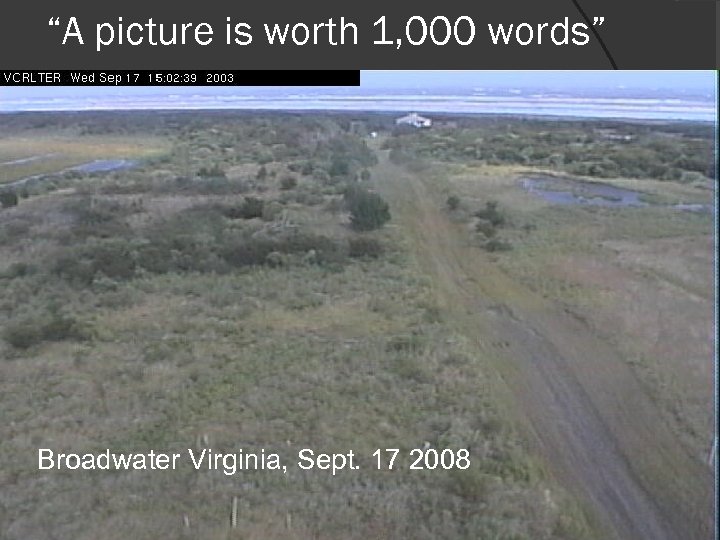 “A picture is worth 1, 000 words” Broadwater Virginia, Sept. 17 2008
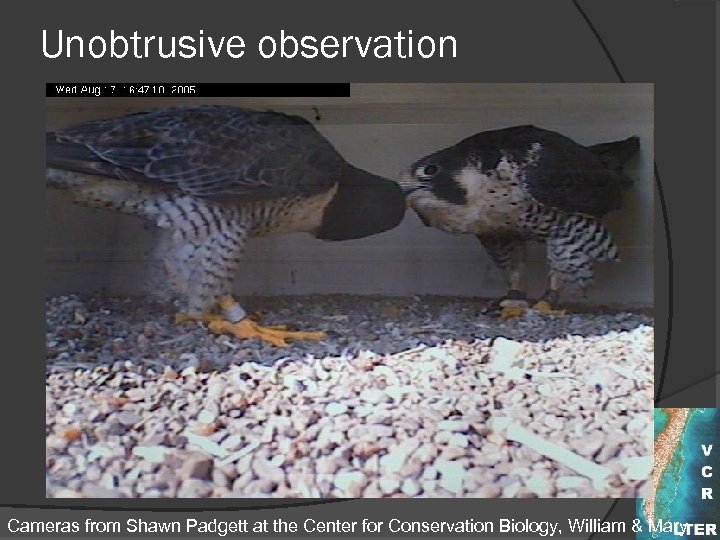 Unobtrusive observation Cameras from Shawn Padgett at the Center for Conservation Biology, William & Mary
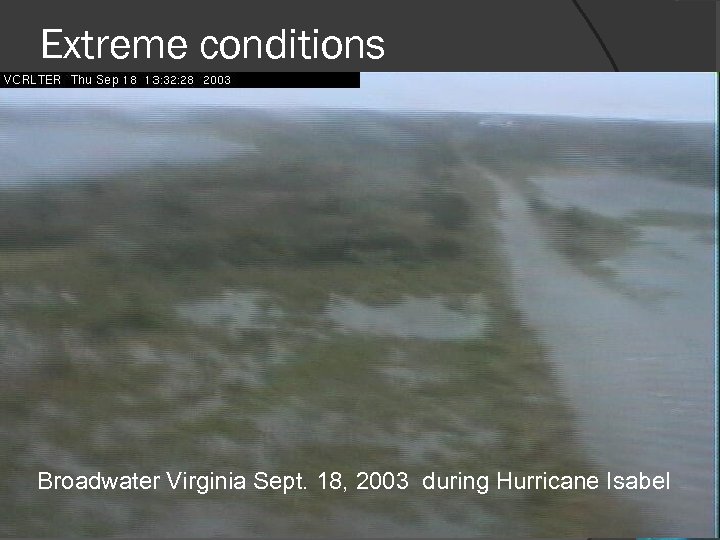 Extreme conditions Broadwater Virginia Sept. 18, 2003 during Hurricane Isabel
 Manipulation of time scales “Watching Grass Grow”
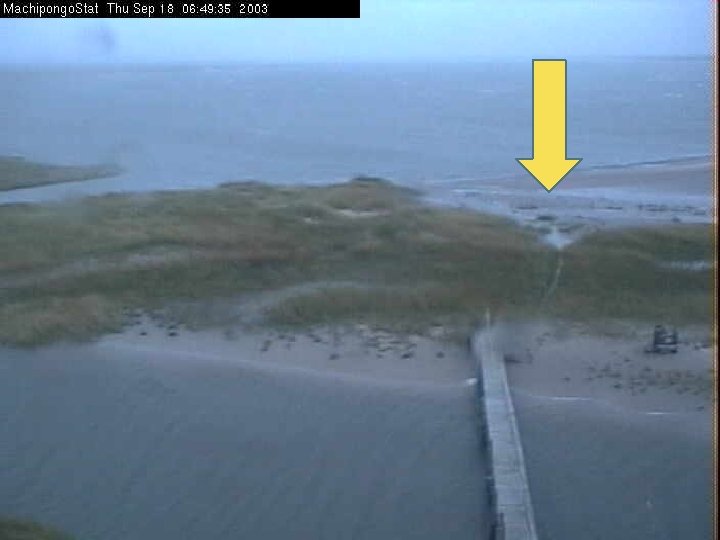
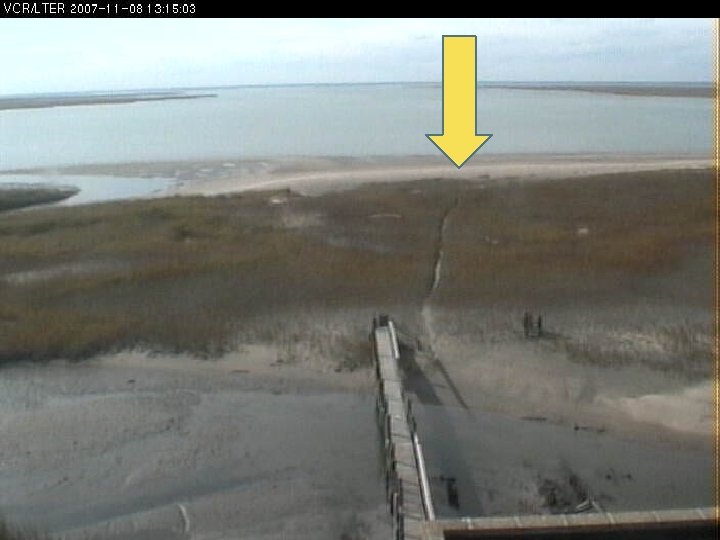
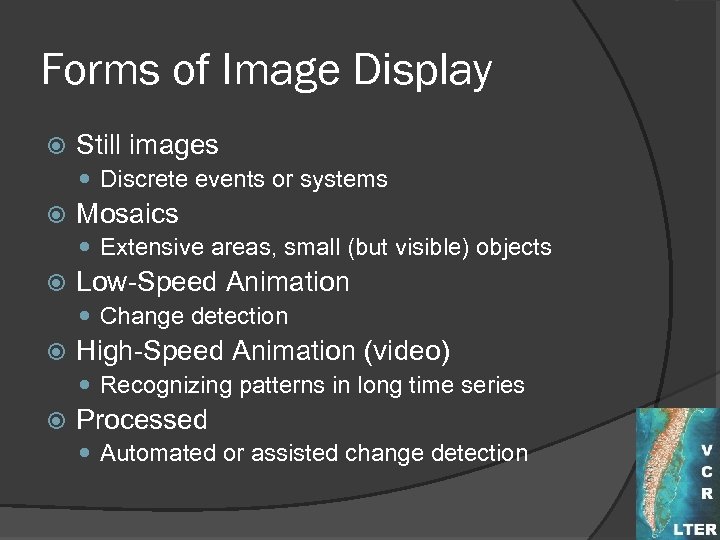 Forms of Image Display Still images Discrete events or systems Mosaics Extensive areas, small (but visible) objects Low-Speed Animation Change detection High-Speed Animation (video) Recognizing patterns in long time series Processed Automated or assisted change detection
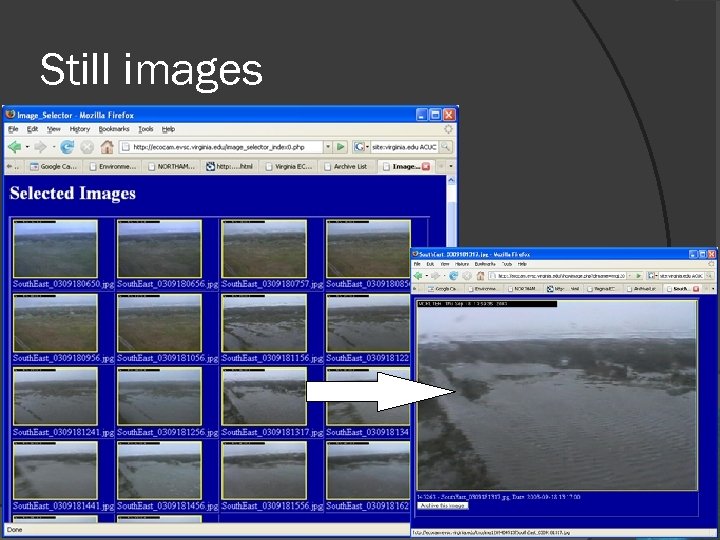 Still images
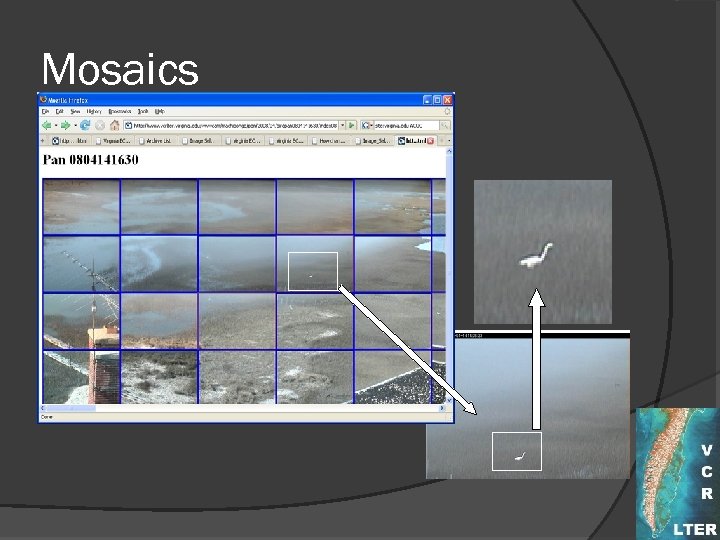 Mosaics
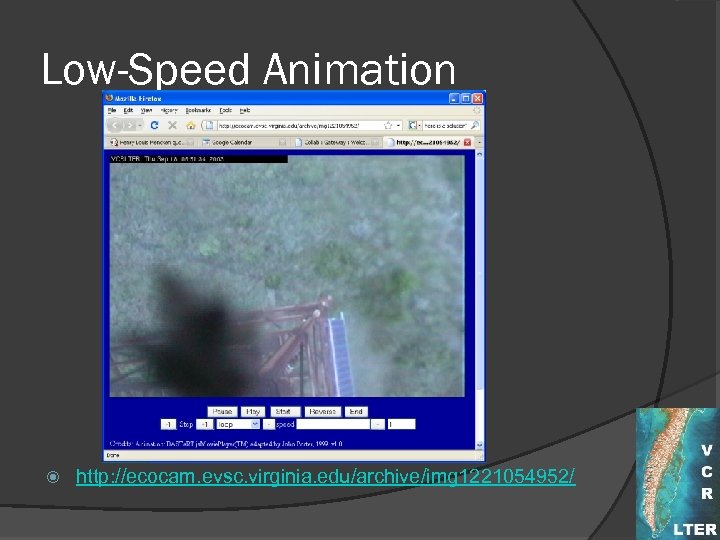 Low-Speed Animation http: //ecocam. evsc. virginia. edu/archive/img 1221054952/
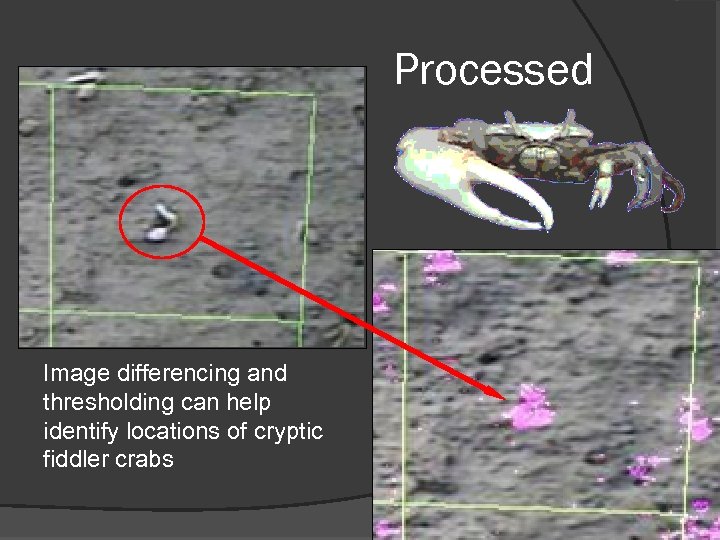 Processed Image differencing and thresholding can help identify locations of cryptic fiddler crabs
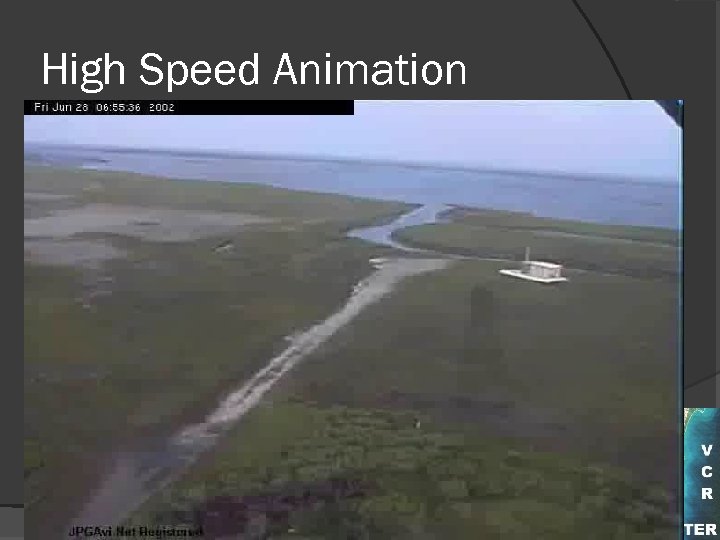 High Speed Animation
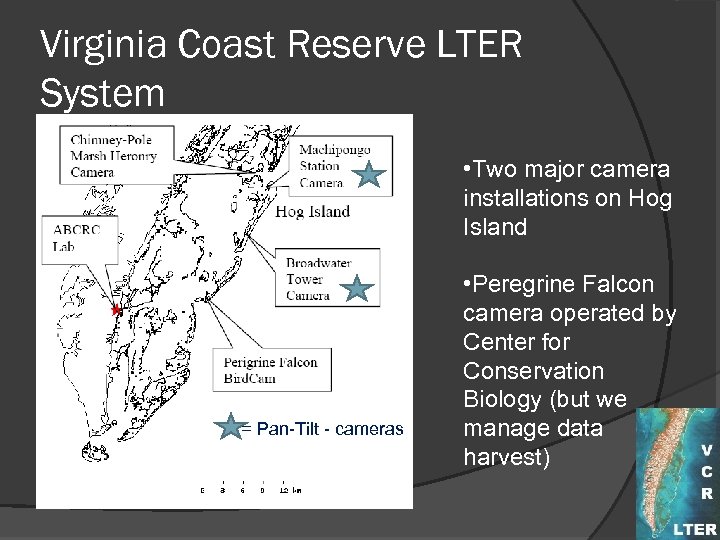 Virginia Coast Reserve LTER System • Two major camera installations on Hog Island = Pan-Tilt - cameras • Peregrine Falcon camera operated by Center for Conservation Biology (but we manage data harvest)
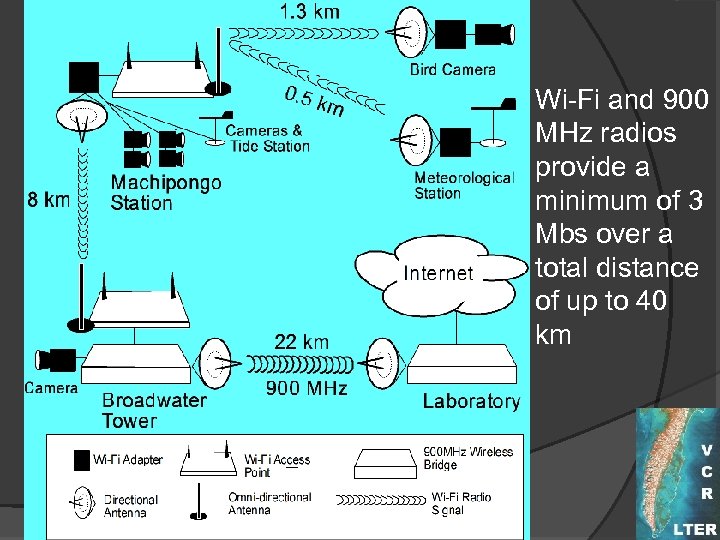 Wi-Fi and 900 MHz radios provide a minimum of 3 Mbs over a total distance of up to 40 km
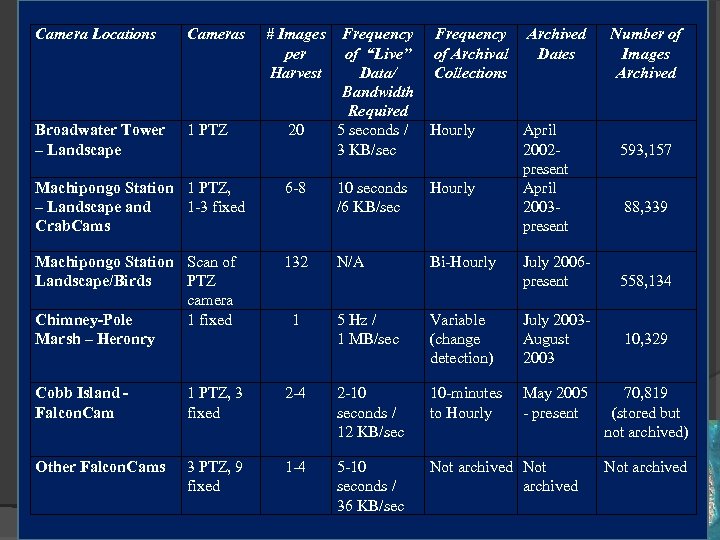 Camera Locations Cameras Broadwater Tower – Landscape 1 PTZ # Images per Harvest 20 Machipongo Station 1 PTZ, – Landscape and 1 -3 fixed Crab. Cams 6 -8 Machipongo Station Scan of Landscape/Birds PTZ camera Chimney-Pole 1 fixed Marsh – Heronry 132 Cobb Island Falcon. Cam 1 PTZ, 3 fixed Other Falcon. Cams 3 PTZ, 9 fixed 1 Frequency Archived of “Live” of Archival Dates Data/ Collections Bandwidth Required 5 seconds / Hourly April 3 KB/sec 2002 present 10 seconds Hourly April /6 KB/sec 2003 present N/A Bi-Hourly July 2006 present 5 Hz / 1 MB/sec Variable (change detection) July 2003 August 2003 2 -4 2 -10 seconds / 12 KB/sec 10 -minutes to Hourly May 2005 - present 1 -4 5 -10 seconds / 36 KB/sec Not archived Number of Images Archived 593, 157 88, 339 558, 134 10, 329 70, 819 (stored but not archived) Not archived
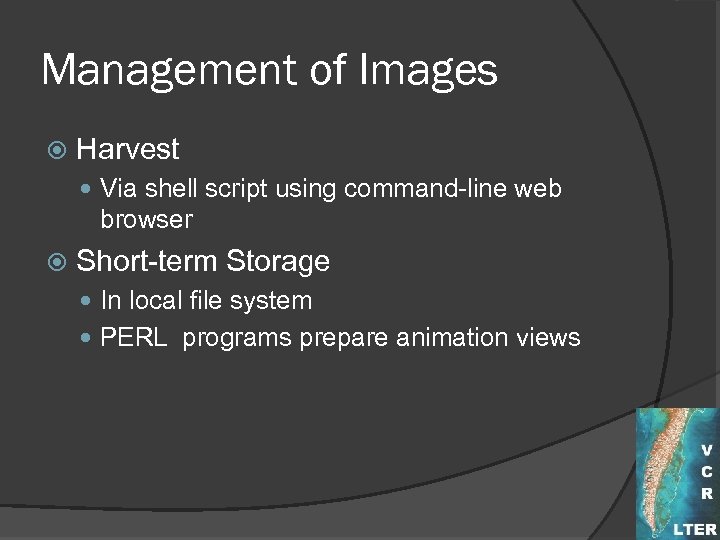 Management of Images Harvest Via shell script using command-line web browser Short-term Storage In local file system PERL programs prepare animation views
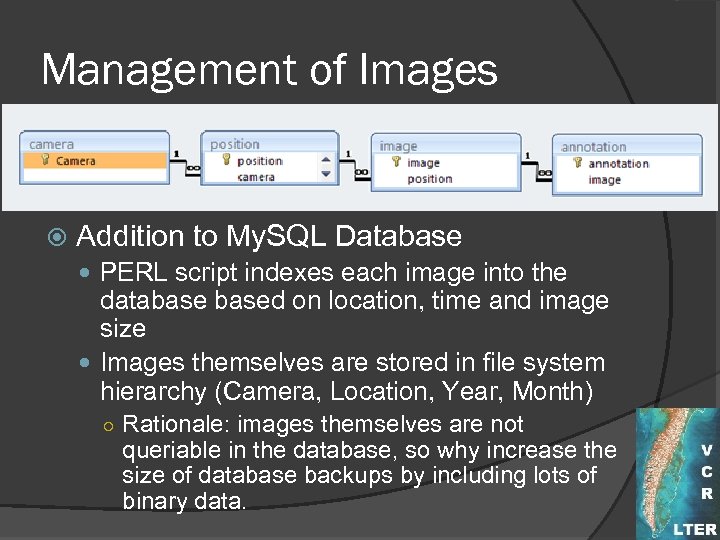 Management of Images Addition to My. SQL Database PERL script indexes each image into the databased on location, time and image size Images themselves are stored in file system hierarchy (Camera, Location, Year, Month) ○ Rationale: images themselves are not queriable in the database, so why increase the size of database backups by including lots of binary data.
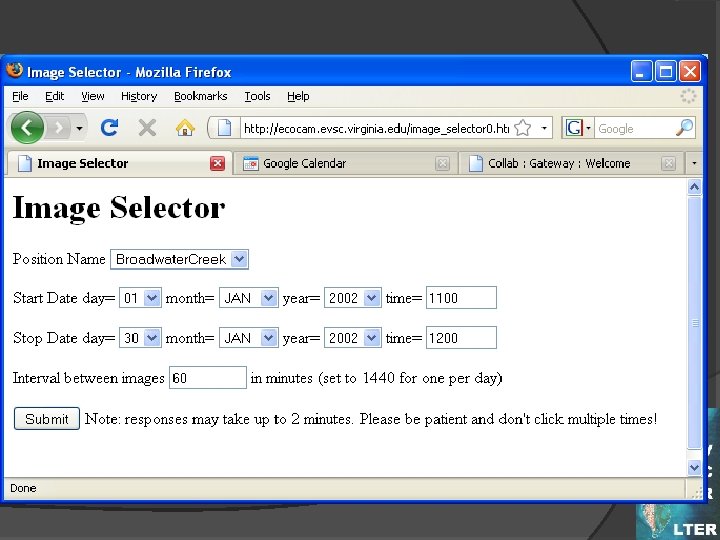
 Image Query Web forms allow selection of image sets based on Location Time Frequency Database search and image retrieval is implemented using a PERL script. This is needed because user-supplied times are imprecise, so multiple candidate images need to be queried, and the best candidate selected for retrieval.
 Conclusions Imagery provides unique perspectives on ecological systems A variety of image visualization tools are needed to exploit those images An underlying database can effectively provide needed images to the visualization tools
 Challenges Additional image processing tools are needed to allow automated data extraction from the images Existing query and analysis tools in the system are designed to aid a human being, not operate independently
 Useful URLs http: //ecocam. evsc. virginia. edu Main webcam educational page http: //www. vcrlter. virginia. edu Look under wwwcams http: //wireless. vcrlter. virginia. edu Information on wireless networks, components etc.
 Acknowledgements This material is based upon work supported by the National Science Foundation under Grants DEB-0080381 and DEB-0621014 and by a grant from the Virginia Environmental Endowment. The Virginia Coast Reserve of the Nature Conservancy provided access to study sites. Thomas Williams, David Hughes and Shawn Padgett provided aid in establishing the wireless network and in the installation of web cameras.