 Скачать презентацию John F Straube Kohta Ueno Why Energy Matters
c3150e0f4bafaa912897d9f778b55362.ppt
- Количество слайдов: 83



John F. Straube Kohta Ueno Why Energy Matters February 10, 2011
Efficiency Vermont is a Registered Provider with The American Institute of Architects Continuing Education Systems (AIA/CES). Credit(s) earned on completion of this program will be reported to AIA/CES for AIA members. Certificates of Completion for both AIA members and non-AIA members are available upon request. This program is registered with AIA/CES for continuing professional education. As such, it does not include content that may be deemed or construed to be an approval or endorsement by the AIA of any material of construction or any method or manner of handling, using, distributing, or dealing in any material or product. Questions related to specific materials, methods, and services will be addressed at the conclusion of this presentation.
Learning Objectives At the end of this program, participants will be able to: Understand a brief overview of the current status of climate change Demonstrate the importance of energy use in buildings with respect to their impact on the planet Understand the importance of embodied energy versus energy use over the life of the building Discuss the importance of good design over a reliance on technology

Course Evaluations In order to maintain high-quality learning experiences, please access the evaluation for this course by logging into CES Discovery and clicking on the Course Evaluation link on the left side of the page.
Background: Fossil Fuels Why Energy Matters: Better Buildings by Design 5
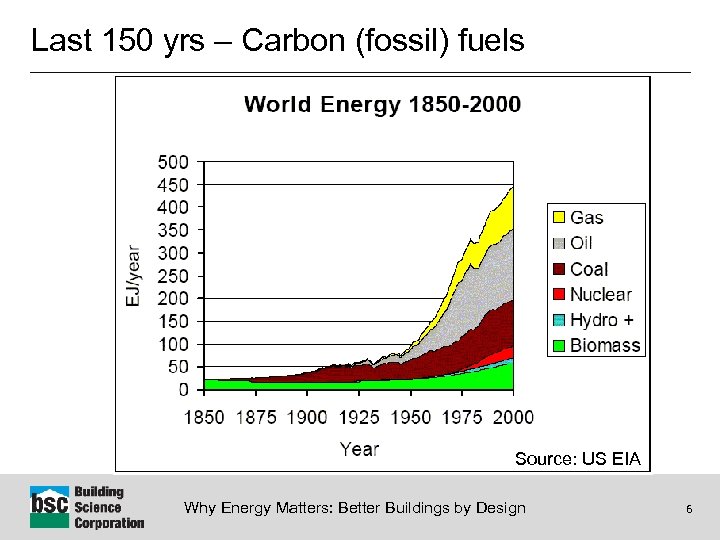
Last 150 yrs – Carbon (fossil) fuels Source: US EIA Why Energy Matters: Better Buildings by Design 6
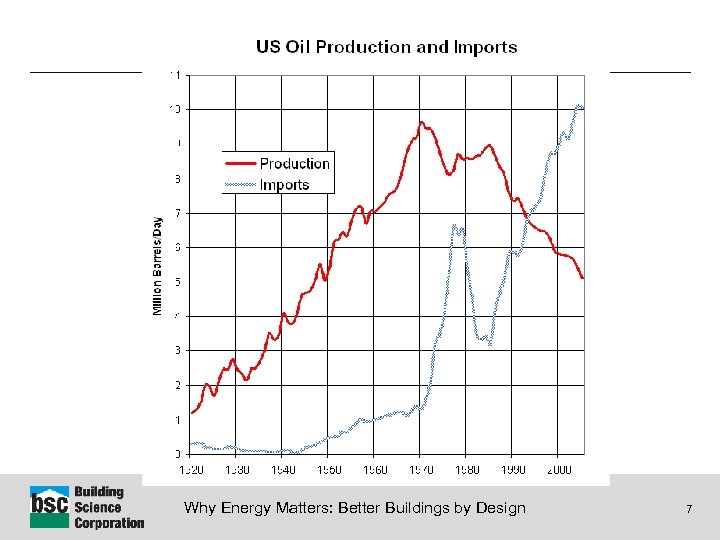
Why Energy Matters: Better Buildings by Design 7
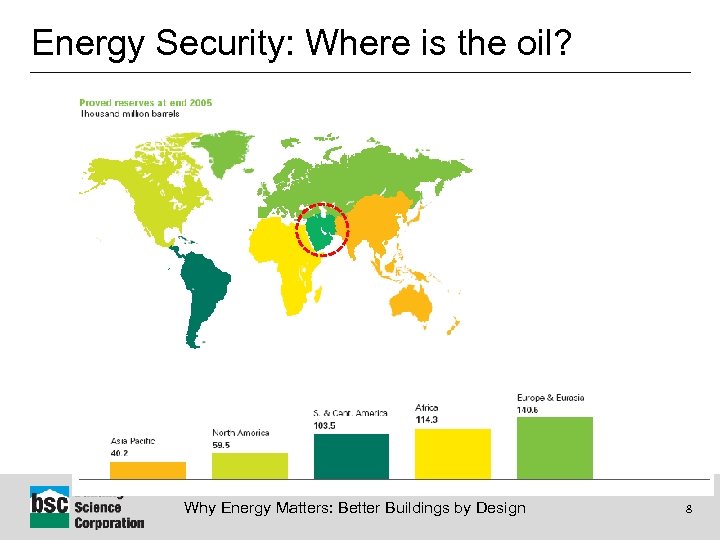
These folks not always friendly Energy Security: Where is the oil? Why Energy Matters: Better Buildings by Design 8
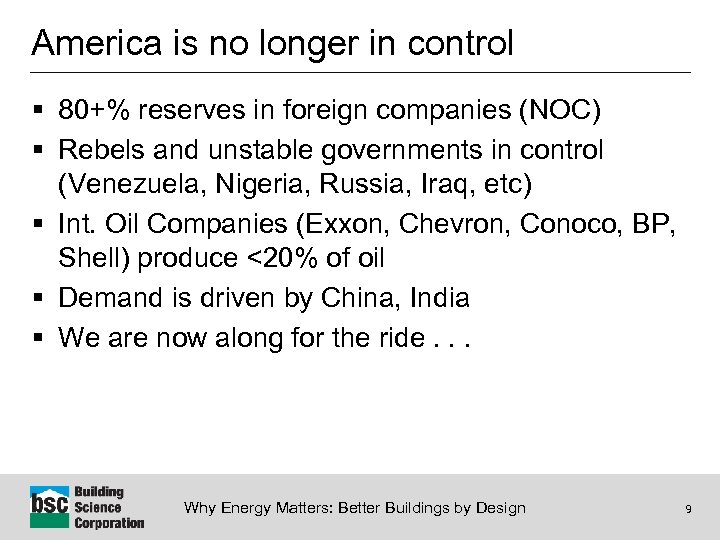
America is no longer in control § 80+% reserves in foreign companies (NOC) § Rebels and unstable governments in control (Venezuela, Nigeria, Russia, Iraq, etc) § Int. Oil Companies (Exxon, Chevron, Conoco, BP, Shell) produce <20% of oil § Demand is driven by China, India § We are now along for the ride. . . Why Energy Matters: Better Buildings by Design 9
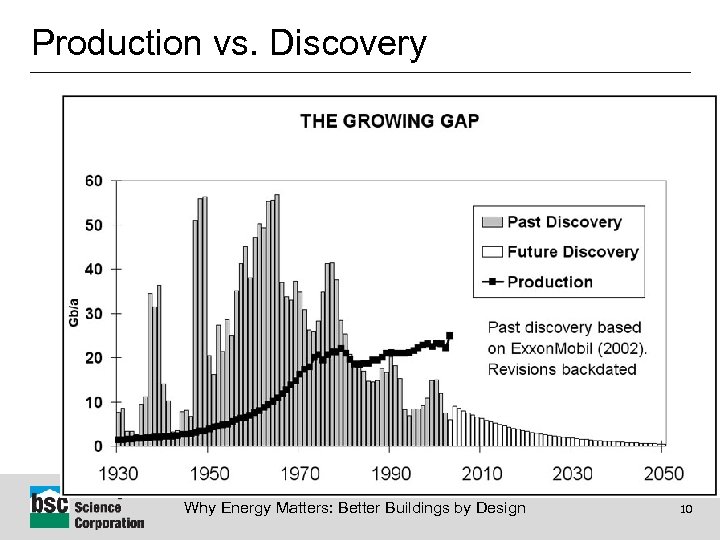
Production vs. Discovery Why Energy Matters: Better Buildings by Design 10
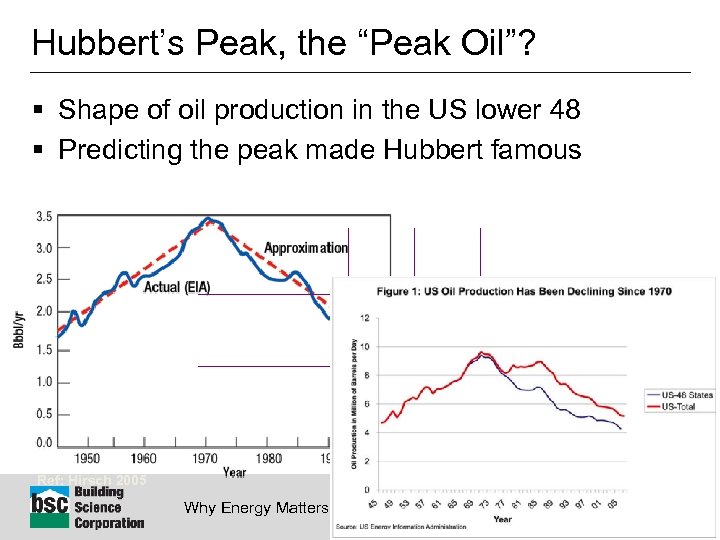
Hubbert’s Peak, the “Peak Oil”? § Shape of oil production in the US lower 48 § Predicting the peak made Hubbert famous Ref: Hirsch 2005 Why Energy Matters: Better Buildings by Design 11
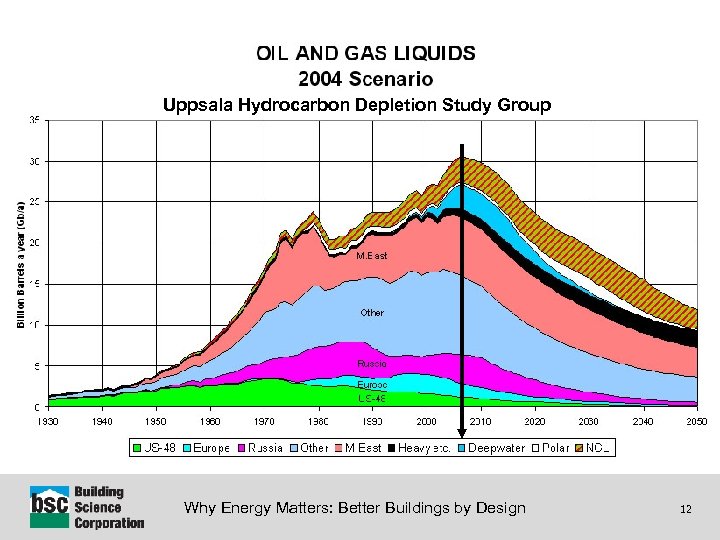
Uppsala Hydrocarbon Depletion Study Group Why Energy Matters: Better Buildings by Design 12
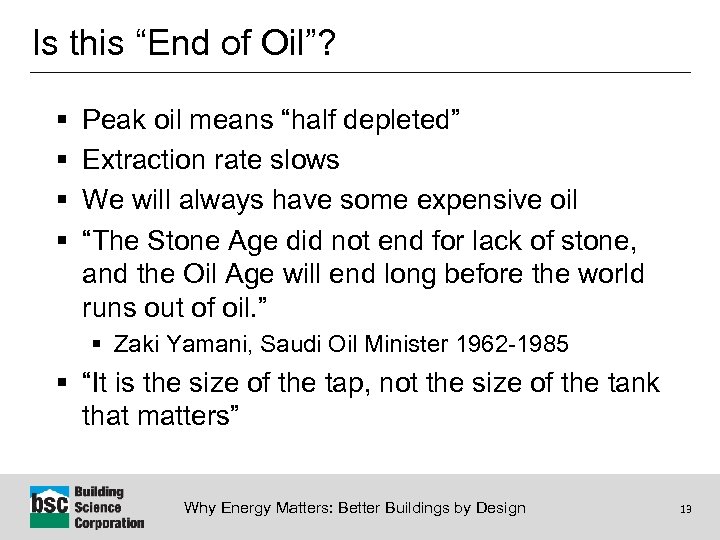
Is this “End of Oil”? § § Peak oil means “half depleted” Extraction rate slows We will always have some expensive oil “The Stone Age did not end for lack of stone, and the Oil Age will end long before the world runs out of oil. ” § Zaki Yamani, Saudi Oil Minister 1962 -1985 § “It is the size of the tap, not the size of the tank that matters” Why Energy Matters: Better Buildings by Design 13
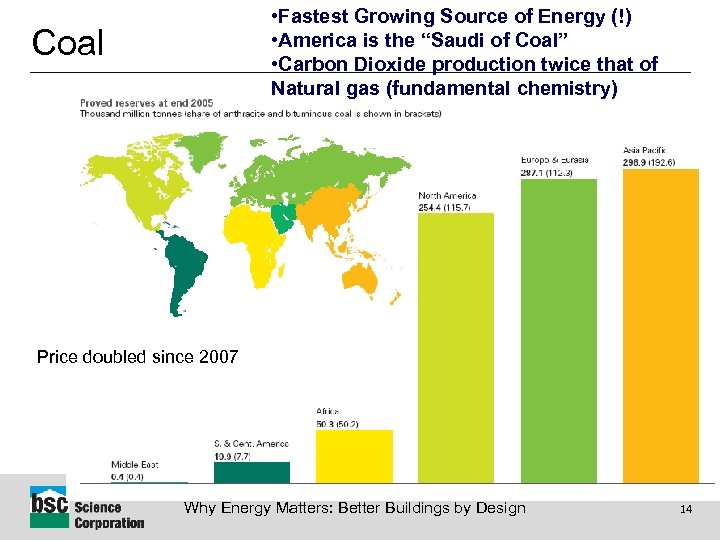
• Fastest Growing Source of Energy (!) • America is the “Saudi of Coal” • Carbon Dioxide production twice that of Natural gas (fundamental chemistry) Coal Price doubled since 2007 Why Energy Matters: Better Buildings by Design 14
Coal § Clean coal (Integrated gasification) § None in America (some new plants in Europe) § Does not solve CO 2 § Carbon Capture and Sequestration (CCS) § Reduces CO 2 output by about 70% § No plants anywhere § Could be major transitional energy source 2010 -2075 § Mining causes environmental damage § Coal to liquid fuel § Well known Fischer-Tropsch process (German WW 2) § Major CO 2 emissions, lots of coal and money needed Why Energy Matters: Better Buildings by Design 15
Agriculture will save us? : Biofuels § Biofuels/mass: wood, ethanol, bio-diesel § Carbon absorbed by plants -> released when burnt = carbon neutral § Ethanol for corn 1. 2 x energy input § Ethanol sugarcane can 5 -8 x energy § Ethanol from cellulose …. eventually § All assumes SUSTAINABLE FARMING § All of this COSTS more money Why Energy Matters: Better Buildings by Design 16
Biofuels & Biofoods § Ravenous appetite for fuel + poor efficiency of production = major consumer of food crops § Corn & land prices rising quickly § 25% of corn crop in US § Poor people suffer § 1 SUV tank of corn = 1 person year corn § Water aquifiers depleted to irrigate corn § Fuel and food get expensive Why Energy Matters: Better Buildings by Design 17
Renewables § Biomass § Makes sense in limited volumes sustainably grown, esp for liquid fuel, feedstocks § Photovoltaics § Expensive, intermittent, but clear future § Printed and organic PV will soon be competitive § Wind § Lowest-cost RE, but intermittent § Combined Heat and Power (CHP) § Need Smart Grid Why Energy Matters: Better Buildings by Design 18
So what does all this have to do with buildings? Why Energy Matters: Better Buildings by Design 19
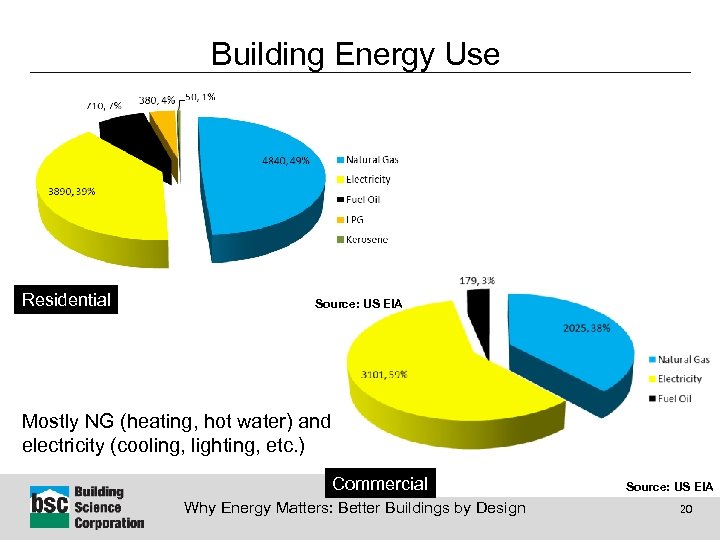
Building Energy Use Residential Source: US EIA Mostly NG (heating, hot water) and electricity (cooling, lighting, etc. ) Commercial Why Energy Matters: Better Buildings by Design Source: US EIA 20
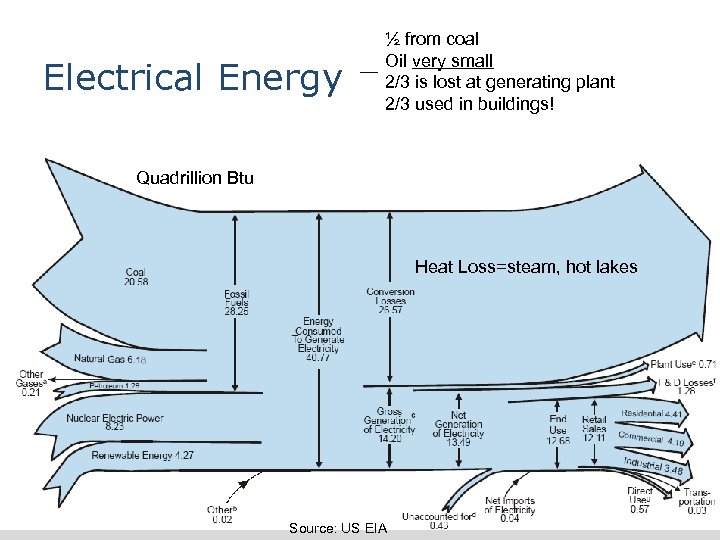
Electrical Energy ½ from coal Oil very small 2/3 is lost at generating plant 2/3 used in buildings! Quadrillion Btu Heat Loss=steam, hot lakes Why Energy Matters: Better Buildings by Design Source: US EIA 21
Buildings, Energy, Pollution § Buildings consume 68% of all electricity § Operation of US buildings § § Energy over $400 Billion in US 750 million tons of CO 2 per year 38% of US total and 9% of global CO 2 production 49% of US total SO 2 Why Energy Matters: Better Buildings by Design 22
Buildings & the Environment § Largest single global industry § Hence, buildings consume resources § § Lots of materials Lots of energy Lots of money Pollute, displace, and destroy habitats § Last a long time: A “durable good” § Running shoe (1 yr), car (10 yr), bldg (100 yr? ) § Hence - more careful long-term design § i. e. societal involvement is justified Why Energy Matters: Better Buildings by Design 23
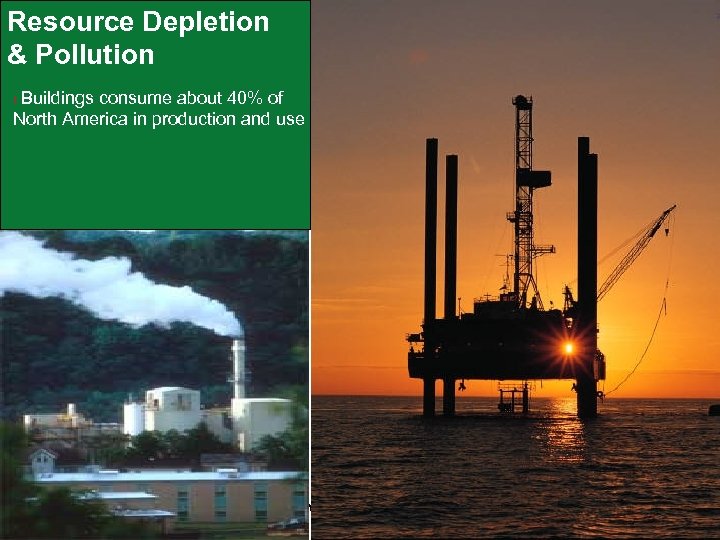
Resource Depletion & Pollution Buildings consume about 40% of North America in production and use l www. Building. Science. com Buildings, Energy, Environment 24/84 No.
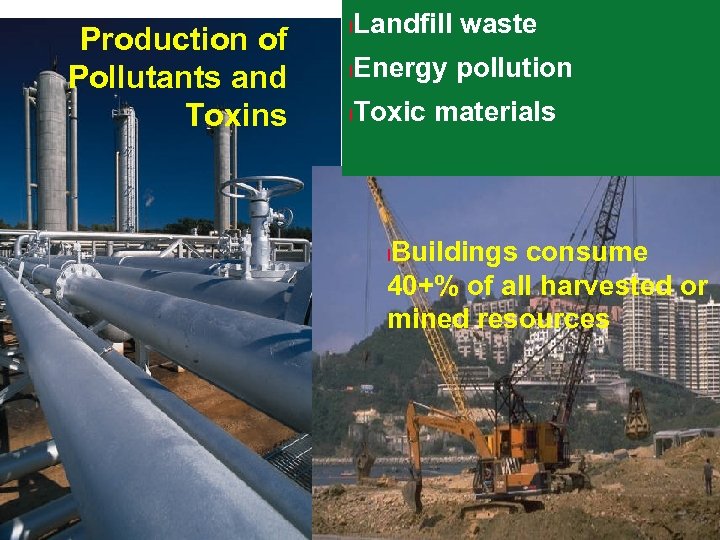
Production of Pollutants and Toxins l Landfill waste l Energy pollution l Toxic materials Buildings consume 40+% of all harvested or mined resources l www. Building. Science. com Buildings, Energy, Environment No. 25/84
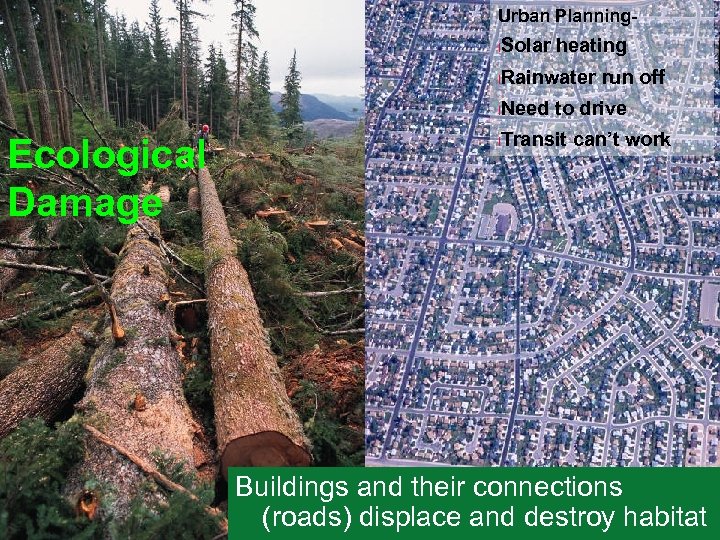
Urban Planning- Solar heating l Rainwater run off l Need to drive l Transit can’t work Ecological Damage l Buildings and their connections 26 Why Energy Matters: Better Buildings by Design www. Building. Science. com (roads) displace and destroy habitat Buildings, Energy, Environment No. 26/84
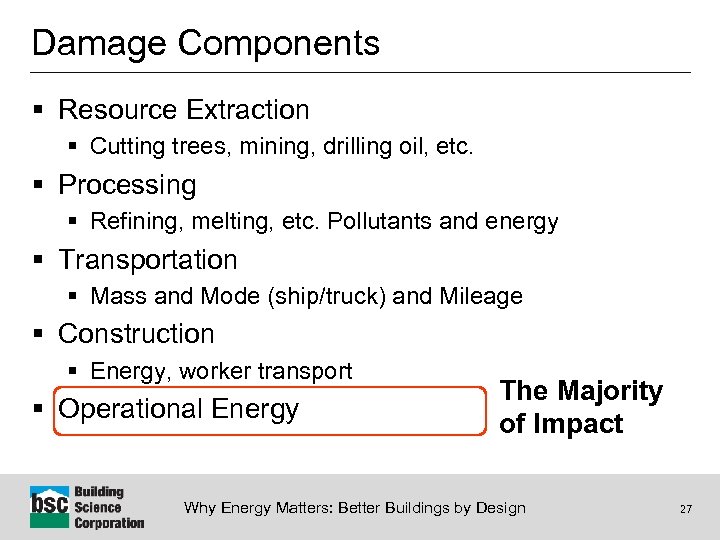
Damage Components § Resource Extraction § Cutting trees, mining, drilling oil, etc. § Processing § Refining, melting, etc. Pollutants and energy § Transportation § Mass and Mode (ship/truck) and Mileage § Construction § Energy, worker transport § Operational Energy The Majority of Impact Why Energy Matters: Better Buildings by Design 27
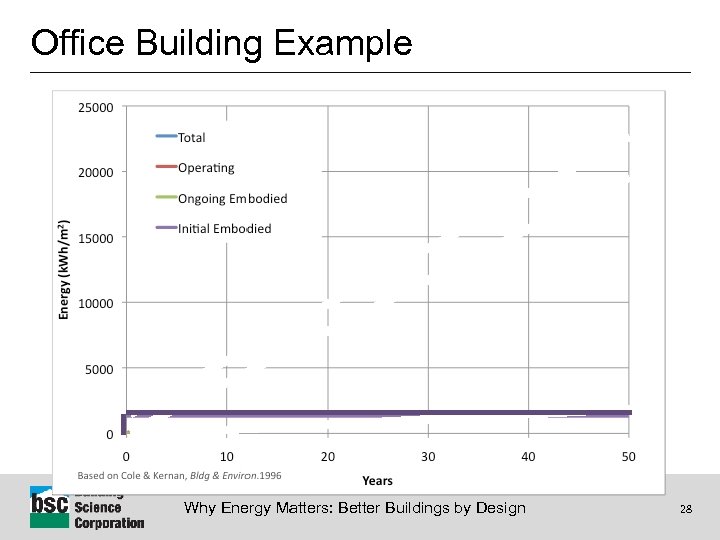
Office Building Example Why Energy Matters: Better Buildings by Design 28
And what about Houses? (Residential) Why Energy Matters: Better Buildings by Design 29
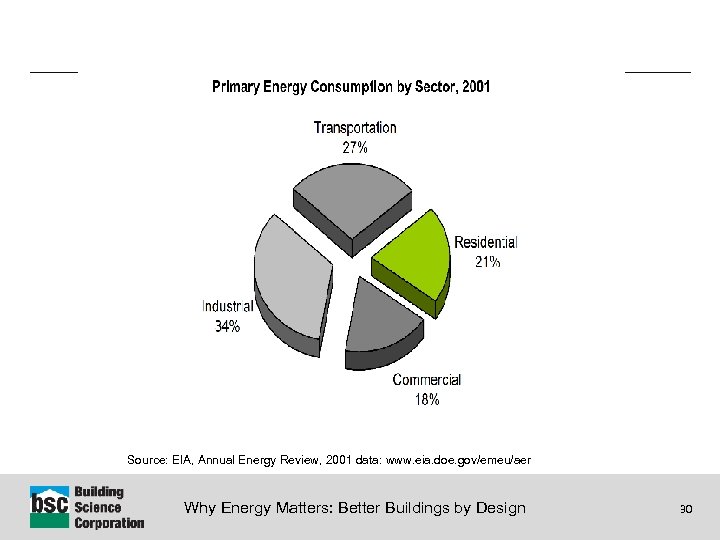
Source: EIA, Annual Energy Review, 2001 data: www. eia. doe. gov/emeu/aer Why Energy Matters: Better Buildings by Design 30
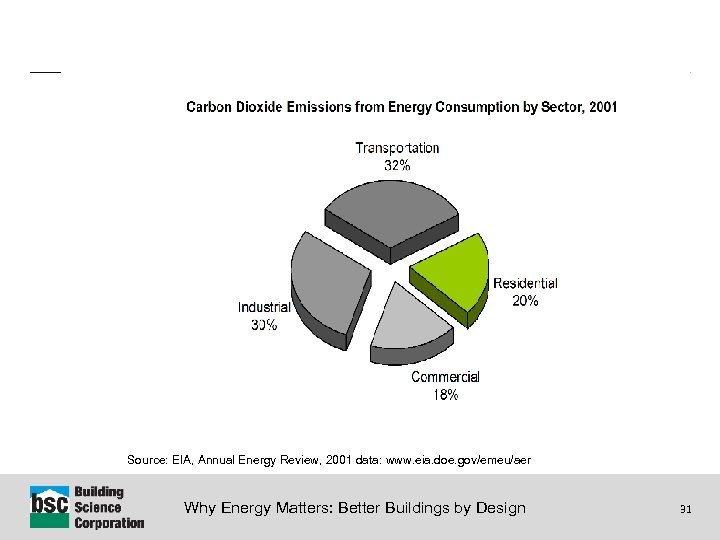
Source: EIA, Annual Energy Review, 2001 data: www. eia. doe. gov/emeu/aer Why Energy Matters: Better Buildings by Design 31
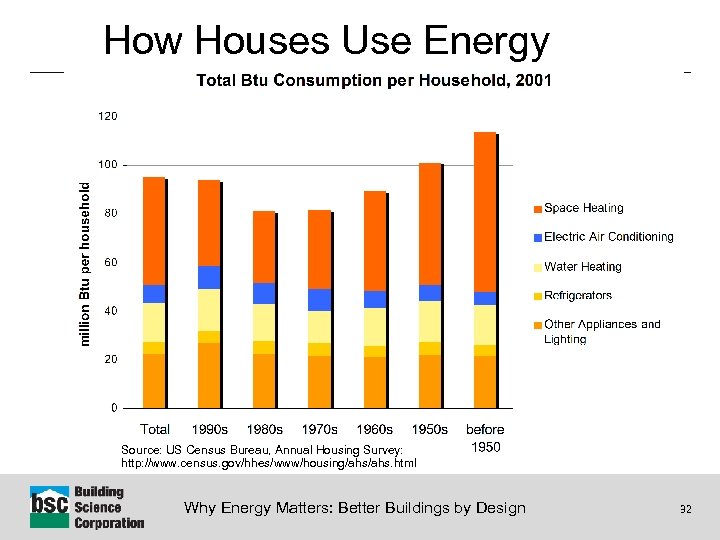
How Houses Use Energy Source: US Census Bureau, Annual Housing Survey: http: //www. census. gov/hhes/www/housing/ahs. html Why Energy Matters: Better Buildings by Design 32
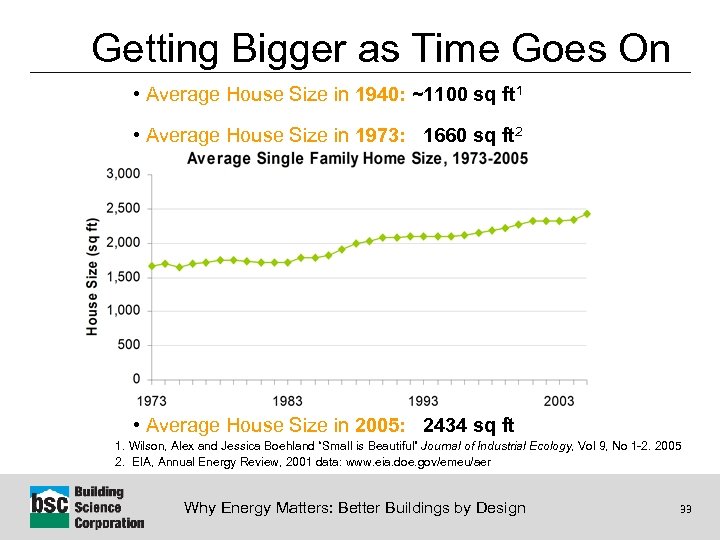
Getting Bigger as Time Goes On • Average House Size in 1940: ~1100 sq ft 1 • Average House Size in 1973: 1660 sq ft 2 • Average House Size in 2005: 2434 sq ft 1. Wilson, Alex and Jessica Boehland “Small is Beautiful” Journal of Industrial Ecology, Vol 9, No 1 -2. 2005 2. EIA, Annual Energy Review, 2001 data: www. eia. doe. gov/emeu/aer Why Energy Matters: Better Buildings by Design 33
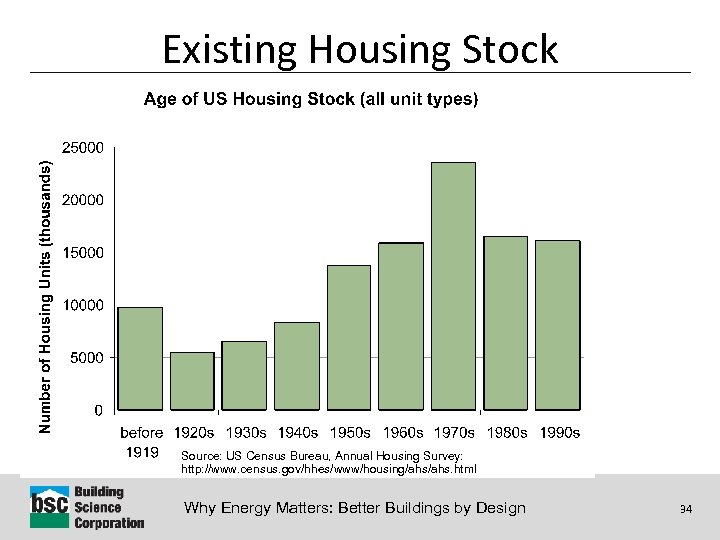
Existing Housing Stock Source: US Census Bureau, Annual Housing Survey: http: //www. census. gov/hhes/www/housing/ahs. html Why Energy Matters: Better Buildings by Design 34
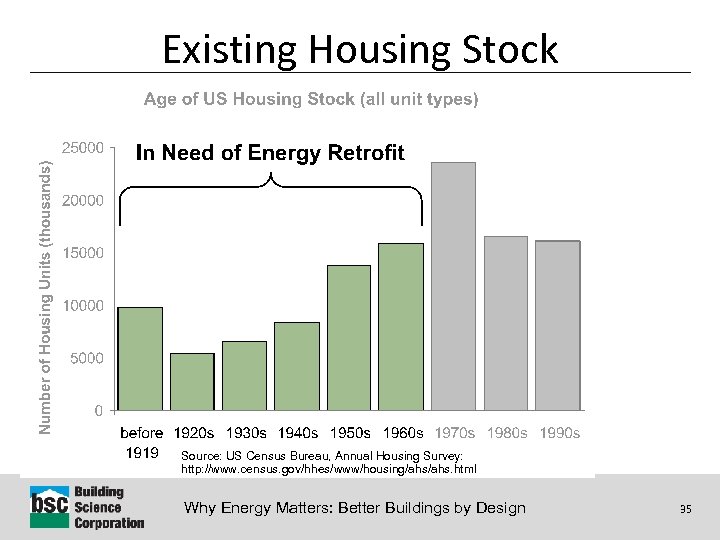
Existing Housing Stock Source: US Census Bureau, Annual Housing Survey: http: //www. census. gov/hhes/www/housing/ahs. html Why Energy Matters: Better Buildings by Design 35
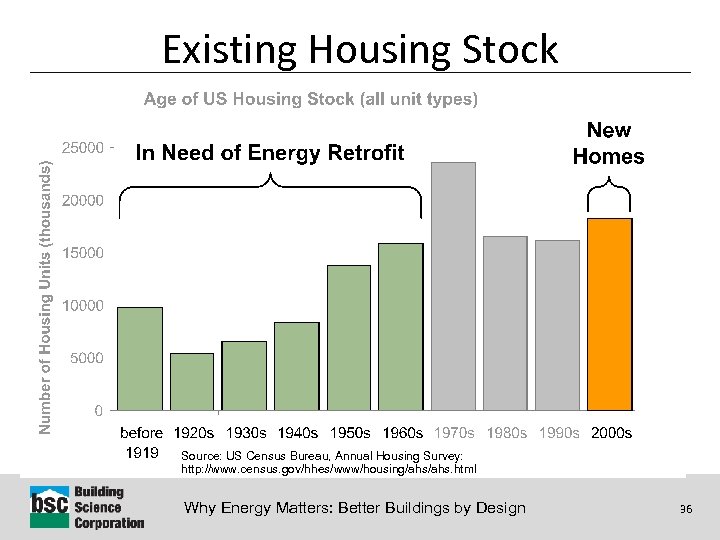
Existing Housing Stock Source: US Census Bureau, Annual Housing Survey: http: //www. census. gov/hhes/www/housing/ahs. html Why Energy Matters: Better Buildings by Design 36
A Bit of History (of building enclosures) Why Energy Matters: Better Buildings by Design 37
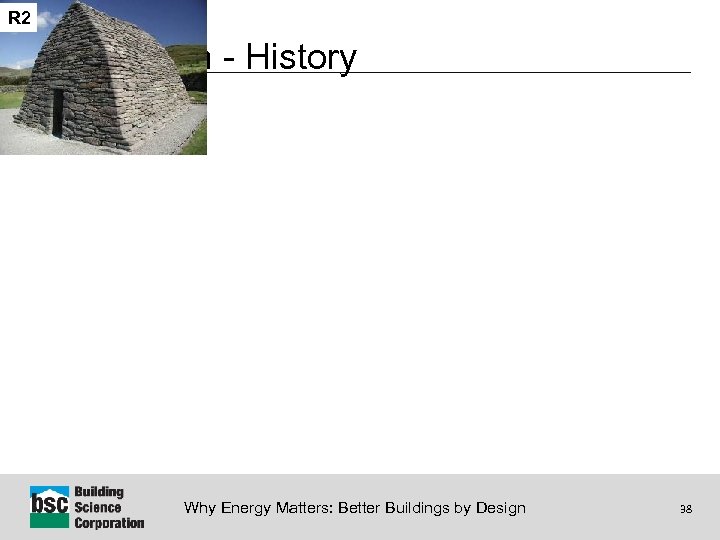
R 2 Insulation - History Why Energy Matters: Better Buildings by Design 38
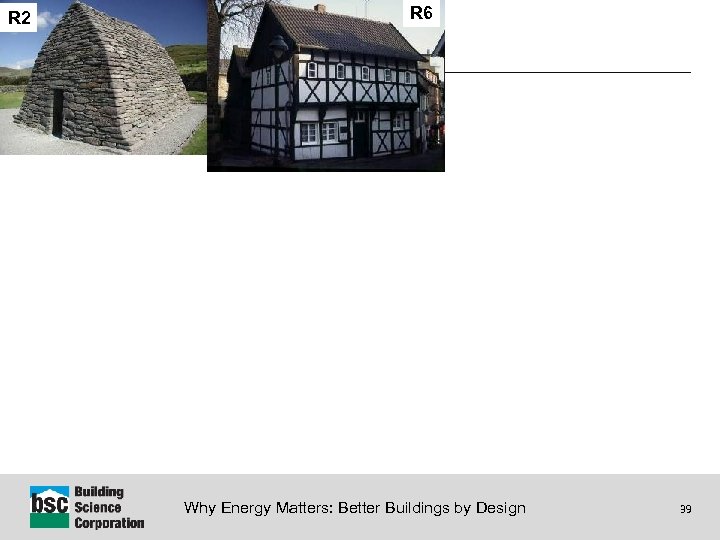
R 6 R 2 Insulation - History Why Energy Matters: Better Buildings by Design 39
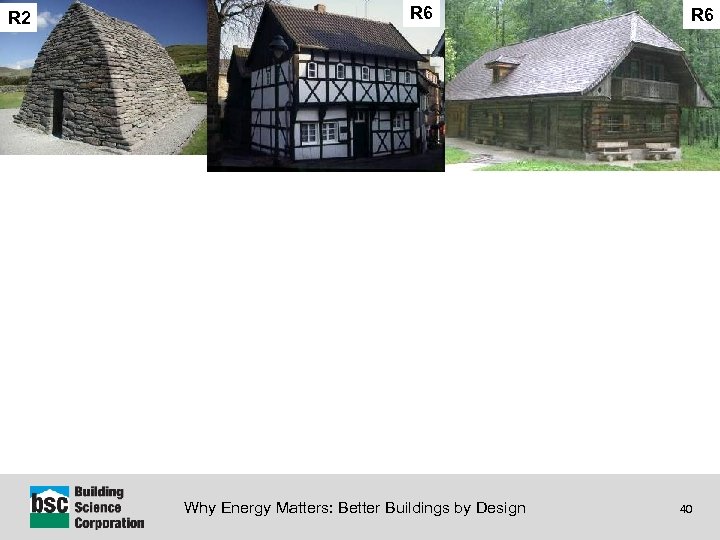
R 6 R 2 R 6 Insulation - History Why Energy Matters: Better Buildings by Design 40
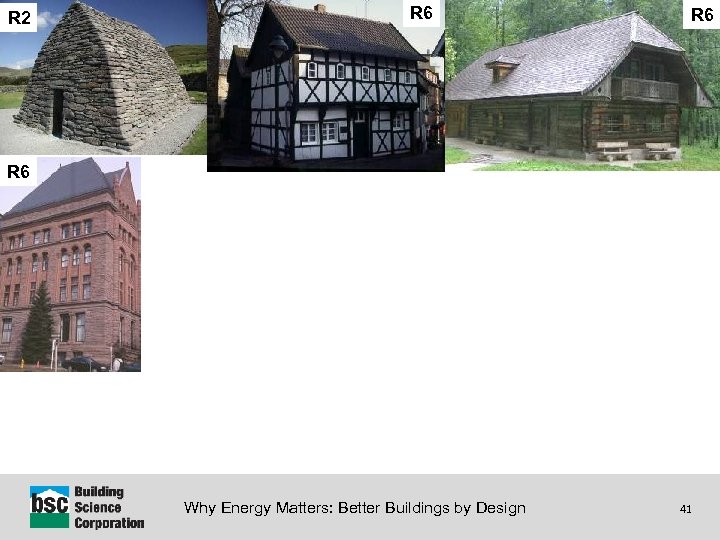
R 6 R 2 R 6 Insulation - History R 6 Why Energy Matters: Better Buildings by Design 41
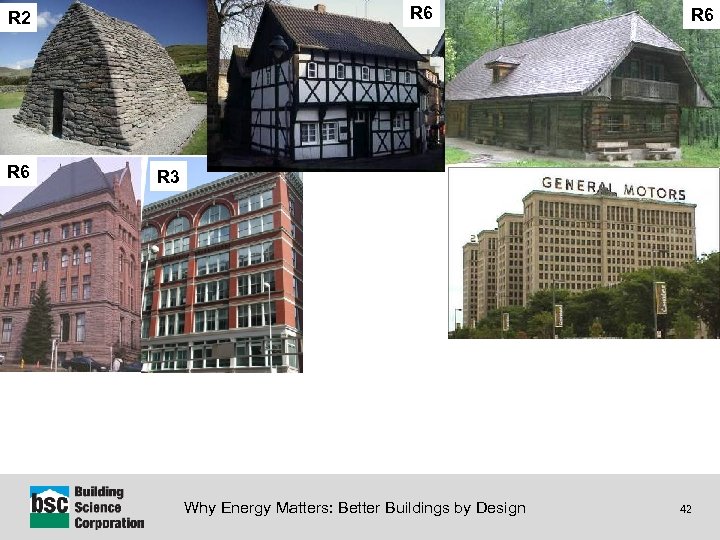
R 6 R 2 R 6 Insulation - History R 6 R 3 4 Why Energy Matters: Better Buildings by Design 42
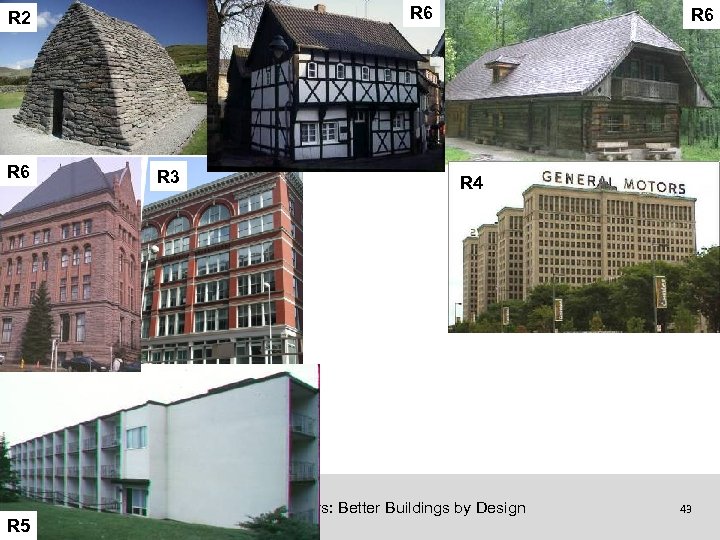
R 6 R 2 R 6 Insulation - History R 6 R 3 R 4 Why Energy Matters: Better Buildings by Design R 5 Building Science 2008 43
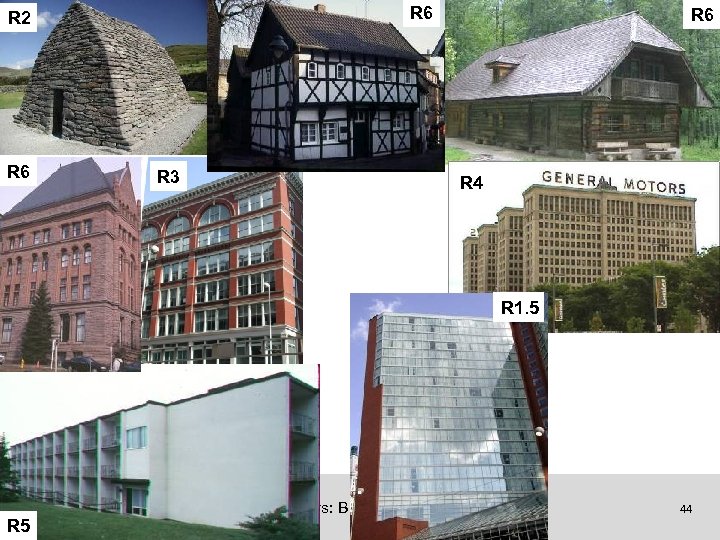
R 6 R 2 R 6 Insulation - History R 6 R 3 R 4 R 1. 5 Why Energy Matters: Better Buildings by Design R 5 Building Science 2008 44
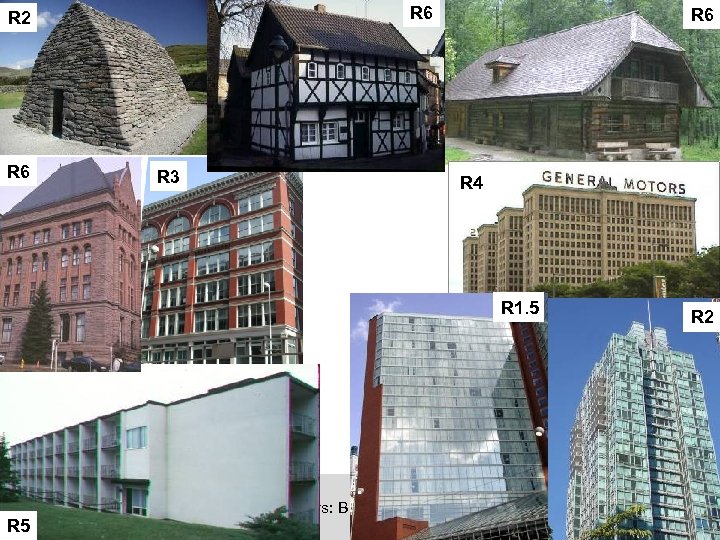
R 6 R 2 R 6 Insulation - History R 6 R 3 R 4 R 1. 5 Why Energy Matters: Better Buildings by Design R 5 Building Science 2008 R 2 45
High R Value Assemblies Why Energy Matters: Better Buildings by Design 46
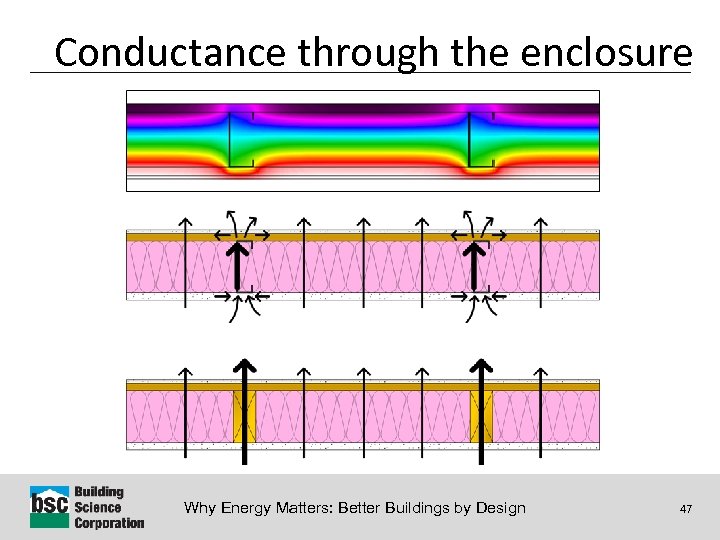
Conductance through the enclosure Resources Why Energy Matters: Better Buildings by Design 47
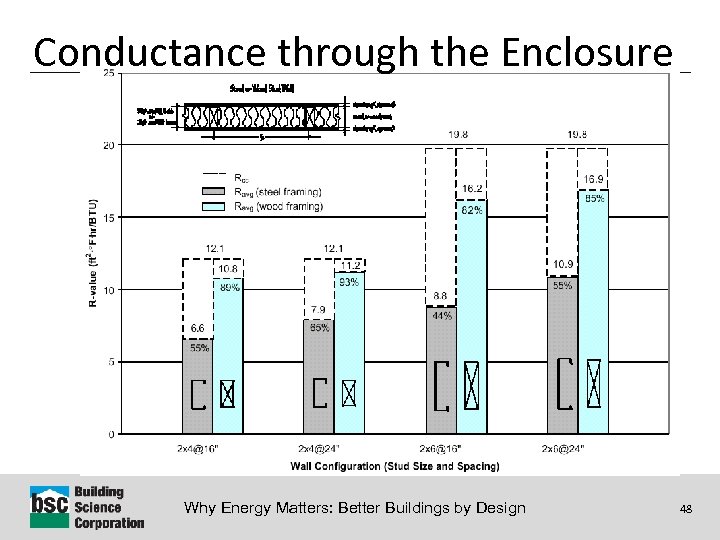
Conductance through the Enclosure Why Energy Matters: Better Buildings by Design 48
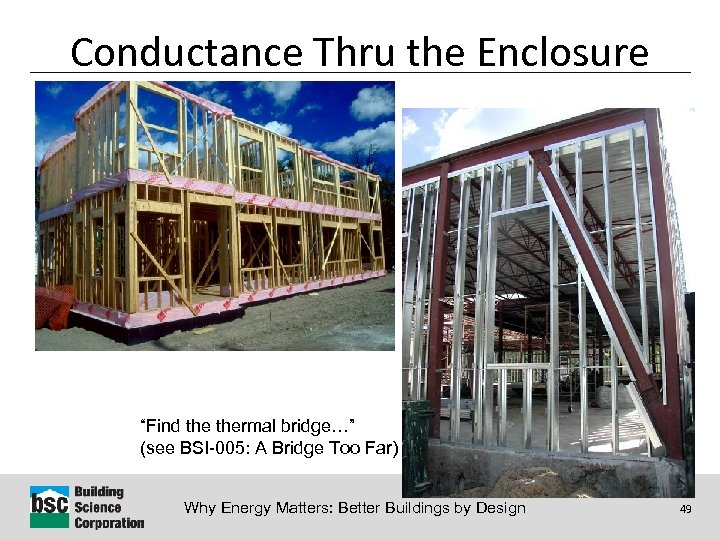
Conductance Thru the Enclosure “Find thermal bridge…” (see BSI-005: A Bridge Too Far) Why Energy Matters: Better Buildings by Design 49
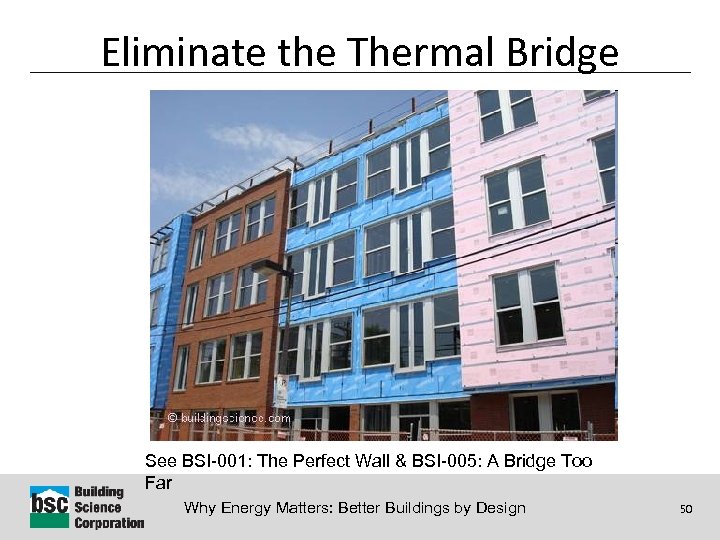
Eliminate the Thermal Bridge See BSI-001: The Perfect Wall & BSI-005: A Bridge Too Far Why Energy Matters: Better Buildings by Design 50
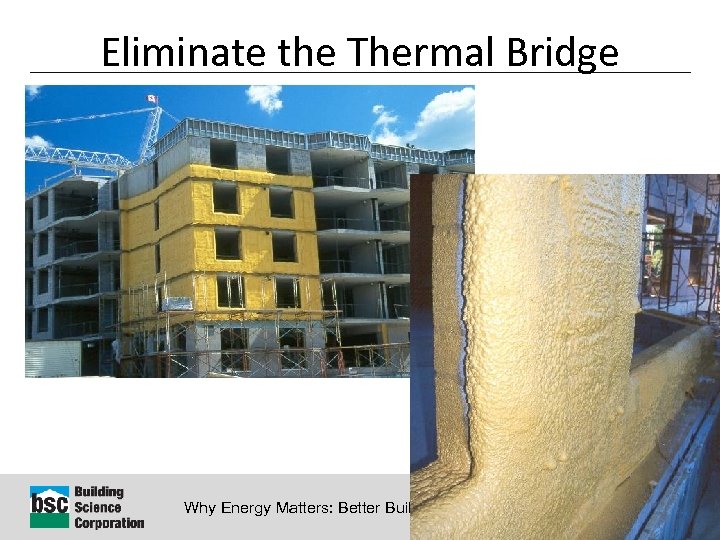
Eliminate the Thermal Bridge Why Energy Matters: Better Buildings by Design 51
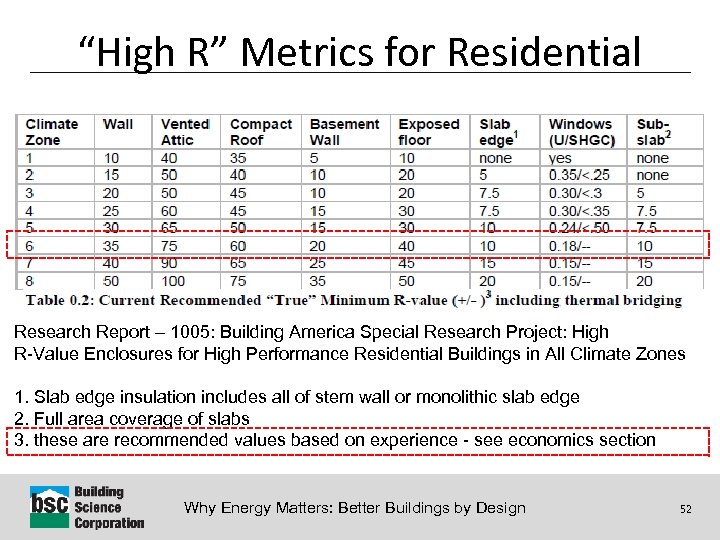
“High R” Metrics for Residential Research Report – 1005: Building America Special Research Project: High R-Value Enclosures for High Performance Residential Buildings in All Climate Zones 1. Slab edge insulation includes all of stem wall or monolithic slab edge 2. Full area coverage of slabs 3. these are recommended values based on experience - see economics section Why Energy Matters: Better Buildings by Design 52
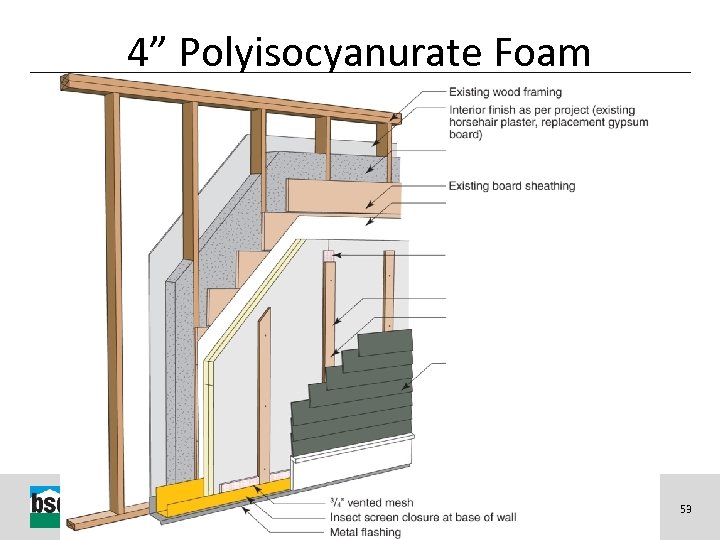
4” Polyisocyanurate Foam Why Energy Matters: Better Buildings by Design 53
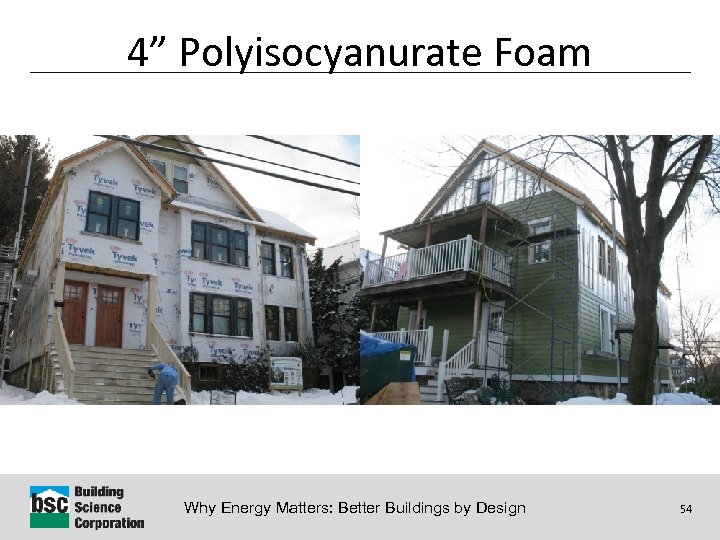
4” Polyisocyanurate Foam Why Energy Matters: Better Buildings by Design 54
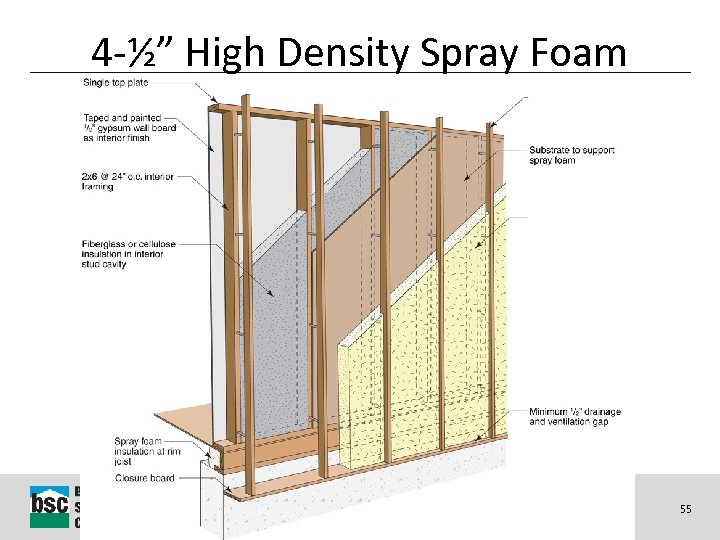
4 -½” High Density Spray Foam Why Energy Matters: Better Buildings by Design 55
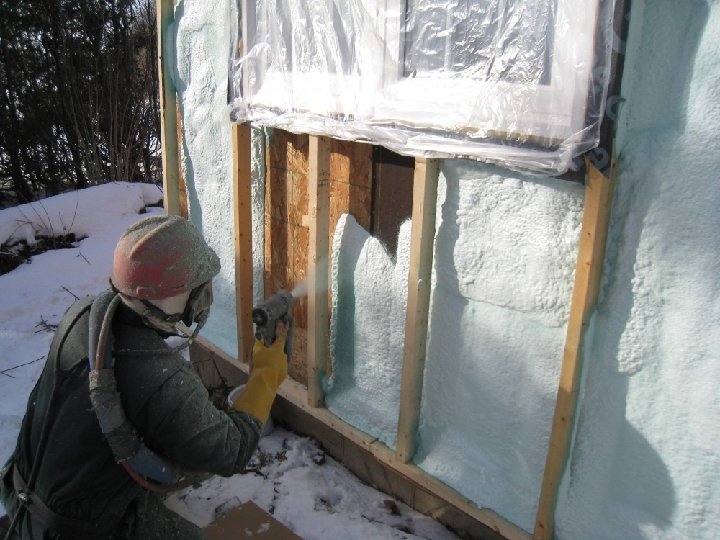
Why Energy Matters: Better Buildings by Design 56
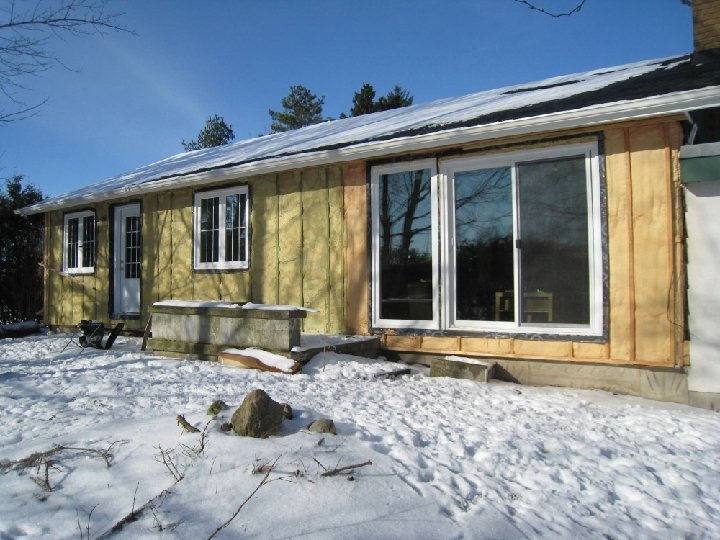
Why Energy Matters: Better Buildings by Design 57
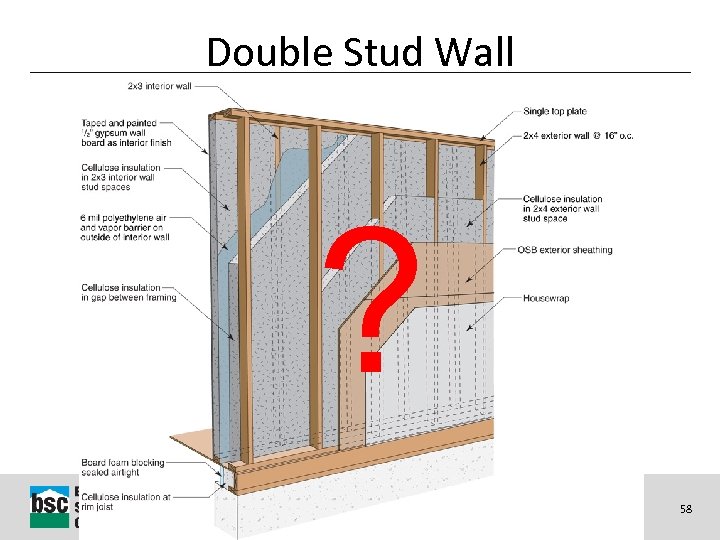
Double Stud Wall ? Why Energy Matters: Better Buildings by Design 58
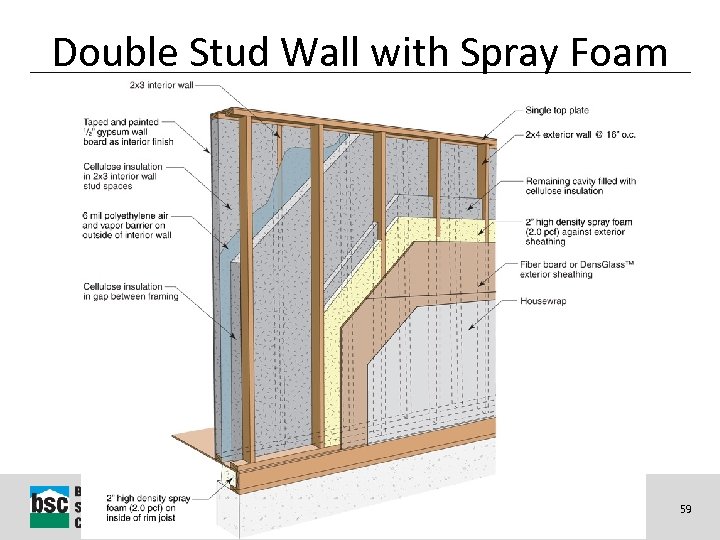
Double Stud Wall with Spray Foam Why Energy Matters: Better Buildings by Design 59
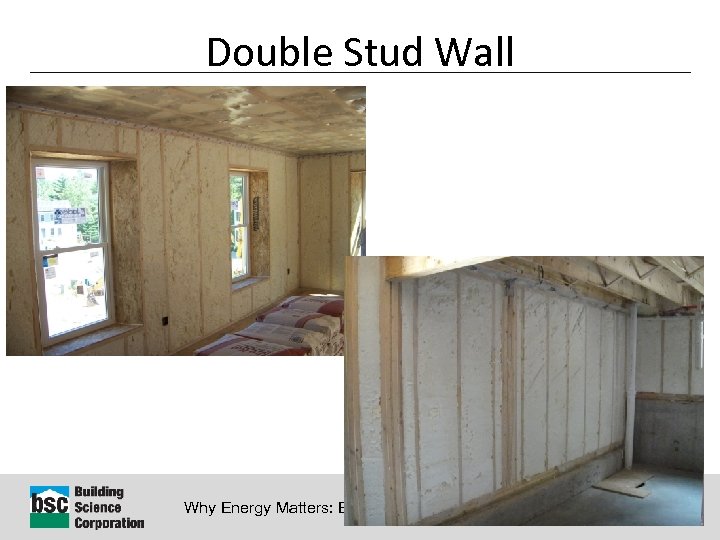
Double Stud Wall Why Energy Matters: Better Buildings by Design 60
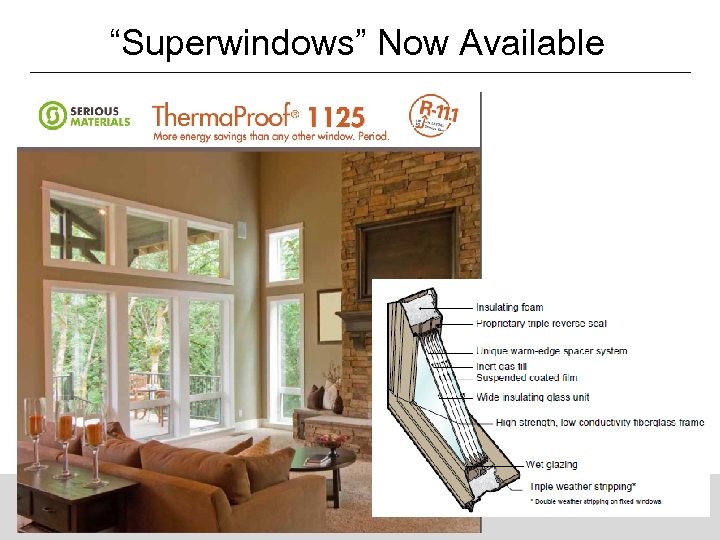
“Superwindows” Now Available Why Energy Matters: Better Buildings by Design 61
Overall “Green” Strategies Why Energy Matters: Better Buildings by Design 62
Green Buildings § Impact the environment less in construction, and operation § Less impact for same function = efficient Why Energy Matters: Better Buildings by Design 63
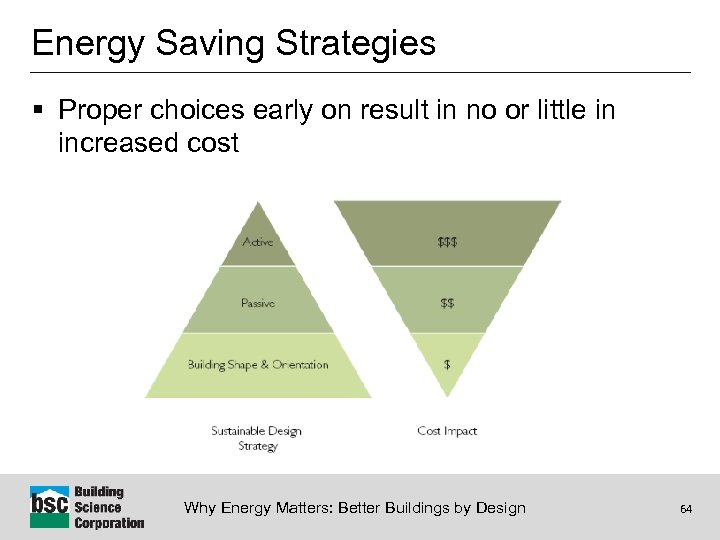
Energy Saving Strategies § Proper choices early on result in no or little in increased cost Why Energy Matters: Better Buildings by Design 64
Green Strategies § 1. Keep it simple (compact) & small, orient to sun § 2. Reduce heat loss and gain § Lots of insulation, avoid thermal bridges (true R-values) § Use very good windows (heat and solar) § Airtight, then control ventilation properly § 3. Avoid energy use § Efficient heating, cooling, lighting, elevators, fans, appliance § Use daylighting, motion sensors, etc. Off=very efficient. § 4. Durable § Moisture control: Drained, airtight, drying capacity § 5. Only then, generate renewable energy § Passive solar then active Why Energy Matters: Better Buildings by Design 65
Energy Metrics Many “green” buildings don’t save energy. Why? They have too "If you glass, they are over-ventilated, they are leaky to air, much can not measure it, you can not improve it. " they are fraught with thermal bridges and they rely on gimmicks. Kelvin (William Thomson) -Lord and fads rather than physics. Joseph W. Lstiburek, Ph. D, P. Eng. , “Prioritizing Green” Why Energy Matters: Better Buildings by Design 66
Real Buildings vs. Models • Any comparison “ 50% vs. compliant house” – Energy Star/HERS – ASHRAE 90. 1 (used in LEED rating) – California Title 24 – Building America Benchmark • Problem: model not capturing complexity or realities of actual building • Occupant effects have huge effect on actual building energy use Why Energy Matters: Better Buildings by Design 67
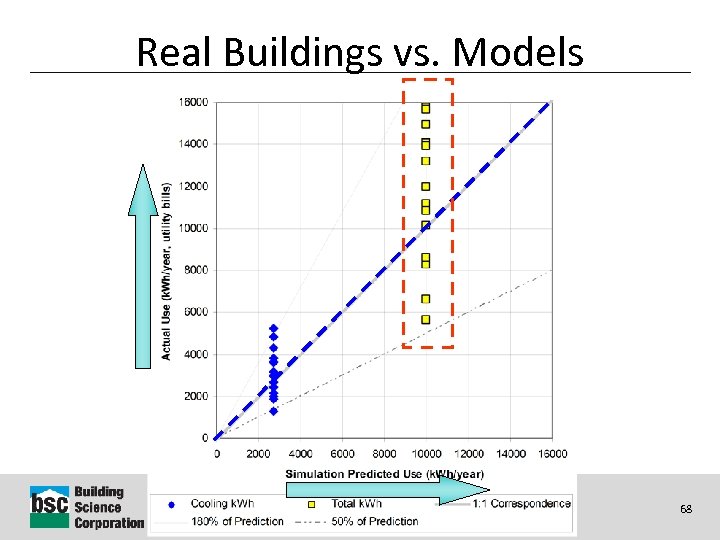
Real Buildings vs. Models Why Energy Matters: Better Buildings by Design 68
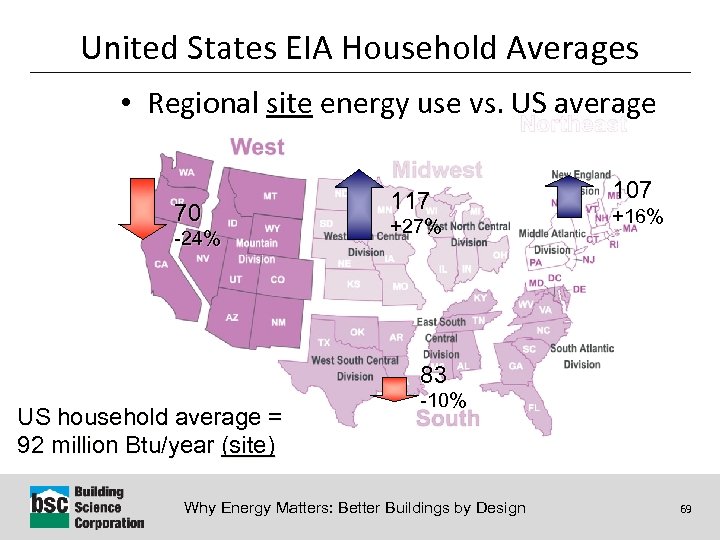
United States EIA Household Averages • Regional site energy use vs. US average 70 -24% 117 +27% 107 +16% 83 US household average = 92 million Btu/year (site) -10% Why Energy Matters: Better Buildings by Design 69
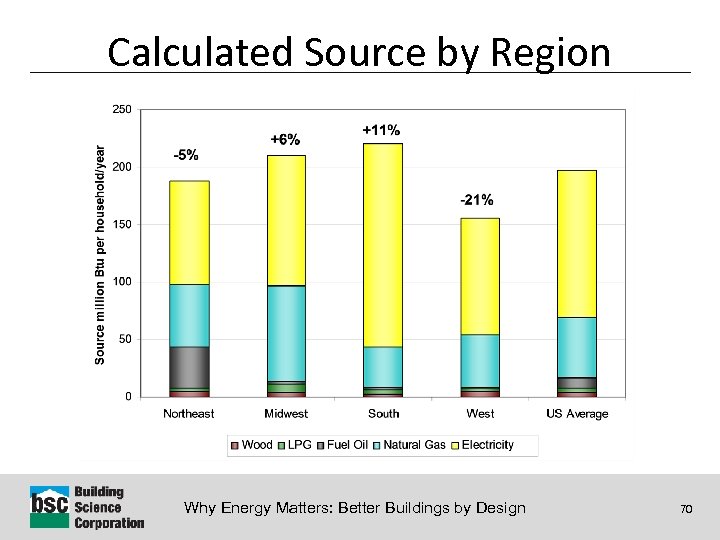
Calculated Source by Region Why Energy Matters: Better Buildings by Design 70
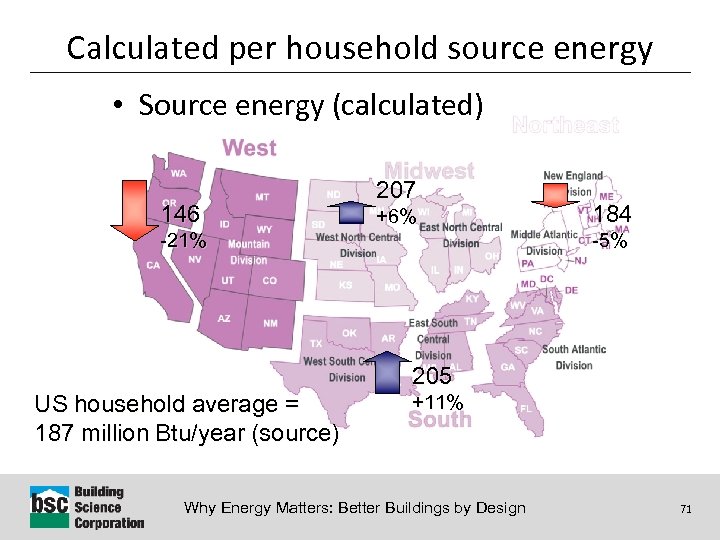
Calculated per household source energy • Source energy (calculated) 146 207 +6% -21% US household average = 187 million Btu/year (source) 184 -5% 205 +11% Why Energy Matters: Better Buildings by Design 71
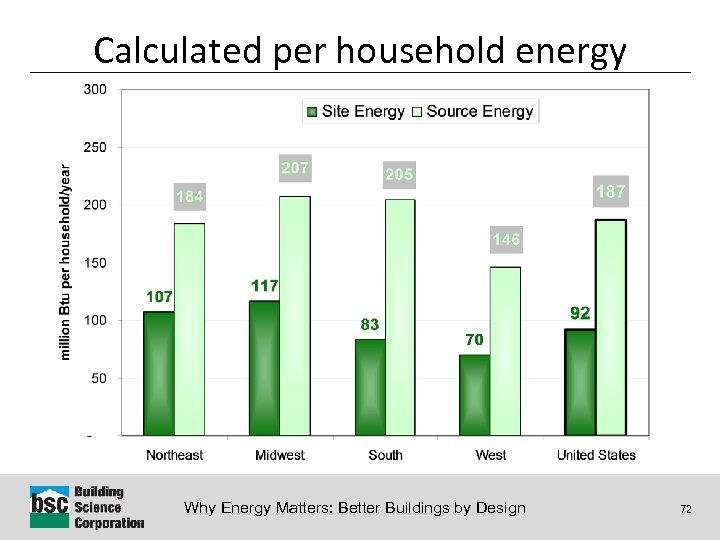
Calculated per household energy Why Energy Matters: Better Buildings by Design 72
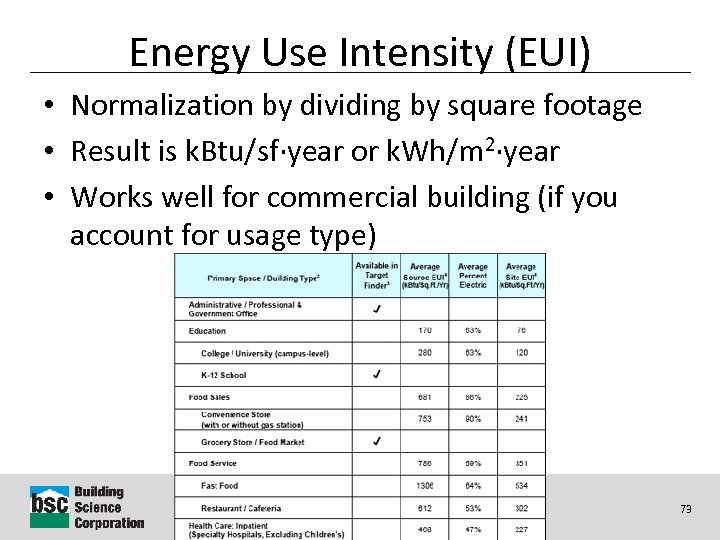
Energy Use Intensity (EUI) • Normalization by dividing by square footage • Result is k. Btu/sf·year or k. Wh/m 2·year • Works well for commercial building (if you account for usage type) Why Energy Matters: Better Buildings by Design 73
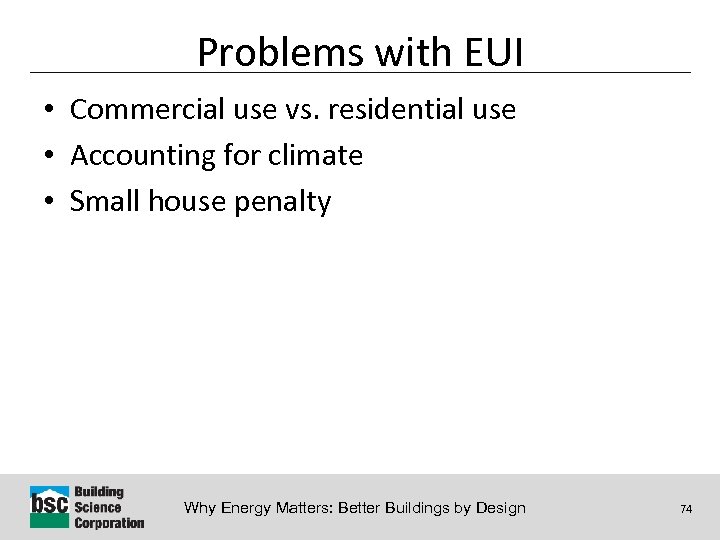
Problems with EUI • Commercial use vs. residential use • Accounting for climate • Small house penalty Why Energy Matters: Better Buildings by Design 74
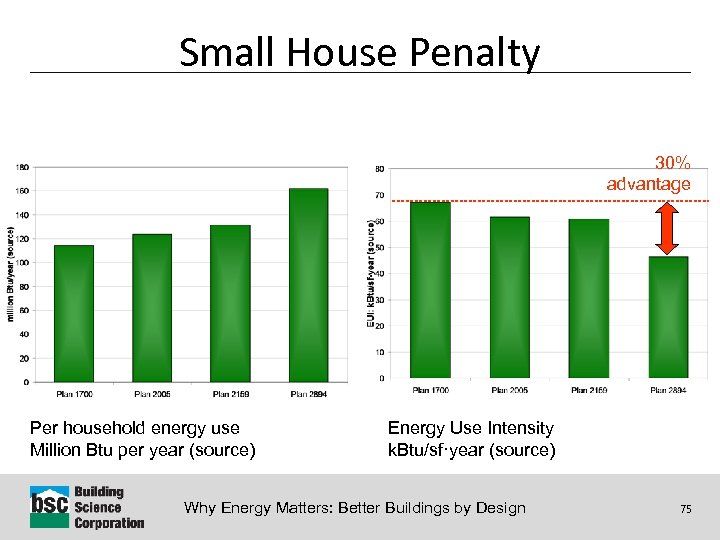
Small House Penalty 30% advantage Per household energy use Million Btu per year (source) Energy Use Intensity k. Btu/sf·year (source) Why Energy Matters: Better Buildings by Design 75
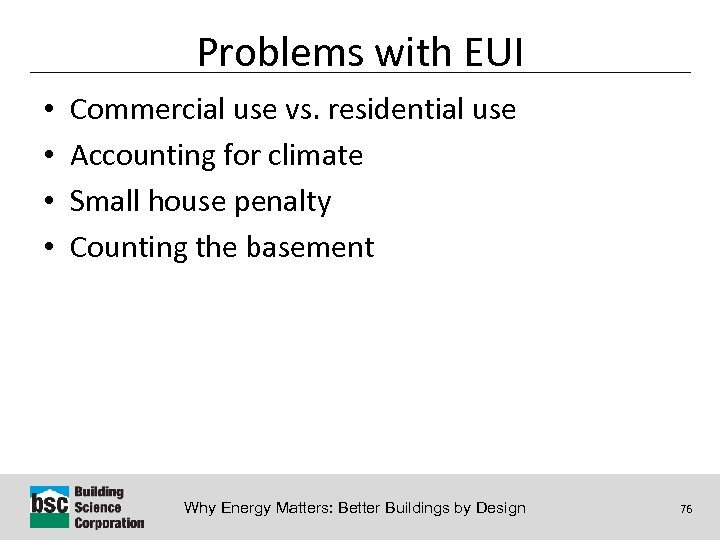
Problems with EUI • • Commercial use vs. residential use Accounting for climate Small house penalty Counting the basement “…the easiest way to reduce a house’s EUI is to finish the basement, and include it in the square footage. ” Why Energy Matters: Better Buildings by Design 76
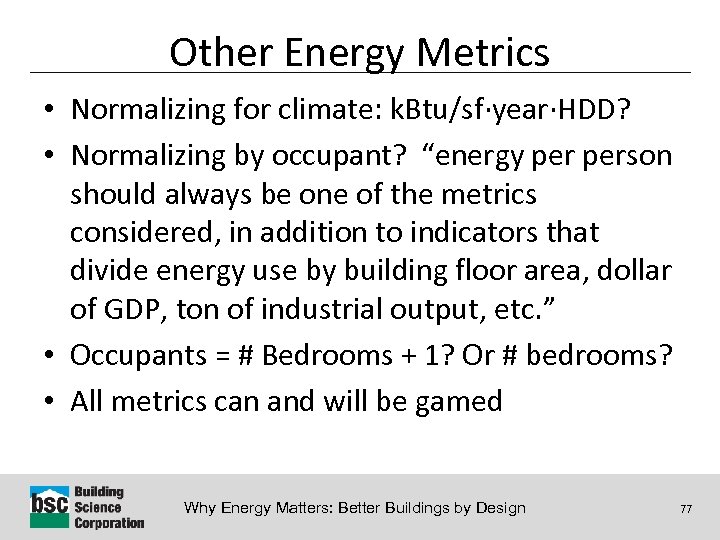
Other Energy Metrics • Normalizing for climate: k. Btu/sf·year·HDD? • Normalizing by occupant? “energy person should always be one of the metrics considered, in addition to indicators that divide energy use by building floor area, dollar of GDP, ton of industrial output, etc. ” • Occupants = # Bedrooms + 1? Or # bedrooms? • All metrics can and will be gamed Why Energy Matters: Better Buildings by Design 77
To Wrap Up… Why Energy Matters: Better Buildings by Design 78
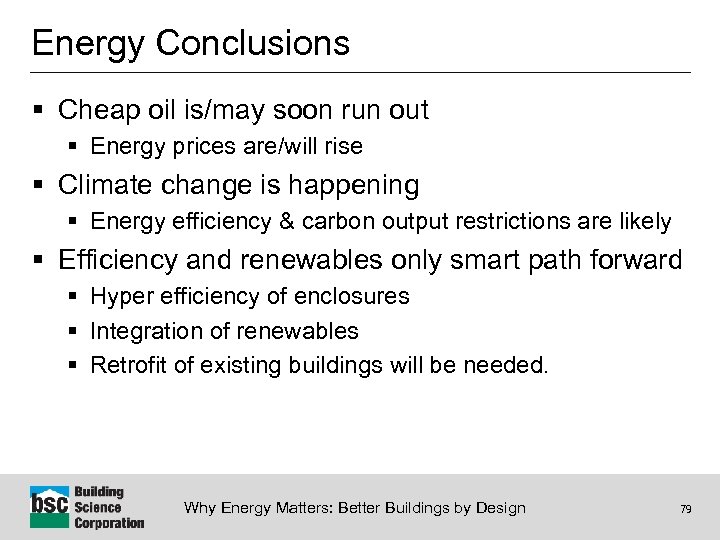
Energy Conclusions § Cheap oil is/may soon run out § Energy prices are/will rise § Climate change is happening § Energy efficiency & carbon output restrictions are likely § Efficiency and renewables only smart path forward § Hyper efficiency of enclosures § Integration of renewables § Retrofit of existing buildings will be needed. Why Energy Matters: Better Buildings by Design 79
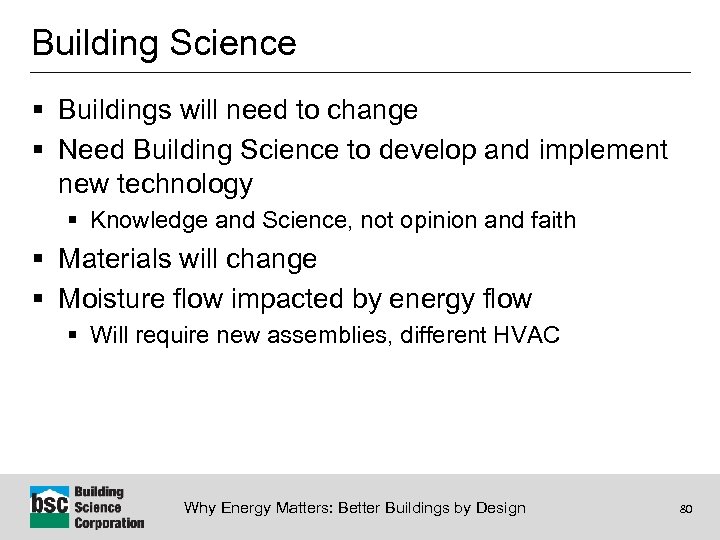
Building Science § Buildings will need to change § Need Building Science to develop and implement new technology § Knowledge and Science, not opinion and faith § Materials will change § Moisture flow impacted by energy flow § Will require new assemblies, different HVAC Why Energy Matters: Better Buildings by Design 80
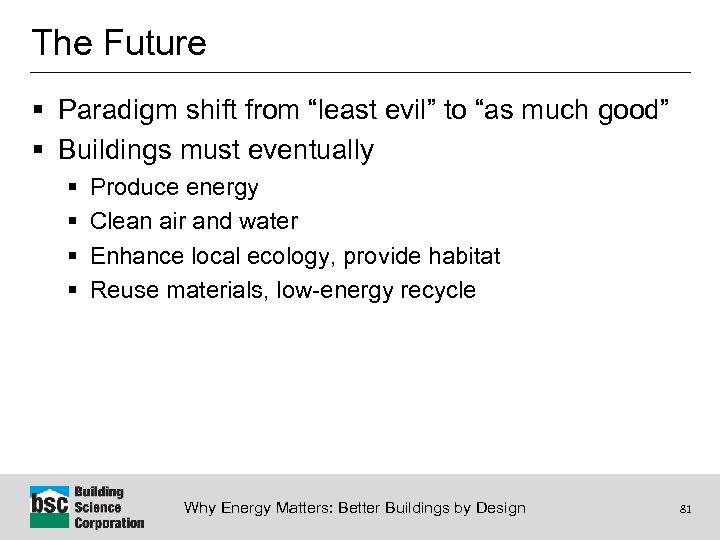
The Future § Paradigm shift from “least evil” to “as much good” § Buildings must eventually § § Produce energy Clean air and water Enhance local ecology, provide habitat Reuse materials, low-energy recycle Why Energy Matters: Better Buildings by Design 81
Resources • • BSD-005: Green Building and Sustainability http: //www. buildingscience. com/documents/digests/bsd-005 -green-building-and-sustainability BSD-011: Thermal Control in Buildings http: //www. buildingscience. com/documents/digests/bsd-011 -thermal-control-in-buildings BSD-007: Historical Development of the Building Enclosure http: //www. buildingscience. com/documents/digests/bsd-007 -historical-development-of-thebuilding-enclosure BSD-151: Understanding Primary/Source and Site Energy http: //www. buildingscience. com/documents/digests/bsd 151 -understanding-primary-sourcesite-energy BSD-152: Building Energy Performance Metrics http: //www. buildingscience. com/documents/digests/bsd 152 -building-energy-performancemetrics RR-1005: Building America Special Research Project: High R-Value Enclosures for High Performance Residential Buildings in All Climate Zones http: //www. buildingscience. com/documents/reports/rr-1005 -building-america-high-r-valuehigh-performance-residential-buildings-all-climate-zones/view? searchterm=high%20 r%20 value BSI-028: Energy Flow Across Enclosures http: //www. buildingscience. com/documents/insights/bsi-028 -energy-flow-across-enclosures Why Energy Matters: Better Buildings by Design 82
Resources • • • High R-Value Wall Assemblies http: //www. buildingscience. com/resources/high-r-value RR-1005: Building America Special Research Project: High R-Value Enclosures for High Performance Residential Buildings in All Climate Zones http: //www. buildingscience. com/documents/reports/rr-1005 -building-america-high-r-valuehigh-performance-residential-buildings-all-climate-zones BSI-001: The Perfect Wall http: //www. buildingscience. com/documents/insights/bsi-001 -the-perfect-wall BSI-005: A Bridge Too Far http: //www. buildingscience. com/documents/insights/bsi-005 -a-bridge-too-far BSI-007: Prioritizing Green—It's the Energy Stupid* http: //www. buildingscience. com/documents/insights/bsi-007 -prioritizing-green-it-s-the-energystupid/ Why Energy Matters: Better Buildings by Design 83
Скачать презентацию John F Straube Kohta Ueno Why Energy Matters
c3150e0f4bafaa912897d9f778b55362.ppt