 Скачать презентацию jobshop scheduling We have a set
0011c6bba56487a58e9c2924b724dbc5.ppt
- Количество слайдов: 73



jobshop scheduling
We have • a set of resources • a set of jobs • a job is a sequence of operations/activities • sequence the activities on the resources
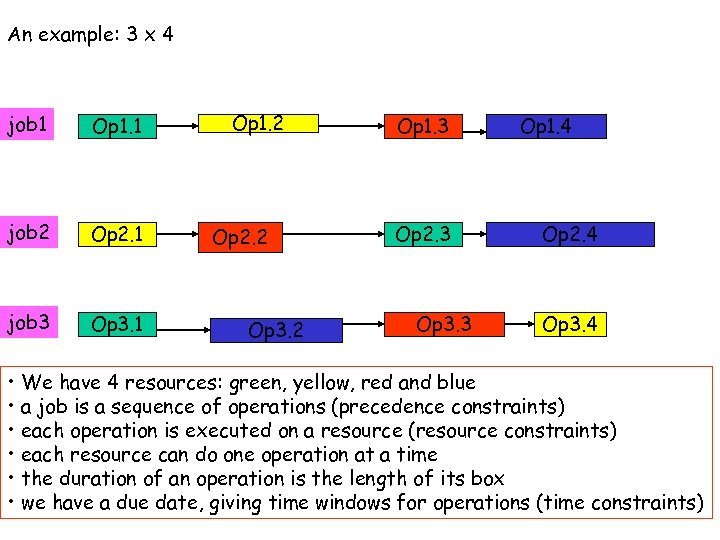
An example: 3 x 4 job 1 Op 1. 1 job 2 Op 2. 1 job 3 Op 3. 1 Op 1. 2 Op 2. 2 Op 3. 2 Op 1. 3 Op 2. 3 Op 3. 3 Op 1. 4 Op 2. 4 Op 3. 4 • We have 4 resources: green, yellow, red and blue • a job is a sequence of operations (precedence constraints) • each operation is executed on a resource (resource constraints) • each resource can do one operation at a time • the duration of an operation is the length of its box • we have a due date, giving time windows for operations (time constraints)
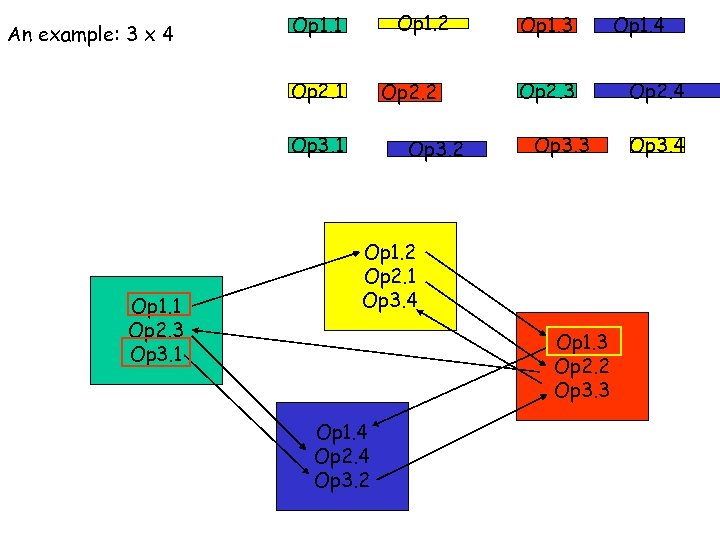
An example: 3 x 4 Op 1. 2 Op 1. 1 Op 2. 2 Op 3. 1 Op 1. 1 Op 2. 3 Op 3. 1 Op 3. 2 Op 1. 3 Op 2. 3 Op 3. 3 Op 1. 2 Op 2. 1 Op 3. 4 Op 1. 3 Op 2. 2 Op 3. 3 Op 1. 4 Op 2. 4 Op 3. 2 Op 1. 4 Op 2. 4 Op 3. 4
The problem Assign a start time to each operation such that (a) no two operations are in process on the same machine at the same time and (b) temporal constraints are respected The problem is NP complete
The problem Alternatively … sequence operations on resources This gives a set of solutions, and might be considered a “least commitment approach”
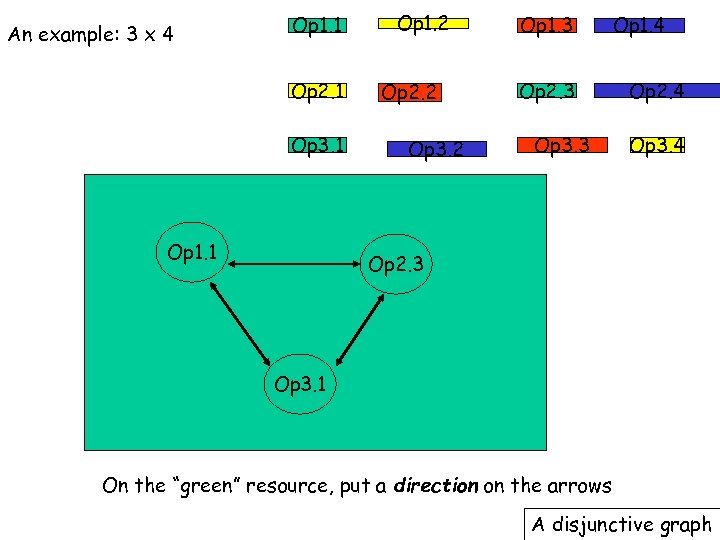
An example: 3 x 4 Op 1. 1 Op 2. 1 Op 3. 1 Op 1. 2 Op 2. 2 Op 3. 2 Op 1. 3 Op 2. 3 Op 3. 3 Op 1. 4 Op 2. 4 Op 3. 4 Op 2. 3 Op 3. 1 On the “green” resource, put a direction on the arrows A disjunctive graph
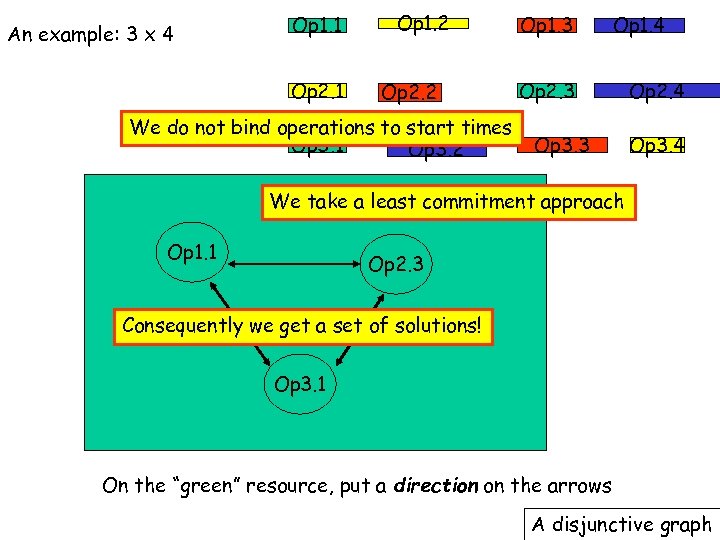
An example: 3 x 4 Op 1. 1 Op 2. 1 Op 1. 2 Op 2. 2 We do not bind operations to start times Op 3. 1 Op 3. 2 Op 1. 3 Op 1. 4 Op 2. 3 Op 3. 3 Op 2. 4 Op 3. 4 We take a least commitment approach Op 1. 1 Op 2. 3 Consequently we get a set of solutions! Op 3. 1 On the “green” resource, put a direction on the arrows A disjunctive graph
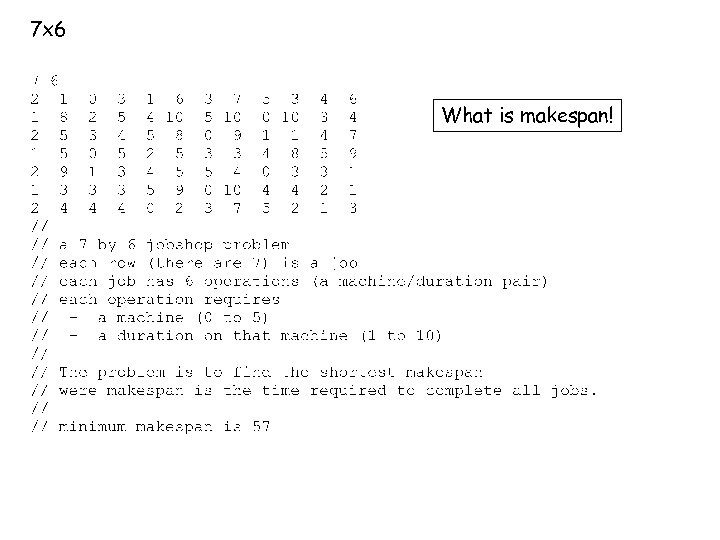
7 x 6 What is makespan!
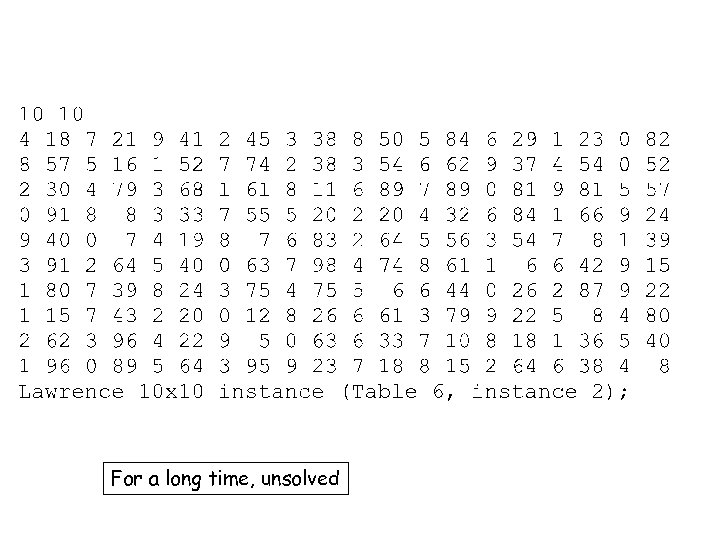
For a long time, unsolved
Why bother? • Minimise makespan • what is makespan? • Maximise start • JIT, minimise inventory levels • minimise idle time on resources • maximise ROI • . . .
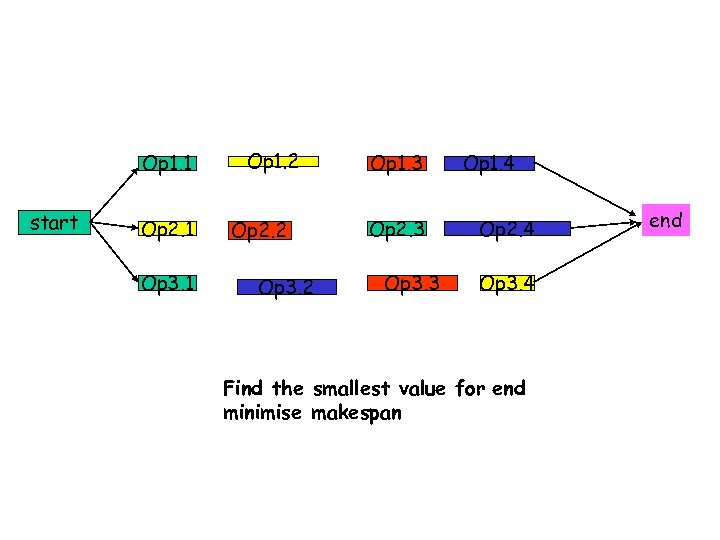
Op 1. 1 start Op 2. 1 Op 3. 1 Op 1. 2 Op 2. 2 Op 3. 2 Op 1. 3 Op 2. 3 Op 3. 3 Op 1. 4 Op 2. 4 Op 3. 4 Find the smallest value for end minimise makespan end
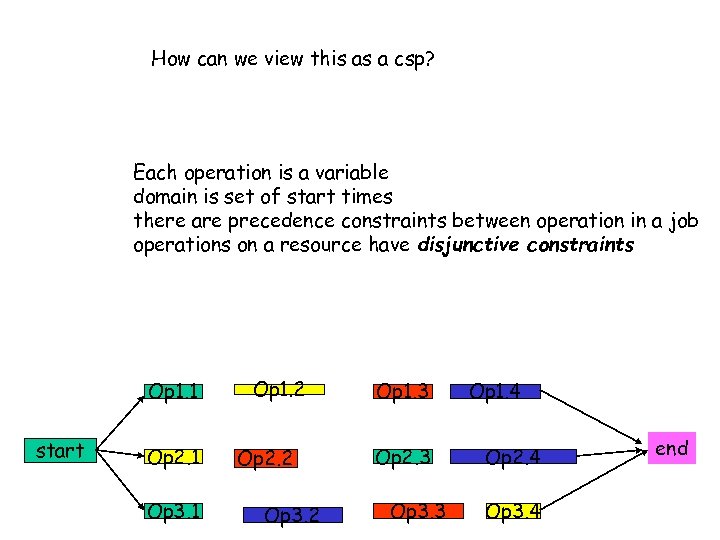
How can we view this as a csp? Each operation is a variable domain is set of start times there are precedence constraints between operation in a job operations on a resource have disjunctive constraints Op 1. 1 start Op 2. 1 Op 3. 1 Op 1. 2 Op 2. 2 Op 3. 2 Op 1. 3 Op 2. 3 Op 3. 3 Op 1. 4 Op 2. 4 Op 3. 4 end
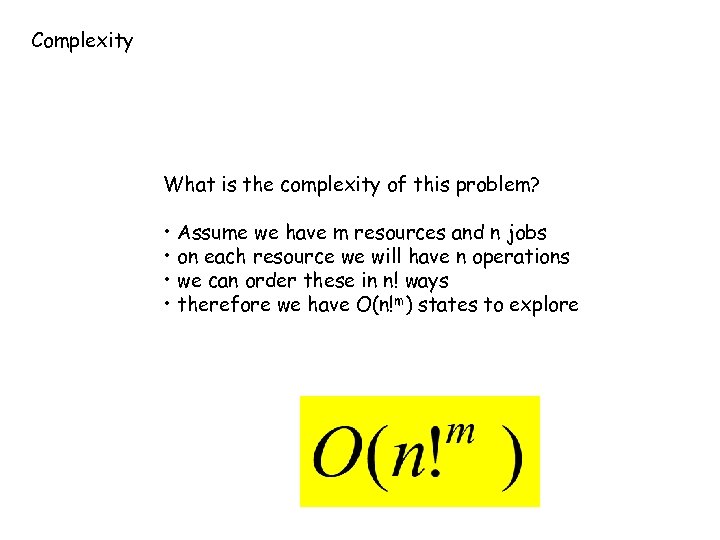
Complexity What is the complexity of this problem? • Assume we have m resources and n jobs • on each resource we will have n operations • we can order these in n! ways • therefore we have O(n!m) states to explore
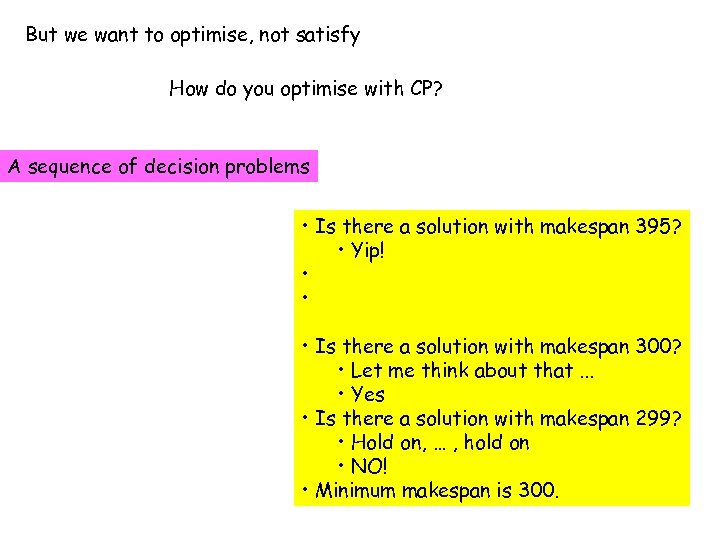
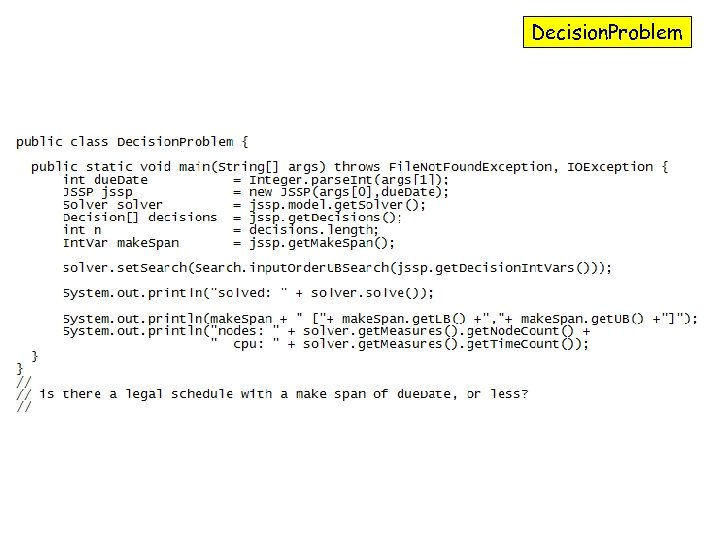
But we want to optimise, not satisfy How do you optimise with CP? A sequence of decision problems • Is there a solution with makespan 395? • Yip! • • • Is there a solution with makespan 300? • Let me think about that. . . • Yes • Is there a solution with makespan 299? • Hold on, … , hold on • NO! • Minimum makespan is 300.
When optimising, via a sequence of decision problems, will all decisions be equally difficult to answer? What does branch and bound (Bn. B) do ?
Who cares about jobshop scheduling? Manufacturing inc.
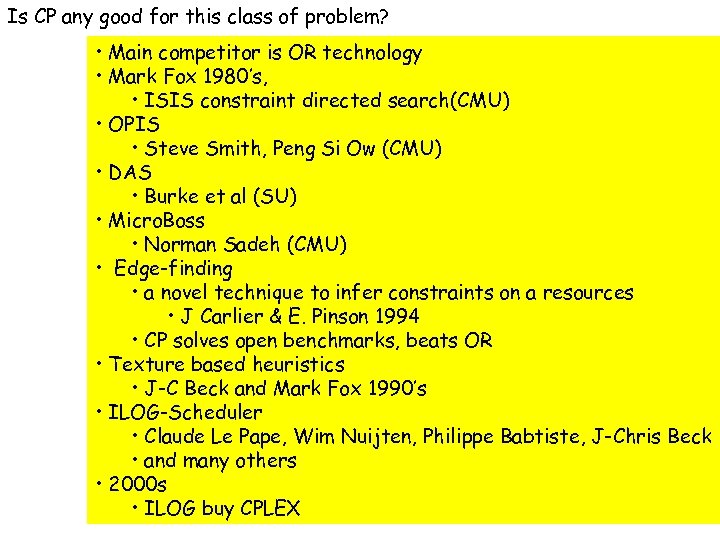
Is CP any good for this class of problem? • Main competitor is OR technology • Mark Fox 1980’s, • ISIS constraint directed search(CMU) • OPIS • Steve Smith, Peng Si Ow (CMU) • DAS • Burke et al (SU) • Micro. Boss • Norman Sadeh (CMU) • Edge-finding • a novel technique to infer constraints on a resources • J Carlier & E. Pinson 1994 • CP solves open benchmarks, beats OR • Texture based heuristics • J-C Beck and Mark Fox 1990’s • ILOG-Scheduler • Claude Le Pape, Wim Nuijten, Philippe Babtiste, J-Chris Beck • and many others • 2000 s • ILOG buy CPLEX
Is CP any good for this class of problem? • 2000 • ILOG buy CPLEX • . . . • 2009 • P. Vilim, edge-finding filtering • 2010 • IBM buy ILOG

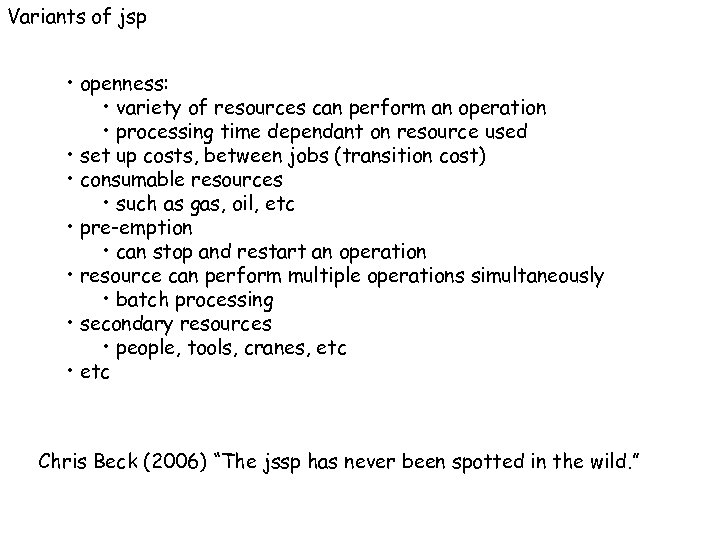
Variants of jsp • openness: • variety of resources can perform an operation • processing time dependant on resource used • set up costs, between jobs (transition cost) • consumable resources • such as gas, oil, etc • pre-emption • can stop and restart an operation • resource can perform multiple operations simultaneously • batch processing • secondary resources • people, tools, cranes, etc • etc Chris Beck (2006) “The jssp has never been spotted in the wild. ”
Why might CP be technology of choice for scheduling? • can model rich real-world problems • addition of side constraints etc • incorporate domain knowledge • in the form of variable and value ordering heuristics • powerful reasoning/inference allied to novel search techniques We can get a solution up and running quickly
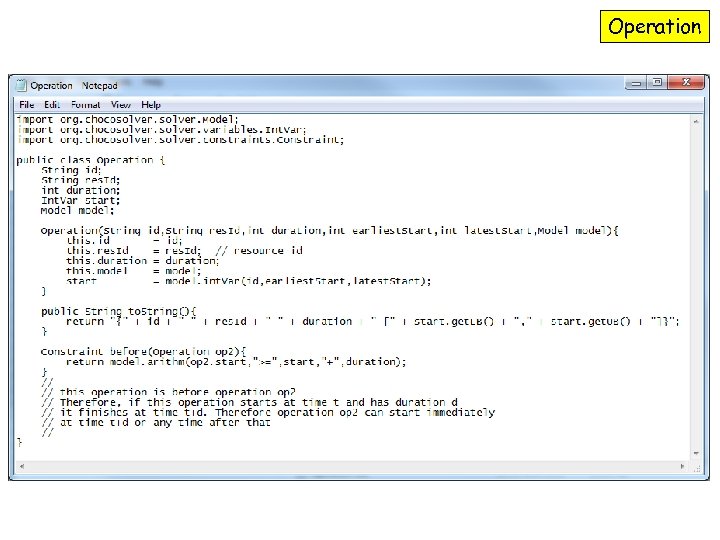
Operation
Operation
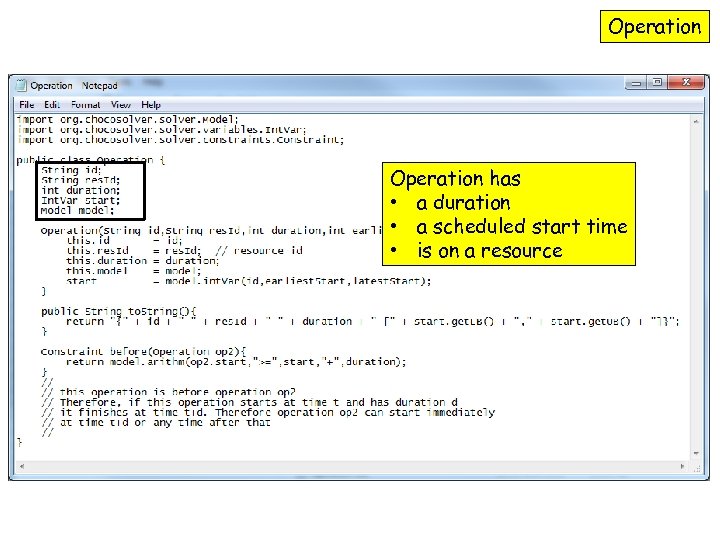
Operation has • a duration • a scheduled start time • is on a resource
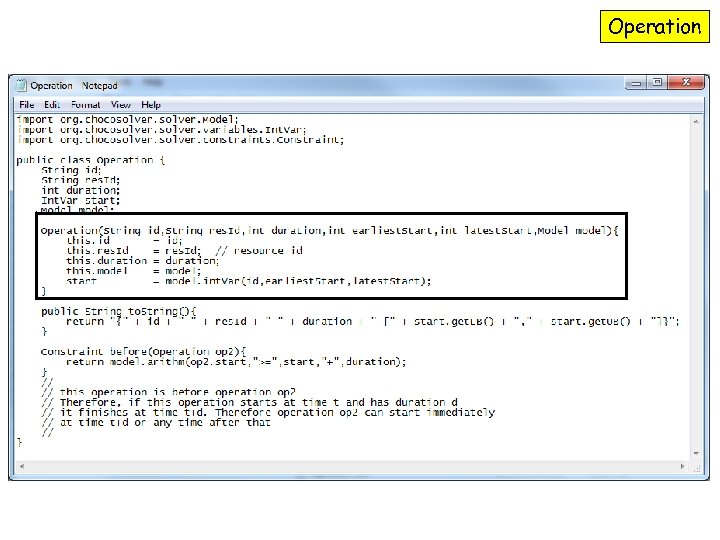
Operation
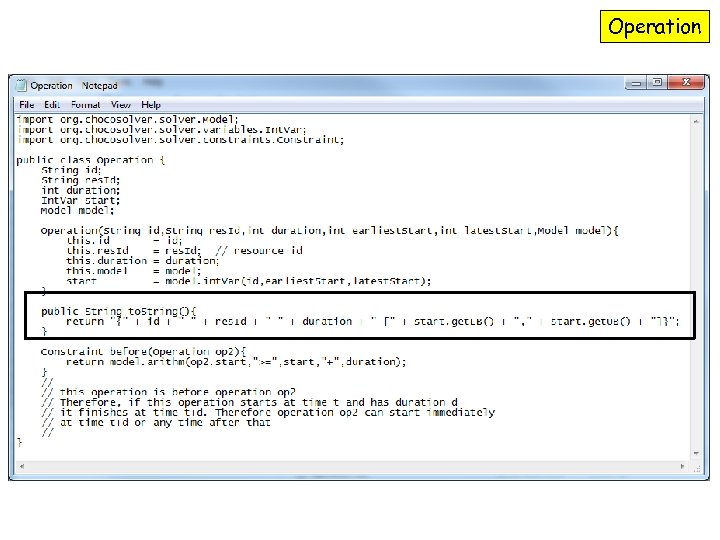
Operation
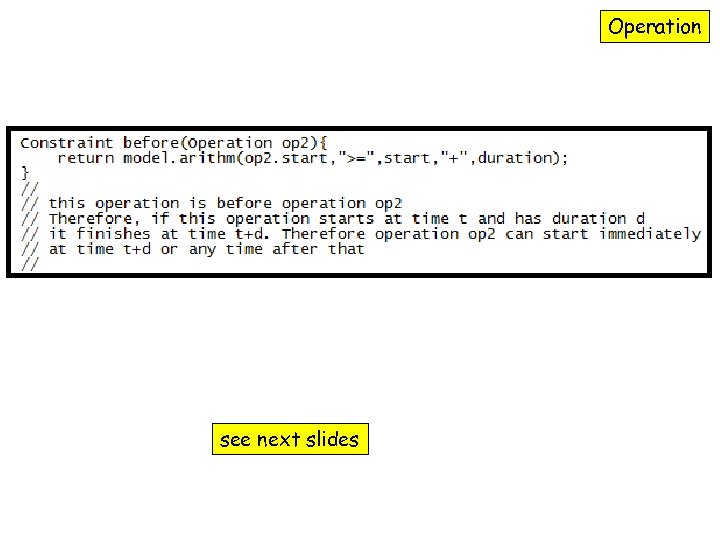
Operation see next slides
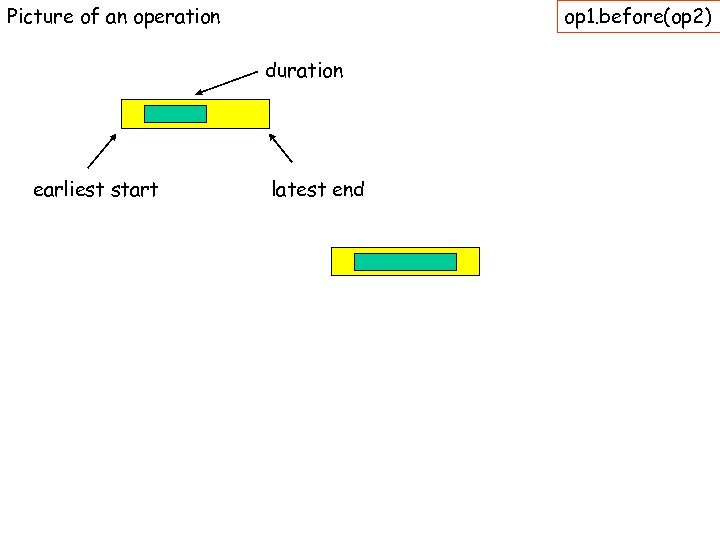
Picture of an operation op 1. before(op 2) duration earliest start latest end
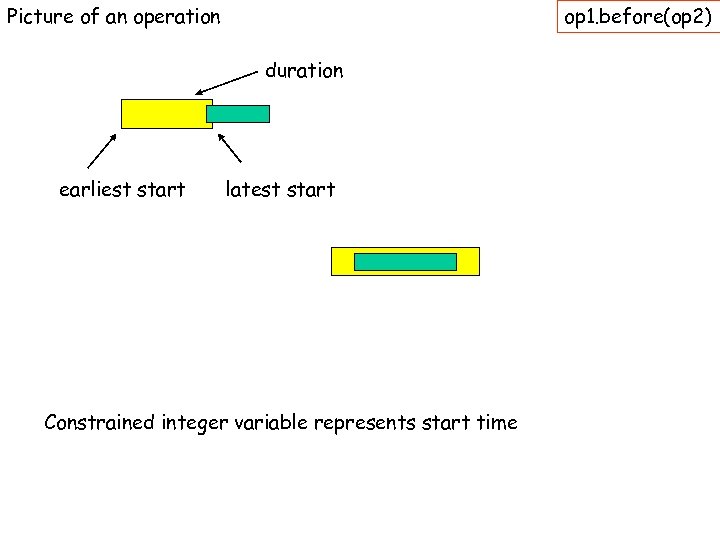
Picture of an operation op 1. before(op 2) duration earliest start latest start Constrained integer variable represents start time
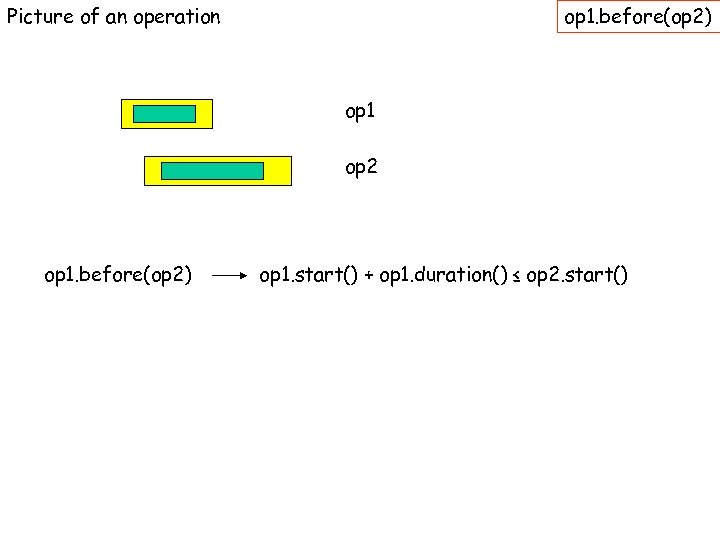
Picture of an operation op 1. before(op 2) op 1 op 2 op 1. before(op 2) op 1. start() + op 1. duration() ≤ op 2. start()
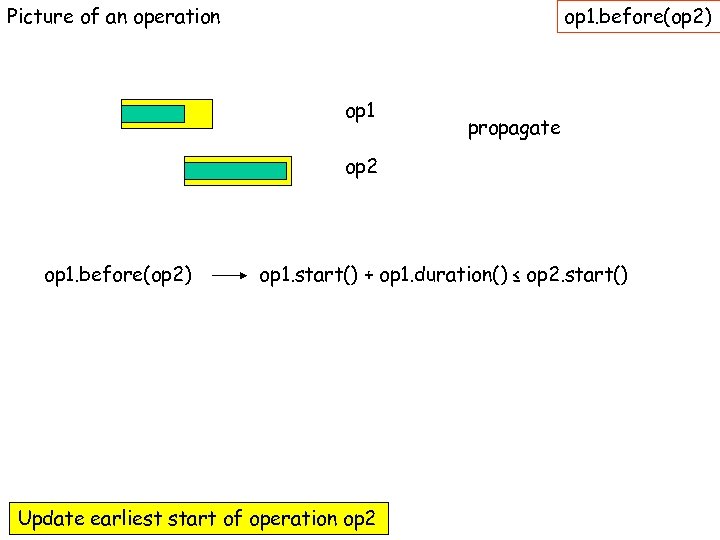
Picture of an operation op 1. before(op 2) op 1 propagate op 2 op 1. before(op 2) op 1. start() + op 1. duration() ≤ op 2. start() Update earliest start of operation op 2
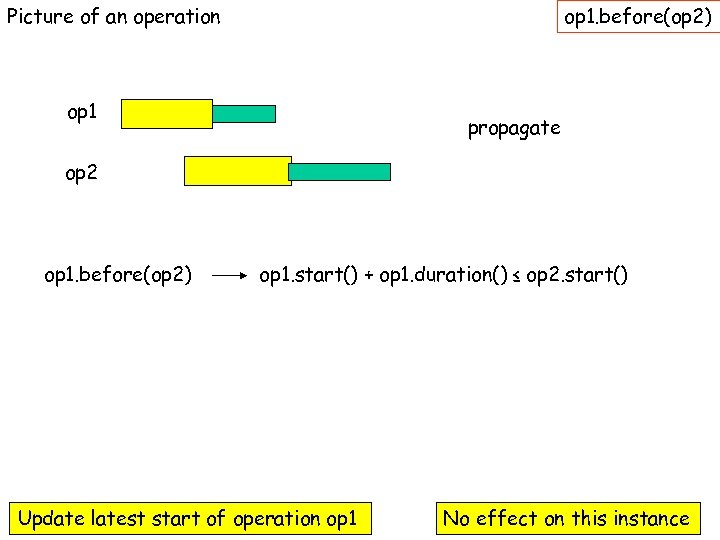
Picture of an operation op 1. before(op 2) op 1 propagate op 2 op 1. before(op 2) op 1. start() + op 1. duration() ≤ op 2. start() Update latest start of operation op 1 No effect on this instance
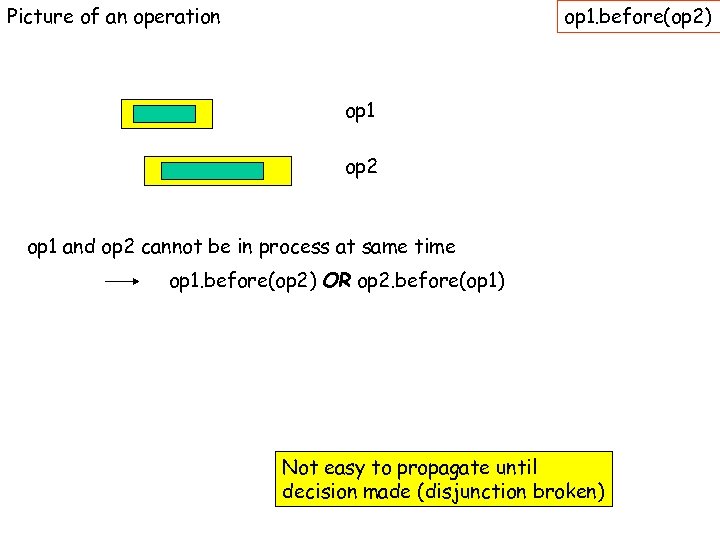
Picture of an operation op 1. before(op 2) op 1 op 2 op 1 and op 2 cannot be in process at same time op 1. before(op 2) OR op 2. before(op 1) Not easy to propagate until decision made (disjunction broken)

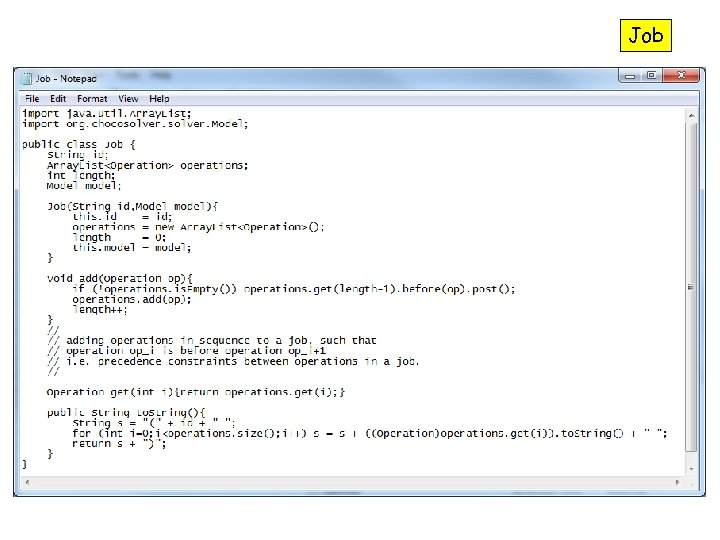
Job
Job
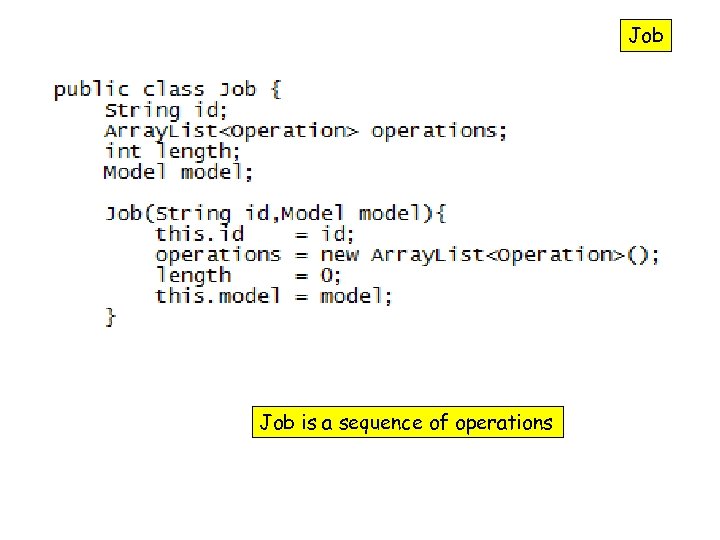
Job is a sequence of operations
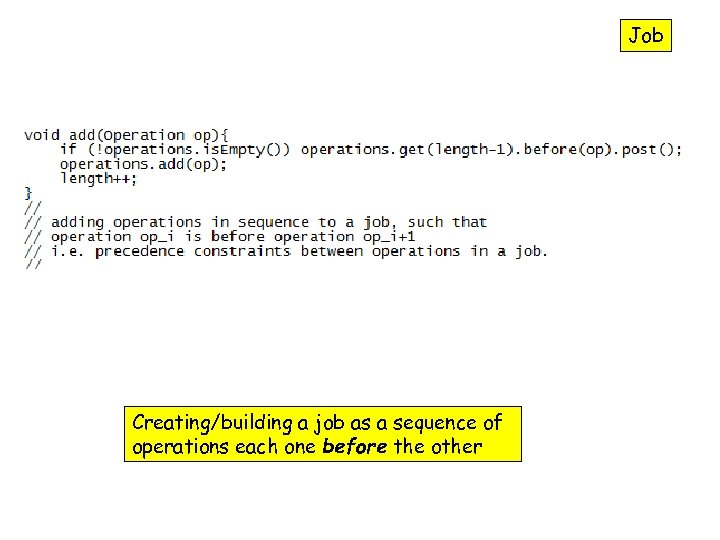
Job Creating/building a job as a sequence of operations each one before the other

Decision
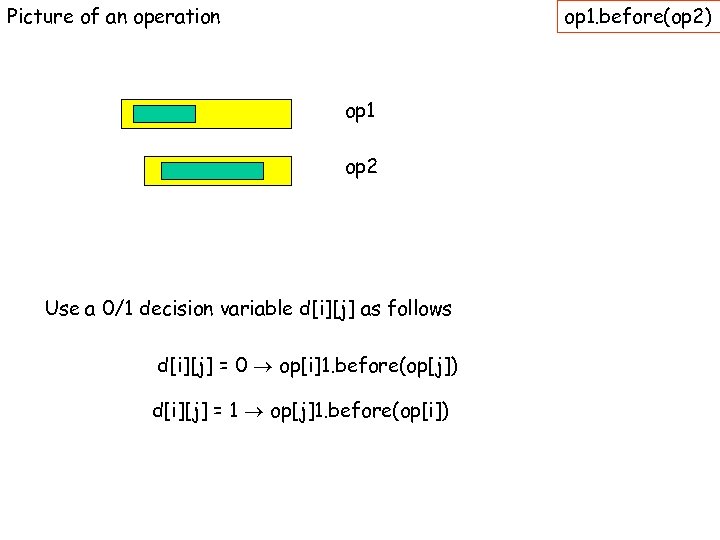
Picture of an operation op 1. before(op 2) op 1 op 2 Use a 0/1 decision variable d[i][j] as follows d[i][j] = 0 op[i]1. before(op[j]) d[i][j] = 1 op[j]1. before(op[i])
![Picture of an operation op 1. before(op 2) op 1 op 2 d[i][j] =](https://present5.com/presentation/0011c6bba56487a58e9c2924b724dbc5/image-45.jpg "Picture of an operation op 1. before(op 2) op 1 op 2 d[i][j] =")
Picture of an operation op 1. before(op 2) op 1 op 2 d[i][j] = 0 op[i]1. before(op[j]) op 1 before op 2
![Picture of an operation op 1. before(op 2) op 1 op 2 d[i][j] =](https://present5.com/presentation/0011c6bba56487a58e9c2924b724dbc5/image-46.jpg "Picture of an operation op 1. before(op 2) op 1 op 2 d[i][j] =")
Picture of an operation op 1. before(op 2) op 1 op 2 d[i][j] = 0 op[i]1. before(op[j]) op 1 before op 2
![Picture of an operation op 1. before(op 2) op 1 op 2 d[i][j] =](https://present5.com/presentation/0011c6bba56487a58e9c2924b724dbc5/image-47.jpg "Picture of an operation op 1. before(op 2) op 1 op 2 d[i][j] =")
Picture of an operation op 1. before(op 2) op 1 op 2 d[i][j] = 1 op[j]1. before(op[i]) op 2 before op 1
![Picture of an operation op 1. before(op 2) op 1 op 2 d[i][j] =](https://present5.com/presentation/0011c6bba56487a58e9c2924b724dbc5/image-48.jpg "Picture of an operation op 1. before(op 2) op 1 op 2 d[i][j] =")
Picture of an operation op 1. before(op 2) op 1 op 2 d[i][j] = 1 op[j]1. before(op[i]) op 2 before op 1
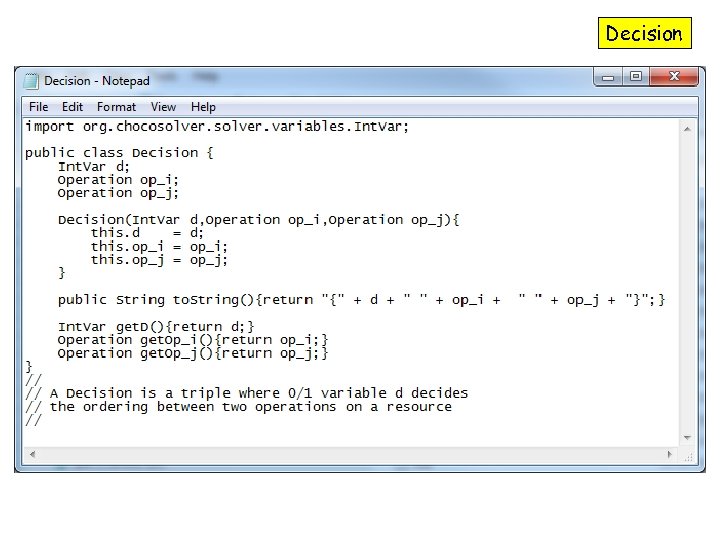
Decision
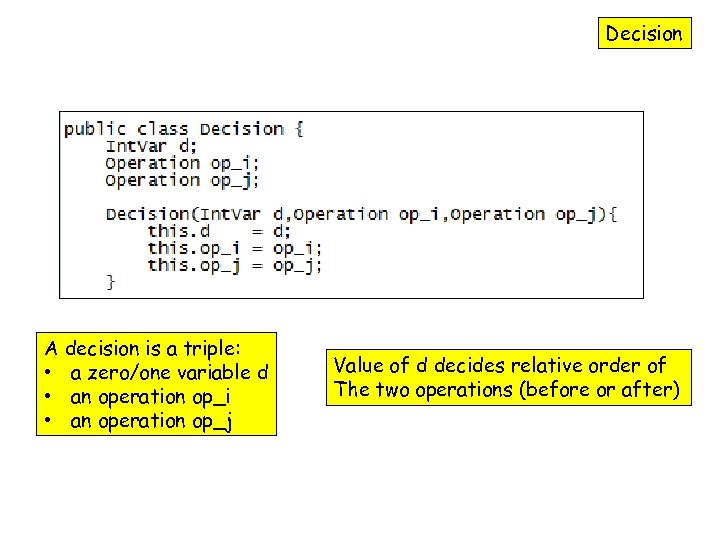
Decision A decision is a triple: • a zero/one variable d • an operation op_i • an operation op_j Value of d decides relative order of The two operations (before or after)

Resource
Resource
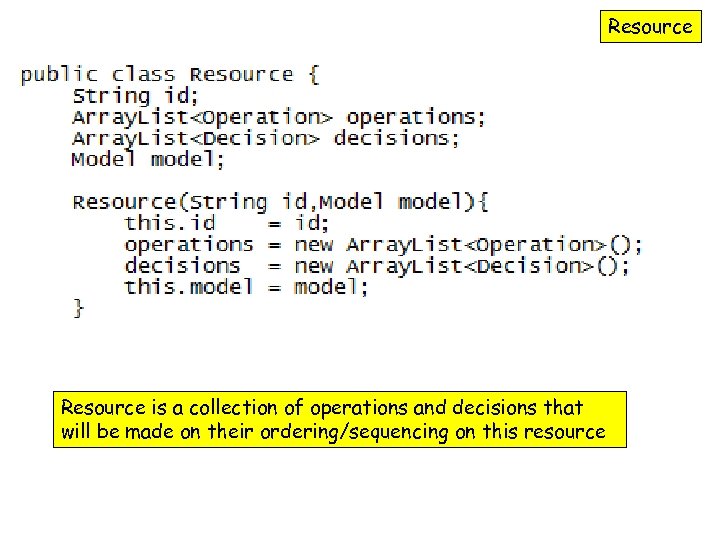
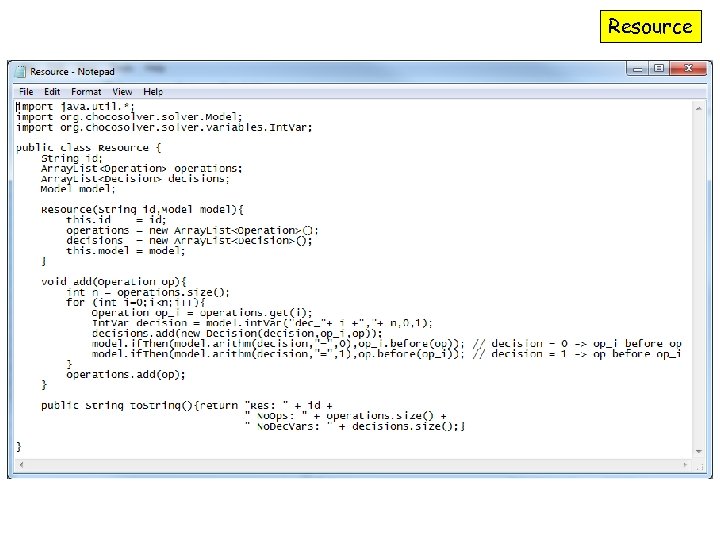
Resource is a collection of operations and decisions that will be made on their ordering/sequencing on this resource
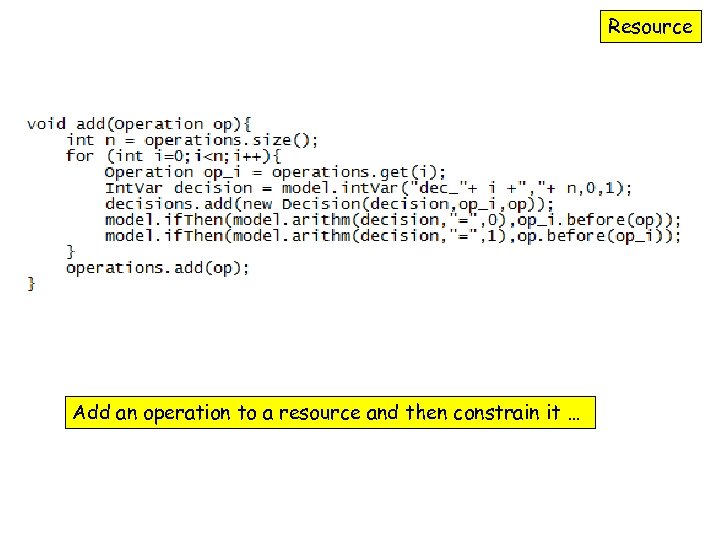
Resource Add an operation to a resource and then constrain it …
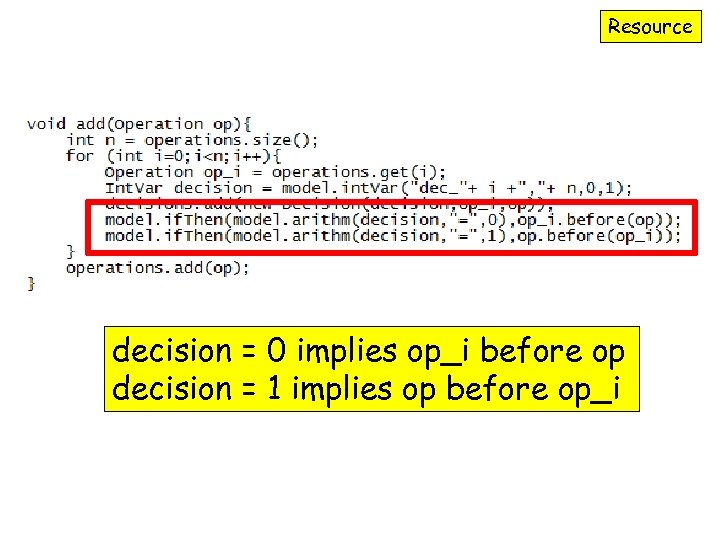
Resource decision = 0 implies op_i before op decision = 1 implies op before op_i

JSSP
JSSP
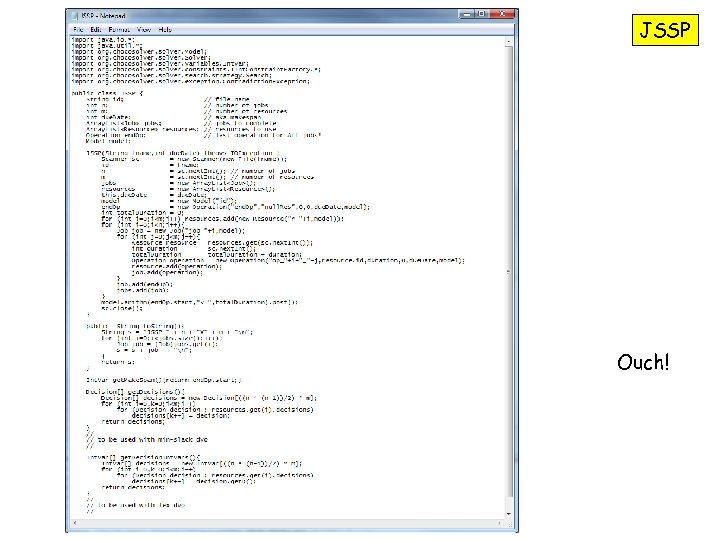
JSSP Ouch!
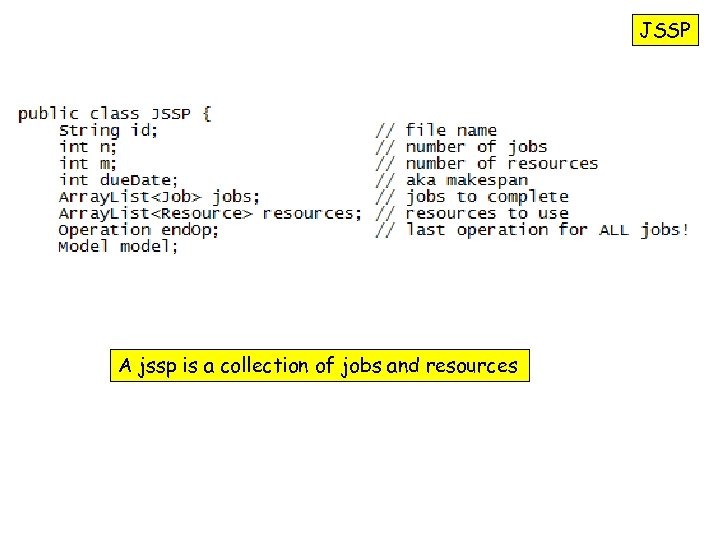
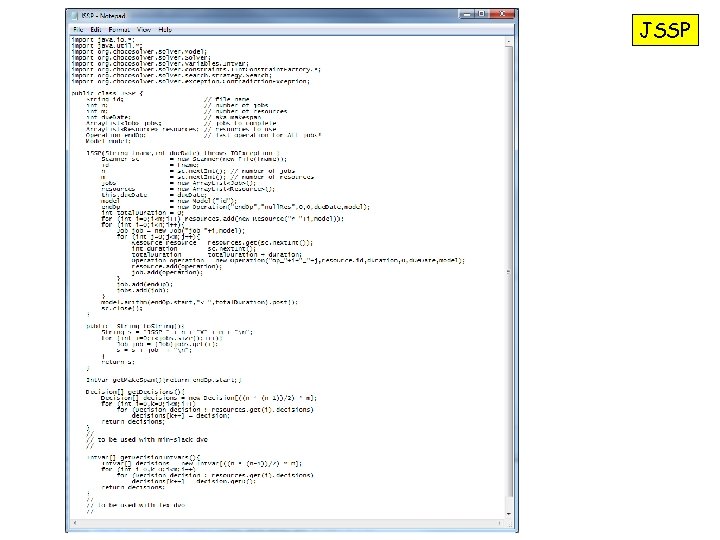
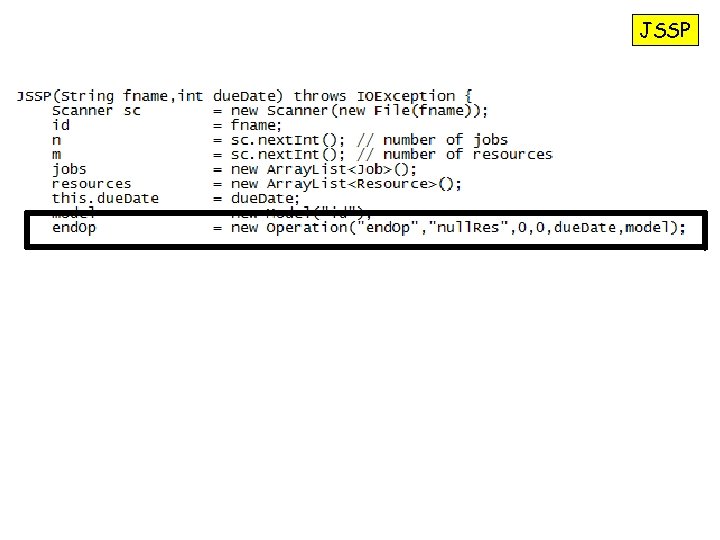
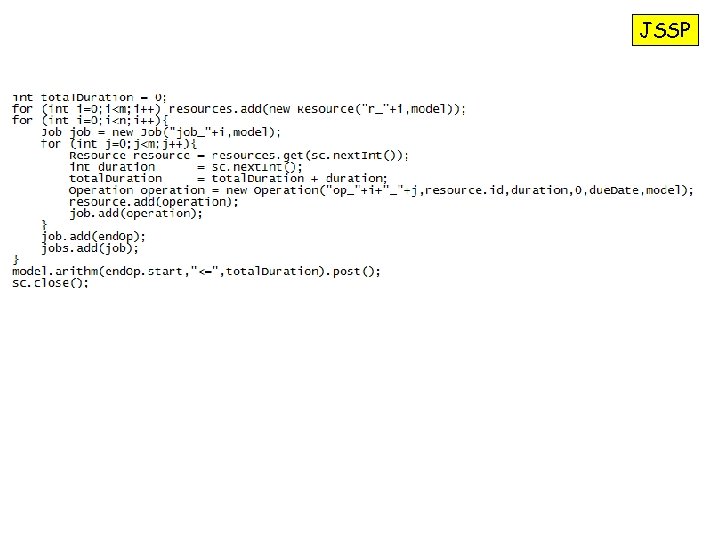
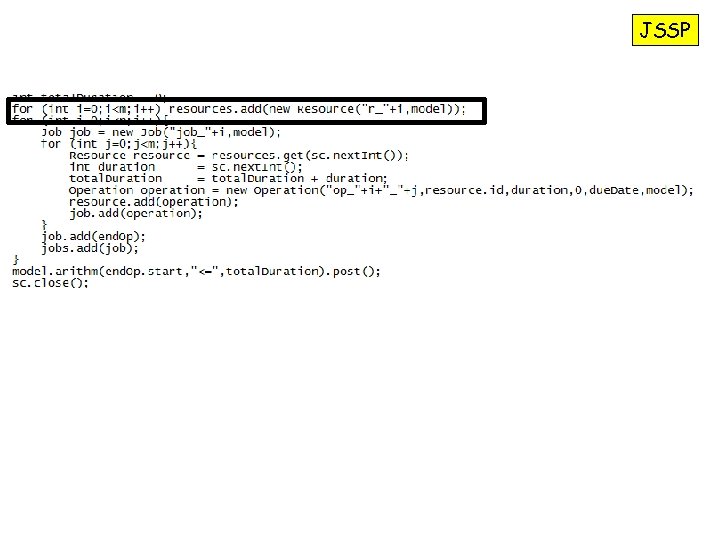
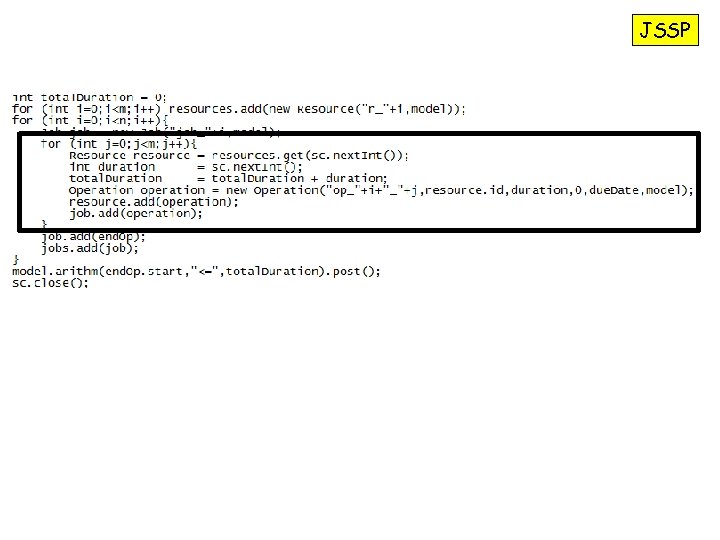
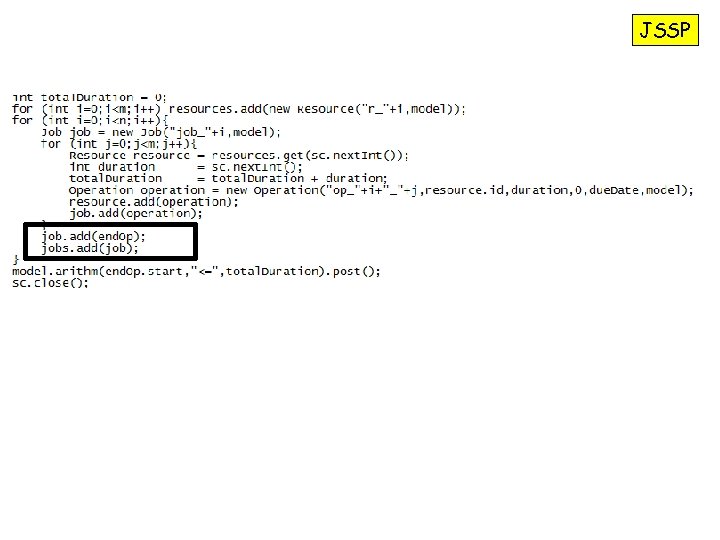
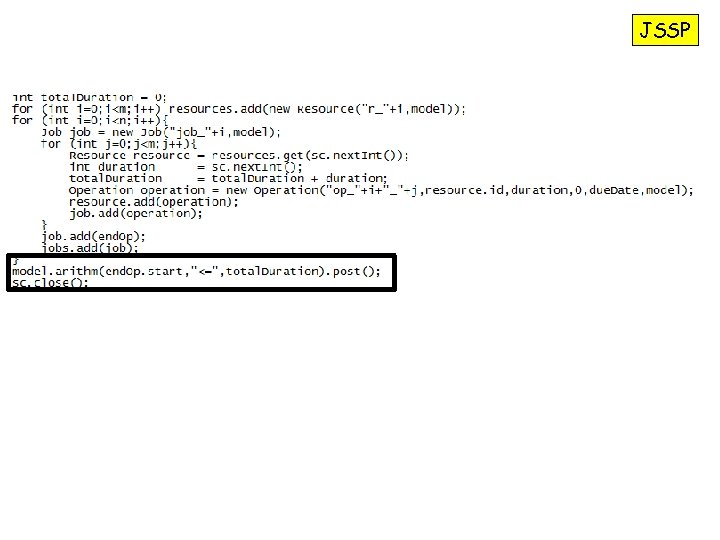
JSSP A jssp is a collection of jobs and resources
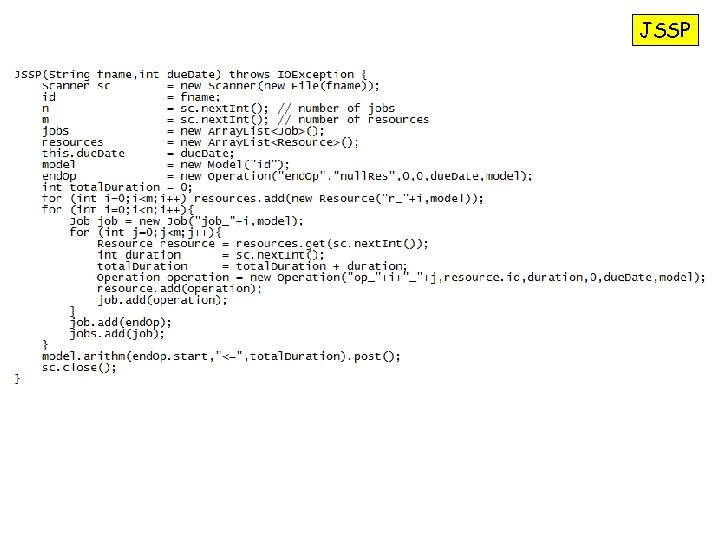
JSSP
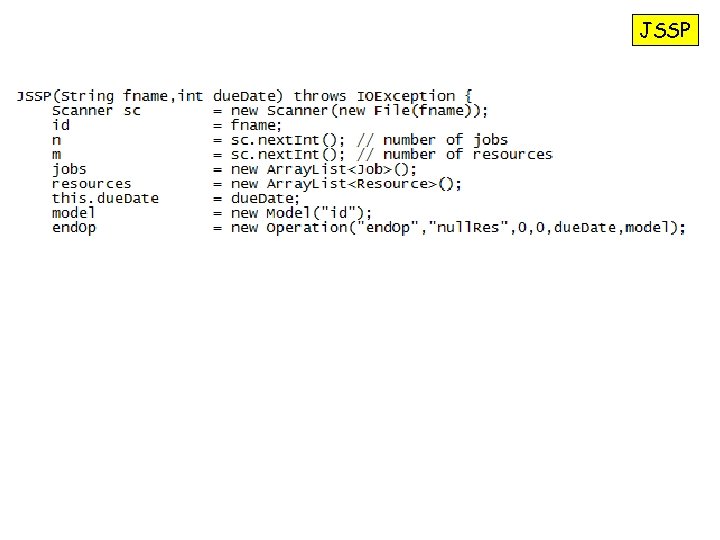
JSSP
JSSP
JSSP
JSSP
JSSP
JSSP
JSSP
Decision. Problem
Decision. Problem
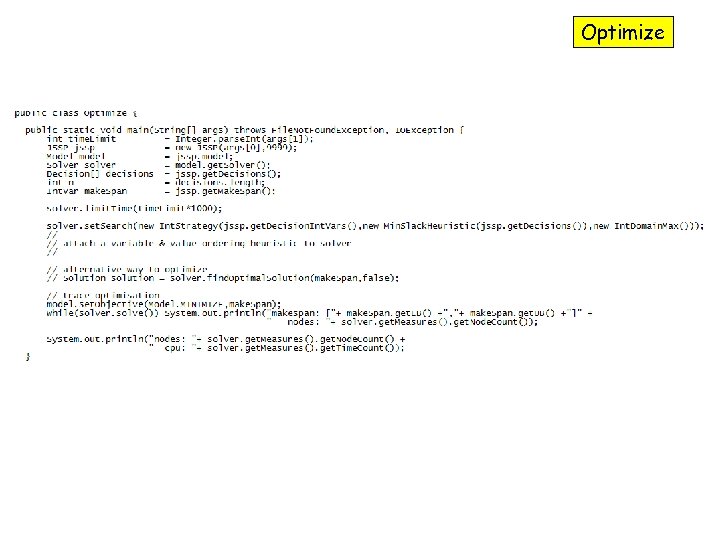
Optimize
Wot!? No heuristics!? !!!
 Скачать презентацию jobshop scheduling We have a set
0011c6bba56487a58e9c2924b724dbc5.ppt