 Скачать презентацию Job Location Utah USA Rank Localization Manager Linguistic
0c0674508df91983541ea3710937ce49.ppt
- Количество слайдов: 24



Job Location: Utah, USA Rank: Localization Manager Linguistic Field(s): General Linguistics LL Issue: 24. 4494 Date Submitted: 11 -Nov-2013 Job Description: The Localization team helps Ancestry's ideas and products look, feel and sound natural to users in their own countries. We collaborate with international engineering, product and marketing teams to steer products through the localization process and ensure successful launches across the globe. You play a strategic role by building relationships with internal teams as well as outside vendors in order to establish needs, quotes, deadlines and budgets. You will utilize your project management and linguistic skills and your translation experience in order to ensure that our Localization process runs effectively and efficiently.
Experiments
Morphology ● Words have parts ● staple+er ● re+send ● cough+ing
Questions experiments try to answer ● ● ● How are certain morphemes related? Do we store mono-morphemic words differently than polymorphemic words? (is there a “morpheme” place in the brain)? Are irregular morphemes stored differently than regular morphemes?
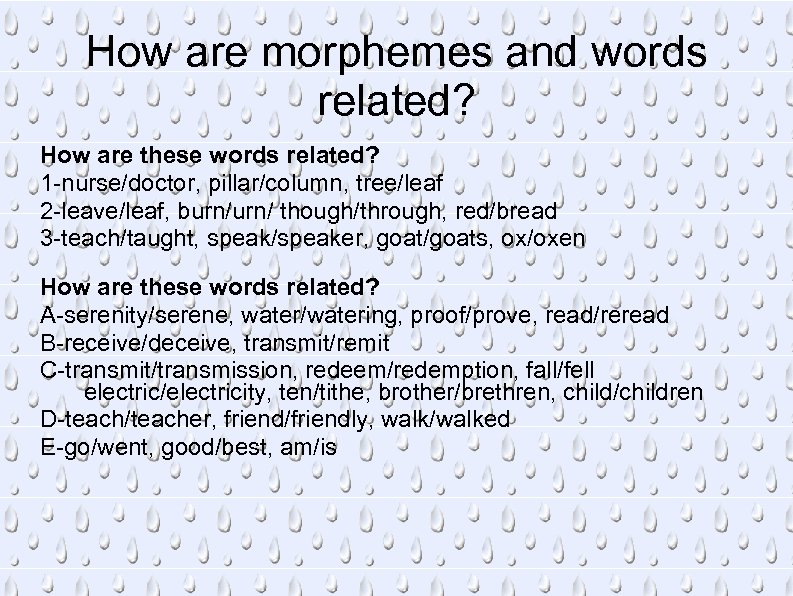
How are morphemes and words related? How are these words related? 1 -nurse/doctor, pillar/column, tree/leaf 2 -leave/leaf, burn/ though/through, red/bread 3 -teach/taught, speak/speaker, goat/goats, ox/oxen How are these words related? A-serenity/serene, water/watering, proof/prove, read/reread B-receive/deceive, transmit/remit C-transmit/transmission, redeem/redemption, fall/fell electric/electricity, ten/tithe, brother/brethren, child/children D-teach/teacher, friend/friendly, walk/walked E-go/went, good/best, am/is
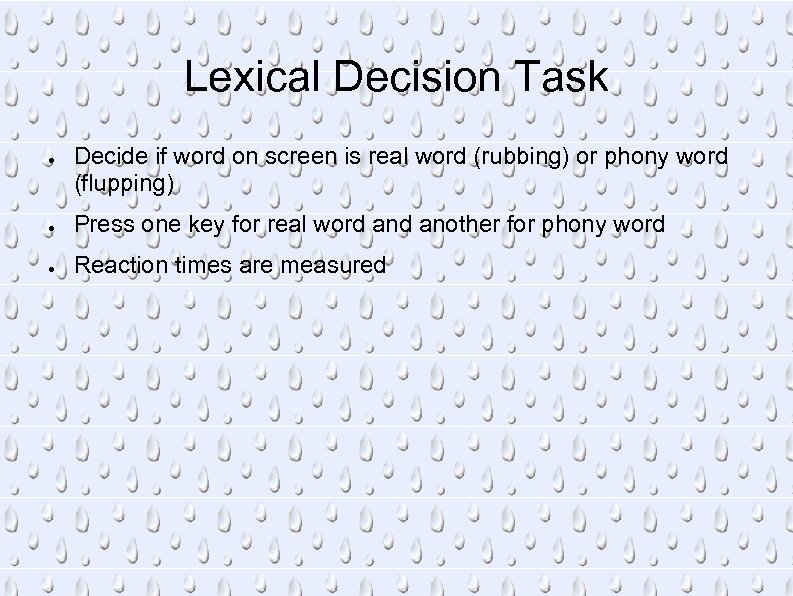
Lexical Decision Task ● Decide if word on screen is real word (rubbing) or phony word (flupping) ● Press one key for real word another for phony word ● Reaction times are measured
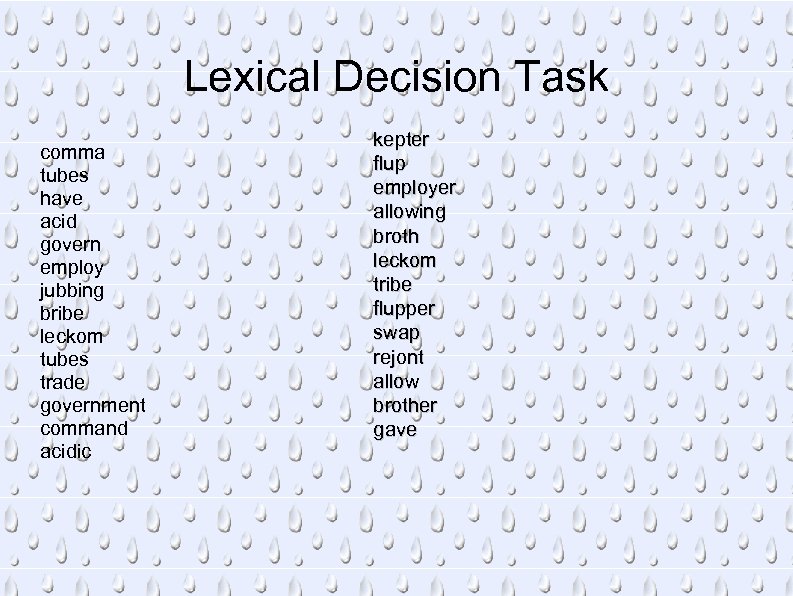
Lexical Decision Task comma tubes have acid govern employ jubbing bribe leckom tubes trade government command acidic kepter flup employer allowing broth leckom tribe flupper swap rejont allow brother gave
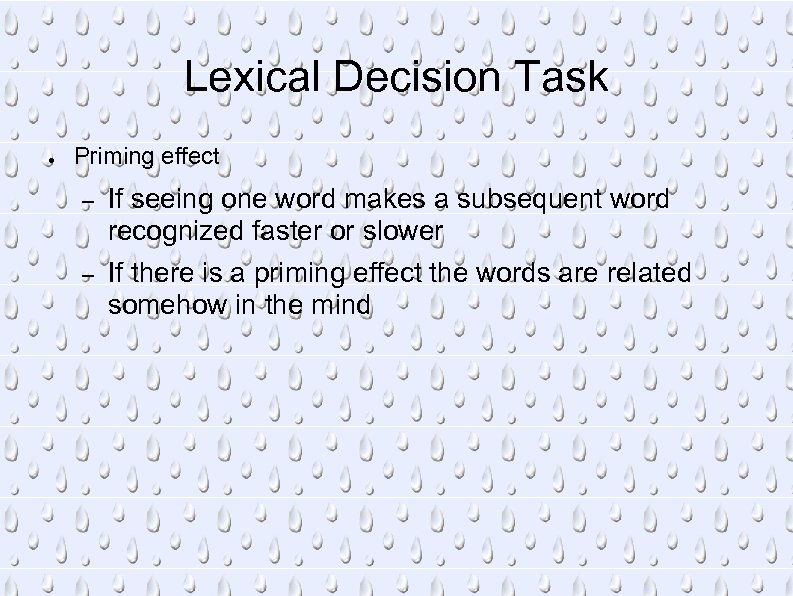
Lexical Decision Task ● Priming effect – If seeing one word makes a subsequent word recognized faster or slower – If there is a priming effect the words are related somehow in the mind
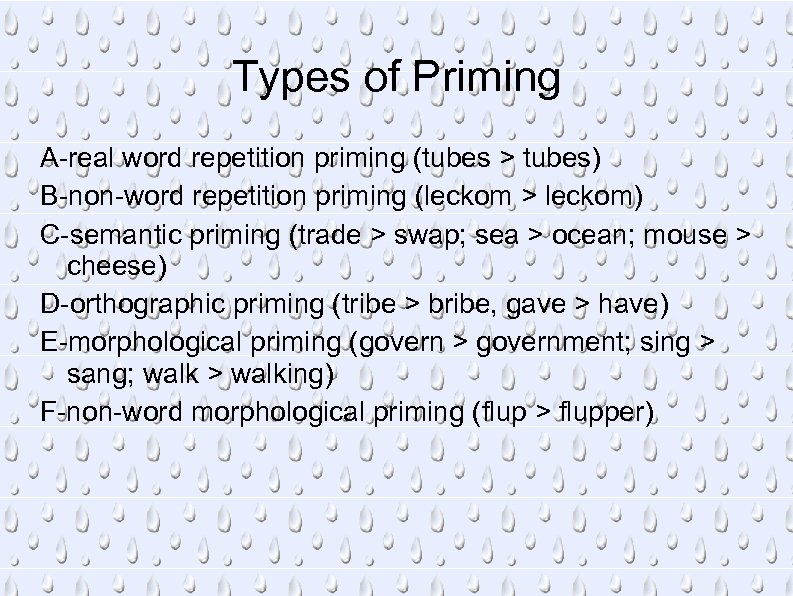
Types of Priming A-real word repetition priming (tubes > tubes) B-non-word repetition priming (leckom > leckom) C-semantic priming (trade > swap; sea > ocean; mouse > cheese) D-orthographic priming (tribe > bribe, gave > have) E-morphological priming (govern > government; sing > sang; walk > walking) F-non-word morphological priming (flup > flupper)
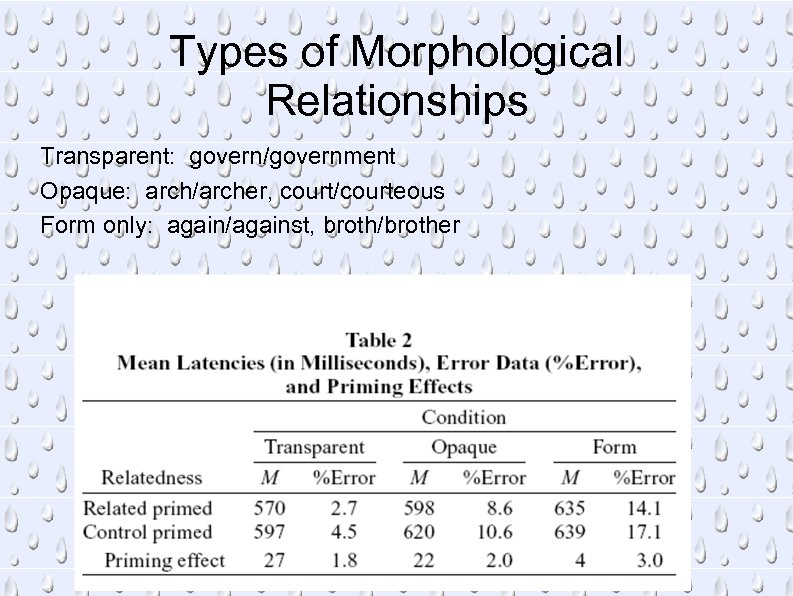
Types of Morphological Relationships Transparent: govern/government Opaque: arch/archer, court/courteous Form only: again/against, broth/brother
Tool ● DMDX, Psyscope and laptop
Do we store mono-morphemic words differently than polymorphemic words? ● How can we look in the brain and see?
Do we store mono-morphemic words differently than polymorphemic words? ● How can we look in the brain and see?
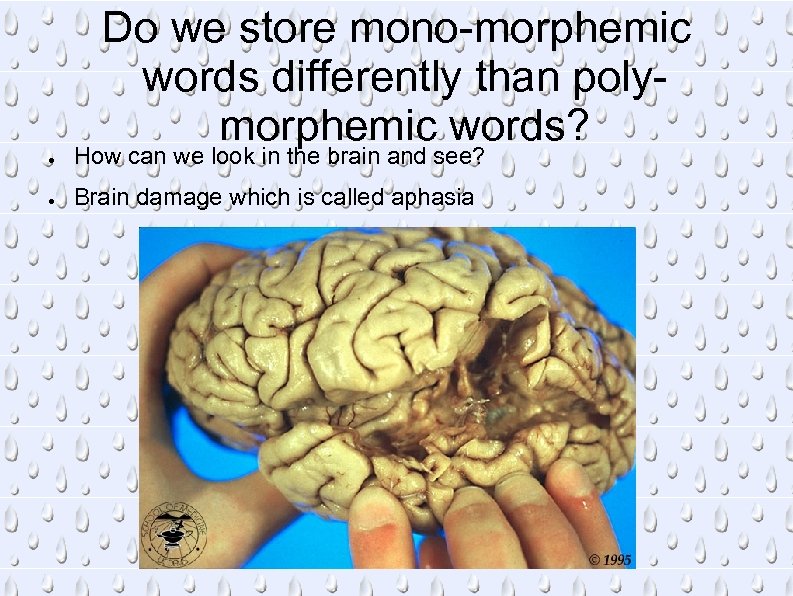
Do we store mono-morphemic words differently than polymorphemic words? ● How can we look in the brain and see? ● Brain damage which is called aphasia
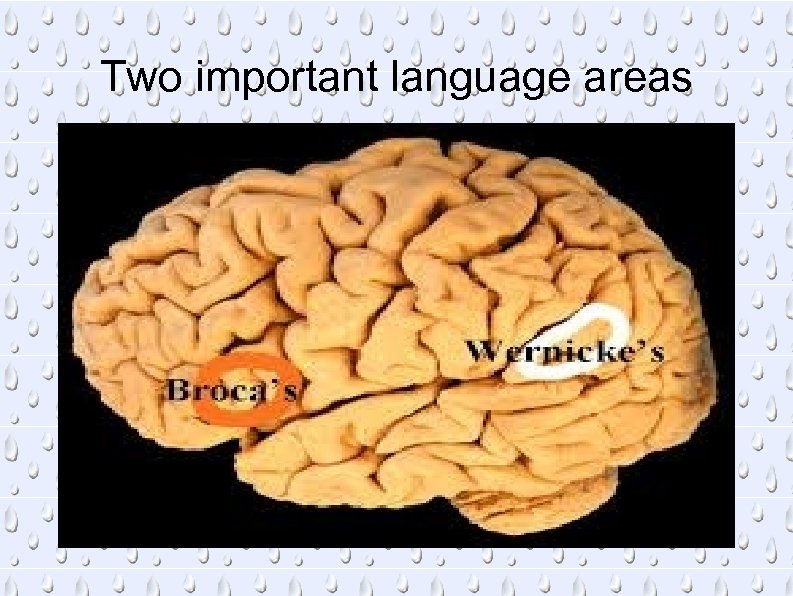
Two important language areas
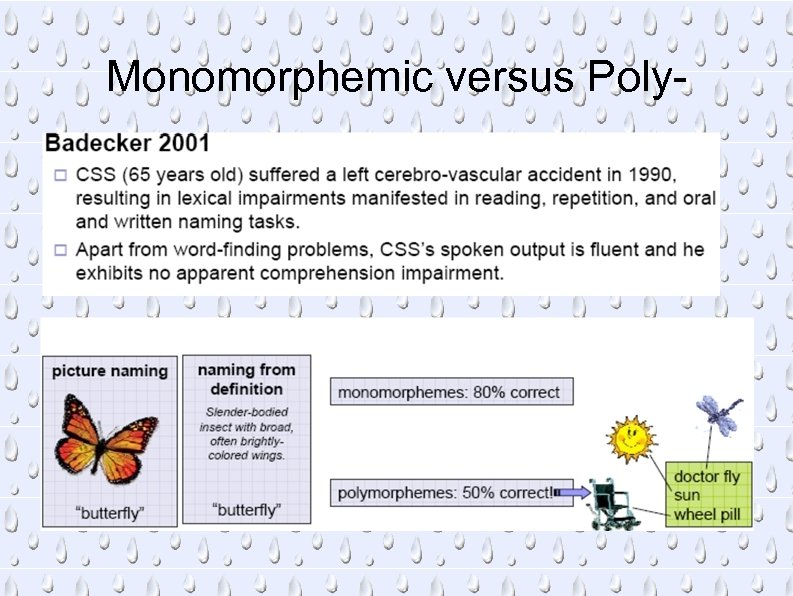
Monomorphemic versus Poly-
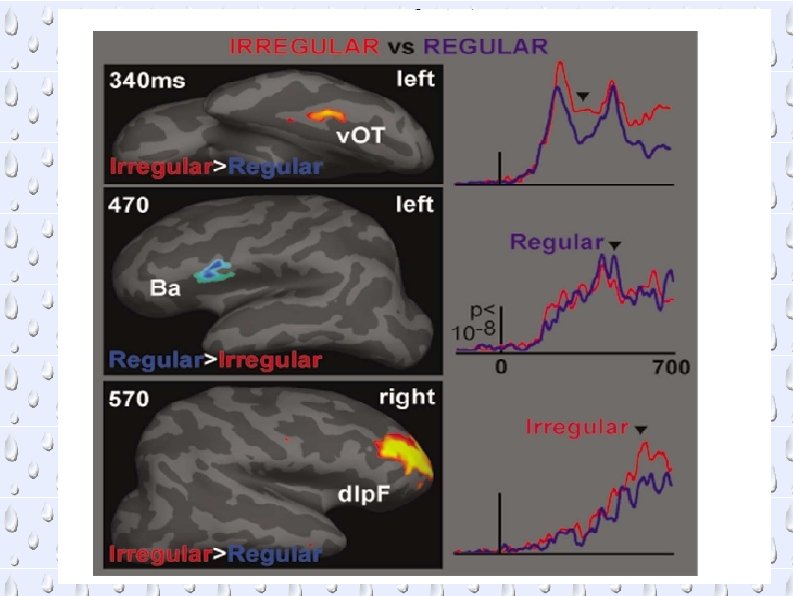
Are irregular morphemes stored differently than regular morphemes? ● MRIs show what part of brain is used. ● EEGs show patterns of activation.
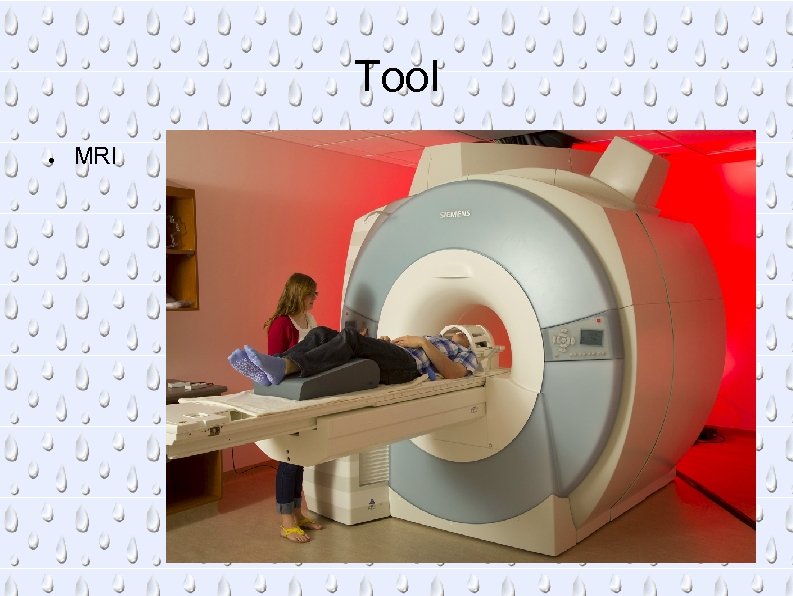
Tool ● MRI
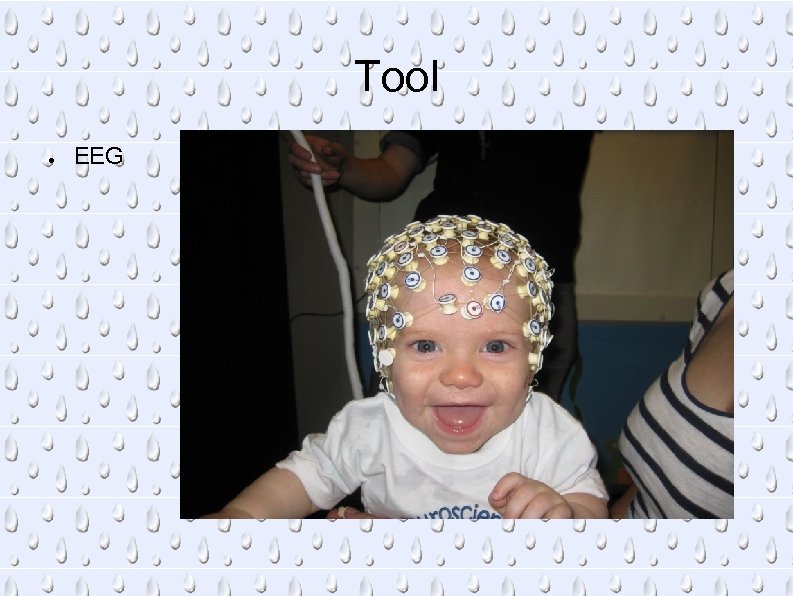
Tool ● EEG
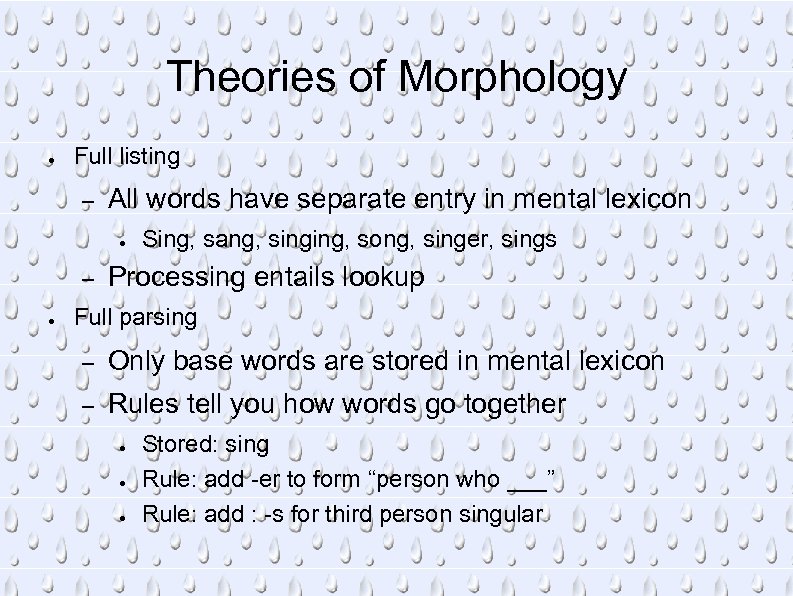
Theories of Morphology ● Full listing – All words have separate entry in mental lexicon ● – ● Sing, sang, singing, song, singer, sings Processing entails lookup Full parsing – Only base words are stored in mental lexicon – Rules tell you how words go together ● ● ● Stored: sing Rule: add -er to form “person who ___” Rule: add : -s for third person singular
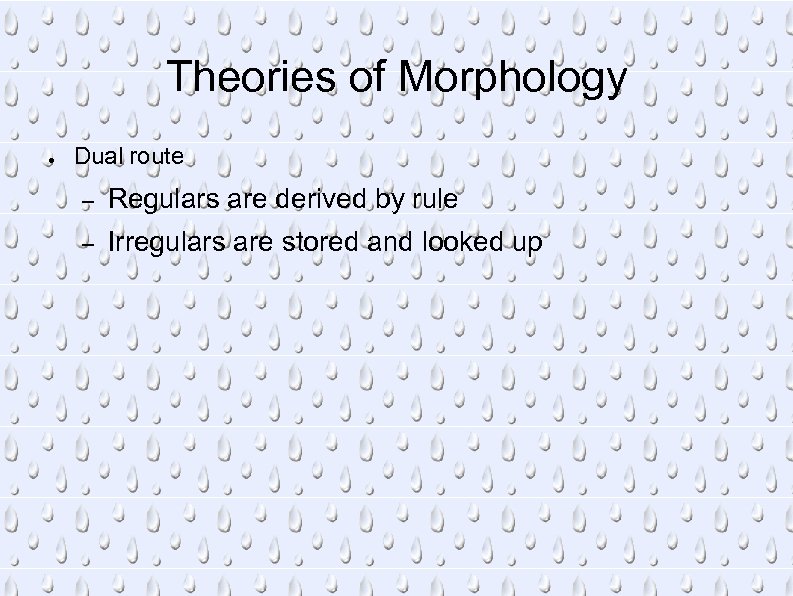
Theories of Morphology ● Dual route – Regulars are derived by rule – Irregulars are stored and looked up
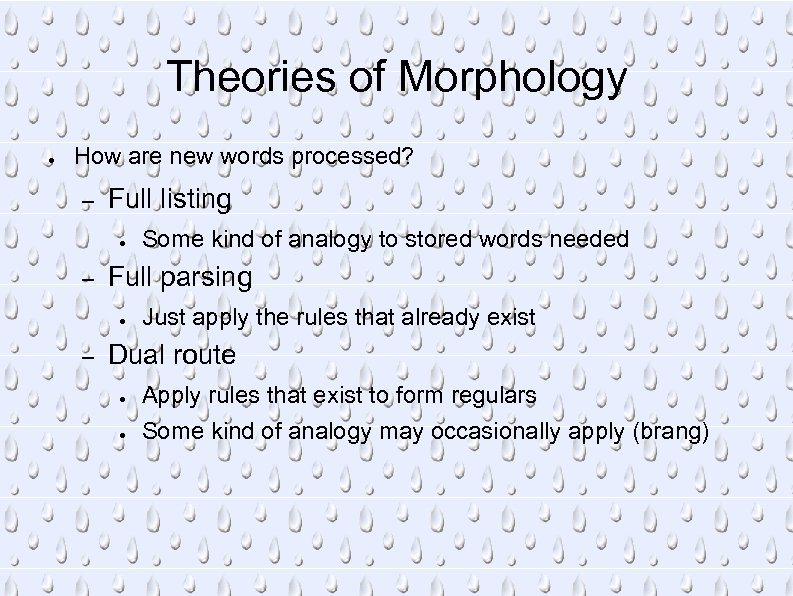
Theories of Morphology ● How are new words processed? – Full listing ● – Full parsing ● – Some kind of analogy to stored words needed Just apply the rules that already exist Dual route ● ● Apply rules that exist to form regulars Some kind of analogy may occasionally apply (brang)
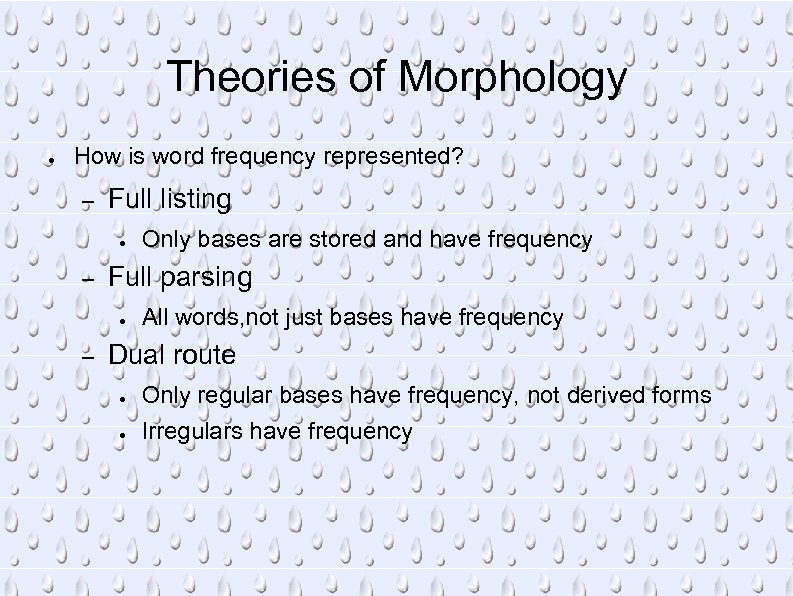
Theories of Morphology ● How is word frequency represented? – Full listing ● – Full parsing ● – Only bases are stored and have frequency All words, not just bases have frequency Dual route ● ● Only regular bases have frequency, not derived forms Irregulars have frequency
Скачать презентацию Job Location Utah USA Rank Localization Manager Linguistic
0c0674508df91983541ea3710937ce49.ppt