 Скачать презентацию Job Analysis- Reed A Castle Ph D Item
dd3d4dc9022321f99663bc1dce3db151.ppt
- Количество слайдов: 160




Job Analysis- Reed A. Castle, Ph. D Item Writing- Steven S. Nettles, Ed. D Test Development- Julia M. Leahy, Ph. D Standard Setting- Paul D. Naylor, Ph. D Scaling/Scoring-Lauren J. Wood- Ph. D, LP 5 topics, 20 minutes and 20 minutes Q&A












































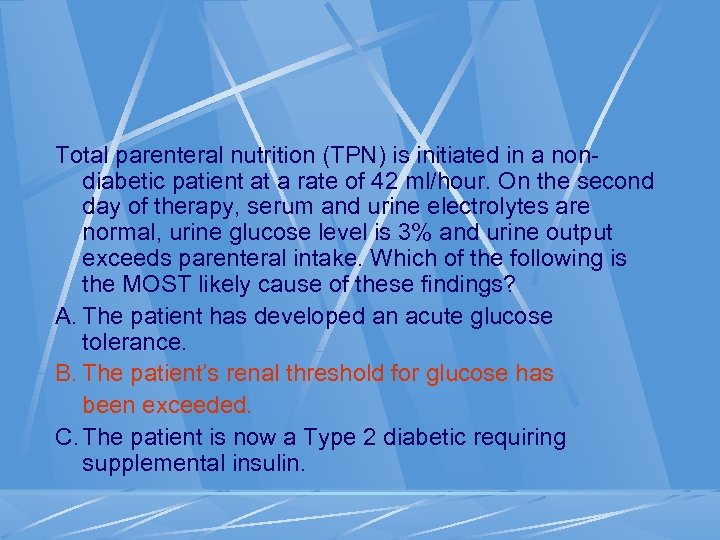
Total parenteral nutrition (TPN) is initiated in a nondiabetic patient at a rate of 42 ml/hour. On the second day of therapy, serum and urine electrolytes are normal, urine glucose level is 3% and urine output exceeds parenteral intake. Which of the following is the MOST likely cause of these findings? A. The patient has developed an acute glucose tolerance. B. The patient’s renal threshold for glucose has been exceeded. C. The patient is now a Type 2 diabetic requiring supplemental insulin.

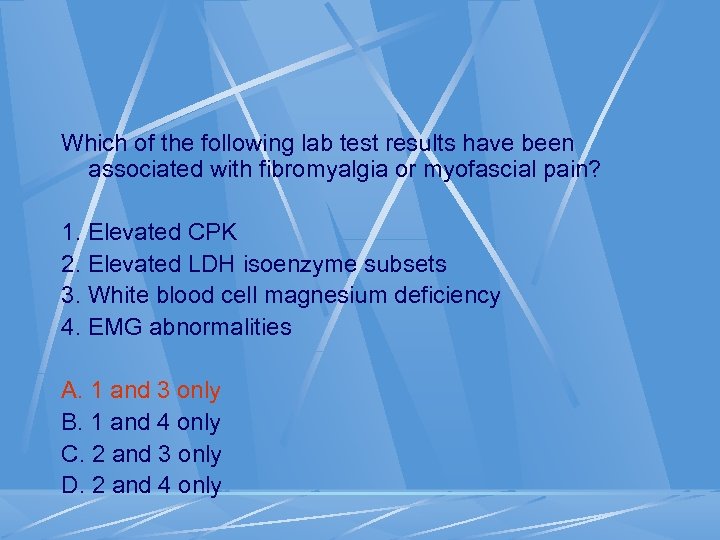
Which of the following lab test results have been associated with fibromyalgia or myofascial pain? 1. Elevated CPK 2. Elevated LDH isoenzyme subsets 3. White blood cell magnesium deficiency 4. EMG abnormalities A. 1 and 3 only B. 1 and 4 only C. 2 and 3 only D. 2 and 4 only

















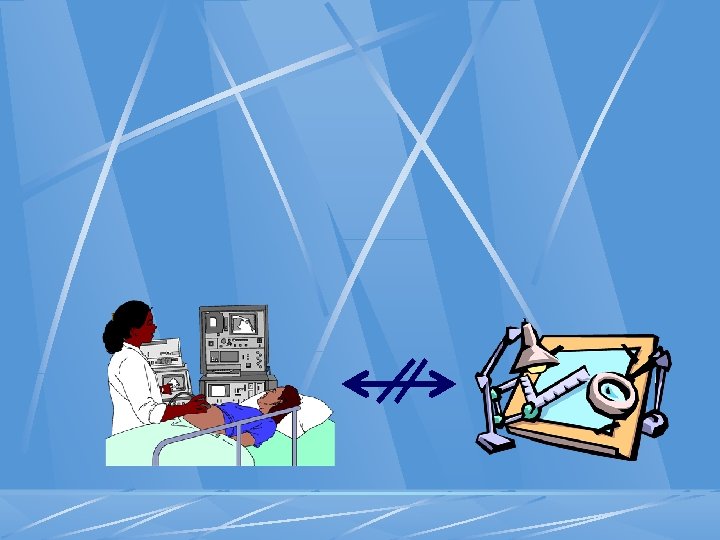




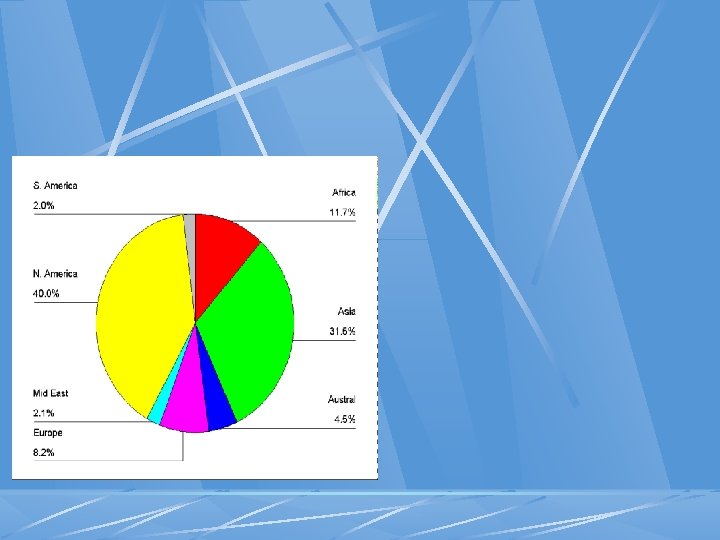
What content is important to test? What content is necessary to be a minimally competent practitioner? How much emphasis should be placed on certain content categories?















Review items for spelling, punctuation, and grammar Usually done by an editor or trained test developer



















Item review can be an iterative process Yes, No, and Yes with modifications Who has final sign off on items?


Establishing a process for item review How item review relates to item approval Who should be involved in the item review How often should items be reviewed






















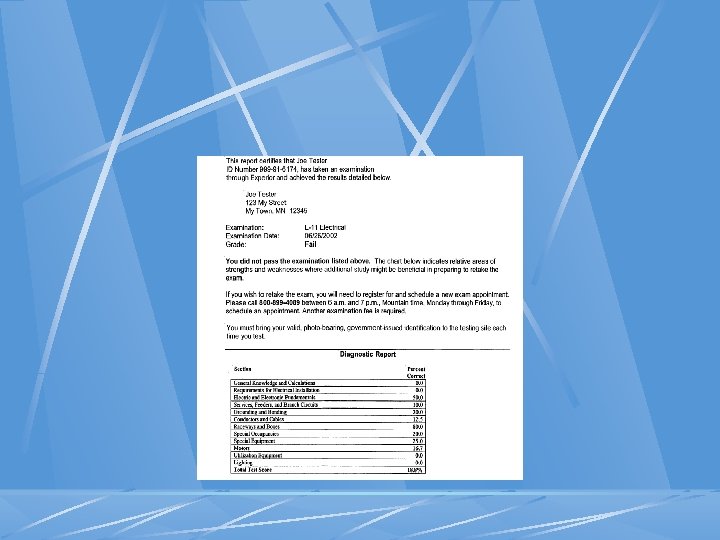





Result Fail Pass





Form #1: P-value=. 66 Form #2: P-value=. 72 Form #3: P-value=. 70










 Скачать презентацию Job Analysis- Reed A Castle Ph D Item
dd3d4dc9022321f99663bc1dce3db151.ppt