 Скачать презентацию JLab Accelerator Controls Matt Bickley Ma RIE discussion
69ba5e513d70a9b2b93a3aa3074a78ad.ppt
- Количество слайдов: 19



JLab Accelerator Controls Matt Bickley Ma. RIE discussion April 26, 2016
Outline • • • Controls scope and architecture CEBAF controls; a brief history Subsystems CEBAF Element Database Future Plans
Controls Scope • Support 24/7 operation – Accelerator: from the injector to the beam dumps – Central Helium Liquifier (CHL) – Low-Energy Recirculator Facility (LERF) – Portions of the experimental endstations – Unified Injector Test Facility (UITF) • Develop and maintain device control, high-level software and manage computing environment – Dynamic accelerator environment with regular changes to hardware and configuration • Collaborate with the world-wide controls community
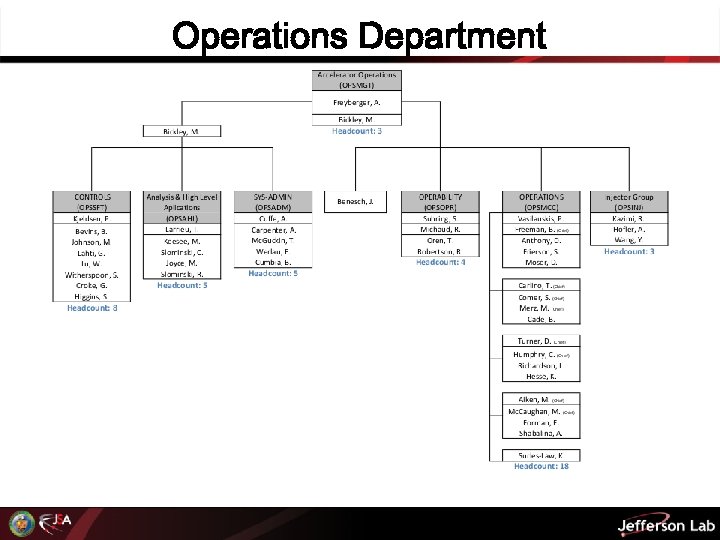
Operations Department
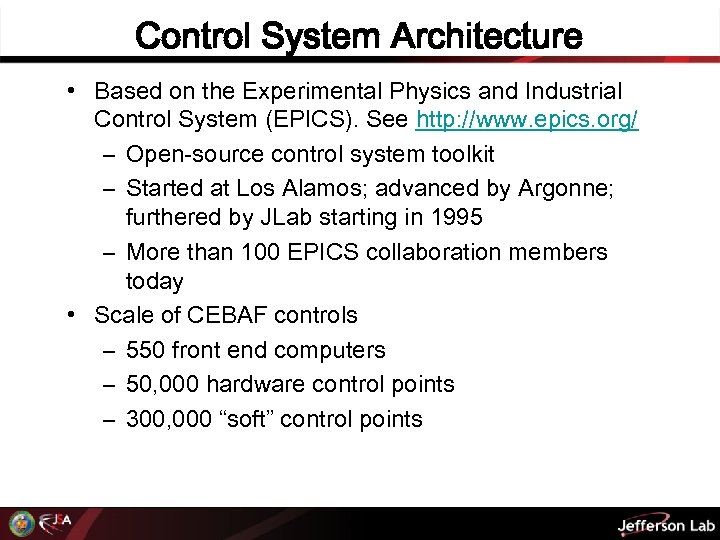
Control System Architecture • Based on the Experimental Physics and Industrial Control System (EPICS). See http: //www. epics. org/ – Open-source control system toolkit – Started at Los Alamos; advanced by Argonne; furthered by JLab starting in 1995 – More than 100 EPICS collaboration members today • Scale of CEBAF controls – 550 front end computers – 50, 000 hardware control points – 300, 000 “soft” control points
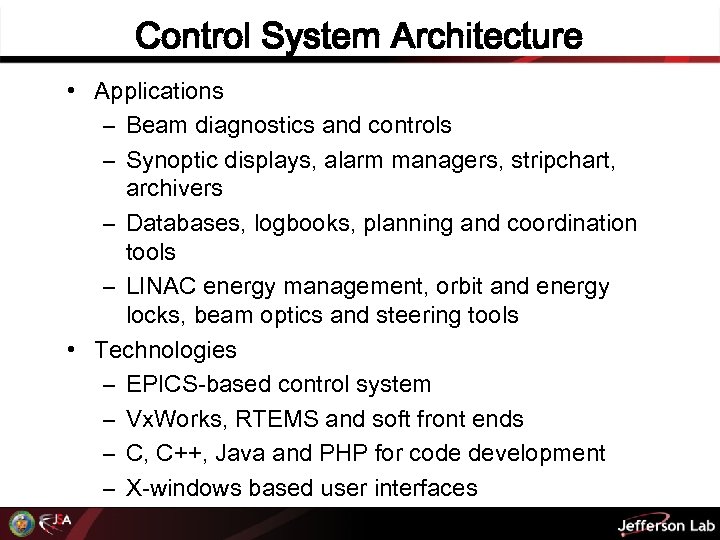
Control System Architecture • Applications – Beam diagnostics and controls – Synoptic displays, alarm managers, stripchart, archivers – Databases, logbooks, planning and coordination tools – LINAC energy management, orbit and energy locks, beam optics and steering tools • Technologies – EPICS-based control system – Vx. Works, RTEMS and soft front ends – C, C++, Java and PHP for code development – X-windows based user interfaces
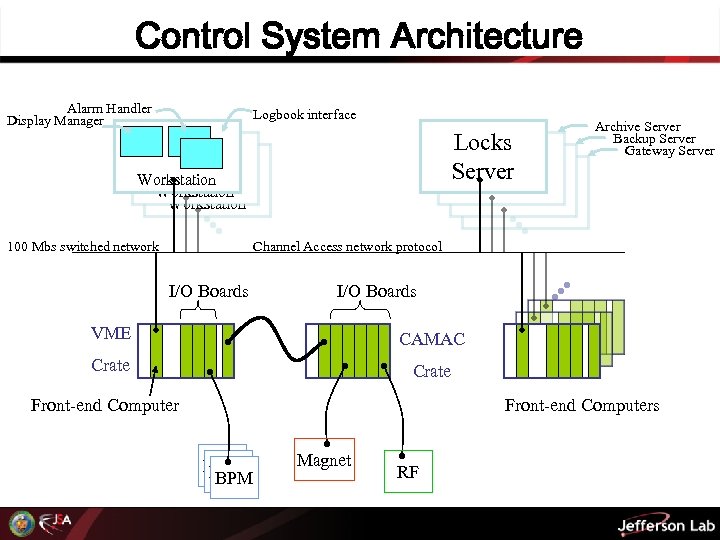
Control System Architecture Alarm Handler Display Manager Logbook interface Locks Server Workstation 100 Mbs switched network Archive Server Backup Server Gateway Server Channel Access network protocol I/O Boards VME CAMAC Crate Front-end Computers BPM BPM Magnet RF
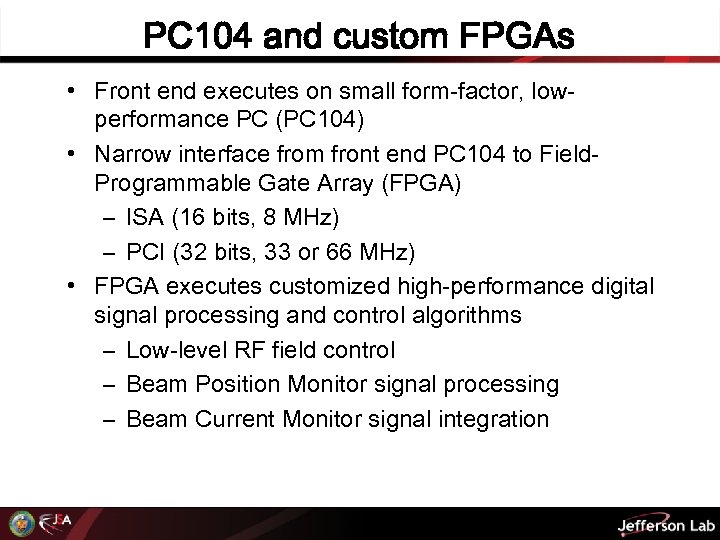
PC 104 and custom FPGAs • Front end executes on small form-factor, lowperformance PC (PC 104) • Narrow interface from front end PC 104 to Field. Programmable Gate Array (FPGA) – ISA (16 bits, 8 MHz) – PCI (32 bits, 33 or 66 MHz) • FPGA executes customized high-performance digital signal processing and control algorithms – Low-level RF field control – Beam Position Monitor signal processing – Beam Current Monitor signal integration
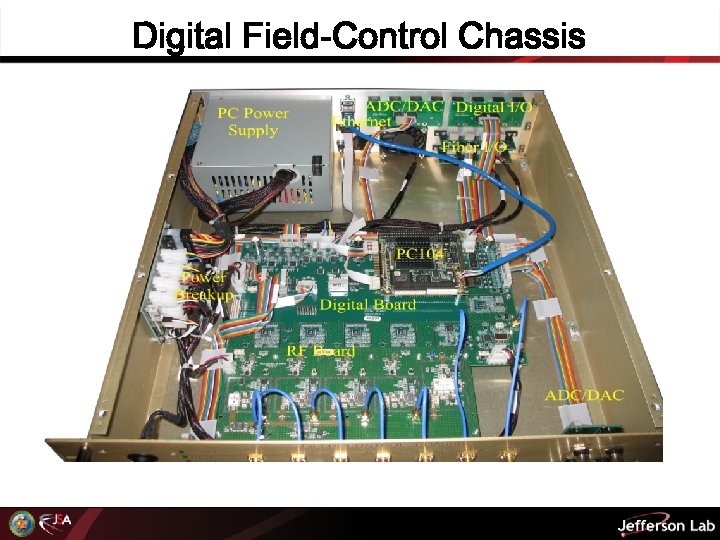
Digital Field-Control Chassis
“Soft” Front Ends • Front end computer with only a network connection – Executes on any computer – Increasingly used on virtual machines • Controls development tools and environment are the same as those for hard front ends • Enables isolation of controls • Makes network-based adapters very appealing e. g. ethernet->GPIB adapters
Controls History • Started in 1990 with custom HP-based software communicating only with CAMAC crates • Adopted EPICS in 1994; VME-based SBCs • Sun servers added in 2001 • Migration to (Red. Hat) linux on back ends started in 2003 • PC 104/custom FPGAs in 2012 • “Soft” front ends in widespread use in 2013 • Overall directions: – Away from proprietary hardware and software – Increasing flexibility in location of control algorithms (FPGA, hard or soft front ends)
Subsystems: RF • C 20/C 50 CAMAC-based analog controls • C 100 PC 104 -based digital controls • Future direction: C 20 and C 50 digital controls – PC 104 replacement (same fundamental design) – LCLS-II design • On-site testing starting in summer ‘ 16 • Hands-on performance and management experience – Next two years will provide a guide
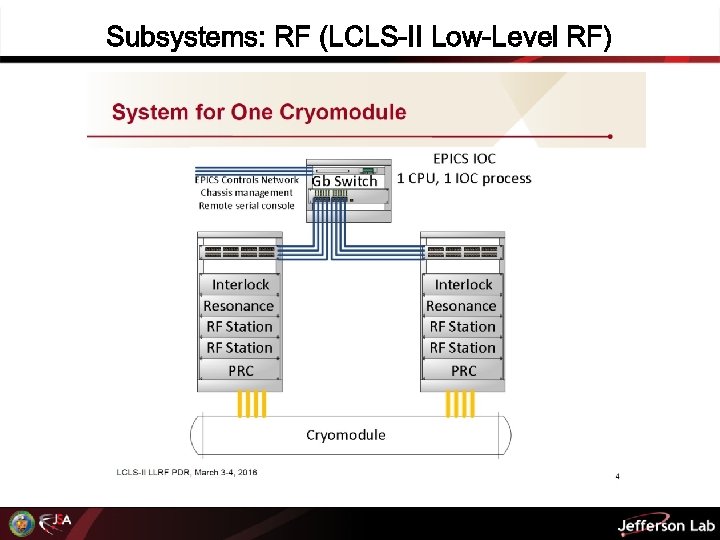
Subsystems: RF (LCLS-II Low-Level RF)
Subsystems: Safety • Personnel Safety System – Safety PLCs programmed by safety professionals – Dedicated, isolated network – Read-only monitoring from the control system • Machine Protection System – CAMAC- and VME-based – Fast Shut Down – Beam Loss Accounting – Beam Loss Monitoring – Beam Envelope Limit System (beam power)
Subsystems: Cryogenics • Migrating to PLC-based equipment control – CAMAC systems being phased out – PLC programming by cryogenics experts – Front end->PLC by controls group • High-level capabilities collaboratively developed – Heat management (electric vs. RF heat) – Interaction between RF and cryogenic systems
Subsystems: Conventional Facilities • Maintained by Facilities Management Division – Controls interfaces developed as-needed • Monitoring, archiving and alarming – Chillers – Low-conductivity water systems – Grid power • Integration outside of system procurement is expensive and time-consuming
CEBAF Element Database (CED) • Flexible database storing accelerator description – Element types and inventory • Attributes and values – Beamline elements (magnets, diagnostics, etc. ) – Associated elements (racks, valves, front ends) • Driver for many operational tools – Hot checkout – Alarm configuration – On-the-fly synoptic displays – Front-end software configuration • Development late in CEBAF’s life makes this much harder
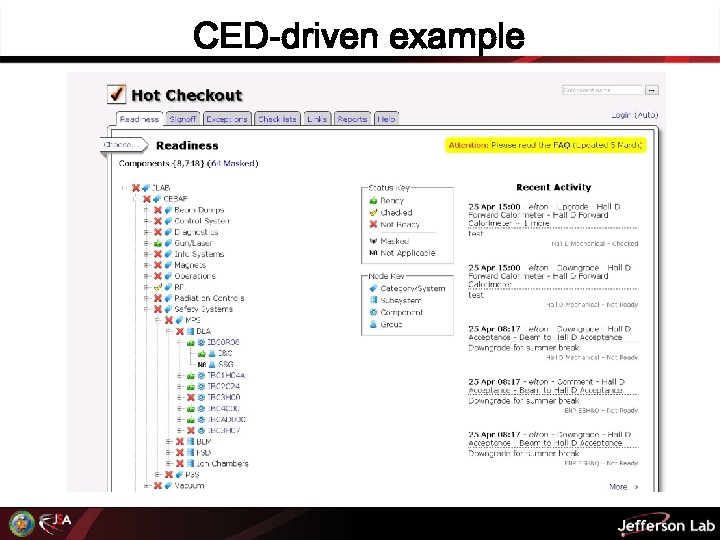
CED-driven example
General-Interest Controls Plans • Broaden integration of CED – Automated configuration of front-end controls – Ties to maintenance database, task management tools – Improve tools to enable data management by system experts (who own the data) • Replace PC 104 s in new hardware solutions – Increase flexibility and capability – Take advantage of new hardware functionality • Real-time linux on front-end computers – Simplify system management – Increase flexibility of hardware choices • Address system administration challenges – Many hundreds of front-end computers
Скачать презентацию JLab Accelerator Controls Matt Bickley Ma RIE discussion
69ba5e513d70a9b2b93a3aa3074a78ad.ppt