


 Скачать презентацию JJSH Clinic Management for Prostate Health MED INF
08c81a1a5f57b391aa3b45281c835ca8.ppt
- Количество слайдов: 13
 JJSH Clinic Management for Prostate Health MED INF 405 Group Project Heather Begley Jaimie Bubb Joanne Rimac Stephanie Wong JJSH Healthcare Consulting
 Background Prostate cancer is the most common cancer in American men. (www. cancer. org) To serve the community JJSH needs to ensure the maximum number of patients are seen and treated Reduce financial burden by operating clinics efficiently and effectively
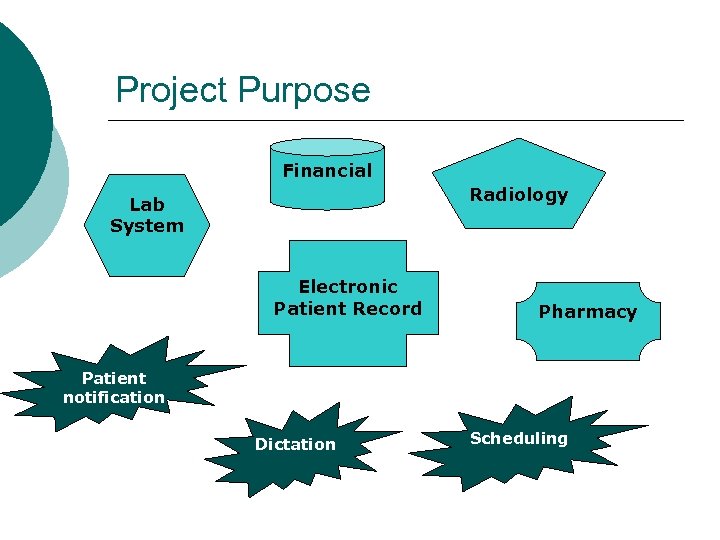 Project Purpose Financial Radiology Lab System Electronic Patient Record Pharmacy Patient notification Dictation Scheduling
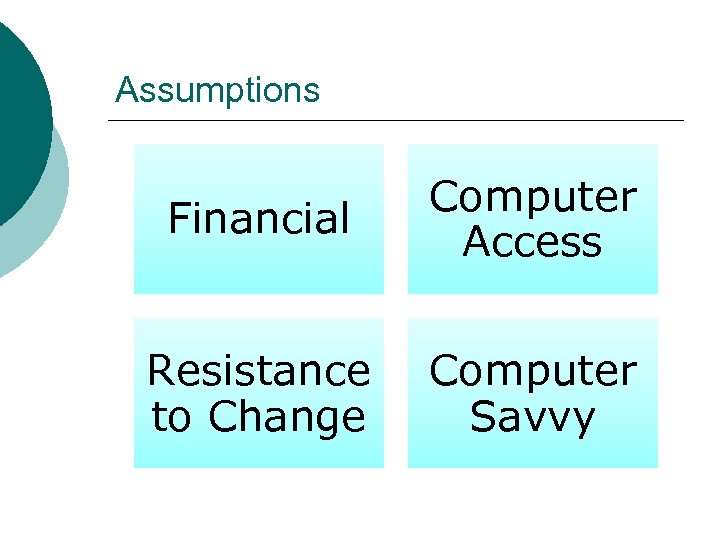 Assumptions Financial Computer Access Resistance to Change Computer Savvy
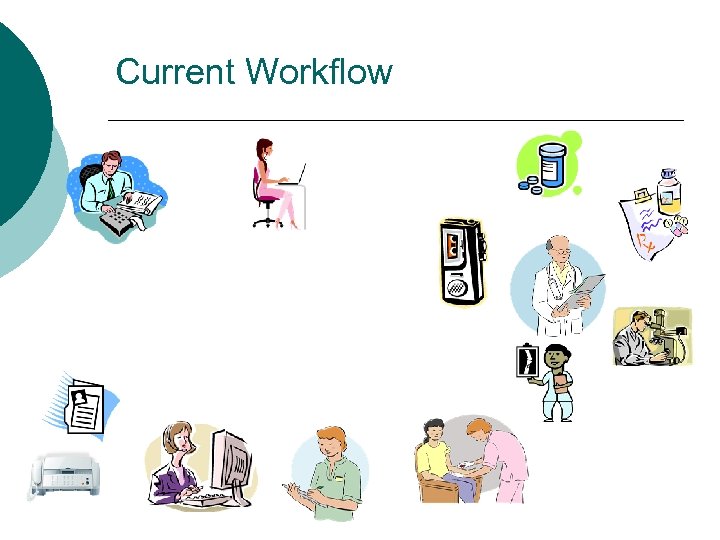 Current Workflow
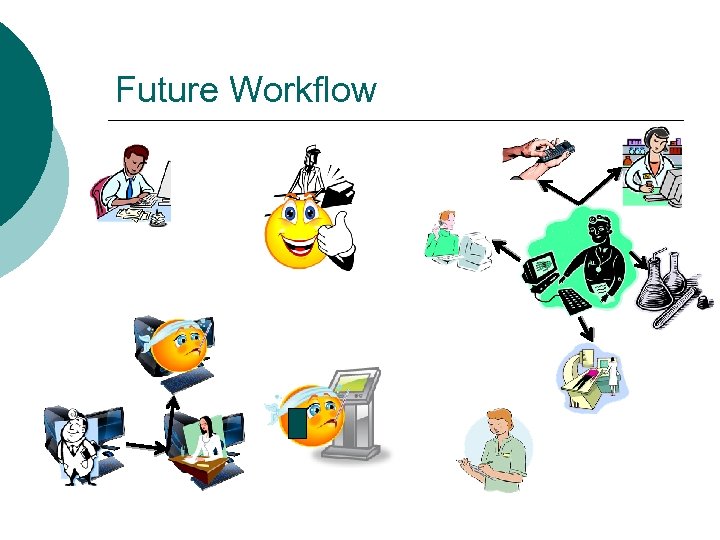 Future Workflow
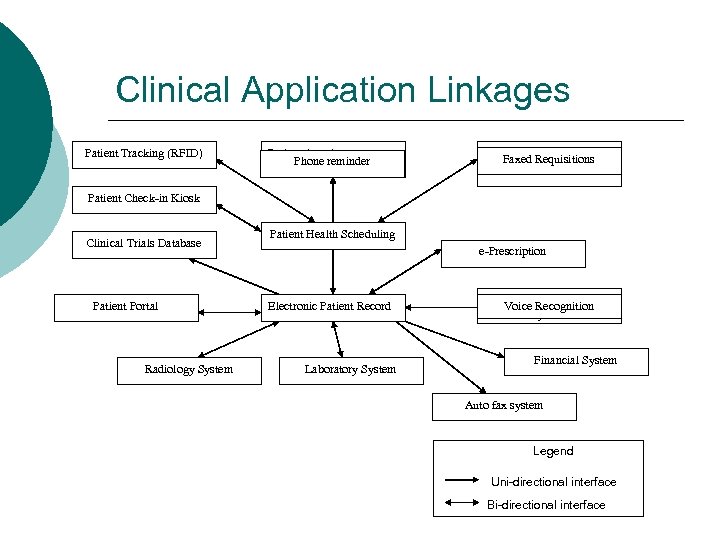 Clinical Application Linkages Patient Tracking (RFID) Patient Appointment Phone reminder Reminder System Referral/Consultation Faxed Requisitions Portal Patient Check-in Kiosk Clinical Trials Database Patient Portal Radiology System Scheduling System Patient Health Scheduling e-Prescription Pharmacy Electronic Patient Record Laboratory System Dictation/Transcription Voice Recognition System Financial System Auto fax Reports Snail Mail system Legend Uni-directional interface Bi-directional interface
 Stakeholders l Patients (who follow up at clinic for prostate health) l Family members of patients l Physicians-including referring physician, clinic MDs, NPs, PAs, hospital MDs as well as surgeons, specialty MDs (and their associated NPs/PAs), anesthesiologists/nurse anesthetists, Physician Review Board
 Stakeholders ¡ ¡ ¡ Clinic/Hospital clinical personnel including RNs/LPNs, nurse’s aides/techs Clinic/Hospital clinical ancillary staff including pharmacists/pharmacy staff/techs, lab staff/techs, radiology staff/techs, nutritionists/dietary staff, social workers, case managers, discharge planners Clinic/Hospital administrative staff including registration and unit clerks, medical records staff, billing staff Clinic/Hospital Executive staff including COO, management, and other executives within facilities Hospital/Home Health adjunct staff including PT/OT, home health/hospice care
 Stakeholders ¡ ¡ ¡ ¡ Government Community/Public Vendors supporting clinic Insurance companies Familial Registry Clinical Trials Tumor Registrar
 EPR Integration Related to Prostate Health ¡ ¡ ¡ 2/3 of patients diagnosed are over the age of 65 The number of Americans age 65 and older will more than double by the year 2030 The cost of providing health care to older Americans is three to five times > those younger than 65 ¡ ¡ ¡ Financial benefits: transcription costs reduced, lab, pharmacy, radiology, billing and scheduling automated Clinical benefits: Accuracy of documentation which enhances billing charges, data gathered quickly and efficiently Organizational benefits: Increased clinician satisfaction due to enhanced workflow and patient satisfaction related to immediate access of clinical and educational information
 ROI related to EPR Implementation ¡ ¡ ¡ Cincinnati Childrens (2003) experienced an improved registration process because records were prepared electronically before arrival Queens Health Network (2002) 50% decrease in pharmacist intervention with medication orders in ambulatory care due to improved legibility, system alerts and increased completeness of prescriptions Maimonides (2002) duplicate testing dropped dramatically, ancillary tests by 48. 9%, U/A by 41. 6%, microbiology by 40. 6%and hematology by 6% Citizens Memorial (2005) Automatic charge capture increased revenue by $34 per patient Patil, Puri & Gonzalez (2008) Implementation of EMR and eliminating transcription costs coincides with increased revenue per provider Kaiser Permanente (2009) A patient satisfaction survey found that nearly all patients utilizing a kiosk had a successful experience. Opportunity for revenue cycle management at the front end.
 Conclusion ¡ ¡ ¡ Incorporate evidence-based practice guidelines related to prostate health Promote an informed decision-making process for prostate screening exams Optimize opportunities for patient and staff education regarding prostate health Utilize information technology standards to complement high quality cost effective care Maintain data integrity for outside investigators and stakeholders