


 Скачать презентацию Jewish Festivals RELIG 210 Lecture 13 Lecture
9cca8820020ce409667052f75c852a16.ppt
- Количество слайдов: 31
 Jewish Festivals RELIG 210: Lecture 13
 Lecture Goals • Provide a basic overview of the structure of Jewish holidays and festivals • Discuss the historical sources and religious significance of major festivals • Illustrate key ritual objects and practices associate with festivals
 Torah Reading • Weekly cycle of reading • Why make Torah part of the liturgy?
 Shabbat and Jewish Time • History vs. Memory • Prayer, Ritual and Halakhah construct Jewish time • Shabbat is most central time-marker • Major theme: Recognizing Creation
 Observing Shabbat • Actions imbued with liturgical significance • All acts of labor are prohibited – God rested, so should the Jews – Cannot bring anything into existence – Any action used in building Tent of Meeting is forbidden • Creating distinctions in time • Liturgy goes beyond communal prayer into daily life
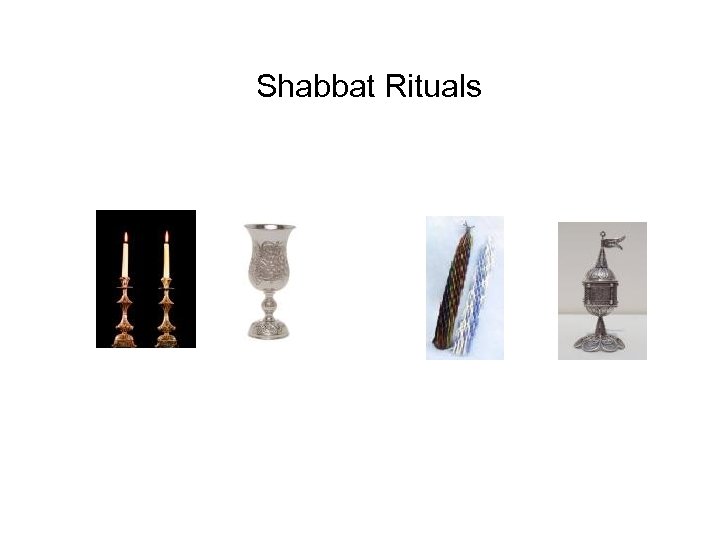 Shabbat Rituals
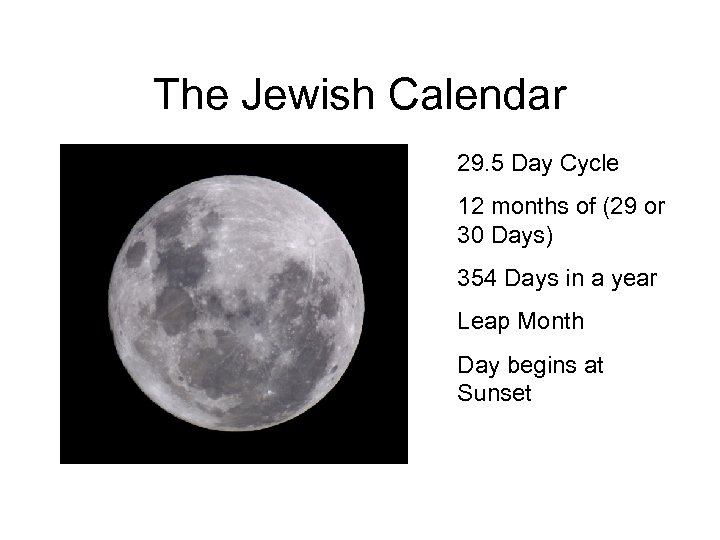 The Jewish Calendar 29. 5 Day Cycle 12 months of (29 or 30 Days) 354 Days in a year Leap Month Day begins at Sunset
 Holidays and Ritual Occasions 1. Pilgrimage Festivals 2. New Year Cycle 3. Commemorative Celebrations and Fasts
 Pilgrimage Festivals • Origins of the Festivals – – • • Agricultural holidays Rabbis add layers Tied to national/theological narrative Temple sacrifice Ritual Reenactment Passover - Leave Egypt (8 Days) Shavuot - Receive Torah (2 Days) Sukkot - Enter the Promised Land (8 Days)
 Pesah (Passover) • Biblical Roots: Spring harvest festival • Commemorates liberation from Egyptian slavery – “You shall observe the feast of unleavened bread, for on this very day I brought your ranks out of the land of Egypt; you shall observe this day throughout the ages as an institution for all time. ” (Exodus 12: 17 -18)
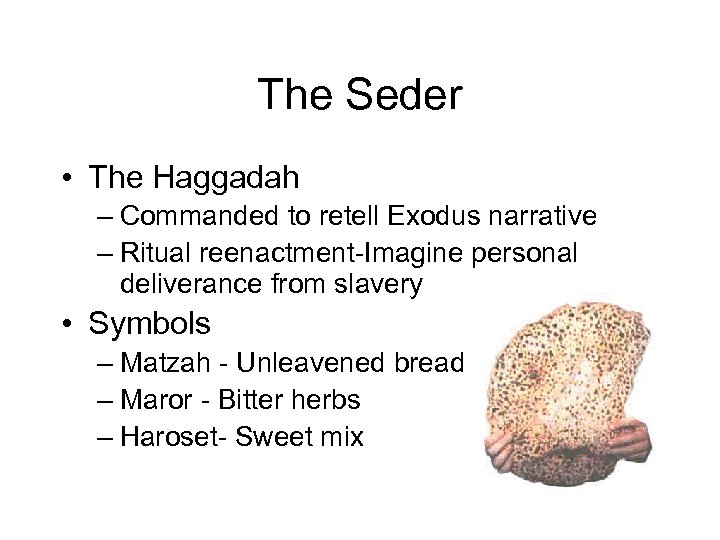 The Seder • The Haggadah – Commanded to retell Exodus narrative – Ritual reenactment-Imagine personal deliverance from slavery • Symbols – Matzah - Unleavened bread – Maror - Bitter herbs – Haroset- Sweet mix
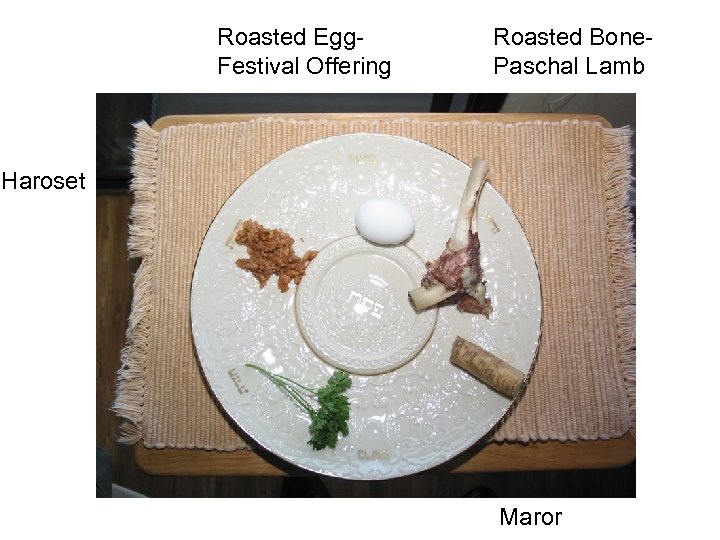 Roasted Egg. Festival Offering Roasted Bone. Paschal Lamb Haroset Maror
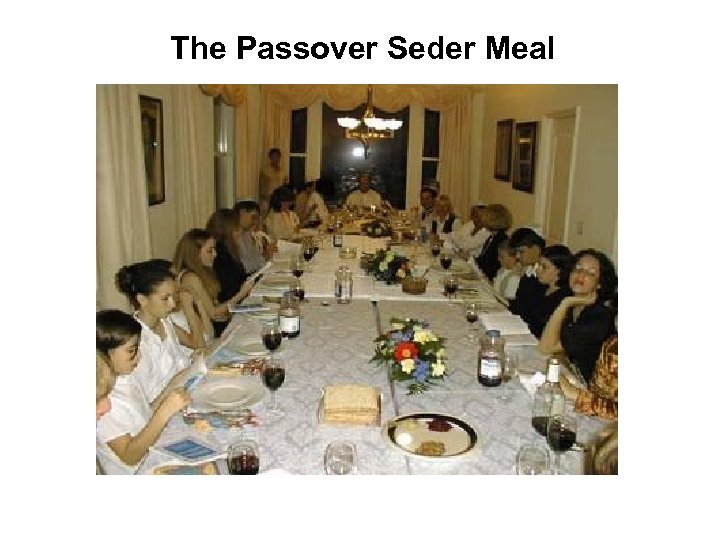 The Passover Seder Meal
 Shavuot (“Feast of Weeks”) • Biblical Source: “You shall observe Shavuot, of first fruits of the wheat harvest. ” (Exodus 34: 21) • Rabbinic Reading: Commemorates giving of Torah at Mt. Sinai • Fewer home rituals than Passover or Sukkot – All night studying
 Sukkot- Biblical Sources • Biblical Source: • Exodus: “the Feast of the Ingathering at the end of the year, when you gather in the result of your work from the field. ” (Exodus 23: 16) • Leviticus: “You shall live in booths (sukkot) seven days…in order that future generations may know that I made the Israelite people live in booths when I brought them out of the land of Egypt. ” (Leviticus 23: 40) • Sukkah- Temporary structures for harvest
 Sukkot-Rabbinic Significance • Significance – Experience of wandering and exile – Liberation and God’s protection – Fragility vs. God’s presence • Ritual – Commandment to be happy – Live in the Sukkah (temporary structure) – Four Species-lulav and etrog
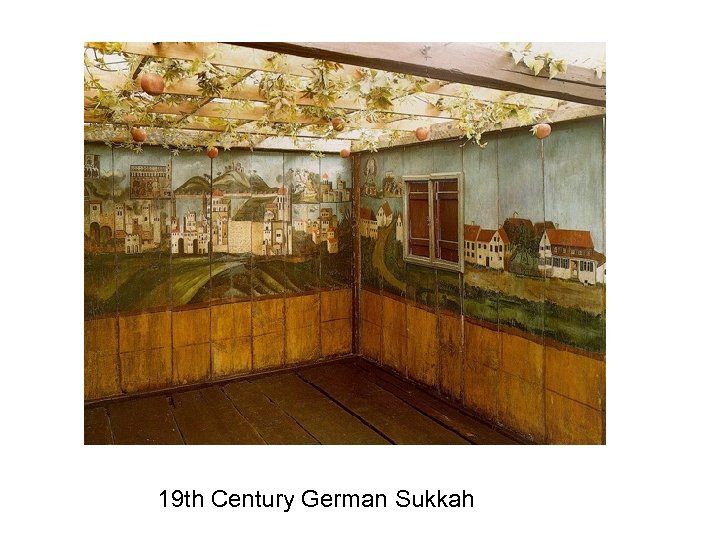 19 th Century German Sukkah
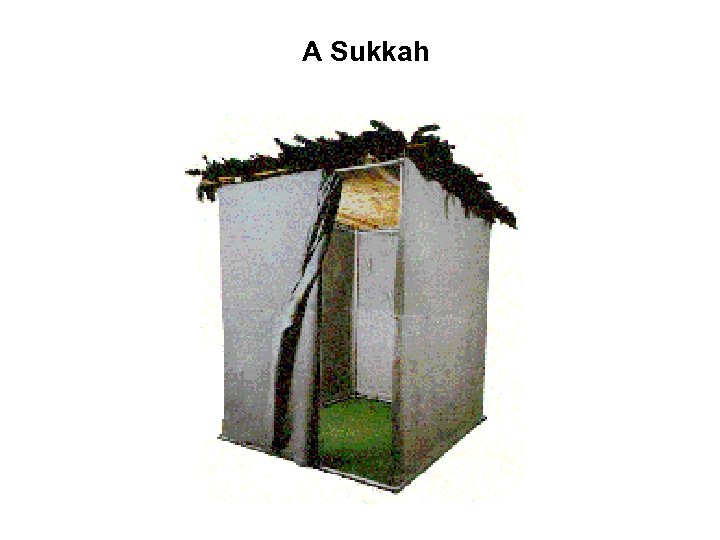 A Sukkah
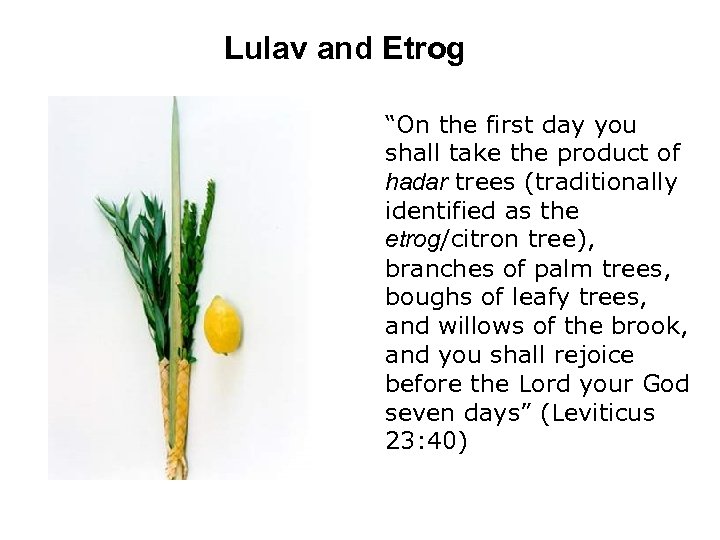 Lulav and Etrog “On the first day you shall take the product of hadar trees (traditionally identified as the etrog/citron tree), branches of palm trees, boughs of leafy trees, and willows of the brook, and you shall rejoice before the Lord your God seven days” (Leviticus 23: 40)
 Shemini Atzeret/Simhat Torah • Eight Day of Assembly-last day of Sukkot • Simhat Torah-Rejoicing in the Torah – Completion of the Torah reading cycle – Dancing and celebration
 The New Year Cycle • High Holidays or Yamim Noraim (Days of Awe) – Rosh Hashannah (New Year’s Day) – Yom Kippur (Day of Atonement) – Sukkot (Tabernacles)
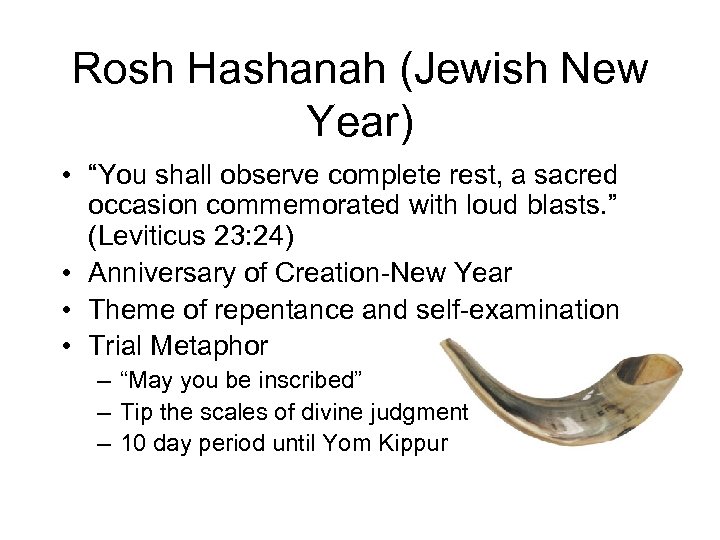 Rosh Hashanah (Jewish New Year) • “You shall observe complete rest, a sacred occasion commemorated with loud blasts. ” (Leviticus 23: 24) • Anniversary of Creation-New Year • Theme of repentance and self-examination • Trial Metaphor – “May you be inscribed” – Tip the scales of divine judgment – 10 day period until Yom Kippur
 Yom Kippur-Biblical Origins • “Mark the tenth day of the seventh month is the Day of Atonement. It shall be a sacred occasion for you; you shall practice selfdenial, and you shall bring a gift to the lord…For it is a day of Atonement, on which expiation is made on your behalf before the Lord your God. ” (Leviticus 23: 27) • High priest performs rite to expiate people’s sins
 Yom Kippur (Day of Atonement) • Rabbis call it “Day of Judgment” – – Climax of trial God decides fate of individual and Israel Excellent replacement for Temple Clean slate every year • Focus on spiritual concerns – Abstention from food, drink, luxury, sexual activity – Imagery of Death
 Commemorative Celebrations • Mythic narrative remains central in yearly calendar • Commemorate great moments and tragedies through rituals
 Chanukah (Dedication) • No reference in Hebrew Bible • Victory of Maccabees over Syrian domination in 135 BCE • Rededicate the Temple • Miracle of jar of oil added in Talmud
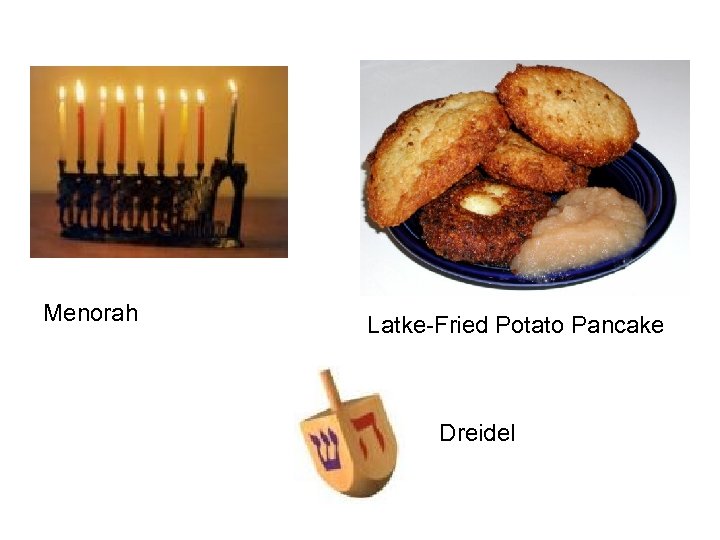 Menorah Latke-Fried Potato Pancake Dreidel
 Tu Bishvat • • Birthday of the Trees Mystical Significance Zionist Symbolism Environmental Holiday-Jewish Earth Day
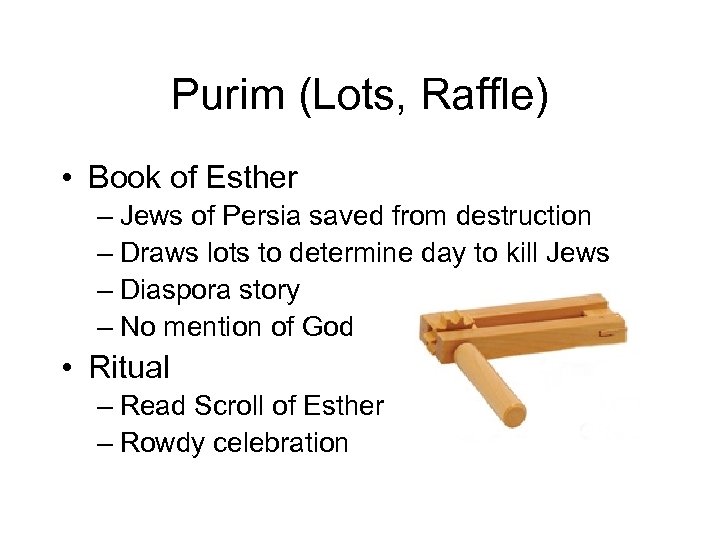 Purim (Lots, Raffle) • Book of Esther – Jews of Persia saved from destruction – Draws lots to determine day to kill Jews – Diaspora story – No mention of God • Ritual – Read Scroll of Esther – Rowdy celebration
 Commemorative Fasts • 4 minor fast days – Daylight and full-day • 3 connected to catastrophe of Temple’s destruction – Tisha B’Av-saddest day on the calendar
 New Holidays • Israel Independence Day • Holocaust Memorial Day