 Скачать презентацию Jesus and the Apostles 6 BC 70
2992da88372b19ddd62c945fcd76c19d.ppt
- Количество слайдов: 55



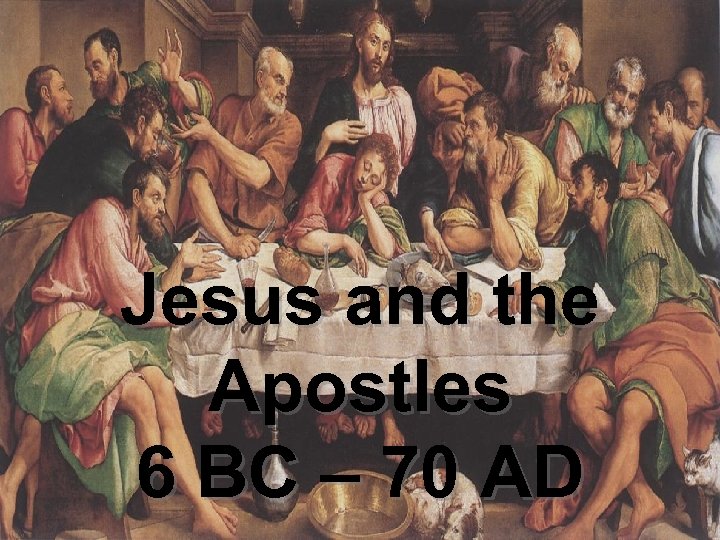
Jesus and the Apostles 6 BC – 70 AD

What is History? Technically it is recorded bias, but to be more specific… 1. Historical Process – What actually happened 2. Historiography – What got written down
Fullness of Time for The Birth of Christ But when the fullness of the time was come, God sent forth his Son, made of a woman, made under the law, To redeem that were under the law, that we might receive the adoption of sons. -Galatians 4: 4 -5 KJV 1. 2. 3. 4. 5. Koine Greek Pax Romana Roman Roads Special status of Jews in Rome Peak and failure of Philosophy
Pentecost: The Birth of the Church And when the day of Pentecost was fully come, they were all with one accord in one place. And suddenly there came a sound from heaven as of a rushing mighty wind, and it filled all the house where they were sitting. And there appeared unto them cloven tongues like as of fire, and it sat upon each of them. (Act 2: 1 -3)
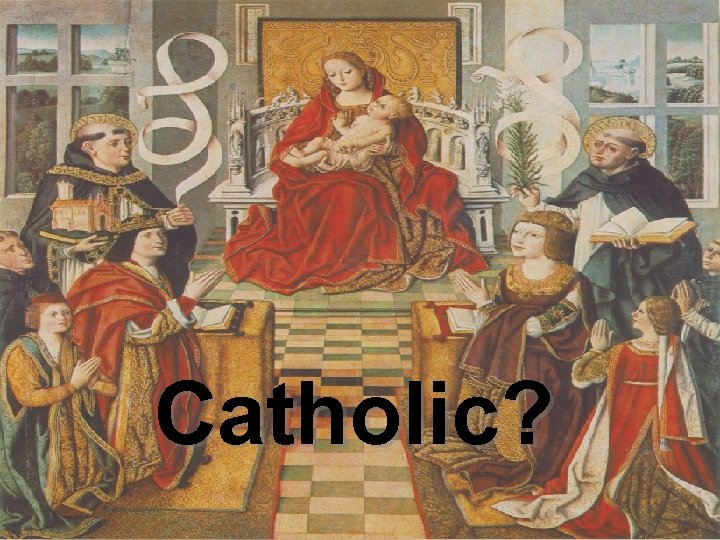
Catholic?
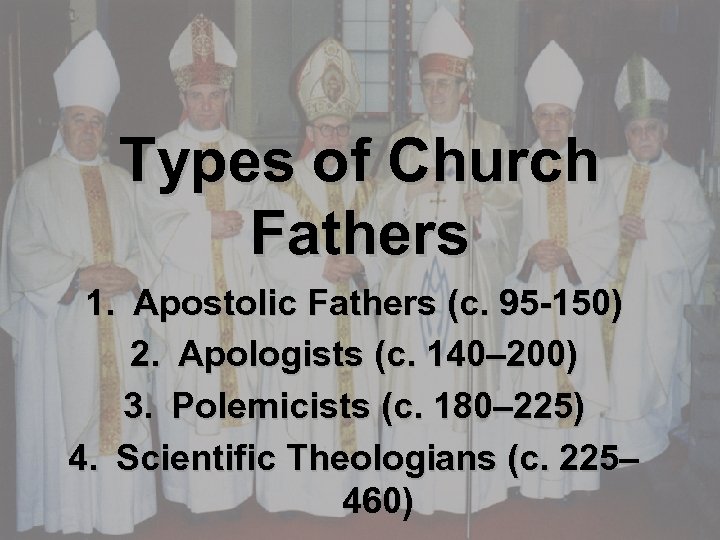
Types of Church Fathers 1. Apostolic Fathers (c. 95 -150) 2. Apologists (c. 140– 200) 3. Polemicists (c. 180– 225) 4. Scientific Theologians (c. 225– 460)
The Apostolic Fathers • Took over after the apostles in founding the early church • Most of their early lives are unknown as only the Christian life was important to them • Usually direct disciples of the apostles • Stayed primarily in the locale in which they grew as Christians • Were godly men of good repute (1 Tim 3)
The Bishop? • The early church bishop was different from the modern concept of bishop • No clear definition has lead to much dispute • In short they ran the local church in a semi-authoritarian manner
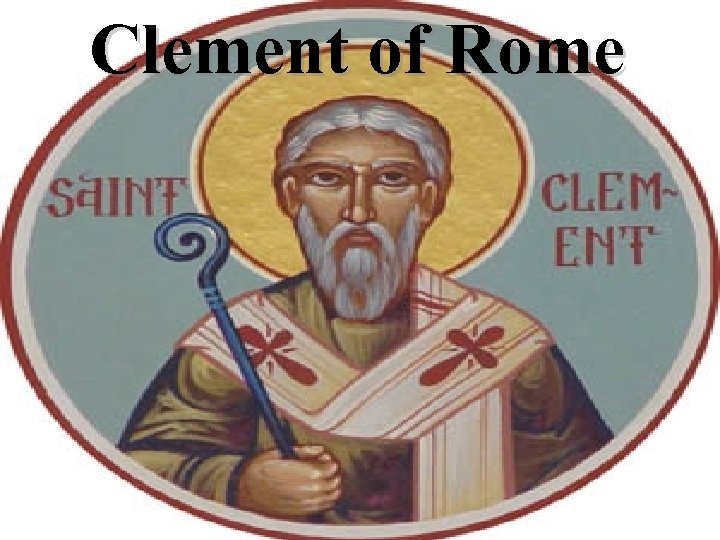
Clement of Rome
Clement of Rome • • • Little is known of his early life, but he was well educated particularly in the Septuagint (Greek Old Testament) Became “the” or at least one of the bishop(s) of Rome Is considered the 4 th pope in the Roman Catholic Church Wrote the nearly Canonical I Clement Was probably martyred but the manner in which it occurred is unclear
Clement of Rome I Clement – Cease rebelling – Come under elders authority – Exhortation to love, penitence and humility – Apostolic succession – Desire for unity in the church
Ignatius of Antioch life Only seen at the end of his • • Was one of the earliest if not the leader of the church in Antioch • Arrested and taken to Rome to be martyred for Christ • Wrote 7 letters while traveling to Rome
Ignatius of Antioch His Seven Letters • Ephesus • Magnesia • Tralles • Romans • Philadelphians • Smyrneans • To Polycarp
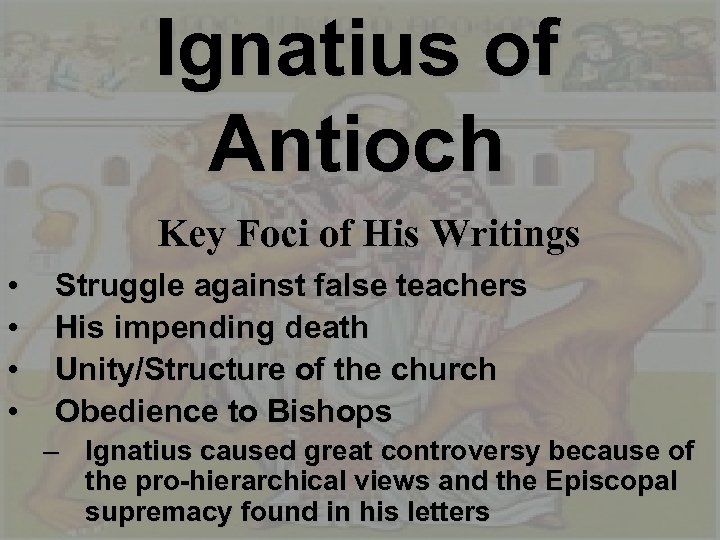
Ignatius of Antioch Key Foci of His Writings • • Struggle against false teachers His impending death Unity/Structure of the church Obedience to Bishops – Ignatius caused great controversy because of the pro-hierarchical views and the Episcopal supremacy found in his letters
Polycarp • • Bishop of Smyrna Disciple of John the Apostle Wrote a letter to the Philippian Church Was simple, loving, humble and pastoral • Martyred Feb. 22, c. 155 AD
Didache (The Teaching) • “The Teaching of the Apostles” • 2 Parts – The “Two Ways” Life v. Death – Manual of church order and practice • • Baptism The Eucharist Prayer Discerning of False Teachers

The Spread of Christianity 1. 2. 3. 4. 5. God Burning Conviction Need in the hearts of people Love for one another Persecution
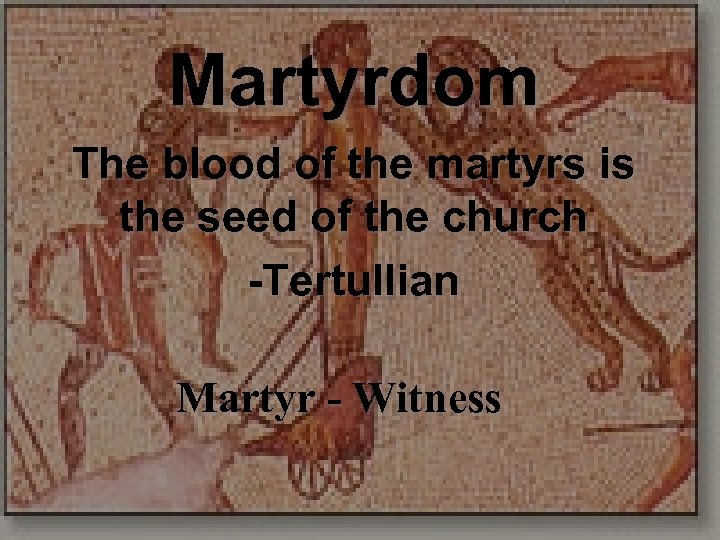
Martyrdom The blood of the martyrs is the seed of the church -Tertullian Martyr - Witness
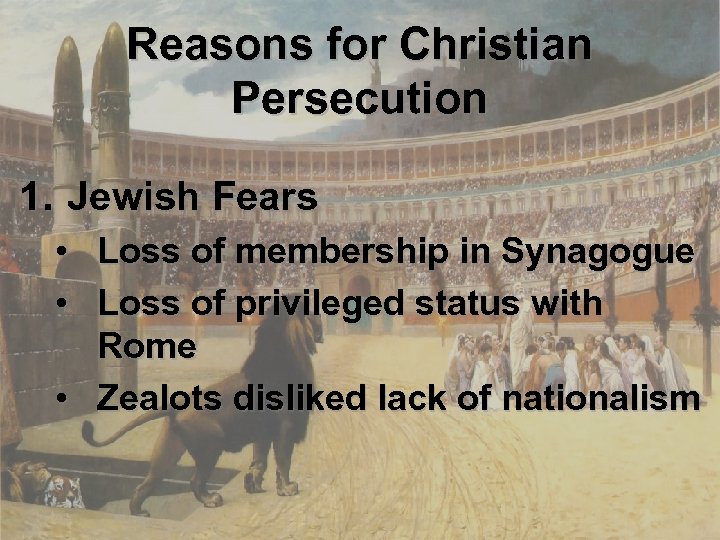
Reasons for Christian Persecution 1. Jewish Fears • • Loss of membership in Synagogue Loss of privileged status with Rome • Zealots disliked lack of nationalism
Reasons for Christian Persecution 2. Roman Politics • Christians believed in an incoming kingdom with Christ, not the emperor, as its head • Union of state and religion excluded Christians from political customs
Reasons for Christian Persecution 3. Social Reasons • Refusal to engage in sporting/theatrical events • Condemnation of the gladiatorial games • Christianity gave status to slaves and women
Reasons for Christian Persecution 4. Economic Reasons • Loss of profit for idol makers/pagan temples • Christians were scapegoats
Reasons for Christian Persecution 5. Religious Reasons • Christianity is Monotheist and exclusive • Holding of secret “Love Feasts” • Christians were strange atheists • Refusal to worship the Emperor
The Early Persecutions 64 -100 AD Nero 64 -68 AD • Nero liked to play dress-up, the lyre, sing, act, and get crazy • Nero fiddled while Rome burned • Burning of Rome • Christian torches • Peter and Paul executed
The Early Persecutions 64 -100 AD Destruction of the Temple • Many signs, portents, and prophecies occurred. • A group of hyper-zealous Jews rebelled • The Roman army put down the rebellion • Despite disruptions, Titus lead the assault on Jerusalem, was victorious and the temple was burned to the ground. • The loss of Jerusalem separated Christian from Jew and forced Christianity to de-
Official Persecution Diocletian 284 -305 • 260 -303 Christians had a respite • Diocletian, a previously neutral emperor, writes 3 edicts calling for persecution • 303 Complete and systematic persecution of Christianity, the worst yet experienced • Persecution targeted the church infrastructure: buildings, bishops, and books
Official Persecution Galerius • Prime force behind Diocletian persecutions • Ruled half of the Empire along with his nephew Maximin Daza, both under Diocletian • Issued an edict requiring all men women and children to sacrifice to the gods, and all food in the markets to be sprinkled with sacrificial wine. • Edict forced Christians to convert, die, or
Positive Effects of Persecution 1. “Blood of the martyrs is the seed of the Church” – Tertullian 2. Purification of the church 3. Spreading of the gospel 4. Canonization of scripture 5. Provided Apologia for the faith
Negative Effects of Persecution 1. 2. 3. People got dead The problem of the lapsed Creation of the Cult of the Martyrs 4. Lack of ability to leave a literary legacy
Age of Catholic Christianity III Heresy-Orthodoxy-The Canon
Gnosticism • Stemmed from the Greek word γνώσις knowledge • Incredibly Syncretistic (mish-mash of religions) • Entailed a search for secret, hidden, knowledge • There were many different forms of Gnosticism, but most kept three main points 1. Dualism – The eternal battle of Light v. Dark, Good v. Evil. usu. They are equal and opposite 2. Demiurgic notion – The separation of the
Marcion c. 110 -160 • • • Heretic Son of a bishop Excommunicated for heresy, contempt of authority and maybe seducing a virgin Studied under the Gnostic Cerdo Wrote Antithesis Met Polycarp
Marcion’s Beliefs 1. 2. 3. OT God and Jews were Evil NT God gracious and good Wrote an 11 book Canon including a mangled Luke and 10 of Paul’s epistles
Mani 215 -277 • Persian philosopher who began preaching his own religion, originally well received he fell out of favor and fled to India and China • Wrote several works in Persian, Syriac and a language of his own invention • Systematized Manichæism including Buddha, whom he discovered while in exile • Returned to Persia, but was convicted of corrupting the old religion and was martyred in 277 A. D.
Beliefs of Manichæism • • • Signaculum Oris – Purity in word and diet Signaculum manuum – Renunciation of material pursuits Signaculum sinus – celibacy 2 classes – “Perfect” and “Hearers” 12 Apostles->72 Bishops->72 Disciples
Montanus Mid-Late • • • nd 2 Century Heterodox - Semi Heretic From Asia Minor Began as a reaction to Gnostic excess, Montanus desired true Christian purity in life Somnambulistic Ecstasies Inspired organ of the Paraclete the helper and comforter in the time of distress Had 2 main Prophetesses Priscilla &
Montanists, Phrygians, and Cataphrygians • • • The Pneumatics “Spiritual Christians” Combated Gnosticism Asceticism No forgiveness for mortal sin postbaptism Miraculous Gifts - especially prophecy Universal Priesthood
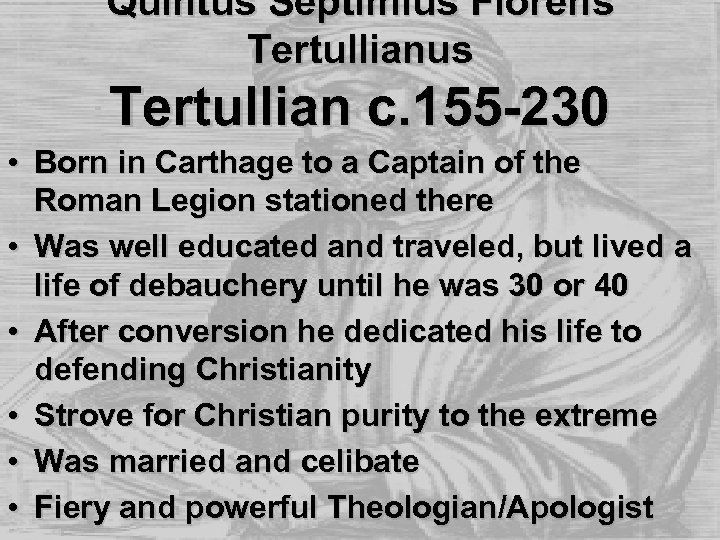
Quintus Septimius Florens Tertullianus Tertullian c. 155 -230 • Born in Carthage to a Captain of the Roman Legion stationed there • Was well educated and traveled, but lived a life of debauchery until he was 30 or 40 • After conversion he dedicated his life to defending Christianity • Strove for Christian purity to the extreme • Was married and celibate • Fiery and powerful Theologian/Apologist
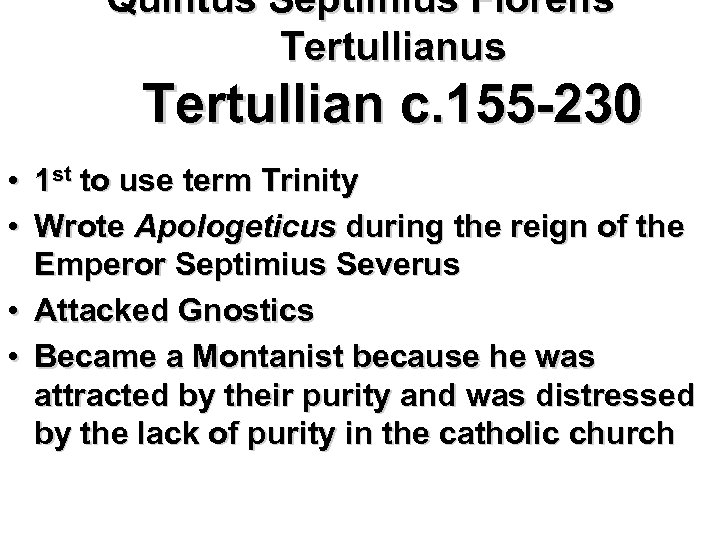
Quintus Septimius Florens Tertullianus Tertullian c. 155 -230 • 1 st to use term Trinity • Wrote Apologeticus during the reign of the Emperor Septimius Severus • Attacked Gnostics • Became a Montanist because he was attracted by their purity and was distressed by the lack of purity in the catholic church
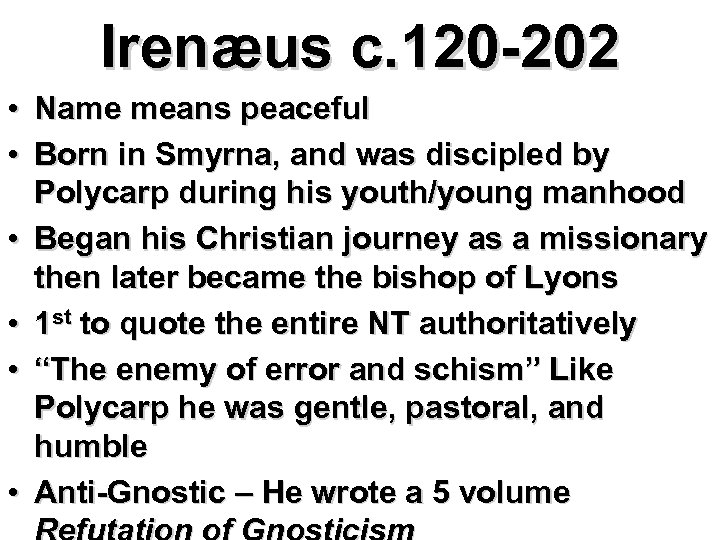
Irenæus c. 120 -202 • Name means peaceful • Born in Smyrna, and was discipled by Polycarp during his youth/young manhood • Began his Christian journey as a missionary then later became the bishop of Lyons • 1 st to quote the entire NT authoritatively • “The enemy of error and schism” Like Polycarp he was gentle, pastoral, and humble • Anti-Gnostic – He wrote a 5 volume
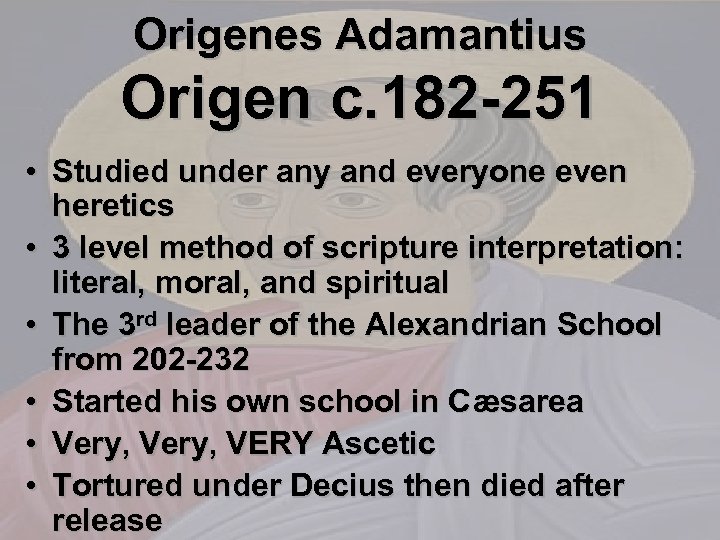
Origenes Adamantius Origen c. 182 -251 • Studied under any and everyone even heretics • 3 level method of scripture interpretation: literal, moral, and spiritual • The 3 rd leader of the Alexandrian School from 202 -232 • Started his own school in Cæsarea • Very, VERY Ascetic • Tortured under Decius then died after release
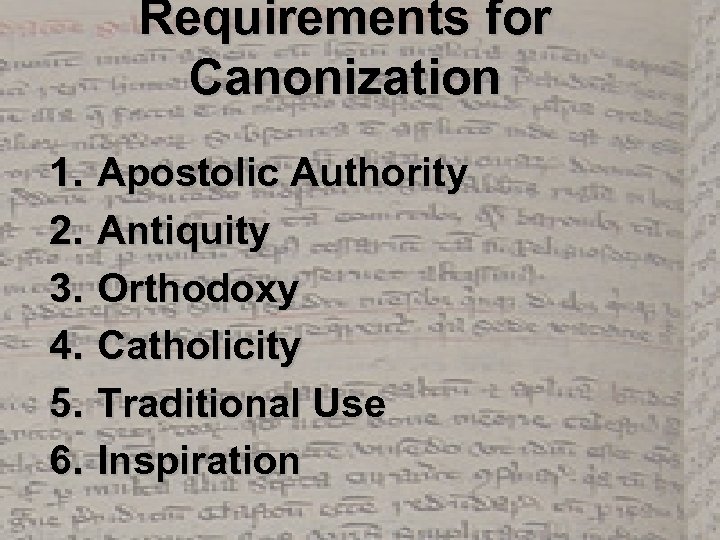
Requirements for Canonization 1. 2. 3. 4. 5. 6. Apostolic Authority Antiquity Orthodoxy Catholicity Traditional Use Inspiration
Age of the Christian Roman Empire I Constantine The Best and Worst thing ever to Happen to Christianity
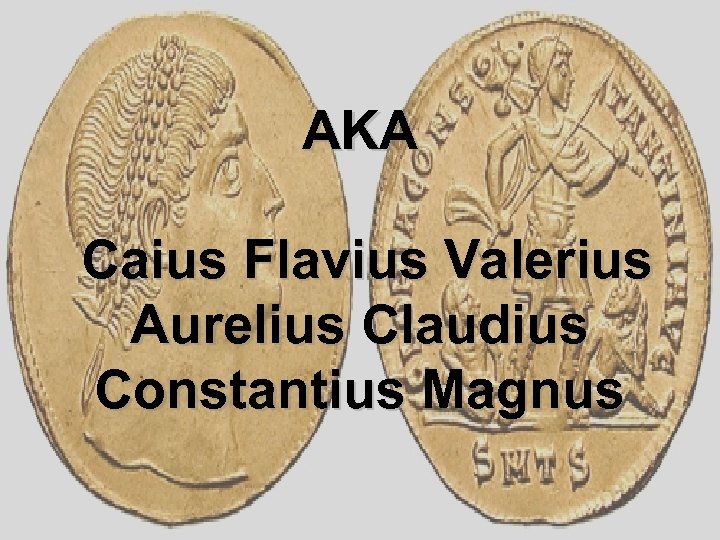
AKA Caius Flavius Valerius Aurelius Claudius Constantius Magnus
Constantine’s Early Life • Son of Co-Emperor Constantius Chlorus and Helena • Served under Diocletian during the Egyptian and Persian Wars • Returned to father in Gaul to become Emperor
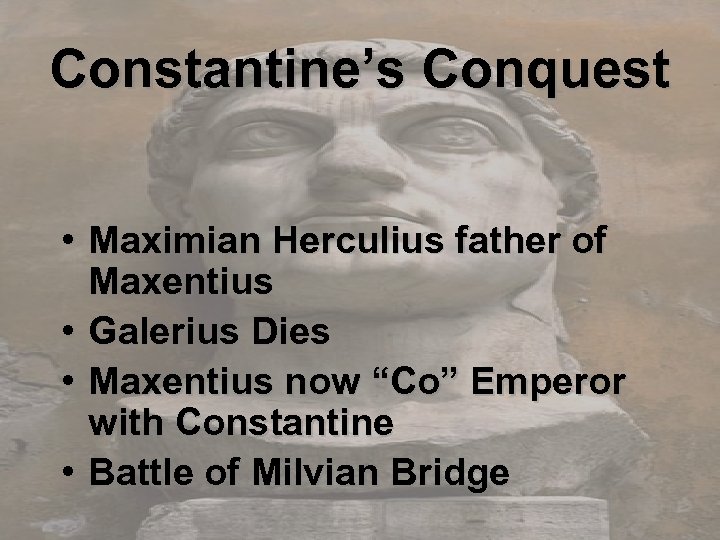
Constantine’s Conquest • Maximian Herculius father of Maxentius • Galerius Dies • Maxentius now “Co” Emperor with Constantine • Battle of Milvian Bridge
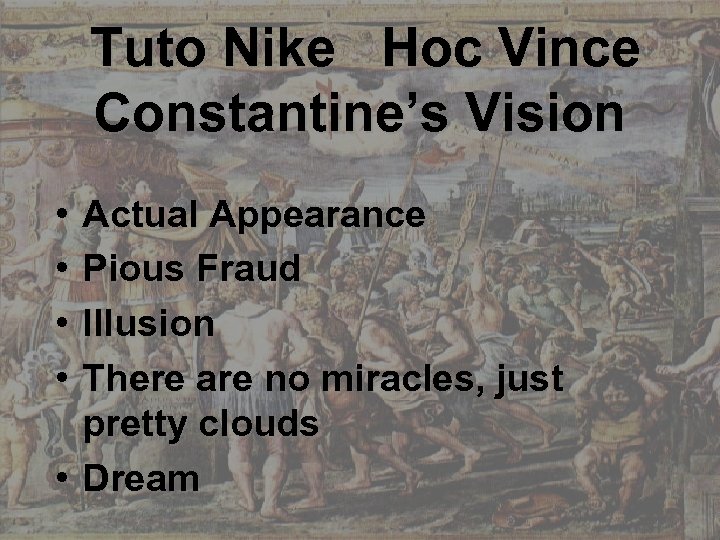
Tuto Nike Hoc Vince Constantine’s Vision • • Actual Appearance Pious Fraud Illusion There are no miracles, just pretty clouds • Dream
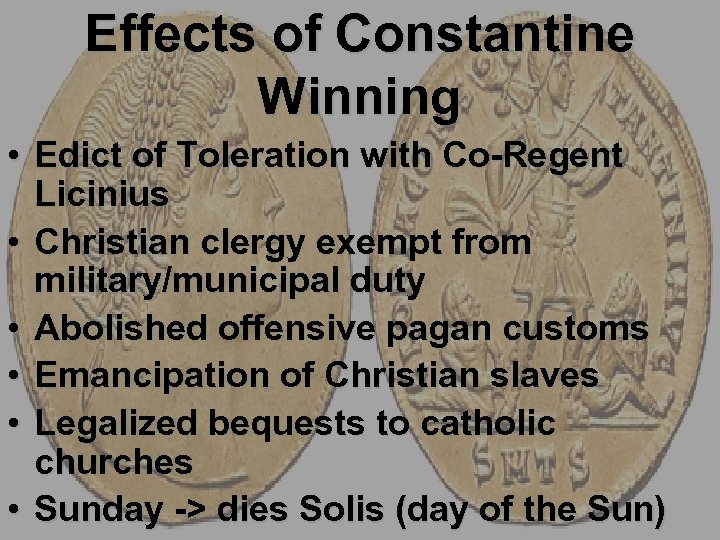
Effects of Constantine Winning • Edict of Toleration with Co-Regent Licinius • Christian clergy exempt from military/municipal duty • Abolished offensive pagan customs • Emancipation of Christian slaves • Legalized bequests to catholic churches • Sunday -> dies Solis (day of the Sun)
Bad Constantine • Warred against his brother in law Licinius defeating him in 324 • Violates promise of mercy and executes Licinius and 11 year old son Licinius • Executes Crispus his eldest son for treason as well as commiting incest with Fausta (Constantine’s
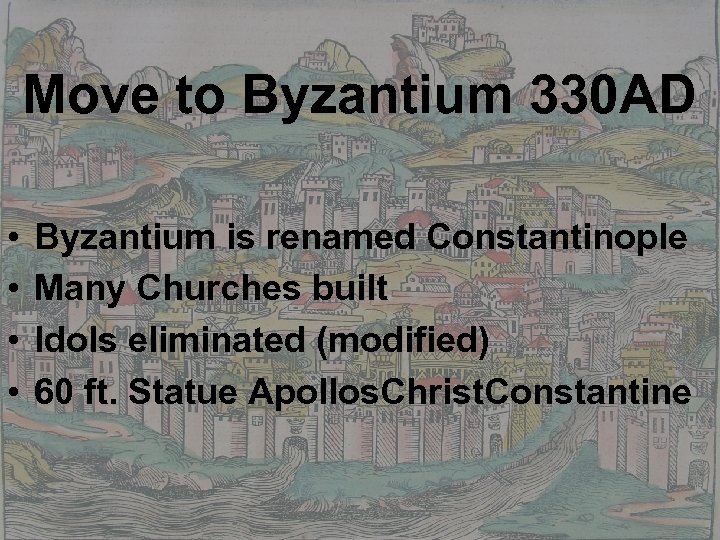
Move to Byzantium 330 AD • • Byzantium is renamed Constantinople Many Churches built Idols eliminated (modified) 60 ft. Statue Apollos. Christ. Constantine
End of Constantine • Deathbed baptism, performed by the semi-Arian bishop Eusebius of Nicomedia • Baptized declaring “Now let us cast away all duplicity” • Wore only baptism robes until death a few days later, on Pentecost, May, 22, 337
Post Constantine • Empire is Divided between his 3 sons Constantine II, Constans, and Constantius • Not very Christian boys • Constans killed Con II, then was in turn killed by the barbarian Magnetius • Constantius defeated Magnetius’ army, resulting in Magnetus committing suicide, becoming the sole Emperor of the Rome. A weak ruler who died a natural death.
Theodosius the Great 392 -395 • The true beginning of the Christianized Emperors • Chastized by Ambrose for massacre • Intiated the final suppression of Paganism • 391 banned under heavy fine the visiting of Pagan temples for religious purposes • Without state support of approval Paganism collapsed as a system
Positive Effects of the Christianized Roman Empire 1. Increased respect for women 2. Better treatment of slaves/freedom for Christian slaves 3. Gladiator games slowed if not stopped 4. More justice in Roman legislation
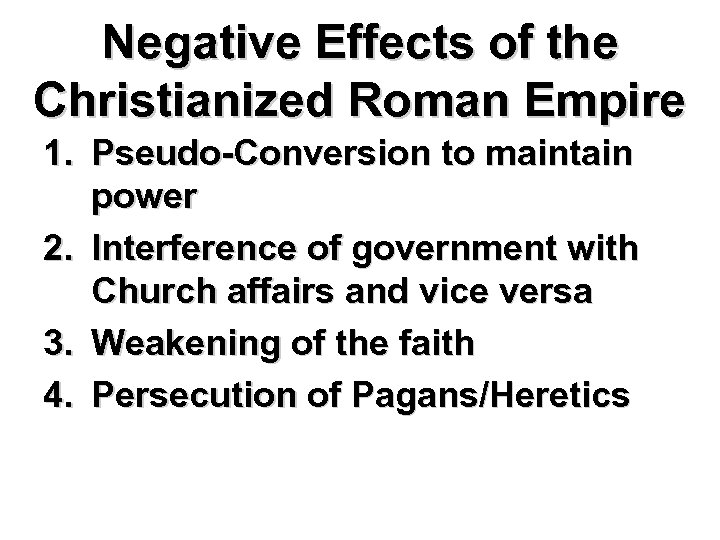
Negative Effects of the Christianized Roman Empire 1. Pseudo-Conversion to maintain power 2. Interference of government with Church affairs and vice versa 3. Weakening of the faith 4. Persecution of Pagans/Heretics
Скачать презентацию Jesus and the Apostles 6 BC 70
2992da88372b19ddd62c945fcd76c19d.ppt