 Скачать презентацию JCOMM Data Buoy Cooperation Panel October 16 2006
732a87a55003bc415c9811d6e31aeb2b.ppt
- Количество слайдов: 22



JCOMM Data Buoy Cooperation Panel October 16, 2006 National Data Buoy Center 2006 Review: A Year of Growth Paul F. Moersdorf, Ph. D, Director
National Data Buoy Center Objective: Build and sustain a global observing system and ensure consistently high quality data responsive to the longterm climate and maritime service requirements. Part 2 of brief Part 1 of brief
Part 1: NOOSS NDBC Ocean Observing System of Systems
Observing Growth at NDBC • NOAA’s major national and international contributions are through its coastal marine and global climate observation initiatives. • NDBC has collected meteorological data in U. S. coastal waters for over 30 years. • NDBC now has a global responsibility that includes: • Tropical Atmosphere Ocean (TAO) array • Pilot Research Array in the Tropical Atlantic • Tsunami detection network • Hurricane buoy network
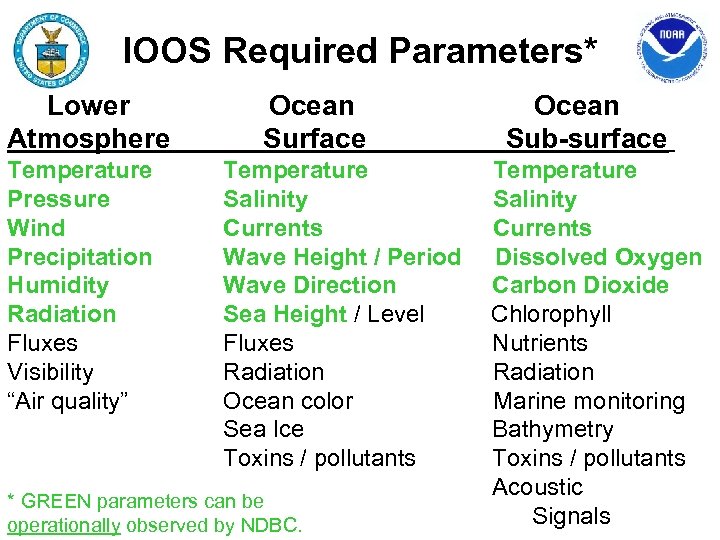
IOOS Required Parameters* Lower Atmosphere Temperature Pressure Wind Precipitation Humidity Radiation Fluxes Visibility “Air quality” Ocean Surface Temperature Salinity Currents Wave Height / Period Wave Direction Sea Height / Level Fluxes Radiation Ocean color Sea Ice Toxins / pollutants * GREEN parameters can be operationally observed by NDBC. Ocean Sub-surface Temperature Salinity Currents Dissolved Oxygen Carbon Dioxide Chlorophyll Nutrients Radiation Marine monitoring Bathymetry Toxins / pollutants Acoustic Signals
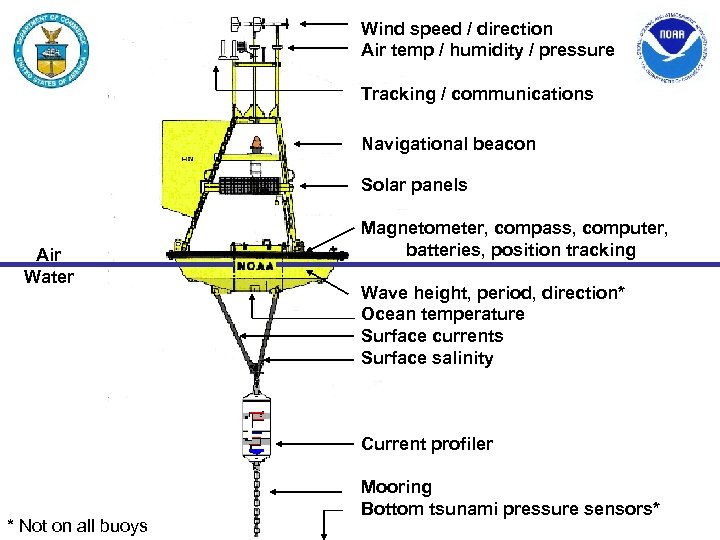
Wind speed / direction Air temp / humidity / pressure Tracking / communications Navigational beacon Solar panels Air Water Magnetometer, compass, computer, batteries, position tracking Wave height, period, direction* Ocean temperature Surface currents Surface salinity Current profiler * Not on all buoys Mooring Bottom tsunami pressure sensors*
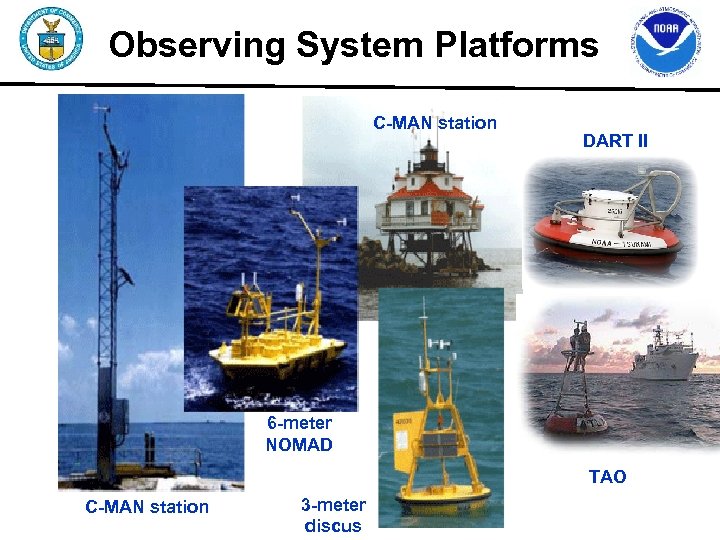
Observing System Platforms C-MAN station DART II 6 -meter NOMAD TAO C-MAN station 3 -meter discus
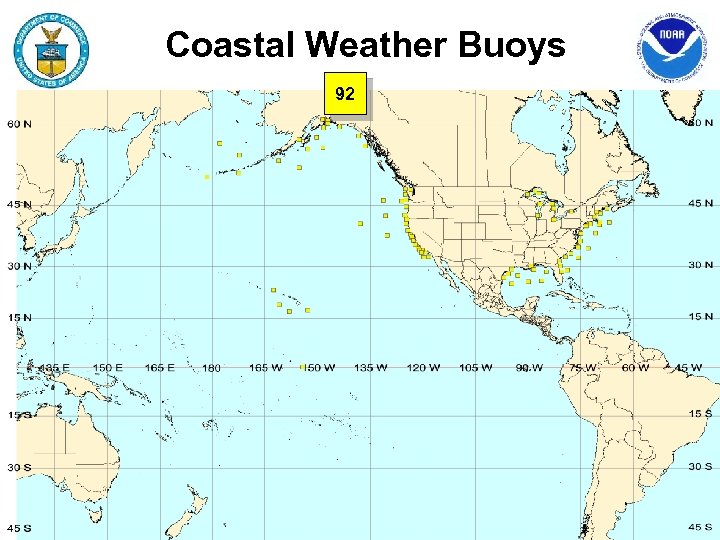
Coastal Weather Buoys 92 06 -062 (May 2006)
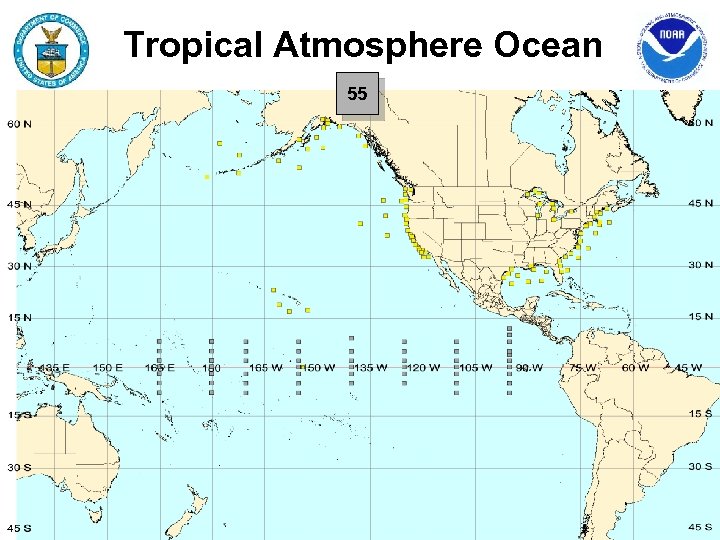
Tropical Atmosphere Ocean 55 06 -062 (May 2006)
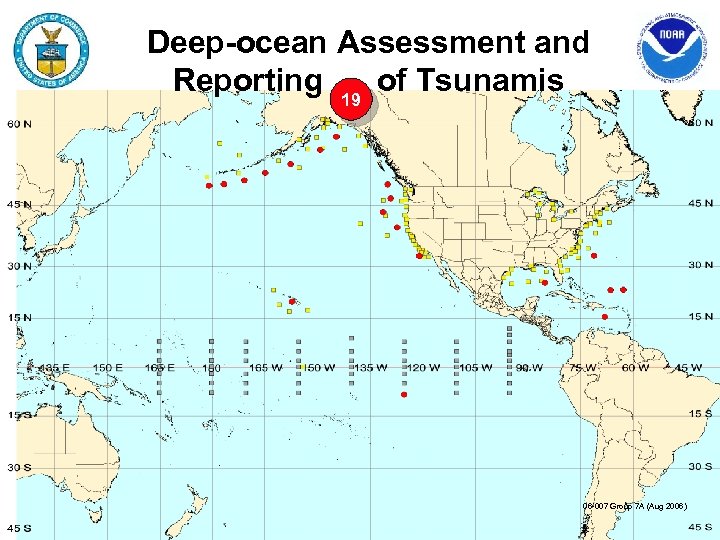
Deep-ocean Assessment and Reporting 19 of Tsunamis 06 -007 Group 7 A (Aug 2006)
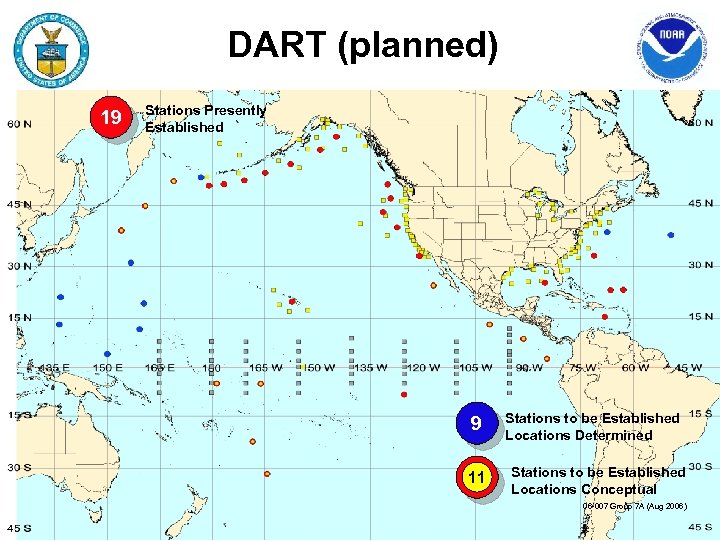
DART (planned) 19 Stations Presently Established 9 11 Stations to be Established Locations Determined Stations to be Established Locations Conceptual 06 -007 Group 7 A (Aug 2006)
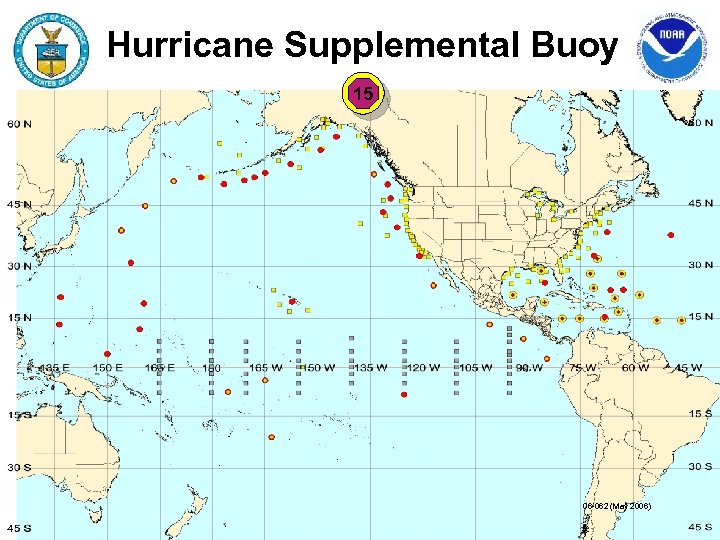
Hurricane Supplemental Buoy 15 06 -062 (May 2006)
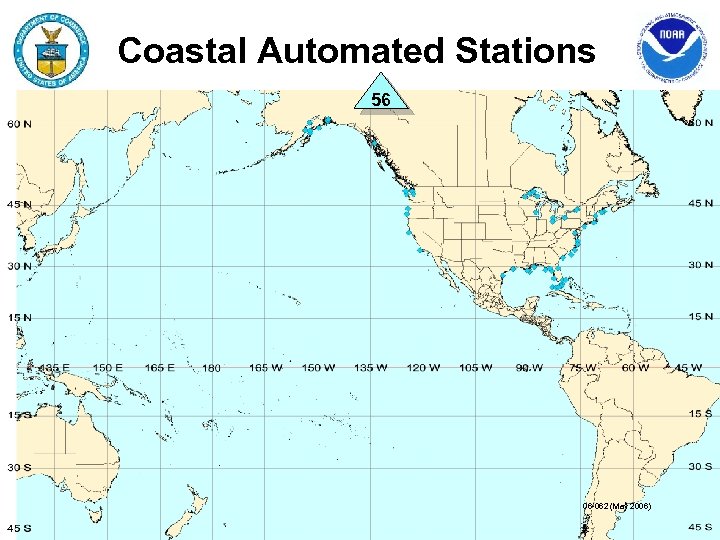
Coastal Automated Stations 56 06 -062 (May 2006)
Part 2: IOOS DAC Integrated Ocean Observing System Data Assembly Center
Data Assembly Center Activities • Occupy a leadership role in developing and setting IOOS standards and protocols through workshops, meetings, etc. • Obtain marine weather and ocean observations from NDBC and other NOAA platforms, regional observing systems, universities and commercial sites. • Ensure the consistent, high quality of these observations in a timeframe consistent with needs of forecasters, mariners, modelers, and archive centers. • Disseminate the data to diverse user communities via multiple U. S. IOOS recommended transmission paths.
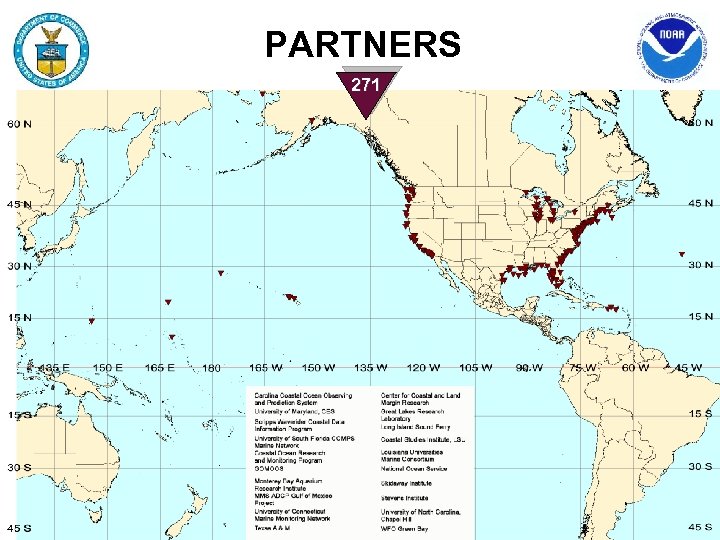
PARTNERS 271 06 -062 (May 2006)
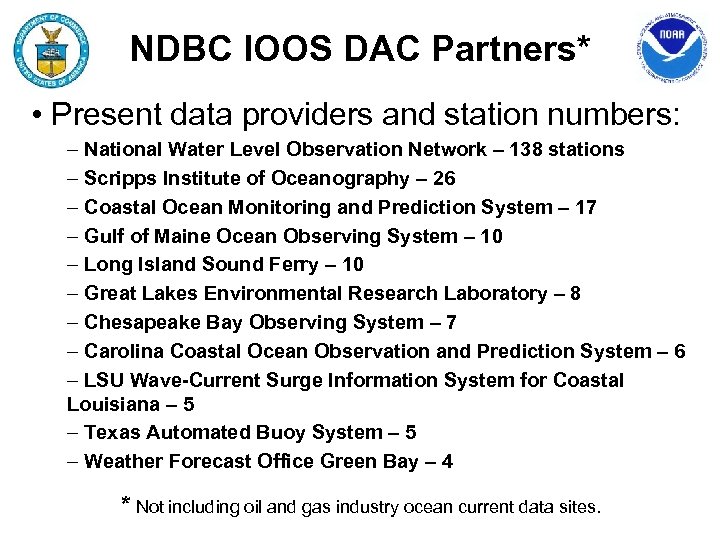
NDBC IOOS DAC Partners* • Present data providers and station numbers: – National Water Level Observation Network – 138 stations – Scripps Institute of Oceanography – 26 – Coastal Ocean Monitoring and Prediction System – 17 – Gulf of Maine Ocean Observing System – 10 – Long Island Sound Ferry – 10 – Great Lakes Environmental Research Laboratory – 8 – Chesapeake Bay Observing System – 7 – Carolina Coastal Ocean Observation and Prediction System – 6 – LSU Wave-Current Surge Information System for Coastal Louisiana – 5 – Texas Automated Buoy System – 5 – Weather Forecast Office Green Bay – 4 * Not including oil and gas industry ocean current data sites.
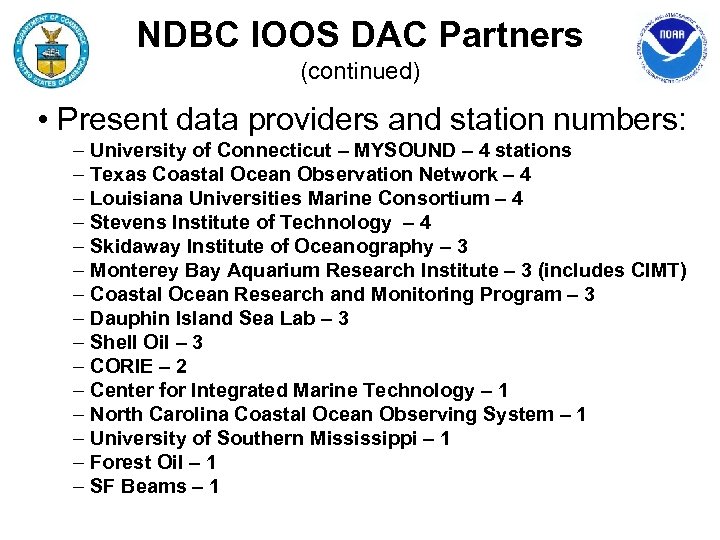
NDBC IOOS DAC Partners (continued) • Present data providers and station numbers: – University of Connecticut – MYSOUND – 4 stations – Texas Coastal Ocean Observation Network – 4 – Louisiana Universities Marine Consortium – 4 – Stevens Institute of Technology – 4 – Skidaway Institute of Oceanography – 3 – Monterey Bay Aquarium Research Institute – 3 (includes CIMT) – Coastal Ocean Research and Monitoring Program – 3 – Dauphin Island Sea Lab – 3 – Shell Oil – 3 – CORIE – 2 – Center for Integrated Marine Technology – 1 – North Carolina Coastal Ocean Observing System – 1 – University of Southern Mississippi – 1 – Forest Oil – 1 – SF Beams – 1
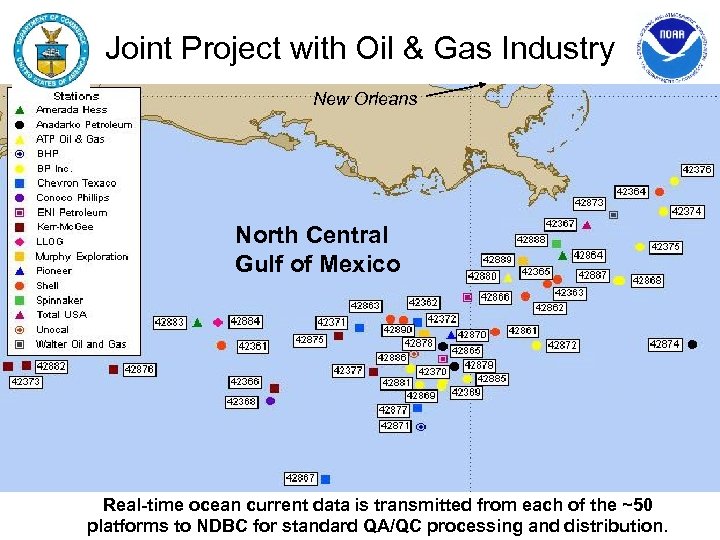
Joint Project with Oil & Gas Industry New Orleans North Central Gulf of Mexico Real-time ocean current data is transmitted from each of the ~50 platforms to NDBC for standard QA/QC processing and distribution.
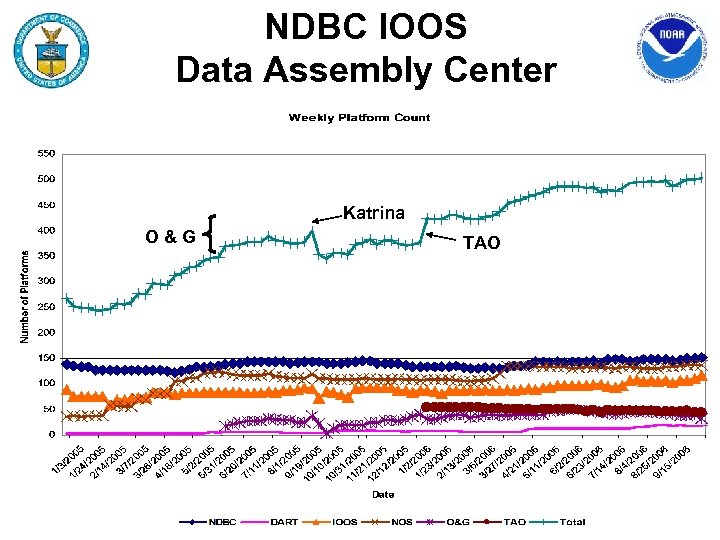
NDBC IOOS Data Assembly Center Katrina O&G TAO
Closing Thoughts This is a good time to be in Ocean Observing! Long term success depends on technology: Low / No cost maintenance; smaller, power efficient, economical (but still accurate) sensors; survivable platforms.
Thank You photo courtesy of Meteo. France
Скачать презентацию JCOMM Data Buoy Cooperation Panel October 16 2006
732a87a55003bc415c9811d6e31aeb2b.ppt