 Japanese
 grammar
 • • • Japanese has agglutinative grammatical structure since the beginning of flektivizatsii. From classic agglutinative languages ( Turkic, Mongolian ) it distinguishes the presence of two conjugations of verbs and irregular verbs , undeveloped system of possessive affixes , limited only by the prefixお - ( o- ) orご - ( th - ) , depending on the main word in the 2 nd and 3 rd person , as well as the presence of three groups of changes adjectives. As a result of strong Chinese influence Japanese characterized by counting suffixes , a group of Chinese adjectives - 的 (- teki ), and possibly also due to the influence of Chinese in Japanese no verb conjugations by numbers and persons. A characteristic feature of the Japanese language is the conjugation of verbs and adjectives on the basics , which are formed from the complete grammatical forms of a word. For the Japanese proposal characterized by the following principles : • subject, additions and circumstances precede the predicate , the predicate is always placed at the end of the sentence (Scheme SOV - Engl. Subject Object Verb, « The subject - direct object - predicate "); • modifier precedes the word; • there are no pretexts and characteristic language postpositions placed after the noun.
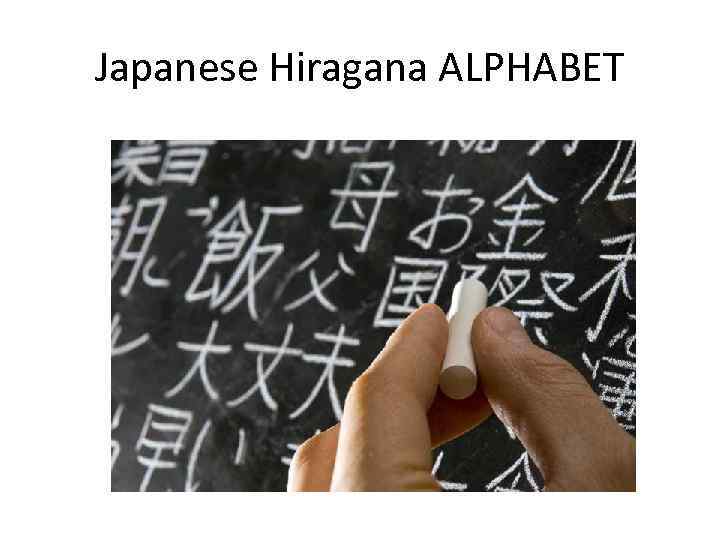 Japanese Hiragana ALPHABET
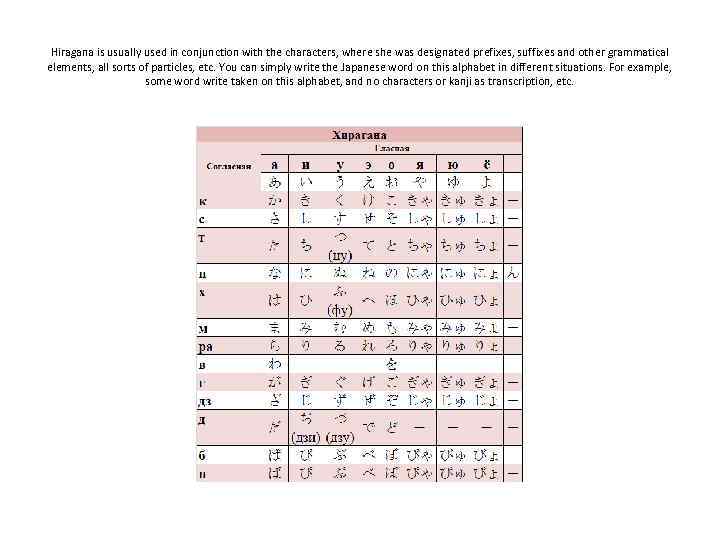 Hiragana is usually used in conjunction with the characters, where she was designated prefixes, suffixes and other grammatical elements, all sorts of particles, etc. You can simply write the Japanese word on this alphabet in different situations. For example, some word write taken on this alphabet, and no characters or kanji as transcription, etc.