 Скачать презентацию Japanese Club with Mrs Crist Konichi-wa My name
994497cc663c0544801eac6a70ad9bbb.ppt
- Количество слайдов: 21



Japanese Club with Mrs. Crist Konichi-wa, My name is Mrs. Crist and I am the foreign language teacher at Hanover Middle School. Besides speaking Spanish and French, I know a little bit of Japanese. I have been to Japan twice and have many Japanese friends. I worked for a Japanese company in Washington D. C. before I became a teacher. I want to share with you some of the things I learned about Japanese culture and language during this club.
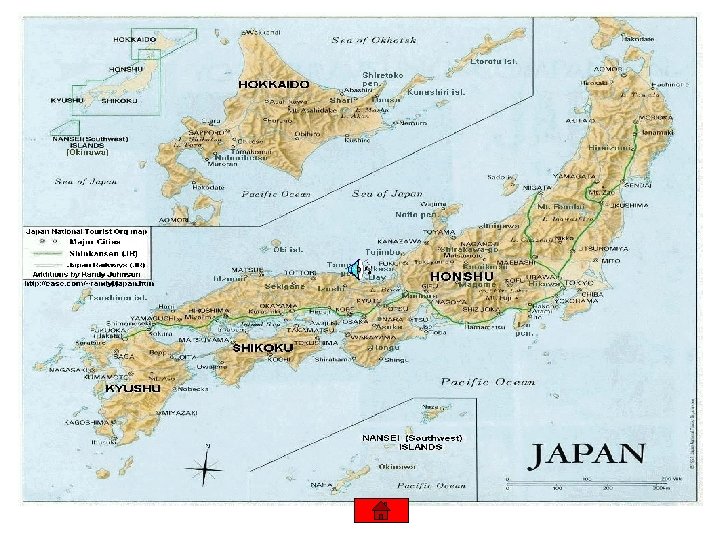
Navigate to the page you would like to visit Map of Japan Photos of Japan Facts comparing Cultural Tidbits Japan to 2 other countries under construction Vocabulary Pages Mrs. Crist’s photo album under construction
Let’s Compare Japan to U. S. A. and Mexico To get a better idea of where Japan stands compared to other countries in the word, let’s compare some facts about Japan to those of U. S. A. and Mexico. All of the information is very current, from the summer of 2008, taken from www. cia. gov.
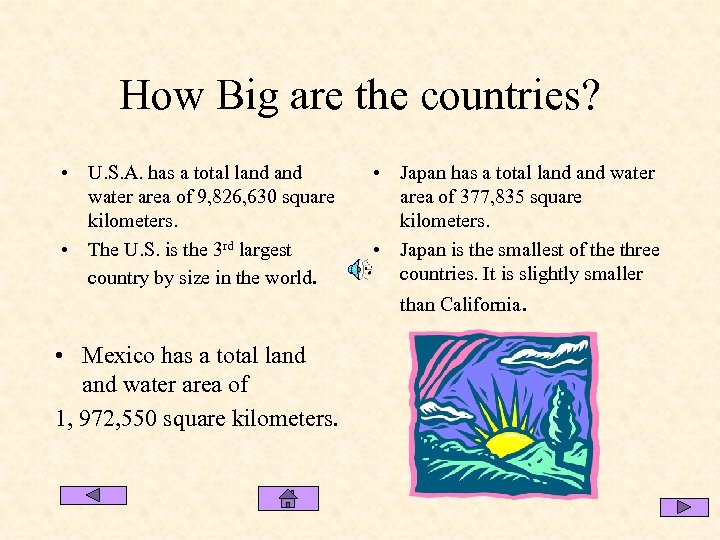
How Big are the countries? • U. S. A. has a total land water area of 9, 826, 630 square kilometers. • The U. S. is the 3 rd largest country by size in the world. • Mexico has a total land water area of 1, 972, 550 square kilometers. • Japan has a total land water area of 377, 835 square kilometers. • Japan is the smallest of the three countries. It is slightly smaller than California.
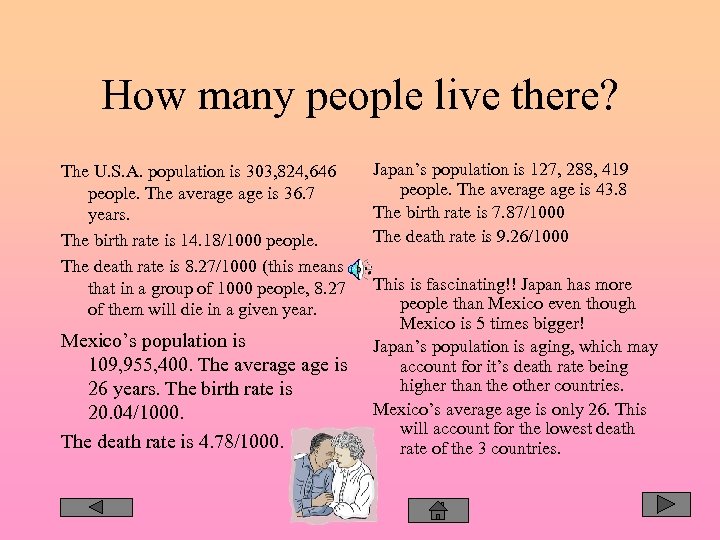
How many people live there? The U. S. A. population is 303, 824, 646 people. The average is 36. 7 years. The birth rate is 14. 18/1000 people. The death rate is 8. 27/1000 (this means that in a group of 1000 people, 8. 27 of them will die in a given year. Mexico’s population is 109, 955, 400. The average is 26 years. The birth rate is 20. 04/1000. The death rate is 4. 78/1000. Japan’s population is 127, 288, 419 people. The average is 43. 8 The birth rate is 7. 87/1000 The death rate is 9. 26/1000 This is fascinating!! Japan has more people than Mexico even though Mexico is 5 times bigger! Japan’s population is aging, which may account for it’s death rate being higher than the other countries. Mexico’s average is only 26. This will account for the lowest death rate of the 3 countries.
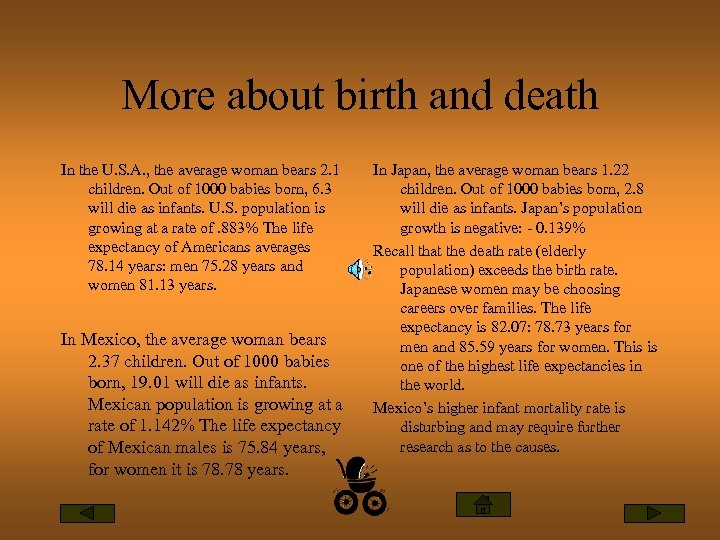
More about birth and death In the U. S. A. , the average woman bears 2. 1 children. Out of 1000 babies born, 6. 3 will die as infants. U. S. population is growing at a rate of. 883% The life expectancy of Americans averages 78. 14 years: men 75. 28 years and women 81. 13 years. In Mexico, the average woman bears 2. 37 children. Out of 1000 babies born, 19. 01 will die as infants. Mexican population is growing at a rate of 1. 142% The life expectancy of Mexican males is 75. 84 years, for women it is 78. 78 years. In Japan, the average woman bears 1. 22 children. Out of 1000 babies born, 2. 8 will die as infants. Japan’s population growth is negative: - 0. 139% Recall that the death rate (elderly population) exceeds the birth rate. Japanese women may be choosing careers over families. The life expectancy is 82. 07: 78. 73 years for men and 85. 59 years for women. This is one of the highest life expectancies in the world. Mexico’s higher infant mortality rate is disturbing and may require further research as to the causes.
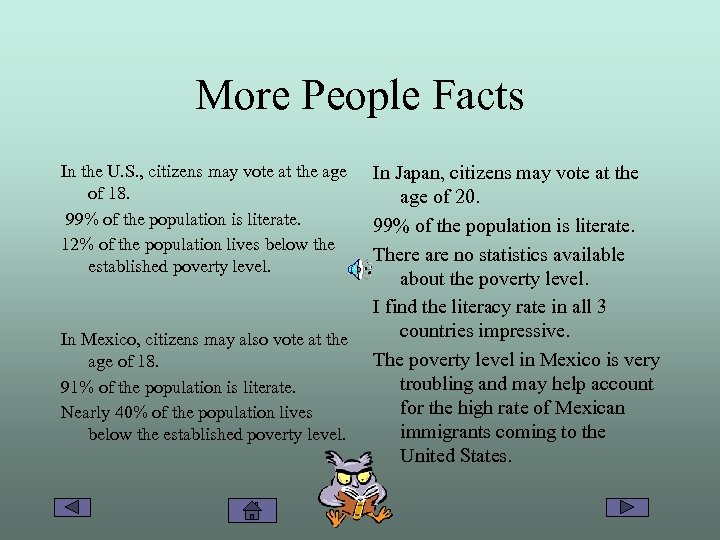
More People Facts In the U. S. , citizens may vote at the age of 18. 99% of the population is literate. 12% of the population lives below the established poverty level. In Mexico, citizens may also vote at the age of 18. 91% of the population is literate. Nearly 40% of the population lives below the established poverty level. In Japan, citizens may vote at the age of 20. 99% of the population is literate. There are no statistics available about the poverty level. I find the literacy rate in all 3 countries impressive. The poverty level in Mexico is very troubling and may help account for the high rate of Mexican immigrants coming to the United States.
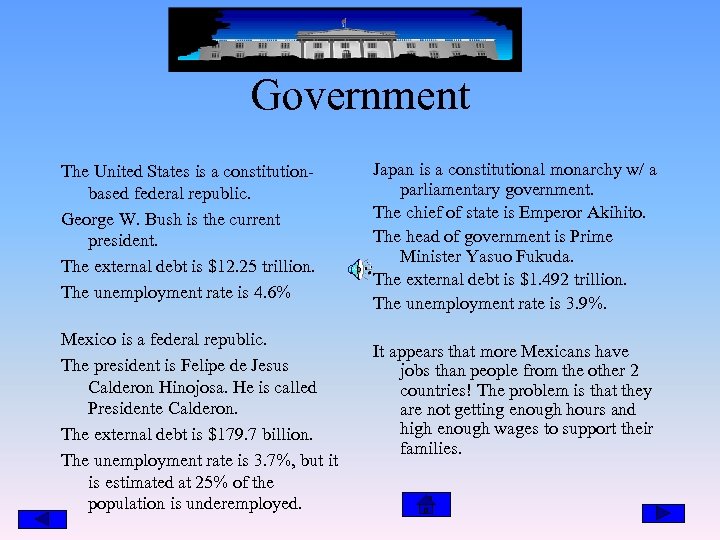
Government The United States is a constitutionbased federal republic. George W. Bush is the current president. The external debt is $12. 25 trillion. The unemployment rate is 4. 6% Mexico is a federal republic. The president is Felipe de Jesus Calderon Hinojosa. He is called Presidente Calderon. The external debt is $179. 7 billion. The unemployment rate is 3. 7%, but it is estimated at 25% of the population is underemployed. Japan is a constitutional monarchy w/ a parliamentary government. The chief of state is Emperor Akihito. The head of government is Prime Minister Yasuo Fukuda. The external debt is $1. 492 trillion. The unemployment rate is 3. 9%. It appears that more Mexicans have jobs than people from the other 2 countries! The problem is that they are not getting enough hours and high enough wages to support their families.
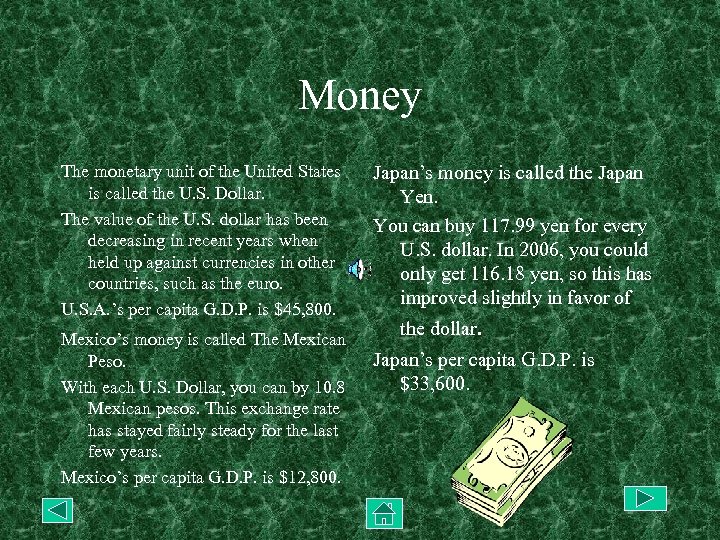
Money The monetary unit of the United States is called the U. S. Dollar. The value of the U. S. dollar has been decreasing in recent years when held up against currencies in other countries, such as the euro. U. S. A. ’s per capita G. D. P. is $45, 800. Mexico’s money is called The Mexican Peso. With each U. S. Dollar, you can by 10. 8 Mexican pesos. This exchange rate has stayed fairly steady for the last few years. Mexico’s per capita G. D. P. is $12, 800. Japan’s money is called the Japan Yen. You can buy 117. 99 yen for every U. S. dollar. In 2006, you could only get 116. 18 yen, so this has improved slightly in favor of the dollar. Japan’s per capita G. D. P. is $33, 600.
Vocabulary Pages Click on the topic to view each vocabulary page • • Colors Numbers Family Days of the week Seasons Animals Foods
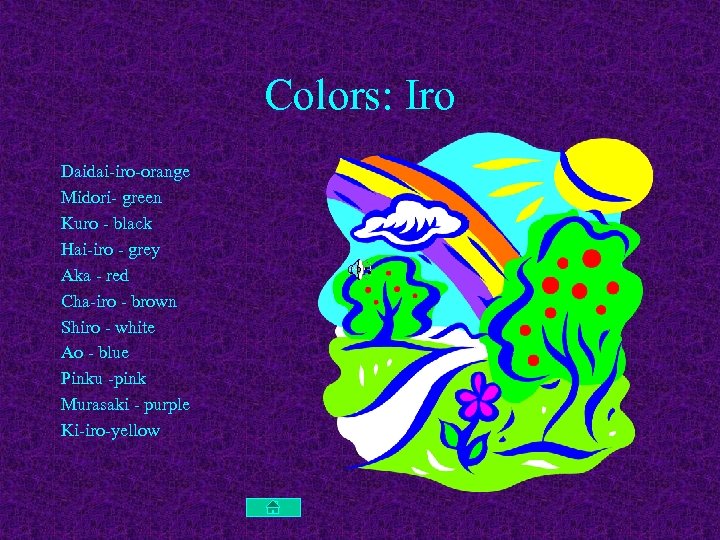
Colors: Iro Daidai-iro-orange Midori- green Kuro - black Hai-iro - grey Aka - red Cha-iro - brown Shiro - white Ao - blue Pinku -pink Murasaki - purple Ki-iro-yellow
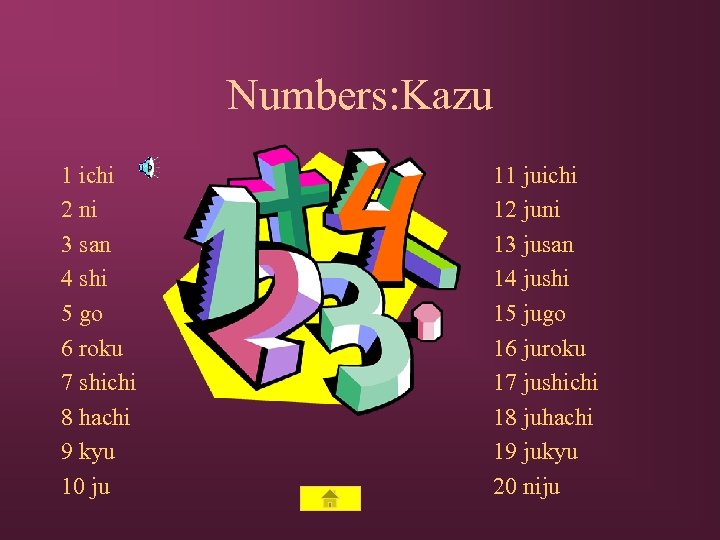
Numbers: Kazu 1 ichi 2 ni 3 san 4 shi 5 go 6 roku 7 shichi 8 hachi 9 kyu 10 ju 11 juichi 12 juni 13 jusan 14 jushi 15 jugo 16 juroku 17 jushichi 18 juhachi 19 jukyu 20 niju
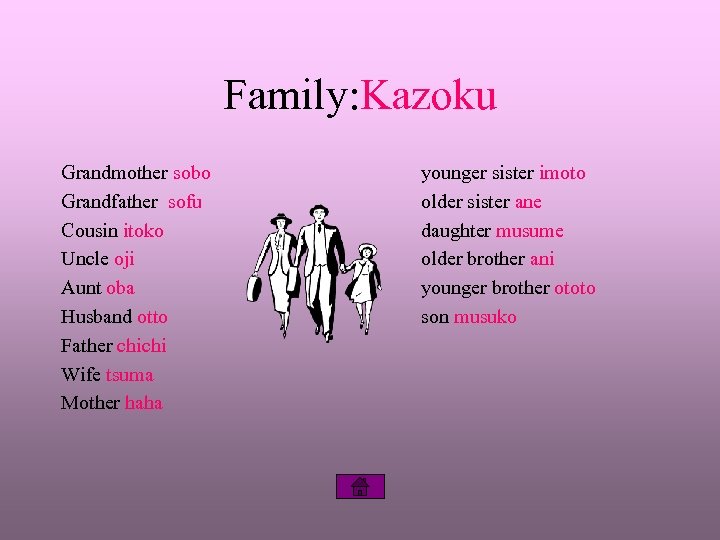
Family: Kazoku Grandmother sobo Grandfather sofu Cousin itoko Uncle oji Aunt oba Husband otto Father chichi Wife tsuma Mother haha younger sister imoto older sister ane daughter musume older brother ani younger brother ototo son musuko
Iroirona-hi: days of the week Japanese Getsu-yobi Ka-yobi Sui-yobi Moku-yobi Kin-yobi Do-yobi Nichi-yobi English Monday Tuesday Wednesday Thursday Friday Saturday Sunday
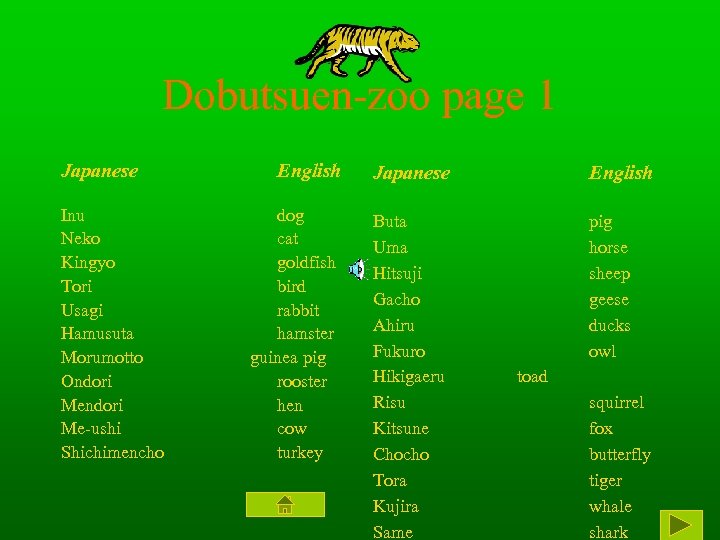
Dobutsuen-zoo page 1 Japanese Inu Neko Kingyo Tori Usagi Hamusuta Morumotto Ondori Me-ushi Shichimencho English dog cat goldfish bird rabbit hamster guinea pig rooster hen cow turkey Japanese English Buta Uma Hitsuji Gacho Ahiru Fukuro Hikigaeru Risu Kitsune Chocho Tora Kujira Same pig horse sheep geese ducks owl toad squirrel fox butterfly tiger whale shark
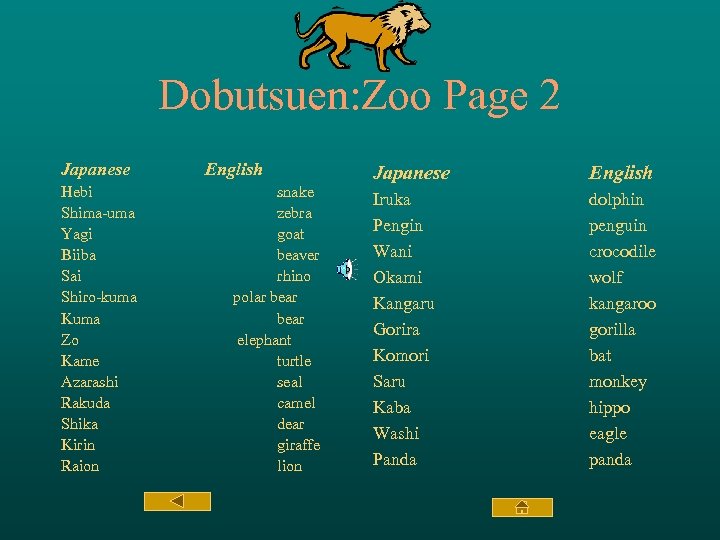
Dobutsuen: Zoo Page 2 Japanese Hebi Shima-uma Yagi Biiba Sai Shiro-kuma Kuma Zo Kame Azarashi Rakuda Shika Kirin Raion English snake zebra goat beaver rhino polar bear elephant turtle seal camel dear giraffe lion Japanese English Iruka Pengin Wani Okami Kangaru Gorira Komori Saru Kaba Washi Panda dolphin penguin crocodile wolf kangaroo gorilla bat monkey hippo eagle panda
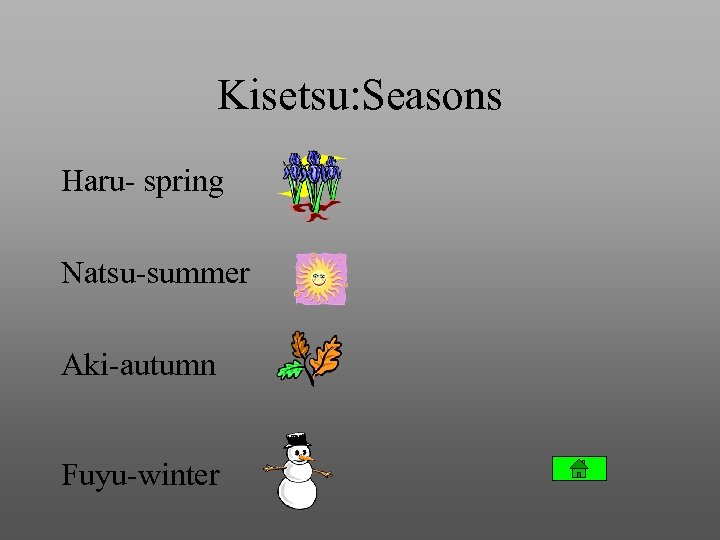
Kisetsu: Seasons Haru- spring Natsu-summer Aki-autumn Fuyu-winter
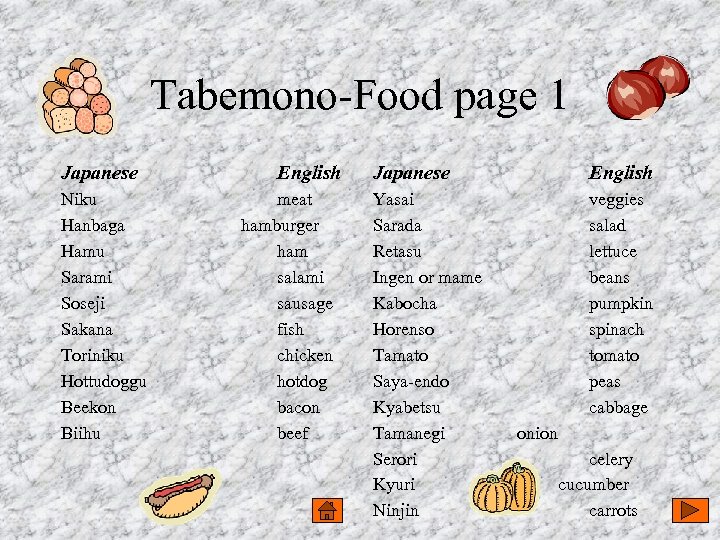
Tabemono-Food page 1 Japanese Niku Hanbaga Hamu Sarami Soseji Sakana Toriniku Hottudoggu Beekon Biihu English meat hamburger ham salami sausage fish chicken hotdog bacon beef Japanese English Yasai Sarada Retasu Ingen or mame Kabocha Horenso Tamato Saya-endo Kyabetsu Tamanegi Serori Kyuri Ninjin veggies salad lettuce beans pumpkin spinach tomato peas cabbage onion celery cucumber carrots
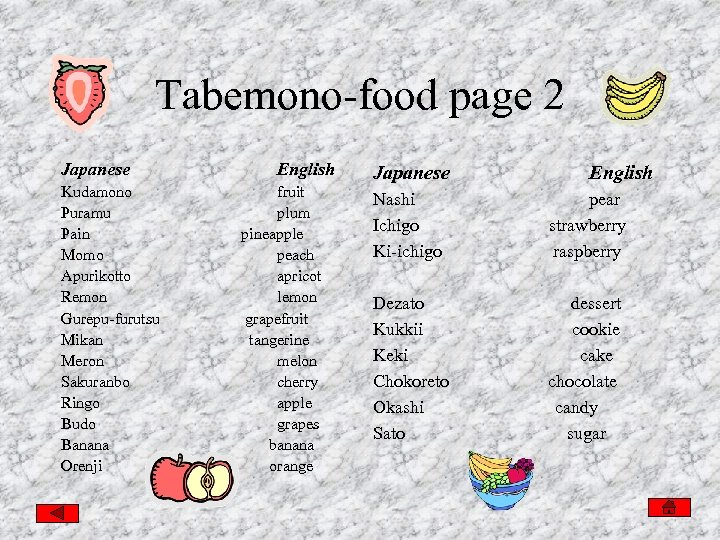
Tabemono-food page 2 Japanese Kudamono Puramu Pain Momo Apurikotto Remon Gurepu-furutsu Mikan Meron Sakuranbo Ringo Budo Banana Orenji English fruit plum pineapple peach apricot lemon grapefruit tangerine melon cherry apple grapes banana orange Japanese English Nashi Ichigo Ki-ichigo pear strawberry raspberry Dezato Kukkii Keki Chokoreto Okashi Sato dessert cookie cake chocolate candy sugar
Скачать презентацию Japanese Club with Mrs Crist Konichi-wa My name
994497cc663c0544801eac6a70ad9bbb.ppt