


 Скачать презентацию Jan 20 -22 Social Justice and Economic Development
8fc0b24d13ce246514e6595d02d15ca5.ppt
- Количество слайдов: 41
 Jan 20 -22: Social Justice and Economic Development DISCUSSED TUESDAY • Putnam, Robert D. "The Prosperous Community: Social Capital and Public Life. " The American Prospect, Vol. 4, No. 13, March 21, 1993, pp. 35 -42. • Sen, Amartya Kumar. 1999. Development as freedom. 1 st. ed. New York: Knopf. (Ch. 2). • (plus briefly on last week’s Mier and Fitzgerald and Leigh) ------ DISCUSSED THURSDAY Sugrue, Thomas J. 1998. The Origins of the Urban Crisis. Princeton: Princeton Univ Press. (Ch 5) Juzhong, Zhuang. 2008. Inclusive Growth toward a Harmonious Society in the People's Republic of China: Policy Implications. Asian Development Review 25 (1/2): 22 And the debate over inner-city revitalization • Porter, Michael. "New Strategies for Inner-City Economic Development. " Economic Development Quarterly, Vol. 11, No. 1, February 1997, pp. 11 -27 • Harrison, Bennett and Amy K. Glasmeier "Response: Why Business Alone Won't Redevelop the Inner City: A Friendly Critique of Michael Porter's Approach to Urban Revitalization. " Economic Development Quarterly, Vol. 11, No. 1, February 1997, pp. 28 -38. • Blair, John P. , and Michael C. Carroll. 2007. Inner-city neighborhoods and metropolitan development. Economic Development Quarterly 21 (3): 263 -277. • see also: Savitch, H. V. et. al. “Ties that Bind: Central Cities, Suburbs, and the New Metropolitan Region” Economic Development Quarterly v. 7, n. 4 (Nov. 1993) -> PLUS: short presentations/discussion of selected economic profiles (Assignment 1)
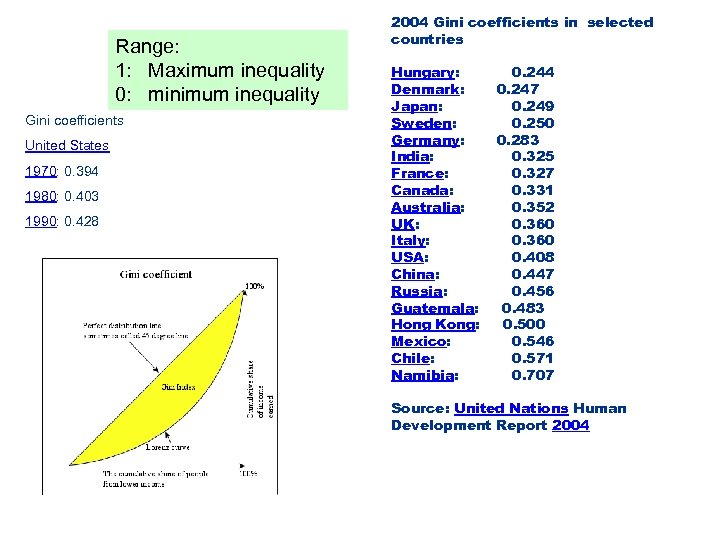 Range: 1: Maximum inequality 0: minimum inequality Gini coefficients United States 1970: 0. 394 1980: 0. 403 1990: 0. 428 2004 Gini coefficients in selected countries Hungary: Denmark: Japan: Sweden: Germany: India: France: Canada: Australia: UK: Italy: USA: China: Russia: Guatemala: Hong Kong: Mexico: Chile: Namibia: 0. 244 0. 247 0. 249 0. 250 0. 283 0. 325 0. 327 0. 331 0. 352 0. 360 0. 408 0. 447 0. 456 0. 483 0. 500 0. 546 0. 571 0. 707 Source: United Nations Human Development Report 2004
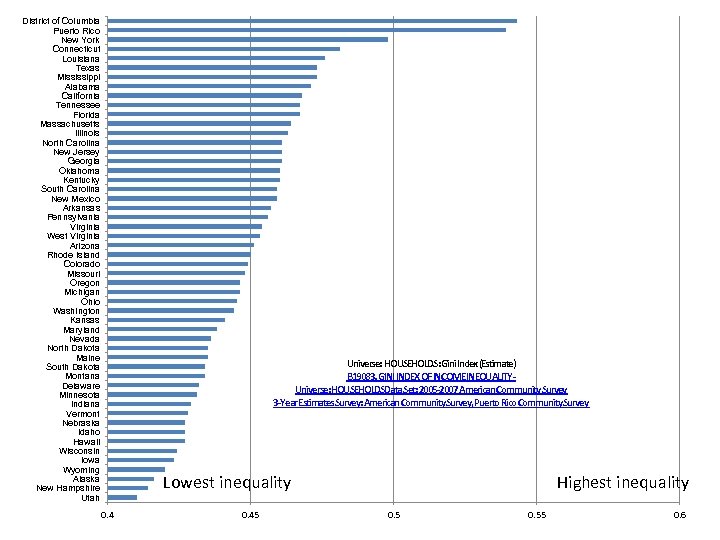 District of Columbia Puerto Rico New York Connecticut Louisiana Texas Mississippi Alabama California Tennessee Florida Massachusetts Illinois North Carolina New Jersey Georgia Oklahoma Kentucky South Carolina New Mexico Arkansas Pennsylvania Virginia West Virginia Arizona Rhode Island Colorado Missouri Oregon Michigan Ohio Washington Kansas Maryland Nevada North Dakota Maine South Dakota Montana Delaware Minnesota Indiana Vermont Nebraska Idaho Hawaii Wisconsin Iowa Wyoming Alaska New Hampshire Utah Universe: HOUSEHOLDS: Gini Index (Estimate) B 19083. GINI INDEX OF INCOME INEQUALITY - Universe: HOUSEHOLDSData Set: 2005 -2007 American Community Survey 3 -Year Estimates Survey: American Community Survey, Puerto Rico Community Survey Lowest inequality 0. 45 Highest inequality 0. 55 0. 6
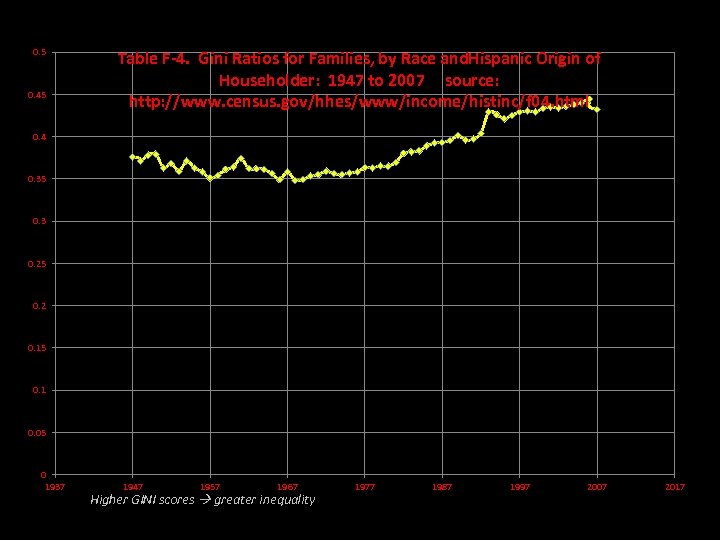 0. 5 0. 45 Table F-4. Gini Ratios for Families, by Race and. Hispanic Origin of Householder: 1947 to 2007 source: http: //www. census. gov/hhes/www/income/histinc/f 04. html 0. 4 0. 35 0. 3 0. 25 0. 2 0. 15 0. 1 0. 05 0 1937 1947 1957 1967 Higher GINI scores greater inequality 1977 1987 1997 2007 2017
 Sen, Amartya Kumar. 1999. Development as freedom. 1 st. ed. New York: Knopf. (Ch. 2) Revisiting Sen… It is mainly an attempt to see development as a process of expanding the real freedoms that people enjoy. In this approach, expansion of freedom is viewed as both (I) the primary end and (2) the principal means of development. They can be called respectively the "constitutive role" and the "instrumental role" of freedom in development. The constitutive role of freedom relates to the importance of substantive freedom in enriching human life. The substantive freedoms include elementary capabilities like being able to avoid such deprivations as starvation, undernourishment, escapable morbidity and premature mortality, as well as the freedoms that are associated with being literate and numerate, enjoying political participation and uncensored speech and so on. In this constitutive perspective, development involves expansion of these and other basic freedoms. Development, in this view, is the process of expanding human freedoms, and the assessment of development has to be informed by this consideration.
 Sen, Amartya Kumar. 1999. Development as freedom. 1 st. ed. New York: Knopf. (Ch. 2) Conclusion: “…enhancement of human freedom is both the main object and the primary means of development. The objective of development relates to the valuation of the actual freedoms enjoyed by the people involved. ” [p. 53] “there is a need to develop and support a plurality of institutions, including democratic systems, legal mechanisms, market structures, educational and health provisions, media and other communication facilities and so on. ”
 Sen, Amartya Kumar. 1999. Development as freedom. 1 st. ed. New York: Knopf. (Ch. 2) “The ends and means of development call for placing the perspective of freedom at the center of the stage. The people have to be seen, in this perspective, as being actively involved-given the opportunity in shaping their own destiny, and not just as passive recipients of the fruits of cunning development programs. The state and the society have extensive roles in strengthening and safeguarding human capabilities. This is a supporting role, rather than one of ready-made delivery. The freedomcentered perspective on the ends and the means of development has some claim to our attention. ”
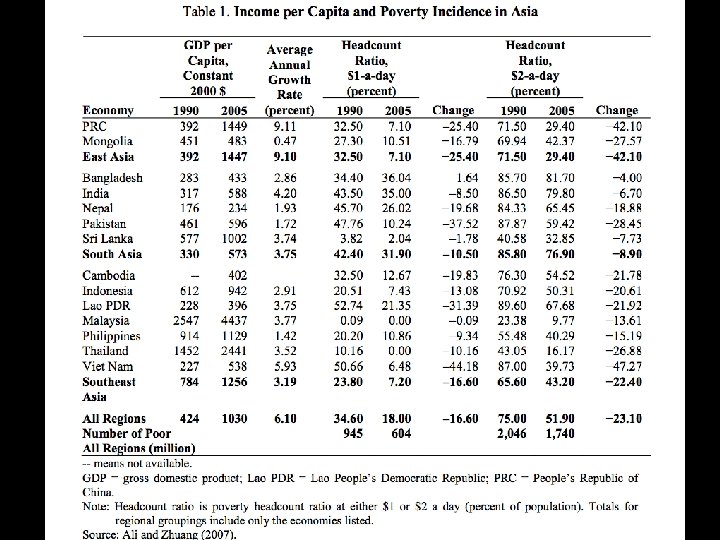
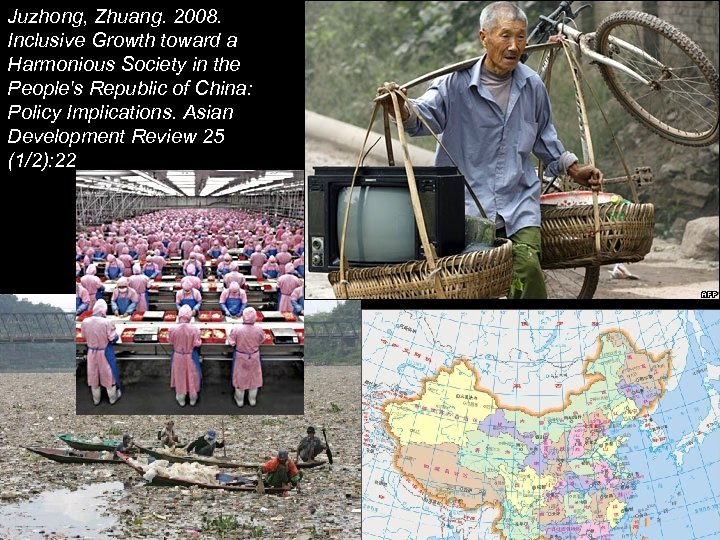 Juzhong, Zhuang. 2008. Inclusive Growth toward a Harmonious Society in the People's Republic of China: Policy Implications. Asian Development Review 25 (1/2): 22
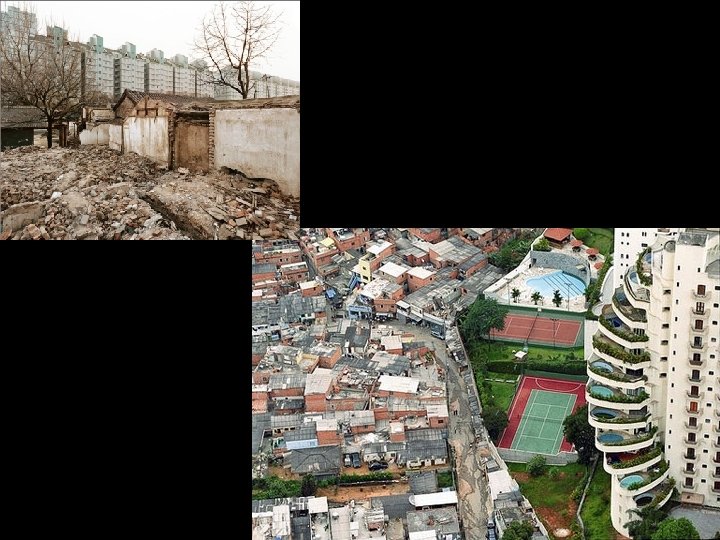
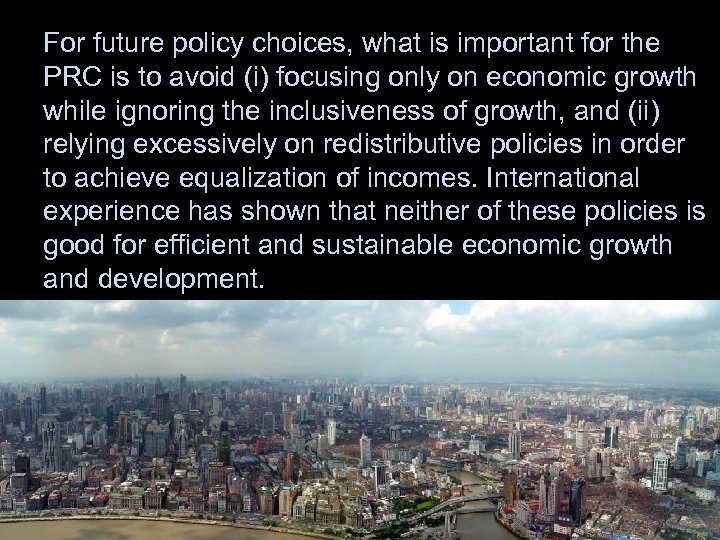 For future policy choices, what is important for the PRC is to avoid (i) focusing only on economic growth while ignoring the inclusiveness of growth, and (ii) relying excessively on redistributive policies in order to achieve equalization of incomes. International experience has shown that neither of these policies is good for efficient and sustainable economic growth and development.
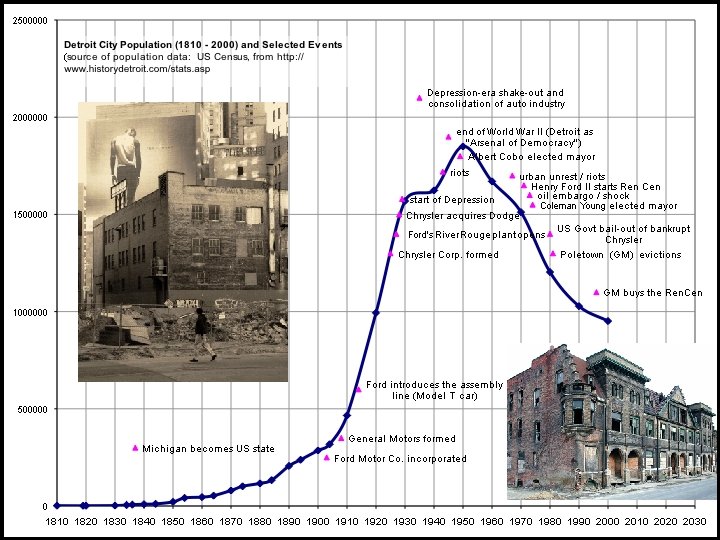
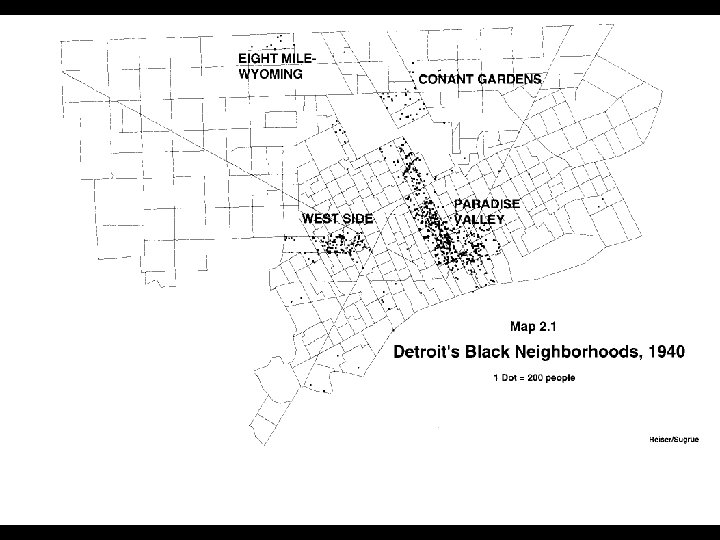
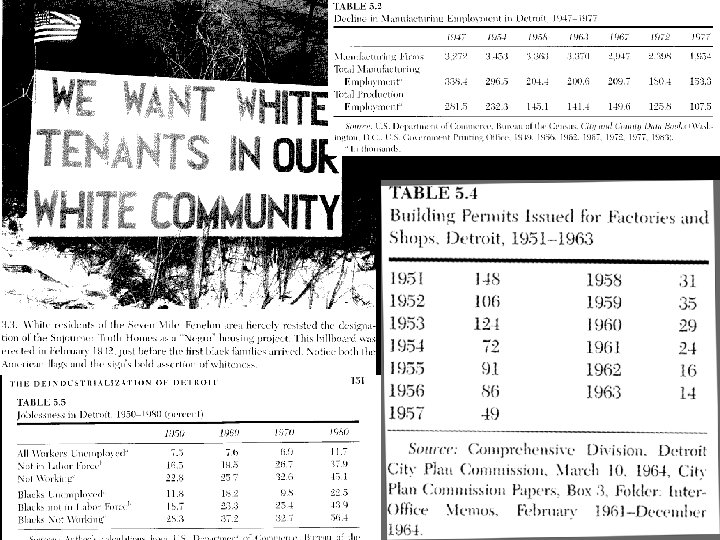
 Sugrue, Thomas J. 1998. The Origins of the Urban Crisis. Princeton: Princeton Univ Press. (Ch 5)
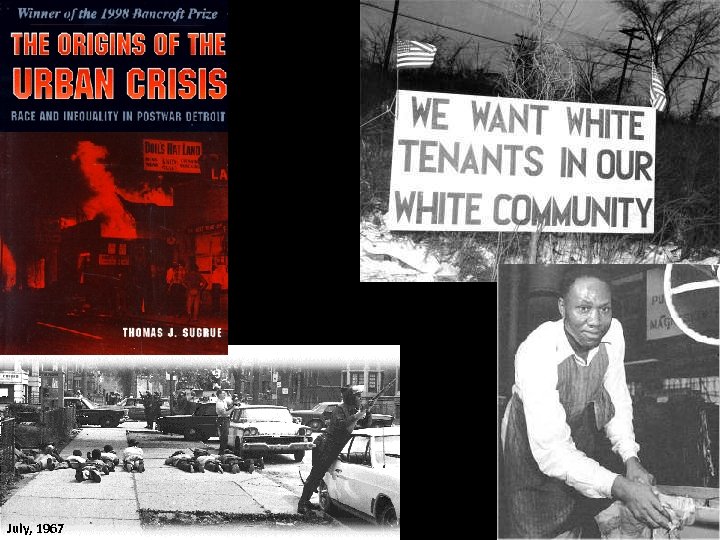 July, 1967 13
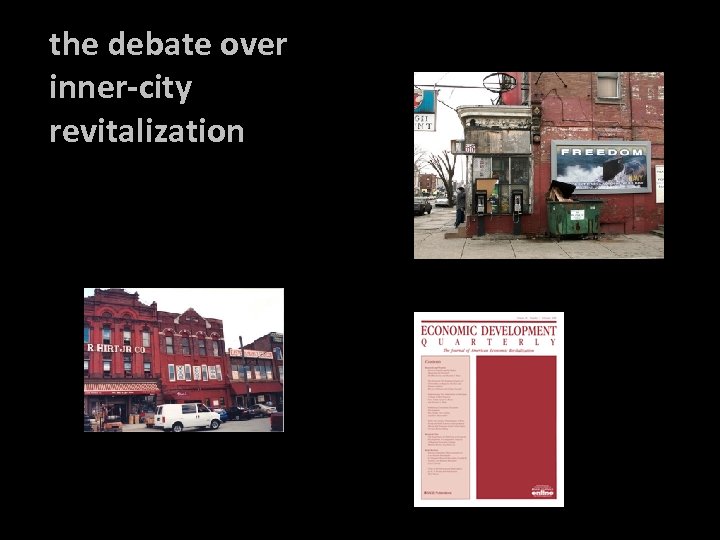 the debate over inner-city revitalization
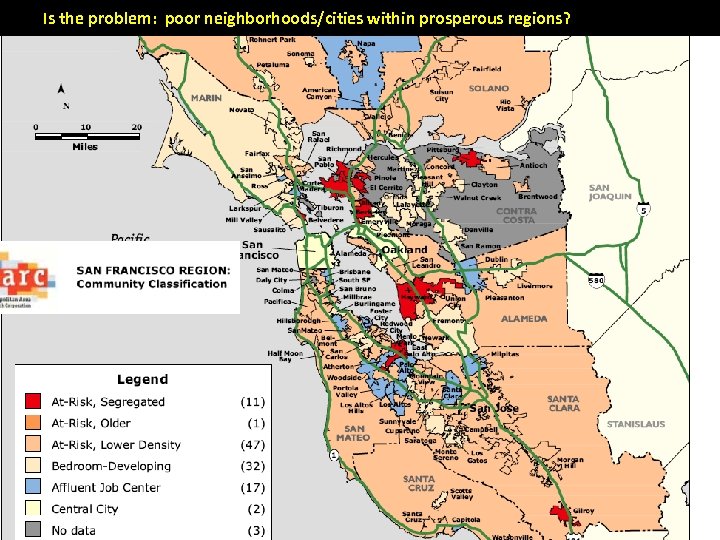 Is the problem: poor neighborhoods/cities within prosperous regions?
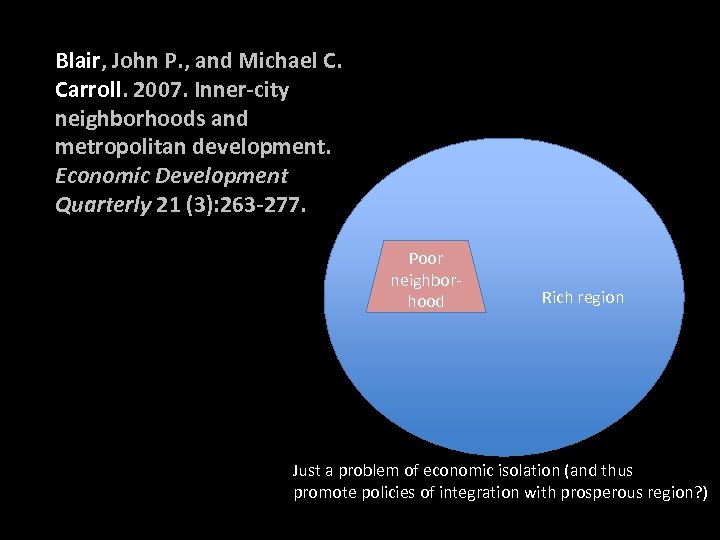 Blair, John P. , and Michael C. Carroll. 2007. Inner-city neighborhoods and metropolitan development. Economic Development Quarterly 21 (3): 263 -277. Poor neighborhood Rich region Just a problem of economic isolation (and thus promote policies of integration with prosperous region? )
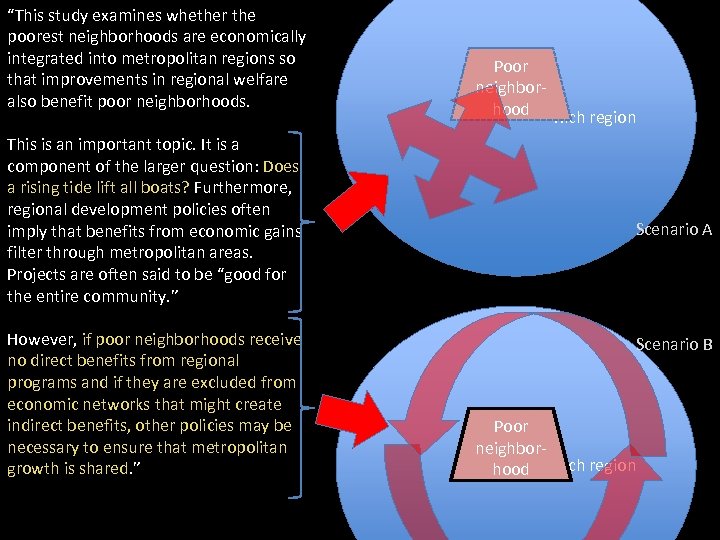 “This study examines whether the poorest neighborhoods are economically integrated into metropolitan regions so that improvements in regional welfare also benefit poor neighborhoods. This is an important topic. It is a component of the larger question: Does a rising tide lift all boats? Furthermore, regional development policies often imply that benefits from economic gains filter through metropolitan areas. Projects are often said to be “good for the entire community. ” However, if poor neighborhoods receive no direct benefits from regional programs and if they are excluded from economic networks that might create indirect benefits, other policies may be necessary to ensure that metropolitan growth is shared. ” Poor neighborhood Rich region Scenario A Scenario B Poor neighborhood Rich region
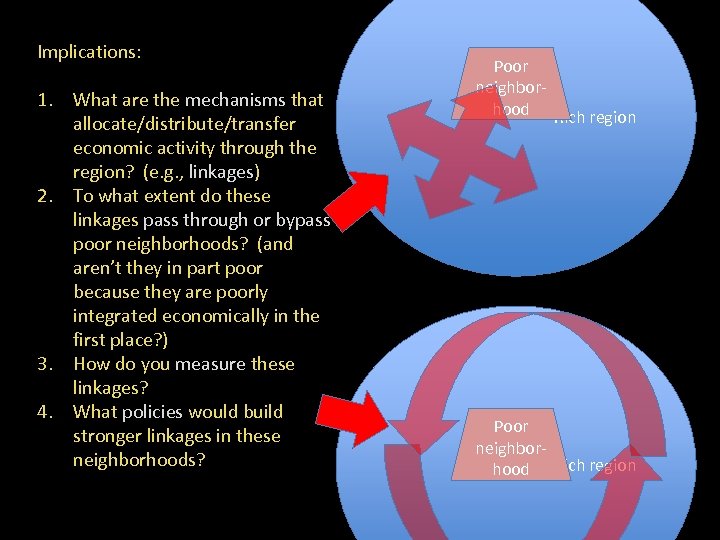 Implications: 1. What are the mechanisms that allocate/distribute/transfer economic activity through the region? (e. g. , linkages) 2. To what extent do these linkages pass through or bypass poor neighborhoods? (and aren’t they in part poor because they are poorly integrated economically in the first place? ) 3. How do you measure these linkages? 4. What policies would build stronger linkages in these neighborhoods? Poor neighborhood Rich region
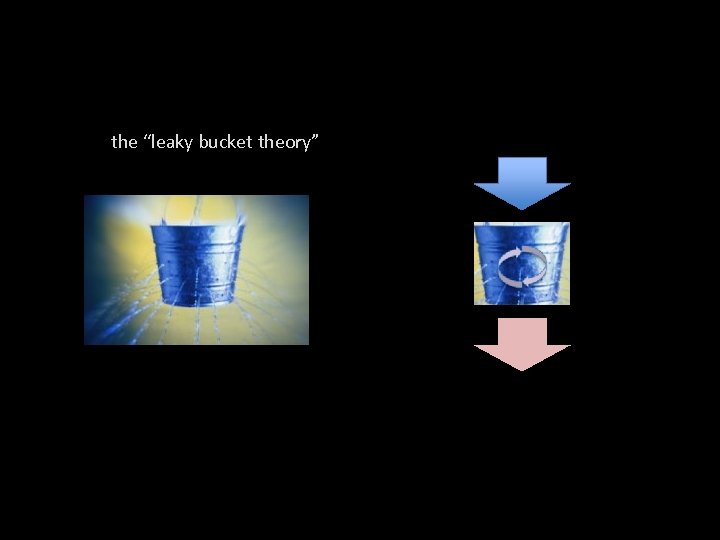 the “leaky bucket theory”
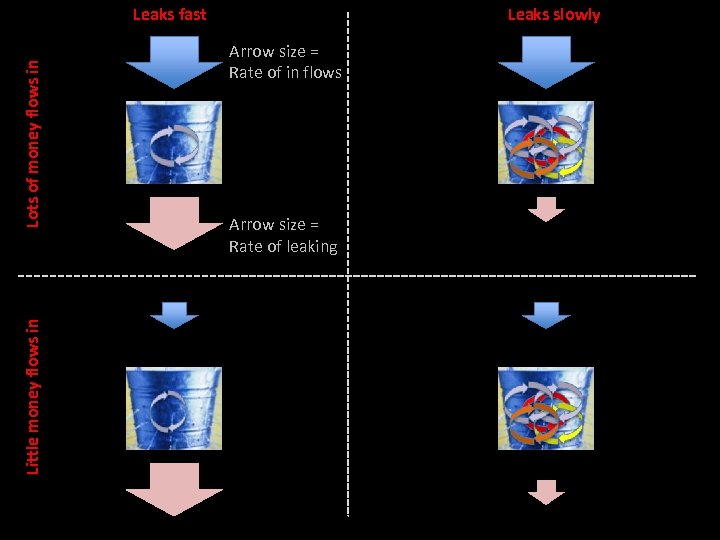 Little money flows in Lots of money flows in Leaks fast Leaks slowly Arrow size = Rate of in flows Arrow size = Rate of leaking
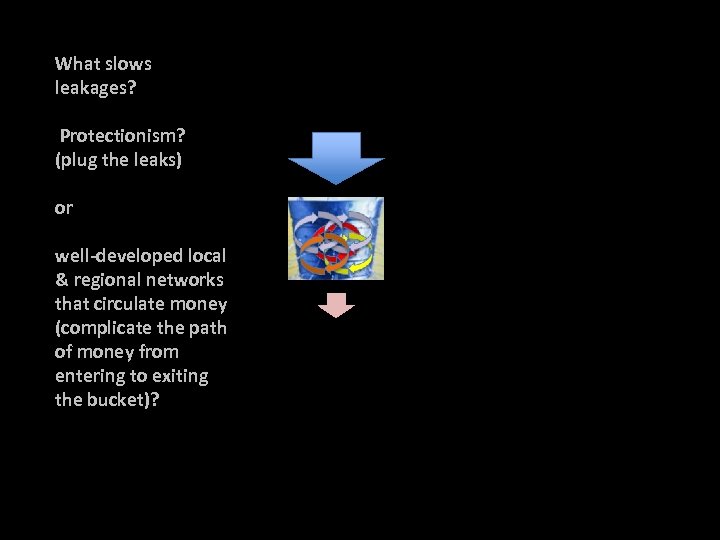 What slows leakages? Protectionism? (plug the leaks) or well-developed local & regional networks that circulate money (complicate the path of money from entering to exiting the bucket)?
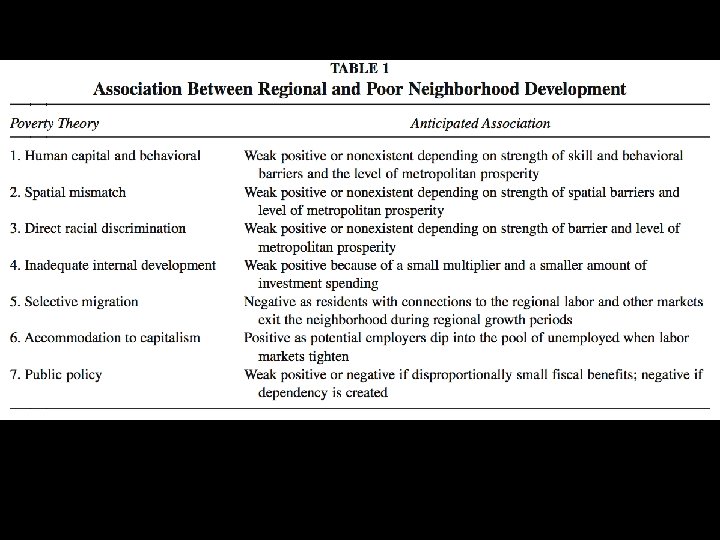
 Seven Explanations of Urban Poverty: Human Capital and Behavioral Explanations Direct Racial Discrimination Spatial Mismatch Explanations Selective Migration Arrested Internal Development Accommodations to Capitalism Public Policies
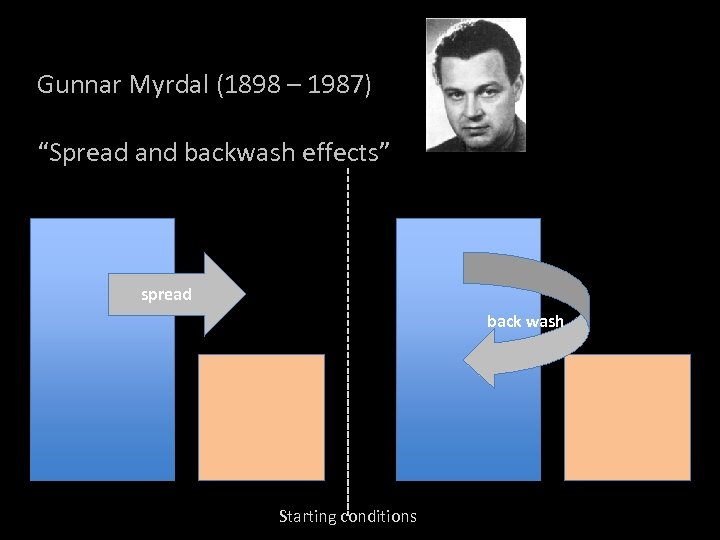 Gunnar Myrdal (1898 – 1987) “Spread and backwash effects” spread back wash Starting conditions
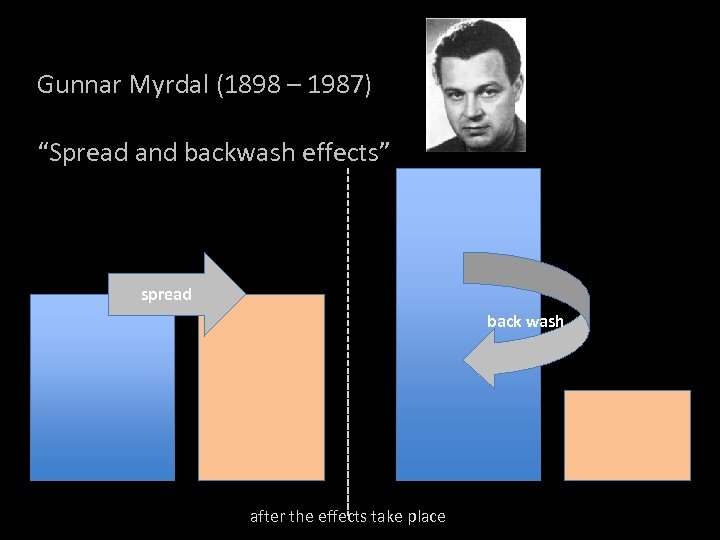 Gunnar Myrdal (1898 – 1987) “Spread and backwash effects” spread back wash after the effects take place
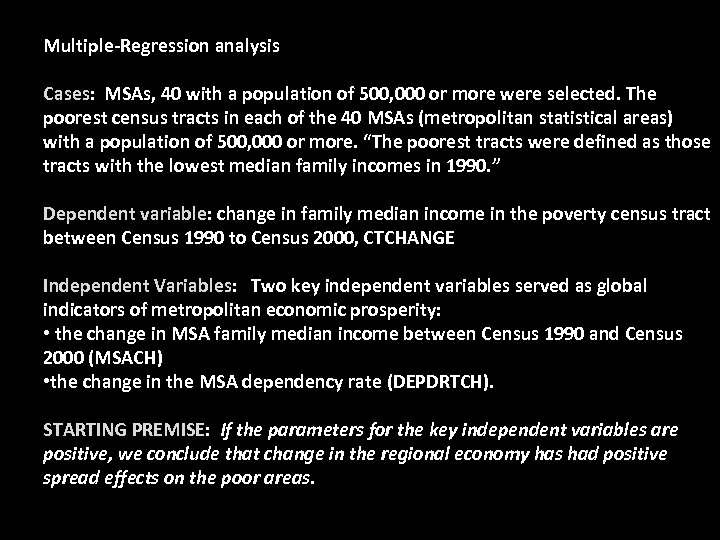 Multiple-Regression analysis Cases: MSAs, 40 with a population of 500, 000 or more were selected. The poorest census tracts in each of the 40 MSAs (metropolitan statistical areas) with a population of 500, 000 or more. “The poorest tracts were defined as those tracts with the lowest median family incomes in 1990. ” Dependent variable: change in family median income in the poverty census tract between Census 1990 to Census 2000, CTCHANGE Independent Variables: Two key independent variables served as global indicators of metropolitan economic prosperity: • the change in MSA family median income between Census 1990 and Census 2000 (MSACH) • the change in the MSA dependency rate (DEPDRTCH). STARTING PREMISE: If the parameters for the key independent variables are positive, we conclude that change in the regional economy has had positive spread effects on the poor areas.
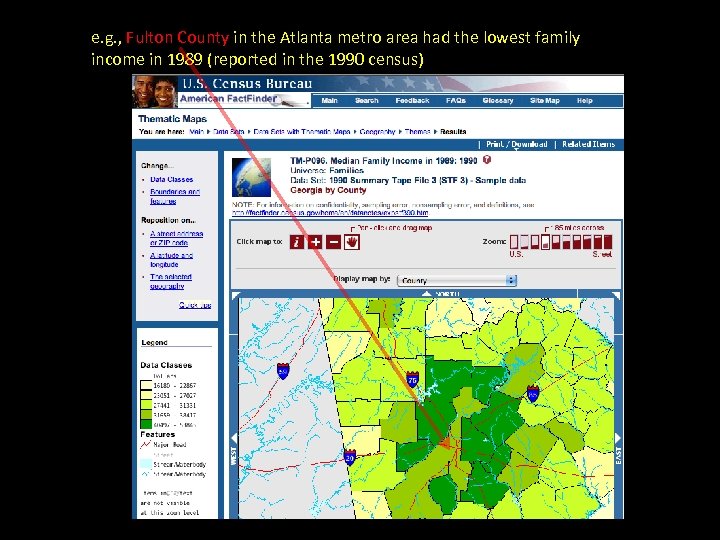 e. g. , Fulton County in the Atlanta metro area had the lowest family income in 1989 (reported in the 1990 census)
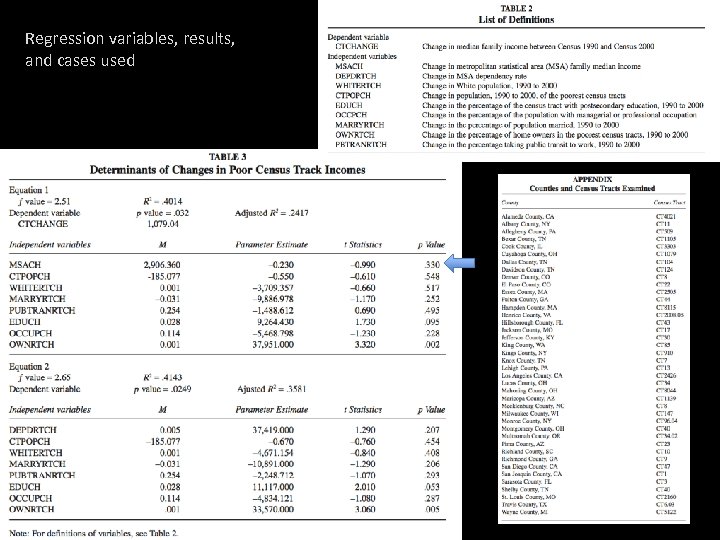 Regression variables, results, and cases used
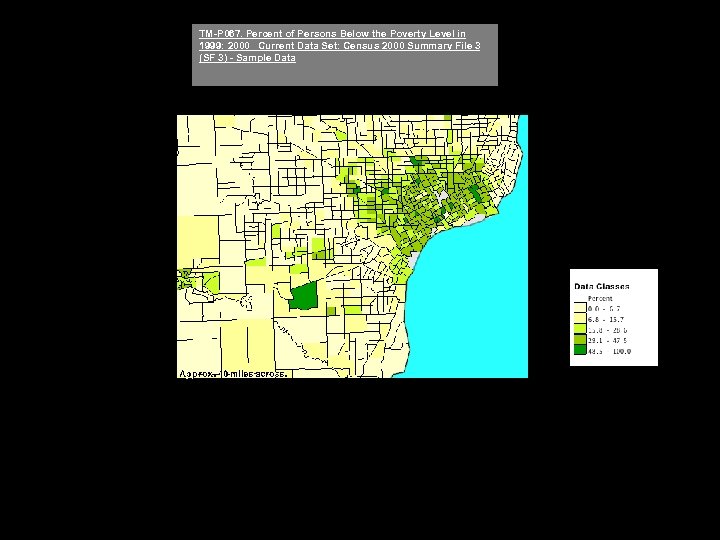 TM-P 067. Percent of Persons Below the Poverty Level in 1999: 2000 Current Data Set: Census 2000 Summary File 3 (SF 3) - Sample Data
 Porter, Michael. "New Strategies for Inner-City Economic Development. " Economic Development Quarterly, Vol. 11, No. 1, February 1997, pp. 11 -27.
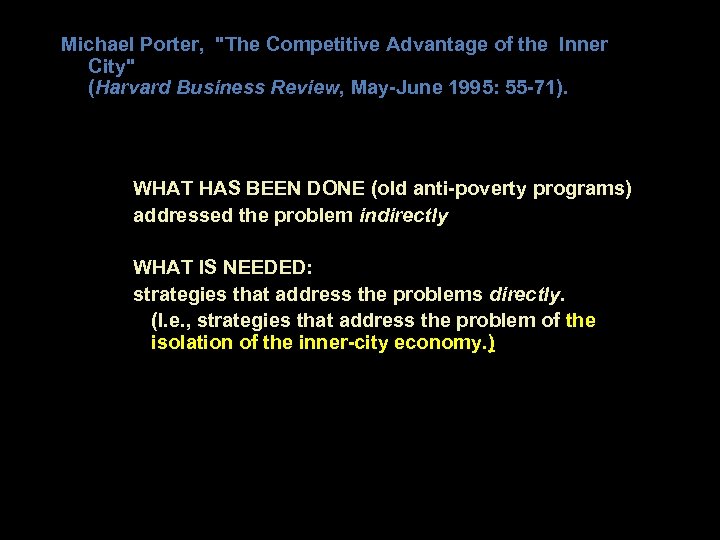 Michael Porter, "The Competitive Advantage of the Inner City" (Harvard Business Review, May-June 1995: 55 -71). WHAT HAS BEEN DONE (old anti-poverty programs) addressed the problem indirectly WHAT IS NEEDED: strategies that address the problems directly. (I. e. , strategies that address the problem of the isolation of the inner-city economy. )
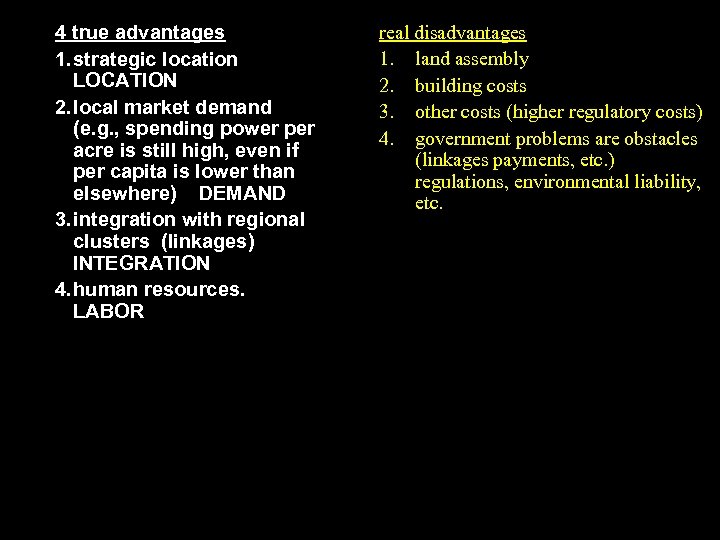 4 true advantages 1. strategic location LOCATION 2. local market demand (e. g. , spending power per acre is still high, even if per capita is lower than elsewhere) DEMAND 3. integration with regional clusters (linkages) INTEGRATION 4. human resources. LABOR real disadvantages 1. land assembly 2. building costs 3. other costs (higher regulatory costs) 4. government problems are obstacles (linkages payments, etc. ) regulations, environmental liability, etc.
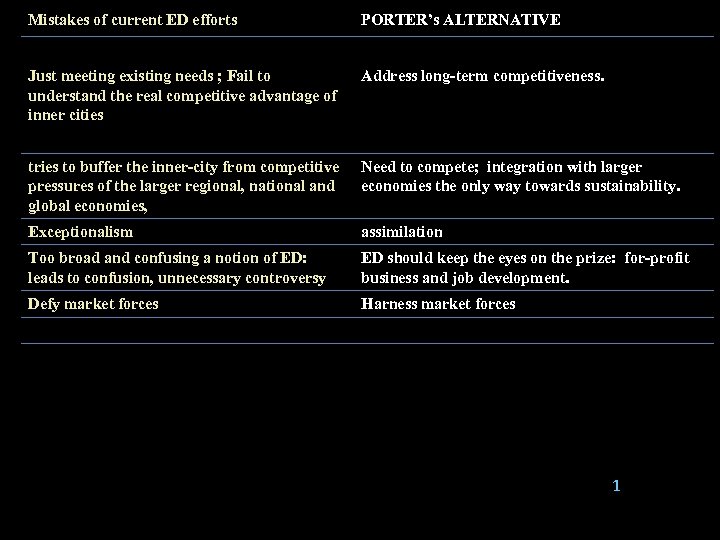 Mistakes of current ED efforts PORTER’s ALTERNATIVE Just meeting existing needs ; Fail to understand the real competitive advantage of inner cities Address long-term competitiveness. tries to buffer the inner-city from competitive pressures of the larger regional, national and global economies, Need to compete; integration with larger economies the only way towards sustainability. Exceptionalism assimilation Too broad and confusing a notion of ED: leads to confusion, unnecessary controversy ED should keep the eyes on the prize: for-profit business and job development. Defy market forces Harness market forces 1
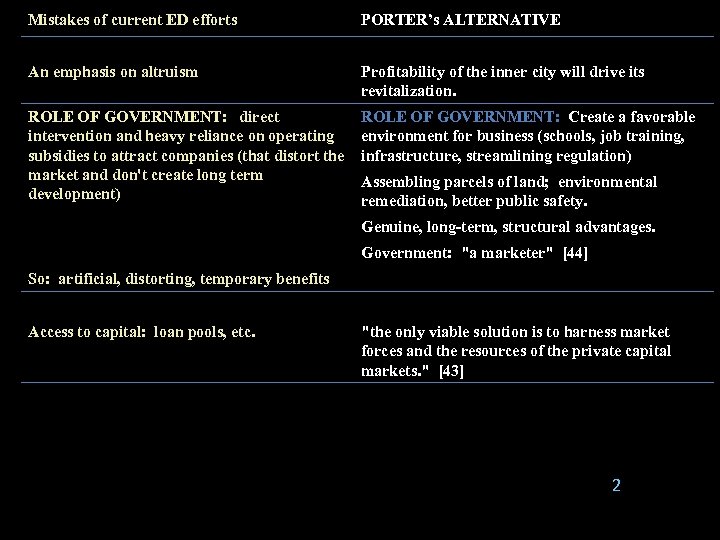 Mistakes of current ED efforts PORTER’s ALTERNATIVE An emphasis on altruism Profitability of the inner city will drive its revitalization. ROLE OF GOVERNMENT: direct intervention and heavy reliance on operating subsidies to attract companies (that distort the market and don't create long term development) ROLE OF GOVERNMENT: Create a favorable environment for business (schools, job training, infrastructure, streamlining regulation) Assembling parcels of land; environmental remediation, better public safety. Genuine, long-term, structural advantages. Government: "a marketer" [44] So: artificial, distorting, temporary benefits Access to capital: loan pools, etc. "the only viable solution is to harness market forces and the resources of the private capital markets. " [43] 2

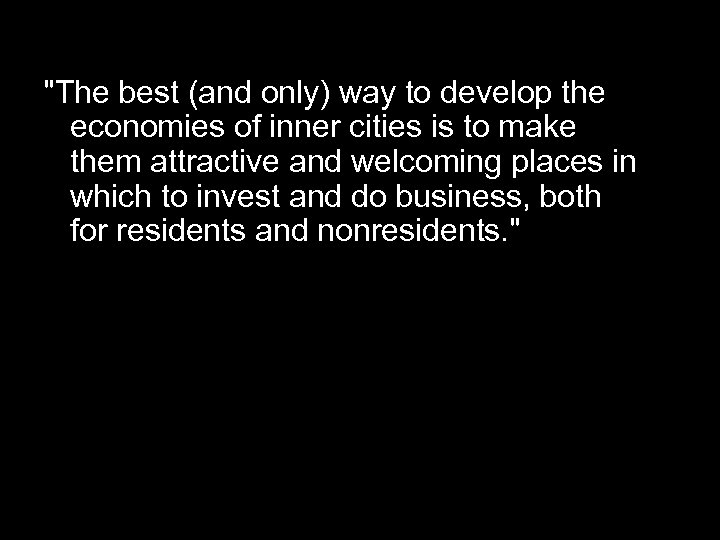 "The best (and only) way to develop the economies of inner cities is to make them attractive and welcoming places in which to invest and do business, both for residents and nonresidents. "
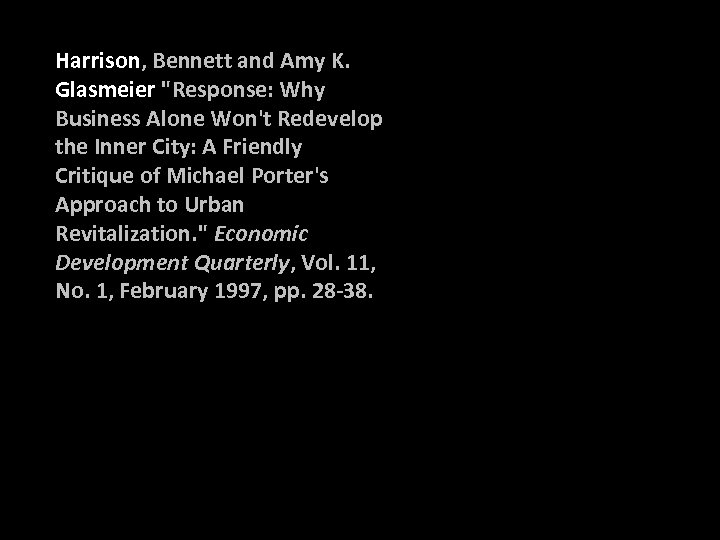 Harrison, Bennett and Amy K. Glasmeier "Response: Why Business Alone Won't Redevelop the Inner City: A Friendly Critique of Michael Porter's Approach to Urban Revitalization. " Economic Development Quarterly, Vol. 11, No. 1, February 1997, pp. 28 -38.
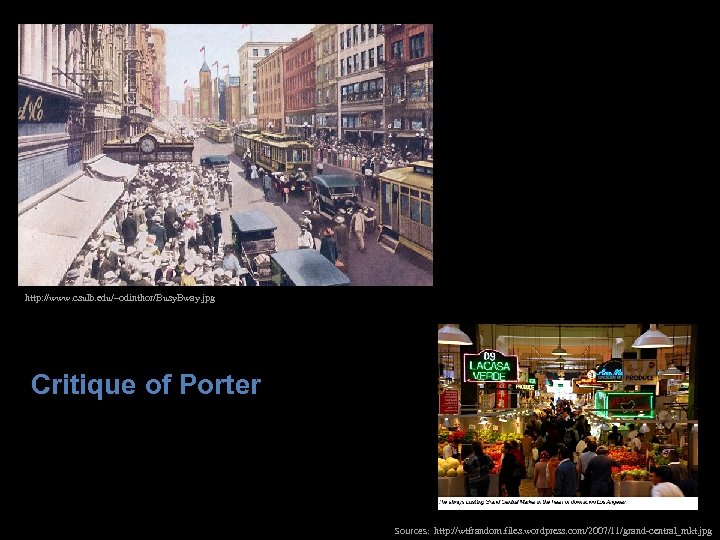 http: //www. csulb. edu/~odinthor/Busy. Bway. jpg Critique of Porter Sources: http: //wtfrandom. files. wordpress. com/2007/11/grand-central_mkt. jpg