



 Jainism
 • Jainism dates to the 6 th century B. C. in India. • It’s name is from the jinas (“conquerors”), a title is given to 24 great teachers. • Mahavira, the last of the thirtankaras, is considered the founder of jainism.
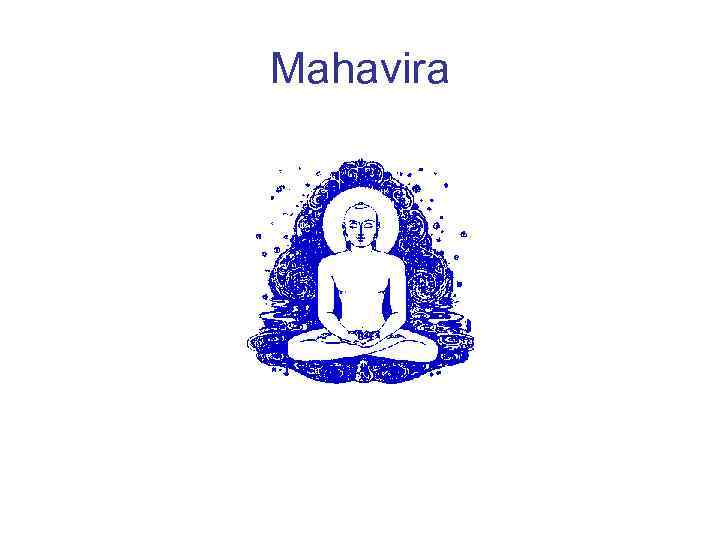 Mahavira
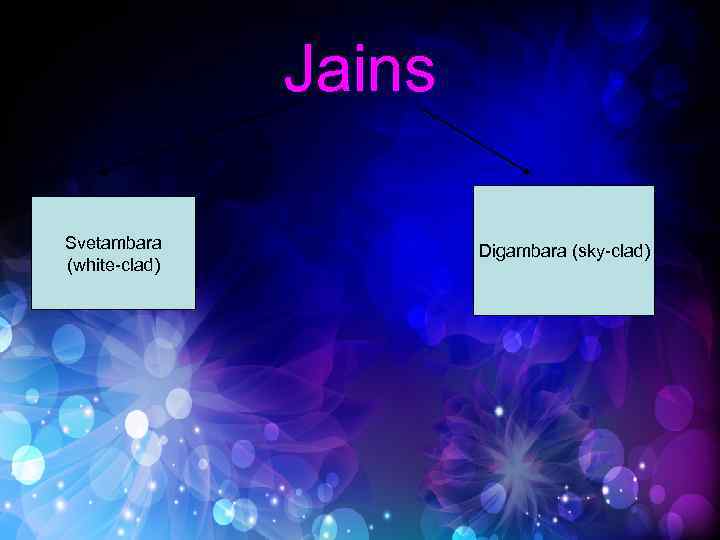 Jains Svetambara (white-clad) Digambara (sky-clad)
 Their belief • There are no Gods or God who will help humans on the road to liberation. They believe that life is a series of births, deaths, and rebirths until the soul has shed all karma and can achieve liberation. The three most central guides for the individual to attain this goal are: Right Belief, Right Knowledge, and Right Conduct. The physical actions of a lifetime do not take precedence over the mental or contemplative acts of the individual. Both physical and mental/spiritual acts are needed to break the cycle of birth, death and rebirth. Therefore, deed and thought are weighed equally in Jainism.
 The Jain monks and nuns follow the Five Great Vows, known as The Mahavratas.
 • The Five Supreme Beings are: • • Arhats “the Worthy Ones”, the Great Teachers, Tirthankaras • Siddhas liberated souls • Acharyasspiritual teachers who lead the monks and nuns • Upadhyayesteachers who instruct the monks and nuns in the Jain scriptures • Sadhu and Sadhvi monks and nuns
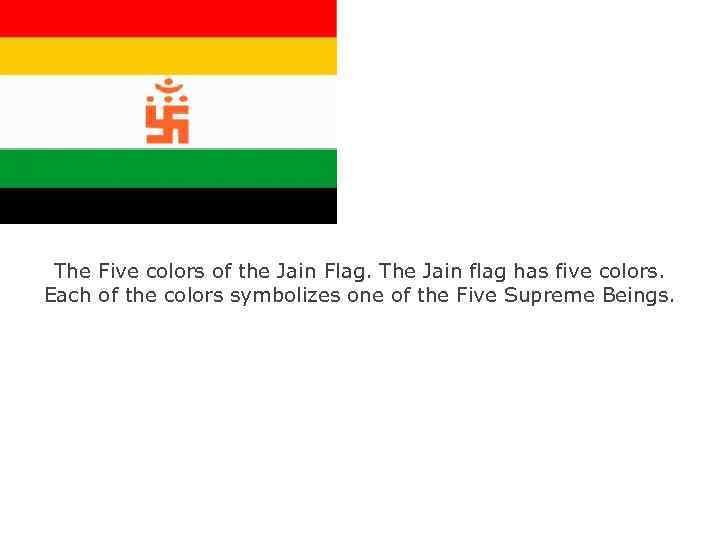 The Five colors of the Jain Flag. The Jain flag has five colors. Each of the colors symbolizes one of the Five Supreme Beings.
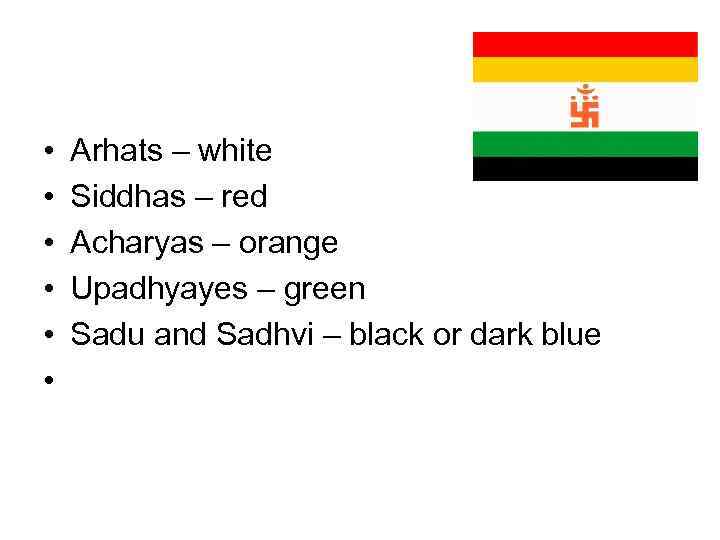 • • • Arhats – white Siddhas – red Acharyas – orange Upadhyayes – green Sadu and Sadhvi – black or dark blue
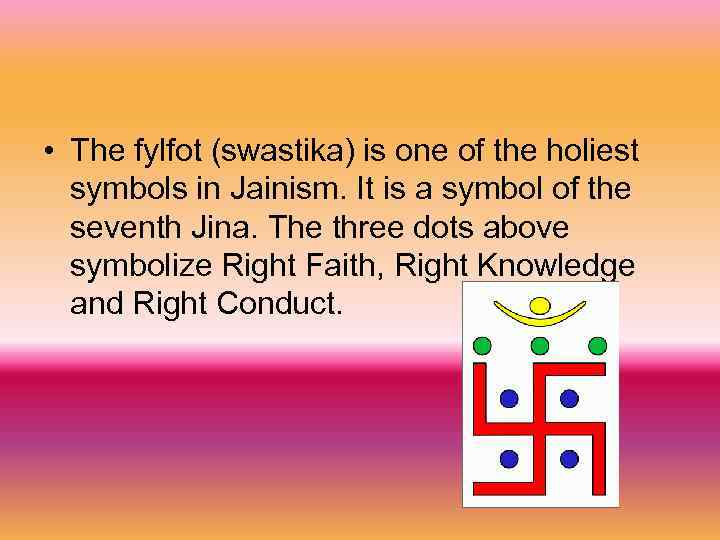 • The fylfot (swastika) is one of the holiest symbols in Jainism. It is a symbol of the seventh Jina. The three dots above symbolize Right Faith, Right Knowledge and Right Conduct.
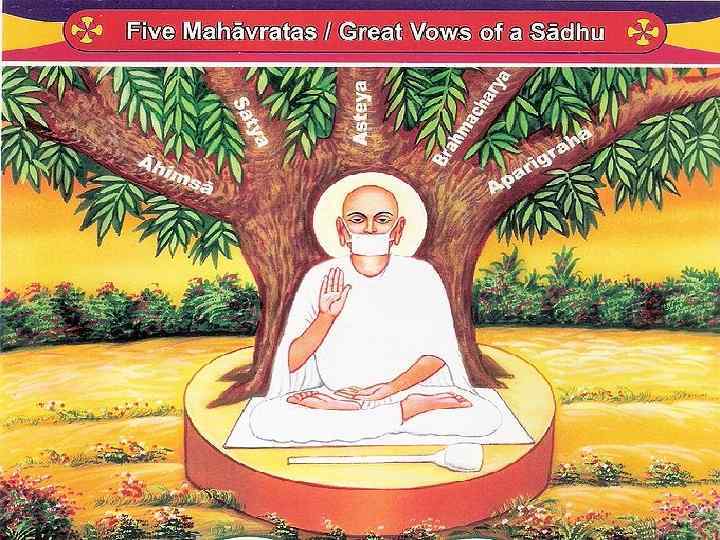
 • Ahimsa-non-violence, cause no harm to any living being • Satya-speaking the truth • Asetya-not taking anything that is not given tj them by the owner • Brahmacharya-complete abstinence from sex • Aparigrapha- detachment from places, persons and things
 • All jains try to be vegetarians
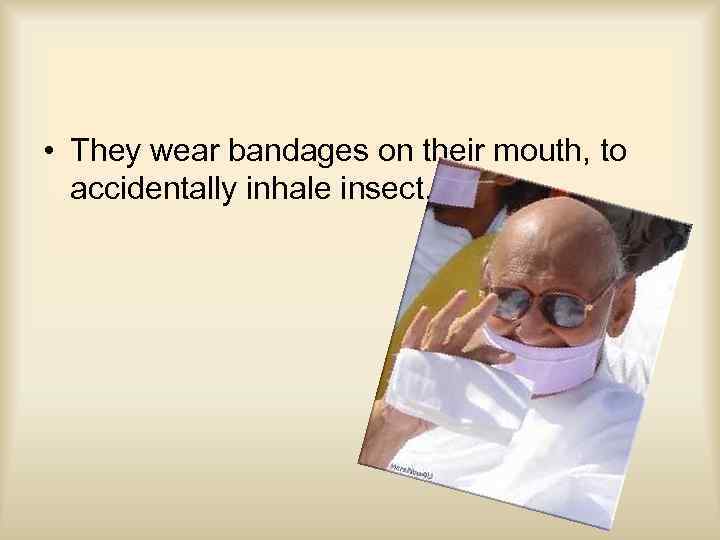 • They wear bandages on their mouth, to accidentally inhale insect.
 • Thank you • for your • Attention!