 Скачать презентацию Jacques Bouchez ISS meeting detector WG CEA DAPNIA-Saclay
cac562b12b4f98b5c4cb41c2667a4853.ppt
- Количество слайдов: 23



Jacques Bouchez ISS meeting, detector WG CEA/DAPNIA-Saclay & APC-Paris KEK, Jan 23 rd, 2006 MEMPHYS : A megaton WČ detector in Fréjus underground laboratory PHYSICS MOTIVATION • Proton decay • Supernovae: explosion, relics • Solar and atmospheric neutrinos • Oscillations: θ 13 and δCP using superbeam and betabeam from CERN
LAYOUT • The Frejus site • Results of the excavation study • The detector • Photodetectors • R&D • Physics performance • Schedule most transparencies borrowed from Luigi Mosca (CARE/BENE, CERN, 23/11/05) and from Jean-Eric Campagne (GDR neutrino, Paris, 21/10/05)
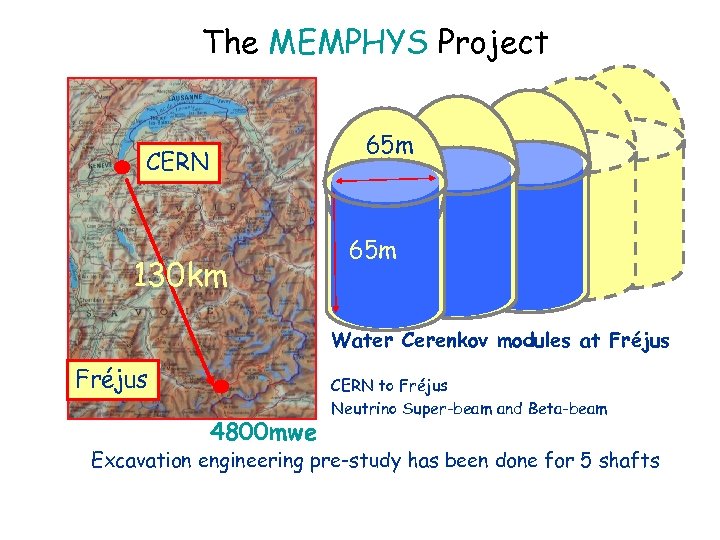
The MEMPHYS Project 65 m CERN 130 km 65 m Water Cerenkov modules at Fréjus 4800 mwe CERN to Fréjus Neutrino Super-beam and Beta-beam Excavation engineering pre-study has been done for 5 shafts
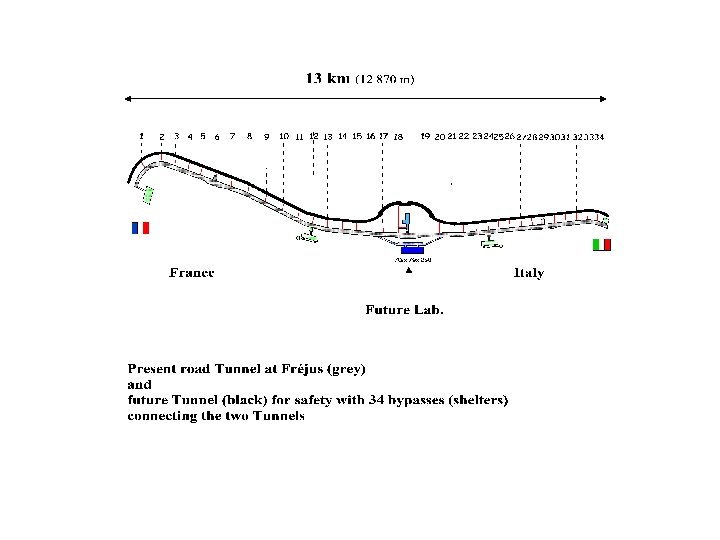
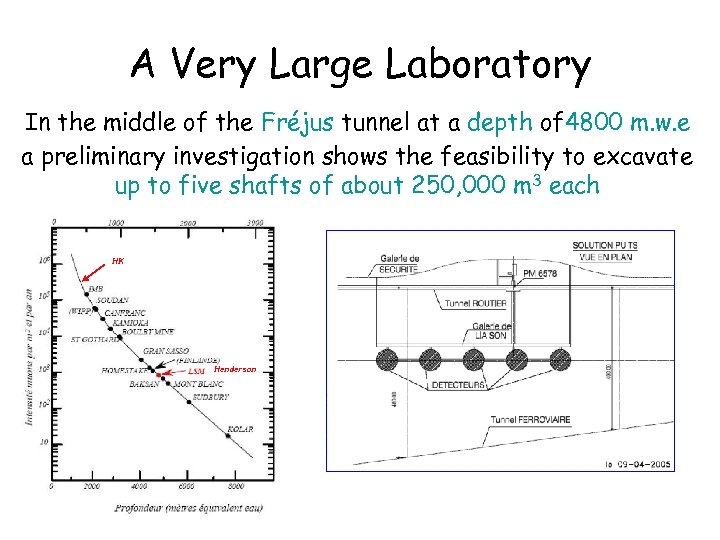
A Very Large Laboratory In the middle of the Fréjus tunnel at a depth of 4800 m. w. e a preliminary investigation shows the feasibility to excavate up to five shafts of about 250, 000 m 3 each HK Henderson
Main results of the Preliminary Study 1) the best site (rock quality) is found in the middle of the mountain, at a depth of 4800 mwe 2) of the two considered shapes : “tunnel” and “shaft”, the “shaft (= well) shape” is strongly preferred 3) Cylindrical shafts are feasible up to : a diameter = 65 m and a full height h = 80 m (≈ 250 000 m 3) 4) with “egg shape” or “intermediate shape” the volume of the shafts could be still increased 5) The estimated cost is ≈ 80 M€ X Nb of shafts
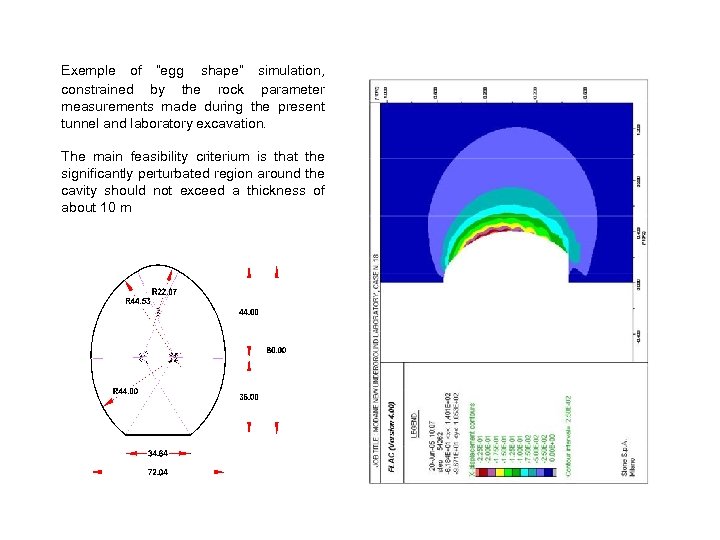
Exemple of “egg shape” simulation, constrained by the rock parameter measurements made during the present tunnel and laboratory excavation. The main feasibility criterium is that the significantly perturbated region around the cavity should not exceed a thickness of about 10 m
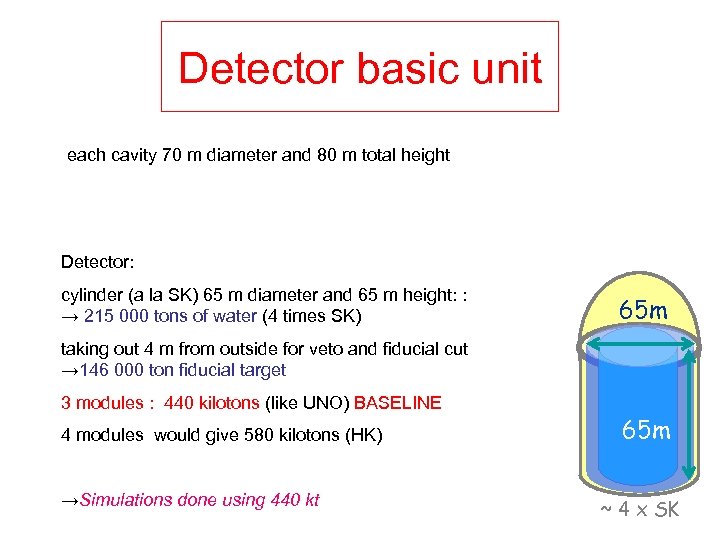
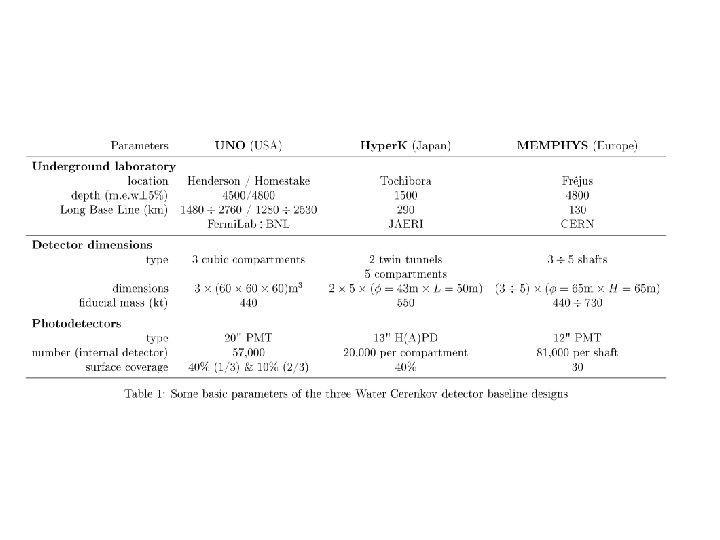
Detector basic unit each cavity 70 m diameter and 80 m total height Detector: cylinder (a la SK) 65 m diameter and 65 m height: : → 215 000 tons of water (4 times SK) 65 m taking out 4 m from outside for veto and fiducial cut → 146 000 ton fiducial target 3 modules : 440 kilotons (like UNO) BASELINE 4 modules would give 580 kilotons (HK) →Simulations done using 440 kt 65 m ~ 4 x SK
PHOTODETECTION Baseline choice: use photomultipliers get the highest possible coverage to get the lowest possible threshold Ideally, we want the same light/Me. V as Super. K. …but the solution with 20’’ PMT’s becomes too expensive (cf. UNO) (40 000 20’’ PMT’s/module with 40% coverage) R&D on HPD started in France (with Photonis) encouraging results from ICRR/Hamamatsu with 13’’ HPD
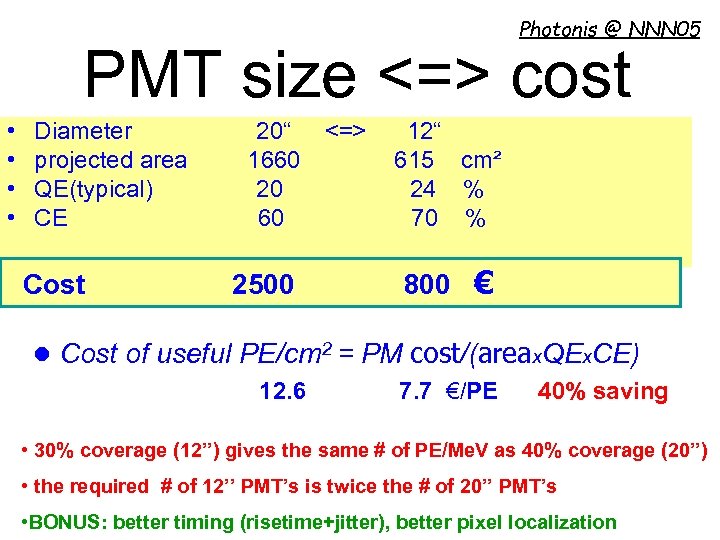
Photonis @ NNN 05 PMT size <=> cost • • Diameter projected area QE(typical) CE Cost 20“ <=> 1660 20 60 2500 12“ 615 cm² 24 % 70 % 800 € l Cost of useful PE/cm 2 = PM cost/(areax. QEx. CE) 12. 6 7. 7 €/PE 40% saving • 30% coverage (12’’) gives the same # of PE/Me. V as 40% coverage (20’’) • the required # of 12’’ PMT’s is twice the # of 20’’ PMT’s • BONUS: better timing (risetime+jitter), better pixel localization
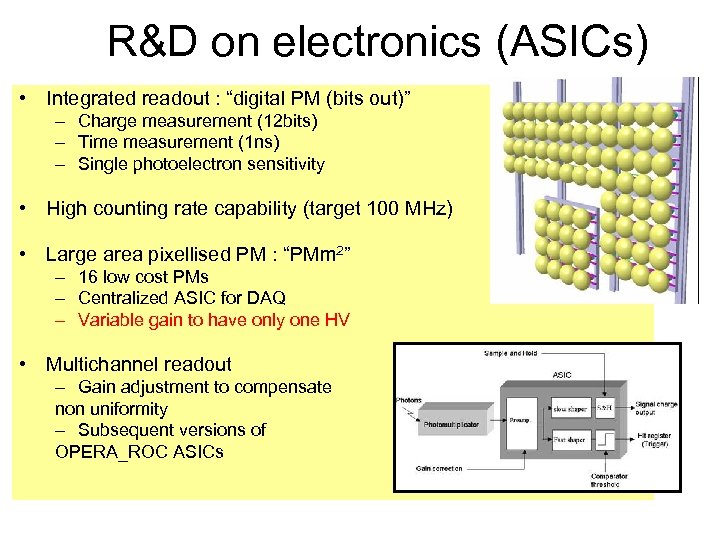
R&D on electronics (ASICs) • Integrated readout : “digital PM (bits out)” – Charge measurement (12 bits) – Time measurement (1 ns) – Single photoelectron sensitivity • High counting rate capability (target 100 MHz) • Large area pixellised PM : “PMm 2” – 16 low cost PMs – Centralized ASIC for DAQ – Variable gain to have only one HV • Multichannel readout – Gain adjustment to compensate non uniformity – Subsequent versions of OPERA_ROC ASICs
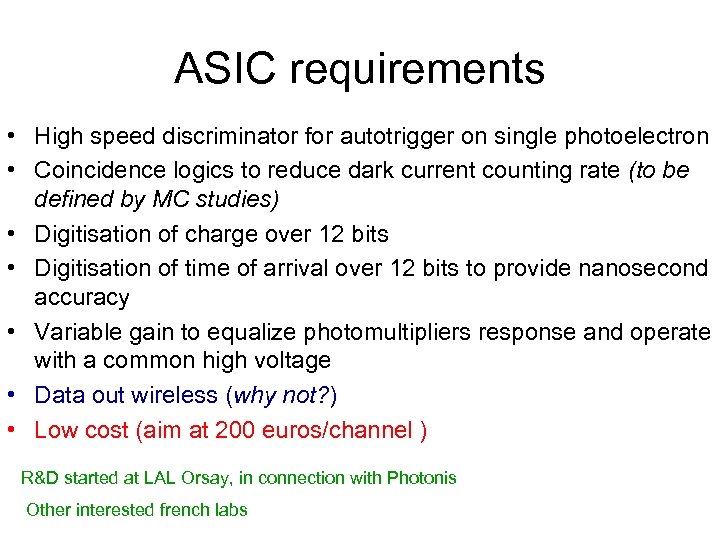
ASIC requirements • High speed discriminator for autotrigger on single photoelectron • Coincidence logics to reduce dark current counting rate (to be defined by MC studies) • Digitisation of charge over 12 bits • Digitisation of time of arrival over 12 bits to provide nanosecond accuracy • Variable gain to equalize photomultipliers response and operate with a common high voltage • Data out wireless (why not? ) • Low cost (aim at 200 euros/channel ) R&D started at LAL Orsay, in connection with Photonis Other interested french labs
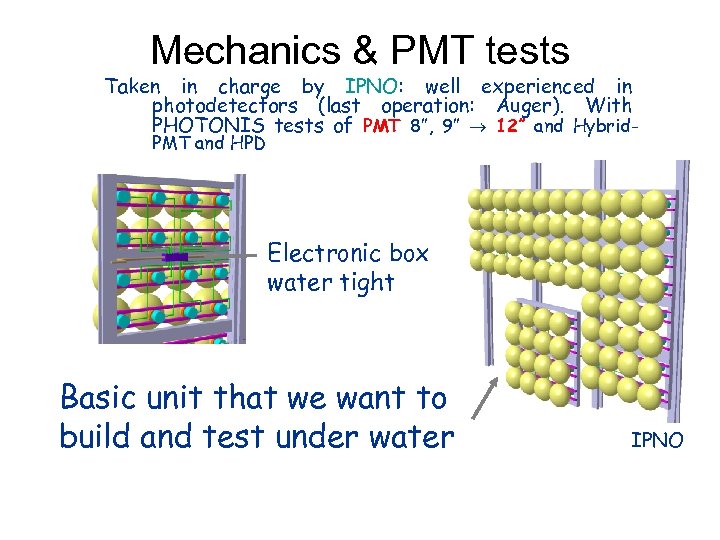
Mechanics & PMT tests Taken in charge by IPNO: well experienced in photodetectors (last operation: Auger). With PHOTONIS tests of PMT 8”, 9” 12” and Hybrid. PMT and HPD Electronic box water tight Basic unit that we want to build and test under water IPNO
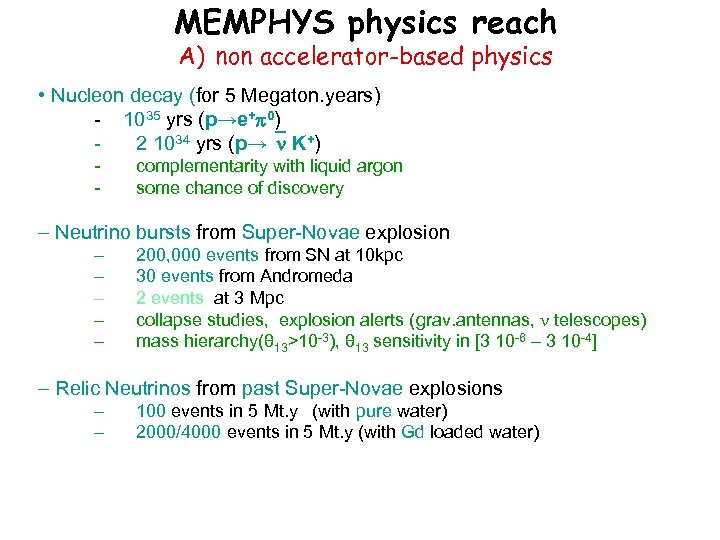
MEMPHYS physics reach A) non accelerator-based physics • Nucleon decay (for 5 Megaton. years) - 1035 yrs (p→e+p 0) 2 1034 yrs (p→ n K+) - complementarity with liquid argon some chance of discovery – Neutrino bursts from Super-Novae explosion – – – 200, 000 events from SN at 10 kpc 30 events from Andromeda 2 events at 3 Mpc collapse studies, explosion alerts (grav. antennas, n telescopes) mass hierarchy(θ 13>10 -3), θ 13 sensitivity in [3 10 -6 – 3 10 -4] – Relic Neutrinos from past Super-Novae explosions – – 100 events in 5 Mt. y (with pure water) 2000/4000 events in 5 Mt. y (with Gd loaded water)
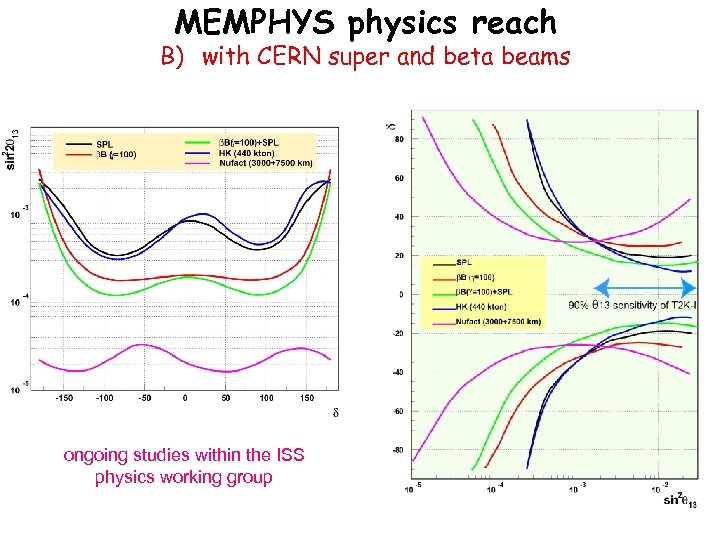
MEMPHYS physics reach B) with CERN super and beta beams ongoing studies within the ISS physics working group
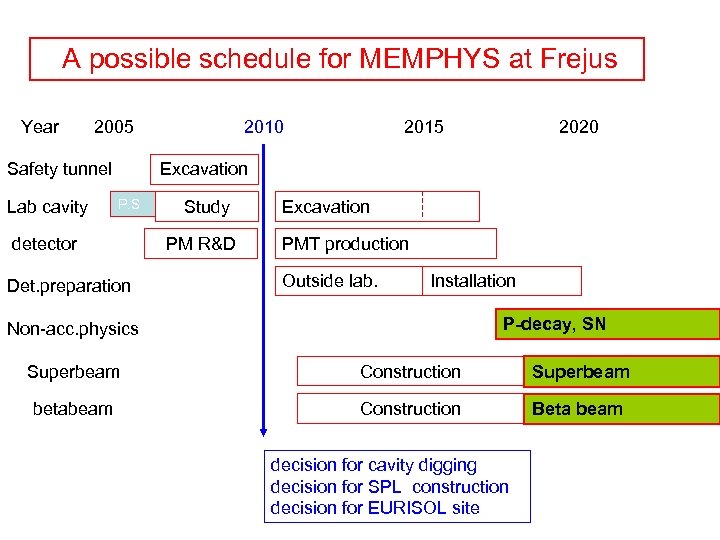
A possible schedule for MEMPHYS at Frejus Year 2005 Safety tunnel Lab cavity 2010 2015 2020 Excavation P. S detector Det. preparation Study PM R&D Excavation PMT production Outside lab. Installation P-decay, SN Non-acc. physics Superbeam Construction Superbeam betabeam Construction Beta beam decision for cavity digging decision for SPL construction decision for EURISOL site
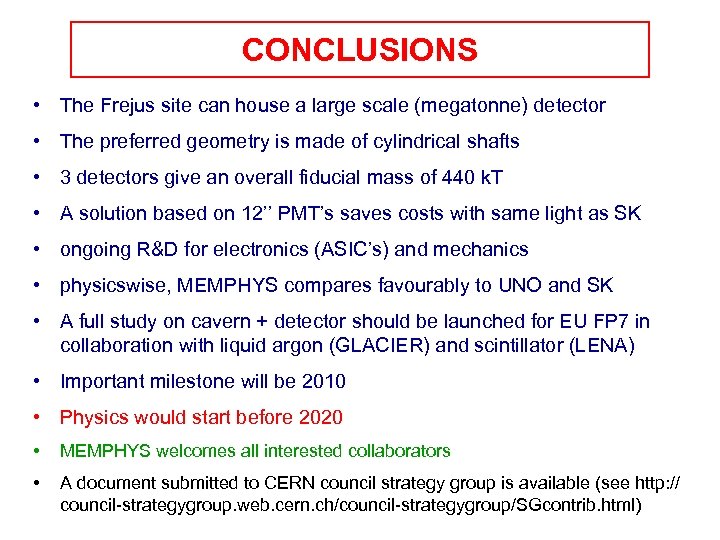
CONCLUSIONS • The Frejus site can house a large scale (megatonne) detector • The preferred geometry is made of cylindrical shafts • 3 detectors give an overall fiducial mass of 440 k. T • A solution based on 12’’ PMT’s saves costs with same light as SK • ongoing R&D for electronics (ASIC’s) and mechanics • physicswise, MEMPHYS compares favourably to UNO and SK • A full study on cavern + detector should be launched for EU FP 7 in collaboration with liquid argon (GLACIER) and scintillator (LENA) • Important milestone will be 2010 • Physics would start before 2020 • MEMPHYS welcomes all interested collaborators • A document submitted to CERN council strategy group is available (see http: // council-strategygroup. web. cern. ch/council-strategygroup/SGcontrib. html)

BACKUP
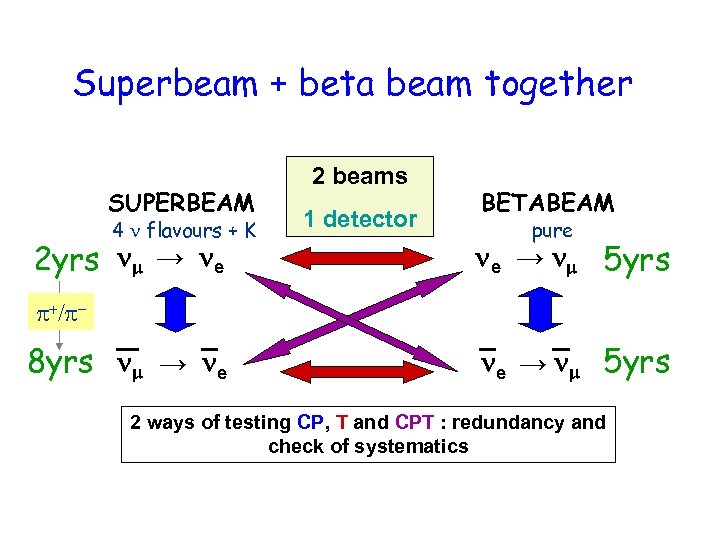
Superbeam + beta beam together SUPERBEAM 4 n flavours + K 2 yrs nm → ne 2 beams 1 detector BETABEAM pure ne → nm 5 yrs p+/p- 8 yrs nm → ne ne → nm 5 yrs 2 ways of testing CP, T and CPT : redundancy and check of systematics
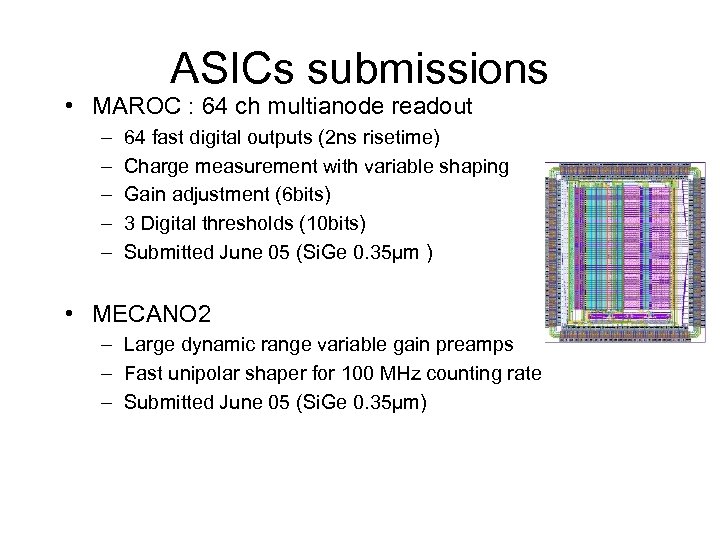
ASICs submissions • MAROC : 64 ch multianode readout – – – 64 fast digital outputs (2 ns risetime) Charge measurement with variable shaping Gain adjustment (6 bits) 3 Digital thresholds (10 bits) Submitted June 05 (Si. Ge 0. 35µm ) • MECANO 2 – Large dynamic range variable gain preamps – Fast unipolar shaper for 100 MHz counting rate – Submitted June 05 (Si. Ge 0. 35µm)
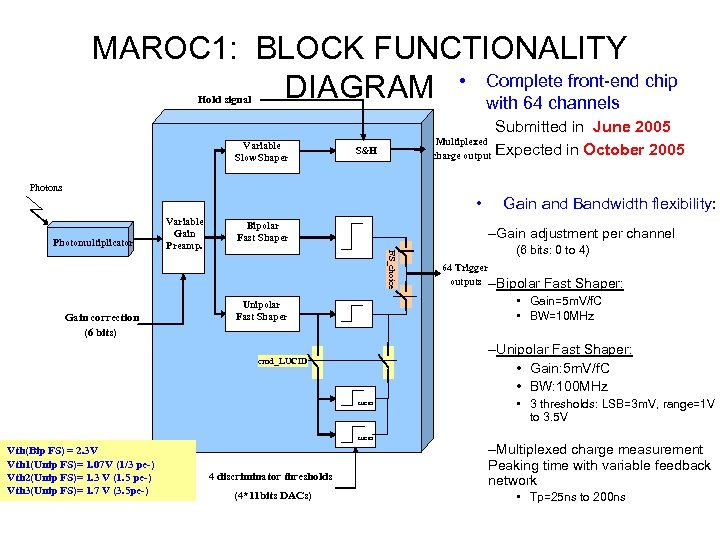
MAROC 1: BLOCK FUNCTIONALITY DIAGRAM • Complete front-end chip with 64 channels Hold signal Variable Slow Shaper Multiplexed charge output S&H Submitted in June 2005 Expected in October 2005 Photons • Photomultiplicator Bipolar Fast Shaper –Gain adjustment per channel FS_choice Gain correction (6 bits) Variable Gain Preamp. LUCID (4*11 bits DACs) 64 Trigger outputs –Bipolar Fast Shaper: –Unipolar Fast Shaper: • Gain: 5 m. V/f. C • BW: 100 MHz LUCID 4 discriminator thresholds (6 bits: 0 to 4) • Gain=5 m. V/f. C • BW=10 MHz Unipolar Fast Shaper cmd_LUCID Vth(Bip FS) = 2. 3 V Vth 1(Unip FS)= 1. 07 V (1/3 pe-) Vth 2(Unip FS)= 1. 3 V (1. 5 pe-) Vth 3(Unip FS)= 1. 7 V (3. 5 pe-) Gain and Bandwidth flexibility: • 3 thresholds: LSB=3 m. V, range=1 V to 3. 5 V –Multiplexed charge measurement Peaking time with variable feedback network • Tp=25 ns to 200 ns
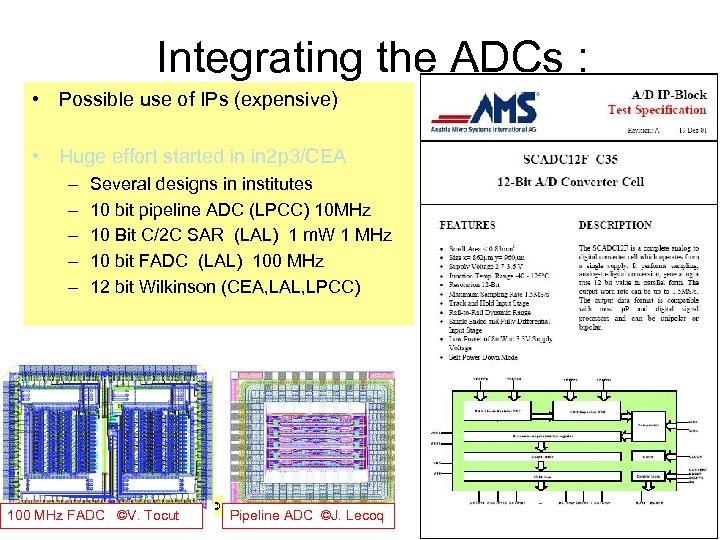
Integrating the ADCs : • Possible use of IPs (expensive) • Huge effort started in in 2 p 3/CEA – – – Several designs in institutes 10 bit pipeline ADC (LPCC) 10 MHz 10 Bit C/2 C SAR (LAL) 1 m. W 1 MHz 10 bit FADC (LAL) 100 MHz 12 bit Wilkinson (CEA, LAL, LPCC) 100 MHz FADC ©V. Tocut © J. Lecoq Pipeline ADC ©J. Lecoq
Скачать презентацию Jacques Bouchez ISS meeting detector WG CEA DAPNIA-Saclay
cac562b12b4f98b5c4cb41c2667a4853.ppt