 J A P A N
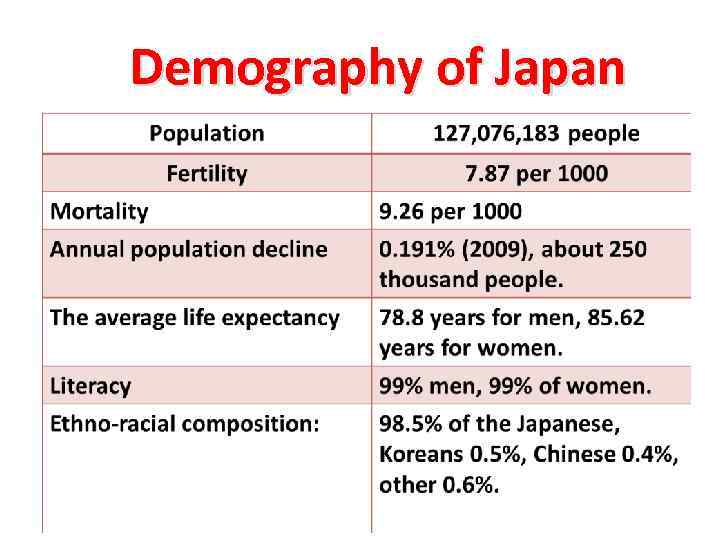 Demography of Japan
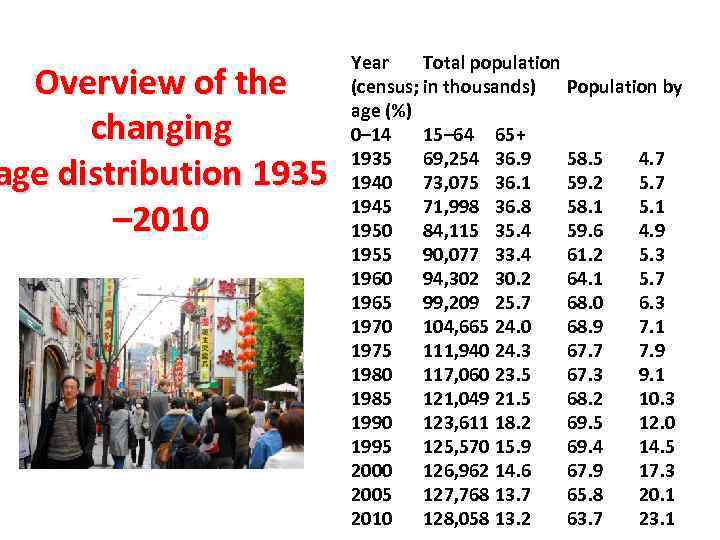 Overview of the changing age distribution 1935 – 2010 Year Total population (census; in thousands) age (%) 0– 14 15– 64 65+ 1935 69, 254 36. 9 1940 73, 075 36. 1 1945 71, 998 36. 8 1950 84, 115 35. 4 1955 90, 077 33. 4 1960 94, 302 30. 2 1965 99, 209 25. 7 1970 104, 665 24. 0 1975 111, 940 24. 3 1980 117, 060 23. 5 1985 121, 049 21. 5 1990 123, 611 18. 2 1995 125, 570 15. 9 2000 126, 962 14. 6 2005 127, 768 13. 7 2010 128, 058 13. 2 Population by 58. 5 59. 2 58. 1 59. 6 61. 2 64. 1 68. 0 68. 9 67. 7 67. 3 68. 2 69. 5 69. 4 67. 9 65. 8 63. 7 4. 7 5. 1 4. 9 5. 3 5. 7 6. 3 7. 1 7. 9 9. 1 10. 3 12. 0 14. 5 17. 3 20. 1 23. 1
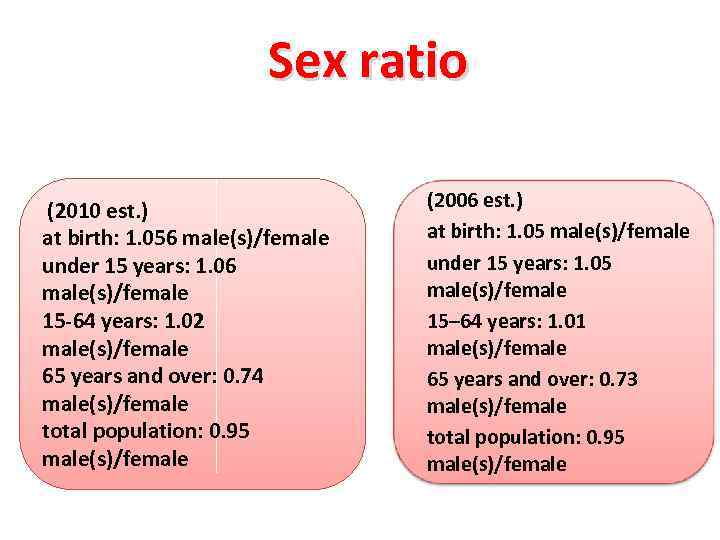 Sex ratio (2010 est. ) at birth: 1. 056 male(s)/female under 15 years: 1. 06 male(s)/female 15 -64 years: 1. 02 male(s)/female 65 years and over: 0. 74 male(s)/female total population: 0. 95 male(s)/female (2006 est. ) at birth: 1. 05 male(s)/female under 15 years: 1. 05 male(s)/female 15– 64 years: 1. 01 male(s)/female 65 years and over: 0. 73 male(s)/female total population: 0. 95 male(s)/female
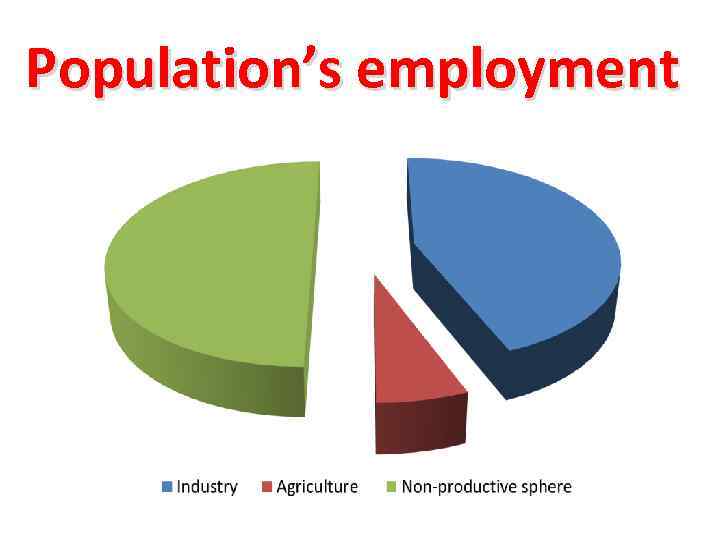 Population’s employment
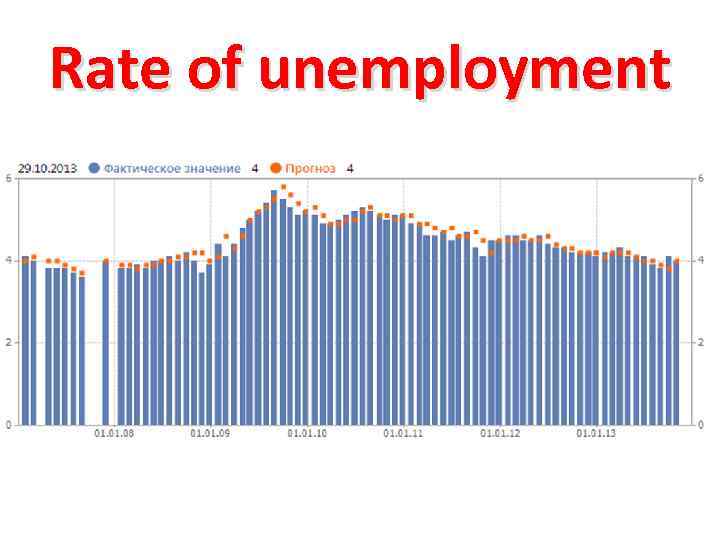 Rate of unemployment
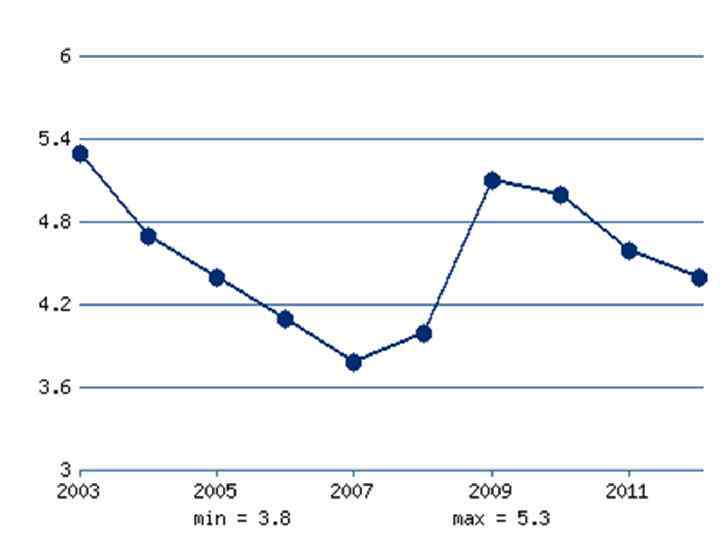
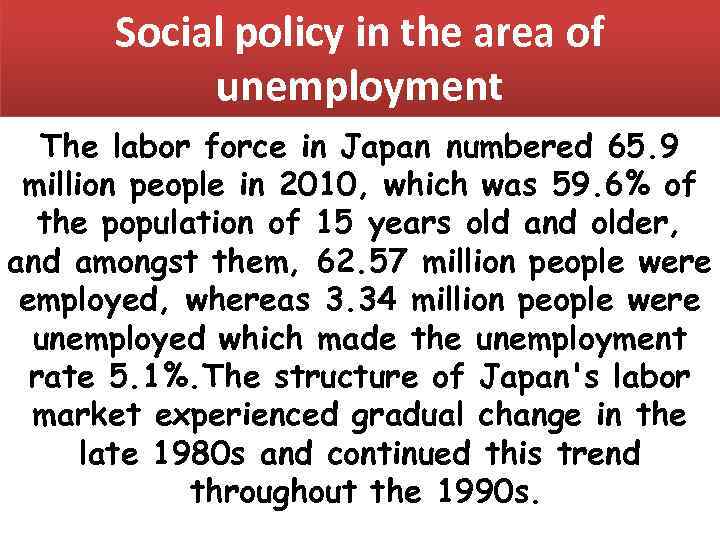 Social policy in the area of unemployment The labor force in Japan numbered 65. 9 million people in 2010, which was 59. 6% of the population of 15 years old and older, and amongst them, 62. 57 million people were employed, whereas 3. 34 million people were unemployed which made the unemployment rate 5. 1%. The structure of Japan's labor market experienced gradual change in the late 1980 s and continued this trend throughout the 1990 s.
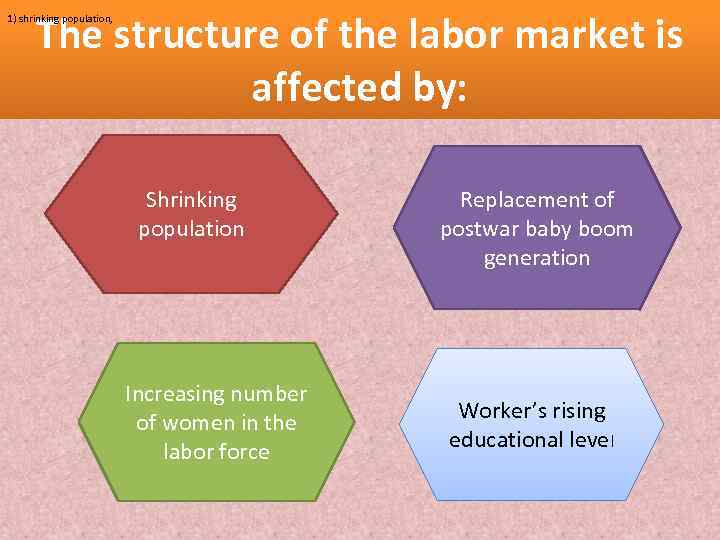 The structure of the labor market is affected by: 1) shrinking population, Shrinking population Increasing number of women in the labor force Replacement of postwar baby boom generation Worker’s rising educational level
 The basic Japanese employment structure is known as "Simultaneous recruiting of new graduates" and "ranking hierarchy", which includes seniority wages and lifetime employment. It allows employees to learn broad skills to achieve in long-term perspective through job rotation and on-the-job training which is likely to be firm-specific.
 Japan has shifted to US-type regulation and capitalism after the burst of economic bubble, and Japanese firms have introduced two developments: • performance-related pay • on-regular employment such as part-time, temporary and hiring through human resource agencies.
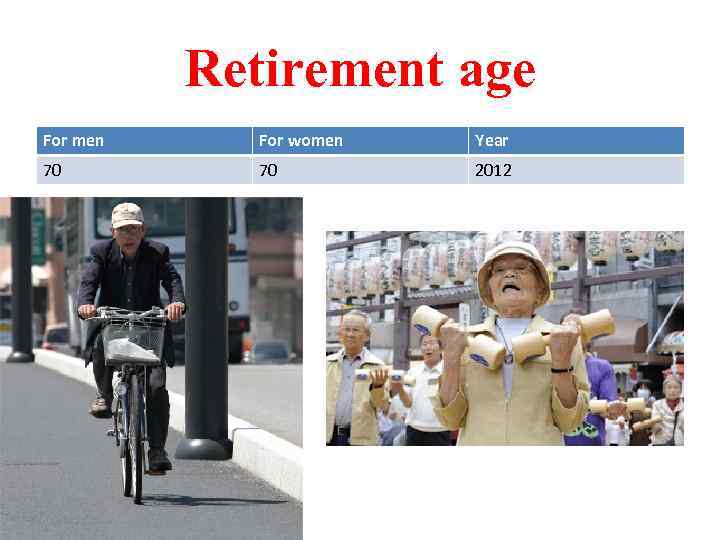 Retirement age For men For women Year 70 70 2012
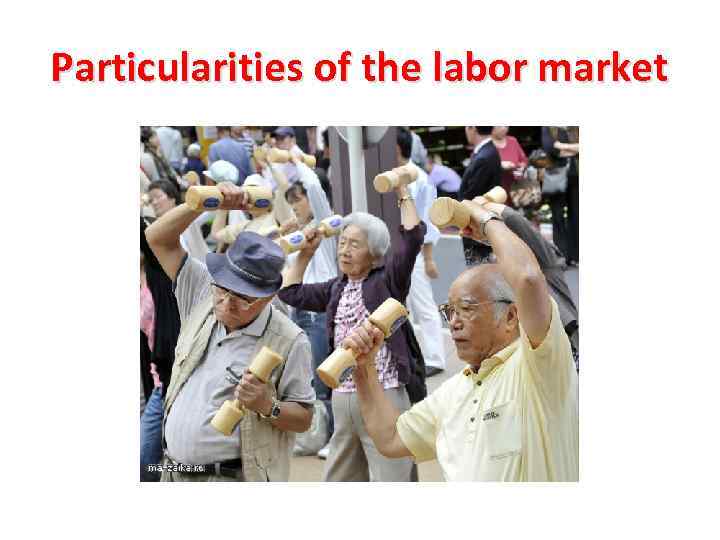 Particularities of the labor market
 Particularities of the labor market • Japan because of its location, the long history and, as a consequence, has a tradition of very specific features of the labor market. • The main features of the labor market in Japan should be noted lifetime employment in large corporations, as well as pay, depending on experience of a worker.
 Particularities of the labor market • A slow process of evaluation and promotion. Many Japanese are waiting for higher by 8 10 years. • There is a tendency to group promotions. That is, people are promoted at the same time with his peers. • Basically, the employer shall provide social support to its workers to acquire housing, health care, and provides other services that are associated with the family.
 Particularities of the labor market Personal success is not encouraged, as opposed to the American model, and anyone who tries to show a strong performance, consider the offender group harmony, which is the most important characteristic feature of the relationship in the labor market.