 Скачать презентацию ITS TECHNOLOGIES FOR PUBLIC TRANSIT SECURITY Eva Lerner-Lam
96f67f140c5e8b365b48b467b387fc66.ppt
- Количество слайдов: 21



ITS TECHNOLOGIES FOR PUBLIC TRANSIT SECURITY Eva Lerner-Lam, President Palisades Consulting Group, Inc. Presented to THE ABC’S OF INTEGRATING INTELLIGENT TRANSPORTATION SYSTEMS (ITS) PUBLIC SAFETY, SECURITY AND EMERGENCY MANAGEMENT SYMPOSIUM – II June 1, 2 2005 The Orleans Hotel and Casino Las Vegas, NV PALISADES
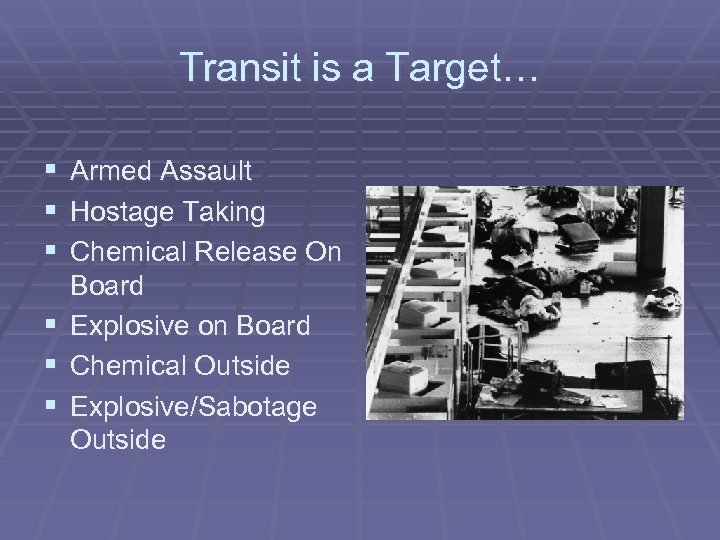
Transit is a Target… § Armed Assault § Hostage Taking § Chemical Release On § § § Board Explosive on Board Chemical Outside Explosive/Sabotage Outside
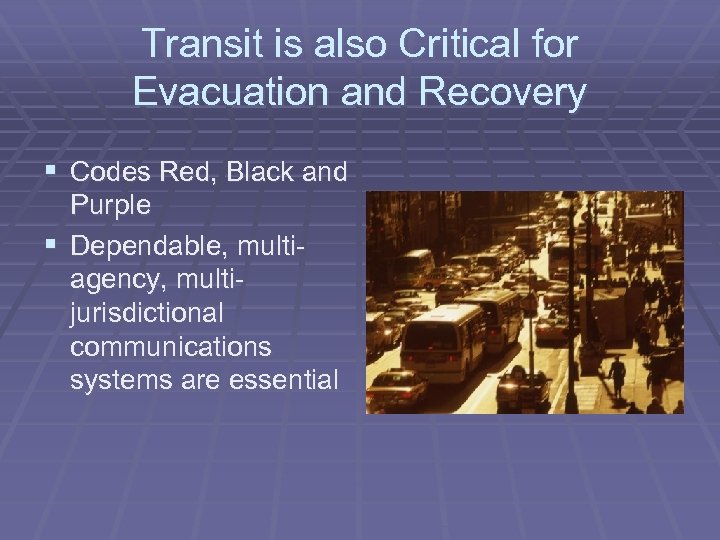
Transit is also Critical for Evacuation and Recovery § Codes Red, Black and Purple § Dependable, multiagency, multijurisdictional communications systems are essential
Transit Performs Well Under Stress § 9/11 attacks in NYC and Washington, DC § August 14, 2003 Blackout § LA Olympics § Loma Prieta Earthquake § Every day crises § 7 -stage color-coded warning system
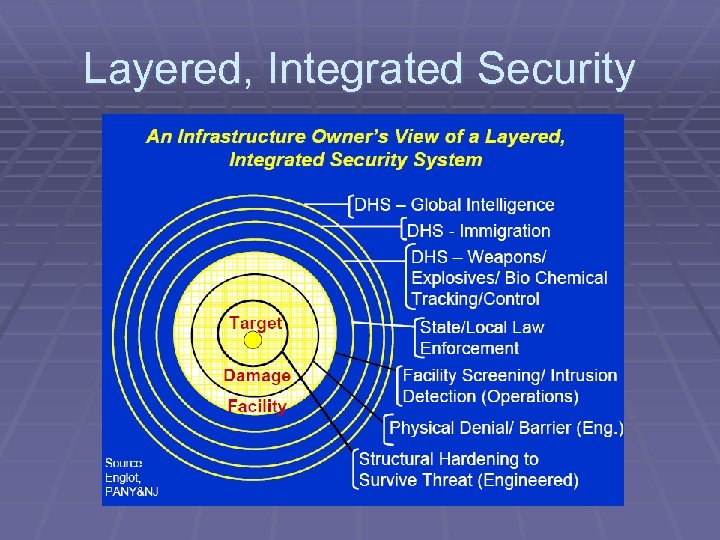
Layered, Integrated Security
How Can ITS Help? Knowing our Vulnerabilities § § Surveillance video, data systems Detection IT firewalls, chemical sensors Trend analyses data collection /analysis “Connecting the dots” models and simulations Responding efficiently and effectively under emergency conditions Helping a region to recover from a major attack
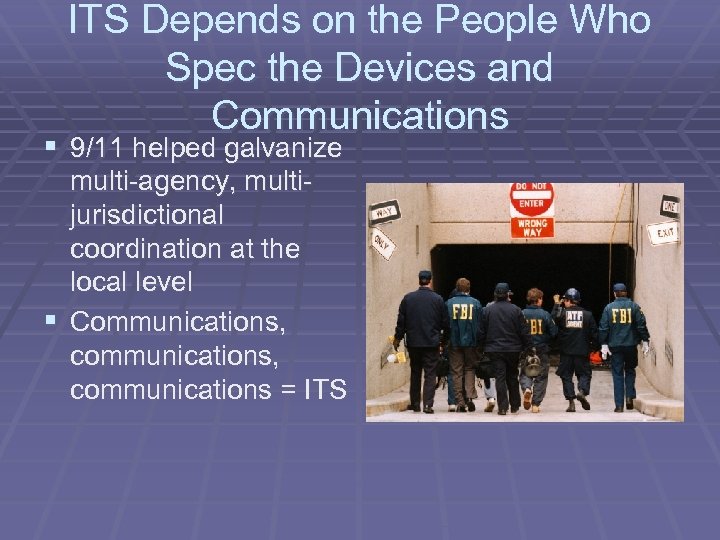
ITS Depends on the People Who Spec the Devices and Communications § 9/11 helped galvanize multi-agency, multijurisdictional coordination at the local level § Communications, communications = ITS
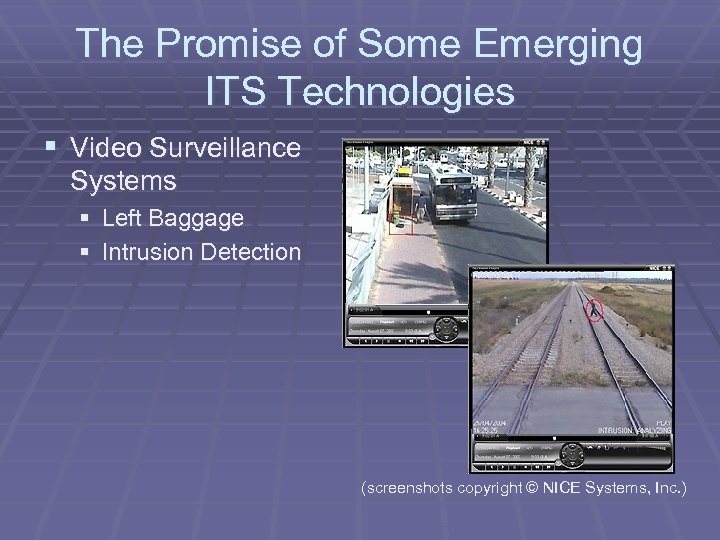
The Promise of Some Emerging ITS Technologies § Video Surveillance Systems § Left Baggage § Intrusion Detection (screenshots copyright © NICE Systems, Inc. )
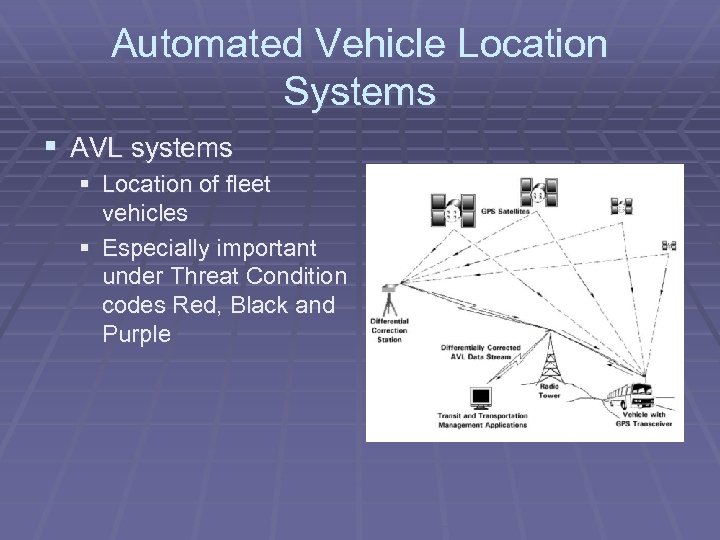
Automated Vehicle Location Systems § AVL systems § Location of fleet vehicles § Especially important under Threat Condition codes Red, Black and Purple
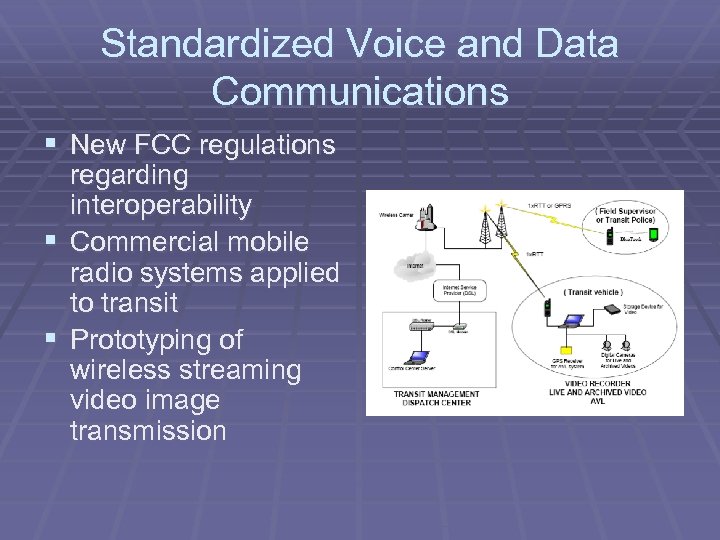
Standardized Voice and Data Communications § New FCC regulations regarding interoperability § Commercial mobile radio systems applied to transit § Prototyping of wireless streaming video image transmission
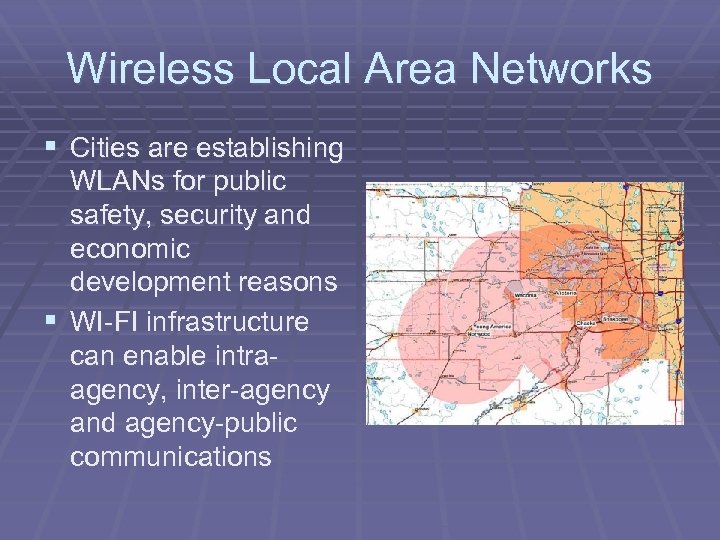
Wireless Local Area Networks § Cities are establishing WLANs for public safety, security and economic development reasons § WI-FI infrastructure can enable intraagency, inter-agency and agency-public communications
Technological Advances § Communications, including: § Broadband capacities § Data storage § Wireless local area networks § Standards, including: § Transit Communications Interface Profiles (NTCIP 1400 series) § Incident management data communications (IEEE 1512)
FTA Policy on National ITS Architecture
Key Provisions of FTA Policy § Federally-funded projects must: § Be part of an adopted Regional ITS Architecture § Use a Systems Engineering approach § Stakeholder involvement § Integration of functions and systems
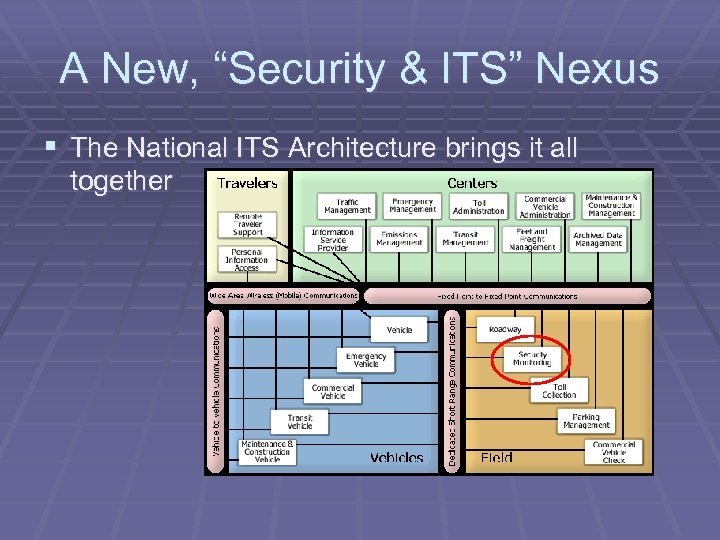
A New, “Security & ITS” Nexus § The National ITS Architecture brings it all together
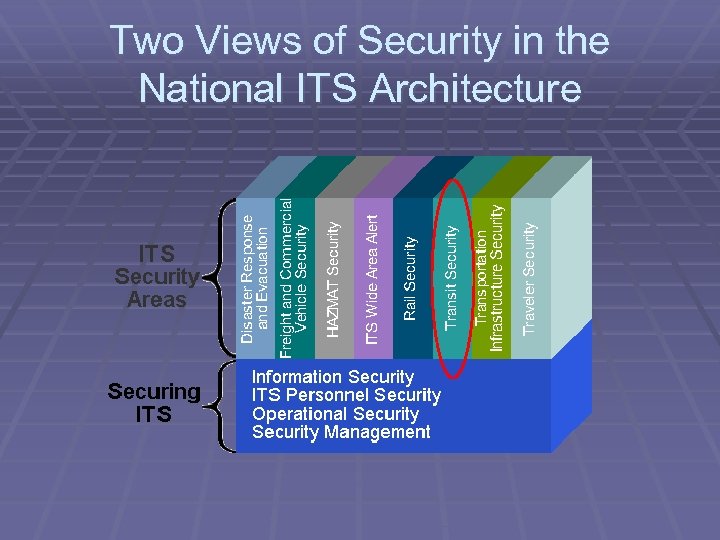
Two Views of Security in the National ITS Architecture
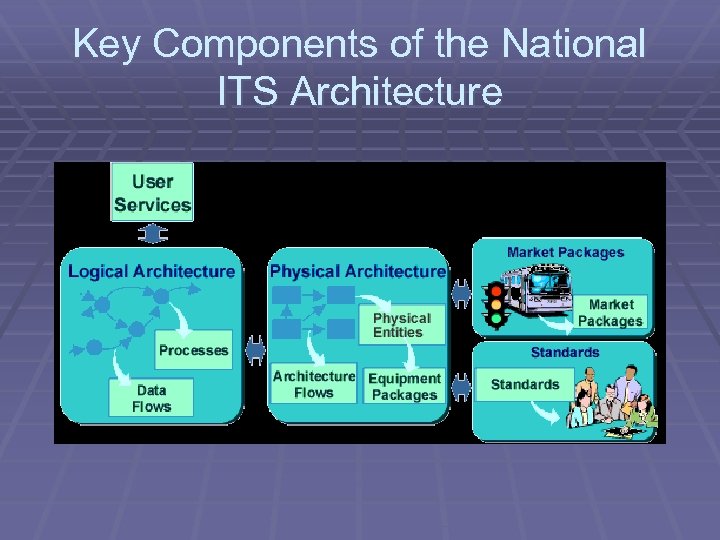
Key Components of the National ITS Architecture
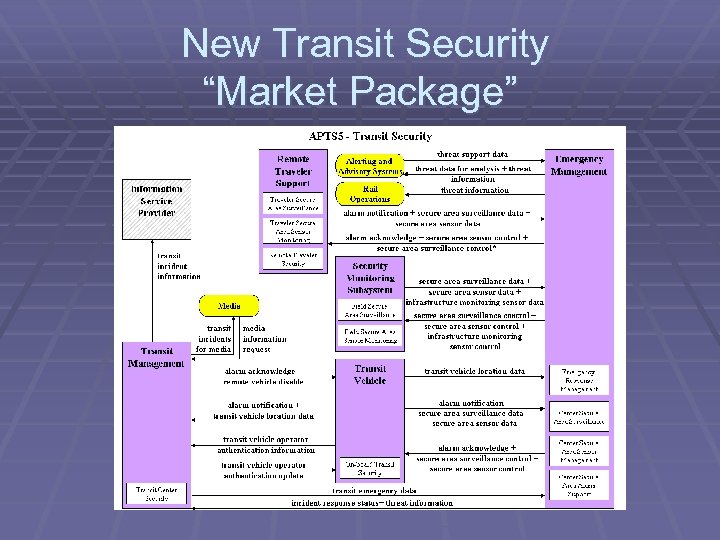
New Transit Security “Market Package”
Challenges To Overcome § Interoperability § Data § Hardware § “Turf and Cultures” (Institutional Barriers) § Engagement must occur INSIDE transit agencies as well as with other, OUTSIDE agencies
In Summary § Use a “layered” and “integrated” approach § Use the National ITS Architecture § Use a systems engineering approach § Use open standards and protocols that support the National ITS Architecture § Meet regularly with regional stakeholders to reduce institutional barriers

The End www. palisadesgroup. com
Скачать презентацию ITS TECHNOLOGIES FOR PUBLIC TRANSIT SECURITY Eva Lerner-Lam
96f67f140c5e8b365b48b467b387fc66.ppt