


 Скачать презентацию ITCE 720 A Autonomic Wireless Networking Fall 2009
961140dd16270d53398cdc6b7beae905.ppt
- Количество слайдов: 47
 ITCE 720 A Autonomic Wireless Networking Fall 2009 Prof. Chansu Yu chansuyu@gmail. com c. yu 91@csuohio. edu 1
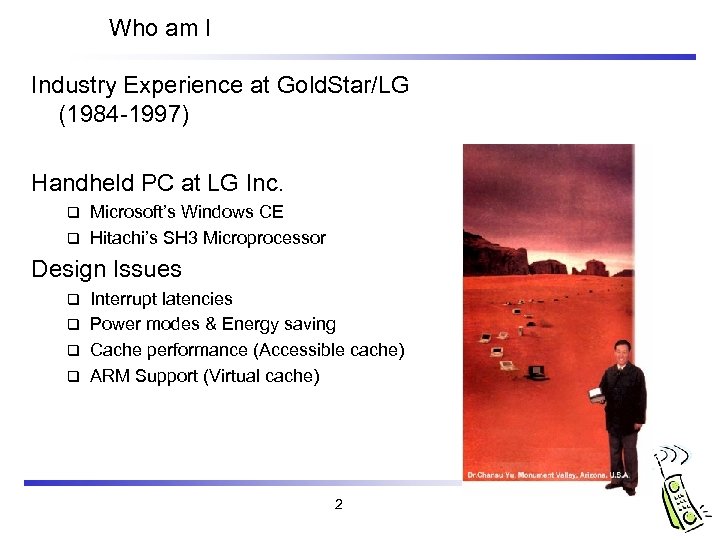 Who am I Industry Experience at Gold. Star/LG (1984 -1997) Handheld PC at LG Inc. Microsoft’s Windows CE q Hitachi’s SH 3 Microprocessor q Design Issues Interrupt latencies q Power modes & Energy saving q Cache performance (Accessible cache) q ARM Support (Virtual cache) q 2
 Who am I PC BIOS (Basic Input/Output Systems) Project at Gold. Star Inc. q Clean room process q Specification writing team : aware of BIOS code q Bios writing team : virgin engineers q. I was in the Specification team to work on POST (Power -on-self-test) & HDD (hard disk drive) 3
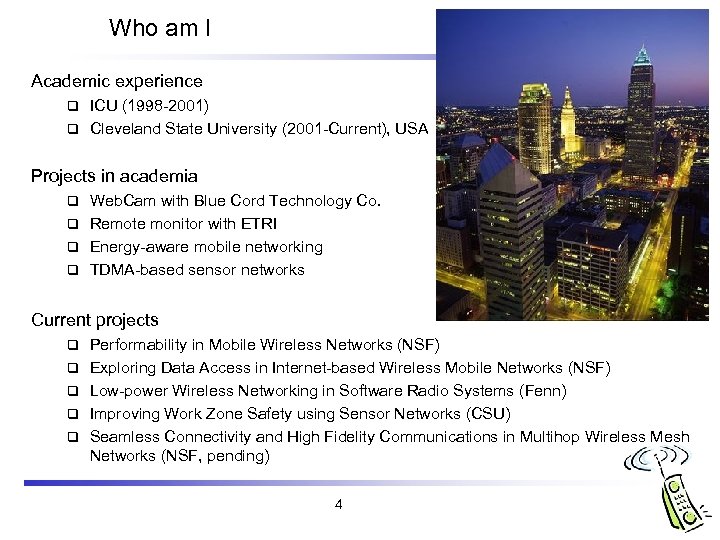 Who am I Academic experience ICU (1998 -2001) q Cleveland State University (2001 -Current), USA q Projects in academia Web. Cam with Blue Cord Technology Co. q Remote monitor with ETRI q Energy-aware mobile networking q TDMA-based sensor networks q Current projects q q q Performability in Mobile Wireless Networks (NSF) Exploring Data Access in Internet-based Wireless Mobile Networks (NSF) Low-power Wireless Networking in Software Radio Systems (Fenn) Improving Work Zone Safety using Sensor Networks (CSU) Seamless Connectivity and High Fidelity Communications in Multihop Wireless Mesh Networks (NSF, pending) 4
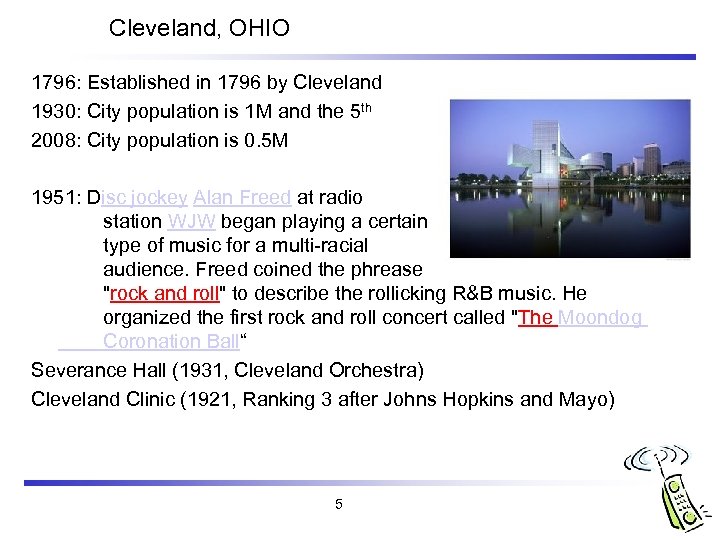 Cleveland, OHIO 1796: Established in 1796 by Cleveland 1930: City population is 1 M and the 5 th 2008: City population is 0. 5 M 1951: Disc jockey Alan Freed at radio station WJW began playing a certain type of music for a multi-racial audience. Freed coined the phrease "rock and roll" to describe the rollicking R&B music. He organized the first rock and roll concert called "The Moondog Coronation Ball“ Severance Hall (1931, Cleveland Orchestra) Cleveland Clinic (1921, Ranking 3 after Johns Hopkins and Mayo) 5
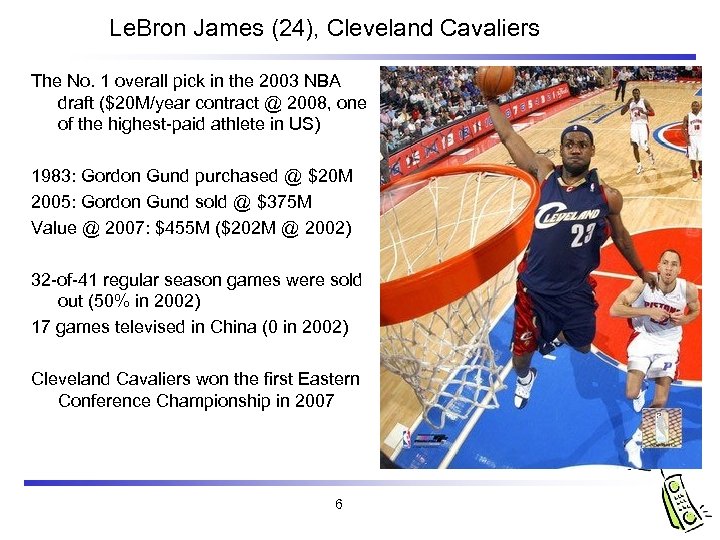 Le. Bron James (24), Cleveland Cavaliers The No. 1 overall pick in the 2003 NBA draft ($20 M/year contract @ 2008, one of the highest-paid athlete in US) 1983: Gordon Gund purchased @ $20 M 2005: Gordon Gund sold @ $375 M Value @ 2007: $455 M ($202 M @ 2002) 32 -of-41 regular season games were sold out (50% in 2002) 17 games televised in China (0 in 2002) Cleveland Cavaliers won the first Eastern Conference Championship in 2007 6
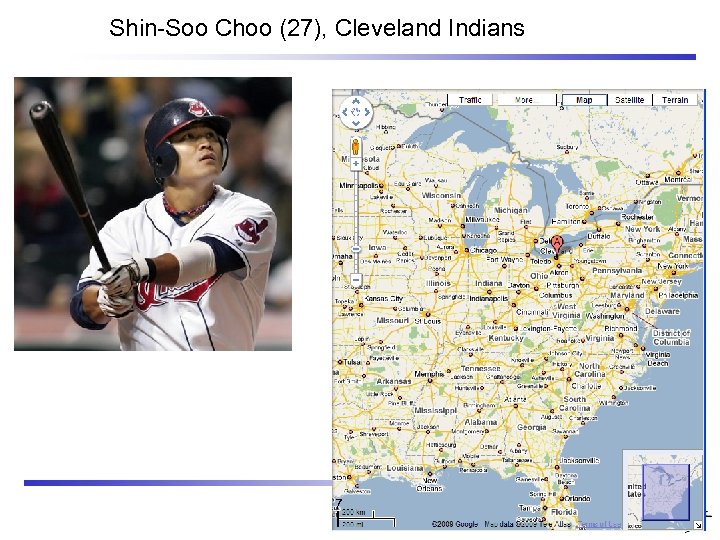 Shin-Soo Choo (27), Cleveland Indians 7
 Introduction 8
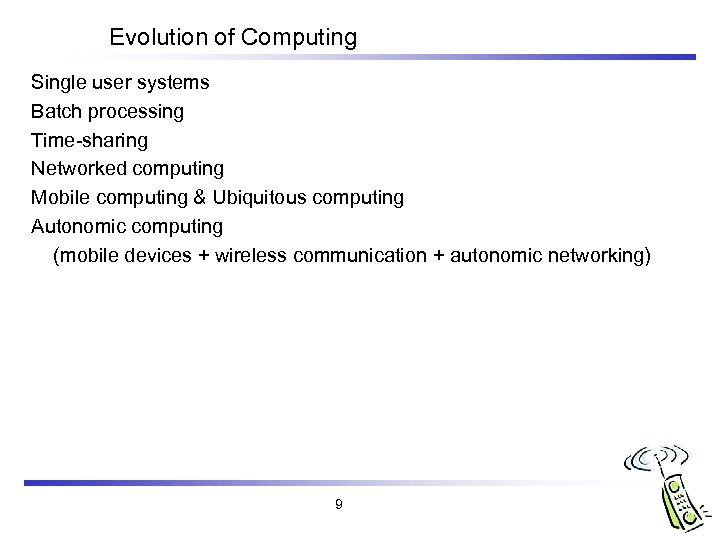 Evolution of Computing Single user systems Batch processing Time-sharing Networked computing Mobile computing & Ubiquitous computing Autonomic computing (mobile devices + wireless communication + autonomic networking) 9
 Mobile Computing Goal q Access information anywhere, anytime Aliases q Nomadic computing, wireless computing, ubiquitous computing, wearable computing Entire new class of applications New massive markets q Personal computing + consumer electronics + wireless communication q Collaborative computing, vehicle dispatching, point of sale, mail enabled applications, filtered information provision, … q 10
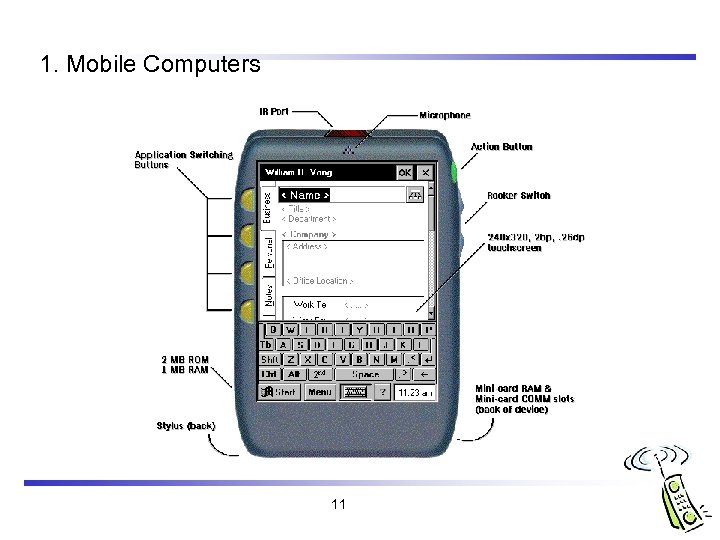 1. Mobile Computers 11
 Information at your Fingertips Handheld or Pocket PC, PDA q PC players - easy interface on a computer : Apple Newton, HP Palmtop, Microsoft Windows CE q Electronics players - computing on home appliance : Sharp Zaurus, Philips Velo, Psion Series, 3 Com (USR) Palm. Pilot Starts from and targets PC metaphor (users) q q q Shrunken PC user interface : ex) stylus for mouse Simple PIM applications : Personal Information Mgmt Strong connectivity to Windows PC via IR or Serial PCMCIA, USB, Ir. DA, Mini-card, Flash ROM Stand-alone device but can add networks 12
 Mobility Issues Bandwidth restrictions and variability Location-aware network operation User may wake up in a new environment q Dynamic replication of data q Querying wireless data & location-based responses Bursty network activity during connections & handling disconnections Disconnection OS and File System Issues - allow for disconnected operation q Database System Issues - when disconnected, based on local data q 13
 Portability Issues Battery power restrictions Risks to data Physical damage, loss, theft q unauthorized access q encrypt data stored on mobiles q backup critical data to fixed (reliable) hosts q Small user interface Small displays due to battery power and aspect ratio constraints q Cannot open too many windows q Difficult to click on miniature icons q Input Graffiti, (Dictionary-based) Expectation q Gesture or handwriting recognition with Stylus Pen Voice matching or voice recognition 14
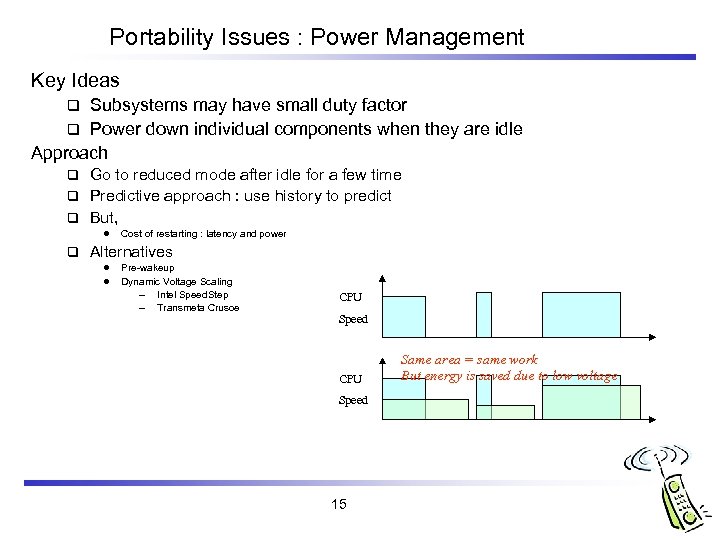 Portability Issues : Power Management Key Ideas Subsystems may have small duty factor q Power down individual components when they are idle Approach q Go to reduced mode after idle for a few time q Predictive approach : use history to predict q But, q l q Cost of restarting : latency and power Alternatives l l Pre-wakeup Dynamic Voltage Scaling – Intel Speed. Step – Transmeta Crusoe CPU Speed 15 Same area = same work But energy is saved due to low voltage
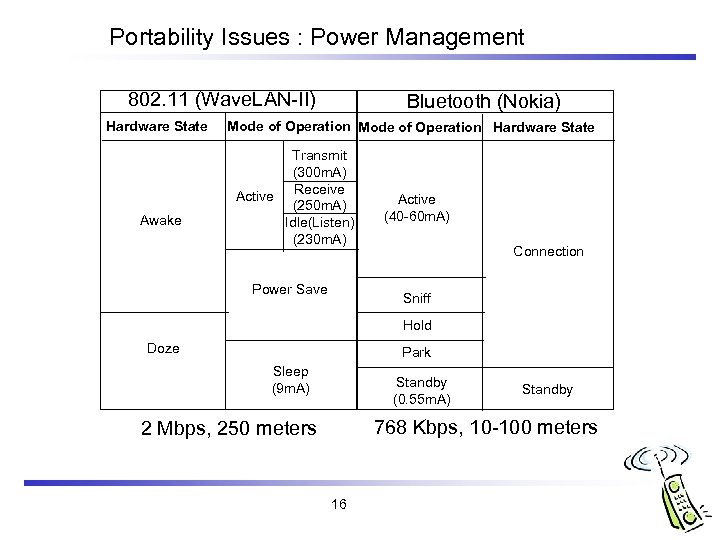 Portability Issues : Power Management 802. 11 (Wave. LAN-II) Hardware State Awake Bluetooth (Nokia) Mode of Operation Hardware State Transmit (300 m. A) Receive Active (250 m. A) Idle(Listen) (230 m. A) Power Save Active (40 -60 m. A) Connection Sniff Hold Doze Park Sleep (9 m. A) Standby (0. 55 m. A) Standby 768 Kbps, 10 -100 meters 2 Mbps, 250 meters 16
 2. Wireless Communication Main research challenges due to mobility variable communication conditions q energy limitations q Effects on different layers of OSI hierarchy mobile communication : physical/MAC layer q mobile computing : data link/network/transport layer q Research Issues q Mobile Networking - Network Layer Mobile IP l Location Management l Multicasting l Ad-hoc networking l q Mobile Networking - Transport Layer 17
 Mobile Networking How the network/transport layer protocols are affected in mobile and wireless environment Mobility Management - Network Layer q Mobile unit's physical location is no longer determines its network address does not know where a given user is l how to route messages l q Approaches Internet community: mobile IP (extends IP, connectionless) l Cellular communication community: location management (connection-oriented) l 18
 Location (Mobility) Management Mobility management q Find an adequate tradeoff between searching and informing l l Searching by the system Informing by the mobile hosts – when MHs receives messages frequently – when MHs does not move between cells often Multicasting Possible to receive no / multiple identical messages q Multicasting is a challenge q l l l how to guarantee “exactly once” or “at least once” delivery in an efficient manner MCAST protocol is proposed how to maintain a “group view” - the set of MSSs for multicasting 19
 Mobile Ad-hoc Networking Ultimate challenge for mobile networking Mobile terminals can form networks without participation of the fixed infrastructure, arise in rapid-deployment situations emergency service at a disaster site q military operations in a remote area q business meetings held in venues without network infra q sensor networks q Highly dynamic frequent change of routing table q a given terminal can serve as a router now but no longer be a short time later q 20
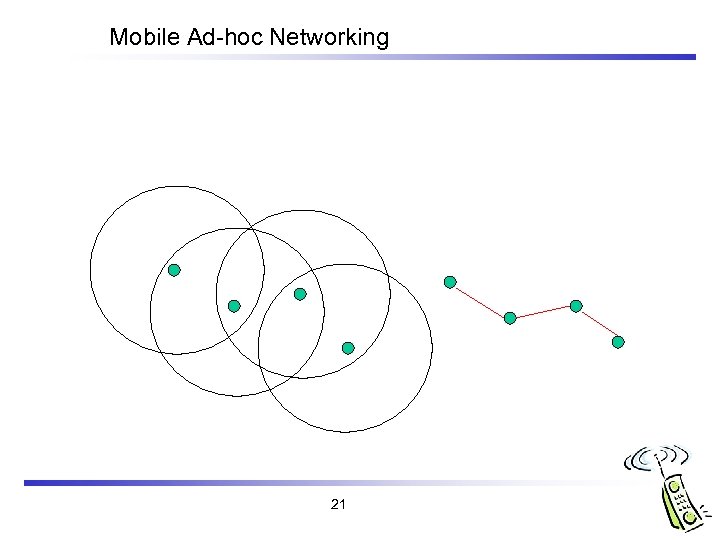 Mobile Ad-hoc Networking 21
 3. Embedded Systems Hardware Embedded processors & embedded peripherals q Interfacing q Interacts with environments Sensing and controlling externals l Real-time constrains l l q I/O : System bus, I 2 C, Parallel, Serial, IR, RF, PCMCIA Software q Embedded OS l Palm OS, Windows CE, Embedded Linux, … Cross development & Emulation q Workload characterization q 22
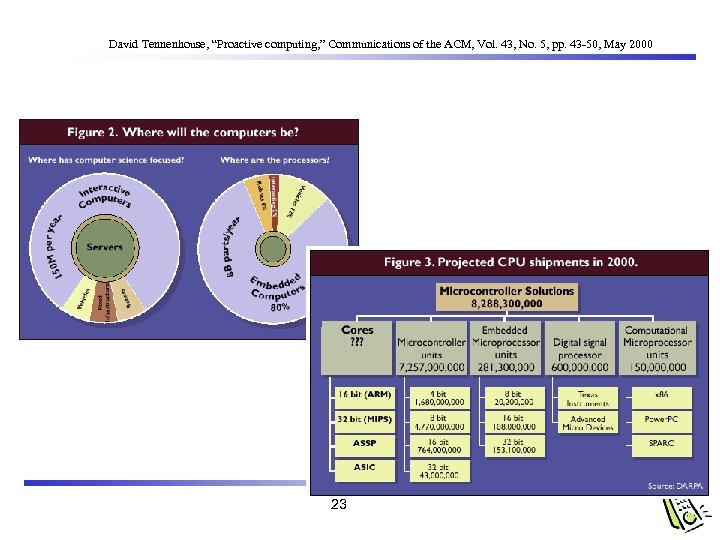 David Tennenhouse, “Proactive computing, ” Communications of the ACM, Vol. 43, No. 5, pp. 43 -50, May 2000 23
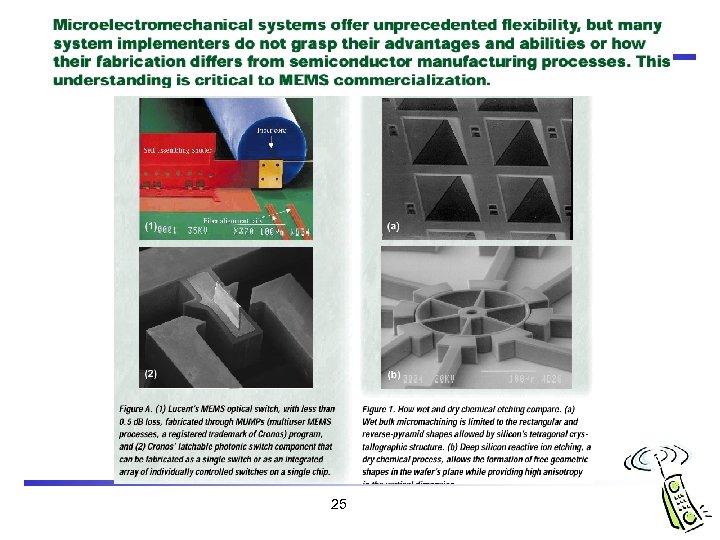
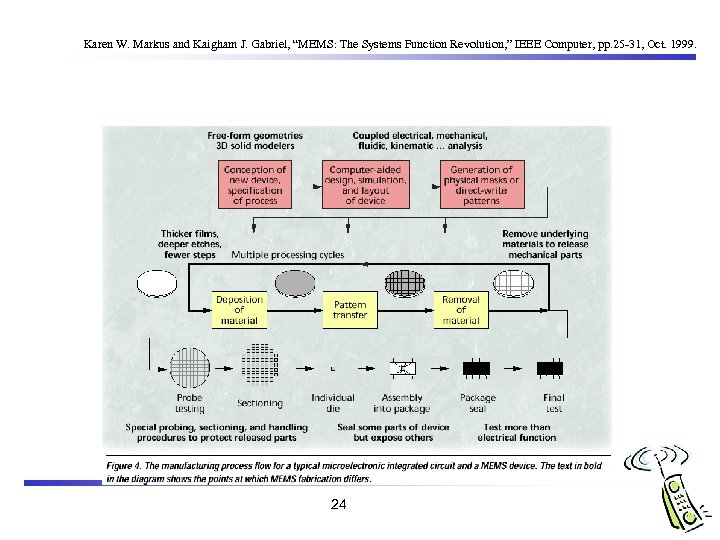 Karen W. Markus and Kaigham J. Gabriel, “MEMS: The Systems Function Revolution, ” IEEE Computer, pp. 25 -31, Oct. 1999. 24
 25
25
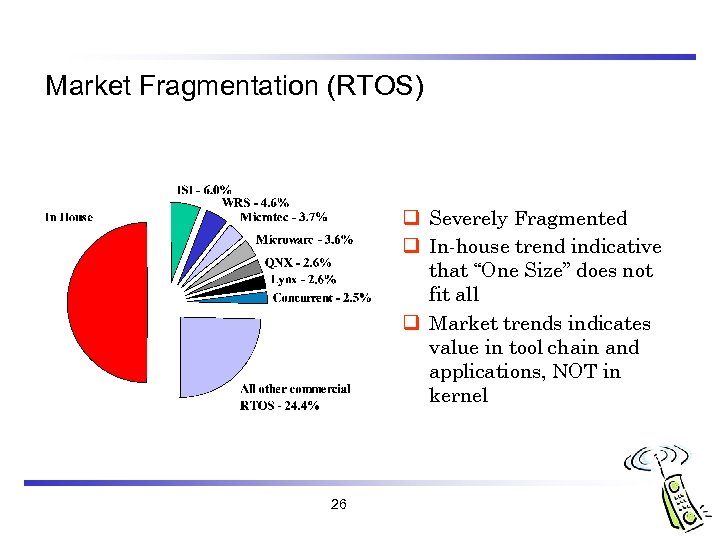 Market Fragmentation (RTOS) q Severely Fragmented q In-house trend indicative that “One Size” does not fit all q Market trends indicates value in tool chain and applications, NOT in kernel 26
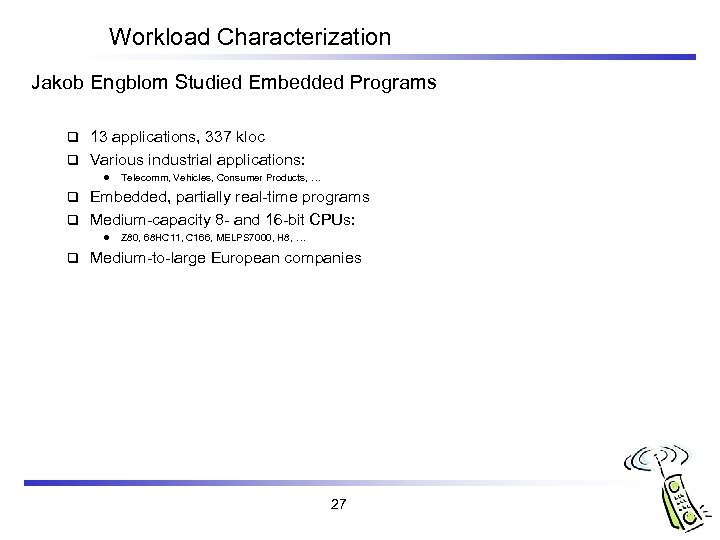 Workload Characterization Jakob Engblom Studied Embedded Programs 13 applications, 337 kloc q Various industrial applications: q l Telecomm, Vehicles, Consumer Products, … Embedded, partially real-time programs q Medium-capacity 8 - and 16 -bit CPUs: q l q Z 80, 68 HC 11, C 166, MELPS 7000, H 8, … Medium-to-large European companies 27
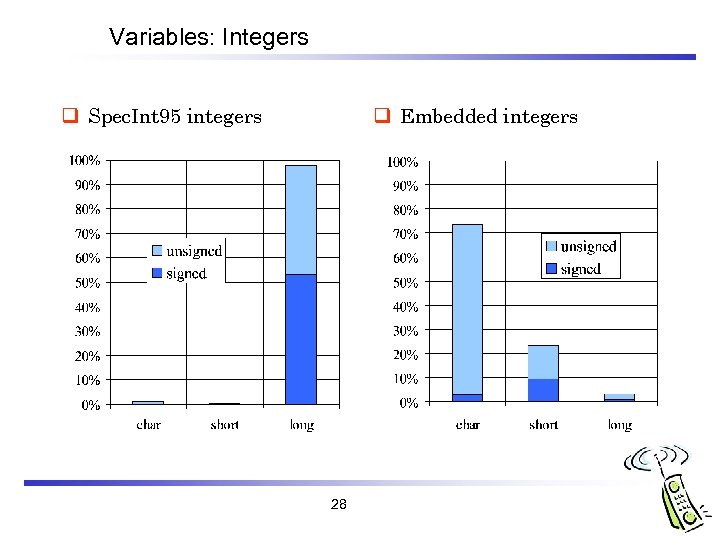 Variables: Integers q Spec. Int 95 integers q Embedded integers 28
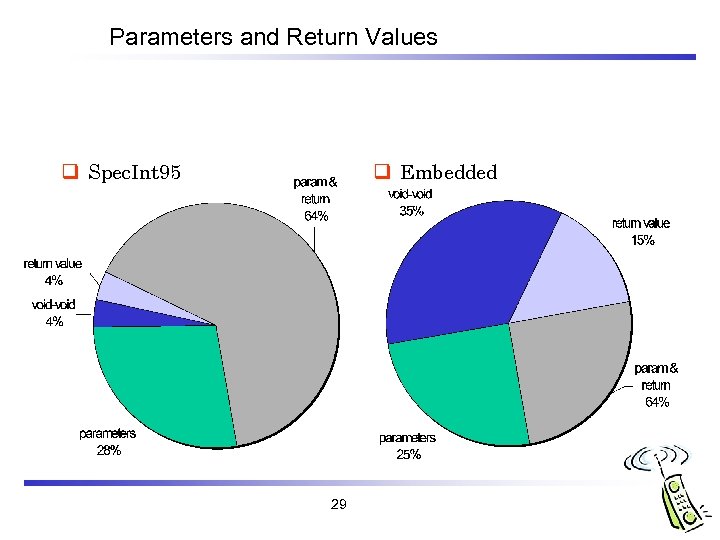 Parameters and Return Values q Spec. Int 95 q Embedded 29
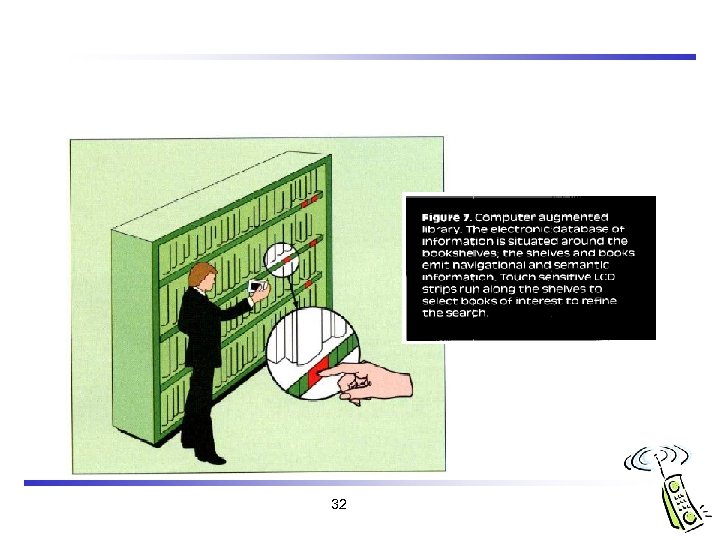
 4. Ubiquitous Computing Whenever people learn something sufficiently well, they cease to be aware of it Location-based services, shared meeting applications <-> Virtual reality : make a world inside the computer Hundreds of computers in a room “share situations” Examples Active Badge - door control, phone call forwarding, terminal preference q Tab - instant votes, library map q 30
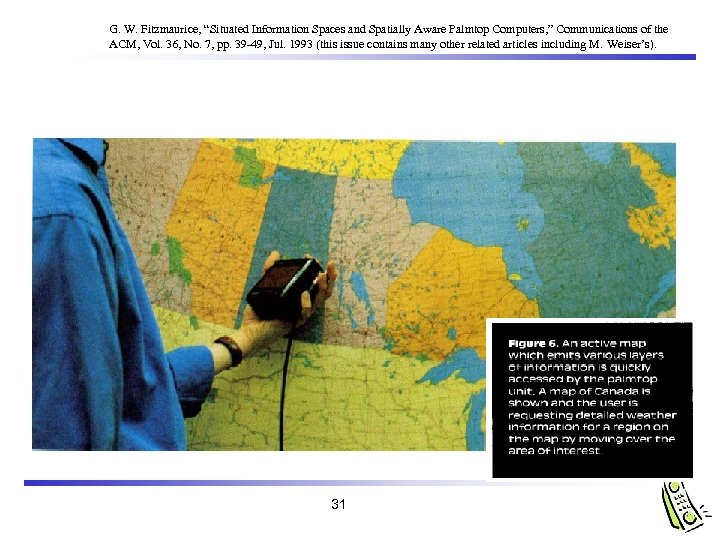 G. W. Fitzmaurice, “Situated Information Spaces and Spatially Aware Palmtop Computers, ” Communications of the ACM, Vol. 36, No. 7, pp. 39 -49, Jul. 1993 (this issue contains many other related articles including M. Weiser’s). 31
 32
32
 Active Badges Purpose q locating individuals within a building by determining the location of their Active Badge (and thus, telephone calls can be routed) Method This small device worn by personnel transmits a unique infra-red signal every 10 seconds (for 0. 1 sec to reduce collision probability) q Each office within a building is equipped with one or more networked sensors which detect these transmissions q The location of the badge (and hence its wearer) can thus be determined on the basis of information provided by these sensors q 33
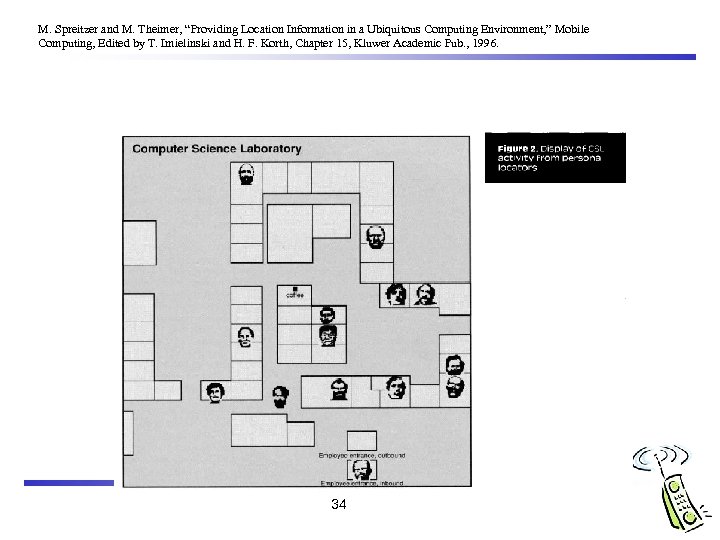 M. Spreitzer and M. Theimer, “Providing Location Information in a Ubiquitous Computing Environment, ” Mobile Computing, Edited by T. Imielinski and H. F. Korth, Chapter 15, Kluwer Academic Pub. , 1996. 34
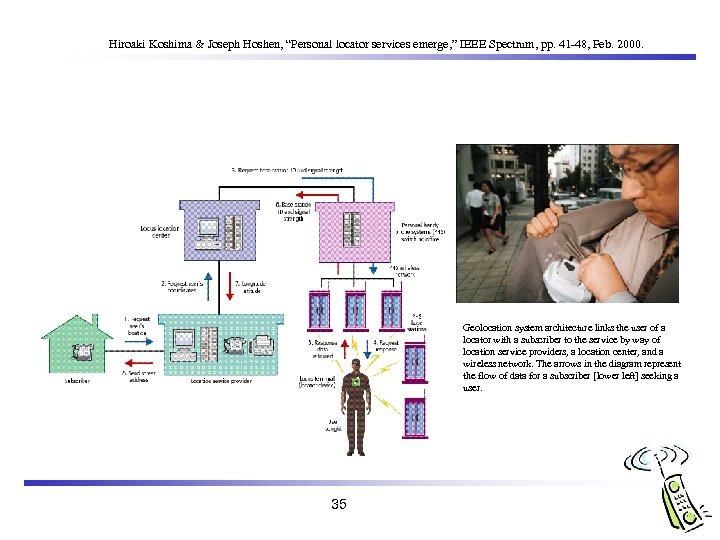 Hiroaki Koshima & Joseph Hoshen, “Personal locator services emerge, ” IEEE Spectrum, pp. 41 -48, Feb. 2000. Geolocation system architecture links the user of a locator with a subscriber to the service by way of location service providers, a location center, and a wireless network. The arrows in the diagram represent the flow of data for a subscriber [lower left] seeking a user. 35
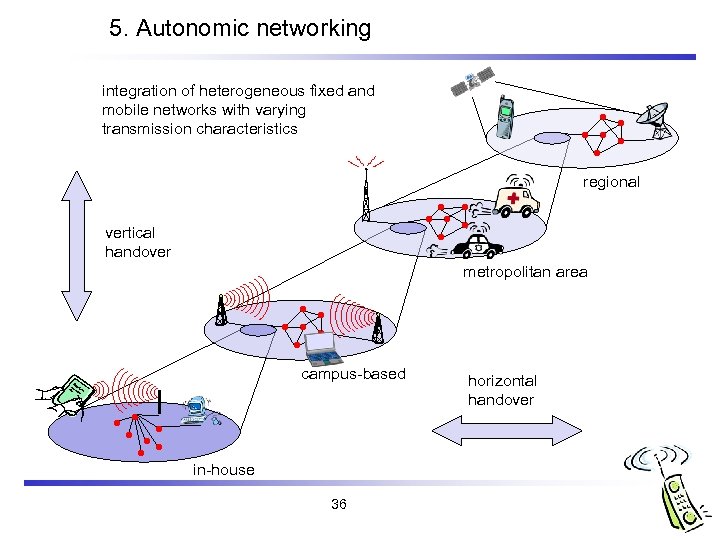 5. Autonomic networking integration of heterogeneous fixed and mobile networks with varying transmission characteristics regional vertical handover metropolitan area campus-based in-house 36 horizontal handover
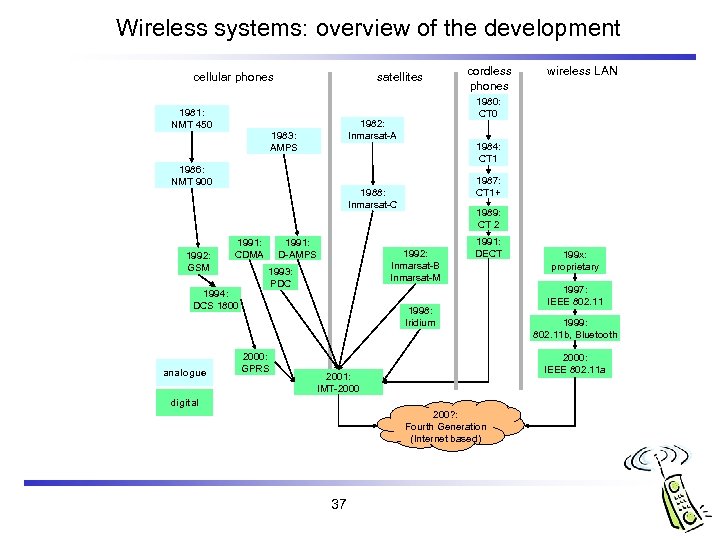 Wireless systems: overview of the development cellular phones 1981: NMT 450 satellites 1986: NMT 900 1992: GSM 1994: DCS 1800 analogue 1984: CT 1 1987: CT 1+ 1988: Inmarsat-C 1991: CDMA 1991: D-AMPS 1989: CT 2 1992: Inmarsat-B Inmarsat-M 1993: PDC 1991: DECT 1998: Iridium 2000: GPRS 199 x: proprietary 1997: IEEE 802. 11 1999: 802. 11 b, Bluetooth 2000: IEEE 802. 11 a 2001: IMT-2000 digital 200? : Fourth Generation (Internet based) 37 wireless LAN 1980: CT 0 1982: Inmarsat-A 1983: AMPS cordless phones
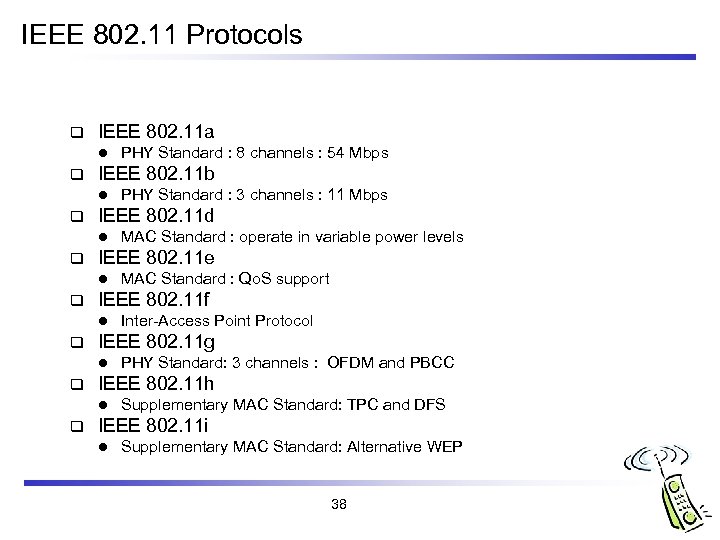 IEEE 802. 11 Protocols q IEEE 802. 11 a l q IEEE 802. 11 b l q PHY Standard: 3 channels : OFDM and PBCC IEEE 802. 11 h l q Inter-Access Point Protocol IEEE 802. 11 g l q MAC Standard : Qo. S support IEEE 802. 11 f l q MAC Standard : operate in variable power levels IEEE 802. 11 e l q PHY Standard : 3 channels : 11 Mbps IEEE 802. 11 d l q PHY Standard : 8 channels : 54 Mbps Supplementary MAC Standard: TPC and DFS IEEE 802. 11 i l Supplementary MAC Standard: Alternative WEP 38
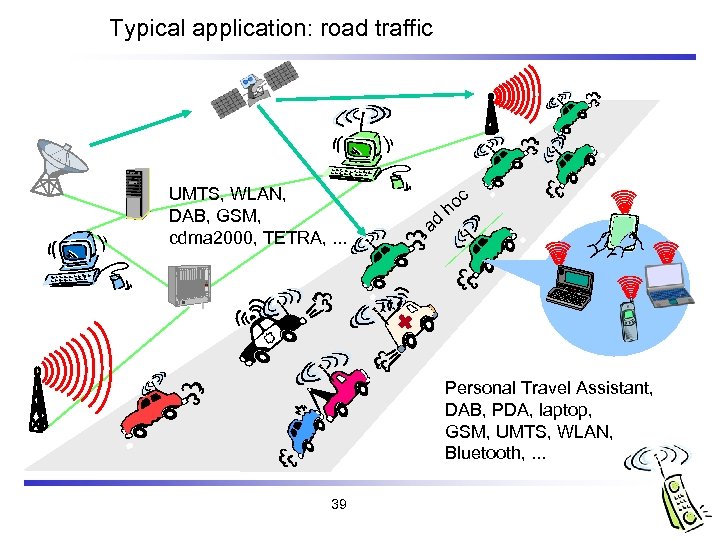 Typical application: road traffic UMTS, WLAN, DAB, GSM, cdma 2000, TETRA, . . . c ad ho Personal Travel Assistant, DAB, PDA, laptop, GSM, UMTS, WLAN, Bluetooth, . . . 39
 Autonomic Wireless Networking Diverse systems and solutions motivate us to consider self-* networks Applications and services are not ported onto a preexisting network, but the network itself grows out of the applications and the services that end users want Service-driven, situated, self-controlled, self-organized, technologyindependent, and scalable Network is not just a “data transport engine” but more like an “information transport/processing engine” 40
 Software-defined and Cognitive Radios Cognitive radio is “an intelligent wireless communication system that is aware of its environment … adapts to statistical variations in the input stimuli, with two primary objectives in mind – highly reliable communication and efficient utilization of the radio spectrum. ” (Simon Haykin, IEEE JSAC, 2005) Three fundamental cognitive tasks are radio-scene analysis, channel-state estimation and predictive modeling, and transmit power control and dynamic spectrum management Technical foundation of cognitive radio is software-defined radio platform GNU Radio and USRP SORA (MSR China) Cal. Radio (UC) Etc. 41
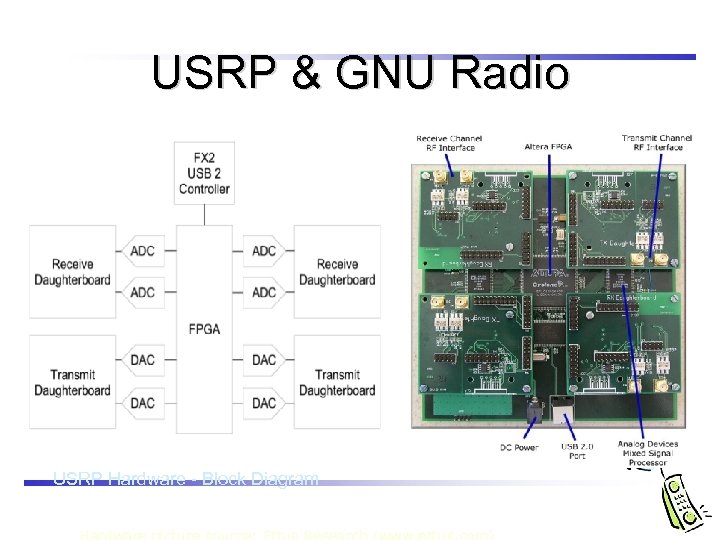 USRP & GNU Radio USRP Hardware - Block Diagram Fig. source - http: //www. nd. edu/~jnl/sdr/docs/tutorials/4. pdf
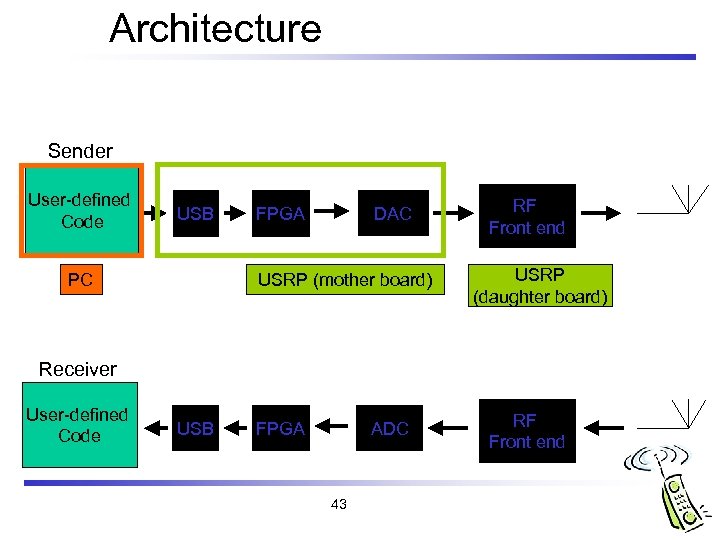 Architecture Sender User-defined Code USB PC DAC FPGA USRP (mother board) RF Front end USRP (daughter board) Receiver User-defined Code USB ADC FPGA 43 RF Front end
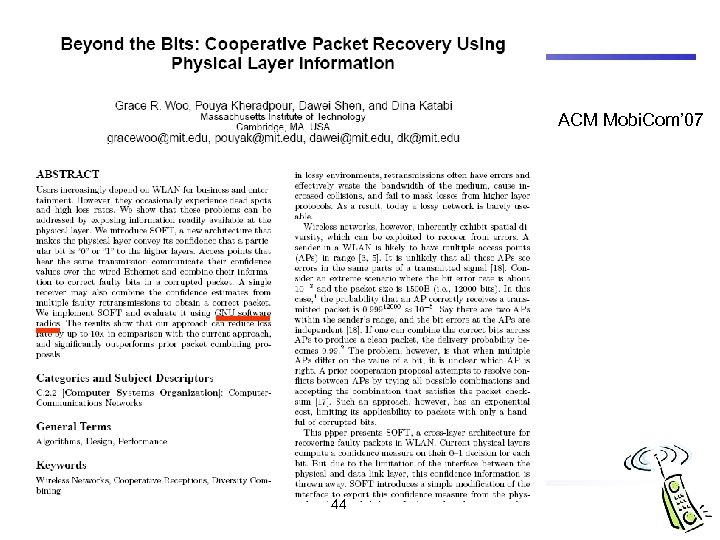 ACM Mobi. Com’ 07 44
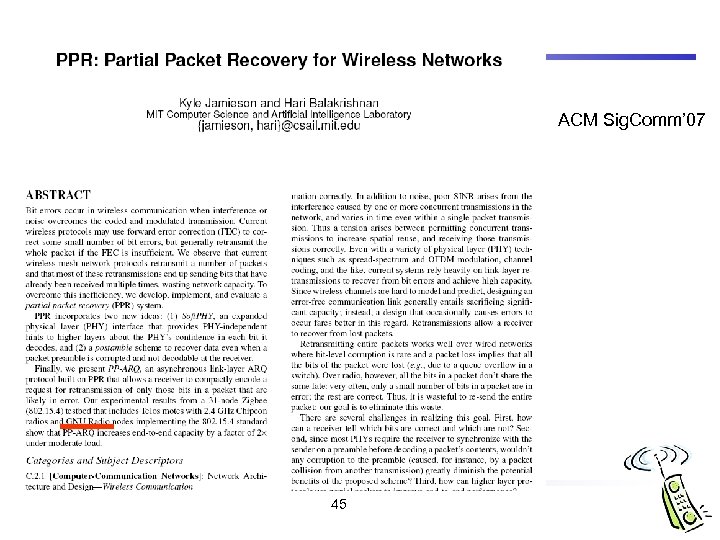 ACM Sig. Comm’ 07 45
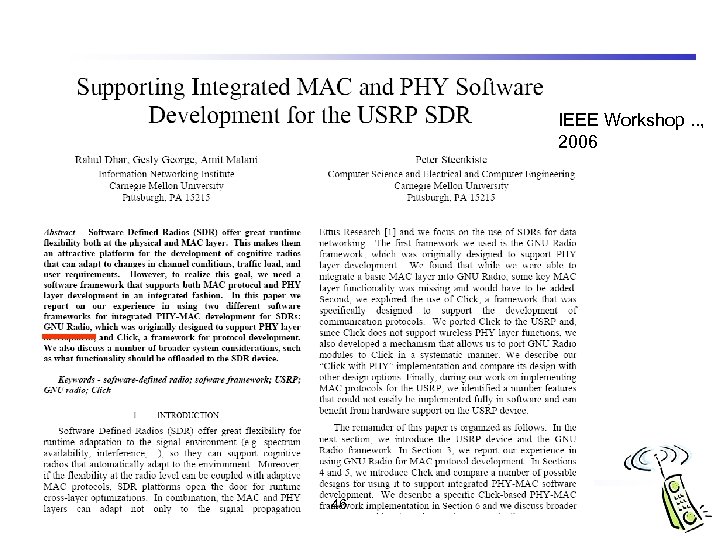 IEEE Workshop. . , 2006 46
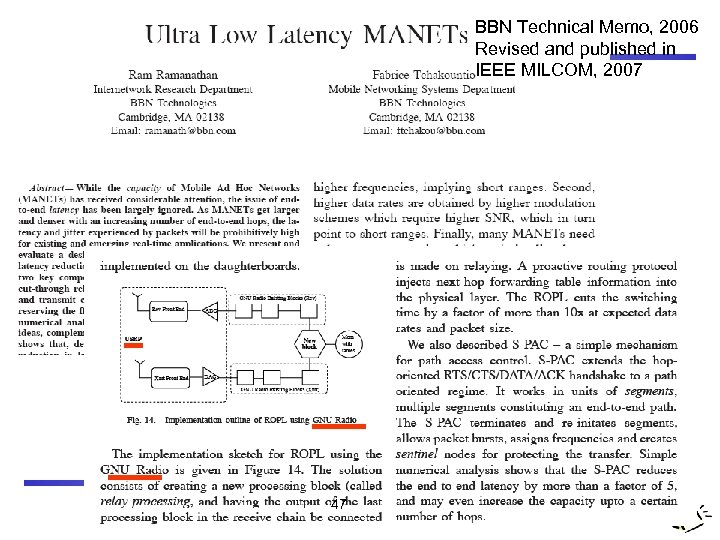 BBN Technical Memo, 2006 Revised and published in IEEE MILCOM, 2007 47