 Скачать презентацию It s About Time Timing for VLBI
77bf607dc81b69ad82da5a86ae2ad63d.ppt
- Количество слайдов: 43



It’s About Time !!!!!
Timing for VLBI z. Tom Clark formerly at NASA Goddard Space Flight Center With help from z Rick Hambly CNS Systems _______________________________ IVS TOW Meeting Haystack – Sept 21 -24, 2003
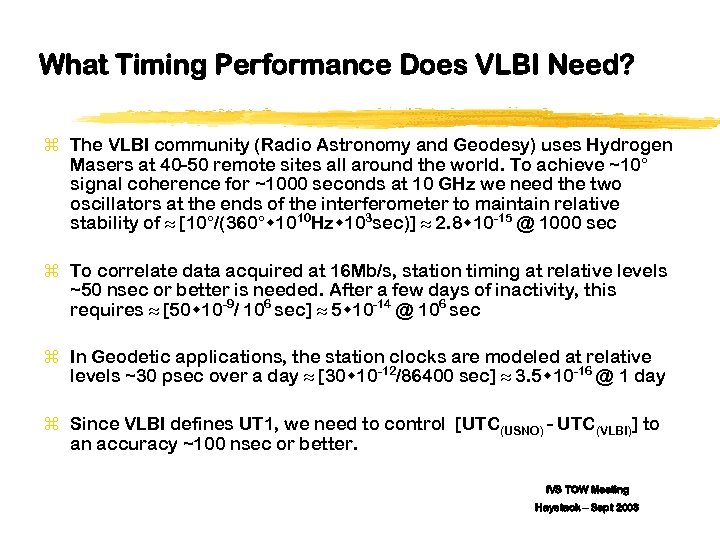
What Timing Performance Does VLBI Need? z The VLBI community (Radio Astronomy and Geodesy) uses Hydrogen Masers at 40 -50 remote sites all around the world. To achieve ~10° signal coherence for ~1000 seconds at 10 GHz we need the two oscillators at the ends of the interferometer to maintain relative stability of [10°/(360° 1010 Hz 103 sec)] 2. 8 10 -15 @ 1000 sec z To correlate data acquired at 16 Mb/s, station timing at relative levels ~50 nsec or better is needed. After a few days of inactivity, this requires [50 10 -9/ 106 sec] 5 10 -14 @ 106 sec z In Geodetic applications, the station clocks are modeled at relative levels ~30 psec over a day [30 10 -12/86400 sec] 3. 5 10 -16 @ 1 day z Since VLBI defines UT 1, we need to control [UTC(USNO) - UTC(VLBI)] to an accuracy ~100 nsec or better. IVS TOW Meeting Haystack – Sept 2003
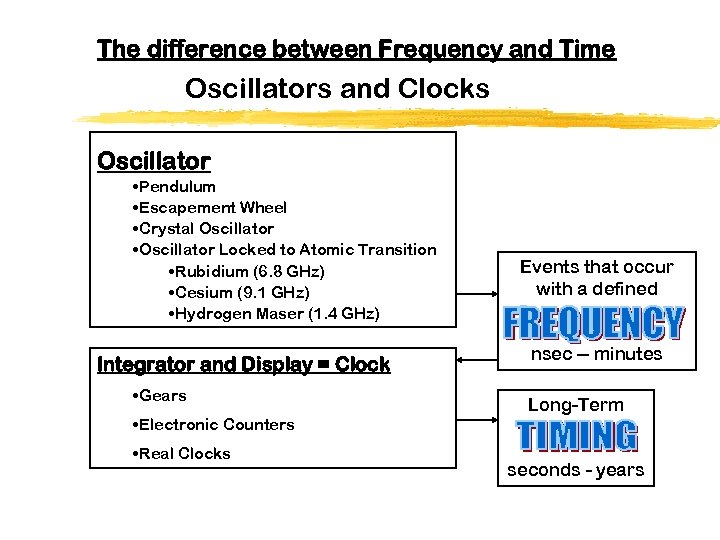
The difference between Frequency and Time Oscillators and Clocks Oscillator • Pendulum • Escapement Wheel • Crystal Oscillator • Oscillator Locked to Atomic Transition • Rubidium (6. 8 GHz) • Cesium (9. 1 GHz) • Hydrogen Maser (1. 4 GHz) Integrator and Display = Clock • Gears • Electronic Counters • Real Clocks Events that occur with a defined nsec -- minutes Long-Term seconds - years
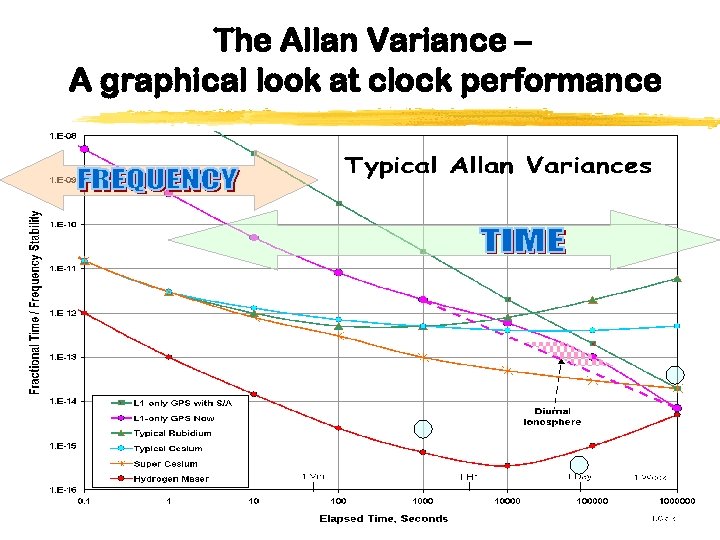
The Allan Variance – A graphical look at clock performance
Why do we need to worry about “Absolute Time” (i. e. Accuracy) in VLBI? • To get the correlators to line up for efficient processing, the relative time between stations needs to be known to ~ 100 nsec. • The correlators maintain their “magic tables” that relates the GPS timing data reported by different stations to each other. • In the past, geodetic and astronomical VLBI data processing has been done by fitting the data with “station clock polynomials” over a day of observing, and then discarding these results as “nuisance parameters” that are not needed for determining baseline lengths, source structure, etc. • The uncalibrated and unknown offsets now range from 1 -10 usec at many VLBI stations. 1
Why do we need to worry about “Absolute Time” (i. e. Accuracy) in VLBI? • The ONLY reason for worrying about “absolute time” is to relate the position of the earth to the position of the stars: • Generating Sidereal Time to point antennas. • Measuring UT 1 (i. e. “Sundial Time”) to see changes due to redistribution of mass in/on the earth over long periods of time. • Knowing the position of the earth with respect to the moon, planets and even the GPS satellites. 2
Why do we need to worry about “Absolute Time” (i. e. Accuracy) in VLBI? At the stations this means that we will need to pay more attention to timing elements like • Frequency Standard and Station Timing • The lengths of cables • The geometry of the feed/receiver to the antenna. • Calibration of instrumental delays inside the receiver and backend. The development of new instrumentation is needed. • The care with which system changes are reported to the correlators and the data analysts. 3
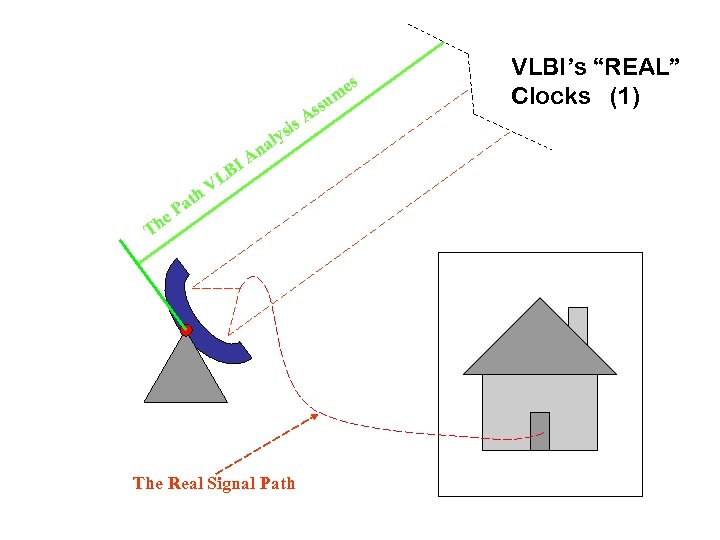
s As s i s aly n A BI VL h t a e. P Th The Real Signal Path s me u VLBI’s “REAL” Clocks (1)
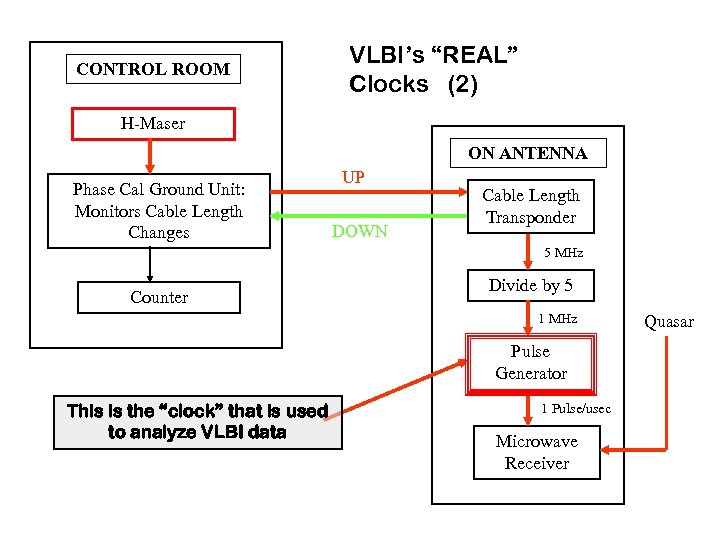
CONTROL ROOM VLBI’s “REAL” Clocks (2) H-Maser ON ANTENNA Phase Cal Ground Unit: Monitors Cable Length Changes UP DOWN Cable Length Transponder 5 MHz Counter Divide by 5 1 MHz Pulse Generator This is the “clock” that is used to analyze VLBI data 1 Pulse/usec Microwave Receiver Quasar
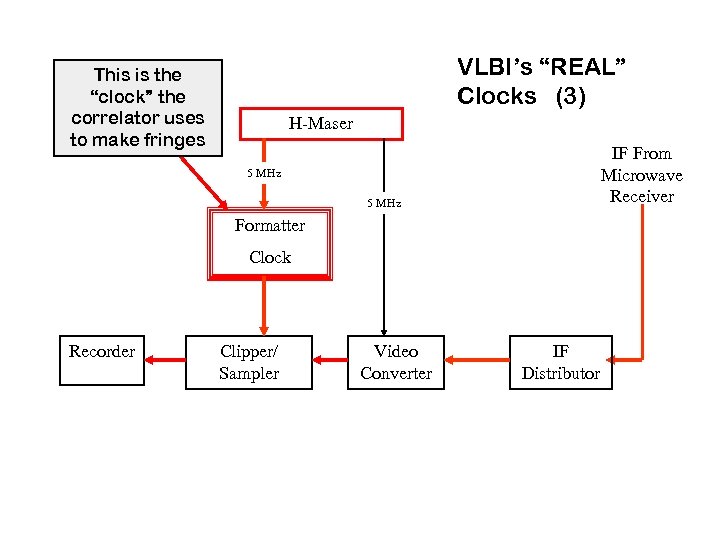
VLBI’s “REAL” Clocks (3) This is the “clock” the correlator uses to make fringes H-Maser IF From Microwave Receiver 5 MHz Formatter Clock Recorder Clipper/ Sampler Video Converter IF Distributor
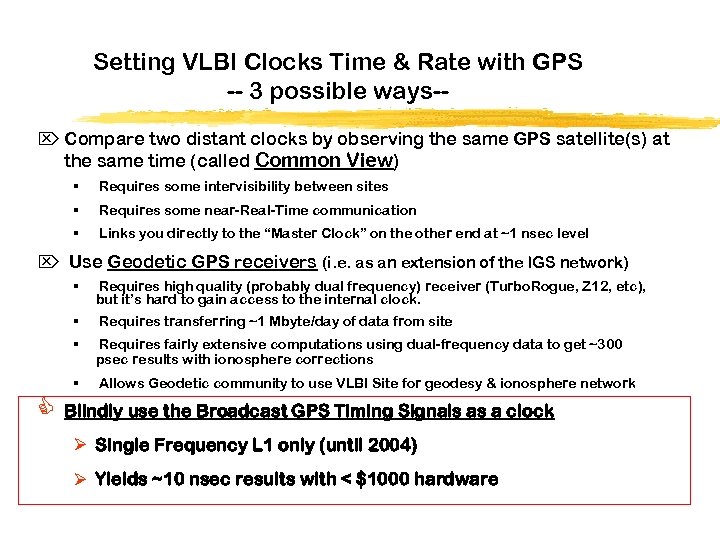
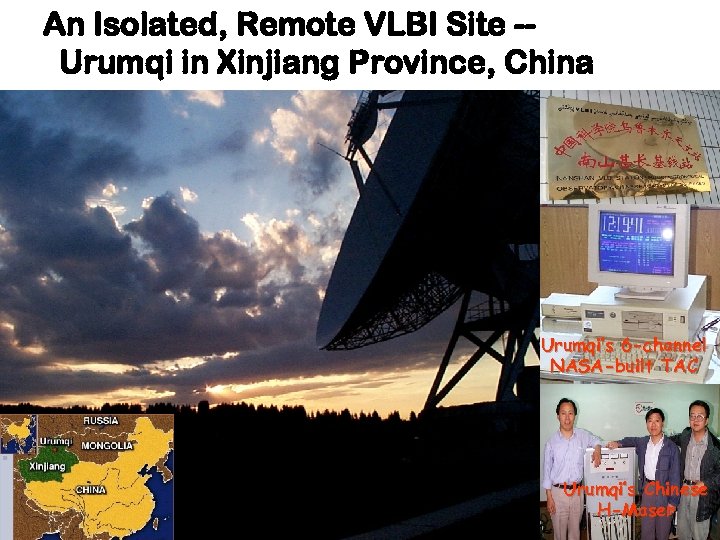
Setting VLBI Clocks Time & Rate with GPS -- 3 possible ways-Ö Compare two distant clocks by observing the same GPS satellite(s) at the same time (called Common View) § Requires some intervisibility between sites § Requires some near-Real-Time communication § Links you directly to the “Master Clock” on the other end at ~1 nsec level Ö Use Geodetic GPS receivers (i. e. as an extension of the IGS network) § § Requires transferring ~1 Mbyte/day of data from site § Requires fairly extensive computations using dual-frequency data to get ~300 psec results with ionosphere corrections § C Requires high quality (probably dual frequency) receiver (Turbo. Rogue, Z 12, etc), but it’s hard to gain access to the internal clock. Allows Geodetic community to use VLBI Site for geodesy & ionosphere network Blindly use the Broadcast GPS Timing Signals as a clock Ø Single Frequency L 1 only (until 2004) Ø Yields ~10 nsec results with < $1000 hardware
An Isolated, Remote VLBI Site -Urumqi in Xinjiang Province, China Urumqi’s 6 -channel NASA-built TAC Urumqi’s Chinese H-Maser
An Early Example of “Blind” GPS Timing with a 6 channel receiver
Before S/A was turned off (8 -channel). . .
GGAO (Goddard Geophysical & Astronomical Observatory) VLBI Trailer & H-Maser VLBI Antenna GPS Trailer GODE GPS Antenna
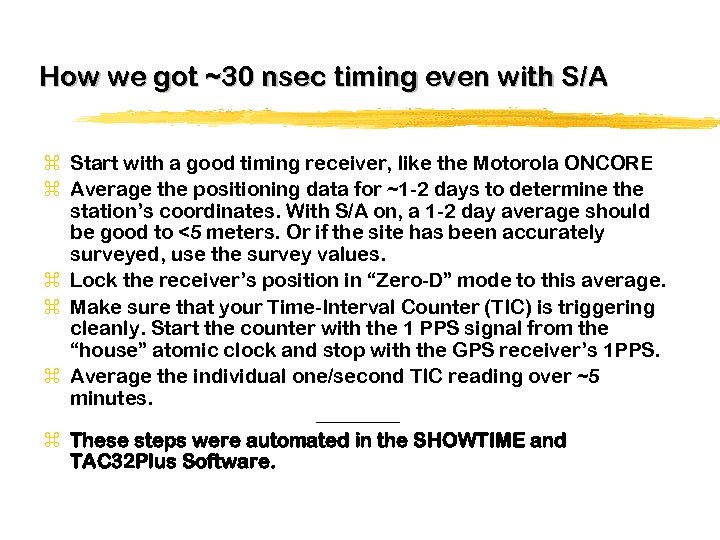
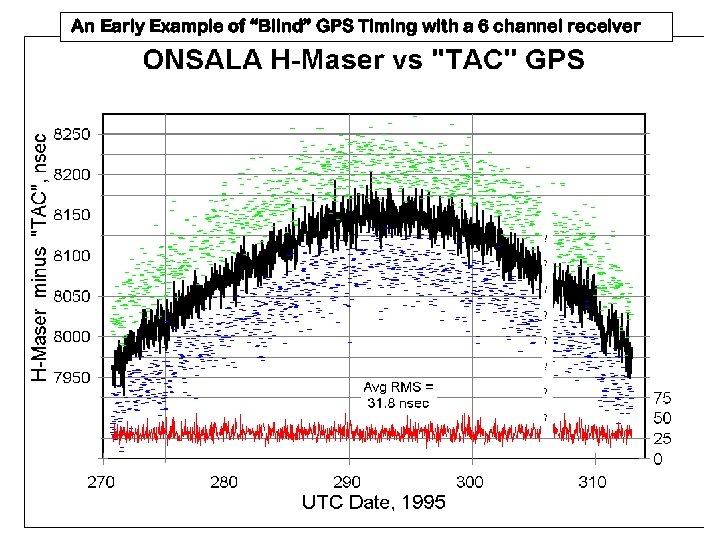
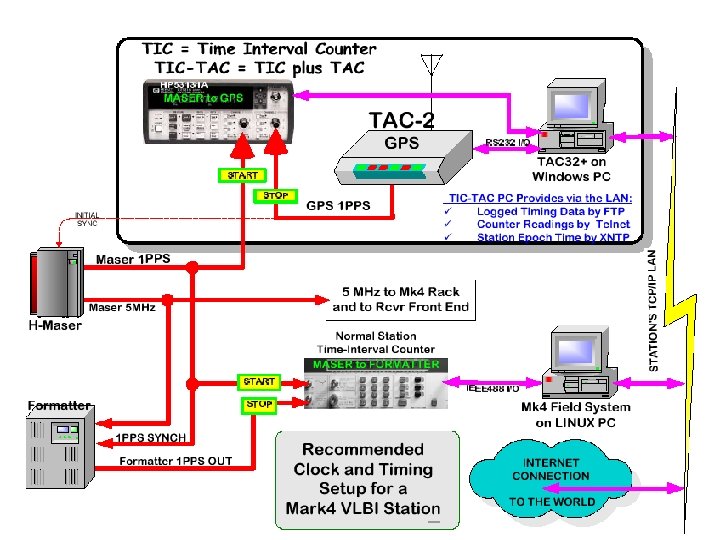
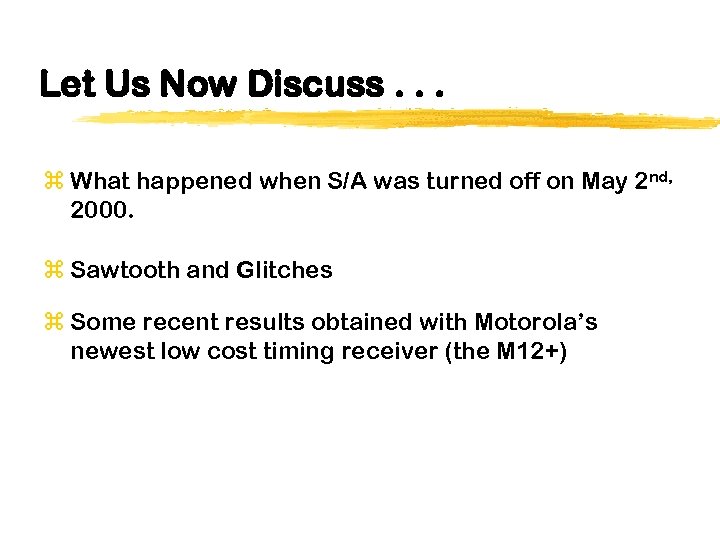
How we got ~30 nsec timing even with S/A z Start with a good timing receiver, like the Motorola ONCORE z Average the positioning data for ~1 -2 days to determine the station’s coordinates. With S/A on, a 1 -2 day average should be good to <5 meters. Or if the site has been accurately surveyed, use the survey values. z Lock the receiver’s position in “Zero-D” mode to this average. z Make sure that your Time-Interval Counter (TIC) is triggering cleanly. Start the counter with the 1 PPS signal from the “house” atomic clock and stop with the GPS receiver’s 1 PPS. z Average the individual one/second TIC reading over ~5 minutes. _______ z These steps were automated in the SHOWTIME and TAC 32 Plus Software.
Let Us Now Discuss. . . z What happened when S/A was turned off on May 2 nd, 2000. z Sawtooth and Glitches z Some recent results obtained with Motorola’s newest low cost timing receiver (the M 12+)
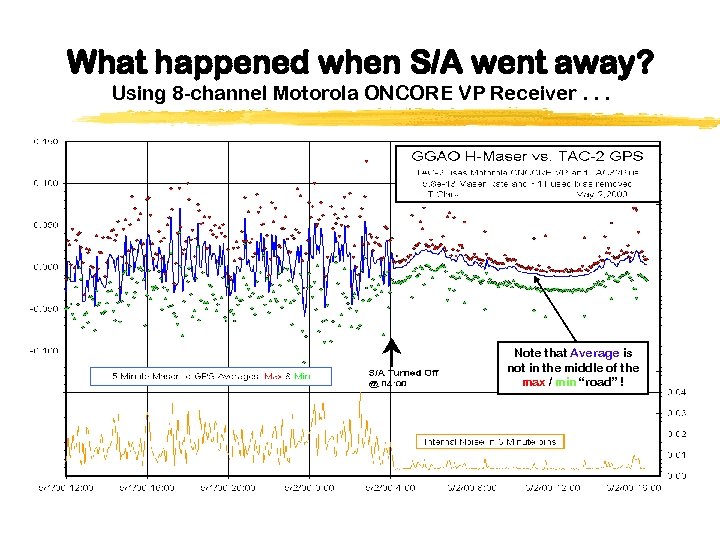
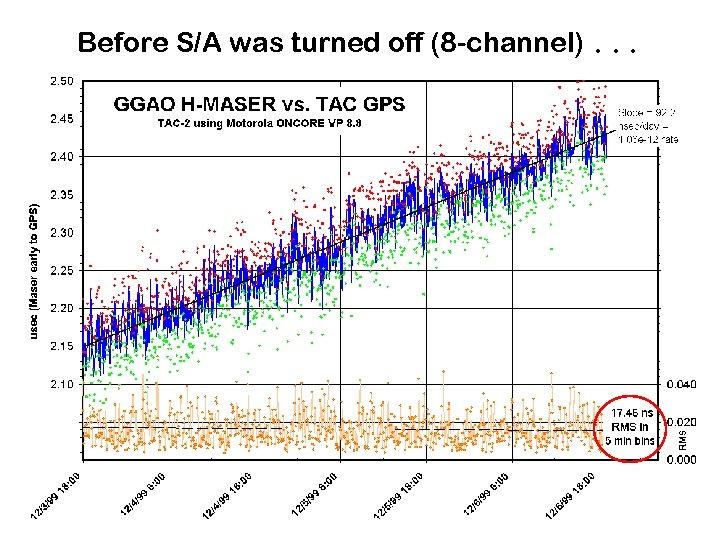
What happened when S/A went away? Using 8 -channel Motorola ONCORE VP Receiver. . . Note that Average is not in the middle of the max / min “road” !
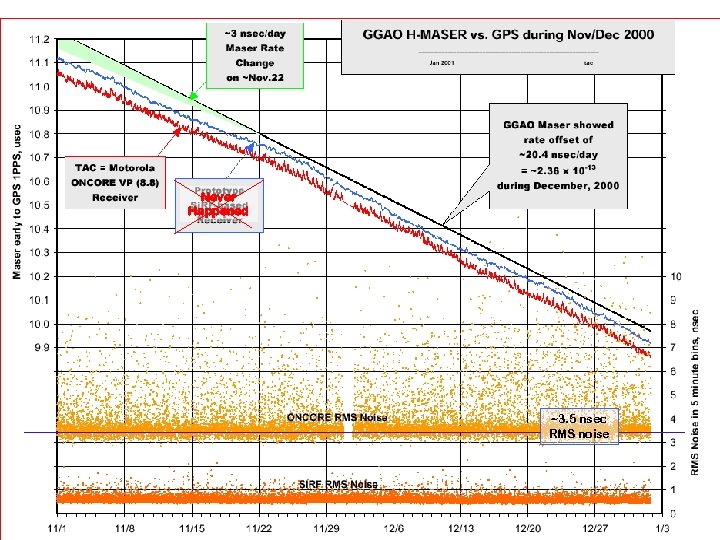
Never Happened ~3. 5 nsec RMS noise
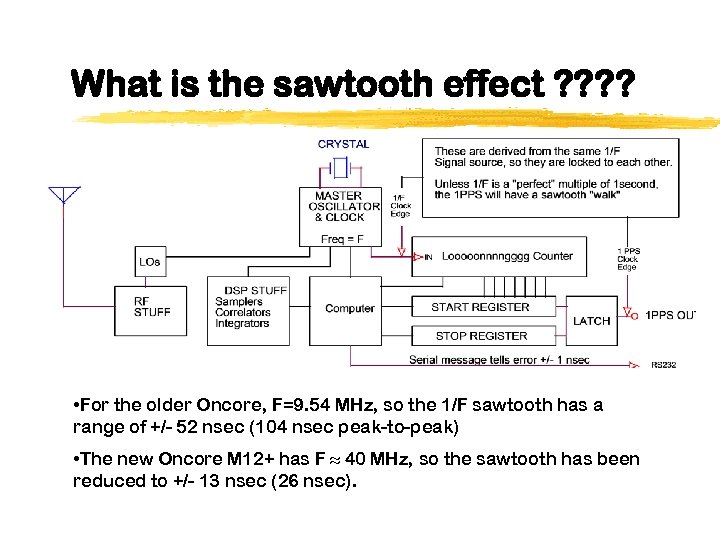
What is the sawtooth effect ? ? • For the older Oncore, F=9. 54 MHz, so the 1/F sawtooth has a range of +/- 52 nsec (104 nsec peak-to-peak) • The new Oncore M 12+ has F 40 MHz, so the sawtooth has been reduced to +/- 13 nsec (26 nsec).
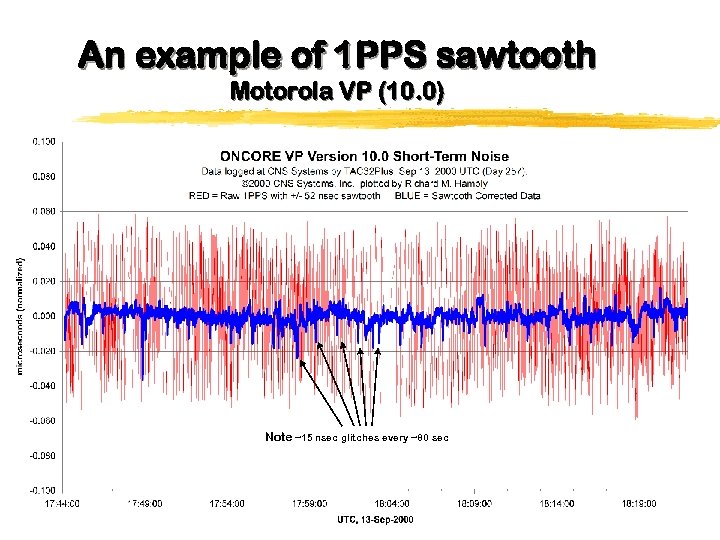
An example of 1 PPS sawtooth Motorola VP (10. 0) Note ~15 nsec glitches every ~80 sec
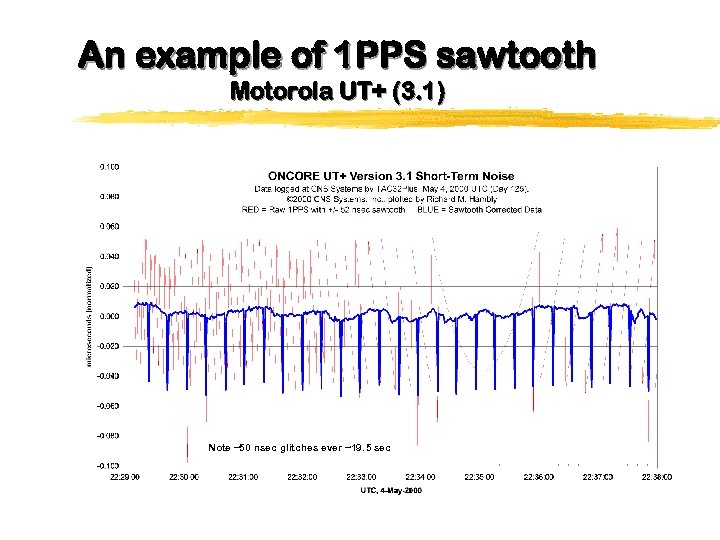
An example of 1 PPS sawtooth Motorola UT+ (3. 1) Note ~50 nsec glitches ever ~19. 5 sec
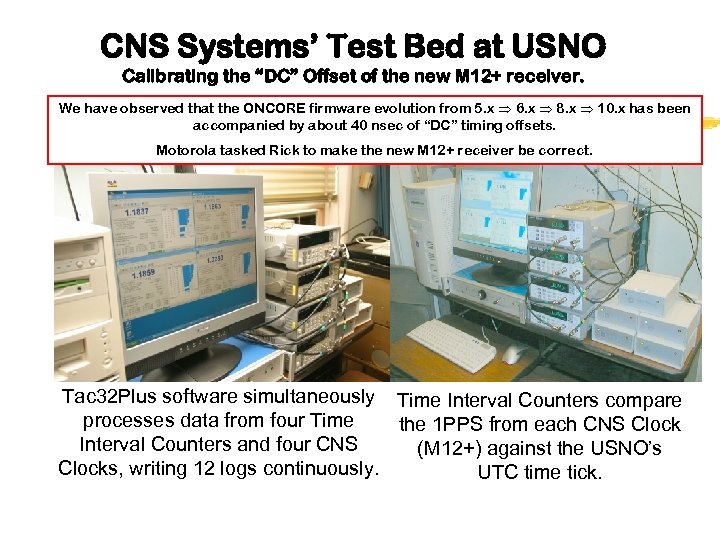
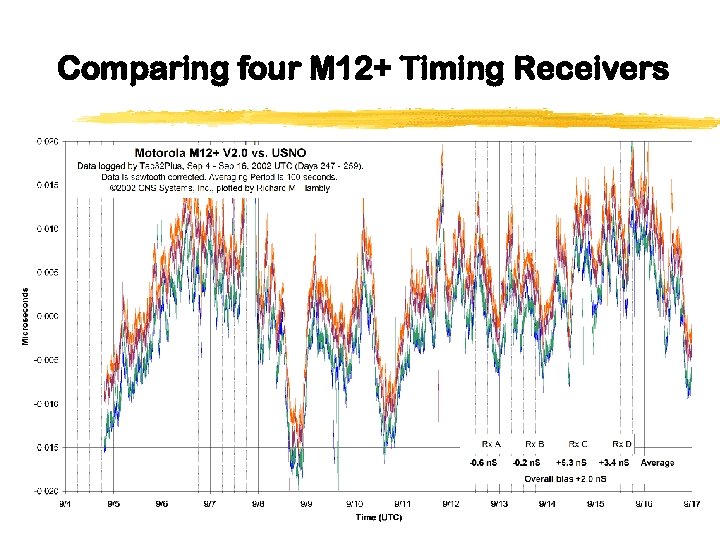
CNS Systems’ Test Bed at USNO Calibrating the “DC” Offset of the new M 12+ receiver. We have observed that the ONCORE firmware evolution from 5. x 6. x 8. x 10. x has been accompanied by about 40 nsec of “DC” timing offsets. Motorola tasked Rick to make the new M 12+ receiver be correct. Tac 32 Plus software simultaneously Time Interval Counters compare processes data from four Time the 1 PPS from each CNS Clock Interval Counters and four CNS (M 12+) against the USNO’s Clocks, writing 12 logs continuously. UTC time tick.
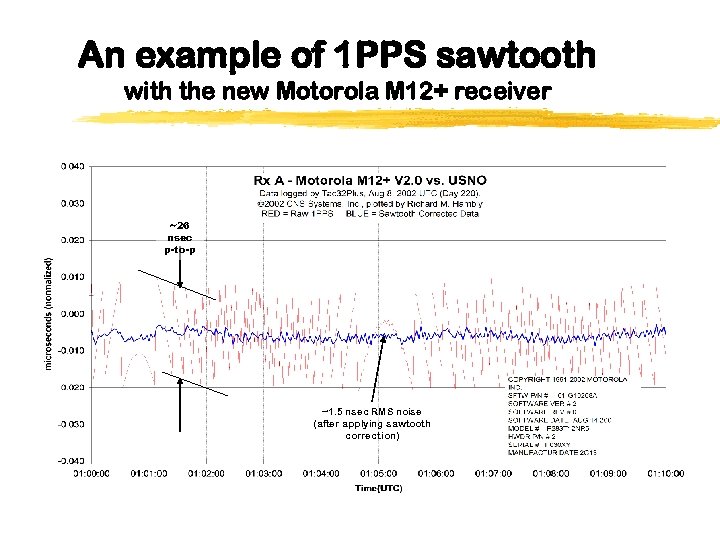
An example of 1 PPS sawtooth with the new Motorola M 12+ receiver ~26 nsec p-to-p ~1. 5 nsec RMS noise (after applying sawtooth correction)
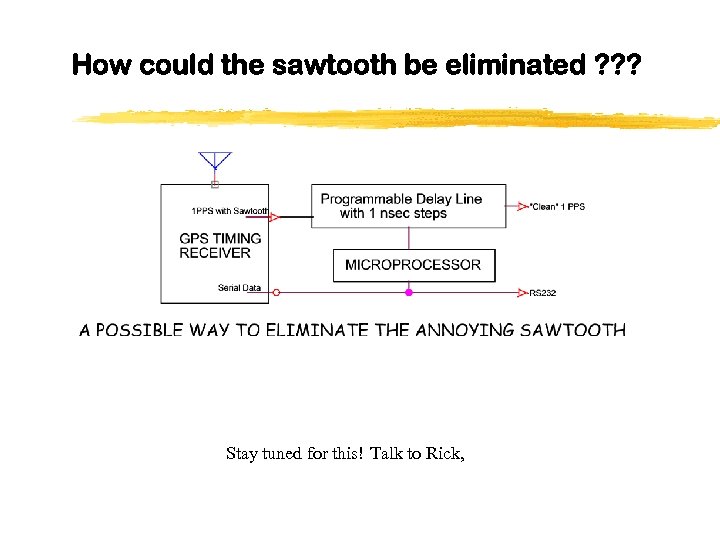
How could the sawtooth be eliminated ? ? ? Stay tuned for this! Talk to Rick,
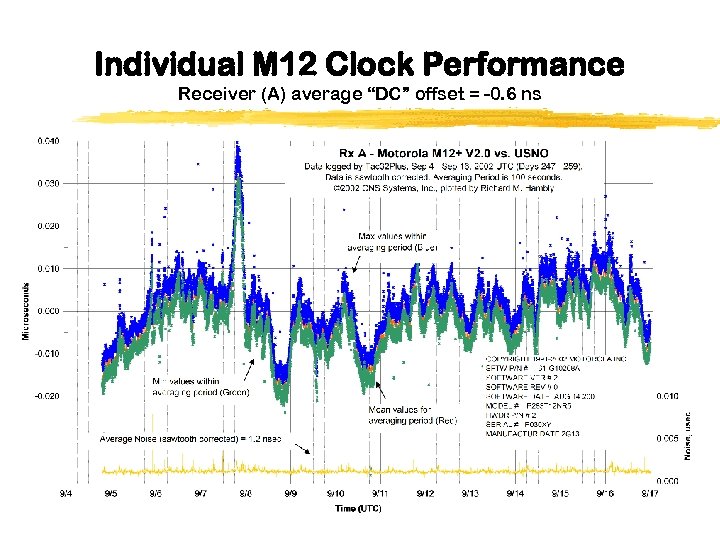
Individual M 12 Clock Performance Receiver (A) average “DC” offset = -0. 6 ns
Comparing four M 12+ Timing Receivers
What Happened on 9/7/02 ? September 7, 2002. September 8, 2002. This picture is a two hour composite of 85 This picture is a four hour composite of 140 different photos spanning 21: 07 thru 23: 10 different photos spanning 20: 00 thru 24: 00 EDT on Sept. 7 th (01: 07 thru 03: 10 UTC Sep. EDT on Sept. 8 th (00: 00 thru 04: 00 UTC Sep. 8). 9). Each picture was an 87 second exposure with 3 seconds between frames. The trails on the picture all due to airplanes. The bright loop is from a plane on final approach into BWI airport. Camera = Canon D 60 shooting Hi Resolution JPEG at ISO 100 with TC-80 timer. Lens = Sigma f/2. 8 20 -40 mm set to 20 mm @ f/4. 5
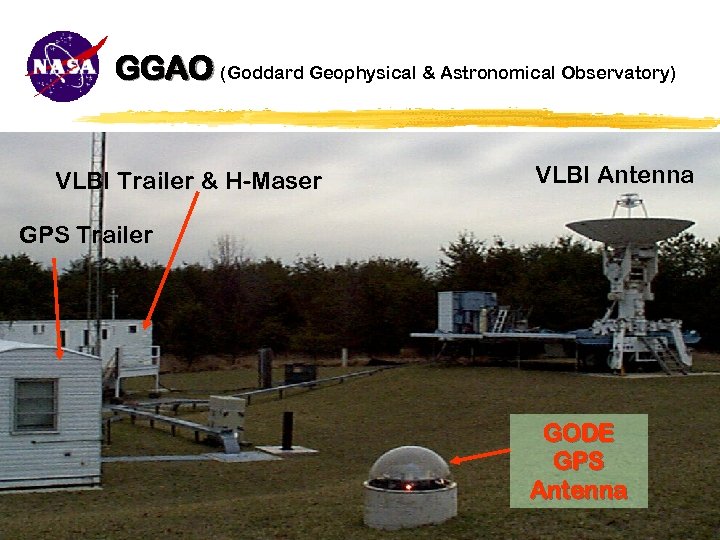
Short Baseline Test (USNO to NASA GGAO)
Where to get information? These Slides and related material and our Salt Lake City ION 2000 paper: http: //gpstime. com Information on Rick Hambly’s CNS Clock, a commercial clone of my TAC-2: http: //www. cnssys. com For ONCORE/TAC-2 receiver used as a LINUX xntp server: http: //gpstime. com To contact me: mailto: w 3 iwi@toad. net To contact Rick: mailto: rick@cnssys. com
Some TAC 32 Plus Screens in Windows 2000 APPENDIX A
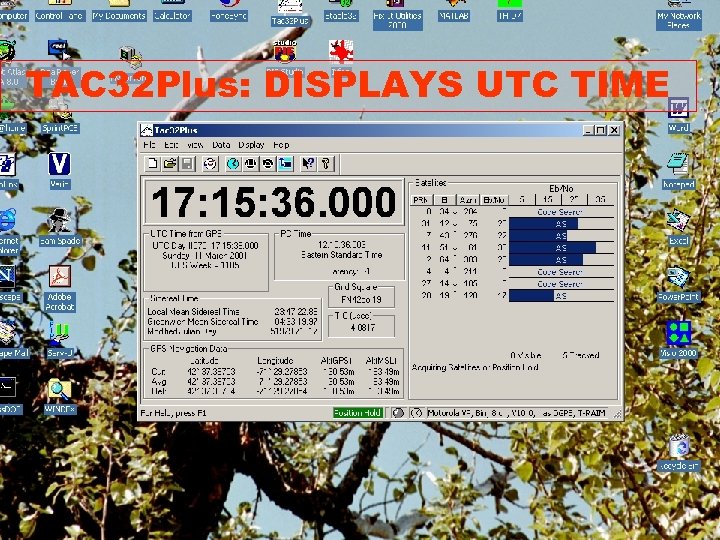
TAC 32 Plus: DISPLAYS UTC TIME
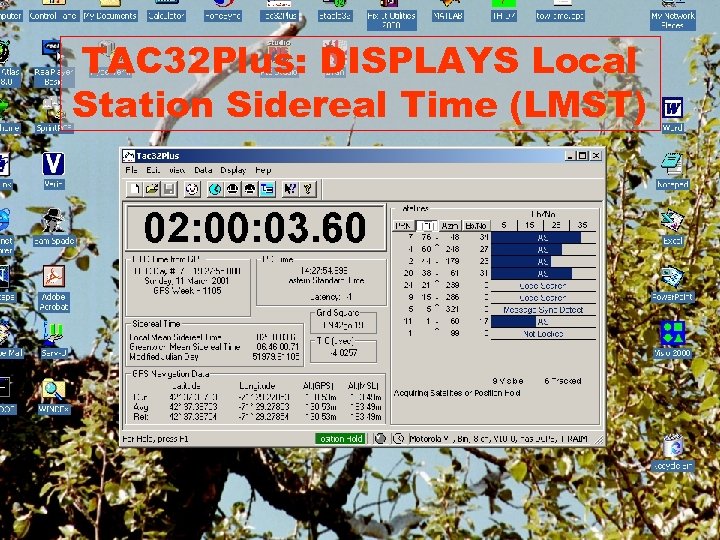
TAC 32 Plus: DISPLAYS Local Station Sidereal Time (LMST)
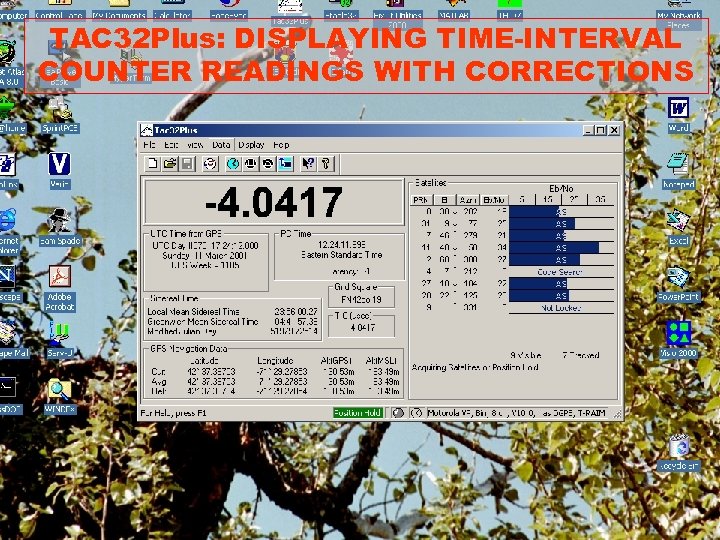
TAC 32 Plus: DISPLAYING TIME-INTERVAL COUNTER READINGS WITH CORRECTIONS
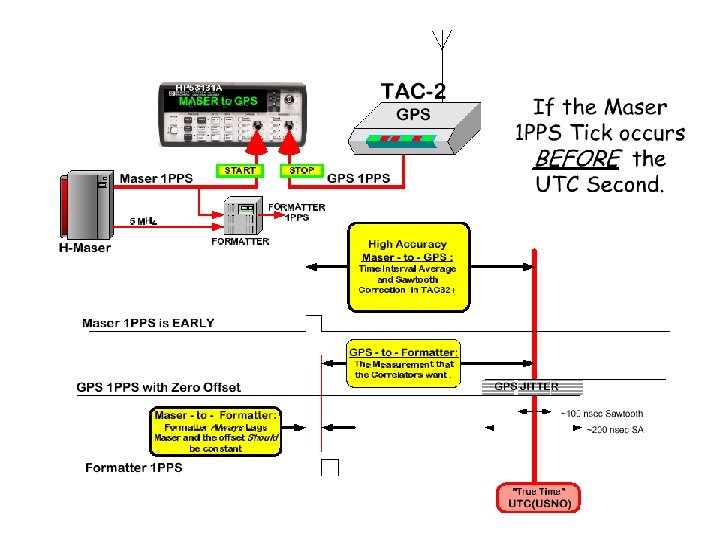
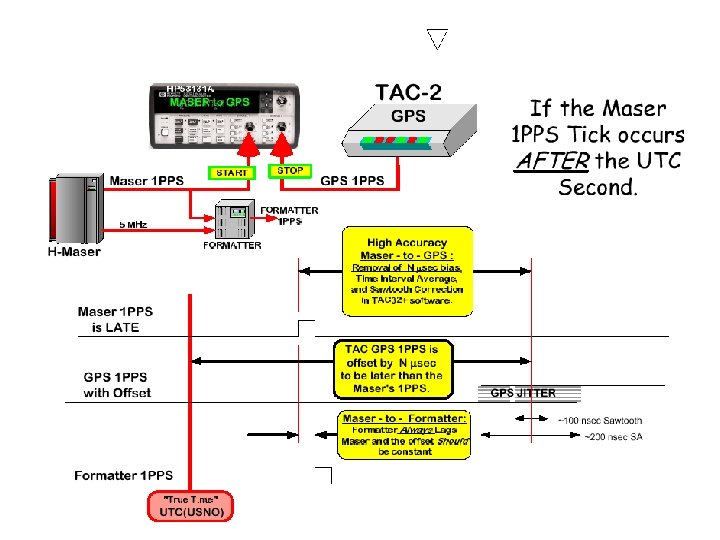
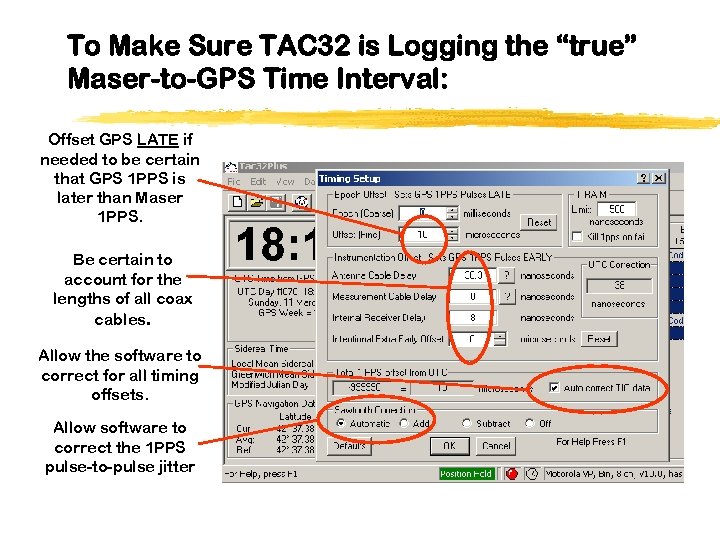
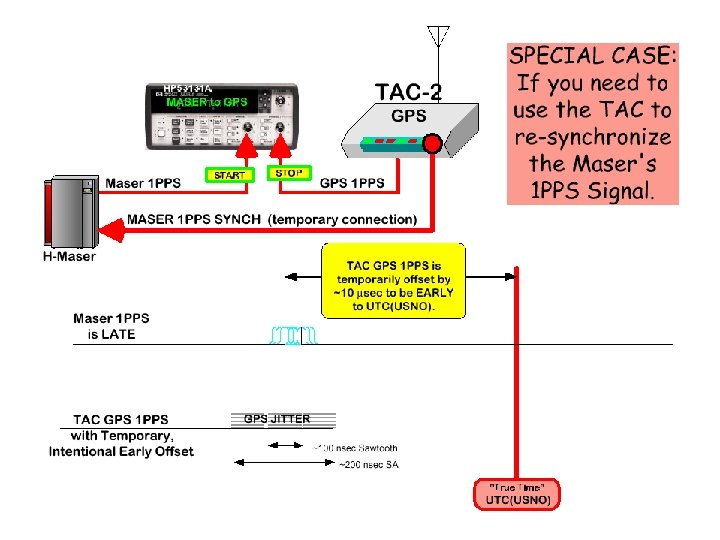
To Make Sure TAC 32 is Logging the “true” Maser-to-GPS Time Interval: Offset GPS LATE if needed to be certain that GPS 1 PPS is later than Maser 1 PPS. Be certain to account for the lengths of all coax cables. Allow the software to correct for all timing offsets. Allow software to correct the 1 PPS pulse-to-pulse jitter
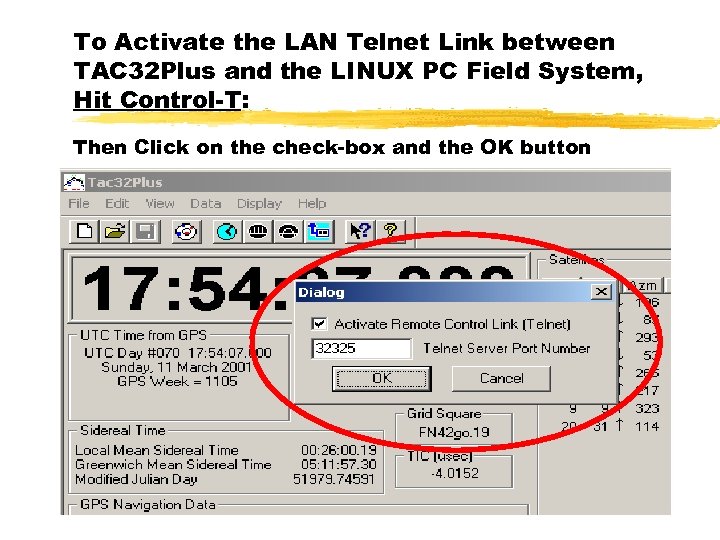
To Activate the LAN Telnet Link between TAC 32 Plus and the LINUX PC Field System, Hit Control-T: Then Click on the check-box and the OK button
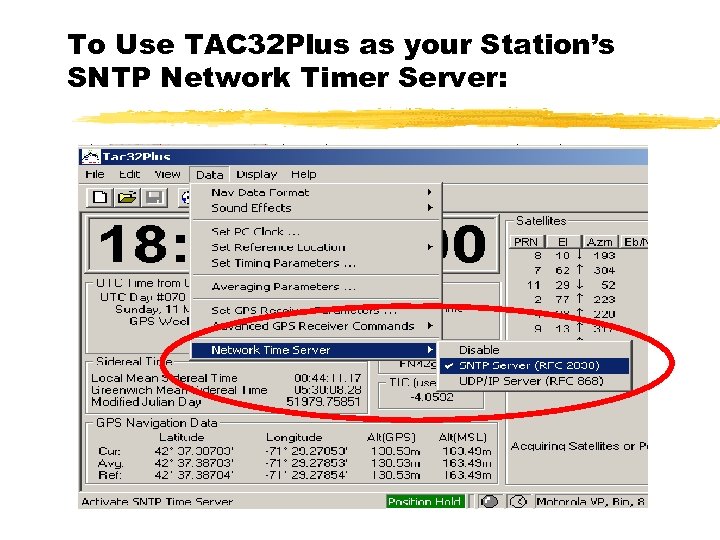
To Use TAC 32 Plus as your Station’s SNTP Network Timer Server:
APPENDIX B TEXT MATERIAL -- Field System Documentation for tacd -- Ed Himwich’s documentation for gpsoff -- David Holland’s HP 53131 setup notes
Скачать презентацию It s About Time Timing for VLBI
77bf607dc81b69ad82da5a86ae2ad63d.ppt