

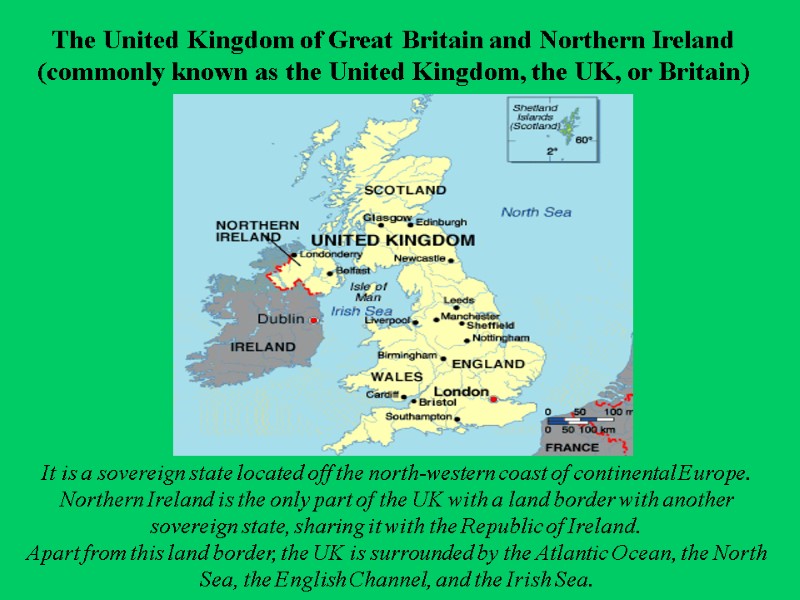
It is a sovereign state located off the









![Northern Ireland is also home to the UK's largest lake, Lough Neagh [nei],](https://present5.com/presentacii-2/20171208\15906-united_kingdom_of_great_britain_and_northern.ppt\15906-united_kingdom_of_great_britain_and_northern_24.jpg "Northern Ireland is also home to the UK's largest lake, Lough Neagh [nei],")



![The landscape of England is more rugged ( [rΔgid] холмиста) in the north and](https://present5.com/presentacii-2/20171208\15906-united_kingdom_of_great_britain_and_northern.ppt\15906-united_kingdom_of_great_britain_and_northern_33.jpg "The landscape of England is more rugged ( [rΔgid] холмиста) in the north and")






















 Скачать презентацию It is a sovereign state located off the
15906-united_kingdom_of_great_britain_and_northern.ppt
- Количество слайдов: 99
It is a sovereign state located off the north-western coast of continental Europe. Northern Ireland is the only part of the UK with a land border with another sovereign state, sharing it with the Republic of Ireland. Apart from this land border, the UK is surrounded by the Atlantic Ocean, the North Sea, the English Channel, and the Irish Sea. The United Kingdom of Great Britain and Northern Ireland (commonly known as the United Kingdom, the UK, or Britain)
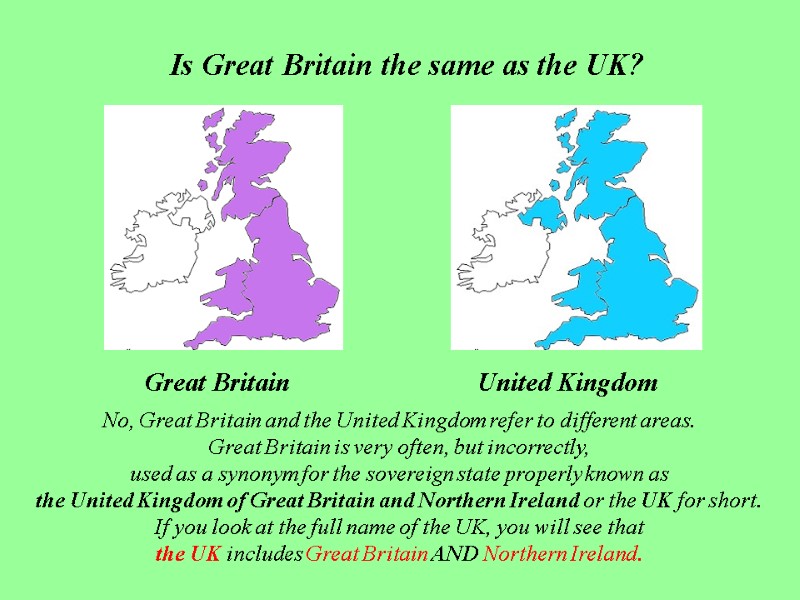
Is Great Britain the same as the UK? Great Britain United Kingdom No, Great Britain and the United Kingdom refer to different areas. Great Britain is very often, but incorrectly, used as a synonym for the sovereign state properly known as the United Kingdom of Great Britain and Northern Ireland or the UK for short. If you look at the full name of the UK, you will see that the UK includes Great Britain AND Northern Ireland.
What is Great Britain? Great Britain is a political term which describes the combination of England, Scotland, and Wales, the three nations which together include all the land on the island. It is also a geographical term referring to the island on which the greater parts of England, Wales and Scotland are situated.
Is Great Britain the same as Britain? Great Britain Britannia Major Sometimes people use the shorten name Britain instead of Great Britain, to mean the same thing, but really Britain only refers to England and Wales. The name Britain goes back to Roman times when they called England and Wales "Britannia« (or "Britannia Major", to distinguished from "Britannia Minor", i.e. Brittany in France). The Roman province of Britannia only covered the areas of modern England and Wales. The area of modern Scotland was never finally conquered.
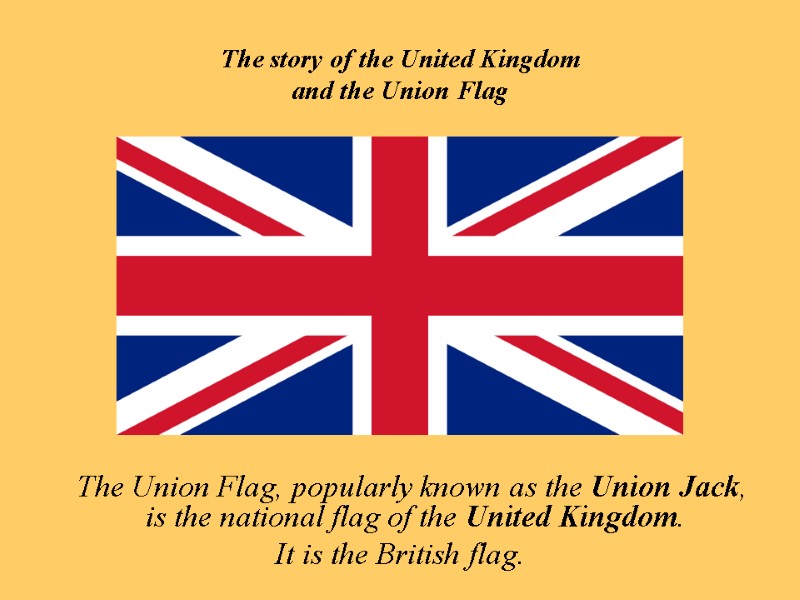
The story of the United Kingdom and the Union Flag The Union Flag, popularly known as the Union Jack, is the national flag of the United Kingdom. It is the British flag.
It is called the Union Flag because it symbolises the administrative union of the countries of the United Kingdom. It is made up of the individual Flags of three of the Kingdom's countries all united under one Sovereign - the countries of England, of Scotland and of Northern Ireland (since 1921 only Northern Ireland has been part of the United Kingdom). As Wales was not a Kingdom but a Principality (князівство) it could not be included on the flag.
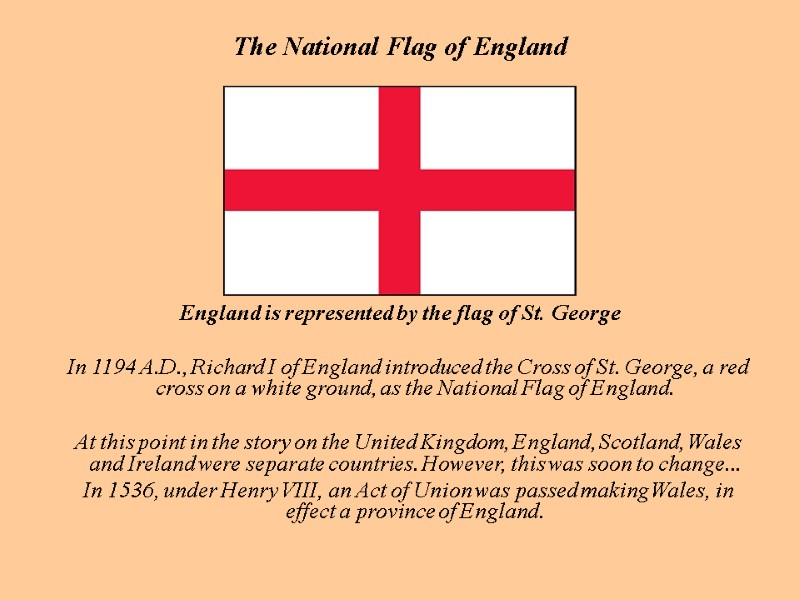
The National Flag of England England is represented by the flag of St. George In 1194 A.D., Richard I of England introduced the Cross of St. George, a red cross on a white ground, as the National Flag of England. At this point in the story on the United Kingdom, England, Scotland, Wales and Ireland were separate countries. However, this was soon to change... In 1536, under Henry VIII, an Act of Union was passed making Wales, in effect a province of England.
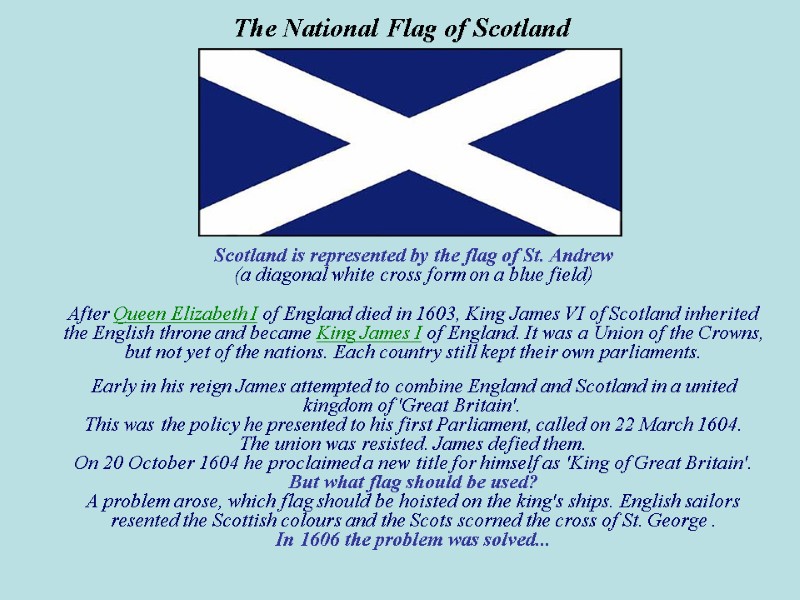
The National Flag of Scotland Scotland is represented by the flag of St. Andrew (a diagonal white cross form on a blue field) After Queen Elizabeth I of England died in 1603, King James VI of Scotland inherited the English throne and became King James I of England. It was a Union of the Crowns, but not yet of the nations. Each country still kept their own parliaments. Early in his reign James attempted to combine England and Scotland in a united kingdom of 'Great Britain'. This was the policy he presented to his first Parliament, called on 22 March 1604. The union was resisted. James defied them. On 20 October 1604 he proclaimed a new title for himself as 'King of Great Britain'. But what flag should be used? A problem arose, which flag should be hoisted on the king's ships. English sailors resented the Scottish colours and the Scots scorned the cross of St. George . In 1606 the problem was solved...
A compromise was the answer and it led to the creation of the first Union Flag. On 12 April 1606, the National Flags of Scotland and England were united for use at sea, thus making the first Union 'Jack'. Ashore however, the old flags of England and Scotland continued to be used by their respective countries. A royal decree declared that the ships of the Kingdom of Great Britain "shall bear on their maintops the red cross, commonly called St. George's cross, and the white cross, commonly called St. Andrew's cross." +
Northern Ireland - St Patrick Ireland is represented by the cross of St. Patrick (a diagonal red cross on a white background.) On 1 January 1801, Ireland was united with Great Britain and it became necessary to have a new National Flag in which Ireland was represented. The cross St. Patrick was combined with the Union Flag of St. George and St. Andrew, to create the Union Flag that has been flown ever since.
The cross of St. Patrick was inserted so the position given to St. Andrew's Cross in one quarter was the same as that given to the Irish one in the diagonally opposite quarter; in heraldry this is known as "counterchanging“ The 'new' British flag is not symmetrical because of the counterchange. +
Wales Why doesn't the Welsh dragon appear on the Union Flag? The Welsh dragon does not appear on the flag because when the first Union Flag was created in 1606, Wales was already united with England from the 13th century. This meant that Wales a Principality instead of a Kingdom and as such could not be included. In 1536, under Henry VIII, the Act of Union joined England and Wales officially.
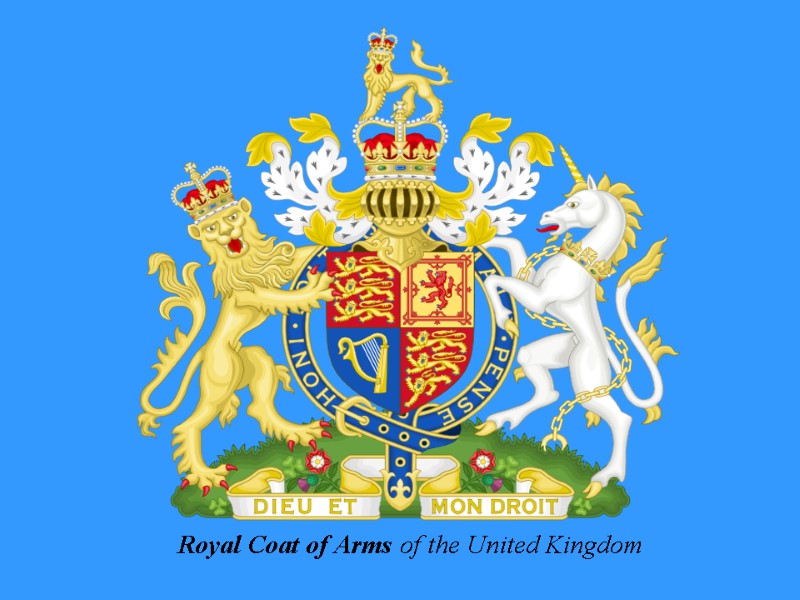
Royal Coat of Arms of the United Kingdom
Royal coat of arms of the United Kingdom The Royal Coat of Arms of the United Kingdom is the official coat of arms of the British monarch, currently Queen Elizabeth II. These arms are used by the Queen in her official capacity as monarch of the United Kingdom, and are officially known as her Arms of Dominion (власть). Variants of the Royal Arms are used by other members of the Royal Family; and by the British Government in connection with the administration and government of the country. In Scotland, the Queen has a separate version of the Royal Arms, a variant of which is used by the Scotland Office. The shield is quartered, depicting in the first and fourth quarters the three passant (идущий с поднятой правой передней лапой и смотрящий вправо) guardant lions of England; in the second, the rampant (стоящий на задних лапах) lion and double tressure fleury-counter-fleury of Scotland; and in the third, a harp for Northern Ireland. The crest (украшение наверху гербового щита) is a statant guardant lion wearing the imperial crown, himself on another representation of that crown. The dexter (находящийся на левой стороне герба) supporter is a likewise crowned English lion; the sinister (находящийся на правой стороне герба), a Scottish unicorn. According to legend a free unicorn was considered a very dangerous beast; therefore the heraldic unicorn is chained, as were both supporting unicorns in the Royal coat of arms of Scotland. The coat features both the motto of English monarchs, Dieu et mon droit (God and my right), and the motto of the Order of the Garter (подвязки), Honi soit qui mal y pense (Shamed be he who thinks ill of it) on a representation of the Garter behind the shield (щит).
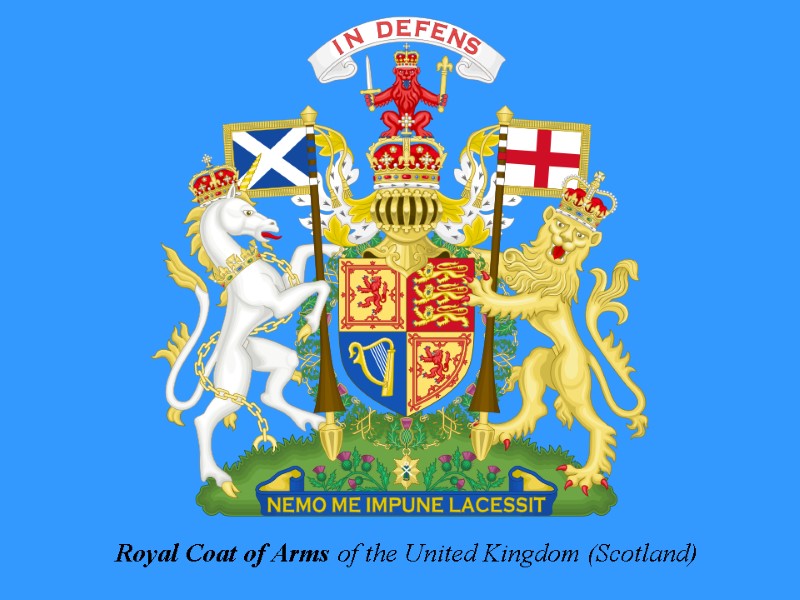
Royal Coat of Arms of the United Kingdom (Scotland)
Royal Coat of Arms of the United Kingdom (Scotland) The Royal Coat of Arms of Scotland was the official coat of arms of the monarchs of Scotland, and was used as the official coat of arms of the Kingdom of Scotland until the Acts of Union of 1707. The blazon (герб) of the arms of the Kingdom of Scotland changed markedly following the Union of the Crowns in 1603, and ultimately went on to become the Royal Coat of Arms of the United Kingdom as used in Scotland. The pre-Union of the Crowns version of the arms feature a shield depicting the red lion of the King of Scots as rampant, with blue tongue and claws, on a yellow field and surrounded by a red double royal tressure flory-counter-flory device. (Specified in heraldry as "Or, a lion rampant Gules armed and langued Azure within a double tressure flory-counter-flory of the second"). Atop the shield sits the helm (шлем) and crest. The helm is full-faced of demasked gold with six bars and features gold mantling (покрытые) lined with ermine (горностай). Upon the helm sits the crest, depicting the red lion, forward facing and sitting atop the Crown of Scotland, displaying the Honours of Scotland. (The lion wears the Crown of Scotland and holds both the Sceptre and the Sword of State). Above the crest is the motto 'In Defens', which is a contraction of the motto In My Defens God Me Defend. (The spelling of 'Defens' being the Scots spelling of 'Defence'). The motto of the arms appears above the crest in the convention of Scottish heraldry. Surrounding the shield is the collar («воротник») of The Most Ancient and Most Noble Order of the Thistle. The supporters are two crowned and chained unicorns, the dexter supporting a banner of the arms, (only in this instance is the lion depicted facing away from the lance (копьё) whereas when flown correctly the lion should face towards or respect the lance or, in most cases, the flag pole); the sinister supporting the national flag of Scotland. The compartment features a number of thistles, the national flower of Scotland.
Geography of the UK The UK is bordered by four seas: to the south by the English Channel, which separates it from continental Europe to the east by the North Sea to the west by the Irish Sea and the Atlantic Ocean
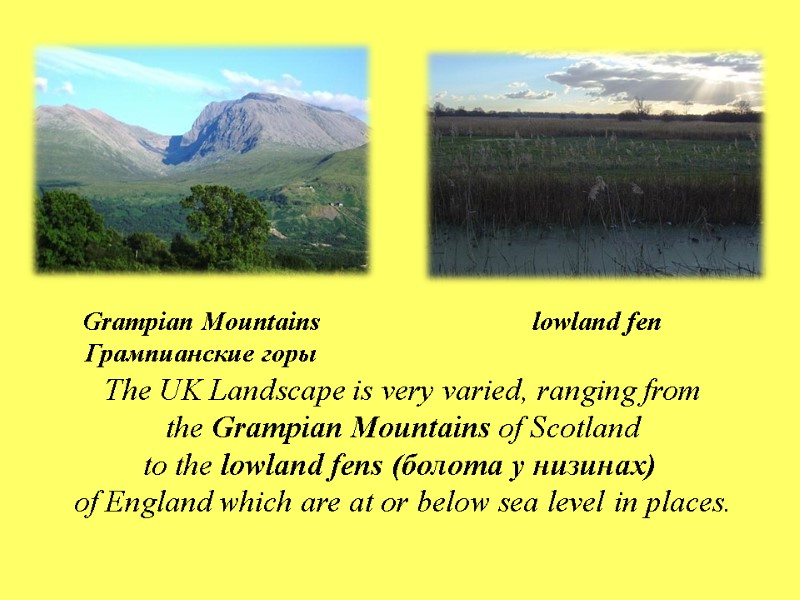
The UK Landscape is very varied, ranging from the Grampian Mountains of Scotland to the lowland fens (болота у низинах) of England which are at or below sea level in places. Grampian Mountains Грампианские горы lowland fen
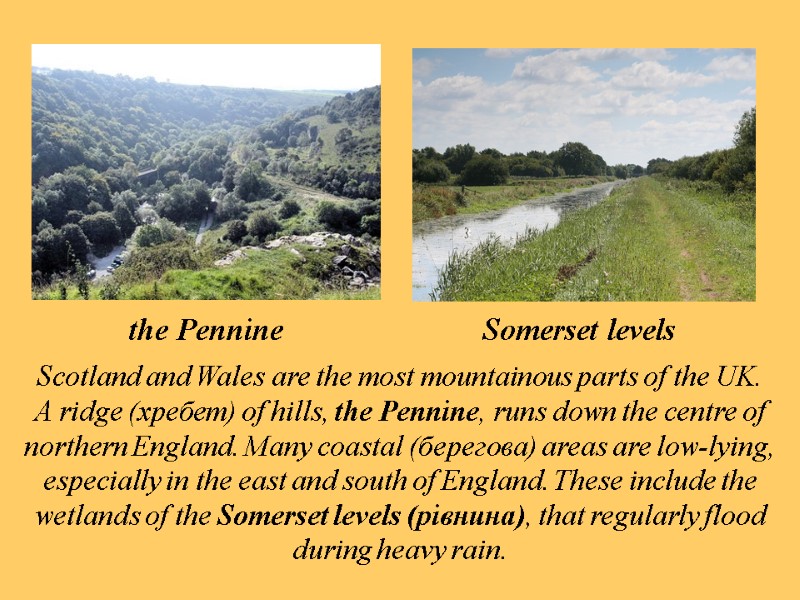
Scotland and Wales are the most mountainous parts of the UK. A ridge (хребет) of hills, the Pennine, runs down the centre of northern England. Many coastal (берегова) areas are low-lying, especially in the east and south of England. These include the wetlands of the Somerset levels (рівнина), that regularly flood during heavy rain. the Pennine Somerset levels
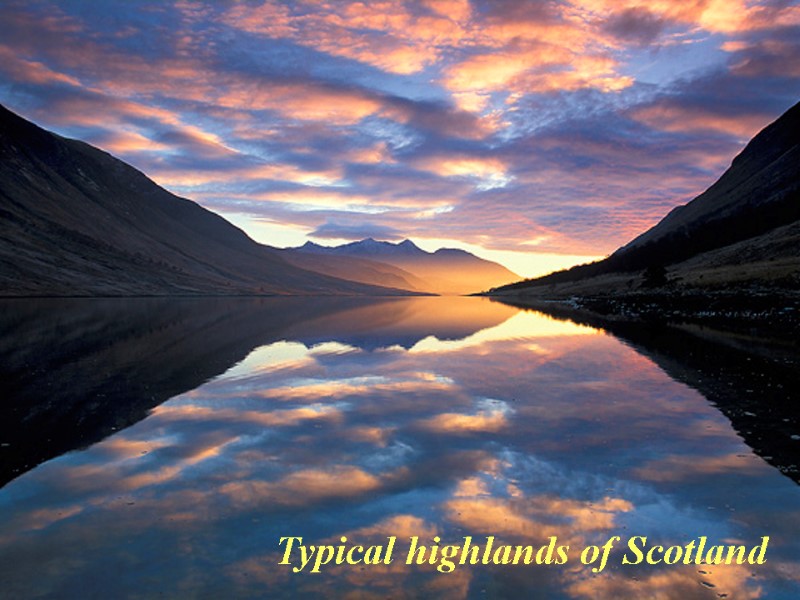
Typical highlands of Scotland
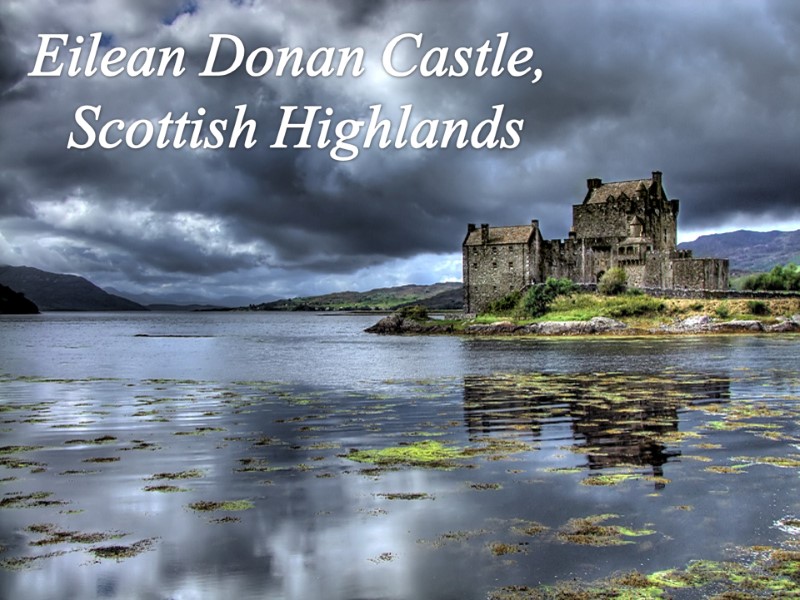
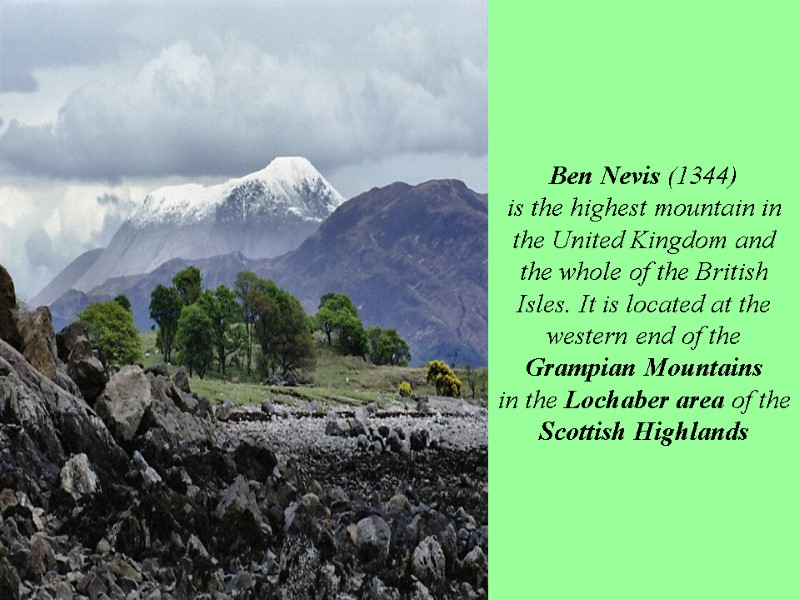
Ben Nevis (1344) is the highest mountain in the United Kingdom and the whole of the British Isles. It is located at the western end of the Grampian Mountains in the Lochaber area of the Scottish Highlands
Most of the UK is made up of gently rolling (холмистый) hills with isolated areas of high ground such as Dartmoor in the south-west of England or the Mourne Mountains in Northern Ireland . Dartmoor Mourne Mountains
Northern Ireland is also home to the UK's largest lake, Lough Neagh [nei], which covers an area of 396 sq.km (153 sq. miles)
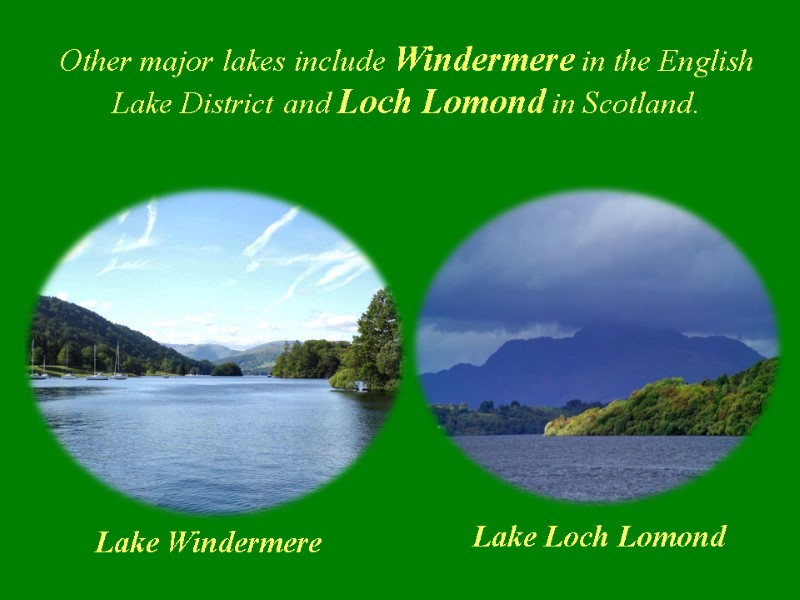
Other major lakes include Windermere in the English Lake District and Loch Lomond in Scotland. Lake Windermere Lake Loch Lomond
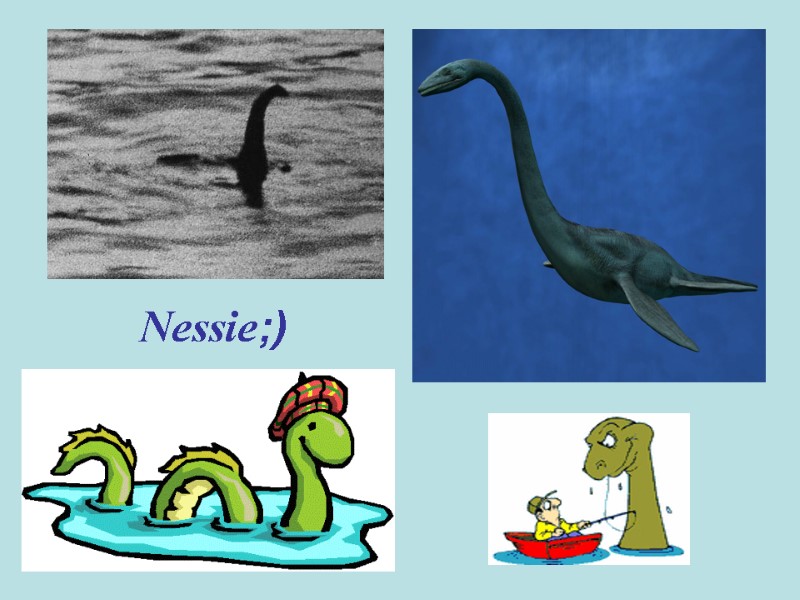
Another of Scotland's lakes, Loch Ness is famous for sightings of 'Nessie', a mythical monster!
Nessie;)
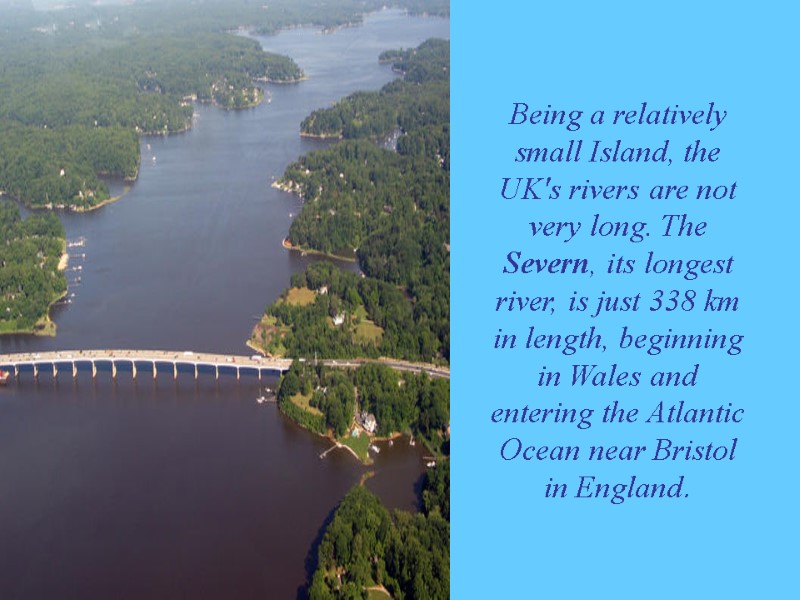
Being a relatively small Island, the UK's rivers are not very long. The Severn, its longest river, is just 338 km in length, beginning in Wales and entering the Atlantic Ocean near Bristol in England.
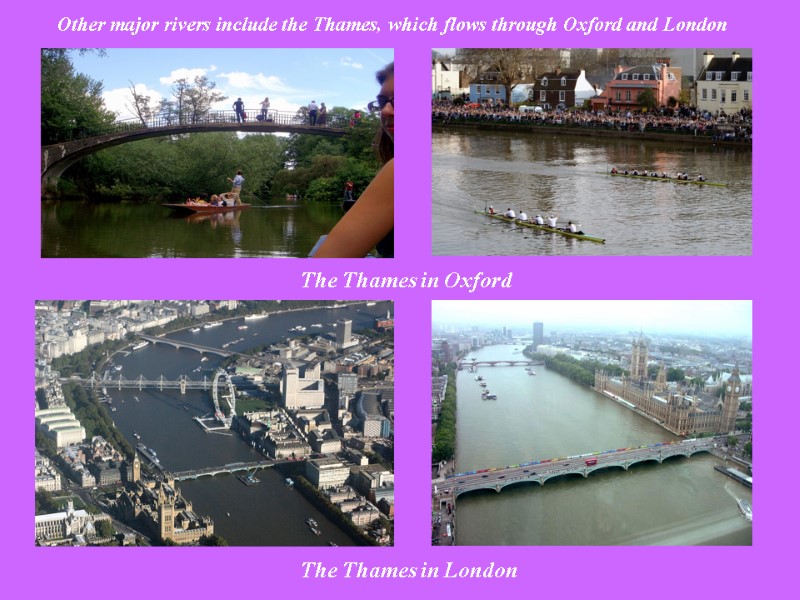
Other major rivers include the Thames, which flows through Oxford and London The Thames in Oxford The Thames in London
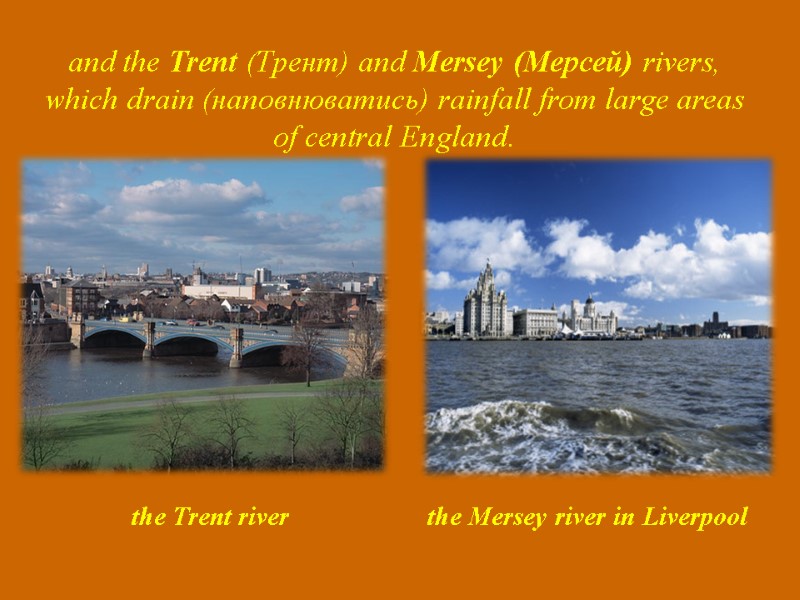
and the Trent (Трент) and Mersey (Мерсей) rivers, which drain (наповнюватись) rainfall from large areas of central England. the Trent river the Mersey river in Liverpool
England covers over 50,000 square miles (130 439 square kilometres) and is the largest of the countries comprising the island of Britain, covering about two-thirds of the island. No place in England is more than 75 miles (120 km) from the sea.
Much of the land in England is flat (low lying) - less than 1000 m above sea level, forming meadowlands (луг) and pastures (пасовища) and less than 10 percent of the area is covered by woodlands. Farmers raise animals or grow crops in the fields. Upland areas are generally confined to (не виходять за межі) northern England: the exceptions are the upland moors of Dartmoor and Exmoor in the south-west.
The landscape of England is more rugged ( [rΔgid] холмиста) in the north and the west. The highest elevations are in Cumbria and the Lake District in the west. The highest point in England is Scafell Peak, 978m, part of the Cumbrian Mountains in North West England. The area of the Cumbrian mountains is the most rugged in England and is more commonly known as the Lake District after the many lakes there.
Scafell Pеаk
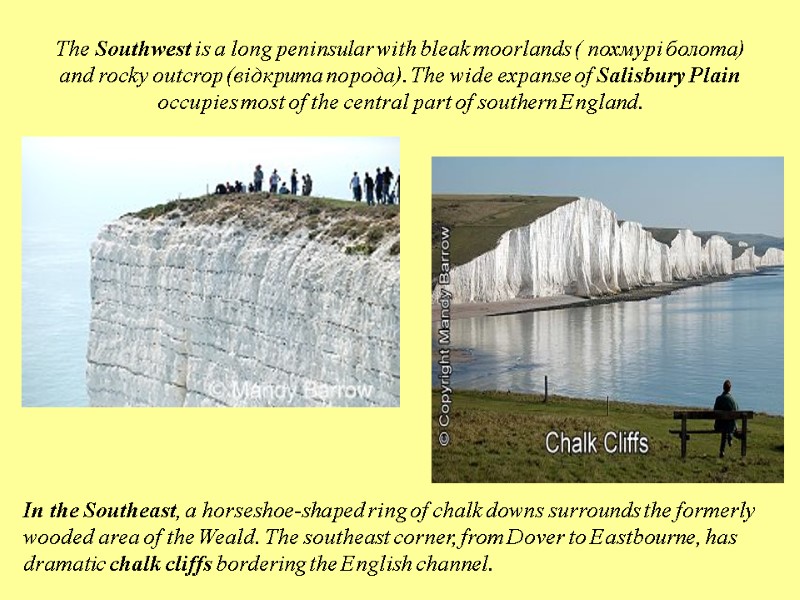
The Southwest is a long peninsular with bleak moorlands ( похмурі болота) and rocky outcrop (відкрита порода). The wide expanse of Salisbury Plain occupies most of the central part of southern England. In the Southeast, a horseshoe-shaped ring of chalk downs surrounds the formerly wooded area of the Weald. The southeast corner, from Dover to Eastbourne, has dramatic chalk cliffs bordering the English channel.
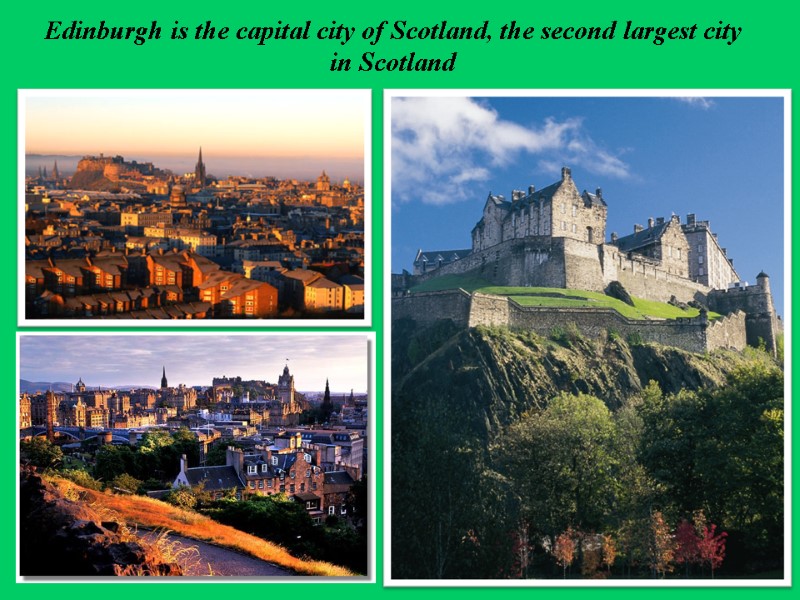
Edinburgh is the capital city of Scotland, the second largest city in Scotland
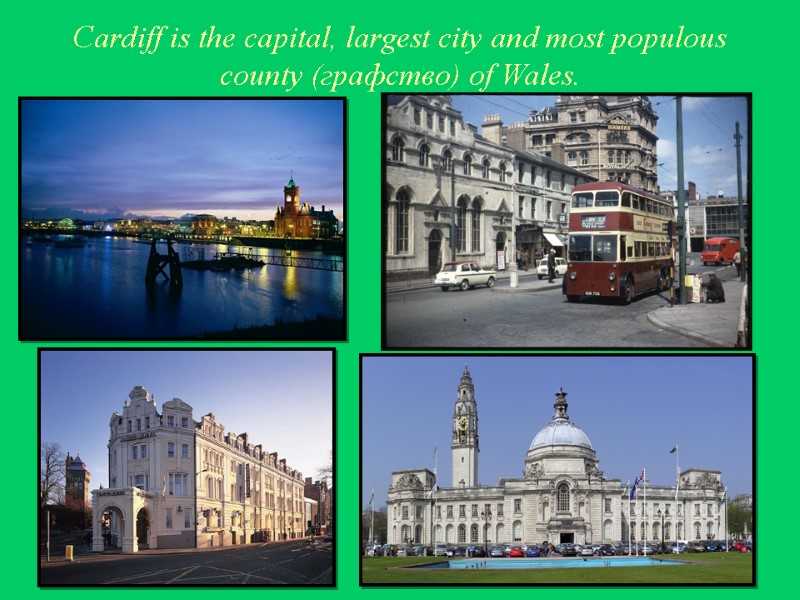
Cardiff is the capital, largest city and most populous county (графство) of Wales.
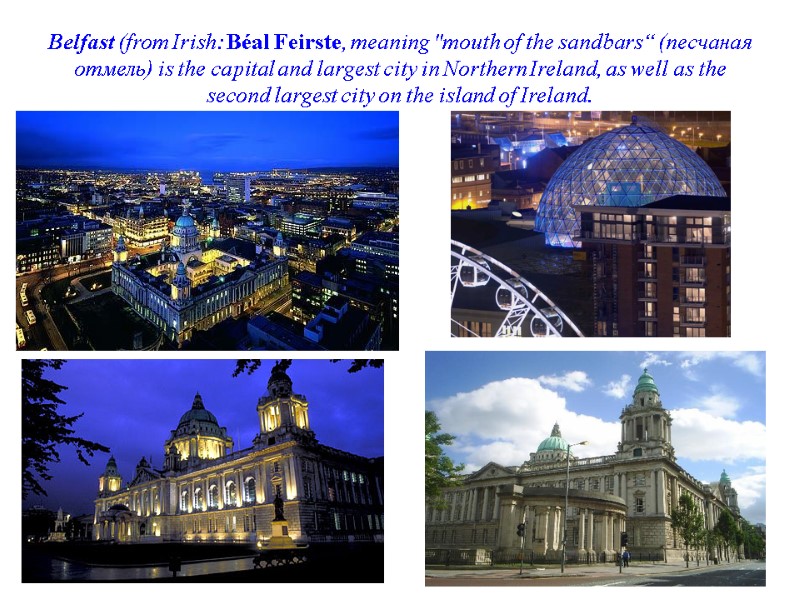
Belfast (from Irish: Béal Feirste, meaning "mouth of the sandbars“ (песчаная отмель) is the capital and largest city in Northern Ireland, as well as the second largest city on the island of Ireland.
London is a world city... And the capital of the UK
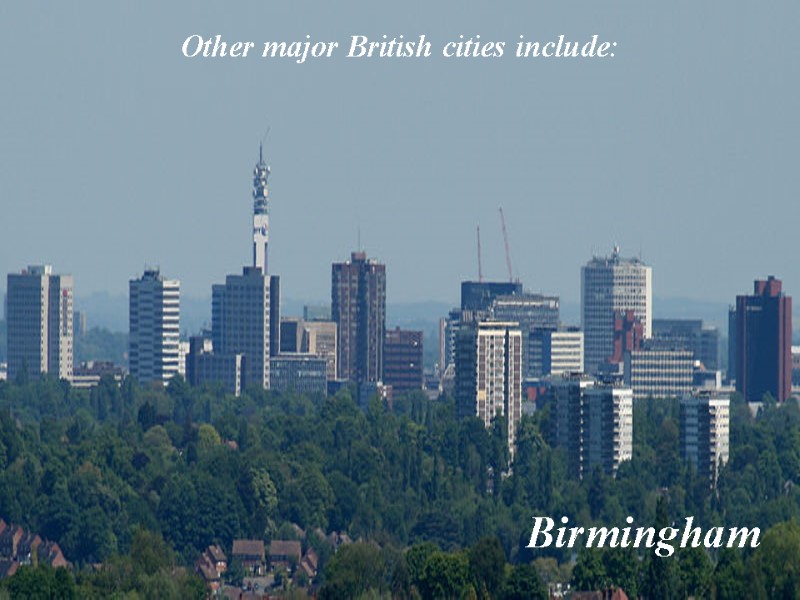
Other major British cities include: Birmingham
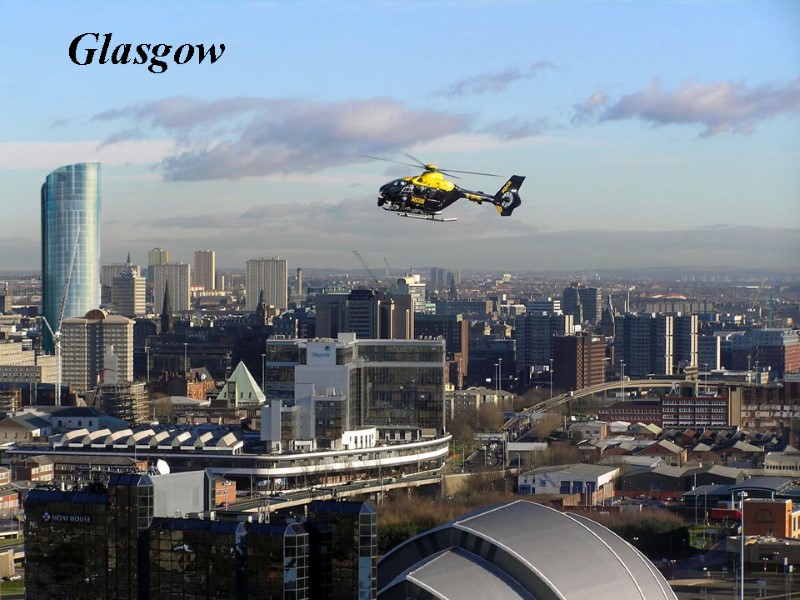
Glasgow
Liverpool
Leeds
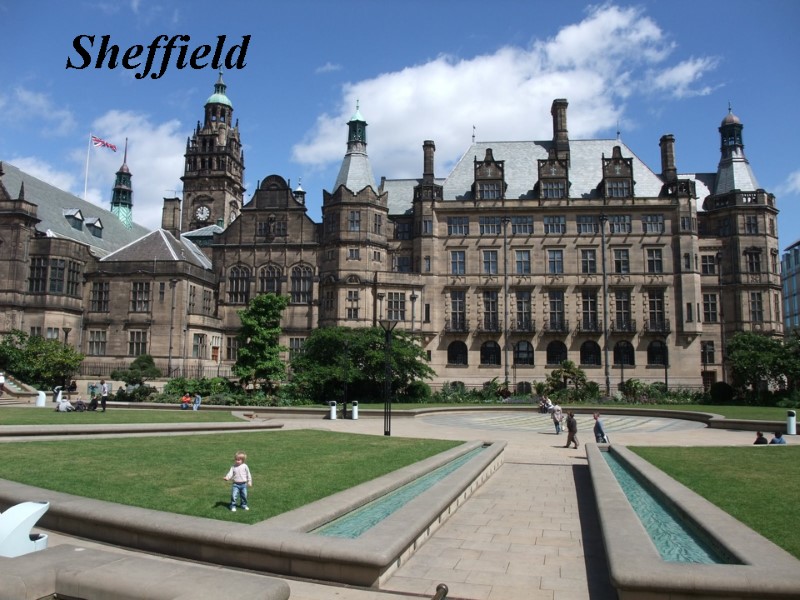
Sheffield
Bristol
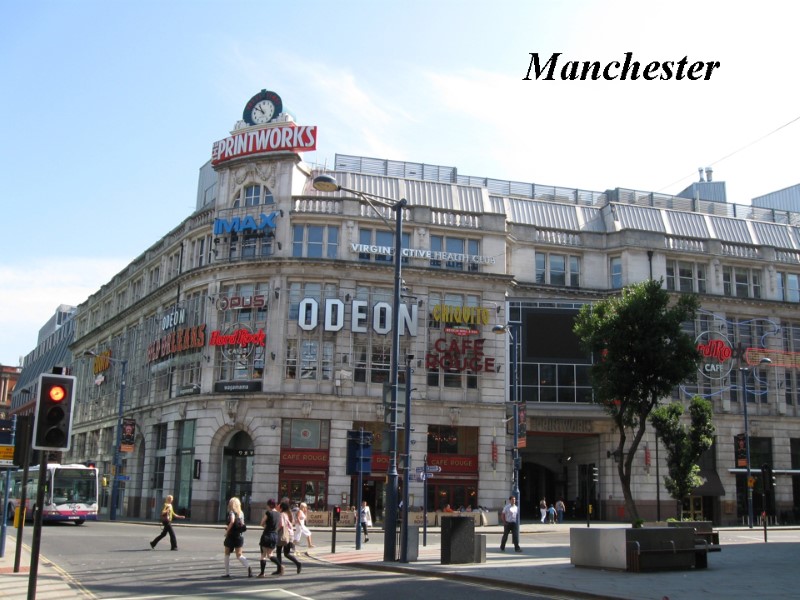
Manchester
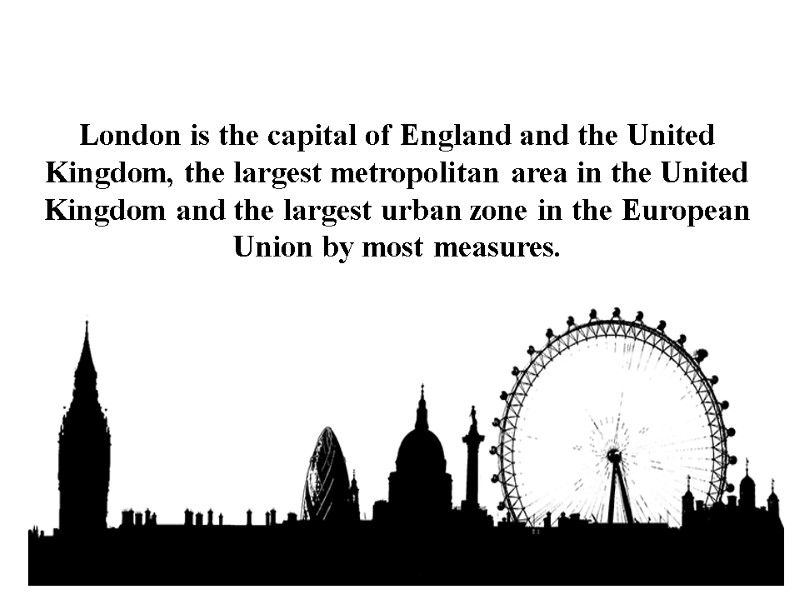
London is the capital of England and the United Kingdom, the largest metropolitan area in the United Kingdom and the largest urban zone in the European Union by most measures.
What to see in London
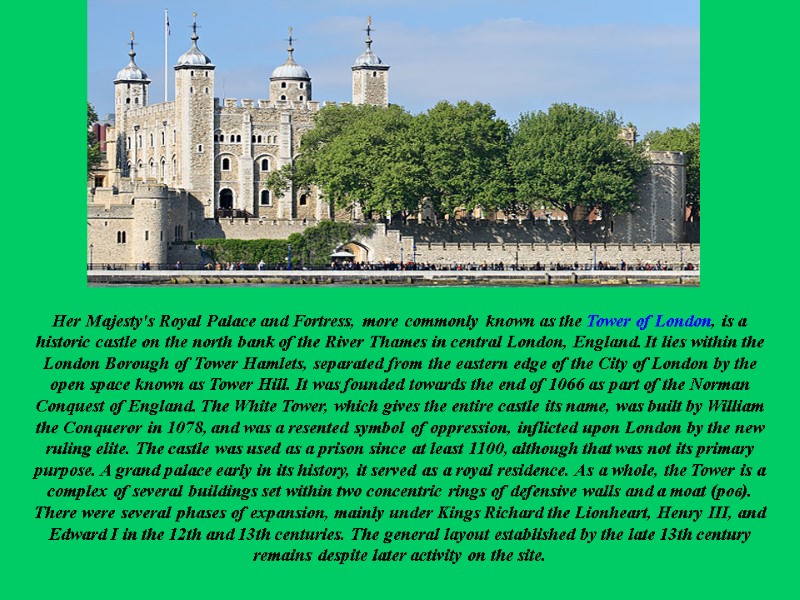
Tower оf London
Her Majesty's Royal Palace and Fortress, more commonly known as the Tower of London, is a historic castle on the north bank of the River Thames in central London, England. It lies within the London Borough of Tower Hamlets, separated from the eastern edge of the City of London by the open space known as Tower Hill. It was founded towards the end of 1066 as part of the Norman Conquest of England. The White Tower, which gives the entire castle its name, was built by William the Conqueror in 1078, and was a resented symbol of oppression, inflicted upon London by the new ruling elite. The castle was used as a prison since at least 1100, although that was not its primary purpose. A grand palace early in its history, it served as a royal residence. As a whole, the Tower is a complex of several buildings set within two concentric rings of defensive walls and a moat (ров). There were several phases of expansion, mainly under Kings Richard the Lionheart, Henry III, and Edward I in the 12th and 13th centuries. The general layout established by the late 13th century remains despite later activity on the site.
The Tower of London has played a prominent role in English history. It was besieged (осаждён) several times and controlling it has been important to controlling the country. The Tower has served variously as an armoury, a treasury, a menagerie (зверинец), the home of the Royal Mint, a public records (документі) office, and the home of the Crown Jewels of the United Kingdom. From the early 14th century until the reign of Charles II, a procession would be led from the Tower to Westminster Abbey on the coronation of a monarch. In the absence of the monarch, the Constable of the Tower is in charge of the castle. This was a powerful and trusted position in the medieval period. In the late 15th century the castle was the prison of the Princes in the Tower. Under the Tudors, the Tower became used less as a royal residence, and despite attempts to refortify and repair the castle its defences lagged behind (уступили) developments to deal with artillery.
Tower Bridge
London's Tower Bridge is one of the most recognizable bridges in the world. Its Victorian Gothic style stems (стал результатом) from a law that forced the designers to create a structure that would be in harmony with the nearby Tower of London.
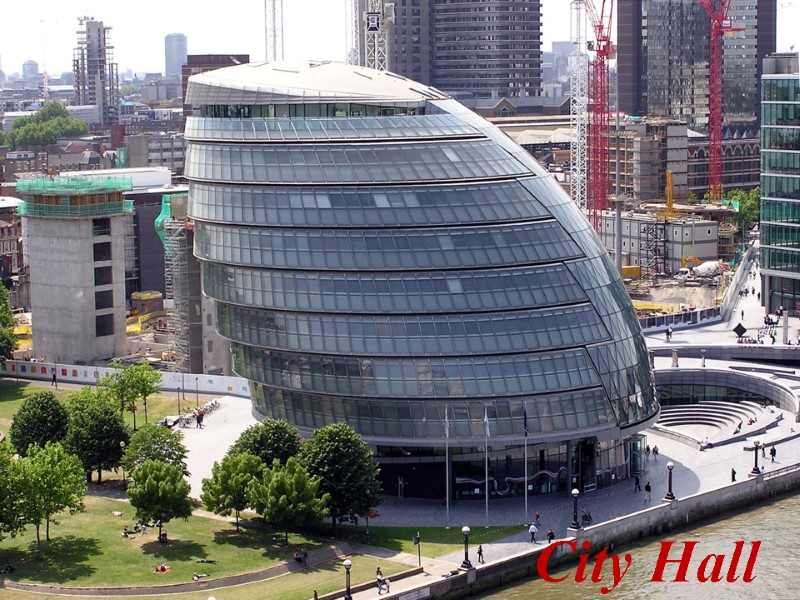
City Hall
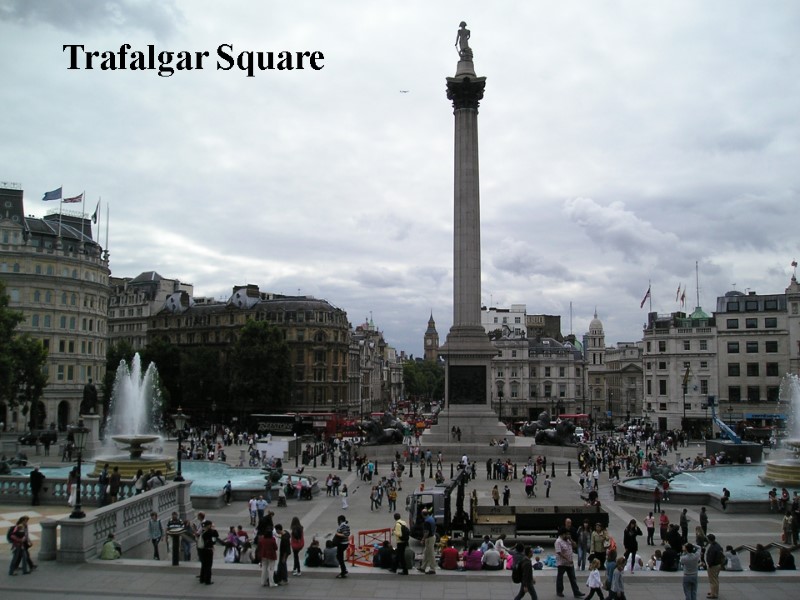
Trafalgar Square
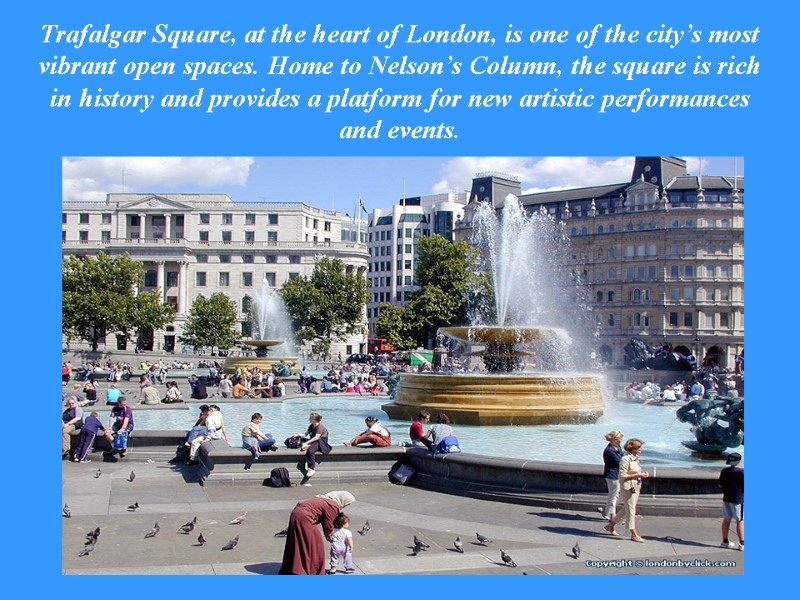
Trafalgar Square, at the heart of London, is one of the city’s most vibrant open spaces. Home to Nelson’s Column, the square is rich in history and provides a platform for new artistic performances and events.
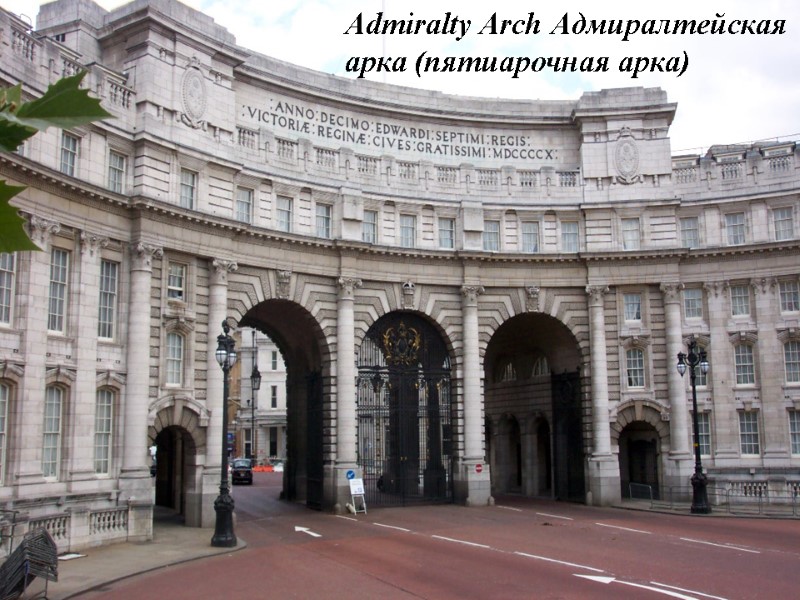
Admiralty Arch Адмиралтейская арка (пятиарочная арка)
Admiralty Arch is a large office building in London which incorporates an archway providing road and pedestrian access between The Mall, which extends to the South-West, and Trafalgar Square to the North-East. It was designed by Sir Aston Webb, constructed by John Mowlem & Co and completed in 1912. It adjoins (примікает) the Old Admiralty Building, hence (отсюда и) the name.
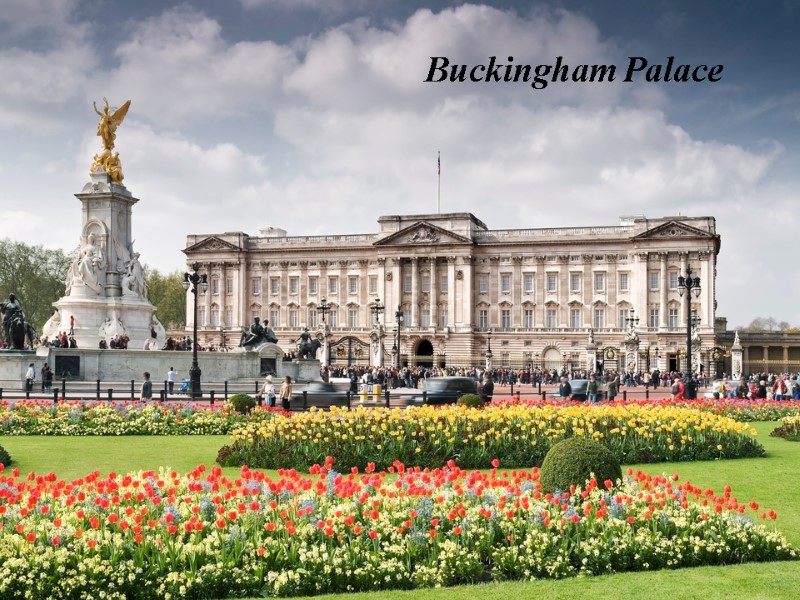
Buckingham Palace
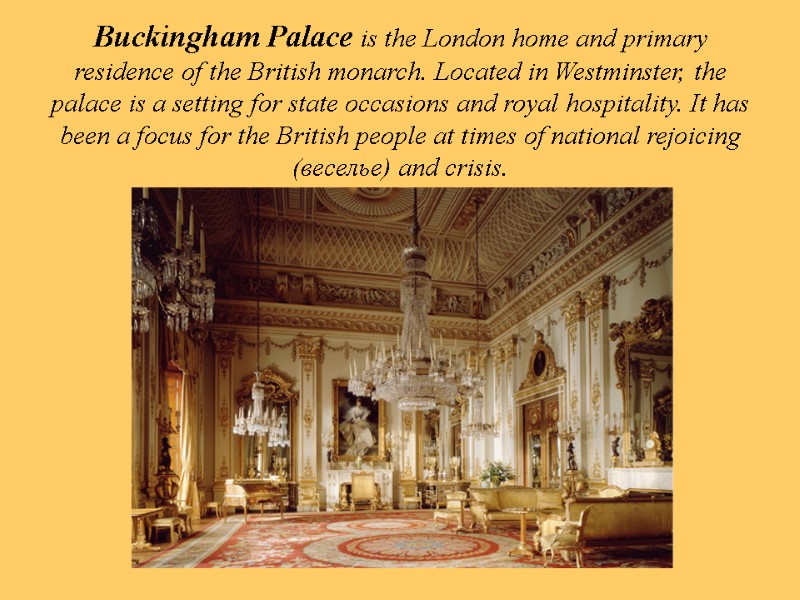
Buckingham Palace is the London home and primary residence of the British monarch. Located in Westminster, the palace is a setting for state occasions and royal hospitality. It has been a focus for the British people at times of national rejoicing (веселье) and crisis.
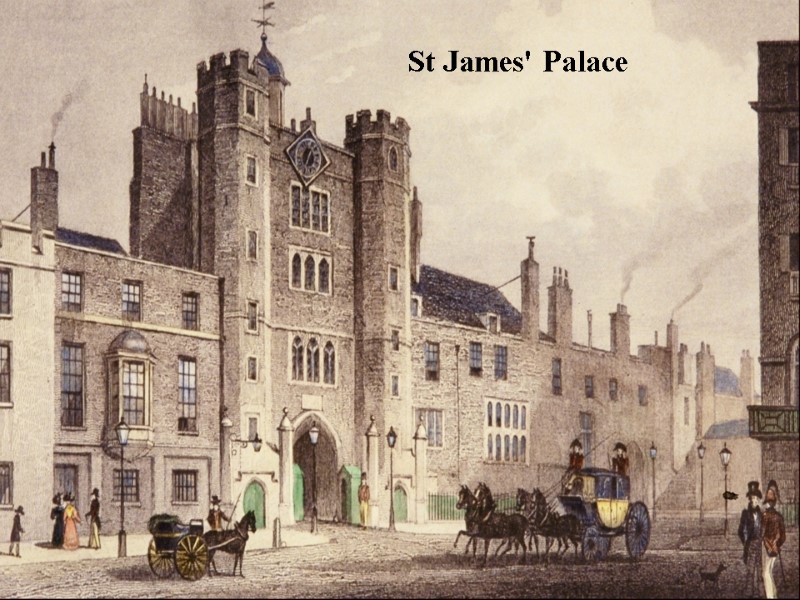
St James' Palace
St James's Palace is one of London's oldest palaces. It is situated in Pall Mall, just north of St James's Park. Although no sovereign has resided there for almost two centuries, it has remained the official residence of the Sovereign (монарх) and the most senior royal palace in the UK. For this reason it gives its name to the Royal Court (the "Court of St James's").
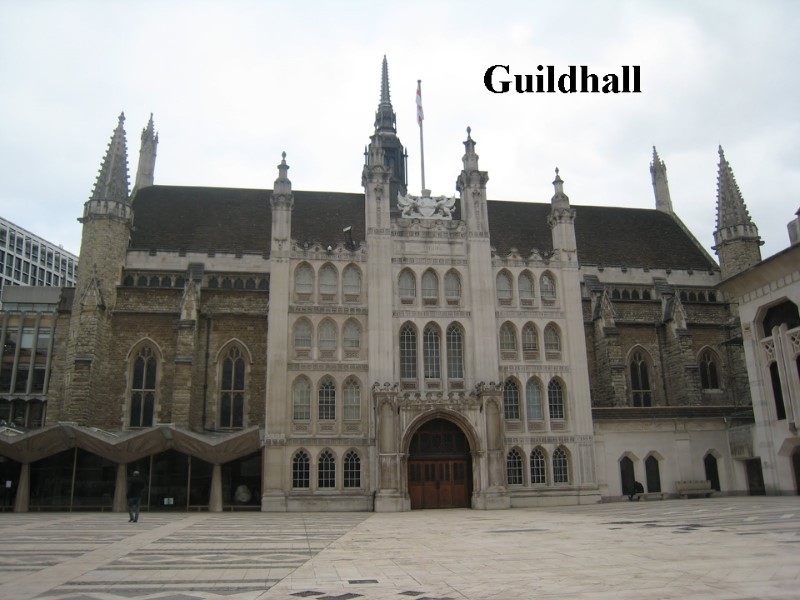
Guildhall
The Guildhall, dating back to 1411, has been used as a town hall for several hundred years, and is still the ceremonial and administrative centre of the City of London. During the Roman period it was the site of an amphitheatre, the largest in Britannia, partial remains of which are on public display in the basement (цокольный этаж) of the Guildhall Art Gallery and the outline of whose arena is marked with a black circle on the paving of the courtyard in front of the hall.
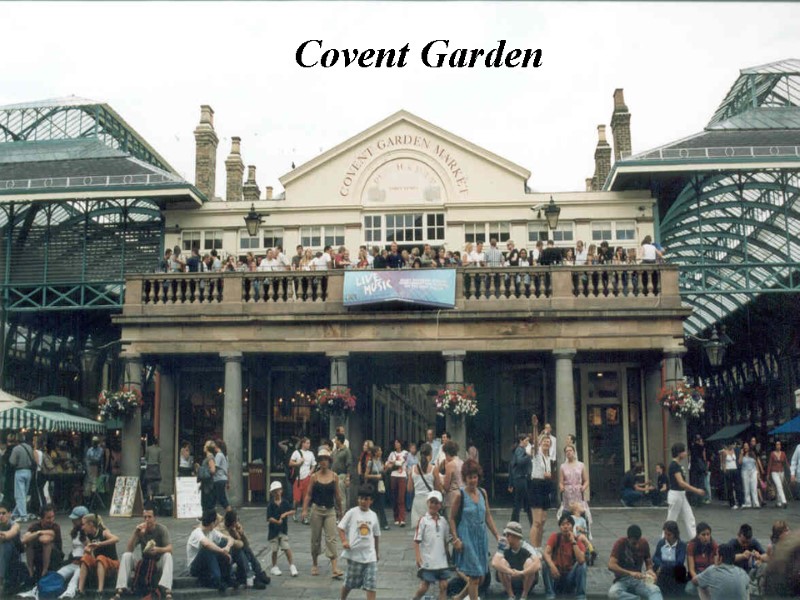
Covent Garden
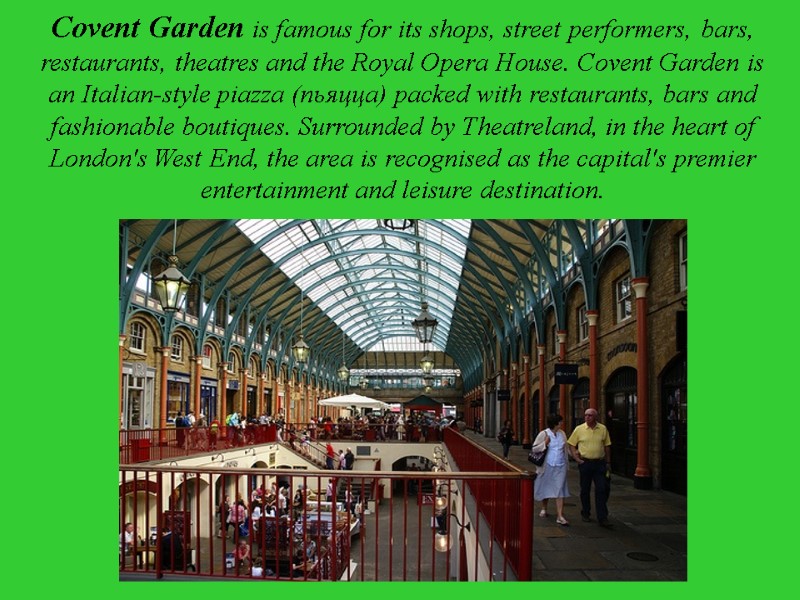
Covent Garden is famous for its shops, street performers, bars, restaurants, theatres and the Royal Opera House. Covent Garden is an Italian-style piazza (пьяцца) packed with restaurants, bars and fashionable boutiques. Surrounded by Theatreland, in the heart of London's West End, the area is recognised as the capital's premier entertainment and leisure destination.
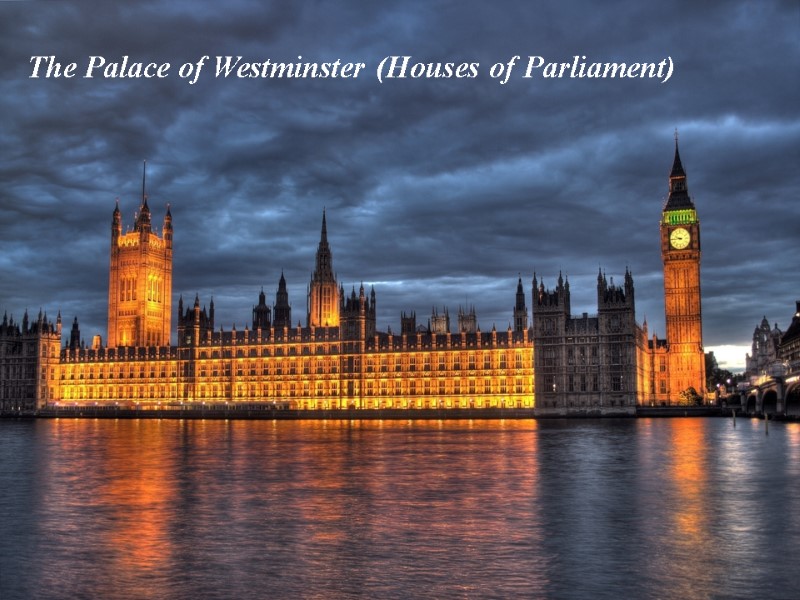
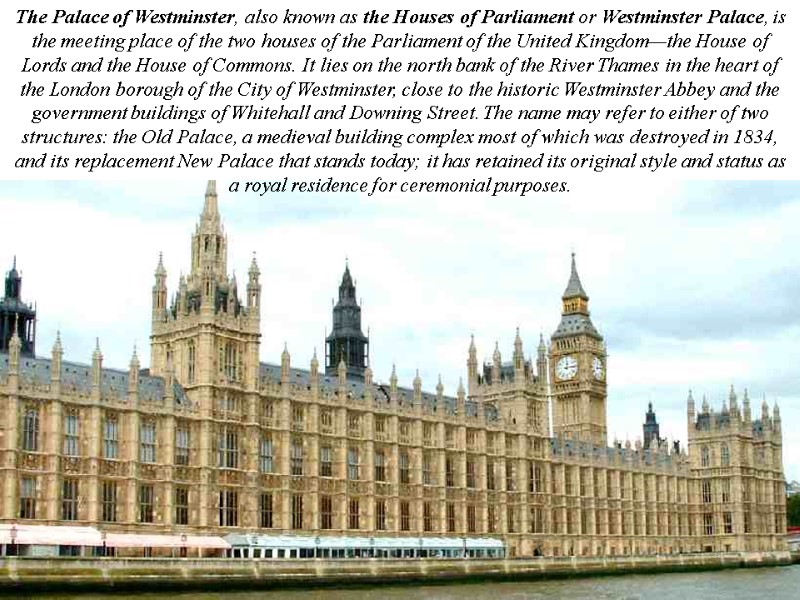
The Palace of Westminster (Houses of Parliament)
The Palace of Westminster, also known as the Houses of Parliament or Westminster Palace, is the meeting place of the two houses of the Parliament of the United Kingdom—the House of Lords and the House of Commons. It lies on the north bank of the River Thames in the heart of the London borough of the City of Westminster, close to the historic Westminster Abbey and the government buildings of Whitehall and Downing Street. The name may refer to either of two structures: the Old Palace, a medieval building complex most of which was destroyed in 1834, and its replacement New Palace that stands today; it has retained its original style and status as a royal residence for ceremonial purposes.
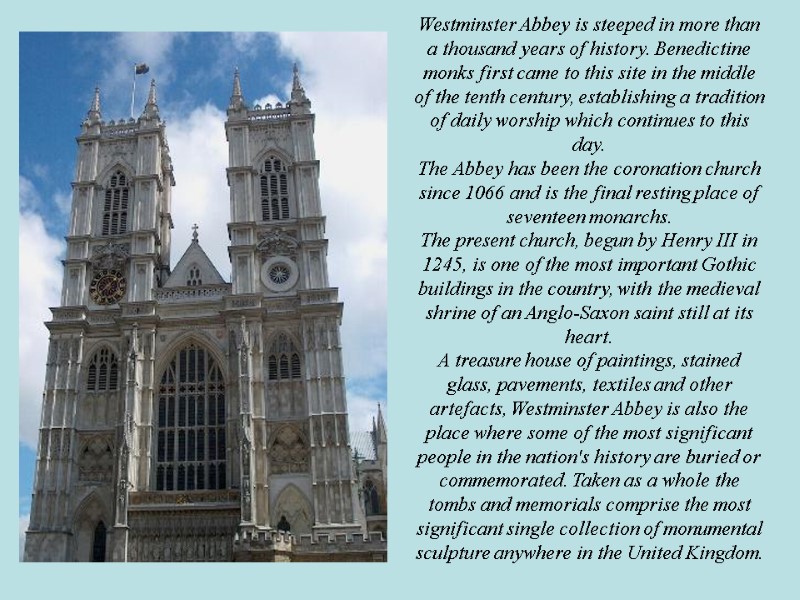
Westminster Abbey
The Collegiate Church of St. Peter at Westminster, which is almost always referred to popularly and informally as Westminster Abbey, is a large, mainly Gothic church, in Westminster, London, located just to the west of the Palace of Westminster. Westminster Abbey, the north entrance
Westminster Abbey is steeped in more than a thousand years of history. Benedictine monks first came to this site in the middle of the tenth century, establishing a tradition of daily worship which continues to this day. The Abbey has been the coronation church since 1066 and is the final resting place of seventeen monarchs. The present church, begun by Henry III in 1245, is one of the most important Gothic buildings in the country, with the medieval shrine of an Anglo-Saxon saint still at its heart. A treasure house of paintings, stained glass, pavements, textiles and other artefacts, Westminster Abbey is also the place where some of the most significant people in the nation's history are buried or commemorated. Taken as a whole the tombs and memorials comprise the most significant single collection of monumental sculpture anywhere in the United Kingdom.
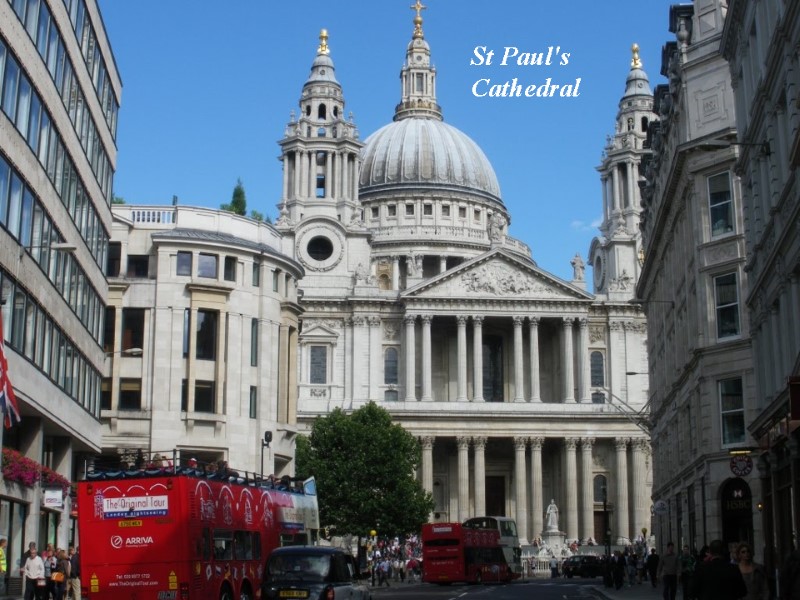
St Paul's Cathedral
A cathedral dedicated to St Paul has stood on this site since 604AD, and throughout the cathedral has remained a busy, working church where millions come to reflect and find peace. St Paul’s is not only an iconic part of the London skyline but also a symbol of the hope, resilience and strength of the city and nation it serves. Above all, St Paul’s Cathedral is a lasting monument to the glory of God.
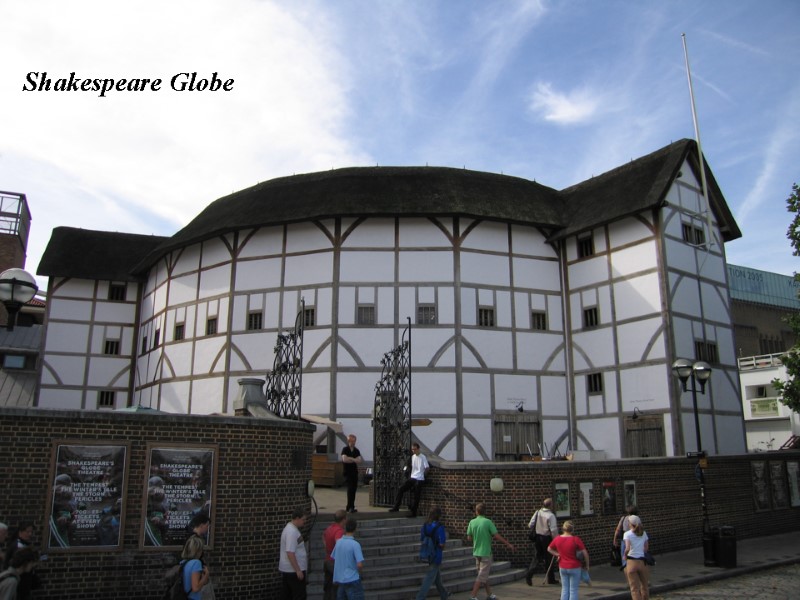
Shakespeare Globe
The fascinating story of the re-creation of Shakespeare's beloved playhouse. Visitors can see the reconstructed Elizabethan theatre, built with materials, techniques and craftsmanship of 400 years ago. The world's largest Shakesperian exhibition explores the playwright's London, Elizabethan theatre and the Shakespeare's influence around the world. The summer season of plays sees Shakespeare performed in an authentic setting.
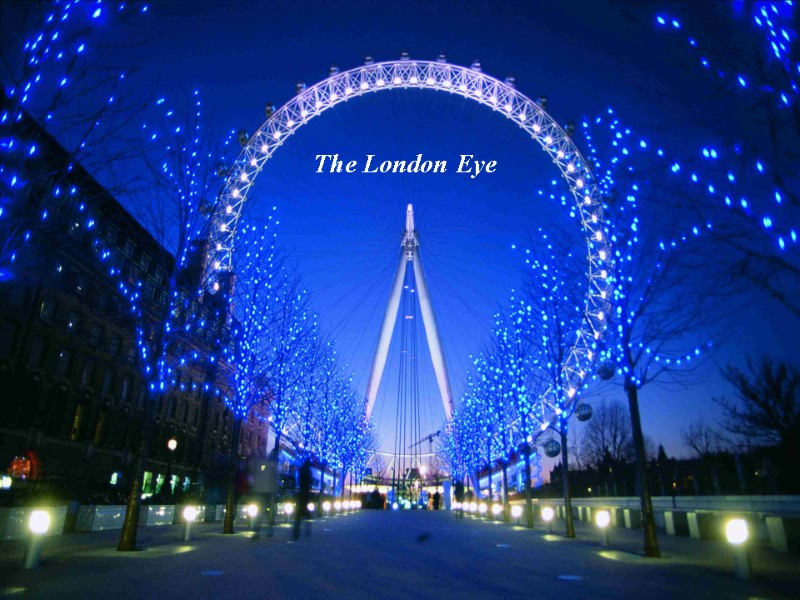
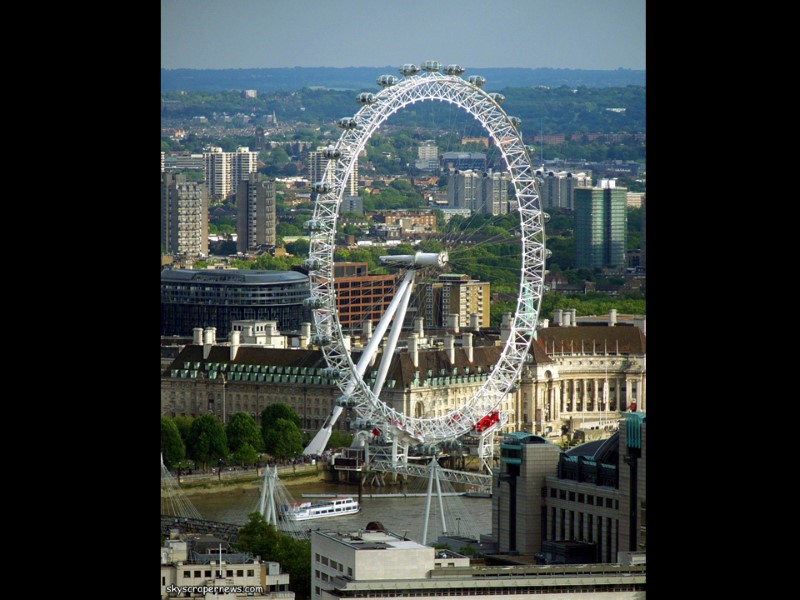
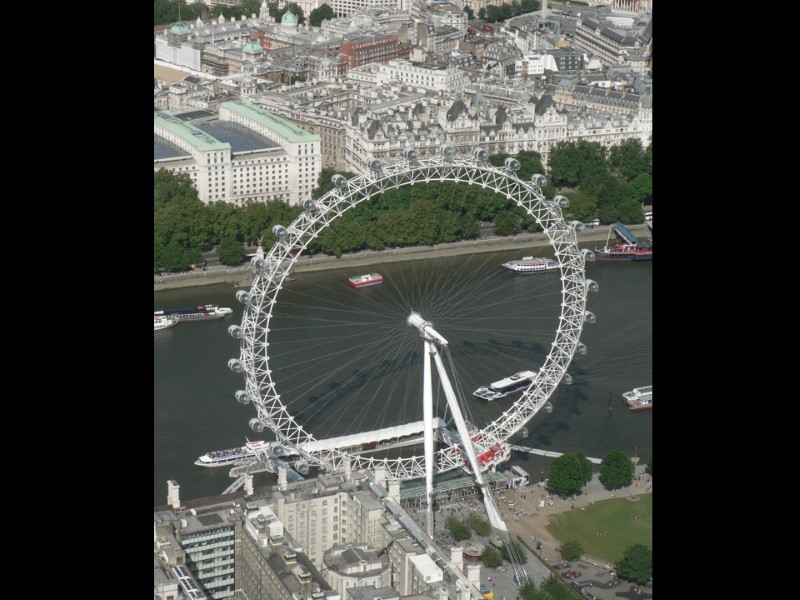
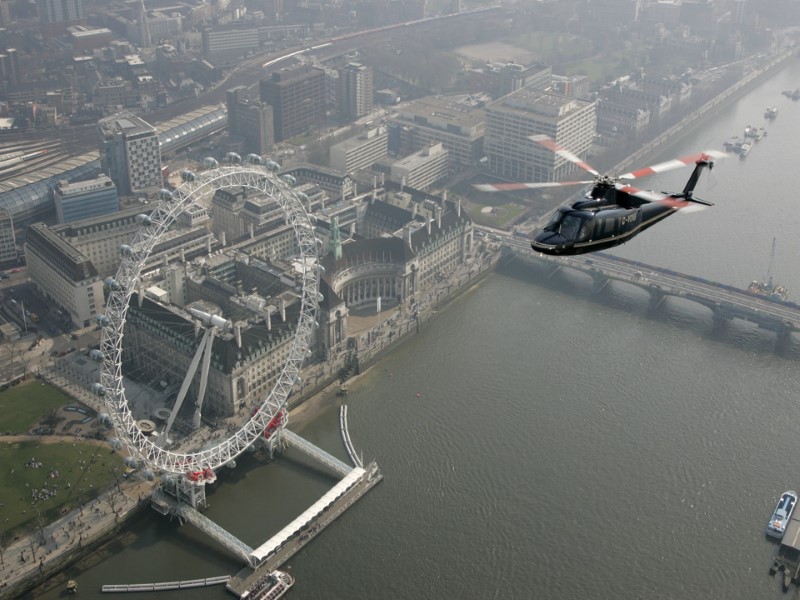
The London Eye
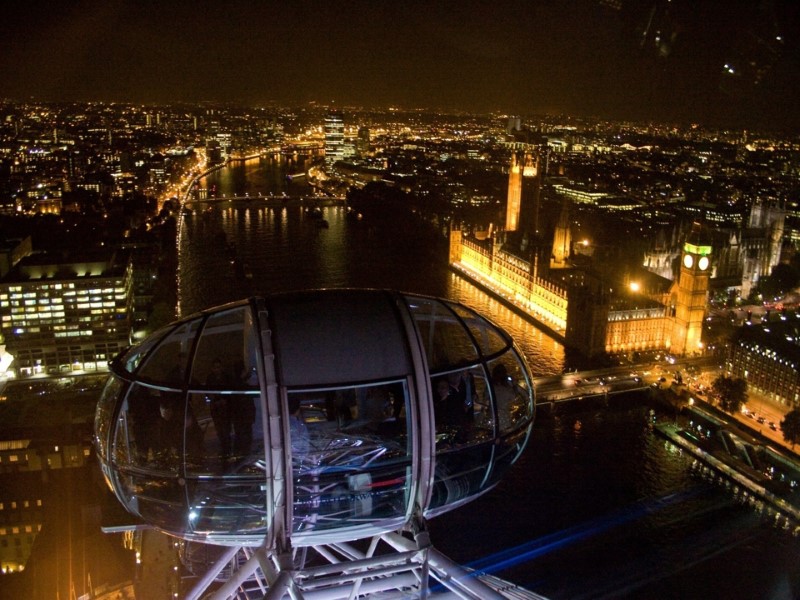
The British Airways London Eye (Millennium Wheel) stands 135 metres (443 feet) high on the South Bank of the River Thames between Westminster and Hungerford Bridges. It is the world's highest observation wheel.
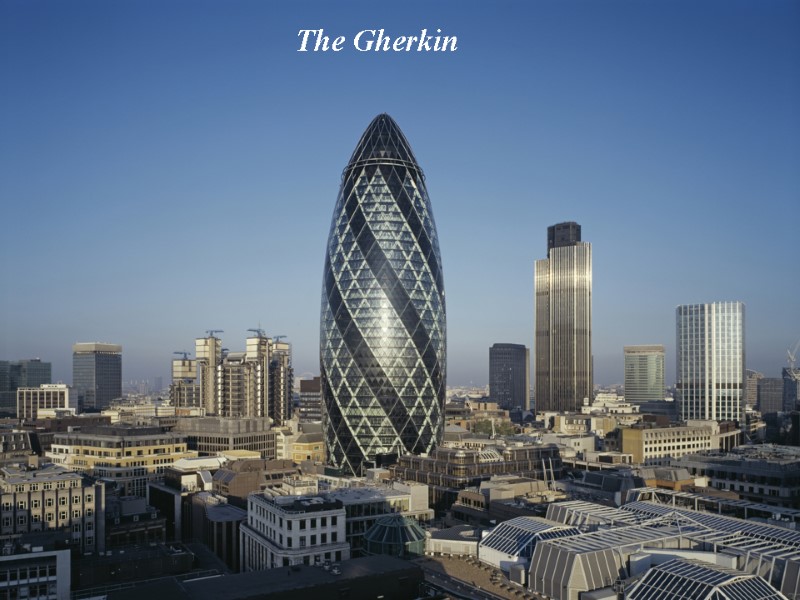
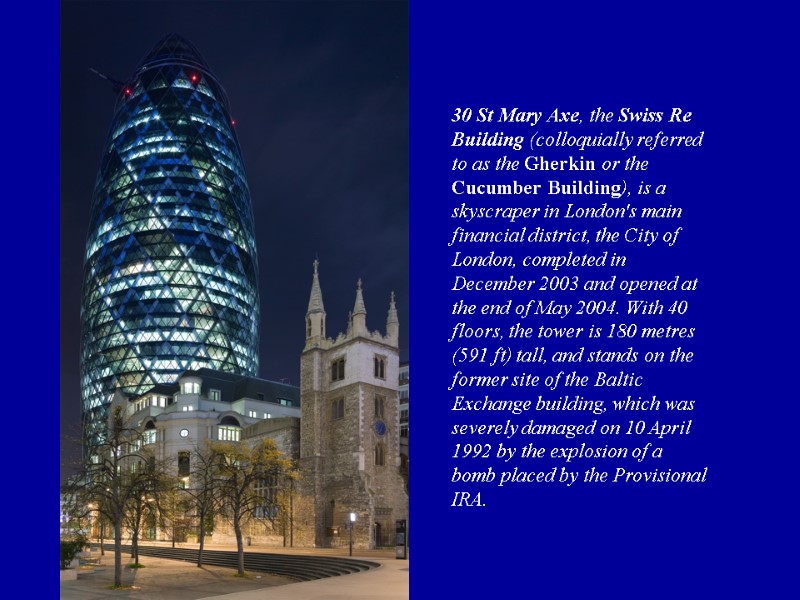
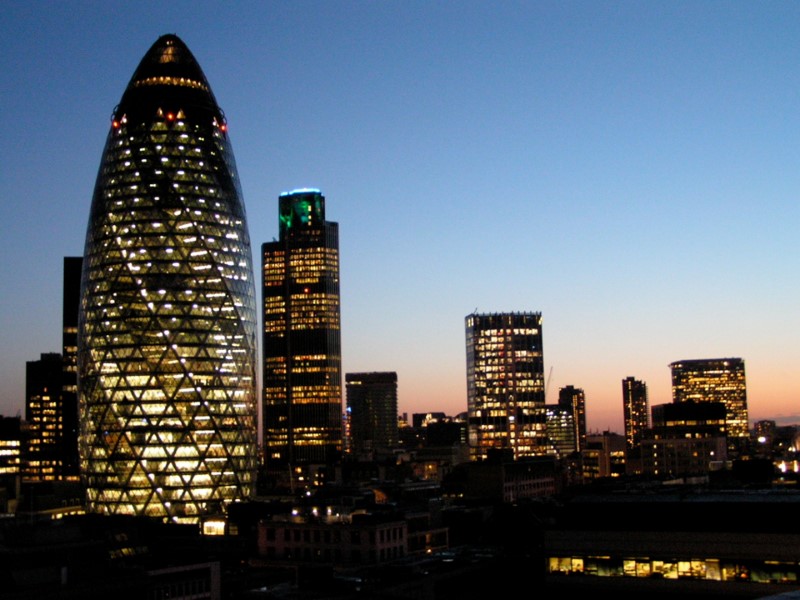
The Gherkin
30 St Mary Axe, the Swiss Re Building (colloquially referred to as the Gherkin or the Cucumber Building), is a skyscraper in London's main financial district, the City of London, completed in December 2003 and opened at the end of May 2004. With 40 floors, the tower is 180 metres (591 ft) tall, and stands on the former site of the Baltic Exchange building, which was severely damaged on 10 April 1992 by the explosion of a bomb placed by the Provisional IRA.
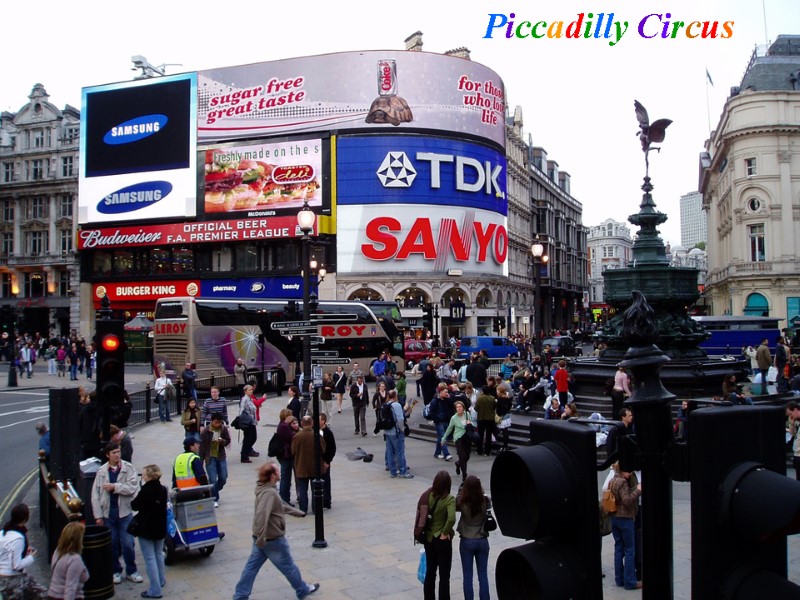
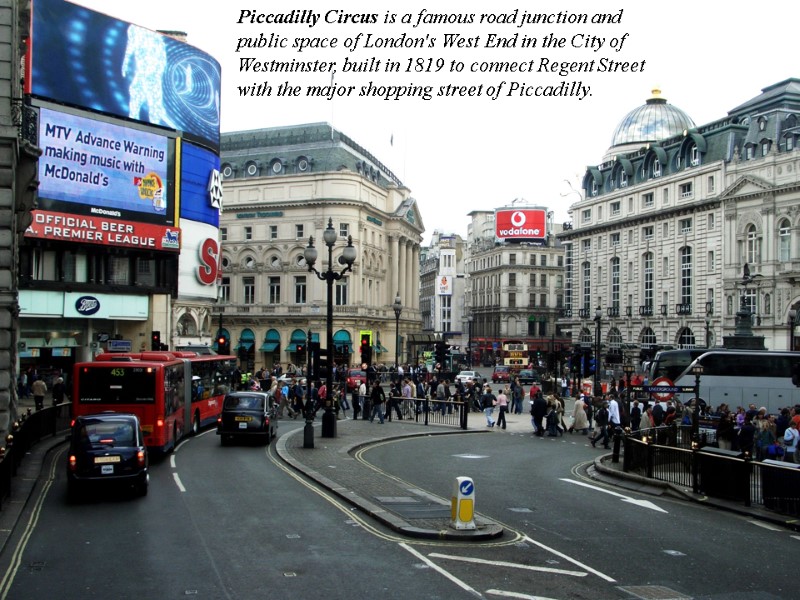
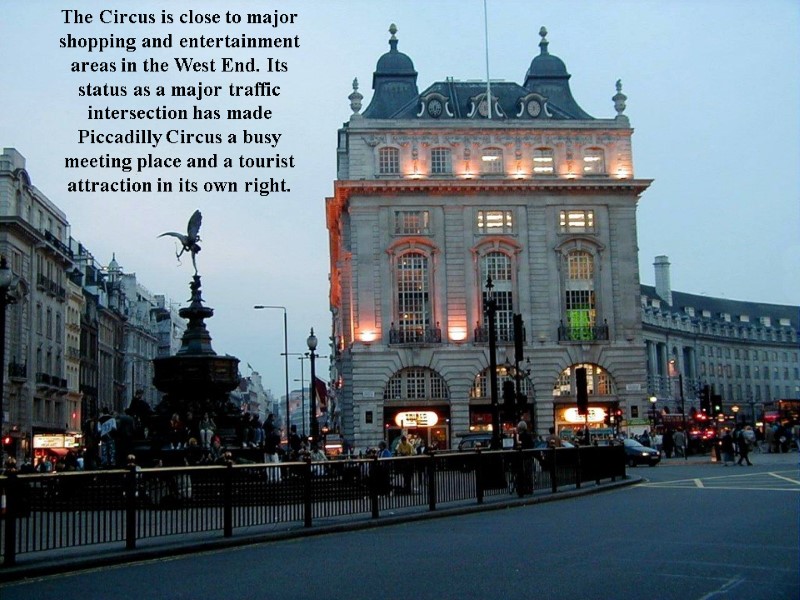
Piccadilly Circus
. Piccadilly Circus is a famous road junction and public space of London's West End in the City of Westminster, built in 1819 to connect Regent Street with the major shopping street of Piccadilly.
In this context, a circus, from the Latin word meaning "circle", is a round open space at a street junction. Piccadilly now links directly to the theatres on Shaftesbury Avenue, as well as the Haymarket, Coventry Street (onwards to Leicester Square), and Glasshouse Street.
The Circus is close to major shopping and entertainment areas in the West End. Its status as a major traffic intersection has made Piccadilly Circus a busy meeting place and a tourist attraction in its own right.
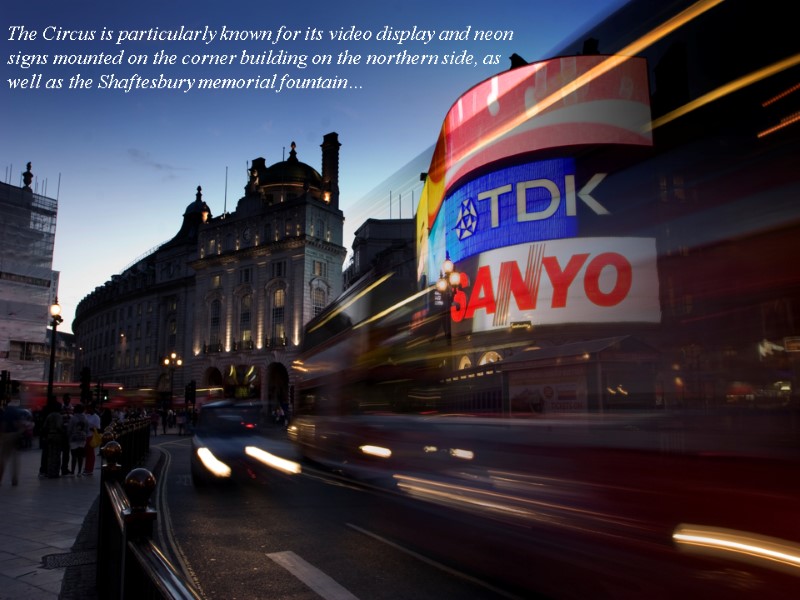
The Circus is particularly known for its video display and neon signs mounted on the corner building on the northern side, as well as the Shaftesbury memorial fountain…
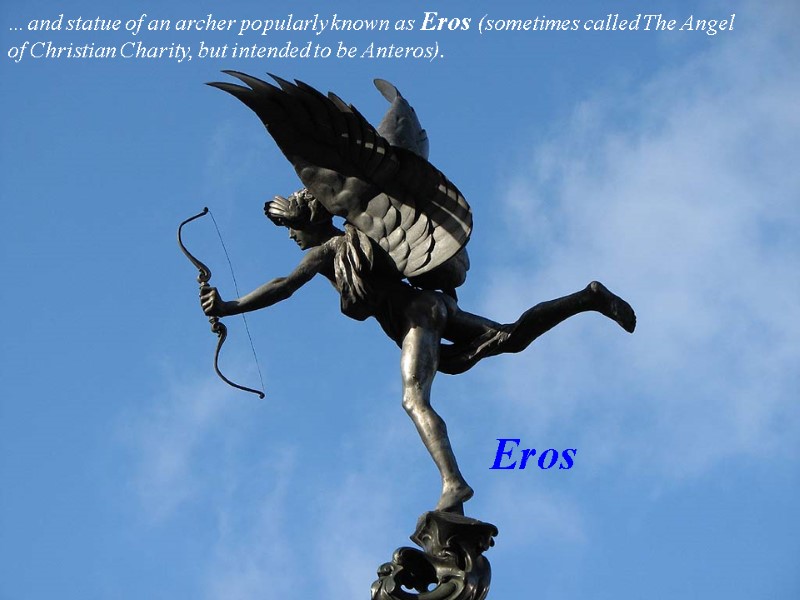
…and statue of an archer popularly known as Eros (sometimes called The Angel of Christian Charity, but intended to be Anteros). Eros
Canary Wharf Tower
One Canada Square (sometimes known as Canary Wharf after its location) is a skyscraper in Canary Wharf in the London Borough of Tower Hamlets. It is the tallest building in the United Kingdom since 1991 in accordance to the Council on Tall Buildings and Urban Habitat criterias of tallest building awards.
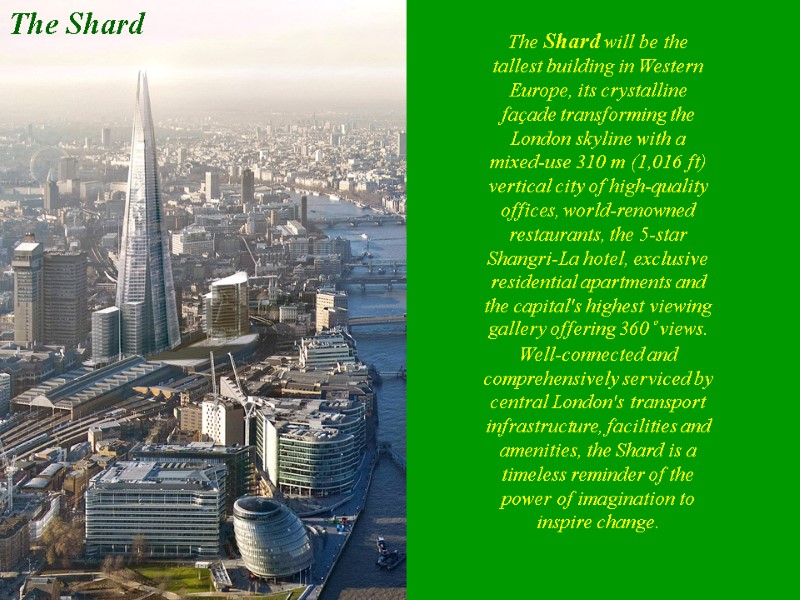
The Shard will be the tallest building in Western Europe, its crystalline façade transforming the London skyline with a mixed-use 310 m (1,016 ft) vertical city of high-quality offices, world-renowned restaurants, the 5-star Shangri-La hotel, exclusive residential apartments and the capital's highest viewing gallery offering 360° views. Well-connected and comprehensively serviced by central London's transport infrastructure, facilities and amenities, the Shard is a timeless reminder of the power of imagination to inspire change. The Shard
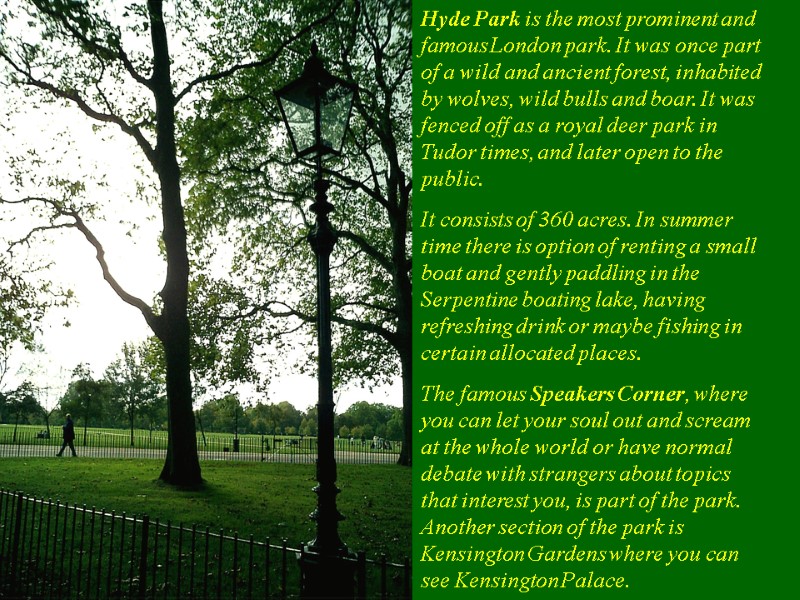
Hyde Park
Hyde Park is the most prominent and famous London park. It was once part of a wild and ancient forest, inhabited by wolves, wild bulls and boar. It was fenced off as a royal deer park in Tudor times, and later open to the public. It consists of 360 acres. In summer time there is option of renting a small boat and gently paddling in the Serpentine boating lake, having refreshing drink or maybe fishing in certain allocated places. The famous Speakers Corner, where you can let your soul out and scream at the whole world or have normal debate with strangers about topics that interest you, is part of the park. Another section of the park is Kensington Gardens where you can see Kensington Palace.