


 Скачать презентацию ИСТОЧНИКИ ЗАРЯЖЕНЫХ ЧАСТИЦ ДЛЯ УСКОРИТЕЛЕЙ 1 Источники электронов
Introduction.ppt
- Количество слайдов: 23
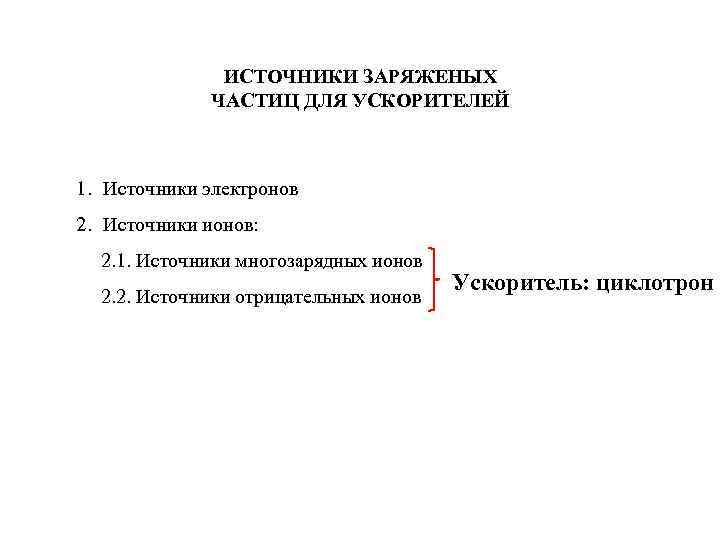 ИСТОЧНИКИ ЗАРЯЖЕНЫХ ЧАСТИЦ ДЛЯ УСКОРИТЕЛЕЙ 1. Источники электронов 2. Источники ионов: 2. 1. Источники многозарядных ионов 2. 2. Источники отрицательных ионов Ускоритель: циклотрон
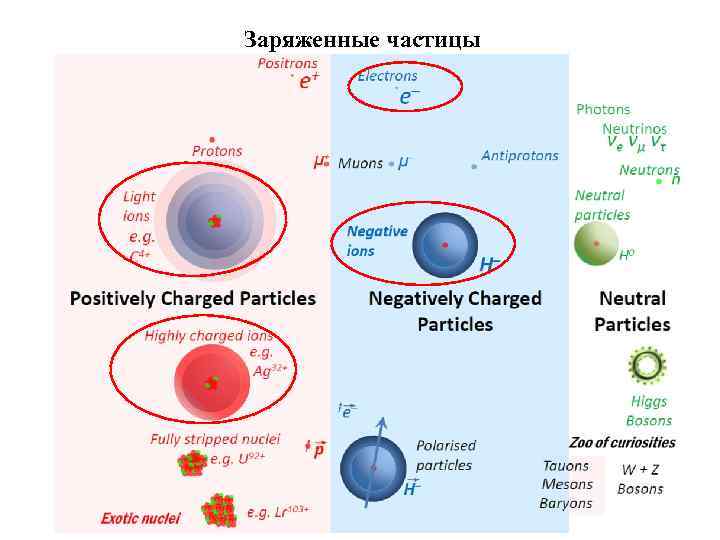 Заряженные частицы
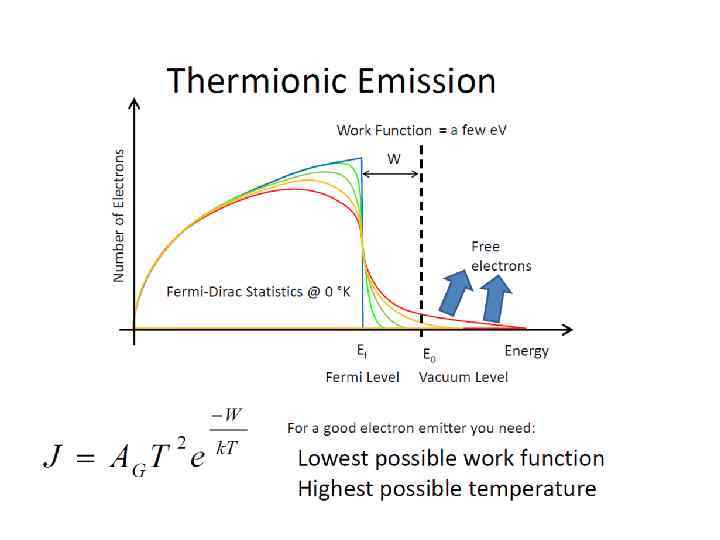
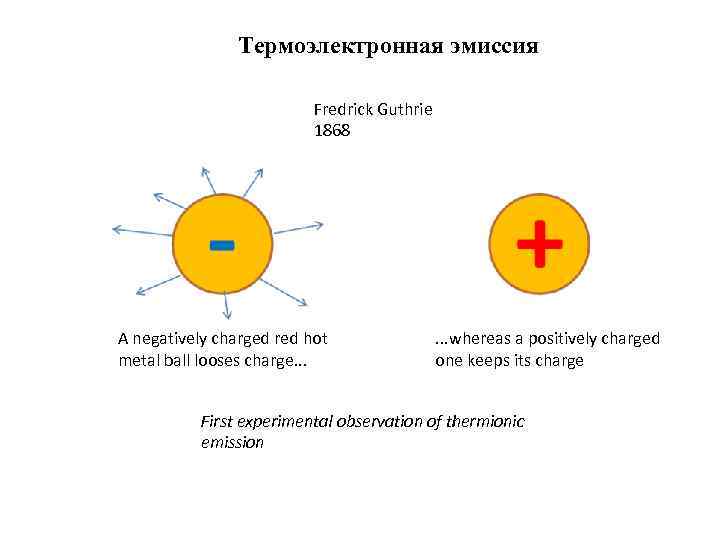 Термоэлектронная эмиссия Fredrick Guthrie 1868 A negatively charged red hot metal ball looses charge. . . whereas a positively charged one keeps its charge First experimental observation of thermionic emission
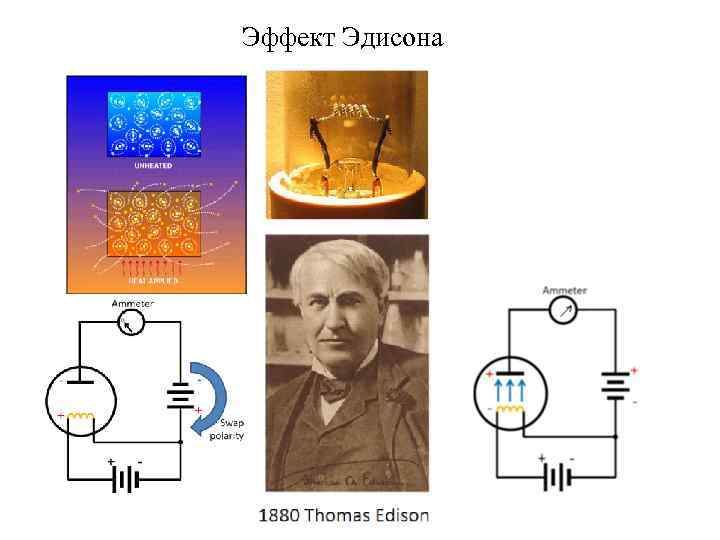 Эффект Эдисона
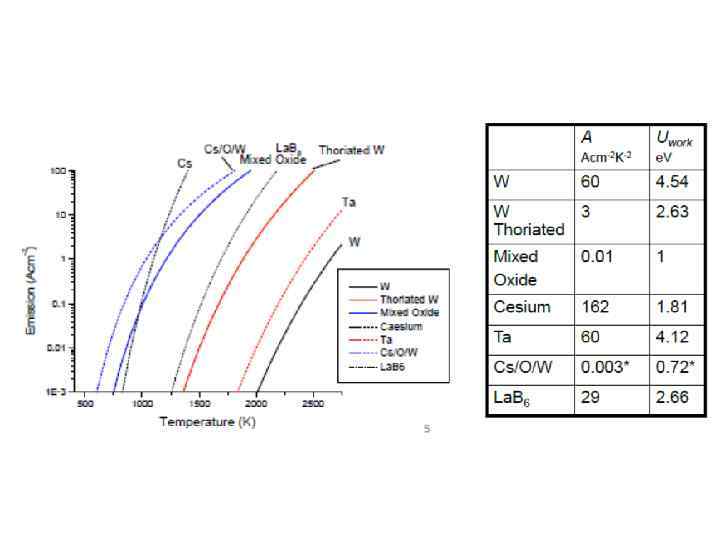
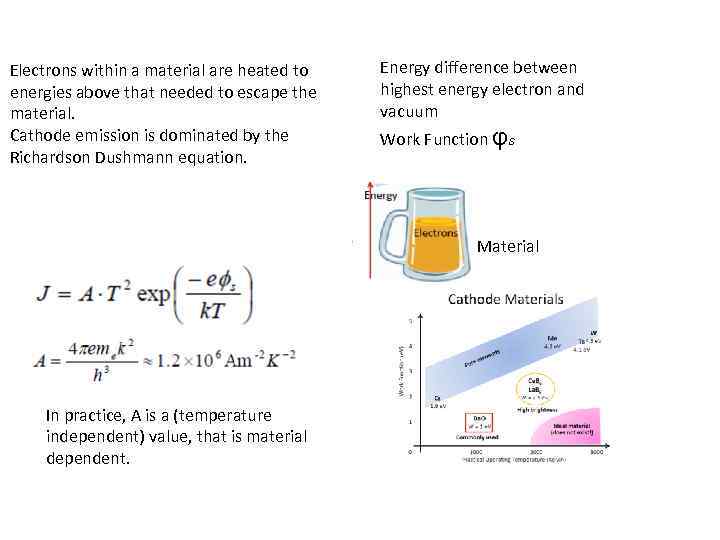 Electrons within a material are heated to energies above that needed to escape the material. Cathode emission is dominated by the Richardson Dushmann equation. Energy difference between highest energy electron and vacuum Work Function φs Material In practice, A is a (temperature independent) value, that is material dependent.
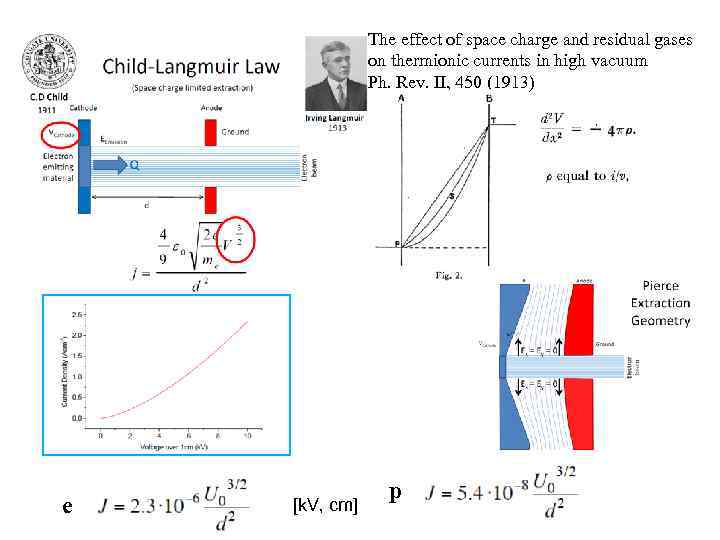 The effect of space charge and residual gases on thermionic currents in high vacuum Ph. Rev. II, 450 (1913) e [k. V, cm] p
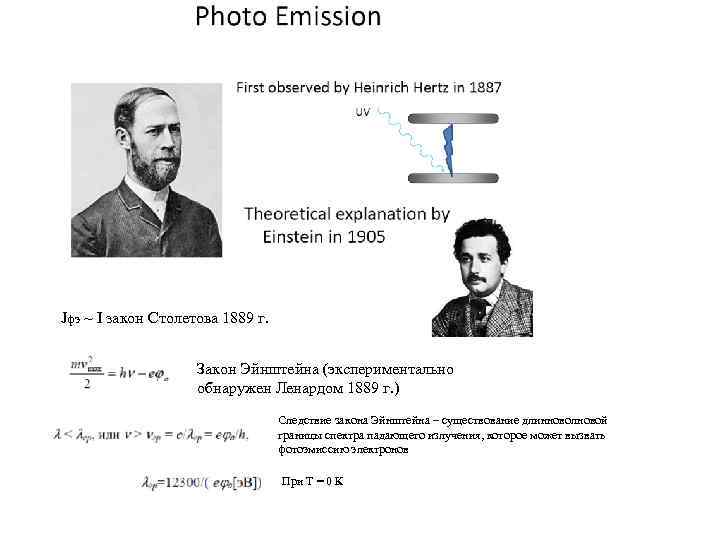 Jфэ ~ I закон Столетова 1889 г. Закон Эйнштейна (экспериментально обнаружен Ленардом 1889 г. ) Следствие закона Эйнштейна – существование длинноволновой границы спектра падающего излучения, которое может вызвать фотоэмиссию электронов При Т = 0 К
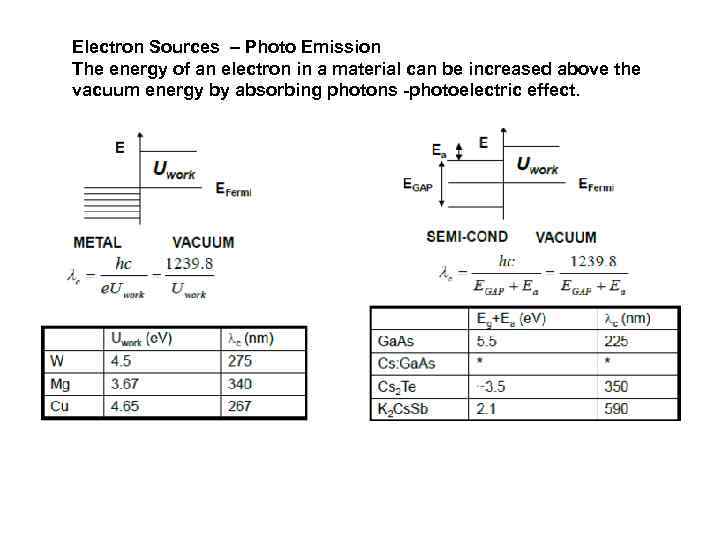 Electron Sources – Photo Emission The energy of an electron in a material can be increased above the vacuum energy by absorbing photons -photoelectric effect.
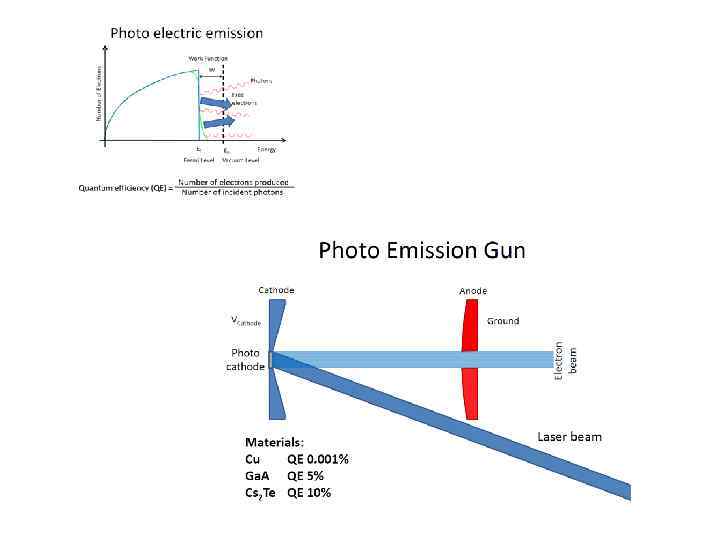
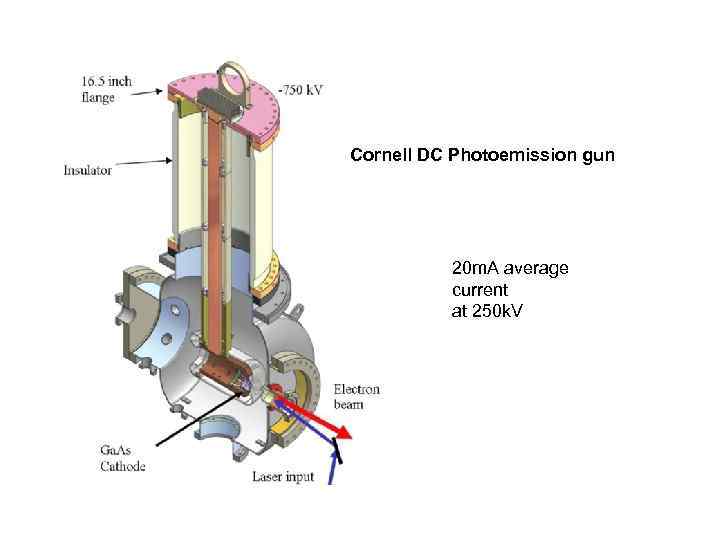 Cornell DC Photoemission gun 20 m. A average current at 250 k. V
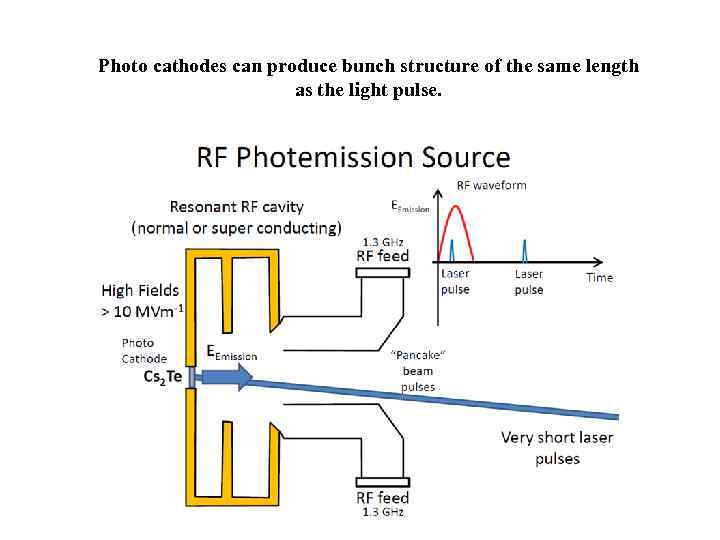 Photo cathodes can produce bunch structure of the same length as the light pulse.
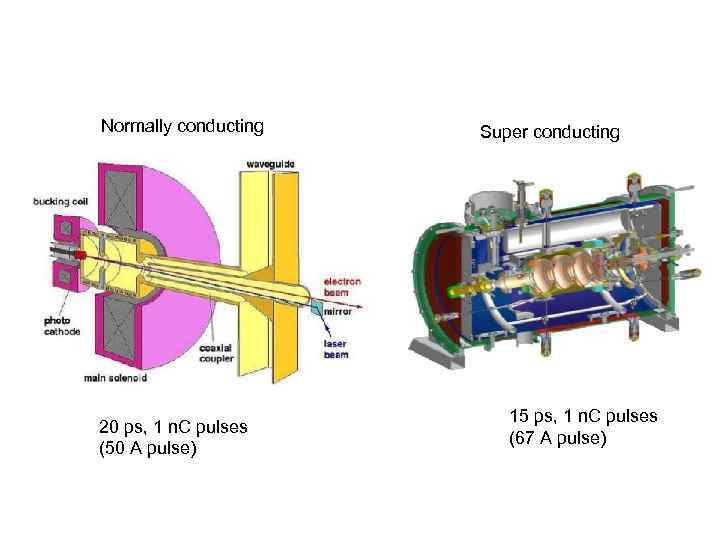 Normally conducting 20 ps, 1 n. C pulses (50 A pulse) Super conducting 15 ps, 1 n. C pulses (67 A pulse)
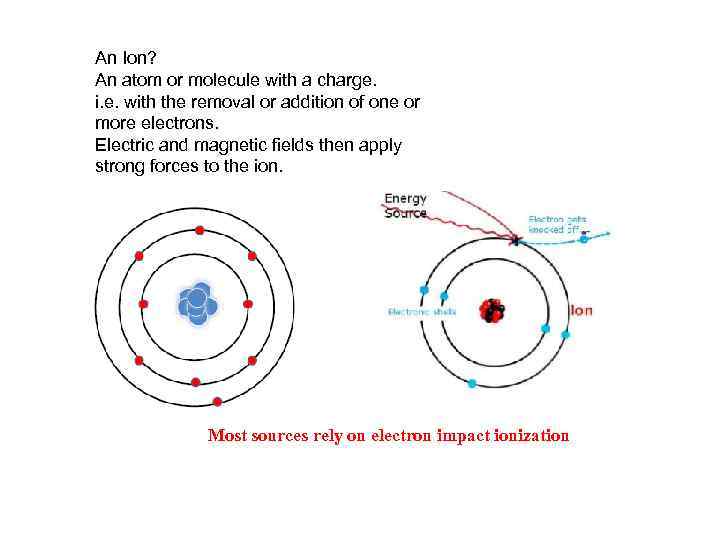 An Ion? An atom or molecule with a charge. i. e. with the removal or addition of one or more electrons. Electric and magnetic fields then apply strong forces to the ion. Most sources rely on electron impact ionization
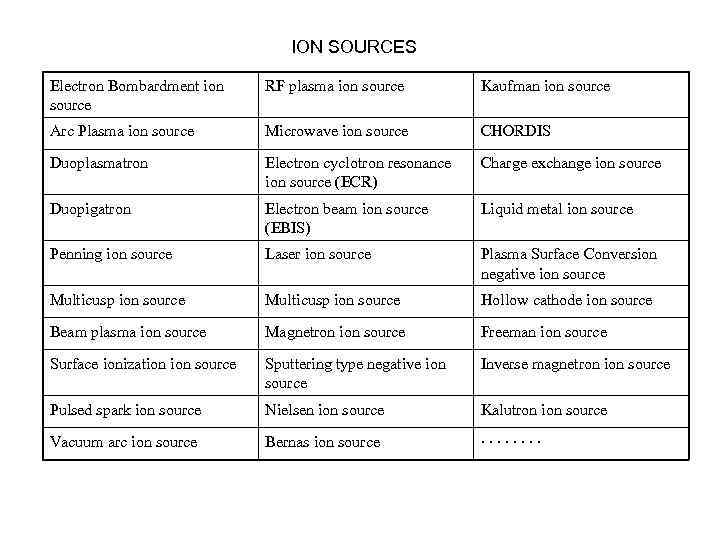 ION SOURCES Electron Bombardment ion source RF plasma ion source Kaufman ion source Arc Plasma ion source Microwave ion source CHORDIS Duoplasmatron Electron cyclotron resonance ion source (ECR) Charge exchange ion source Duopigatron Electron beam ion source (EBIS) Liquid metal ion source Penning ion source Laser ion source Plasma Surface Conversion negative ion source Multicusp ion source Hollow cathode ion source Beam plasma ion source Magnetron ion source Freeman ion source Surface ionization source Sputtering type negative ion source Inverse magnetron ion source Pulsed spark ion source Nielsen ion source Kalutron ion source Vacuum arc ion source Bernas ion source ∙∙∙∙
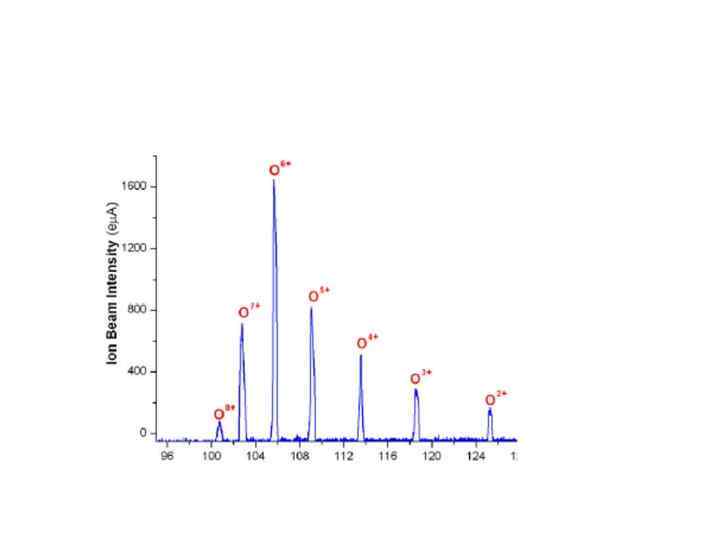
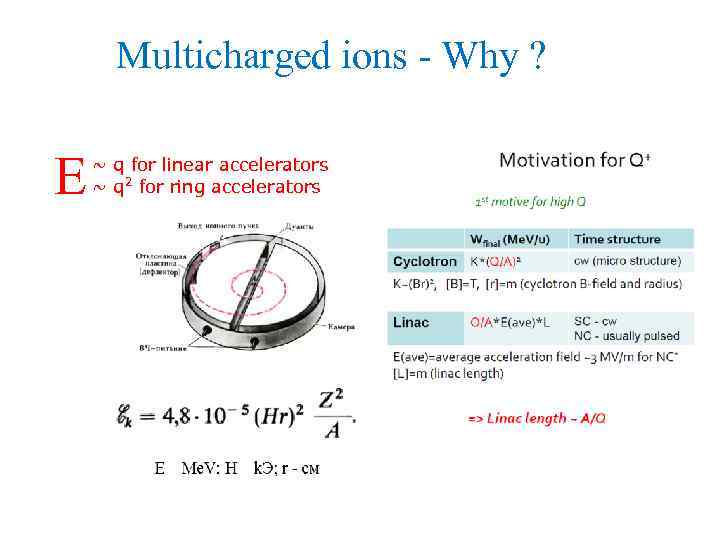 Multicharged ions - Why ? E ~ q for linear accelerators ~ q 2 for ring accelerators
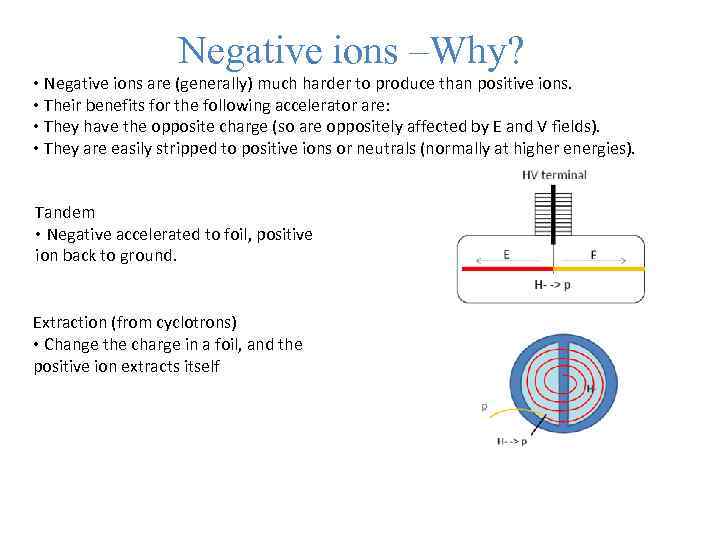 Negative ions –Why? • Negative ions are (generally) much harder to produce than positive ions. • Their benefits for the following accelerator are: • They have the opposite charge (so are oppositely affected by E and V fields). • They are easily stripped to positive ions or neutrals (normally at higher energies). Tandem • Negative accelerated to foil, positive ion back to ground. Extraction (from cyclotrons) • Change the charge in a foil, and the positive ion extracts itself
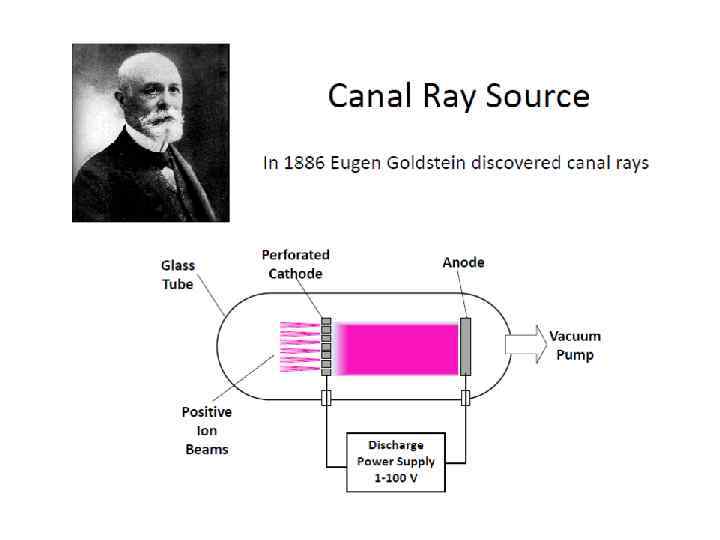
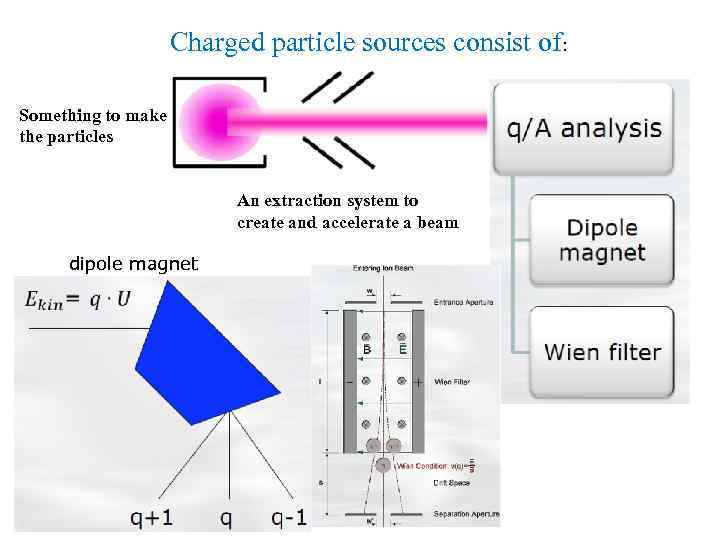 Charged particle sources consist of: Something to make the particles An extraction system to create and accelerate a beam dipole magnet
 Most ion sources rely on electron impact ionisation. In most (but not all) cases, ion production occurs in a plasma.