 Скачать презентацию Issues Behind the Revolution Colonies Grow Discontented
007884fe4119ce01b4b388b9e8f5c817.ppt
- Количество слайдов: 16



Issues Behind the Revolution
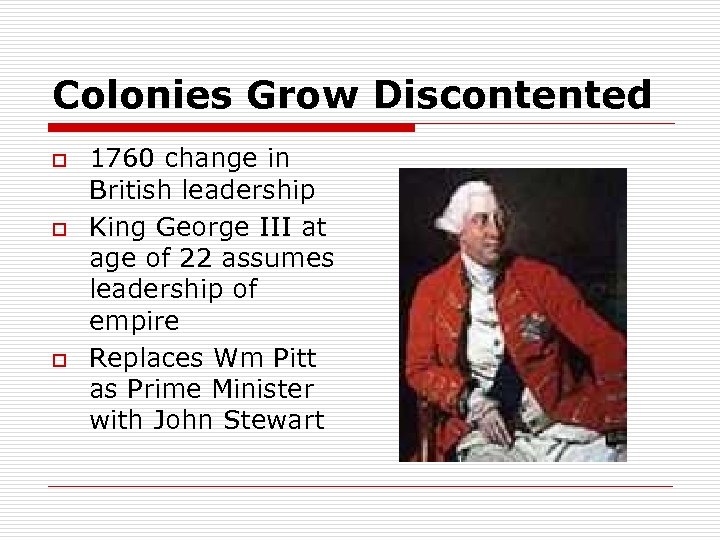
Colonies Grow Discontented o o o 1760 change in British leadership King George III at age of 22 assumes leadership of empire Replaces Wm Pitt as Prime Minister with John Stewart
Colonies Grow Discontented o o o The British victory caused enormous British debt. King George III promised to get Britain of debt. Britain looked to the colonies to pay for the war.

Colonies Grow Discontented o o o In the spring of 1763, Pontaic, Ottawa chief, united several other Native America groups to go to war against the British. They attacked settlements along the frontier. “Racist Europeans try to slaughter Indians as brave frontiersmen try to make peace with the tribes. ”
Proclamation Act of 1763 o o British did not want to pay for another war. This order closed the region west of the Applachain Mtns to all settlement by colonists. Land off limits-Act angered many settlers and land speculators. Colonists continued to move into area.
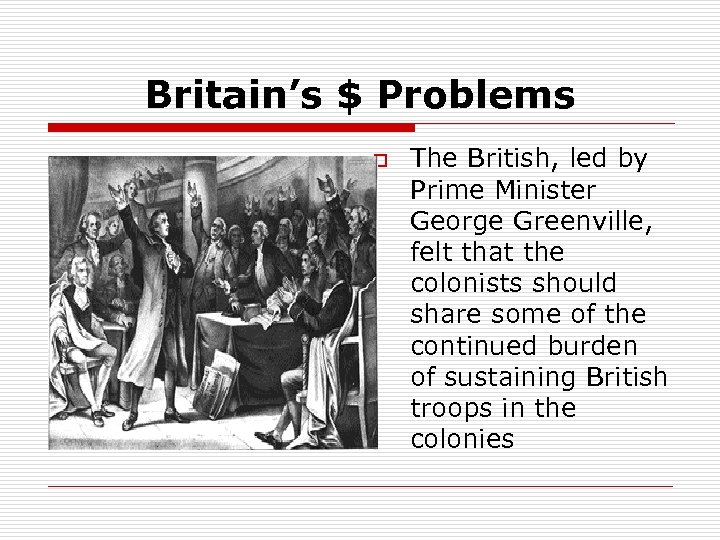
Britain’s $ Problems o The British, led by Prime Minister George Greenville, felt that the colonists should share some of the continued burden of sustaining British troops in the colonies
Sugar & Quartering Acts o o o The Revenue Act of 1764 (The Sugar Act) “If taxes are laid upon us in any shape without ever having a legal representation where they are laid, are we not reduced from the character of free subjects to the miserable state of tributary slaves? ” —excerpts from a Boston Town Meeting, May 24, 1764
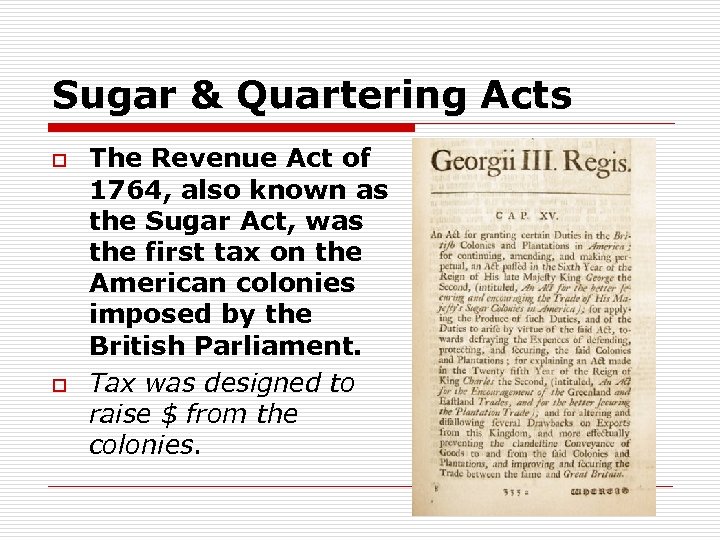
Sugar & Quartering Acts o o The Revenue Act of 1764, also known as the Sugar Act, was the first tax on the American colonies imposed by the British Parliament. Tax was designed to raise $ from the colonies.
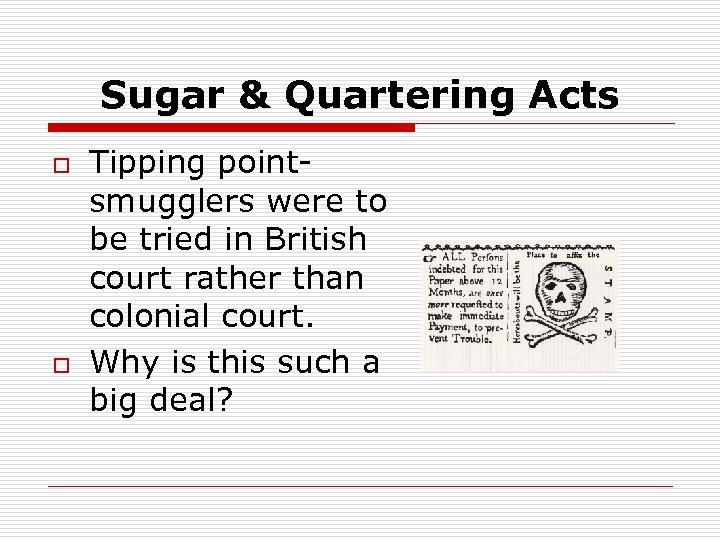
Sugar & Quartering Acts o o Tipping pointsmugglers were to be tried in British court rather than colonial court. Why is this such a big deal?
Sugar & Quartering Acts o That the Act came from an external body rather than a colonial legislature alarmed a handful of colonial leaders in Boston who held that the Act violated their “British privileges”. Their principle complaint was against taxation without representation
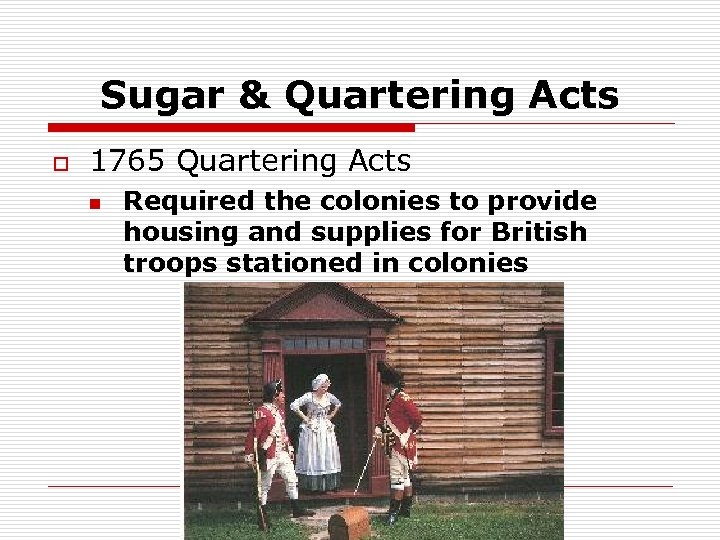
Sugar & Quartering Acts o 1765 Quartering Acts n Required the colonies to provide housing and supplies for British troops stationed in colonies
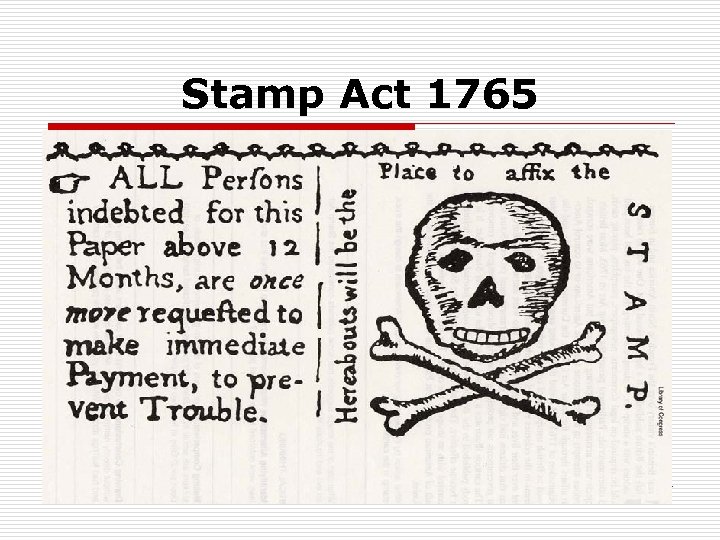
Stamp Act 1765
Stamp Act 1765 o o Stamp Act required colonists to purchase special stamped paper for every legal document, license, newspaper, pamphlet, … Why the tax? PM Greenville estimated that this tax would raise enough $ to pay the cost of keeping British troops in America
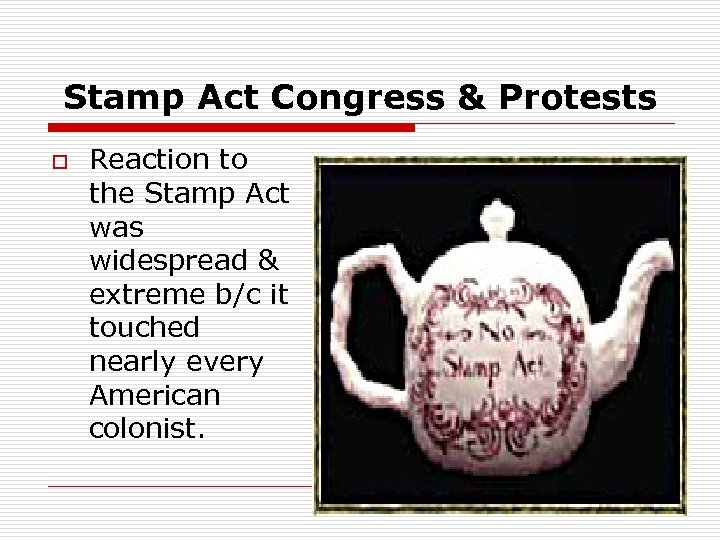
Stamp Act Congress & Protests o Reaction to the Stamp Act was widespread & extreme b/c it touched nearly every American colonist.
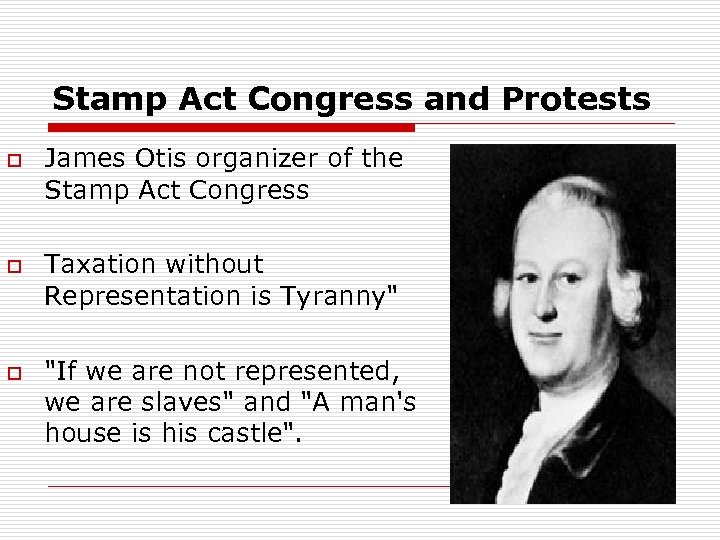
Stamp Act Congress and Protests o o o James Otis organizer of the Stamp Act Congress Taxation without Representation is Tyranny" "If we are not represented, we are slaves" and "A man's house is his castle".
Stamp Act Congress and Protests o Oct 1765 Stamp Act Congress issued a Declaration of Rights and Grievances n n Parliament lacked the power to pass taxees Colonial merchants signed a non importation agreement
Скачать презентацию Issues Behind the Revolution Colonies Grow Discontented
007884fe4119ce01b4b388b9e8f5c817.ppt