Скачать презентацию Israel s Settlement Enterprise in Gaza the Jordan Valley
8cefcceccadd75c807be2d5c96ad1fe6.ppt
- Количество слайдов: 33
 Israel’s Settlement Enterprise in Gaza, the Jordan Valley, Samaria, Binyamin, and Judea Shaul Arieli www. shaularieli. com January 2009
 The Political Zionism and the Religious Zionism Salvation vs. Redemption
 The Motivation • A safe refuge for the Jewish people – “Let the sovereignty be granted us over a portion of the globe large enough to satisfy the rightful requirements of a nation; the rest we shall manage for ourselves. ” • "We settled … because we were commanded to inherit the land god gave our ancestors… the settlement itself… doesn’t derive from security and physical necessities but from the power of destiny and the Jewish people’s return to its land” “. . . for he commands us “And ye shall drive out the inhabitants of the land, and dwell therein; for unto you have I given the land to possess it. ” and Rashi interprets ‘Ye shall possess the land’ – take possession of it from its inhabitants, then ‘ye may dwell therein’ – safely exist there. Otherwise ye shall not be able to exist there"
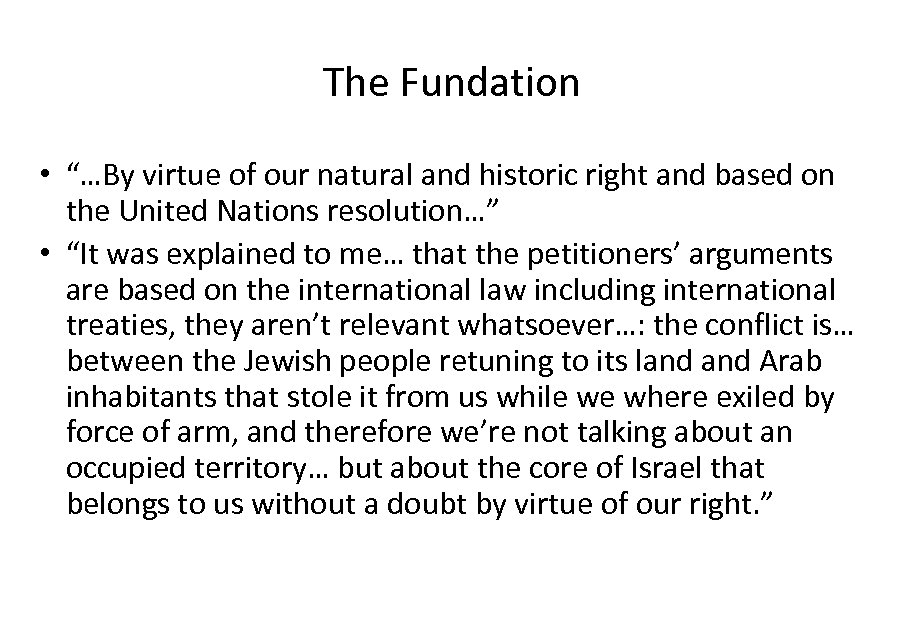 The Fundation • “…By virtue of our natural and historic right and based on the United Nations resolution…” • “It was explained to me… that the petitioners’ arguments are based on the international law including international treaties, they aren’t relevant whatsoever…: the conflict is… between the Jewish people retuning to its land Arab inhabitants that stole it from us while we where exiled by force of arm, and therefore we’re not talking about an occupied territory… but about the core of Israel that belongs to us without a doubt by virtue of our right. ”
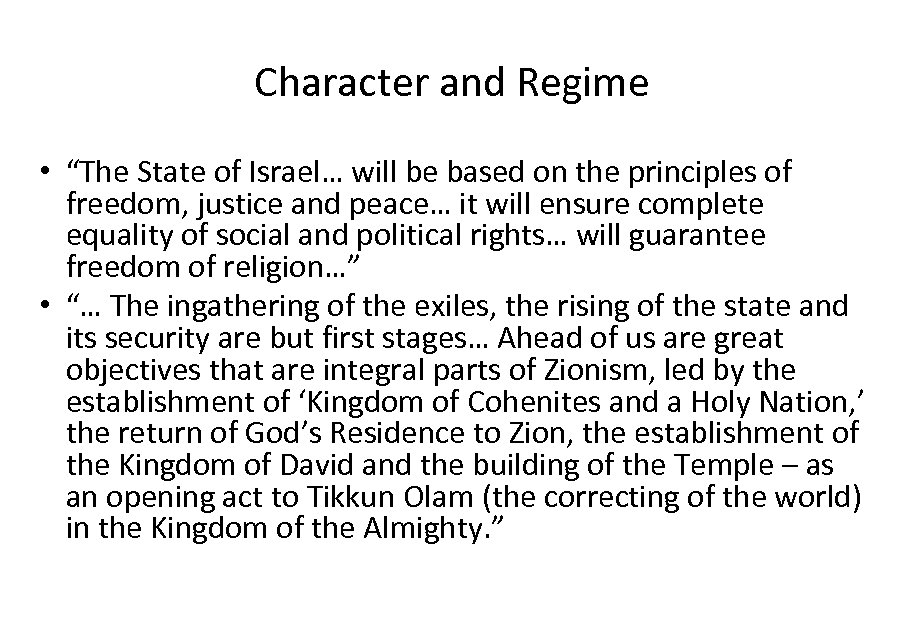 Character and Regime • “The State of Israel… will be based on the principles of freedom, justice and peace… it will ensure complete equality of social and political rights… will guarantee freedom of religion…” • “… The ingathering of the exiles, the rising of the state and its security are but first stages… Ahead of us are great objectives that are integral parts of Zionism, led by the establishment of ‘Kingdom of Cohenites and a Holy Nation, ’ the return of God’s Residence to Zion, the establishment of the Kingdom of David and the building of the Temple – as an opening act to Tikkun Olam (the correcting of the world) in the Kingdom of the Almighty. ”
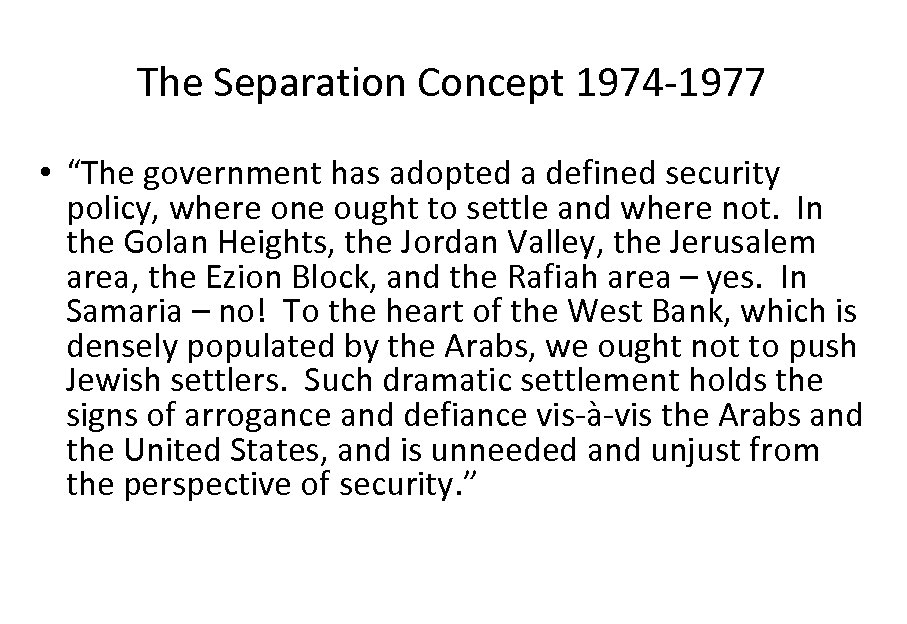 The Separation Concept 1974 -1977 • “The government has adopted a defined security policy, where one ought to settle and where not. In the Golan Heights, the Jordan Valley, the Jerusalem area, the Ezion Block, and the Rafiah area – yes. In Samaria – no! To the heart of the West Bank, which is densely populated by the Arabs, we ought not to push Jewish settlers. Such dramatic settlement holds the signs of arrogance and defiance vis-à-vis the Arabs and the United States, and is unneeded and unjust from the perspective of security. ”
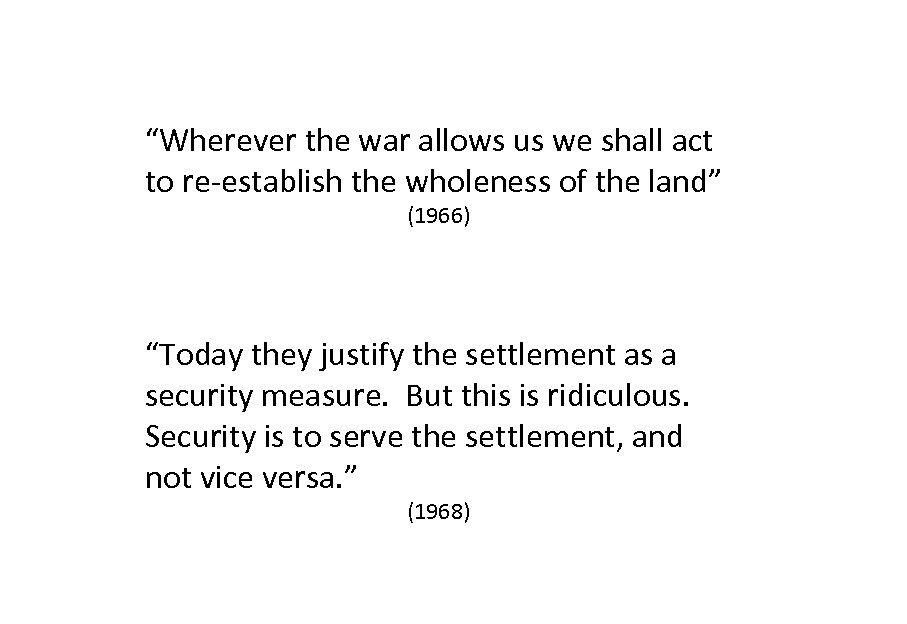 “Wherever the war allows us we shall act to re-establish the wholeness of the land” (1966) “Today they justify the settlement as a security measure. But this is ridiculous. Security is to serve the settlement, and not vice versa. ” (1968)
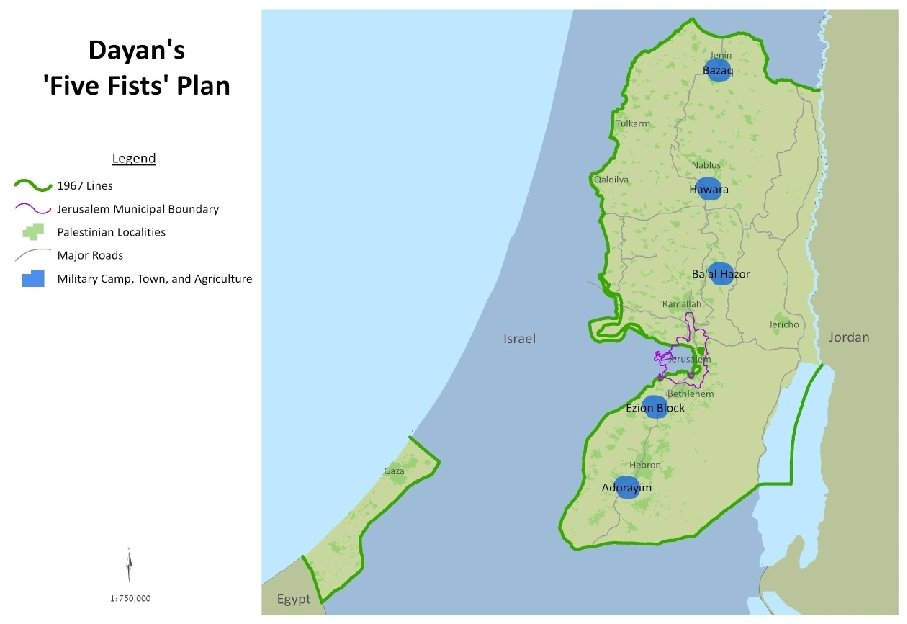
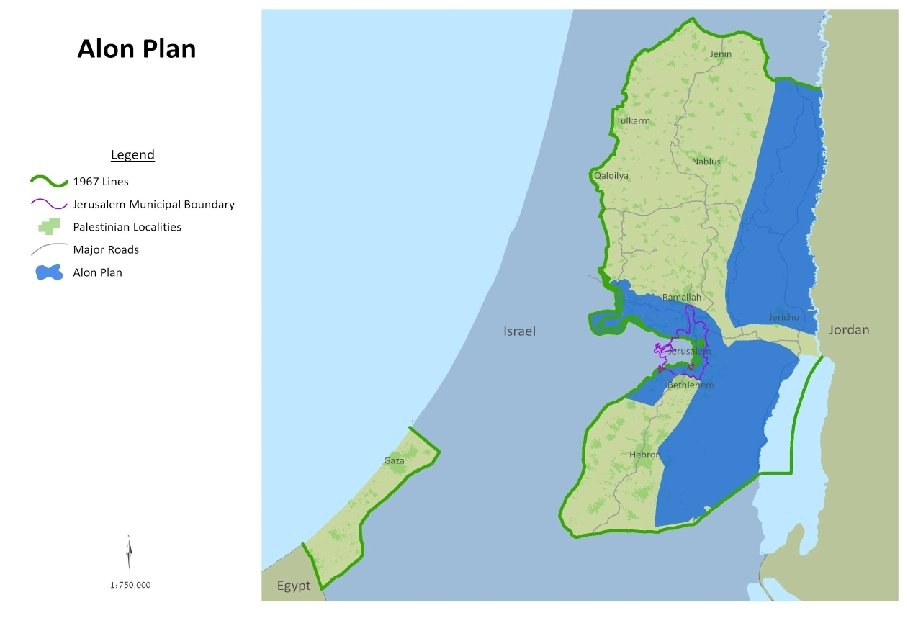
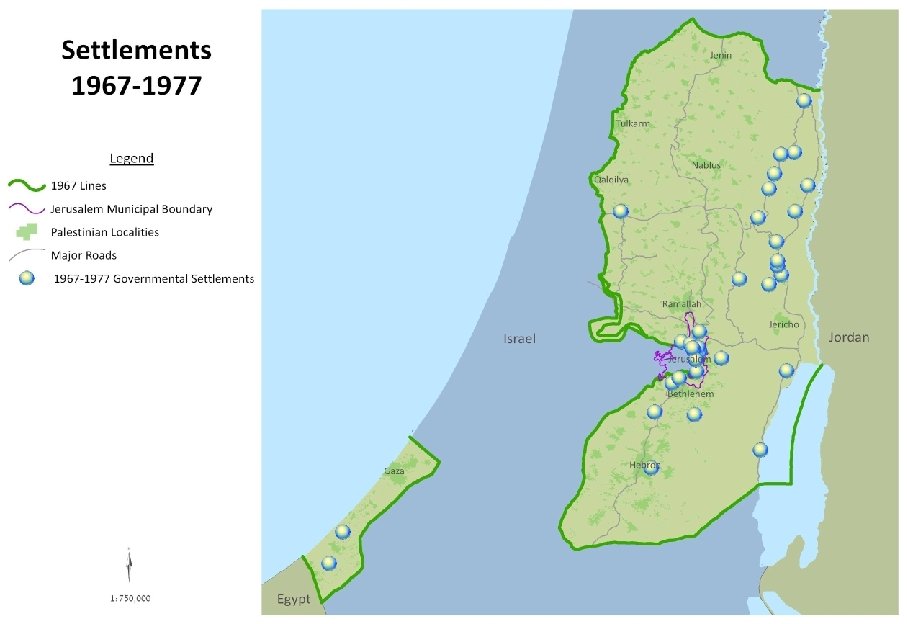
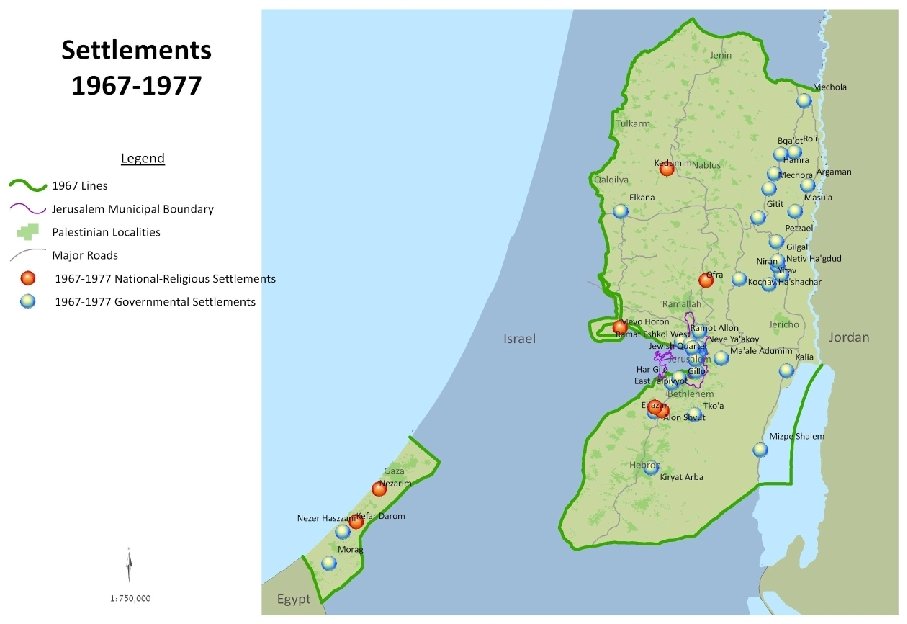
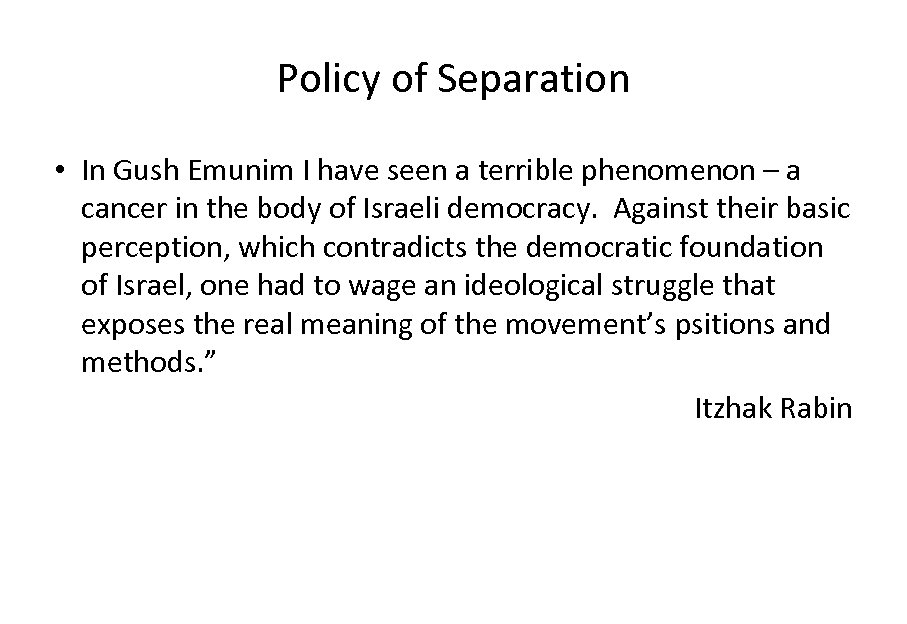 Policy of Separation • In Gush Emunim I have seen a terrible phenomenon – a cancer in the body of Israeli democracy. Against their basic perception, which contradicts the democratic foundation of Israel, one had to wage an ideological struggle that exposes the real meaning of the movement’s psitions and methods. ” Itzhak Rabin
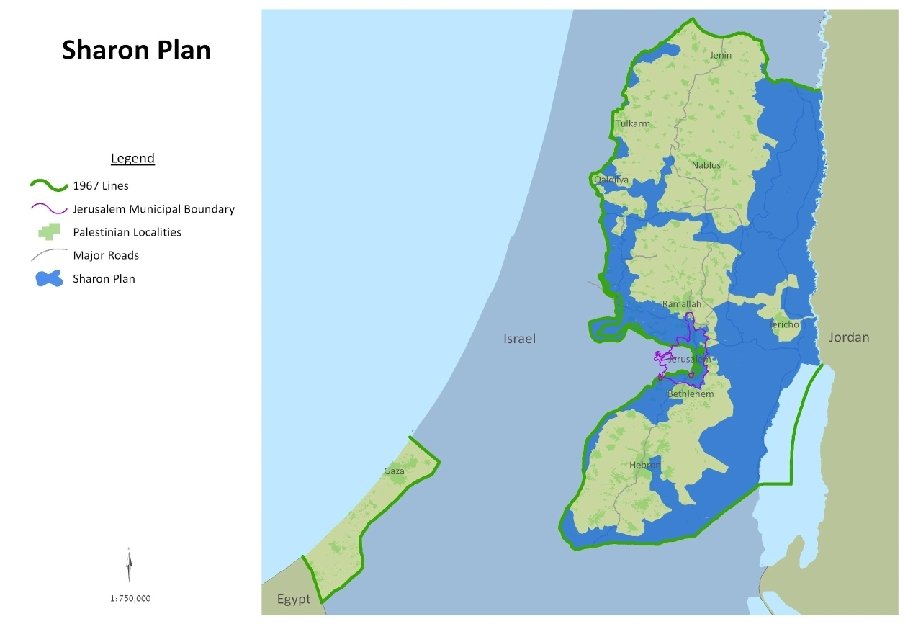
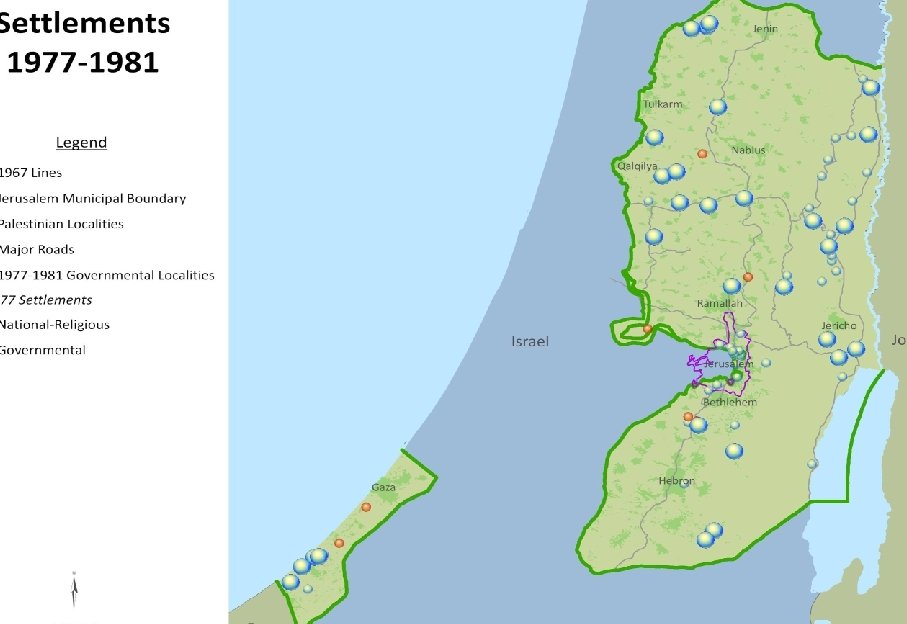
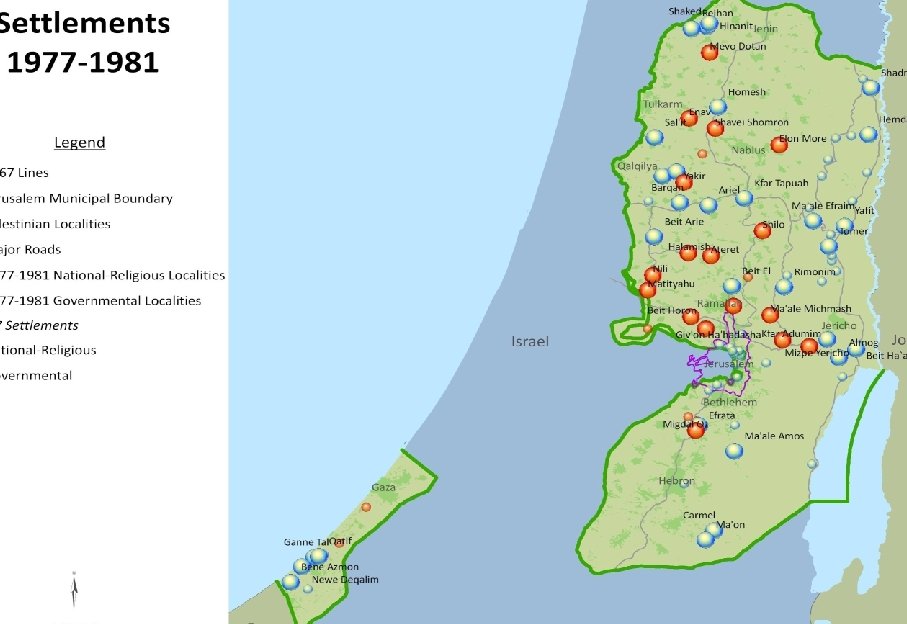
 Elon Moreh • Security – the emptying of the land • “State Land” • Character of the settlements
 The Yesha Council’s Founding Covenant (1981) • Ongoing action to enforce Israeli sovereignty over all parts of the land of Israel. • Resisting any other political solution. • The Council rejects the establishment of a non-Israeli soveregin administration in parts of the land of Israel… State lands and water resources are national assets of the Jewish people and therefore the Council rejects and denounces any proposal to share control over such assets with a foreign element. The Council will act to thwart such proposals. • The Council considers any proposal whose purpose is to transfer parts of the land of Israel to a foreign sovereign element a denial of the designation of the Jewish People, the missions of the Jewish people, and an illegal act…”
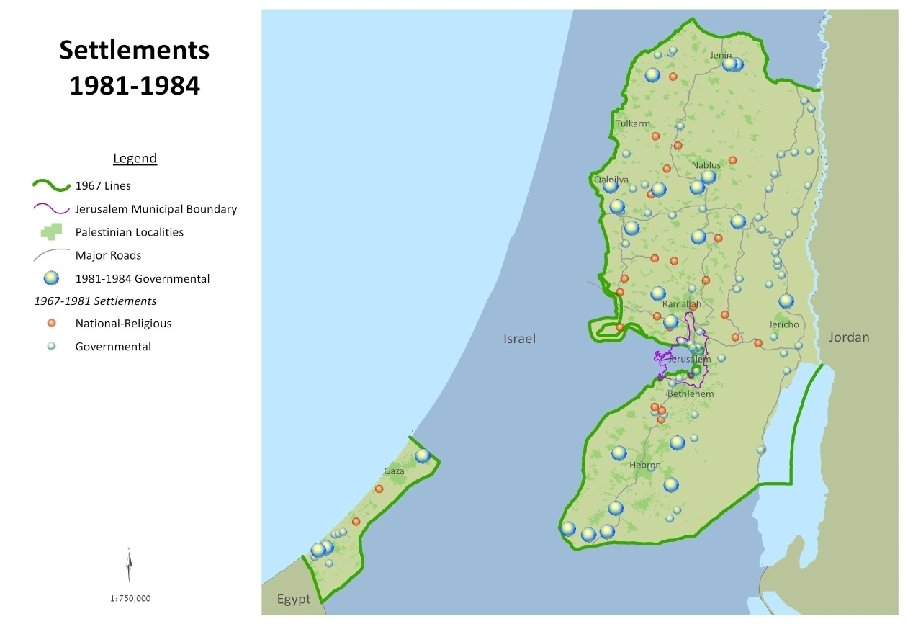
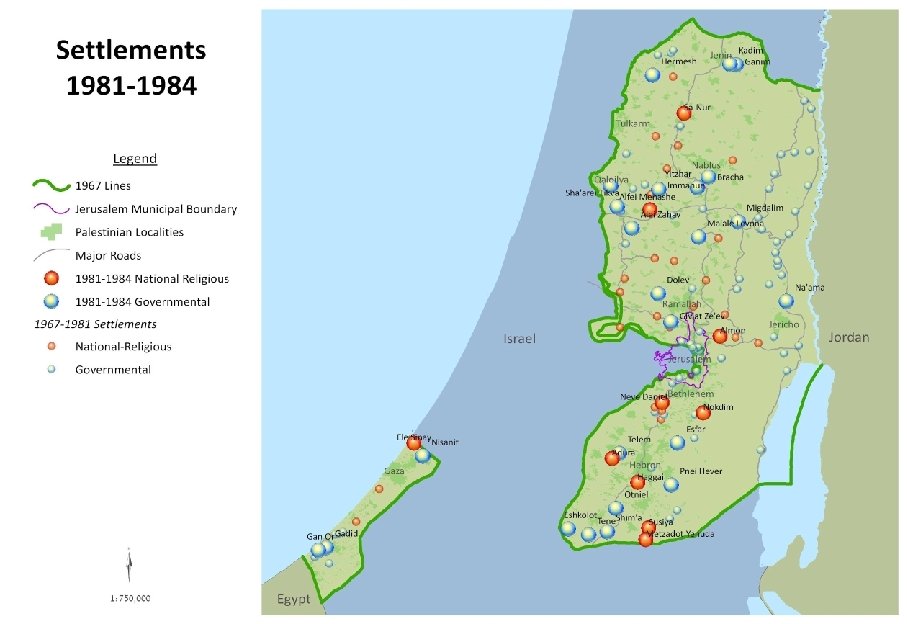
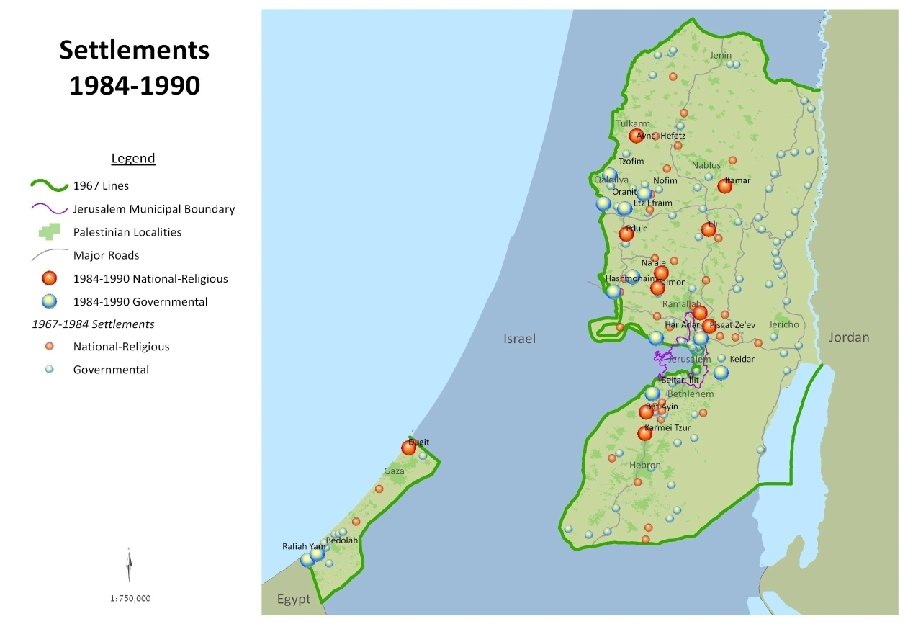
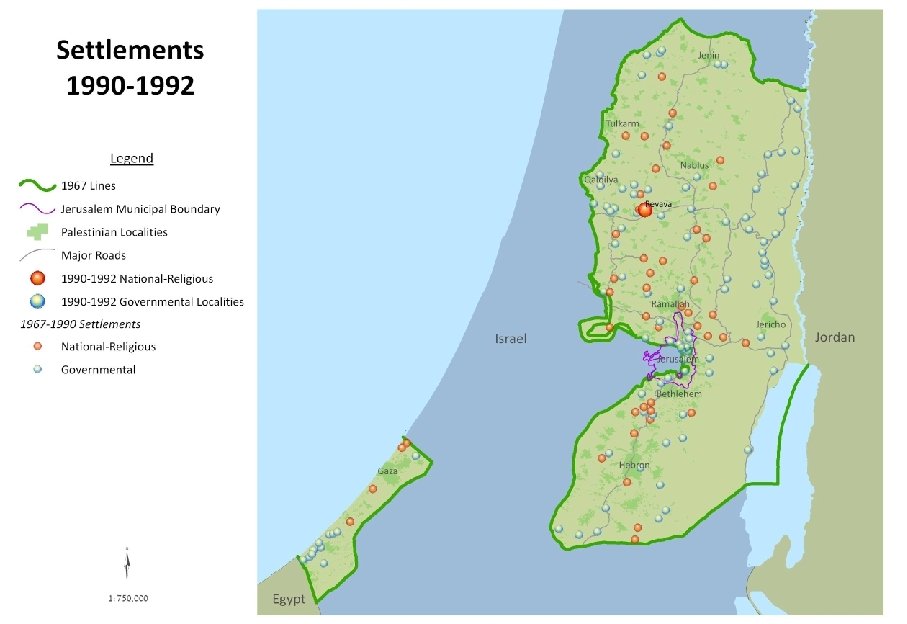
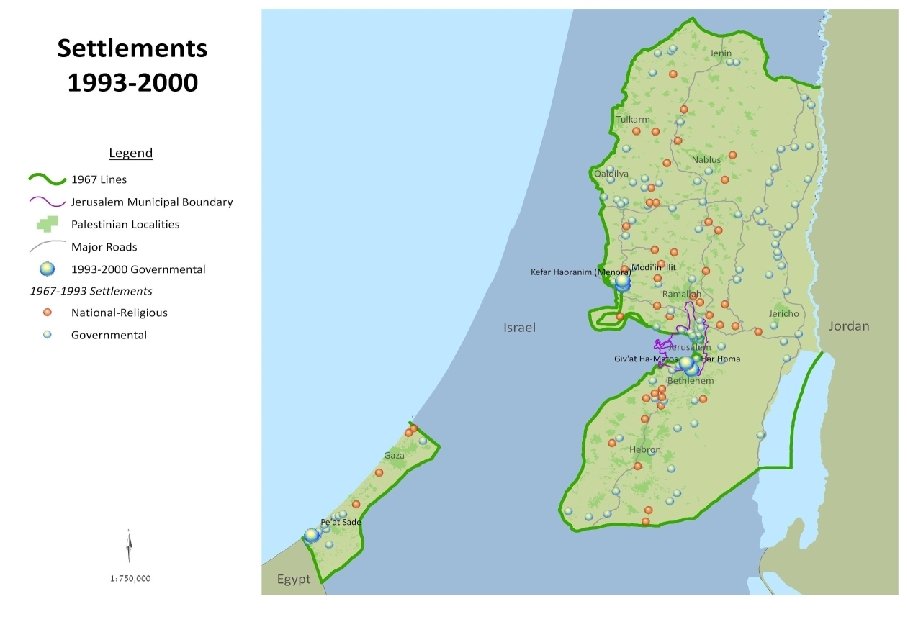
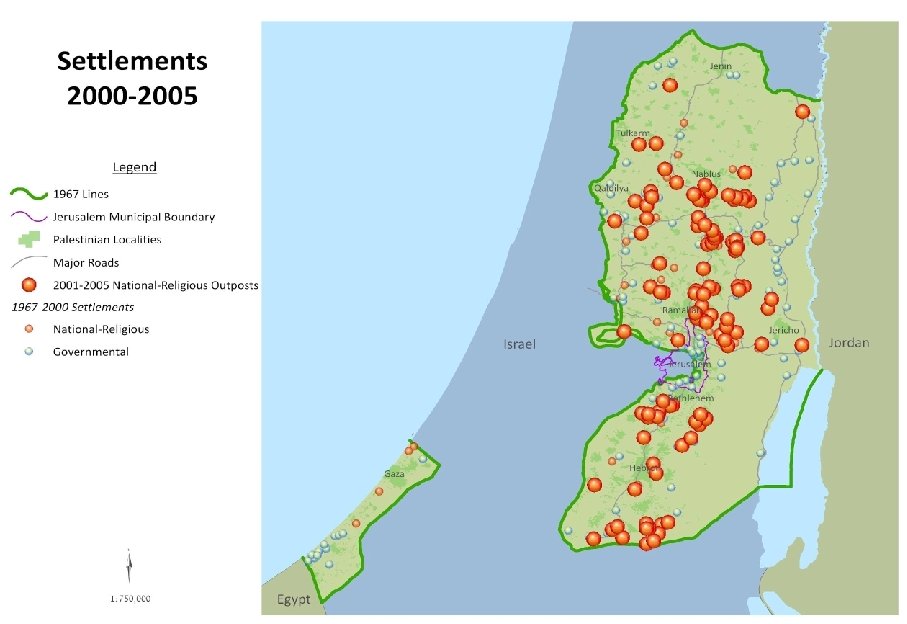
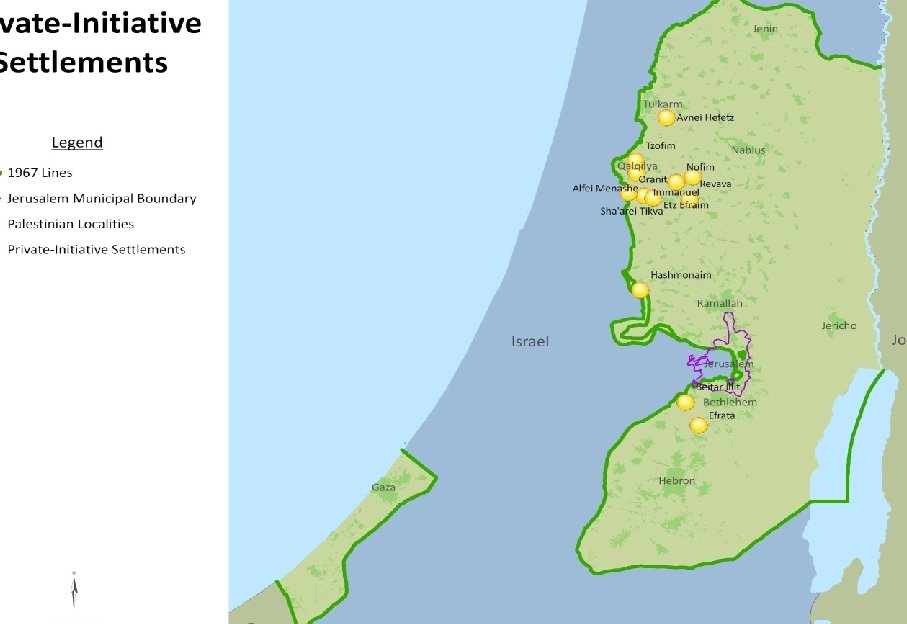
 Government Bypasses • “Ha’marchiv” – a governmental company for settlement in Israel and abroad. • Security seizure orders, Jordanian camps • Survey procedure (1979) • Privately-initiated construction • Unauthorized outposts (the settlement division)
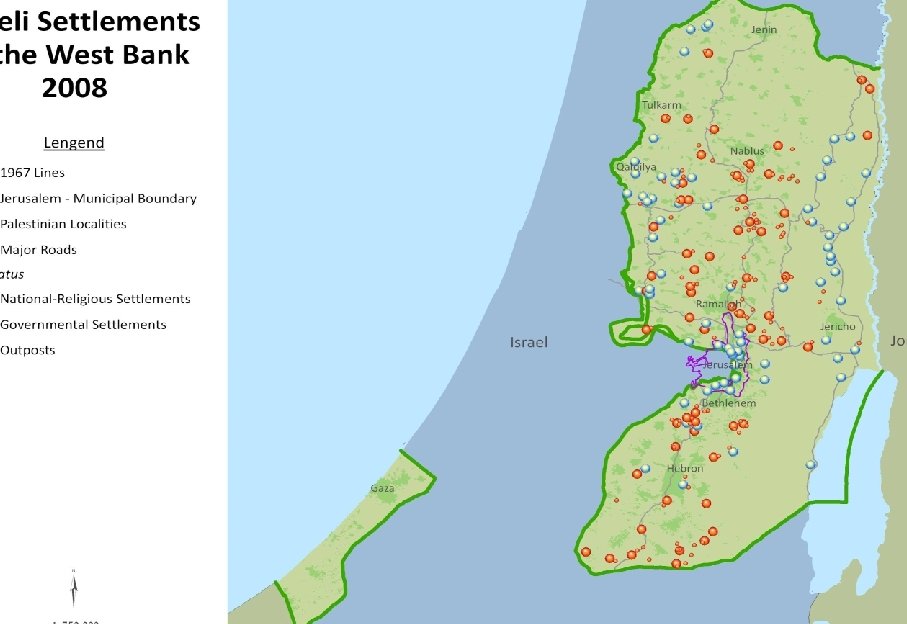
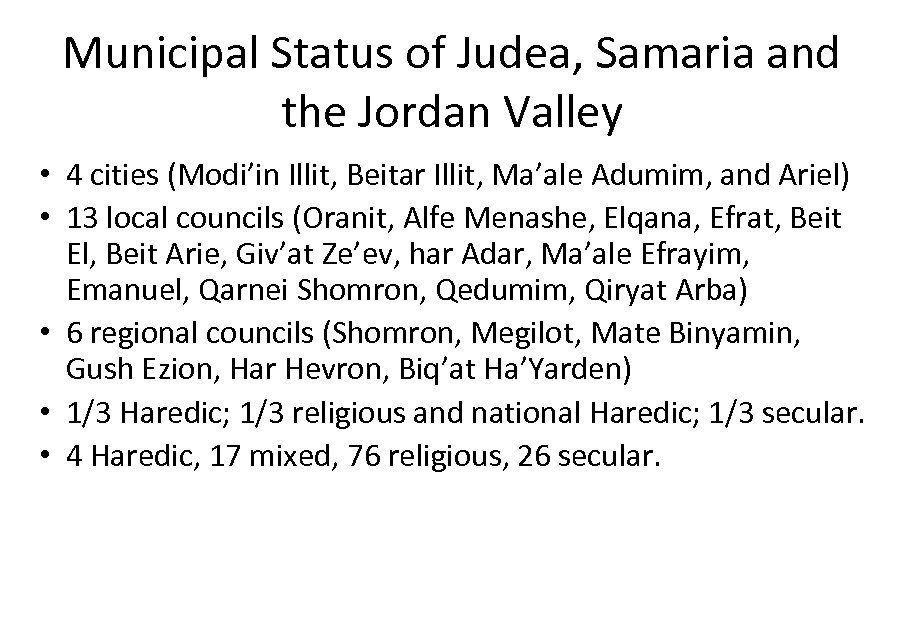 Municipal Status of Judea, Samaria and the Jordan Valley • 4 cities (Modi’in Illit, Beitar Illit, Ma’ale Adumim, and Ariel) • 13 local councils (Oranit, Alfe Menashe, Elqana, Efrat, Beit El, Beit Arie, Giv’at Ze’ev, har Adar, Ma’ale Efrayim, Emanuel, Qarnei Shomron, Qedumim, Qiryat Arba) • 6 regional councils (Shomron, Megilot, Mate Binyamin, Gush Ezion, Har Hevron, Biq’at Ha’Yarden) • 1/3 Haredic; 1/3 religious and national Haredic; 1/3 secular. • 4 Haredic, 17 mixed, 76 religious, 26 secular.
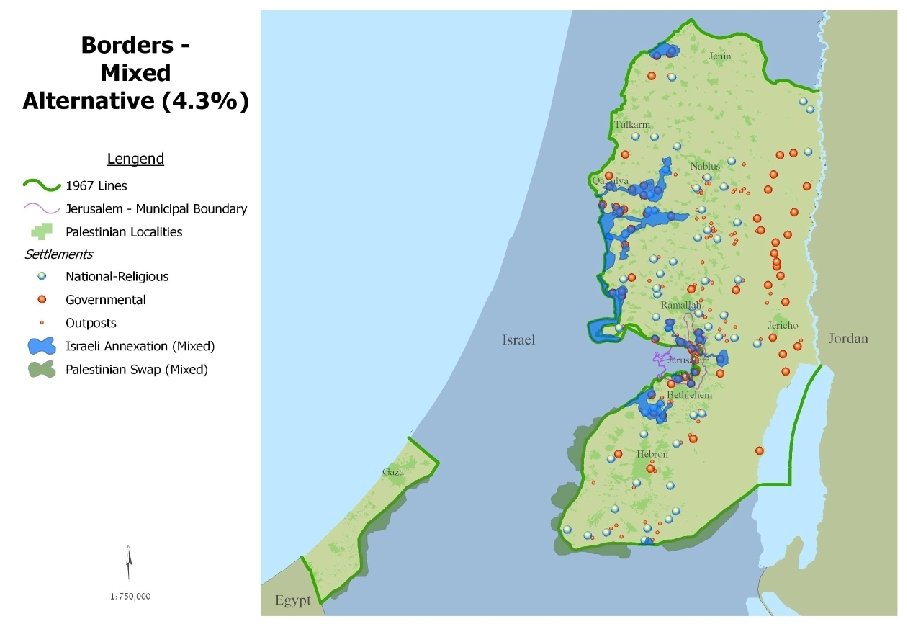
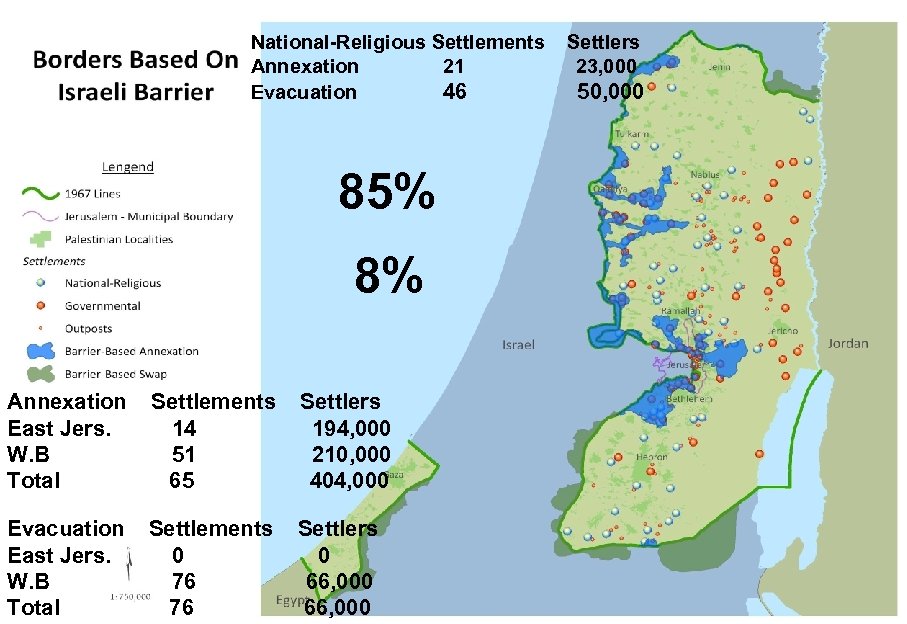 National-Religious Settlements Annexation 21 Evacuation 46 85% 8% Annexation East Jers. W. B Total Settlements 14 51 65 Settlers 194, 000 210, 000 404, 000 Evacuation East Jers. W. B Total Settlements 0 76 76 Settlers 0 66, 000 Settlers 23, 000 50, 000
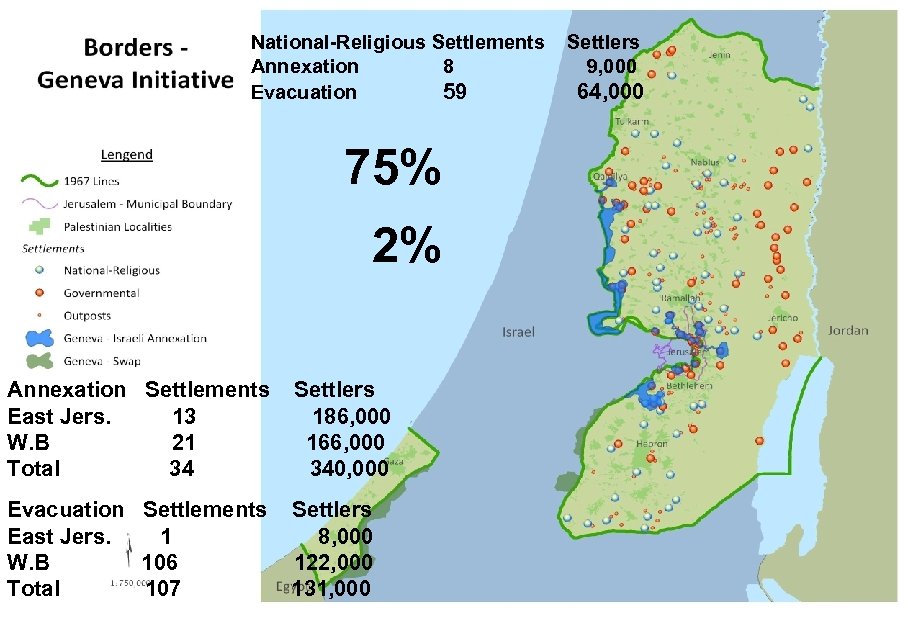 National-Religious Settlements Annexation 8 Evacuation 59 75% 2% Annexation Settlements East Jers. 13 W. B 21 Total 34 Settlers 186, 000 166, 000 340, 000 Evacuation Settlements East Jers. 1 W. B 106 Total 107 Settlers 8, 000 122, 000 131, 000 Settlers 9, 000 64, 000
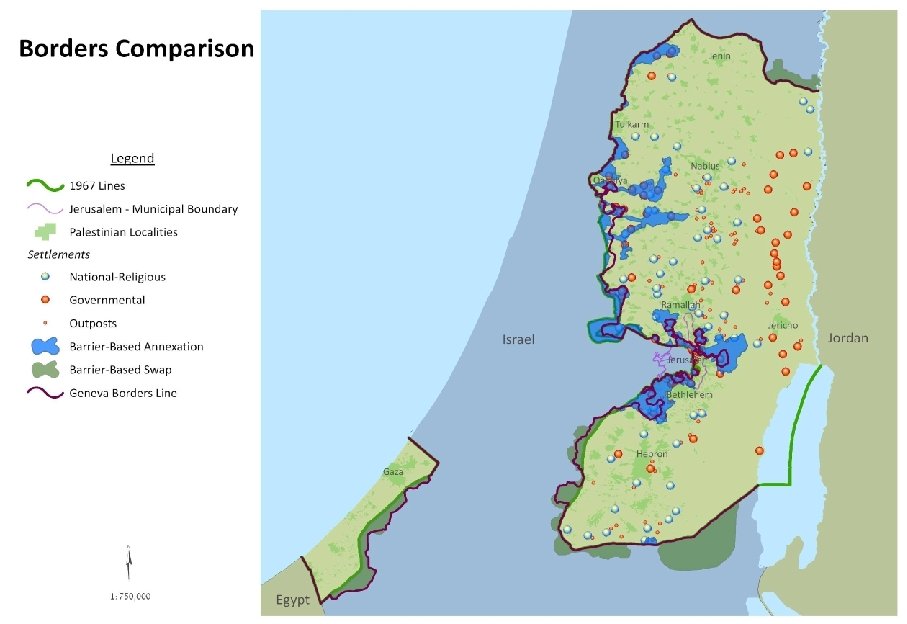
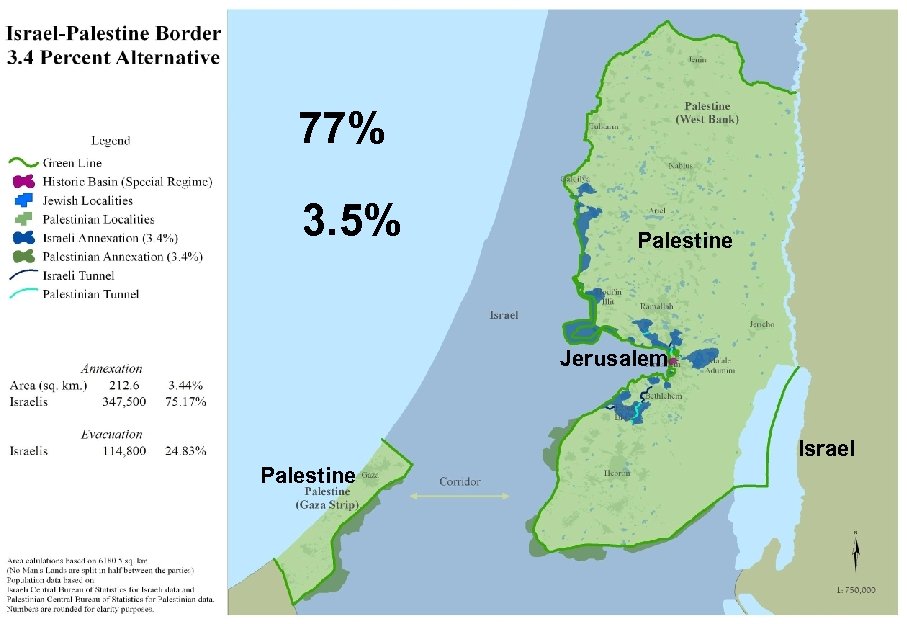 77% 3. 5% Palestine Jerusalem Israel Palestine