


 Скачать презентацию Israel in the 50 s and 60 s
6de1a24518890686aee21d3950a28291.ppt
- Количество слайдов: 18
 Israel in the 50 s and 60 s
 Radical discontinuity • 1948 as a defining moment • Sovereignty as internal control • Sovereignty as external definition
 State and economy • State owned the railway system, postal service, telephone and television systems • State owned as much as 50% of companies in oil, petrochemical, and defense products • More heavily engaged in agriculture than in industry • “European” country where taxes=40% of GDP
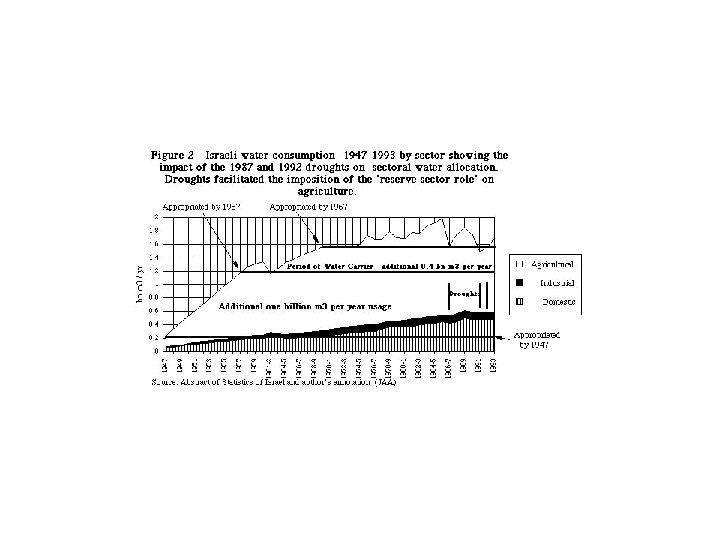
 Development • Rapid population growth in the cities • Increased water consumption from 230 million meters 3 to 1900 million meters 3
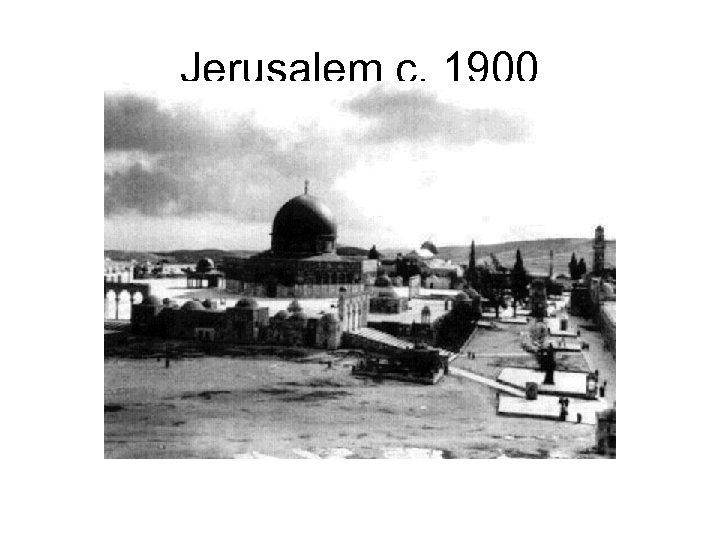 Jerusalem c. 1900
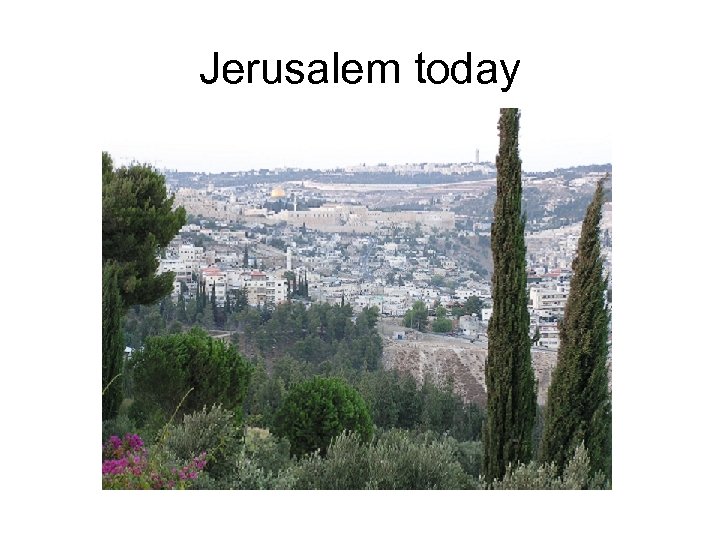 Jerusalem today
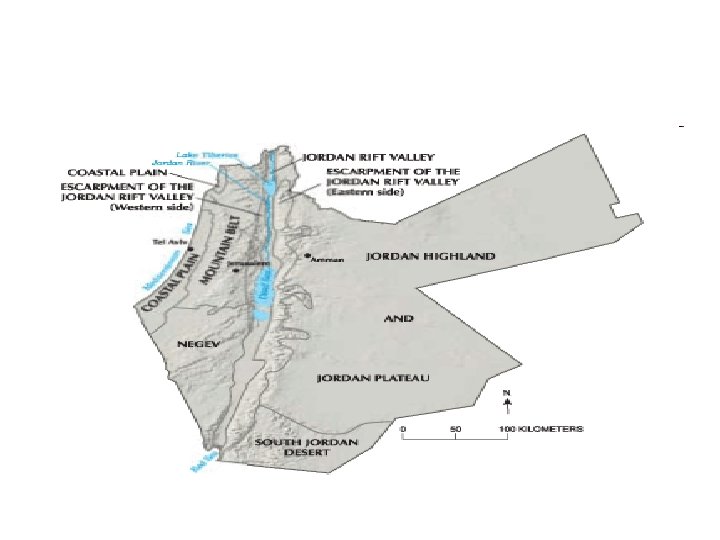
 Conflict over water • Sources of Jordan : Israel, Lebanon and Jordan • Lake Tiberias only overyear storage site – If it is within Israel’s sovereignty
 1964 • Clash at Dan headwaters • Diversion of water from the Hasbani to the Banias river
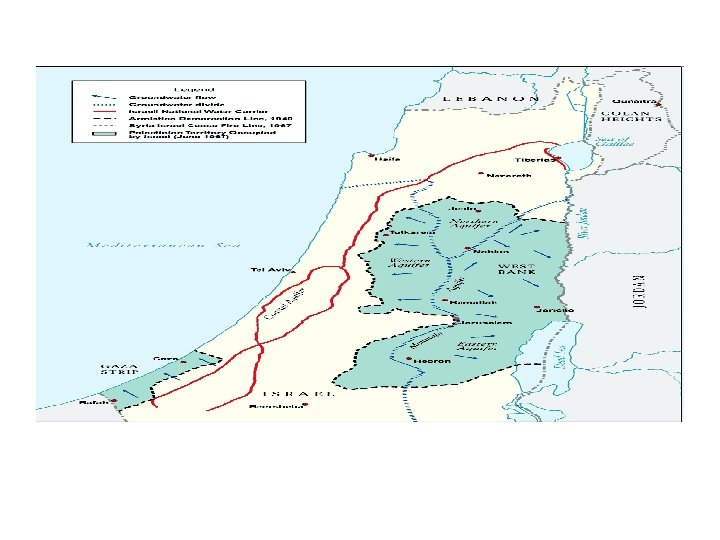
 Water and sovereignty • Conflict over the use of the Jordan directly and indirectly between 1964 -1967 – Could Syria build a diversion canal on the Yarmouk? – Could Israel prevent the canal and dam? – The battle for air supremacy
 On the Egyptian front • After 1956 UN Forces were stationed on Egyptian territory • Israel had “innocent passage” through Aqaba • Inter-Arab conflict induced Nasser to remove UN troops, re-instate the blockade and prepare for war with Israel
 Israeli strategic concerns • Better to strike first • Preference to weaken Egypt • Recognition that the US had become the dominant power in the world
 National Unity • In May 1967 Revisionists join the government • Capture of East Jerusalem and collapse of the Arab armies = euphoria
 Back to the beginning? • Israel now controlled all of the Mandate but with the large Palestinian population • Would be plausible to “re-play” the 30 s? • A far more diverse Jewish society had replaced the Zionist movement • Integration of Israel into a global economy required economic change
 The emergence of “Likud” • Begin as electoral leader • The Mizrahim search for power • The Labor Old Guard exhausts itself