 Скачать презентацию Israel and the OECD A Comparison Based on
405c877db27342784e8386e5c2001f74.ppt
- Количество слайдов: 23



Israel and the OECD A Comparison Based on The Herzliya Indices Approach Presented by Dr. Zalman Shiffer The Herzliya Indices Team Herzliya Conference 2008 1
Herzliya Indices Team Leader Prof. Rafi Melnick - IDC Herzliya Team Members Ms. Leah Achdut – Van Leer Jerusalem Institute; The Ruppin Academic Center Dr. Michel Strawczynski – Bank of Israel Mr. Tommy Steiner – IDC Herzliya Dr. Zalman Shiffer – Economic Advisor With thanks to Michal Ophir and Refaela Cohen (National Insurance Institute of Israel), Polina Dovman (Bank of Israel), and Gilad Skutelsky (IDC Herzliya) for their assistance with research. 2
Purpose of the Presentation The purpose of the present enquiry is to carry a systematic quantitative comparison between the economic, social and governmental/political performance of Israel and that of the current and potential future members of the OECD. This will serve as background for evaluating the compatibility of Israeli achievements with the standards of the members of a leading advanced and democratic international organization. 3
Methodology • Comparing Israel’s economic, social and governmental/ political achievements to those of: - The OECD Members - Relevant Sub-Groups of the OECD - New Candidates to the OECD - “The Current Accession Talks” group - Potential Future Candidates - “The Enhanced Engagement" Group • Using the Herzliya Indices wherever possible and partial components of these indices in other cases. 4
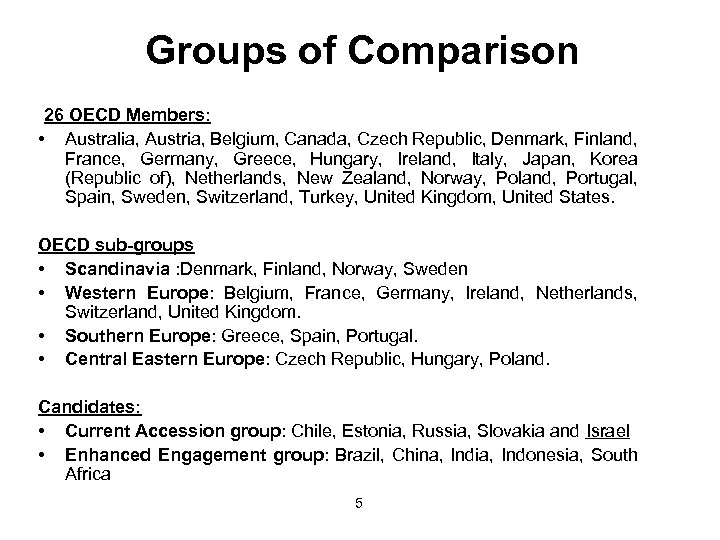
Groups of Comparison 26 OECD Members: • Australia, Austria, Belgium, Canada, Czech Republic, Denmark, Finland, France, Germany, Greece, Hungary, Ireland, Italy, Japan, Korea (Republic of), Netherlands, New Zealand, Norway, Poland, Portugal, Spain, Sweden, Switzerland, Turkey, United Kingdom, United States. OECD sub-groups • Scandinavia : Denmark, Finland, Norway, Sweden • Western Europe: Belgium, France, Germany, Ireland, Netherlands, Switzerland, United Kingdom. • Southern Europe: Greece, Spain, Portugal. • Central Eastern Europe: Czech Republic, Hungary, Poland. Candidates: • Current Accession group: Chile, Estonia, Russia, Slovakia and Israel • Enhanced Engagement group: Brazil, China, India, Indonesia, South Africa 5
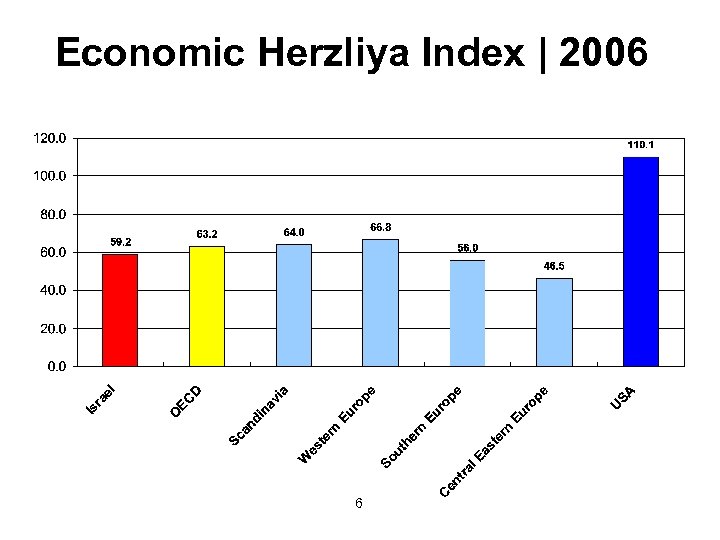
Economic Herzliya Index | 2006 6
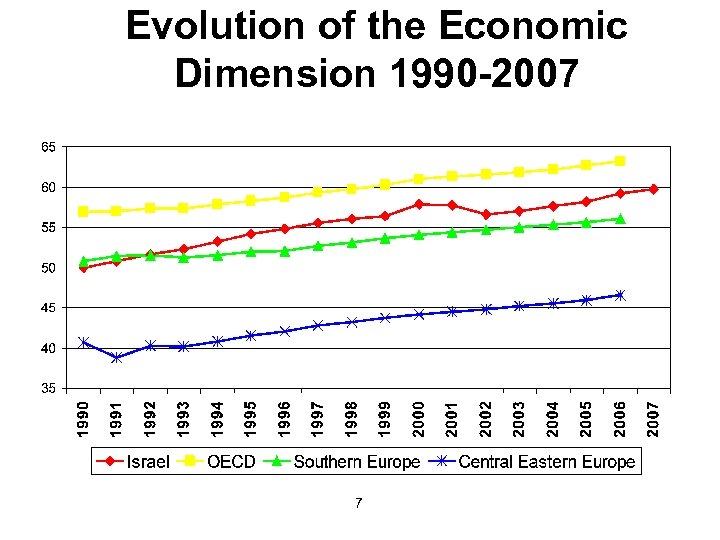
Evolution of the Economic Dimension 1990 -2007 7
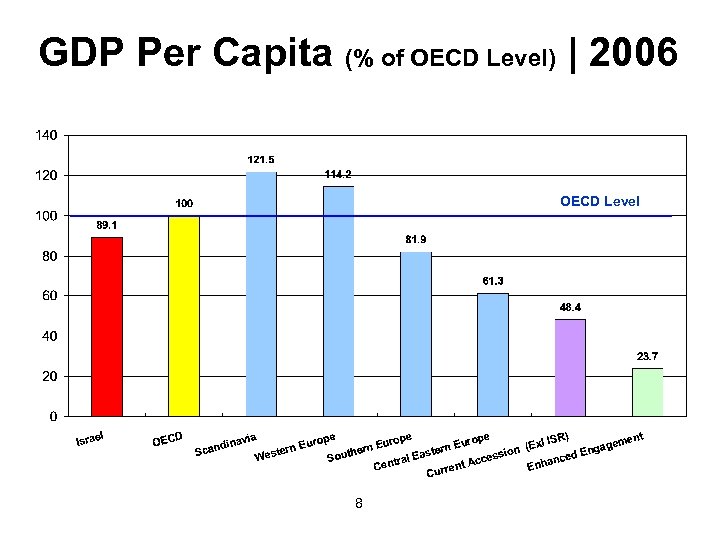
GDP Per Capita (% of OECD Level) | 2006 OECD Level 8
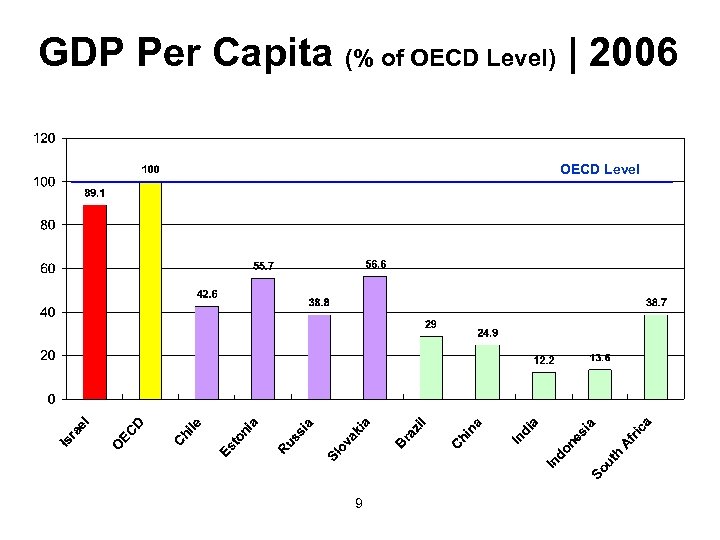
GDP Per Capita (% of OECD Level) | 2006 OECD Level 9
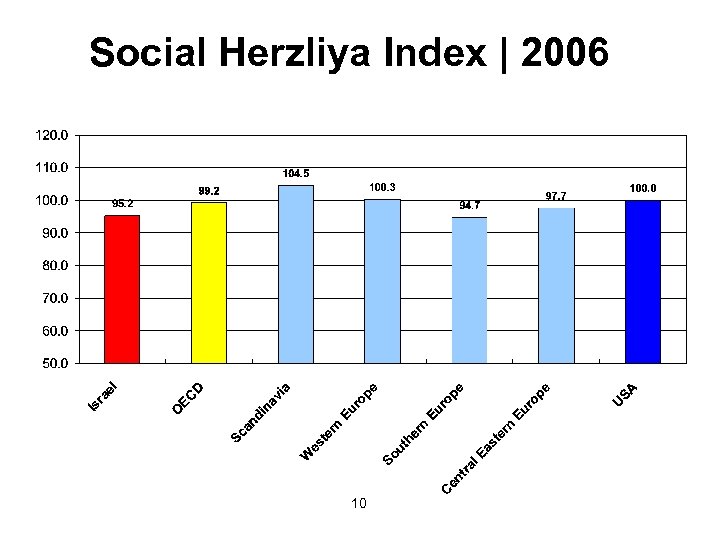
Social Herzliya Index | 2006 10
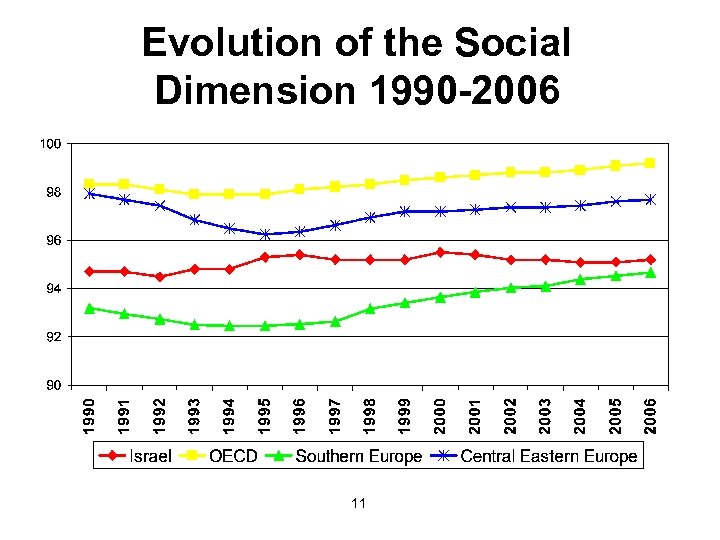
Evolution of the Social Dimension 1990 -2006 11
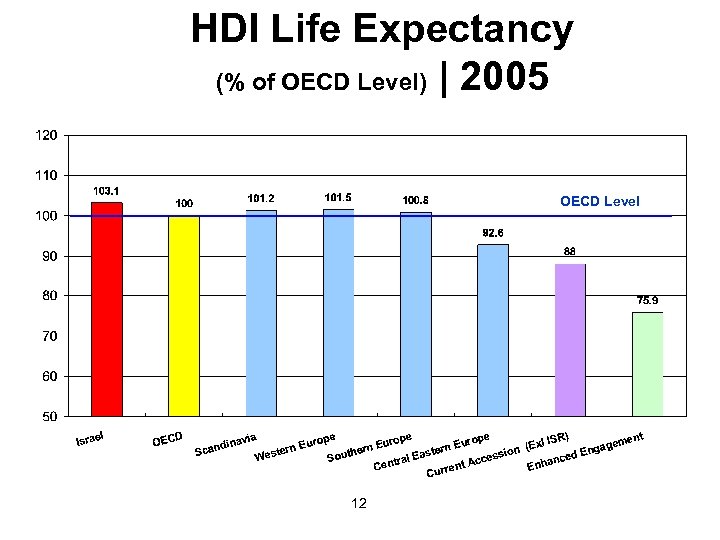
HDI Life Expectancy (% of OECD Level) | 2005 OECD Level 12
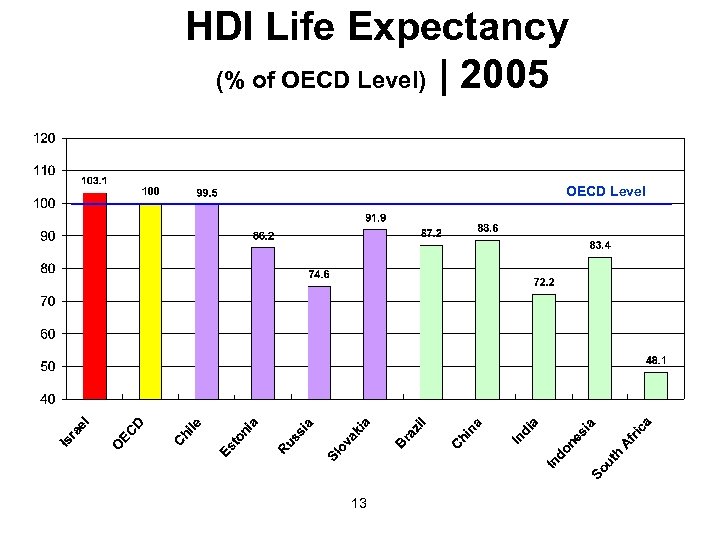
HDI Life Expectancy (% of OECD Level) | 2005 OECD Level 13
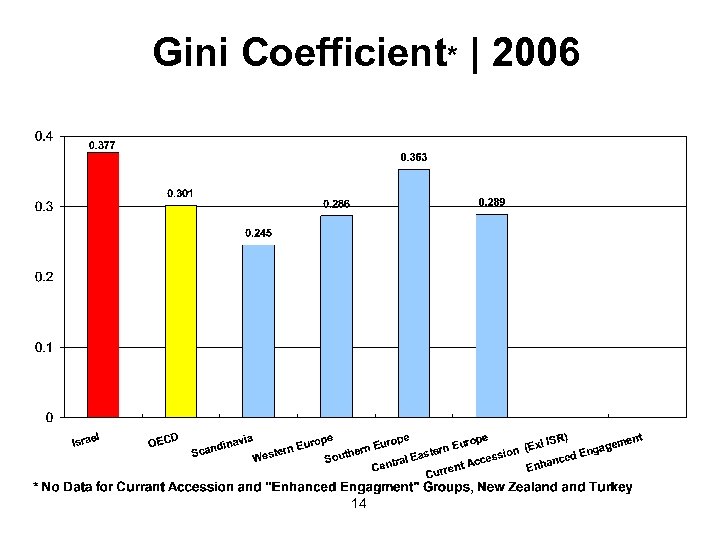
Gini Coefficient* | 2006 14
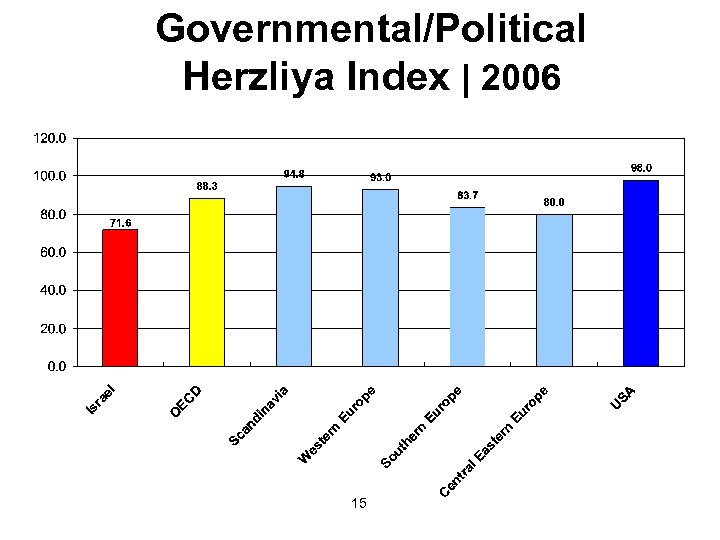
Governmental/Political Herzliya Index | 2006 15
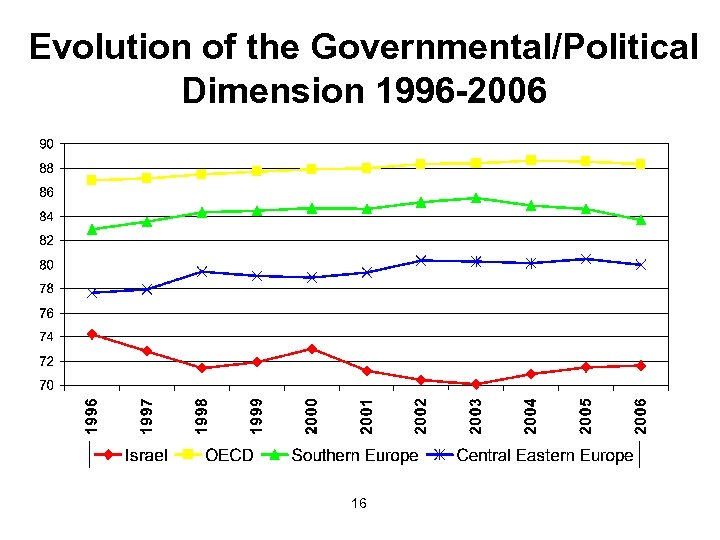
Evolution of the Governmental/Political Dimension 1996 -2006 16
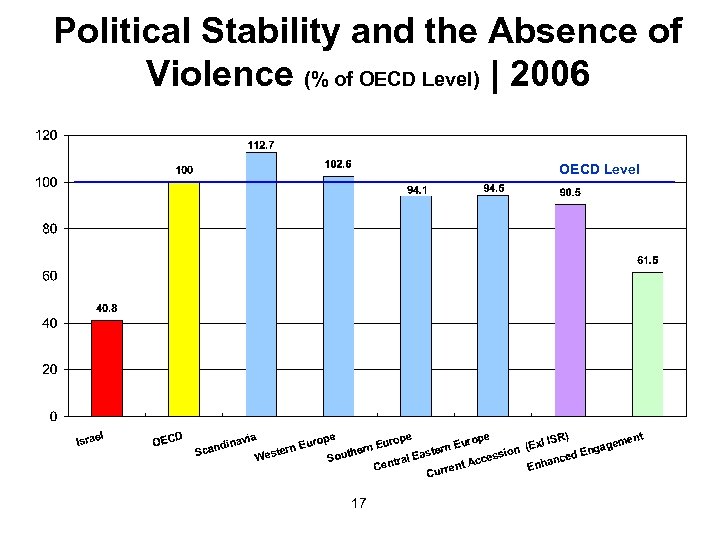
Political Stability and the Absence of Violence (% of OECD Level) | 2006 OECD Level 17
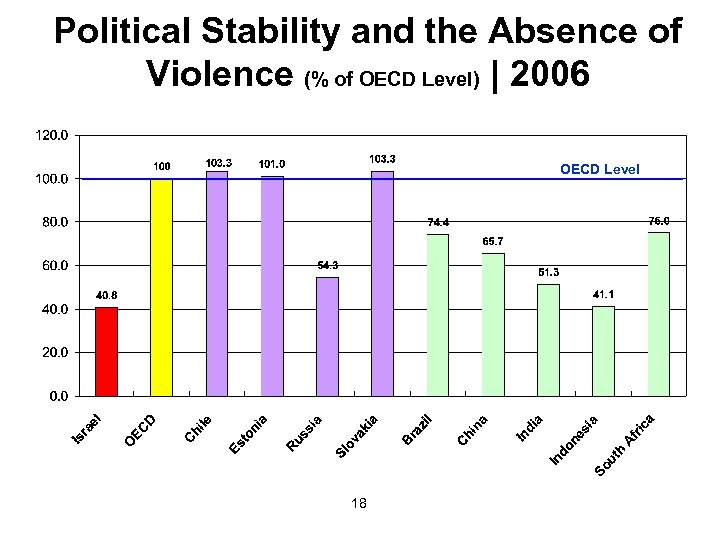
Political Stability and the Absence of Violence (% of OECD Level) | 2006 OECD Level 18
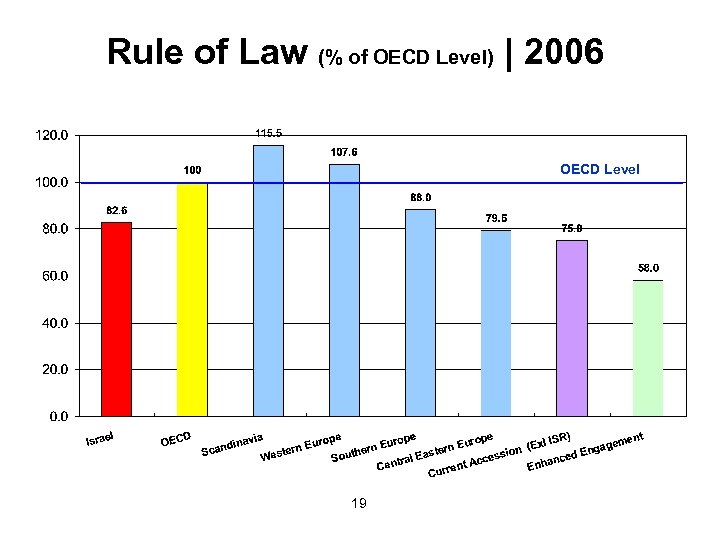
Rule of Law (% of OECD Level) | 2006 OECD Level 19
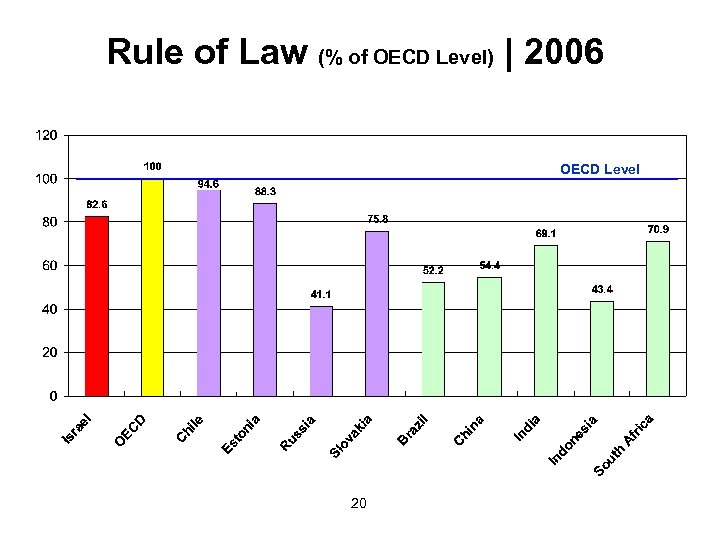
Rule of Law (% of OECD Level) | 2006 OECD Level 20
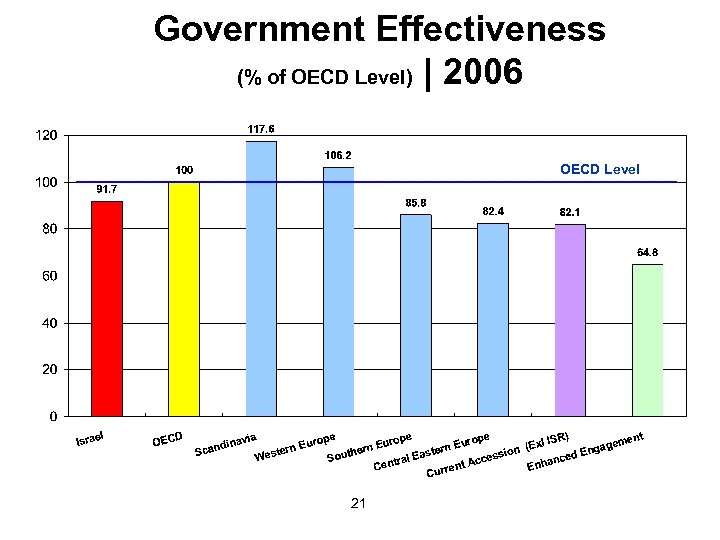
Government Effectiveness (% of OECD Level) | 2006 OECD Level 21
Overall Evaluation • In terms of past OECD standards, Israel has a reasonable economic record, marginal achievements in the social dimension, and is lagging behind in the political dimension. • In spite of these weaknesses, Israel is ready for OECD membership and is in the position of both benefiting from membership and contributing to the achievements of this organization. • Israel could have qualified for OECD membership for some time; the timing of its invitation to join the organization may have been related to political considerations. 22
Overall Evaluation - continued • More detailed assessment indicates that Israel’s mixed socio-political record reflects a combination of satisfactory and even good results in some fields with poorer achievements in other fields, notably the field of income distribution, and political stability and violence. • Israel should be aware of its insufficient record in these important fields, and use its future OECD membership as leverage for improving its overall performance. 23
Скачать презентацию Israel and the OECD A Comparison Based on
405c877db27342784e8386e5c2001f74.ppt