 Скачать презентацию Isotope monitoring and global change Transportation energy
eb4ece89709bba31917c6fea9fcb6262.ppt
- Количество слайдов: 32



Isotope monitoring and global change
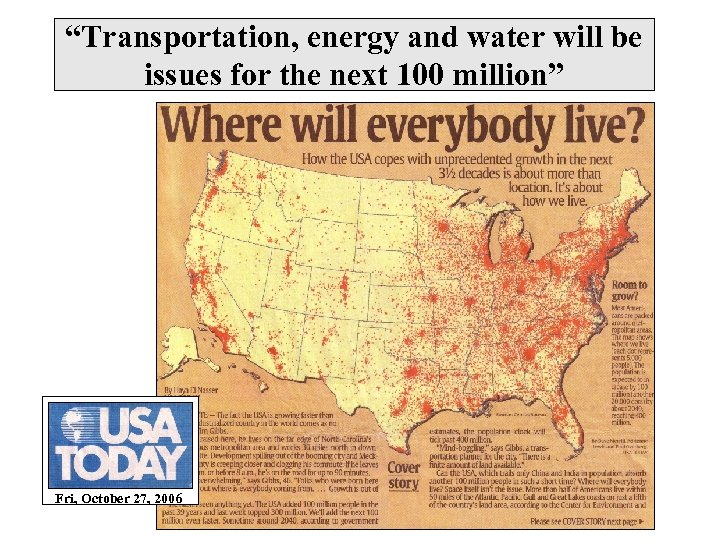
“Transportation, energy and water will be issues for the next 100 million” Fri, October 27, 2006
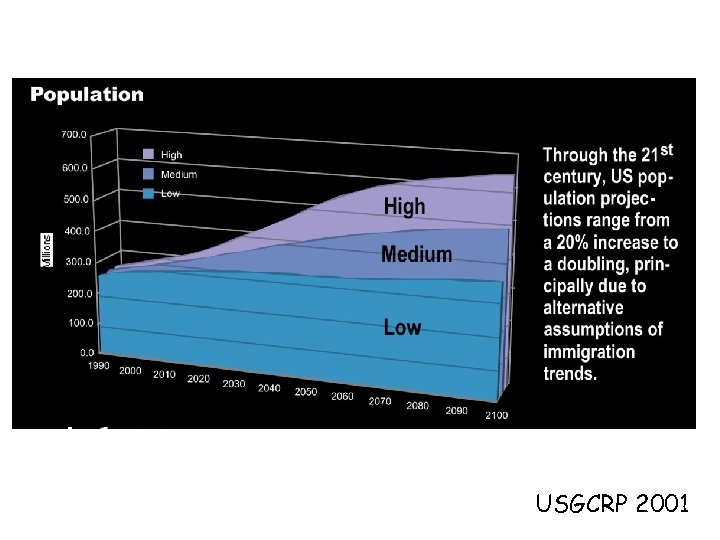
USGCRP 2001
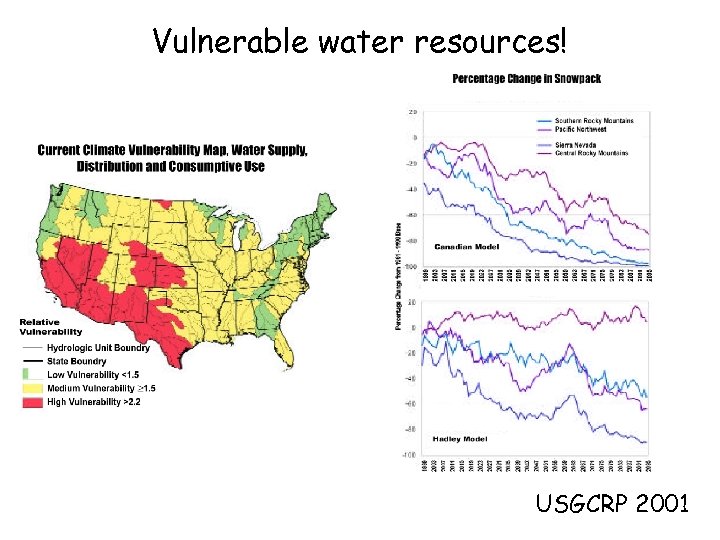
Vulnerable water resources! USGCRP 2001
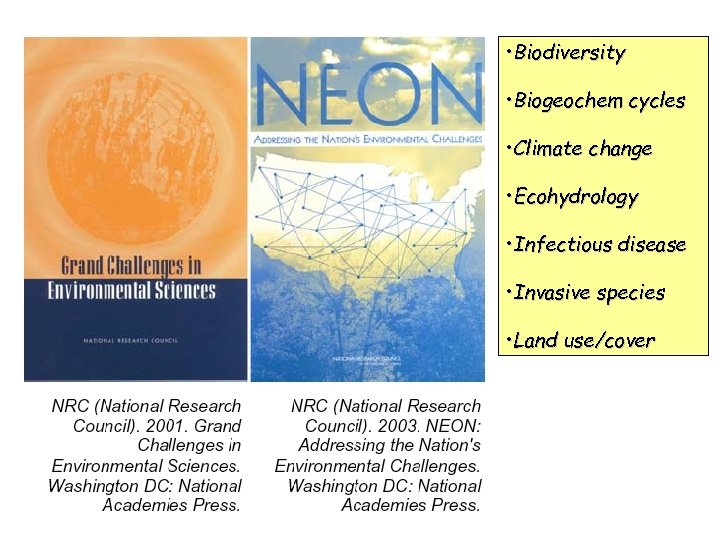
• Biodiversity • Biogeochem cycles • Climate change • Ecohydrology • Infectious disease • Invasive species • Land use/cover
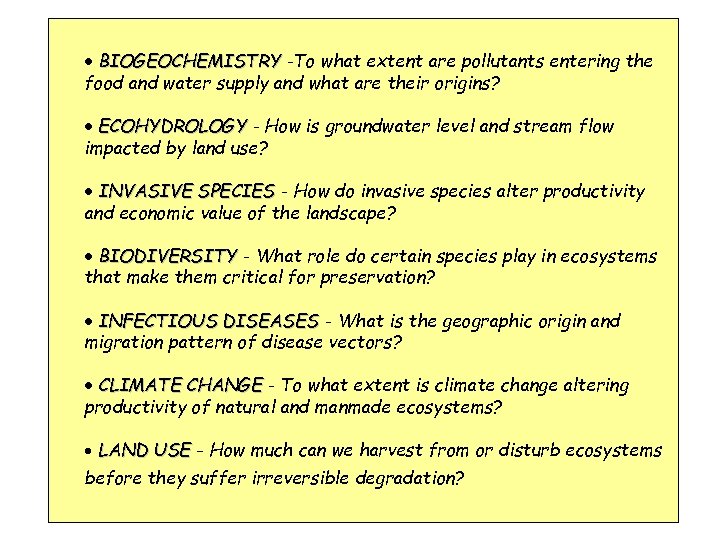
BIOGEOCHEMISTRY -To what extent are pollutants entering the food and water supply and what are their origins? ECOHYDROLOGY - How is groundwater level and stream flow impacted by land use? INVASIVE SPECIES - How do invasive species alter productivity and economic value of the landscape? BIODIVERSITY - What role do certain species play in ecosystems that make them critical for preservation? INFECTIOUS DISEASES - What is the geographic origin and migration pattern of disease vectors? CLIMATE CHANGE - To what extent is climate change altering productivity of natural and manmade ecosystems? LAND USE - How much can we harvest from or disturb ecosystems before they suffer irreversible degradation?
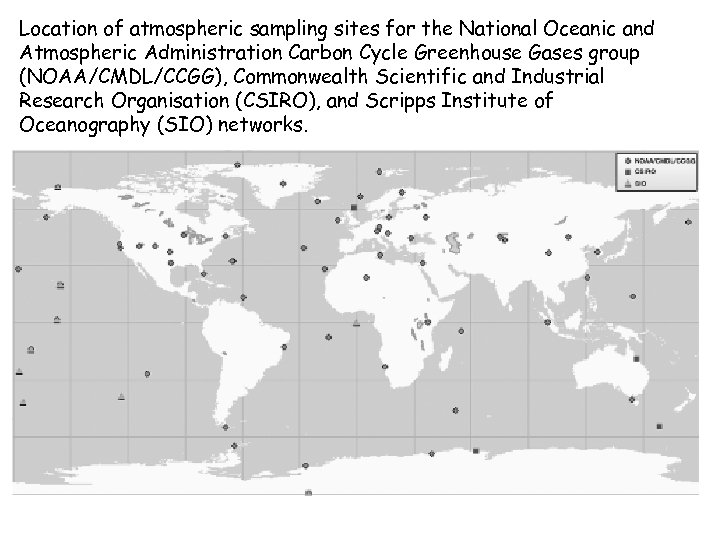
Location of atmospheric sampling sites for the National Oceanic and Atmospheric Administration Carbon Cycle Greenhouse Gases group (NOAA/CMDL/CCGG), Commonwealth Scientific and Industrial Research Organisation (CSIRO), and Scripps Institute of Oceanography (SIO) networks.
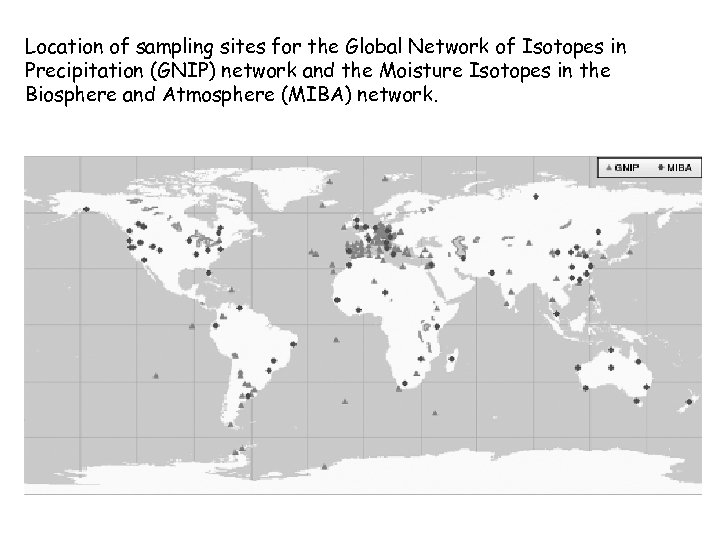
Location of sampling sites for the Global Network of Isotopes in Precipitation (GNIP) network and the Moisture Isotopes in the Biosphere and Atmosphere (MIBA) network.
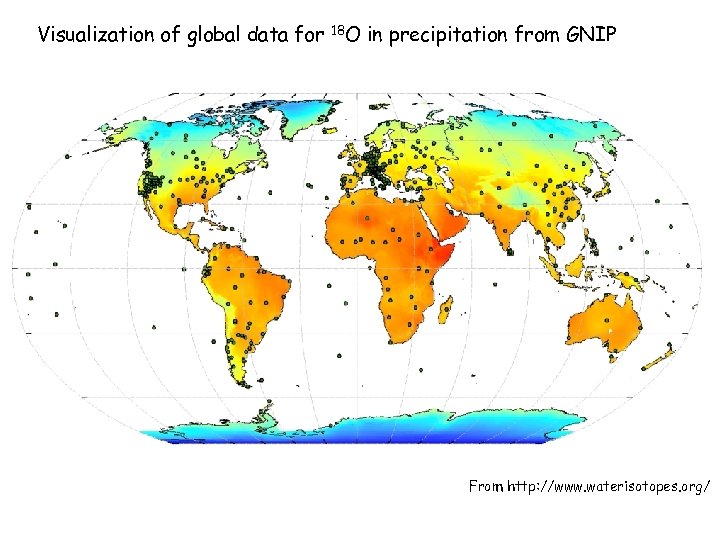
Visualization of global data for 18 O in precipitation from GNIP From http: //www. waterisotopes. org/
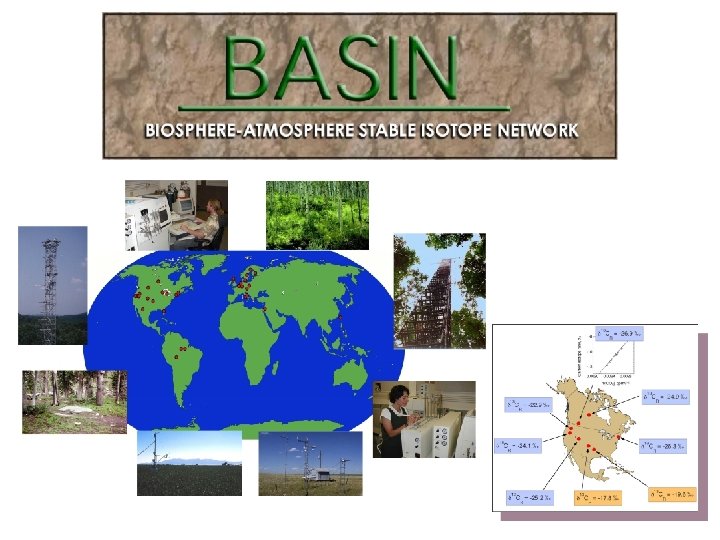
• http: //www. basinisotopes. org/ • Provide information on isotope measurements within NEON • Coordination among groups submitting NEON RFI responses • Organize workshops on isotope techniques useful for the NEON effort • Assist with development of isotope standards and QA/QC
Biogeosphere-Atmosphere Stable Isotope Network Phase 2 - BASIN-II • http: //www. basinisotopes. org/ • Provide information on isotope measurements • Coordinate communication among groups • Organize symposia and workshops on isotope techniques • Provides support for students • Assist with development of isotope standards and QA/QC
The National Ecological Observatory Network (NEON) Two parts to NEON infrastructure design 1. Research Design (a) national / multi-regional scale questions that require NEON’s observational research and cyber infrastructure (continental and domain toolboxes), (b) national/multi-regional scale questions that require continental-scale manipulative experiments. 2. Core Wildland Site Locations Identification of a specific location within each NEON climate domain where a core “wildland” site should be established. These 20 sites will become part of the NEON continental infrastructure backbone.
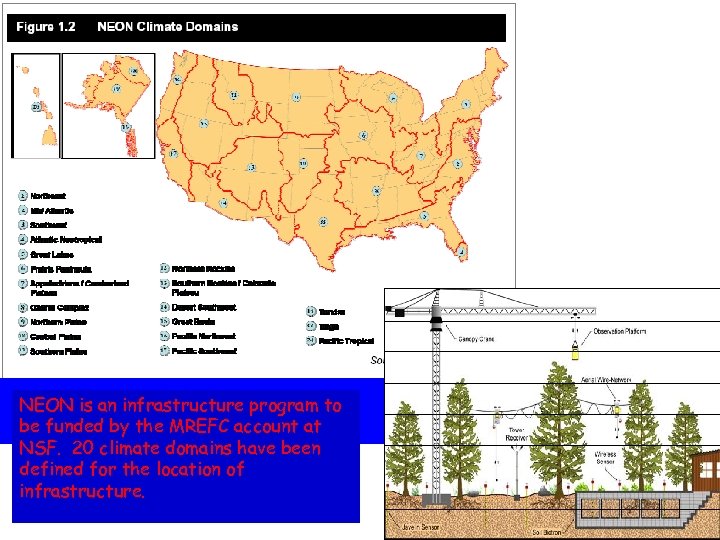
NEON is an infrastructure program to be funded by the MREFC account at NSF. 20 climate domains have been defined for the location of infrastructure.
Cast of many: BASIN workshops: September 16 -17, 2004, Park City December 12, 2004, San Francisco March 1, 2005, Tucson http: //basinisotopes. org Steve Beaupre Sharon Billings Gabriel Bowen Dave Bowling Dave Breshears Renee Brooks Jeff Chanton Todd Dawson David Dettman Rick Doucett Brian Fry Carol Kendall Jennifer King Guanghui Lin Stephen Macko John Marshall Nate Mc. Dowell Dan Murnick Nathaniel Ostrom Diane Pataki Brian Popp Darren Sandquist Laurel Saito Alyson Sayer Jed Sparks Heidi Steltzer Leo Sternberg Paddy Sullyvan Valery Terwilliger Bruce Vaughn Jeff Welker Blair Wolf
What should an isotope monitoring network do? • Generate fundamental data needed to address scientific questions in many fields • Monitor changes in Earth’s ecological condition • Stimulate technological innovation • Educate new scientists and technical experts • Inform society and policy makers
Centralized or de-centralized structure? Centralized Uniformity of measurements, protocol and quality control Source: Jeff Owen, 2004 De-centralized Local scientific “buy-in” More interest in the data, its quality and innovation
Isotope monitoring goals: • Assess ecological condition and change • Identify ecosystem functional or process changes using sensitive indicators • Evaluate success of ecological management or environmental mitigation efforts - reference areas or reference period
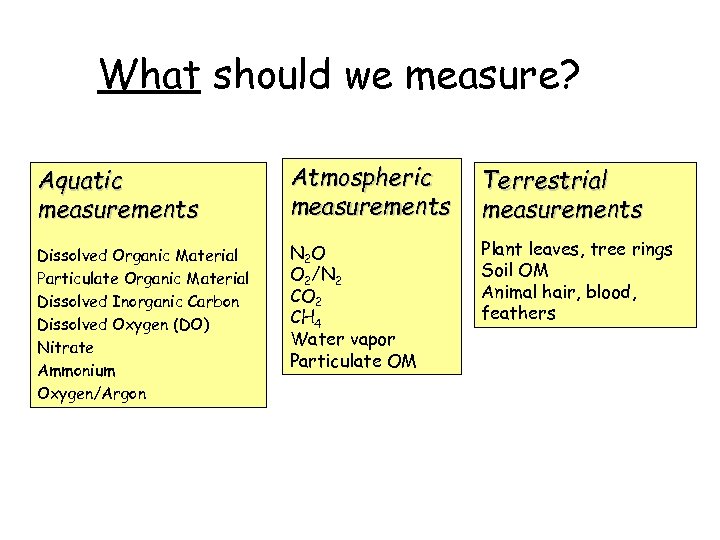
What should we measure? Aquatic measurements Atmospheric measurements Terrestrial measurements Dissolved Organic Material Particulate Organic Material Dissolved Inorganic Carbon Dissolved Oxygen (DO) Nitrate Ammonium Oxygen/Argon N 2 O O 2/N 2 CO 2 CH 4 Water vapor Particulate OM Plant leaves, tree rings Soil OM Animal hair, blood, feathers
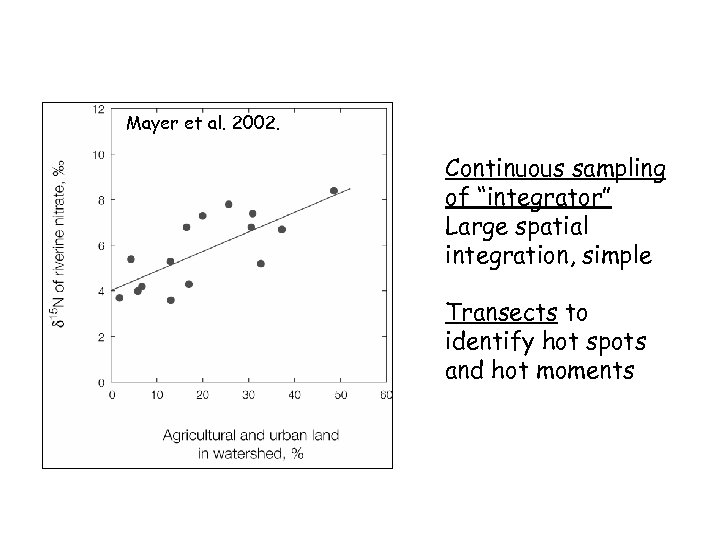
Mayer et al. 2002. Continuous sampling of “integrator” Large spatial integration, simple Transects to identify hot spots and hot moments
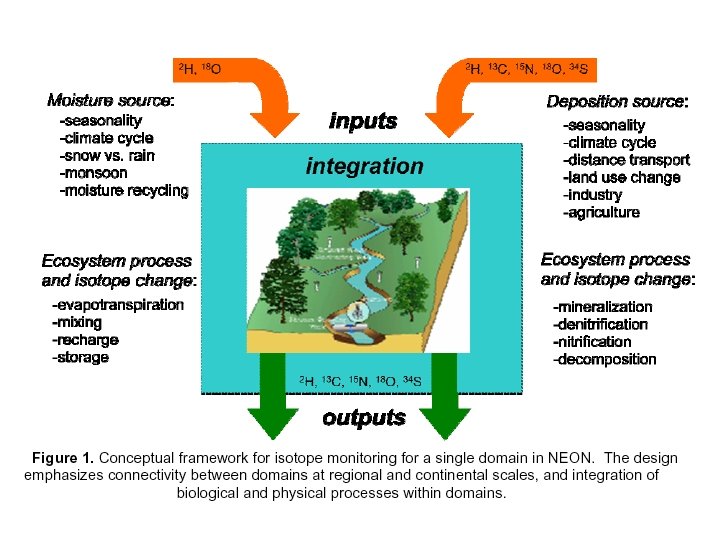
Isotope Network of Ecological Warning Signals INEWS Dave Williams – University of Wyoming R. Dave Evans – Washington State University Jim Ehleringer – University of Utah
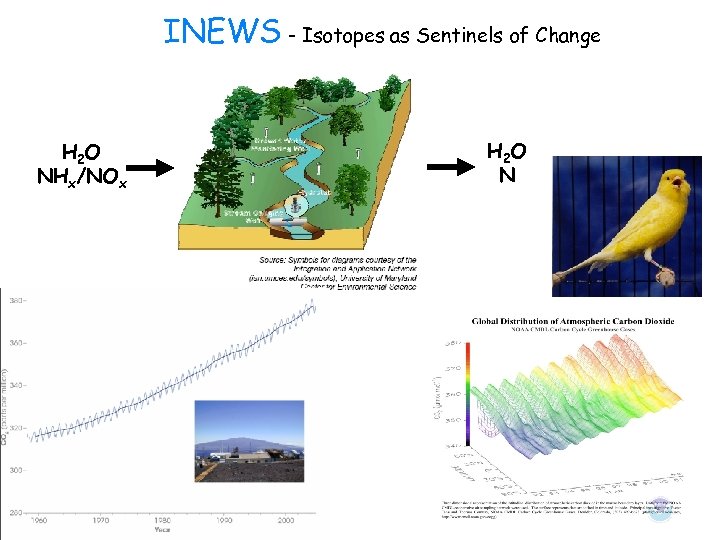
INEWS - Isotopes as Sentinels of Change H 2 O NHx/NOx H 2 O N
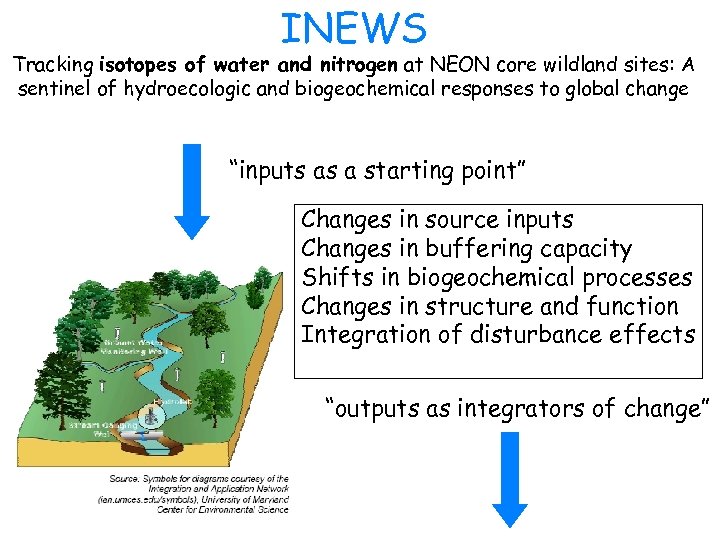
INEWS Tracking isotopes of water and nitrogen at NEON core wildland sites: A sentinel of hydroecologic and biogeochemical responses to global change “inputs as a starting point” Changes in source inputs Changes in buffering capacity Shifts in biogeochemical processes Changes in structure and function Integration of disturbance effects “outputs as integrators of change”
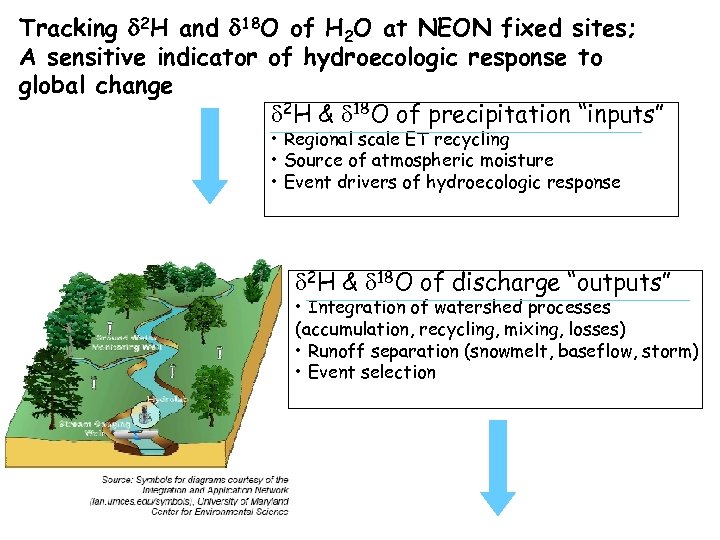
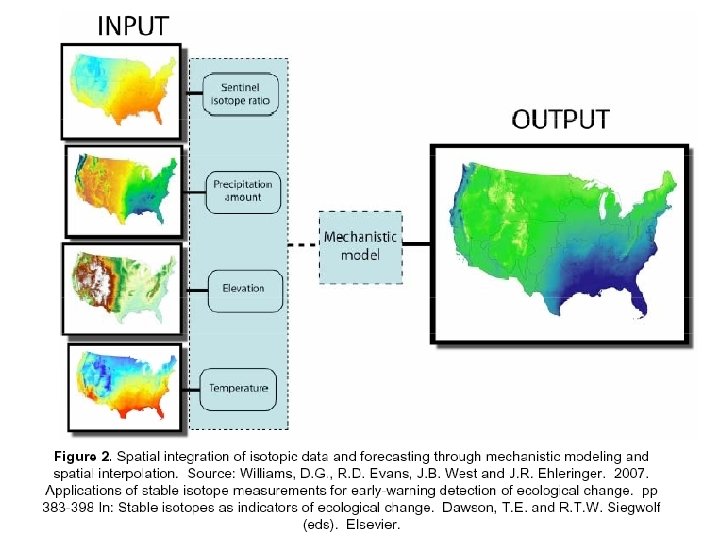
Tracking d 2 H and d 18 O of H 2 O at NEON fixed sites; A sensitive indicator of hydroecologic response to global change d 2 H & d 18 O of precipitation “inputs” • Regional scale ET recycling • Source of atmospheric moisture • Event drivers of hydroecologic response d 2 H & d 18 O of discharge “outputs” • Integration of watershed processes (accumulation, recycling, mixing, losses) • Runoff separation (snowmelt, baseflow, storm) • Event selection
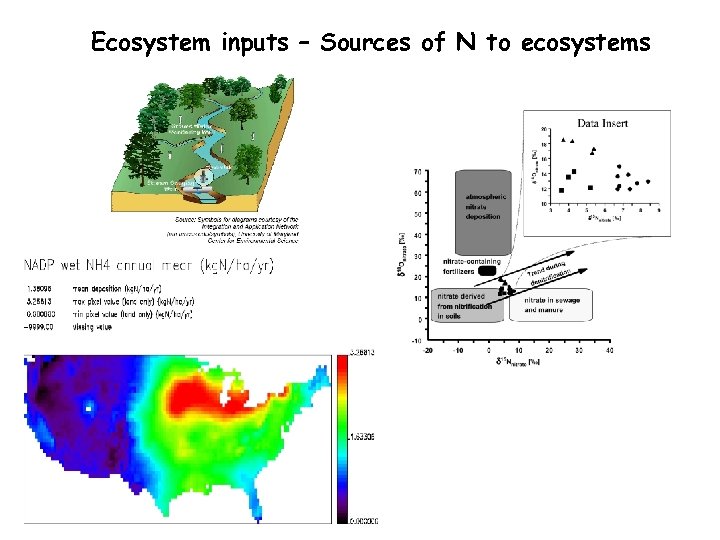
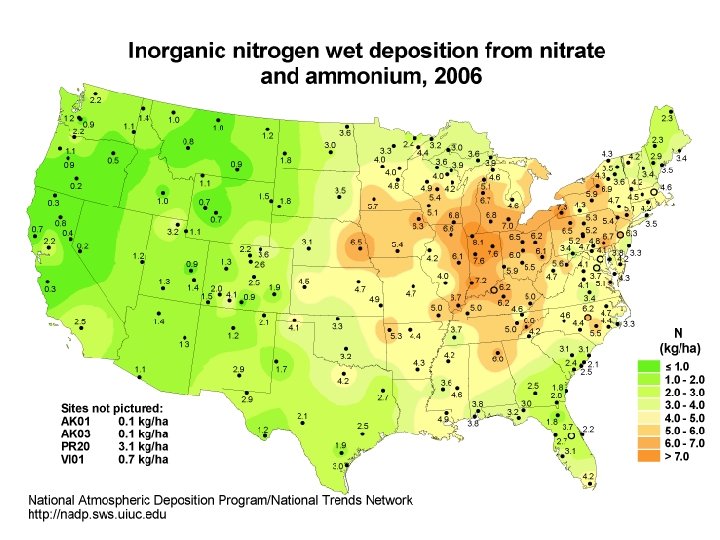
Ecosystem inputs – Sources of N to ecosystems
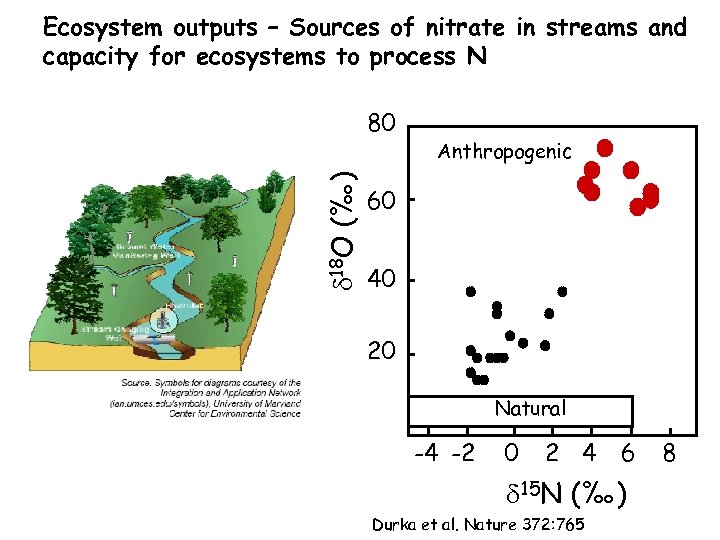
Ecosystem outputs – Sources of nitrate in streams and capacity for ecosystems to process N d 18 O (‰) 80 Anthropogenic 60 40 20 Natural -4 -2 0 2 4 6 d 15 N (‰) Durka et al. Nature 372: 765 8
• What needs to be measured at a fundamental level to assist all branches of ecology? • Figure out how to convince those who will benefit from this knowledge that an isotope network is needed
Скачать презентацию Isotope monitoring and global change Transportation energy
eb4ece89709bba31917c6fea9fcb6262.ppt