


 Скачать презентацию ISM 270 Service Engineering and Management Lecture 3
62f6b097eb17530aab1c218ac806664d.ppt
- Количество слайдов: 41
 ISM 270 Service Engineering and Management Lecture 3: Technology in Services
 Announcements Ø Homework 1 due today Ø Homework 2 due next week 1/31
 Today’s Lecture Ø Role of Technology in Services, especially in new service development Ø Dr Charles Ng, Demandtec
 Discussion Name an Internet site you believe will be successful in the long run - explain why.
 Technology in Service
 What roles can technology play?
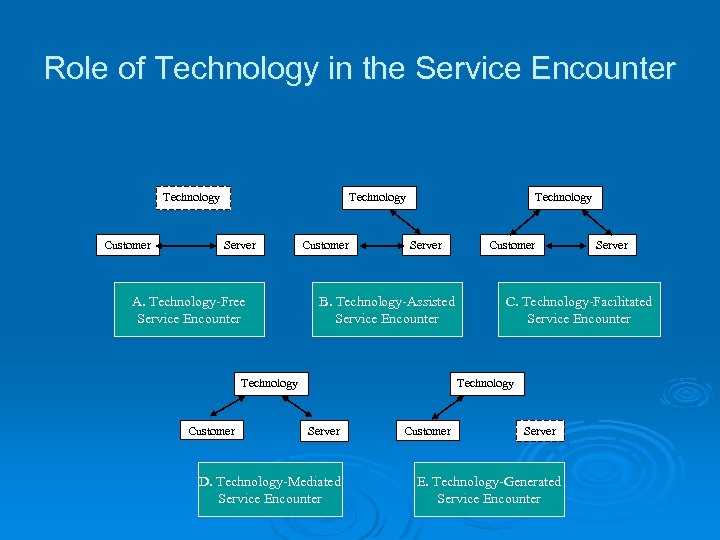 Role of Technology in the Service Encounter Technology Customer Technology Server A. Technology-Free Service Encounter Customer Technology Server B. Technology-Assisted Service Encounter Technology Customer C. Technology-Facilitated Service Encounter Technology Server D. Technology-Mediated Service Encounter Customer Server E. Technology-Generated Service Encounter
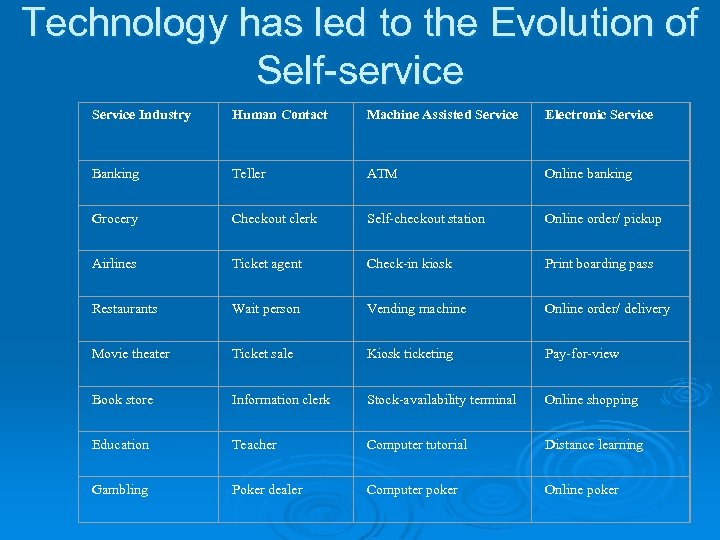 Technology has led to the Evolution of Self-service Service Industry Human Contact Machine Assisted Service Electronic Service Banking Teller ATM Online banking Grocery Checkout clerk Self-checkout station Online order/ pickup Airlines Ticket agent Check-in kiosk Print boarding pass Restaurants Wait person Vending machine Online order/ delivery Movie theater Ticket sale Kiosk ticketing Pay-for-view Book store Information clerk Stock-availability terminal Online shopping Education Teacher Computer tutorial Distance learning Gambling Poker dealer Computer poker Online poker
 Self-service Technologies (SST) Does customer adoption of self-service follow a predictable pattern? Ø How do we measure self-service quality (e. g. , ease of use, enjoyment, and/or control)? Ø What is the optimal mix of SST and personal service for a service delivery system? Ø How do we achieve continuous improvement when using SST? Ø What are the limits of self-service given the loss of human interaction? Ø
 Self-Service examples Ø Airline industry
 Technology has led to service automation Ø Fixed-sequence (F) - parking lot gate Ø Variable-sequence (V) - ATM Ø Playback (P) - answering machine Ø Numerical controlled (N) - animation Ø Intelligent (I) - autopilot Ø Expert system (E) - medical diagnosis Ø Totally automated system (T) - EFT
 Technology has led to a variety of services available via the web A retail channel (Amazon. com) Ø Supplemental channel (Barnes & Nobel) Ø Technical support (Dell Computer) Ø Embellish existing service (HBS Press) Ø Order processing (Delta Airline) Ø Convey information (Kelly Blue Book) Ø Organization membership (POMS. org) Ø Games (Treeloot. com) Ø
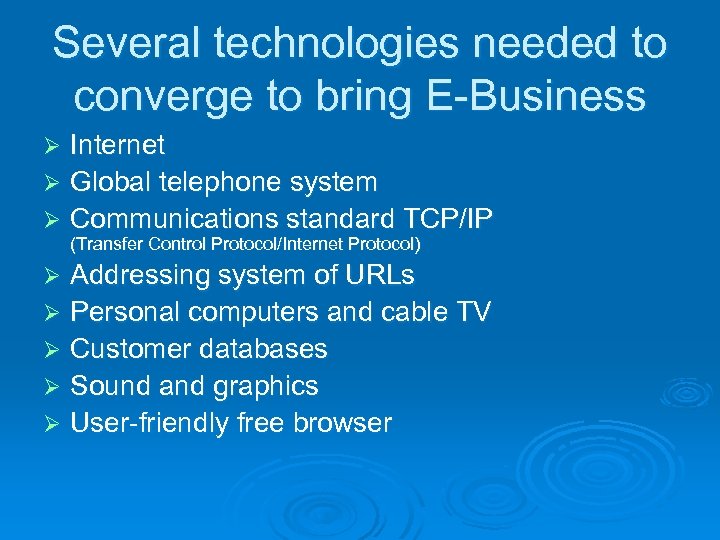 Several technologies needed to converge to bring E-Business Internet Ø Global telephone system Ø Communications standard TCP/IP Ø (Transfer Control Protocol/Internet Protocol) Addressing system of URLs Ø Personal computers and cable TV Ø Customer databases Ø Sound and graphics Ø User-friendly free browser Ø
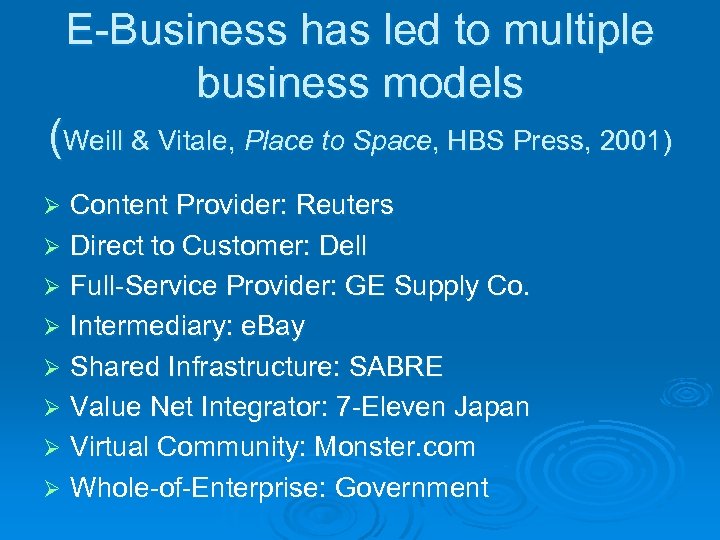 E-Business has led to multiple business models (Weill & Vitale, Place to Space, HBS Press, 2001) Content Provider: Reuters Ø Direct to Customer: Dell Ø Full-Service Provider: GE Supply Co. Ø Intermediary: e. Bay Ø Shared Infrastructure: SABRE Ø Value Net Integrator: 7 -Eleven Japan Ø Virtual Community: Monster. com Ø Whole-of-Enterprise: Government Ø
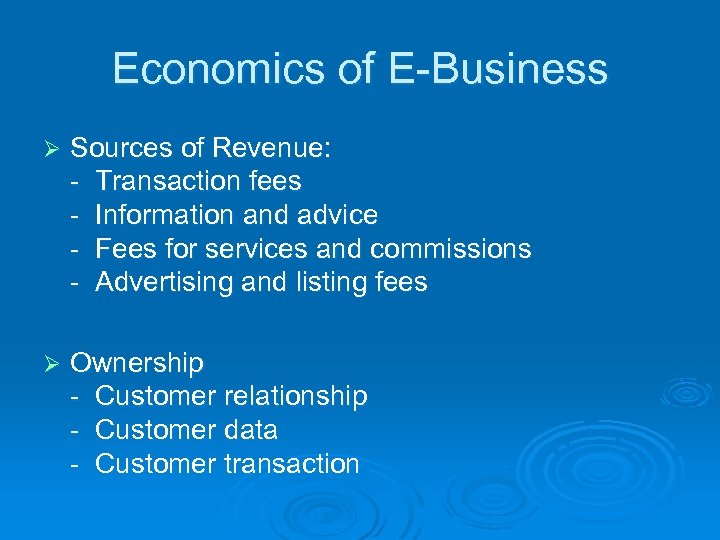 Economics of E-Business Ø Sources of Revenue: - Transaction fees - Information and advice - Fees for services and commissions - Advertising and listing fees Ø Ownership - Customer relationship - Customer data - Customer transaction
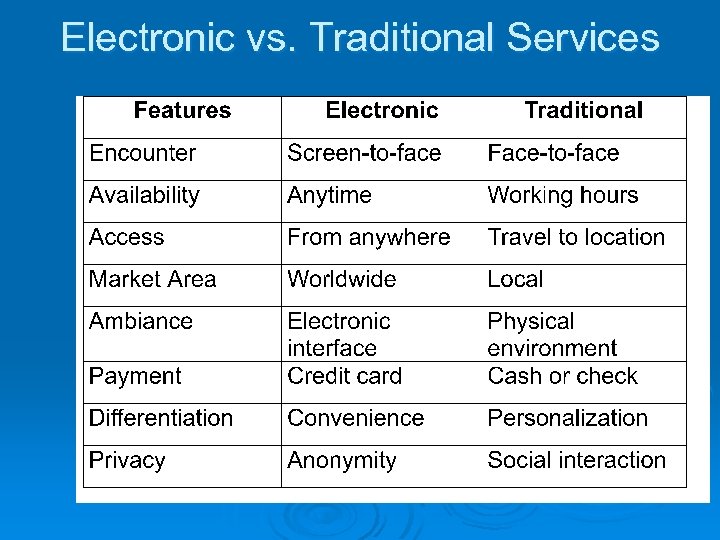 Electronic vs. Traditional Services
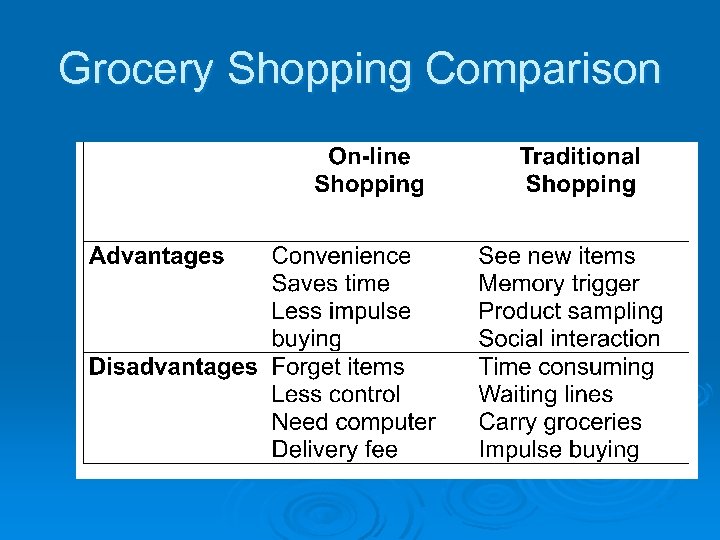 Grocery Shopping Comparison
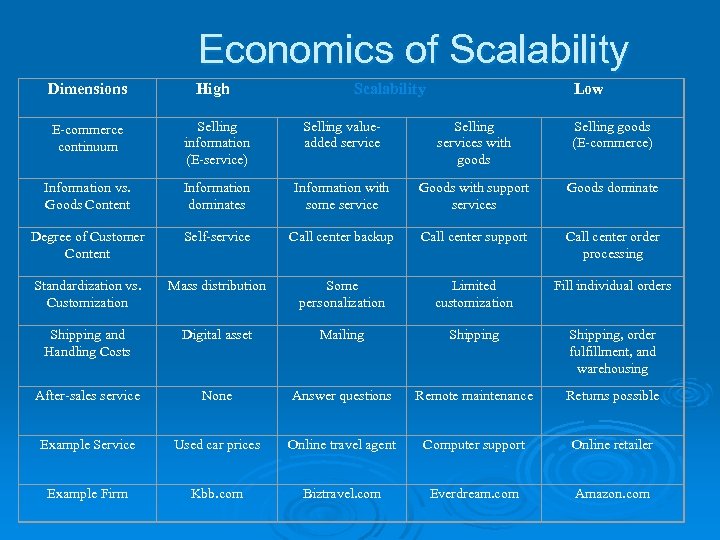 Economics of Scalability Dimensions High Scalability Low E-commerce continuum Selling information (E-service) Selling valueadded service Selling services with goods Selling goods (E-commerce) Information vs. Goods Content Information dominates Information with some service Goods with support services Goods dominate Degree of Customer Content Self-service Call center backup Call center support Call center order processing Standardization vs. Customization Mass distribution Some personalization Limited customization Fill individual orders Shipping and Handling Costs Digital asset Mailing Shipping, order fulfillment, and warehousing After-sales service None Answer questions Remote maintenance Returns possible Example Service Used car prices Online travel agent Computer support Online retailer Example Firm Kbb. com Biztravel. com Everdream. com Amazon. com
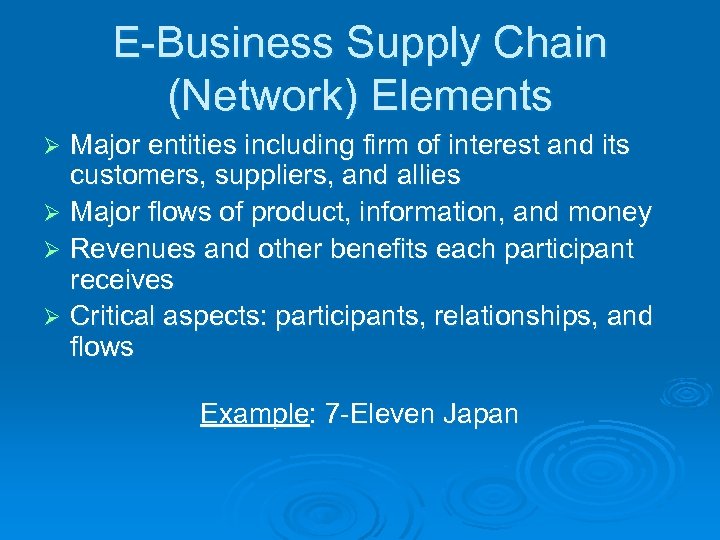 E-Business Supply Chain (Network) Elements Major entities including firm of interest and its customers, suppliers, and allies Ø Major flows of product, information, and money Ø Revenues and other benefits each participant receives Ø Critical aspects: participants, relationships, and flows Ø Example: 7 -Eleven Japan
 Japanese 7 -Eleven Ø Read case in text l (p 103, 6 th edition, p 122 5 th edition)
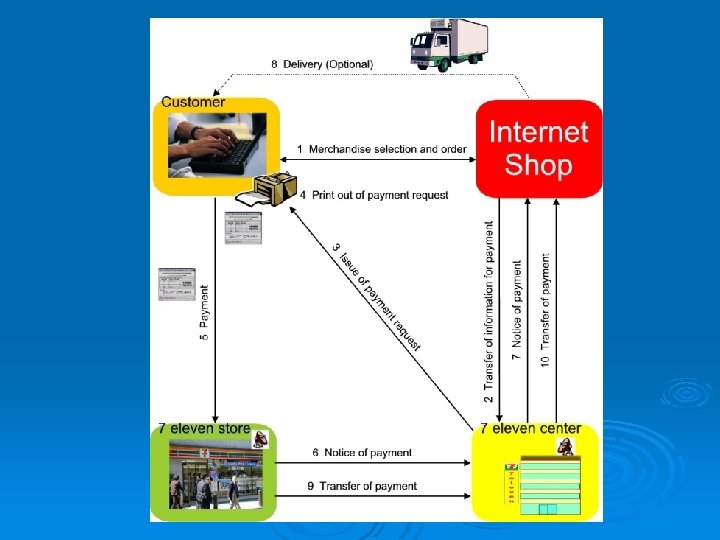
 Evolution of B 2 C E-Commerce in Japan What features of the 7 -Eleven Japan distribution system illustrate the “Value Net Integrator” e-business model? 2. Does the 7 -Eleven Japan distribution system exhibit scalability economics? 3. How does the 7 -Eleven example of B 2 C ecommerce in Japan illustrate the impact of culture on service system design? 4. Will the 7 -Eleven “Konbini and Mobile” system be adopted in the United States? 1.
 New Service Development
 Video
Video
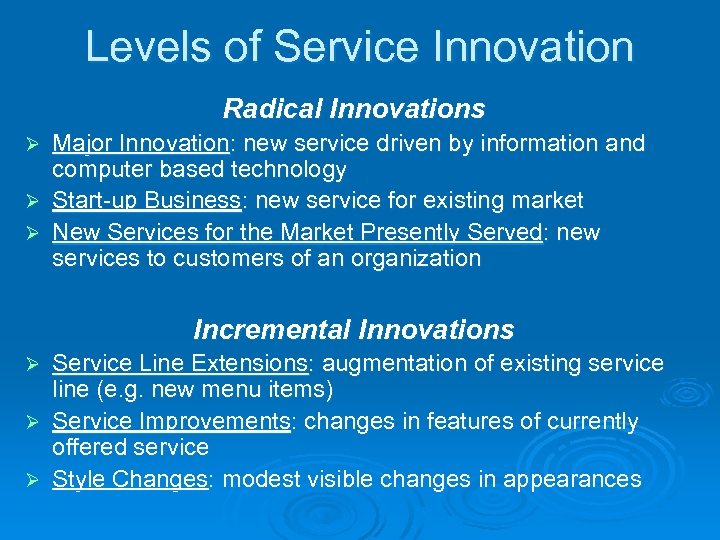 Levels of Service Innovation Radical Innovations Major Innovation: new service driven by information and computer based technology Ø Start-up Business: new service for existing market Ø New Services for the Market Presently Served: new services to customers of an organization Ø Incremental Innovations Service Line Extensions: augmentation of existing service line (e. g. new menu items) Ø Service Improvements: changes in features of currently offered service Ø Style Changes: modest visible changes in appearances Ø
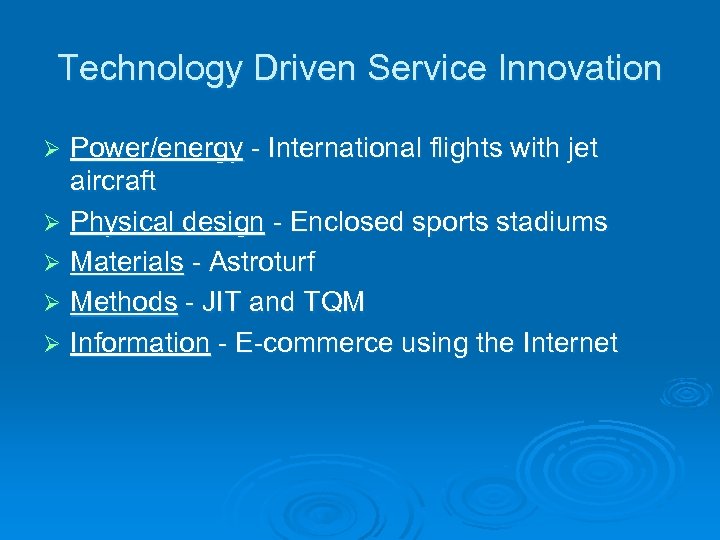 Technology Driven Service Innovation Power/energy - International flights with jet aircraft Ø Physical design - Enclosed sports stadiums Ø Materials - Astroturf Ø Methods - JIT and TQM Ø Information - E-commerce using the Internet Ø
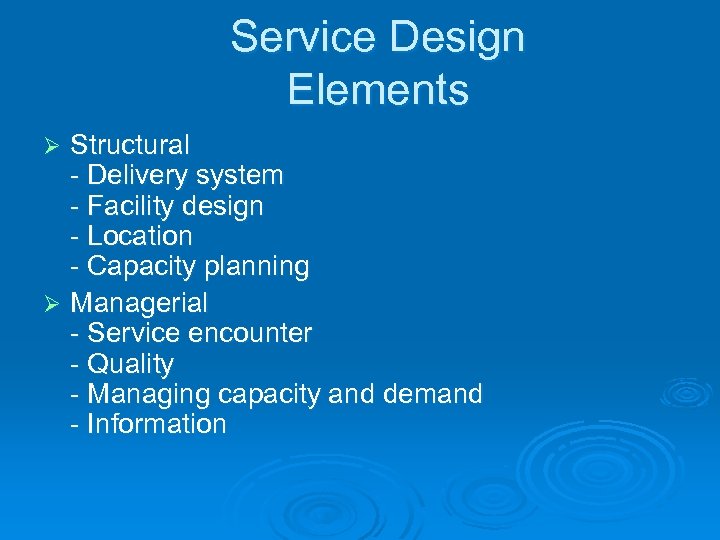 Service Design Elements Structural - Delivery system - Facility design - Location - Capacity planning Ø Managerial - Service encounter - Quality - Managing capacity and demand - Information Ø
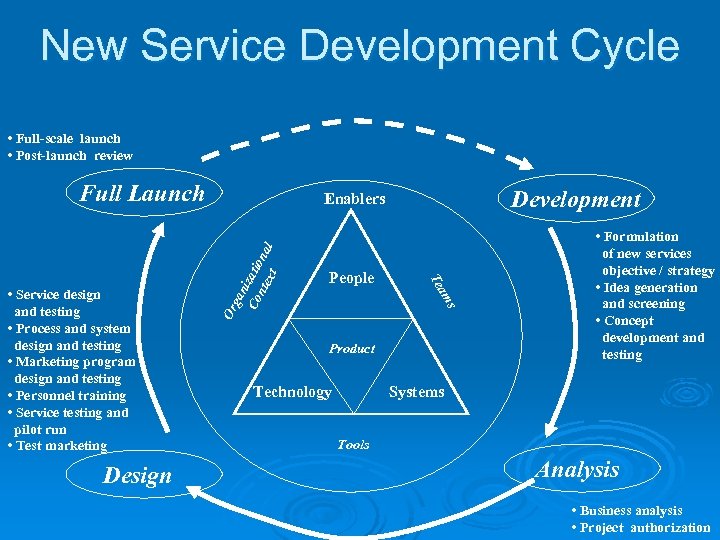 New Service Development Cycle • Full-scale launch • Post-launch review Full Launch ga n Co izatio nte na l xt Or s am Design People Te • Service design and testing • Process and system design and testing • Marketing program design and testing • Personnel training • Service testing and pilot run • Test marketing Development Enablers Product Technology • Formulation of new services objective / strategy • Idea generation and screening • Concept development and testing Systems Tools Analysis • Business analysis • Project authorization
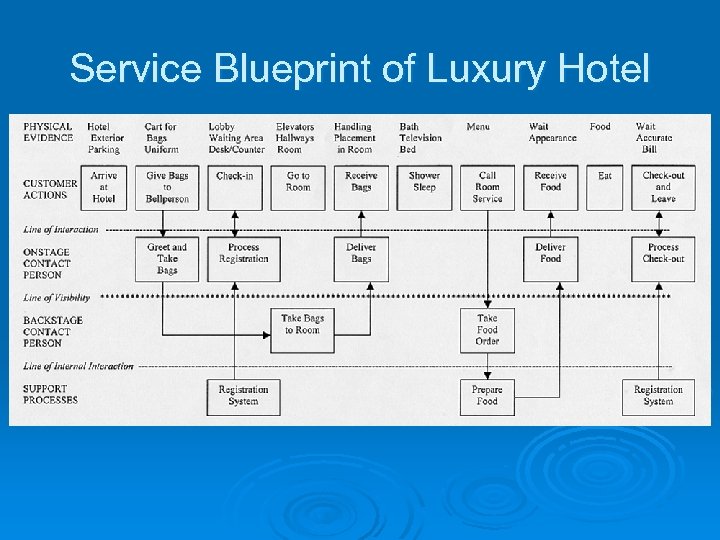 Service Blueprint of Luxury Hotel
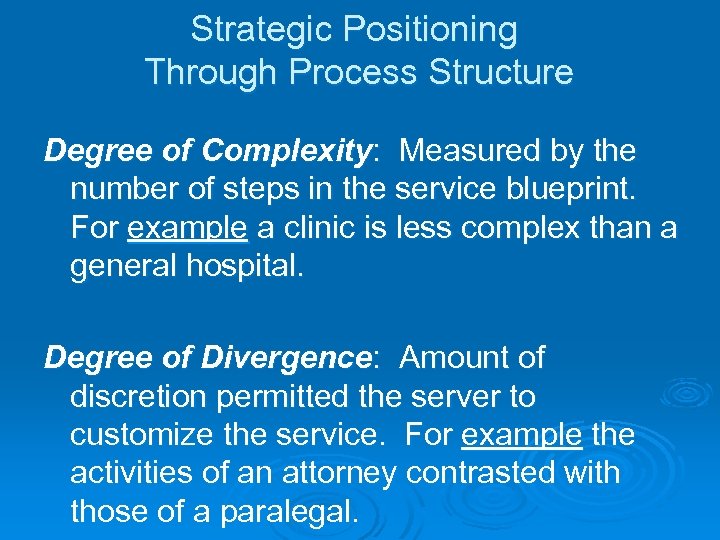 Strategic Positioning Through Process Structure Degree of Complexity: Measured by the number of steps in the service blueprint. For example a clinic is less complex than a general hospital. Degree of Divergence: Amount of discretion permitted the server to customize the service. For example the activities of an attorney contrasted with those of a paralegal.
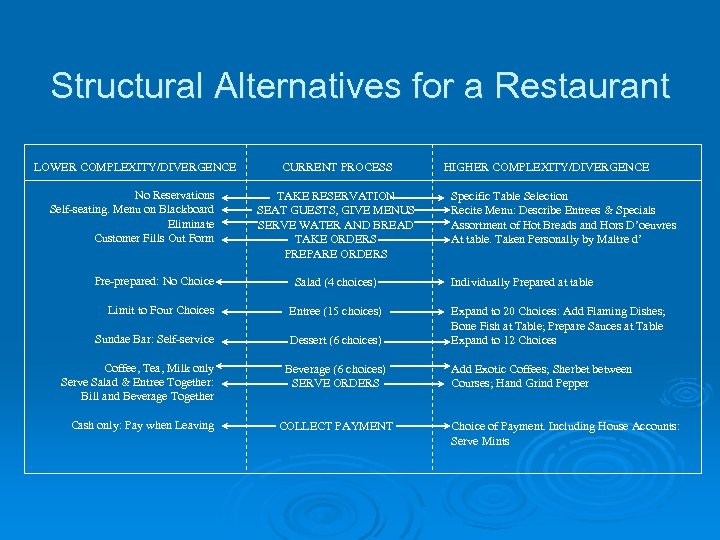 Structural Alternatives for a Restaurant LOWER COMPLEXITY/DIVERGENCE CURRENT PROCESS HIGHER COMPLEXITY/DIVERGENCE No Reservations Self-seating. Menu on Blackboard Eliminate Customer Fills Out Form Pre-prepared: No Choice TAKE RESERVATION SEAT GUESTS, GIVE MENUS SERVE WATER AND BREAD TAKE ORDERS PREPARE ORDERS Salad (4 choices) Limit to Four Choices Entree (15 choices) Sundae Bar: Self-service Dessert (6 choices) Coffee, Tea, Milk only Serve Salad & Entree Together: Bill and Beverage Together Cash only: Pay when Leaving Beverage (6 choices) SERVE ORDERS COLLECT PAYMENT Specific Table Selection Recite Menu: Describe Entrees & Specials Assortment of Hot Breads and Hors D’oeuvres At table. Taken Personally by Maltre d’ Individually Prepared at table Expand to 20 Choices: Add Flaming Dishes; Bone Fish at Table; Prepare Sauces at Table Expand to 12 Choices Add Exotic Coffees; Sherbet between Courses; Hand Grind Pepper Choice of Payment. Including House Accounts: Serve Mints
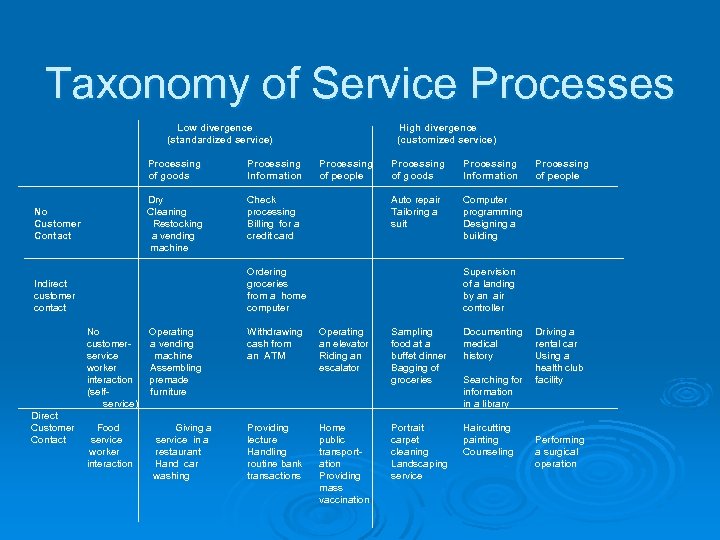 Taxonomy of Service Processes Low divergence Low (standardized service) Processing of goods Dry No Cleaning Customer Restocking Contact a vending machine Processing Information High divergence (customized service) Processing of people Processing of goods Processing Information Processing of people Check Auto repair Computer processing Tailoring a programming Billing for a suit Designing a credit card building Ordering Supervision Indirect groceries of a landing customer from a home by an air contact computer controller No Operating Withdrawing Operating Sampling Documenting Driving a customer- a vending cash from an elevator food at a medical rental car cash from an elevator service machine an ATM Riding an buffet dinner history Using a worker Assembling escalator Bagging of health club interaction premade groceries Searching for facility (self- furniture information service) in a library Direct Customer Food Giving a Providing Home Portrait Haircutting Contact service in a lecture public carpet painting Performing worker restaurant Handling transport- cleaning Counseling a surgical interaction Hand car routine bank ation Landscaping operation washing transactions Providing service mass vaccination
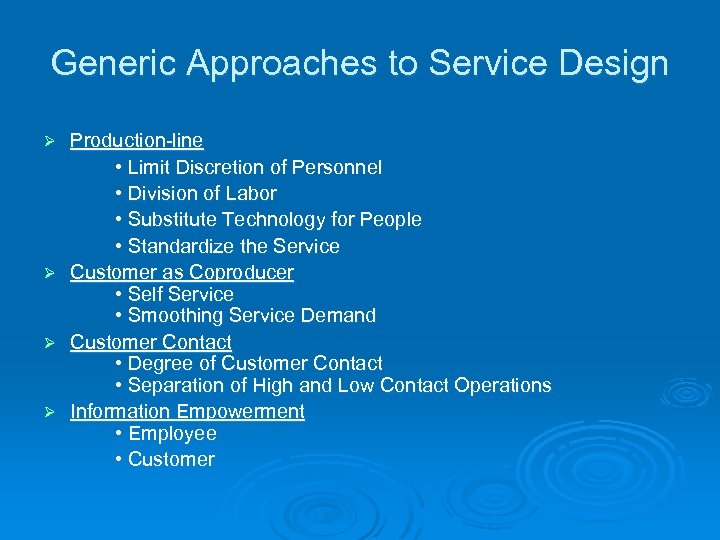 Generic Approaches to Service Design Production-line • Limit Discretion of Personnel • Division of Labor • Substitute Technology for People • Standardize the Service Ø Customer as Coproducer • Self Service • Smoothing Service Demand Ø Customer Contact • Degree of Customer Contact • Separation of High and Low Contact Operations Ø Information Empowerment • Employee • Customer Ø
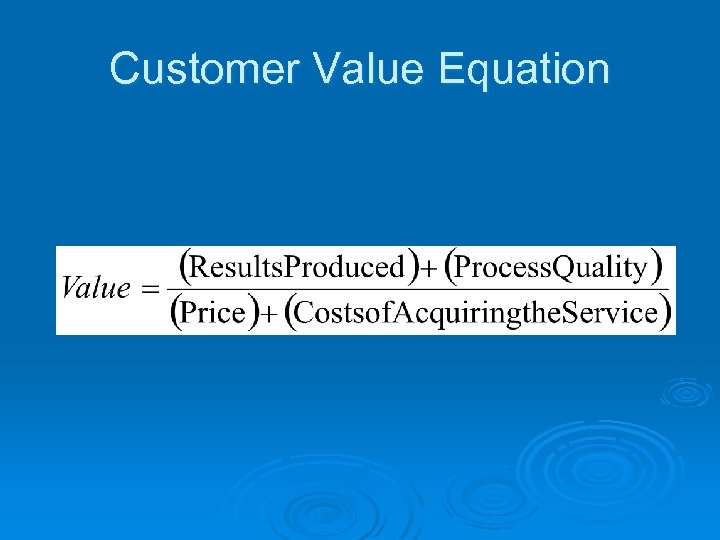 Customer Value Equation
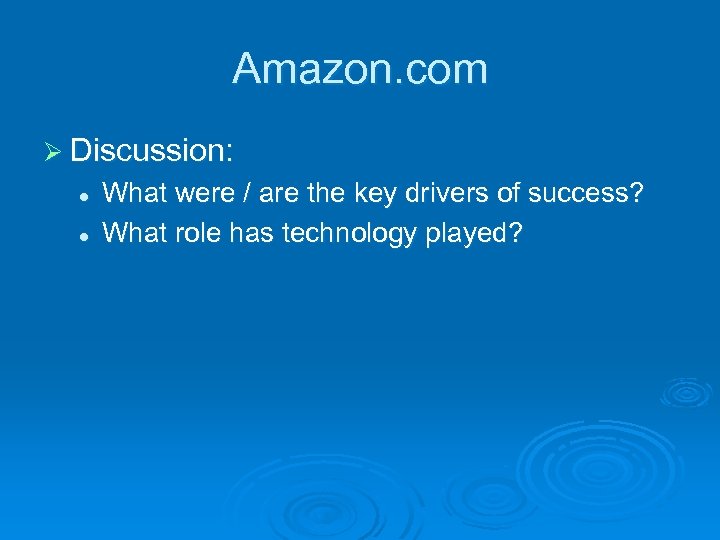 Amazon. com Ø Discussion: l l What were / are the key drivers of success? What role has technology played?
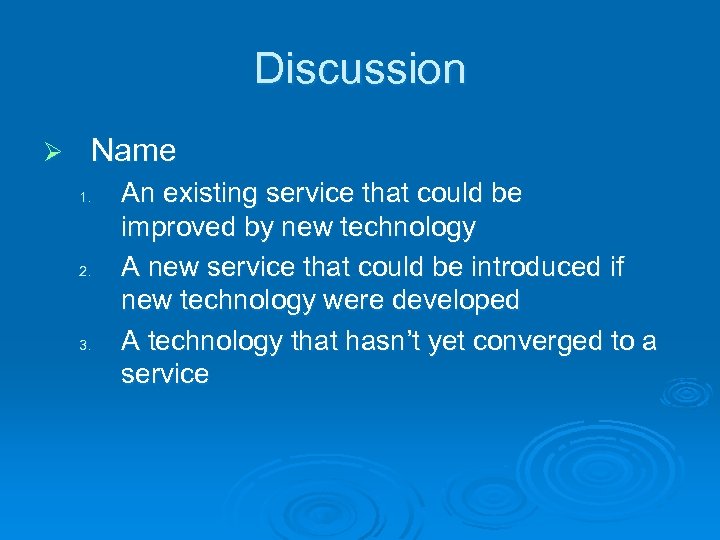 Discussion Ø Name 1. 2. 3. An existing service that could be improved by new technology A new service that could be introduced if new technology were developed A technology that hasn’t yet converged to a service
 Aside: Transportation and Location Problems Ø Appear frequently in service design Ø Homework 2 has an example
 Clarke-Wright for homework 2 Ø Traveling Salesman-type problems very common in services l l l Ø Delivery of goods Mail routes Sales tour Standard problem: l Given the distance between each city pair, visit all N cities in some order, ending back at the base • Objective: Minimize total distance traveled
 Traveling salesman Standard problem is very difficult to solve (NP – complete) Ø We will use the Clarke-Wright Algorithm (page 499 of text) Ø C-W algorithm intuition: Ø l l l Ø Start with the path that returns to base between every node Add links between nodes instead of returning in order of distance gained Stop when no gain can be made Note: This is a good heuristic l Performs well in practice, but not guaranteed to find the best solution.
 Next Week Ø Service Quality Ø Frank Tung
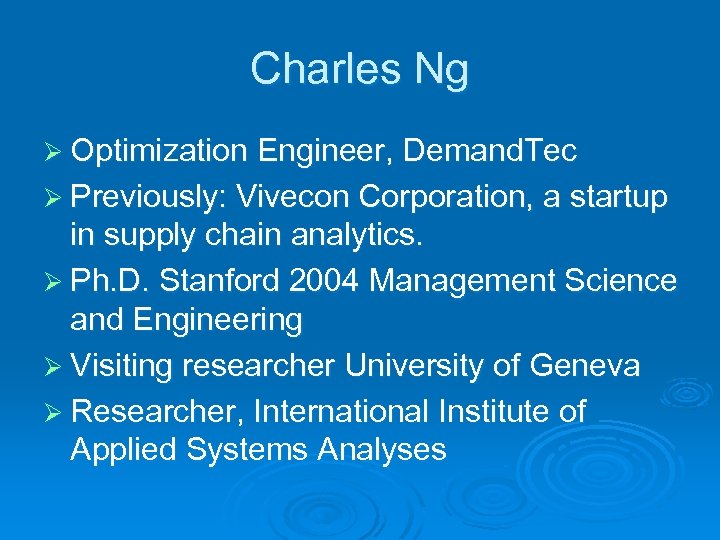 Charles Ng Ø Optimization Engineer, Demand. Tec Ø Previously: Vivecon Corporation, a startup in supply chain analytics. Ø Ph. D. Stanford 2004 Management Science and Engineering Ø Visiting researcher University of Geneva Ø Researcher, International Institute of Applied Systems Analyses