


 Скачать презентацию ISLAMISM Marek Čejka Characteristics of Islamism REVIVALIST
a17c712520ae655d622816c34bb0bc89.ppt
- Количество слайдов: 26
 ISLAMISM Marek Čejka
 Characteristics of Islamism REVIVALIST movement and alternative to MODERNITY and MODERNISATION in Muslim world (signs of modernity: secularization, derogation of role of Islam, loss of power of traditional authorities, NATIONALISM, Western influence, imperialism and colonisation, morale degradation, corruption, poverty) One of its main aims is to lead Muslims back to their religious roots and values. Islamism is criticizing negative phenomenons connected with Modernity and Nationalism and is offering its own (Islamic) solutions. One of the goal of the Islamist also creation of statehood – but based on religious (theocratic) principles rather than nationalistic – restoration of caliphate
 RADICAL vs. MODERATE ISLAMISM The term „Islamism“ does not automatically mean connection with violence or terrorism Some Islamist groups are completelly apolitical Other Islamists want to combine traditional Islamic principles and values together with western values (analogy of Christian democracy) The most visible Islamist groups in World media are those, which use the violence for assertion of their ideology – RADICAL ISLAMISM
 Typology of Islamism Participative/legal (constructive, state-building) Islamist movements (e. g. Hizb an-Nahda in post-Ben Ali Tunisia, AKP in Turkey) Radical Islamist/Jihadist movements using subversive and violent methods for gaining influence and domination of politics in Muslim countries/or Muslim World (e. g. Al-Qaeda in Islamic Maghreb, Islamic Jihad) Non-political Islamist movements (e. g. some Sufi orders, some branches of Salafism) Hybrid/combined/sui-generis Islamist movements – they could combine social work, charity etc. together with violent methods (Hamas in Palestine, Hezbollah in Lebanon e. g. ) or they can use radical rhetoric without using violence (e. g. Hizb ut-Tahrir, some Wahhabi streams) This typology was inspired by lecture of Moroccan political scientist Yousef Belal at 13 th DGAP New Faces Conference “Democratization and Security in the Middle East and North Africa”, Istanbul, 17. – 20. March 2010
 Moderated Islamists (Participative/Legal Islamism) Many Islamist groups are able to participate on democracy and even contribute to democratization of their countries Parties: AKP (Turkey) Party of Justice and Development (Morocco) Muslim Brotherhood (Egypt) Islamic Action Front (Jordan)
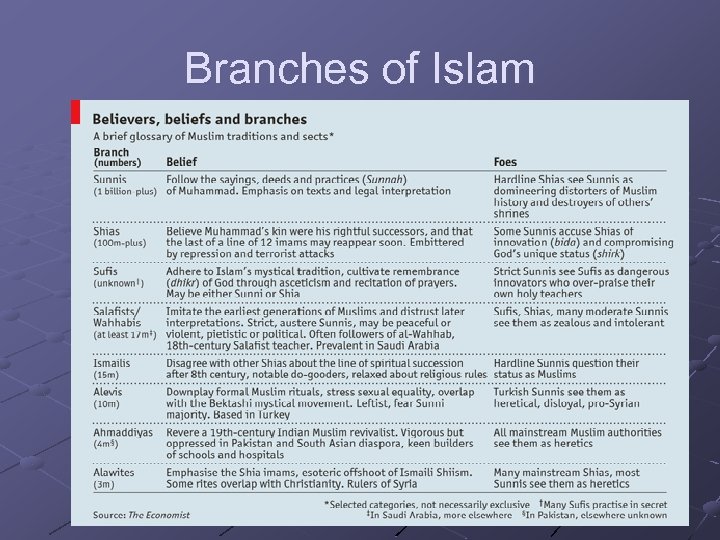 Branches of Islam
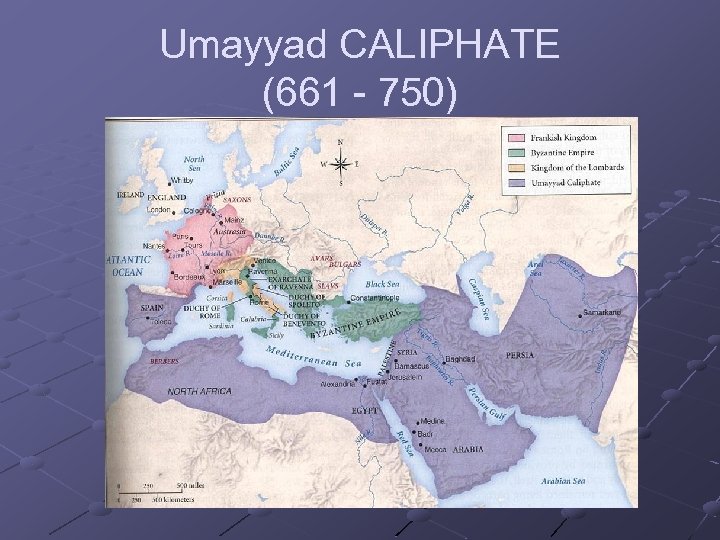 Umayyad CALIPHATE (661 - 750)
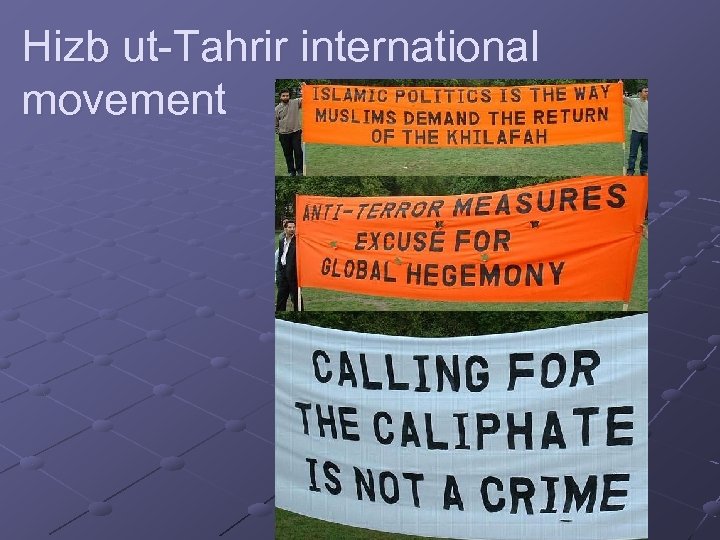 Hizb ut-Tahrir international movement
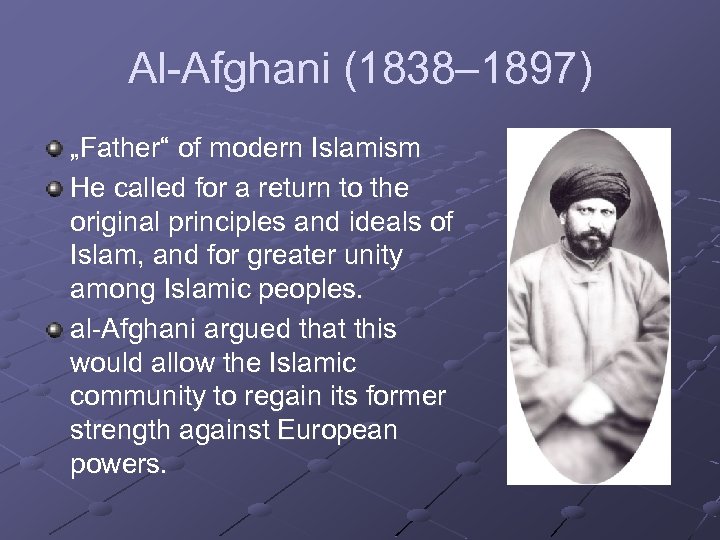 Al-Afghani (1838– 1897) „Father“ of modern Islamism He called for a return to the original principles and ideals of Islam, and for greater unity among Islamic peoples. al-Afghani argued that this would allow the Islamic community to regain its former strength against European powers.
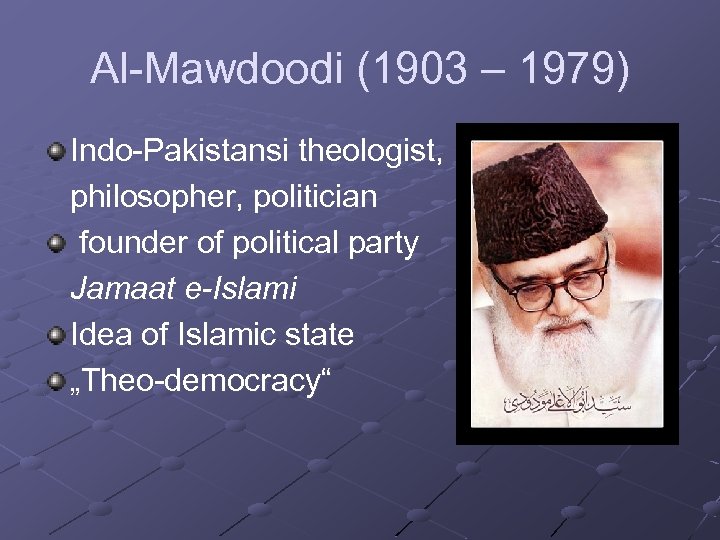 Al-Mawdoodi (1903 – 1979) Indo-Pakistansi theologist, philosopher, politician founder of political party Jamaat e-Islami Idea of Islamic state „Theo-democracy“
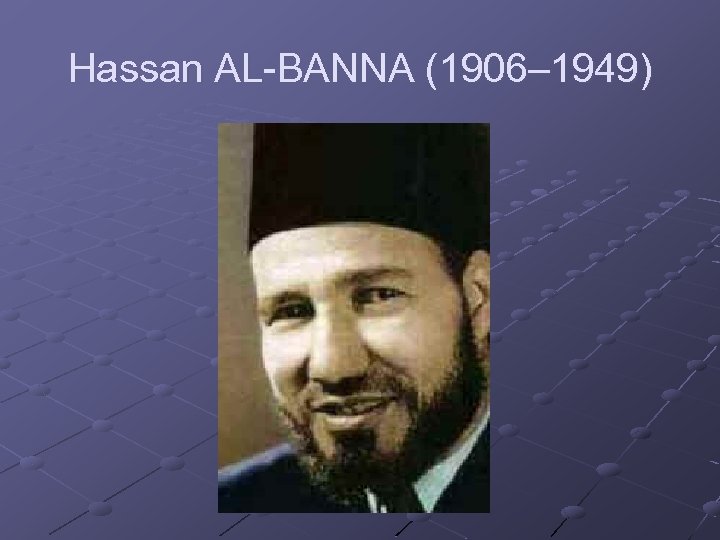 Hassan AL-BANNA (1906– 1949)
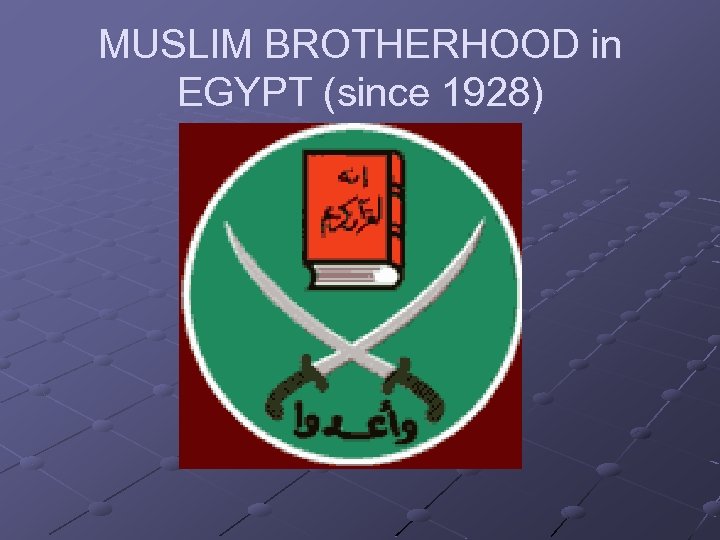 MUSLIM BROTHERHOOD in EGYPT (since 1928)
 Original aim of the Muslim Brotherhood was charity In Egypt (ruled by secular nationalists who were dependent on Britain) was very bad economic and social situation MB offered alternative and charitable activities Popularity of MB grew steadily and they become more politicized and radicalized. Egyptian political establishment saw MB as an rival. Conspiration vs. Repression Anti-British policies of MB
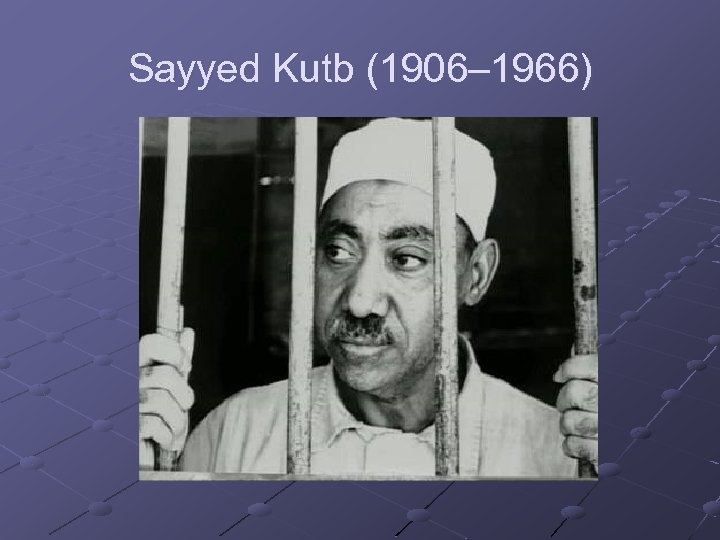 Sayyed Kutb (1906– 1966)
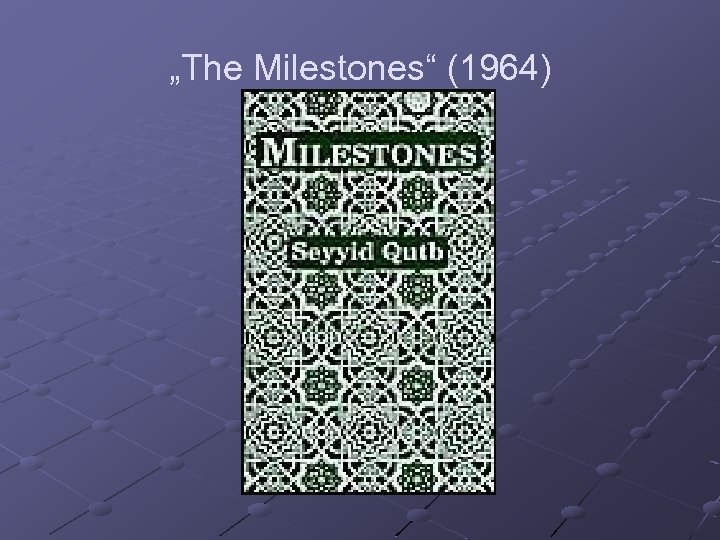 „The Milestones“ (1964)
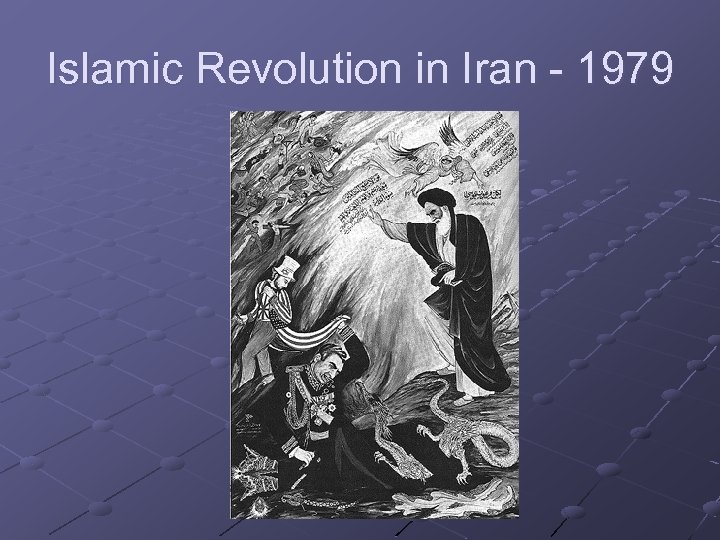 Islamic Revolution in Iran - 1979
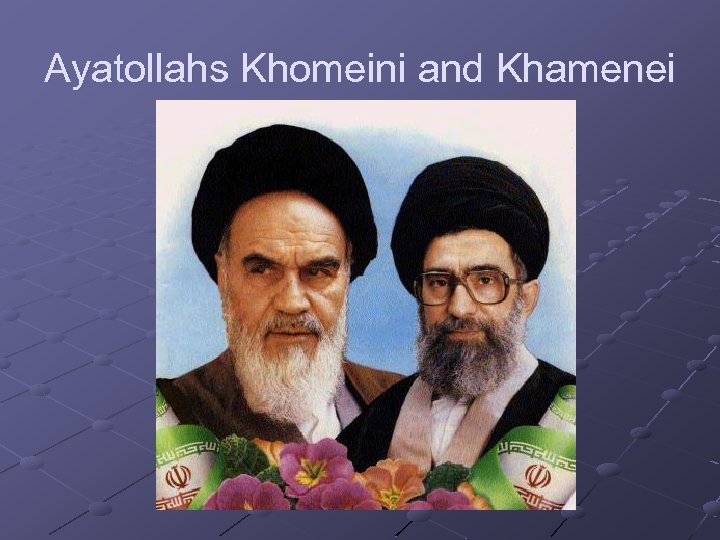 Ayatollahs Khomeini and Khamenei
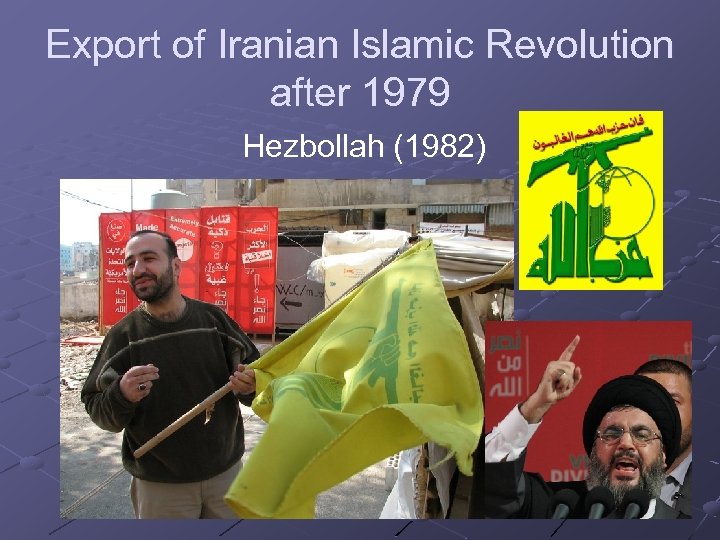 Export of Iranian Islamic Revolution after 1979 Hezbollah (1982)
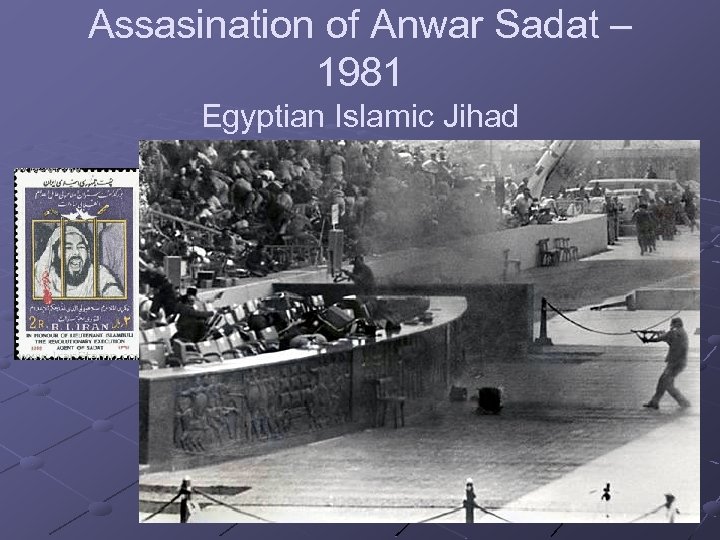 Assasination of Anwar Sadat – 1981 Egyptian Islamic Jihad
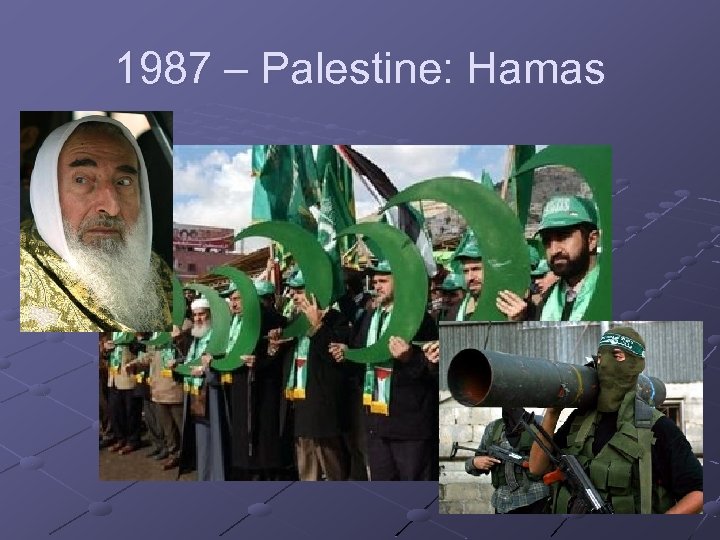 1987 – Palestine: Hamas
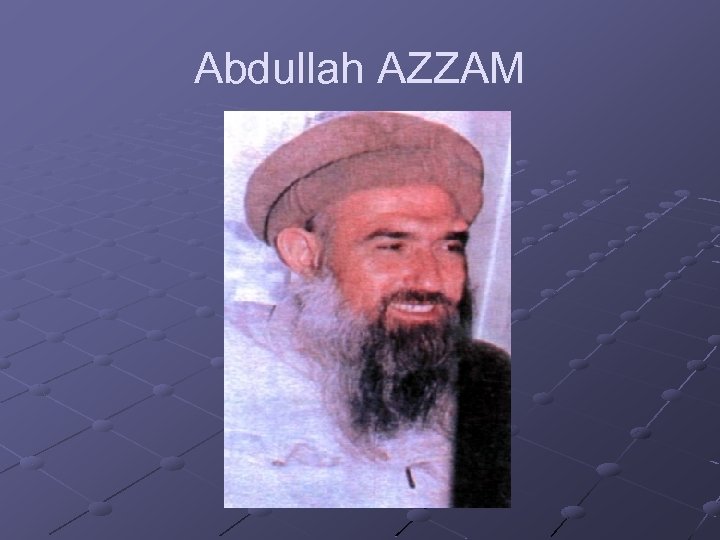 Abdullah AZZAM
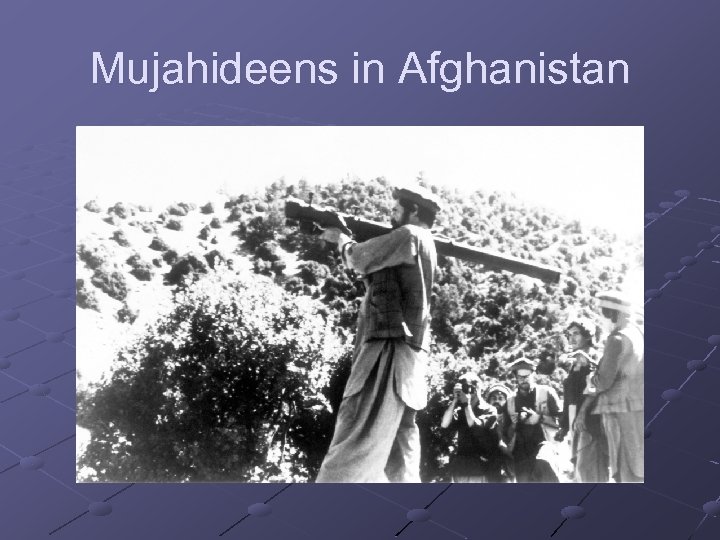 Mujahideens in Afghanistan
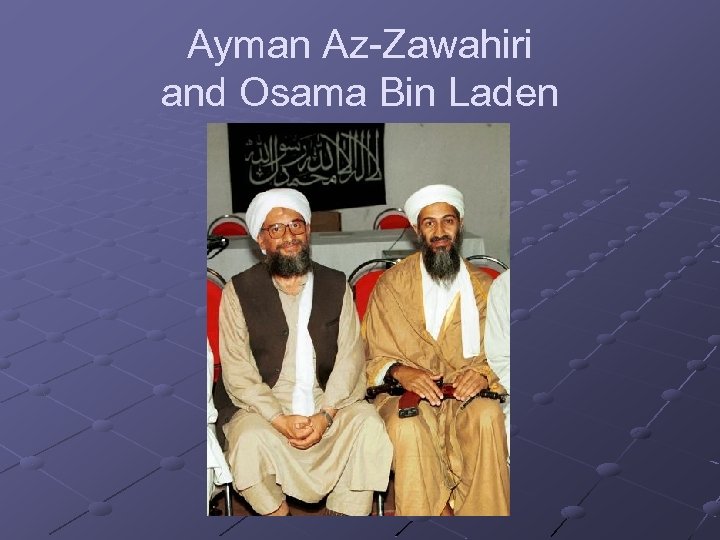 Ayman Az-Zawahiri and Osama Bin Laden
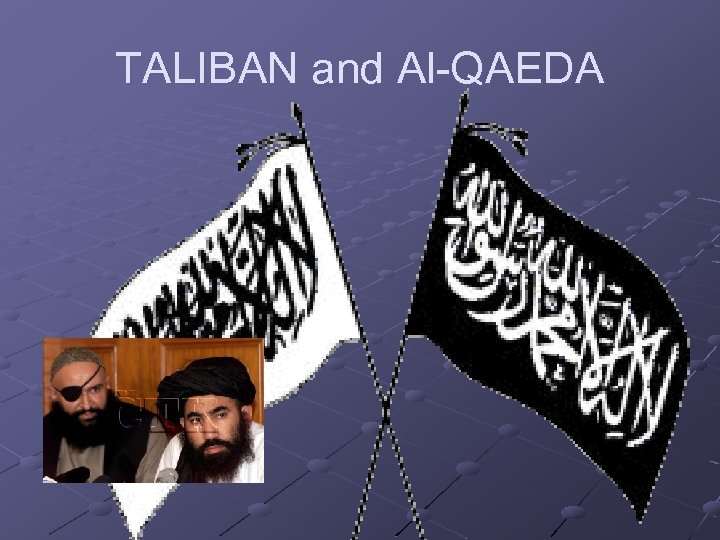 TALIBAN and Al-QAEDA
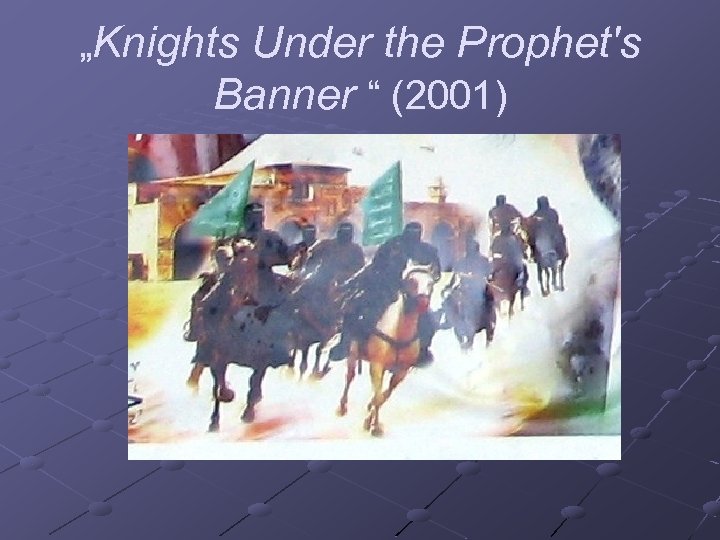 „Knights Under the Prophet's Banner “ (2001)
 For more see: http: //blizky-vychod. blogspot. com Marek´s books: Judaism and politics in Israel (2002, 2009) Israel and Palestine (2005) Encyclopedia of the Middle Eastern Terrorism (2007) Rabbis of our Time (2010, co-author) History of Modern Israel (2011)