


 Скачать презентацию Ischemic Anterior Circulation Stroke Edward C Jauch MD
c04487ee6738bc551adb23f813b64c7f.ppt
- Количество слайдов: 71
 Ischemic Anterior Circulation Stroke Edward C. Jauch, MD, MS Assistant Professor Department of Emergency Medicine University of Cincinnati College of Medicine Cincinnati, OH and Greater Cincinnati/Northern Kentucky Stroke Team
 Lecture Goals • Review Emergency Department evaluation of acute ischemic stroke • Identify issues specific to thrombolytic therapy in acute stroke • Identify treatment options for acute ischemic stroke Edward Jauch, MD, MS Introduction
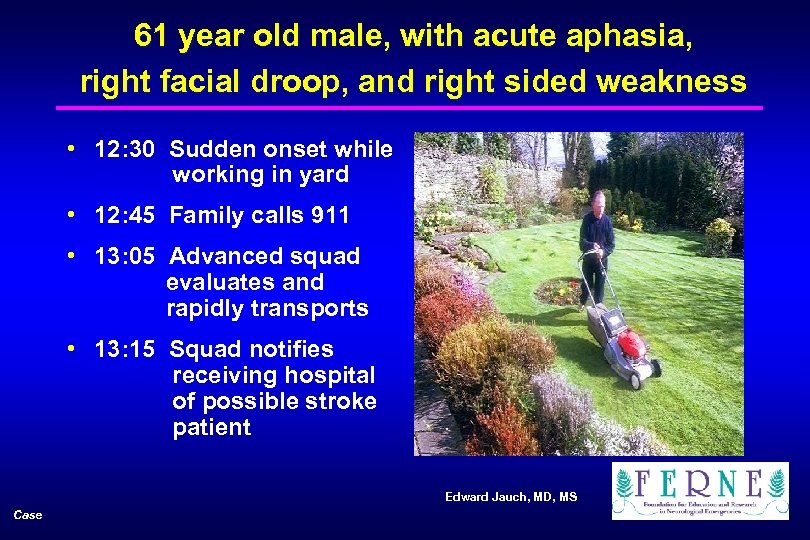 61 year old male, with acute aphasia, right facial droop, and right sided weakness • 12: 30 Sudden onset while working in yard • 12: 45 Family calls 911 • 13: 05 Advanced squad evaluates and rapidly transports • 13: 15 Squad notifies receiving hospital of possible stroke patient Edward Jauch, MD, MS Case
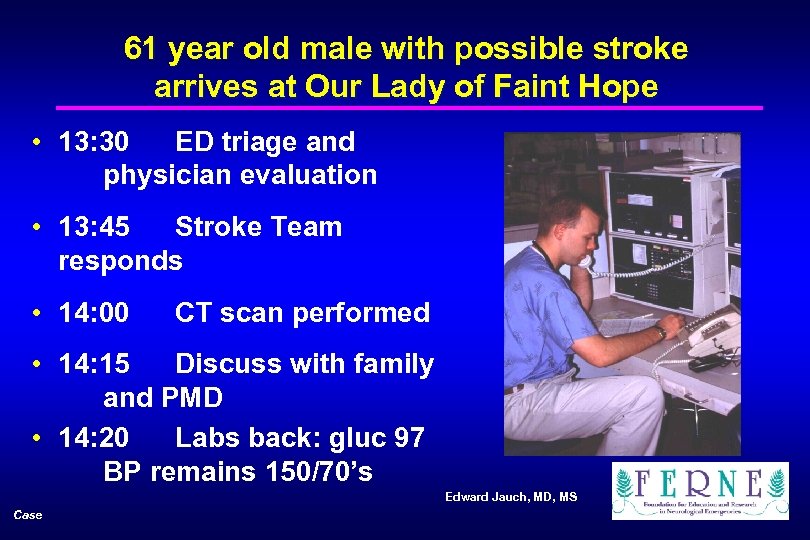 61 year old male with possible stroke arrives at Our Lady of Faint Hope • 13: 30 ED triage and physician evaluation • 13: 45 Stroke Team responds • 14: 00 CT scan performed • 14: 15 Discuss with family and PMD • 14: 20 Labs back: gluc 97 BP remains 150/70’s Edward Jauch, MD, MS Case
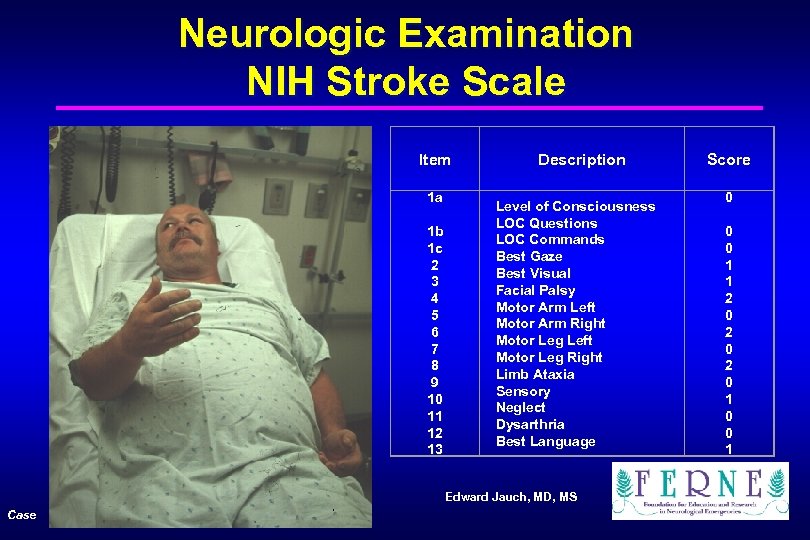 Neurologic Examination NIH Stroke Scale Item 1 a 1 b 1 c 2 3 4 5 6 7 8 9 10 11 12 13 Description Level of Consciousness LOC Questions LOC Commands Best Gaze Best Visual Facial Palsy Motor Arm Left Motor Arm Right Motor Leg Left Motor Leg Right Limb Ataxia Sensory Neglect Dysarthria Best Language Edward Jauch, MD, MS Case Score 0 0 0 1 1 2 0 2 0 1 0 0 1
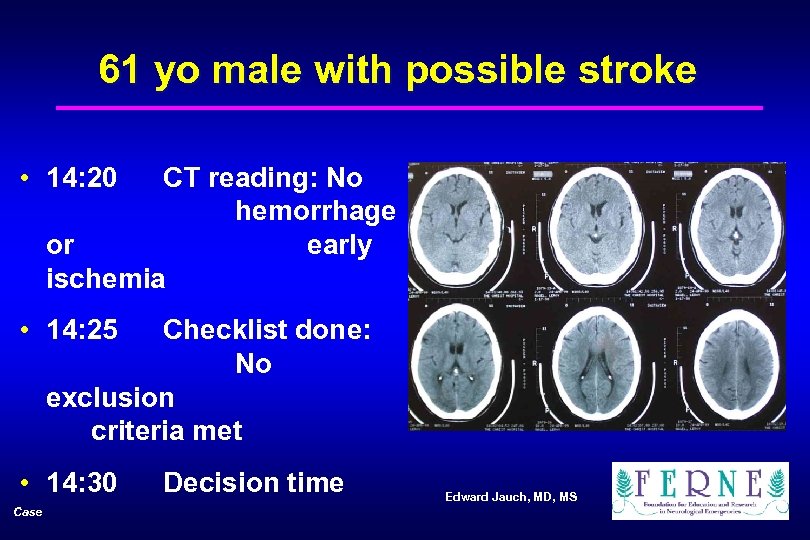 61 yo male with possible stroke • 14: 20 CT reading: No hemorrhage or early ischemia • 14: 25 Checklist done: No exclusion criteria met • 14: 30 Case Decision time Edward Jauch, MD, MS
 Impact of Stroke • 3 rd leading cause of death in the U. S. • A leading cause of adult disability • 600, 000 new strokes per year in U. S. • 85% are ischemic Edward Jauch, MD, MS Introduction
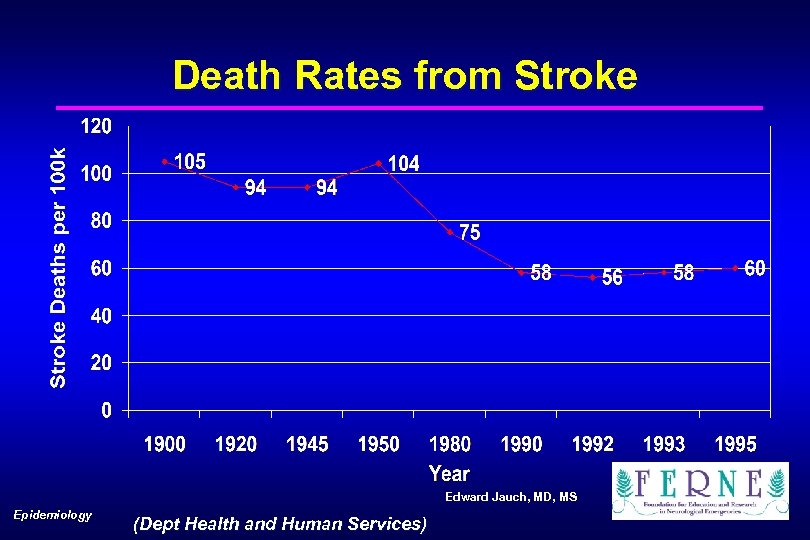 Death Rates from Stroke Edward Jauch, MD, MS Epidemiology (Dept Health and Human Services)
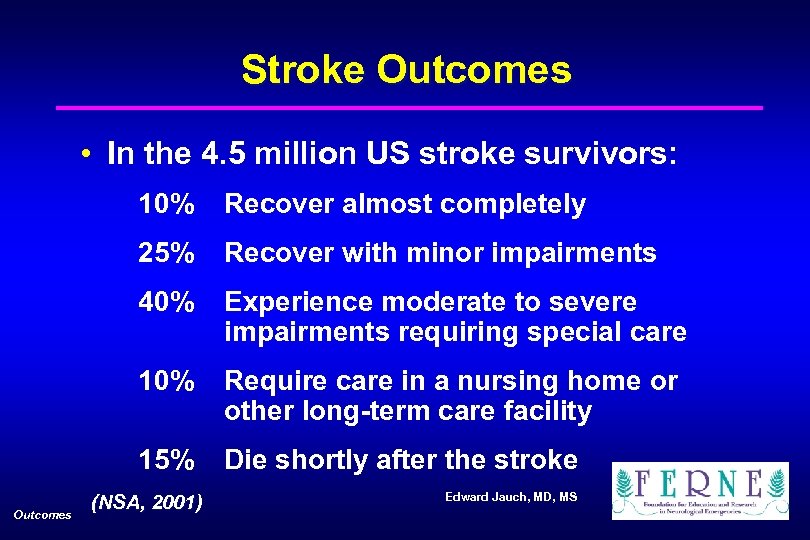 Stroke Outcomes • In the 4. 5 million US stroke survivors: 10% Recover almost completely 25% Recover with minor impairments 40% Experience moderate to severe impairments requiring special care 10% Require care in a nursing home or other long-term care facility 15% Die shortly after the stroke Outcomes (NSA, 2001) Edward Jauch, MD, MS
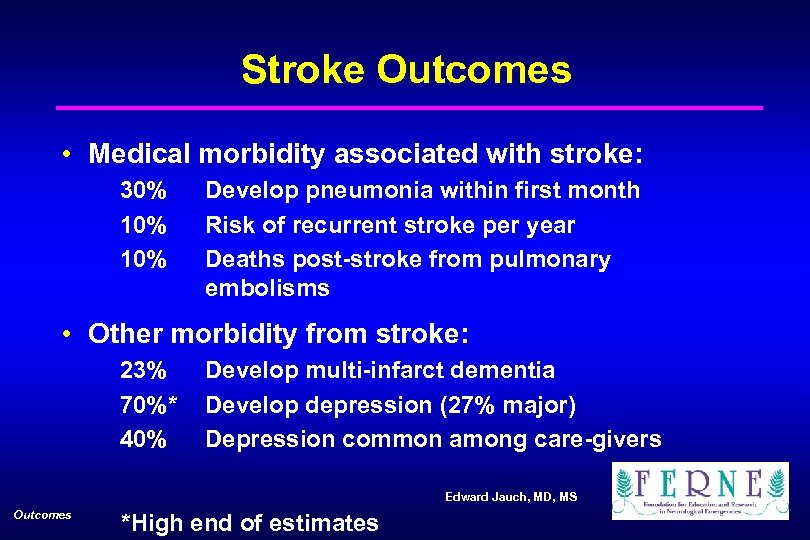 Stroke Outcomes • Medical morbidity associated with stroke: 30% 10% Develop pneumonia within first month Risk of recurrent stroke per year Deaths post-stroke from pulmonary embolisms • Other morbidity from stroke: 23% 70%* 40% Develop multi-infarct dementia Develop depression (27% major) Depression common among care-givers Edward Jauch, MD, MS Outcomes *High end of estimates
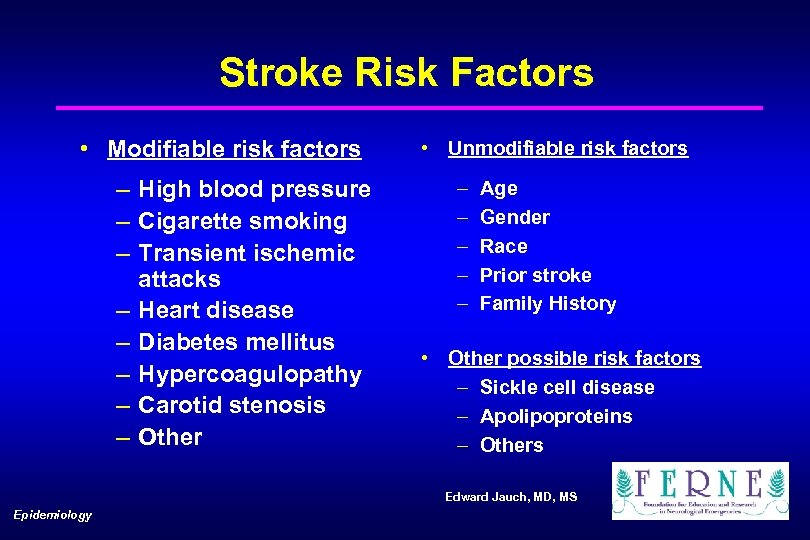 Stroke Risk Factors • Modifiable risk factors – High blood pressure – Cigarette smoking – Transient ischemic attacks – Heart disease – Diabetes mellitus – Hypercoagulopathy – Carotid stenosis – Other • Unmodifiable risk factors – – – Age Gender Race Prior stroke Family History • Other possible risk factors – Sickle cell disease – Apolipoproteins – Others Edward Jauch, MD, MS Epidemiology
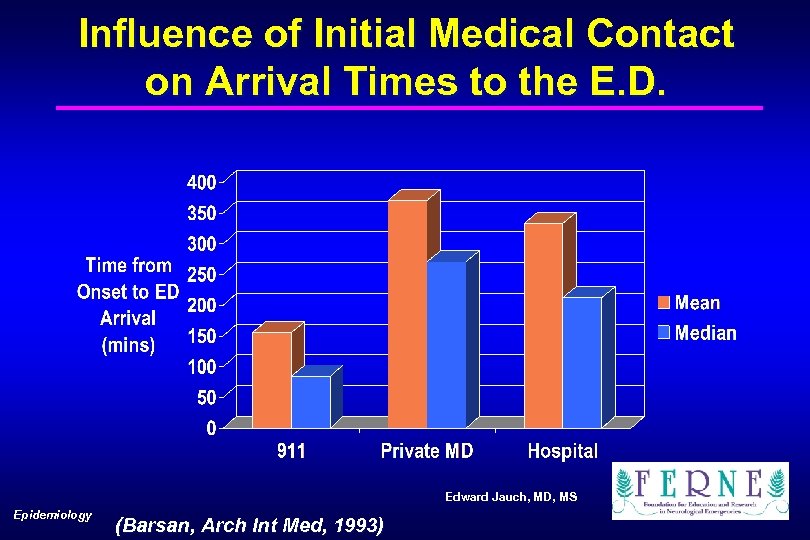 Influence of Initial Medical Contact on Arrival Times to the E. D. Edward Jauch, MD, MS Epidemiology (Barsan, Arch Int Med, 1993)
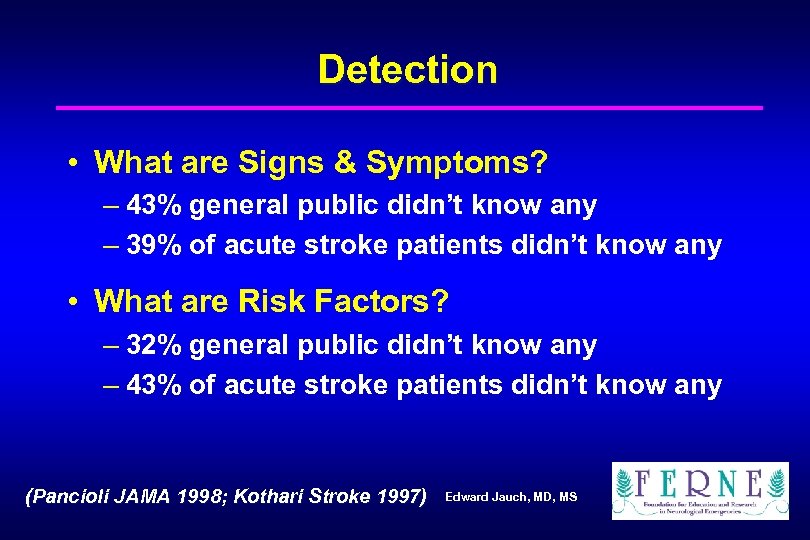 Detection • What are Signs & Symptoms? – 43% general public didn’t know any – 39% of acute stroke patients didn’t know any • What are Risk Factors? – 32% general public didn’t know any – 43% of acute stroke patients didn’t know any (Pancioli JAMA 1998; Kothari Stroke 1997) Edward Jauch, MD, MS
 Where Are We Today? • Poorly informed • Too slow • Too late • Ill prepared • Fatalistic Edward Jauch, MD, MS Epidemiology
 Forces of Change • Public expectations – Aware of “Draino for the Braino” – Nihilistic attitude of stroke changing • Medical - legal pressures • Managed care cost concerns • New treatments of stroke on horizon • Change in treating physicians perceptions of “risk” Edward Jauch, MD, MS Epidemiology
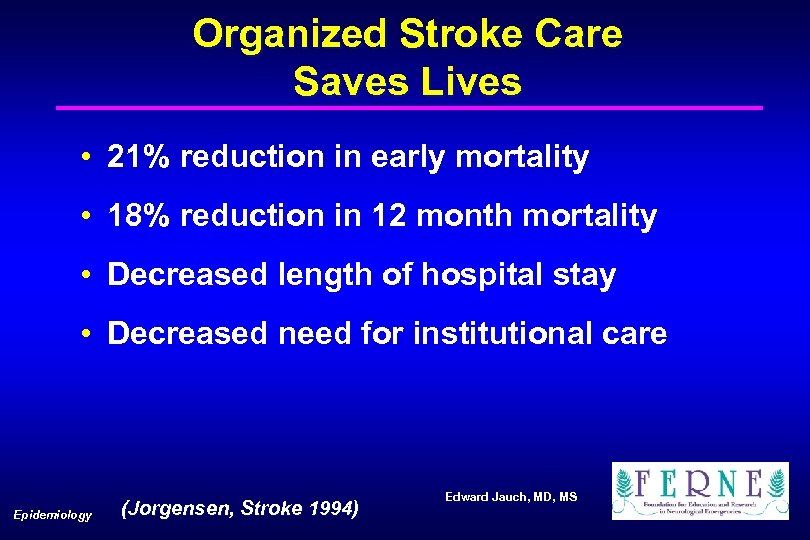 Organized Stroke Care Saves Lives • 21% reduction in early mortality • 18% reduction in 12 month mortality • Decreased length of hospital stay • Decreased need for institutional care Epidemiology (Jorgensen, Stroke 1994) Edward Jauch, MD, MS
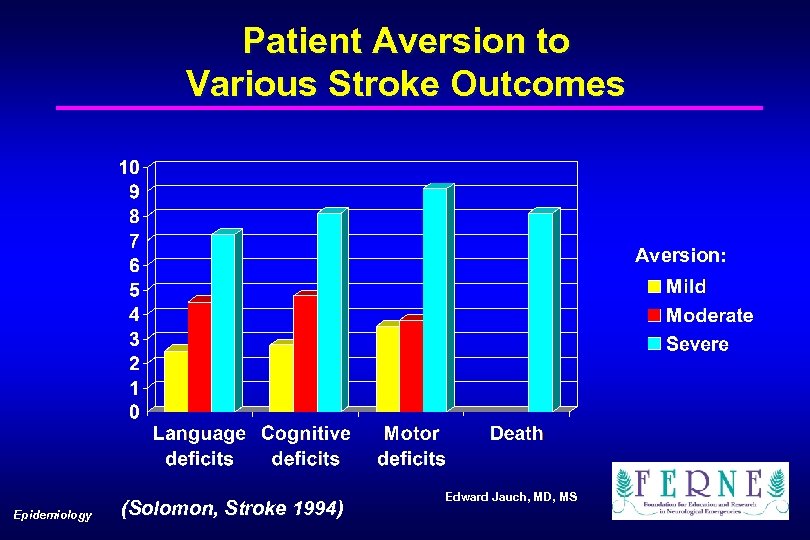 Patient Aversion to Various Stroke Outcomes Aversion: Epidemiology (Solomon, Stroke 1994) Edward Jauch, MD, MS
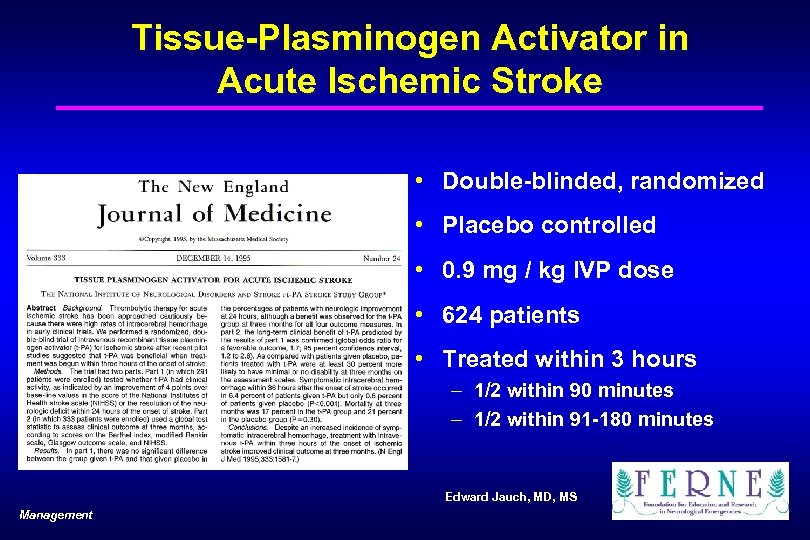 Tissue-Plasminogen Activator in Acute Ischemic Stroke • Double-blinded, randomized • Placebo controlled • 0. 9 mg / kg IVP dose • 624 patients • Treated within 3 hours – 1/2 within 90 minutes – 1/2 within 91 -180 minutes Edward Jauch, MD, MS Management
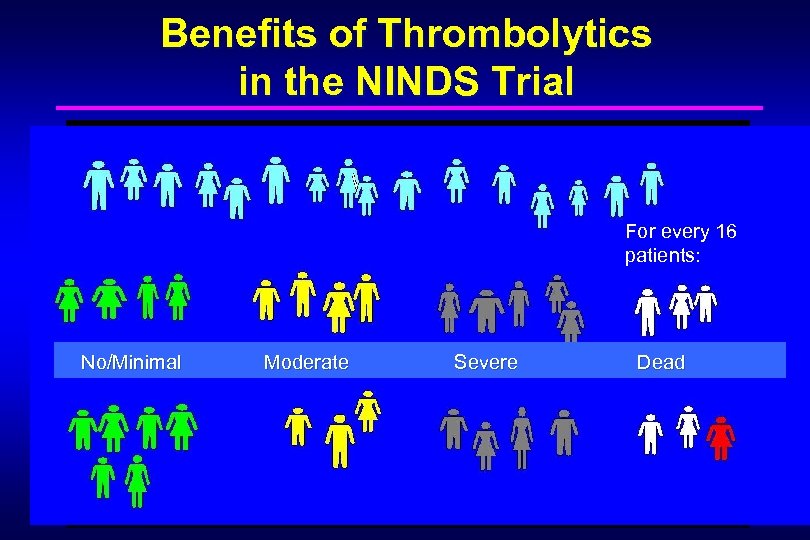 Benefits of Thrombolytics in the NINDS Trial For every 16 patients: No/Minimal Moderate Severe Edward Jauch, MD, MS Dead
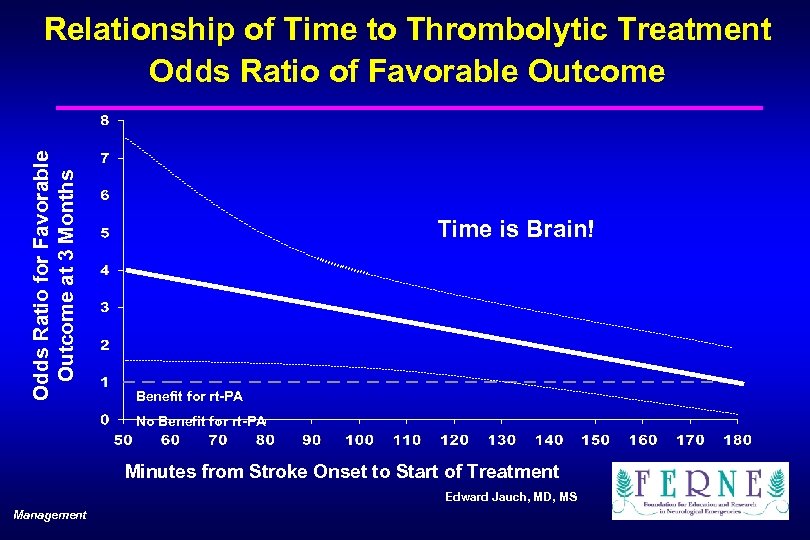 Odds Ratio for Favorable Outcome at 3 Months Relationship of Time to Thrombolytic Treatment Odds Ratio of Favorable Outcome Time is Brain! Benefit for rt-PA No Benefit for rt-PA Minutes from Stroke Onset to Start of Treatment Edward Jauch, MD, MS Management
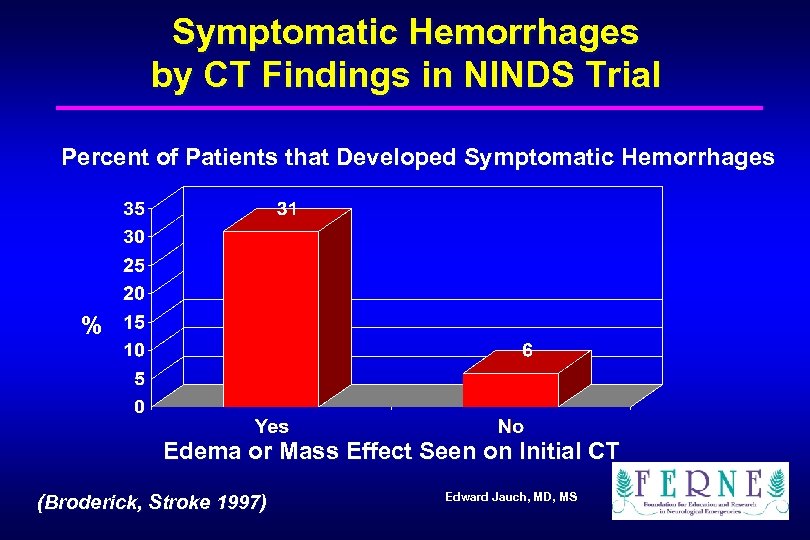 Symptomatic Hemorrhages by CT Findings in NINDS Trial Percent of Patients that Developed Symptomatic Hemorrhages % Edema or Mass Effect Seen on Initial CT (Broderick, Stroke 1997) Edward Jauch, MD, MS
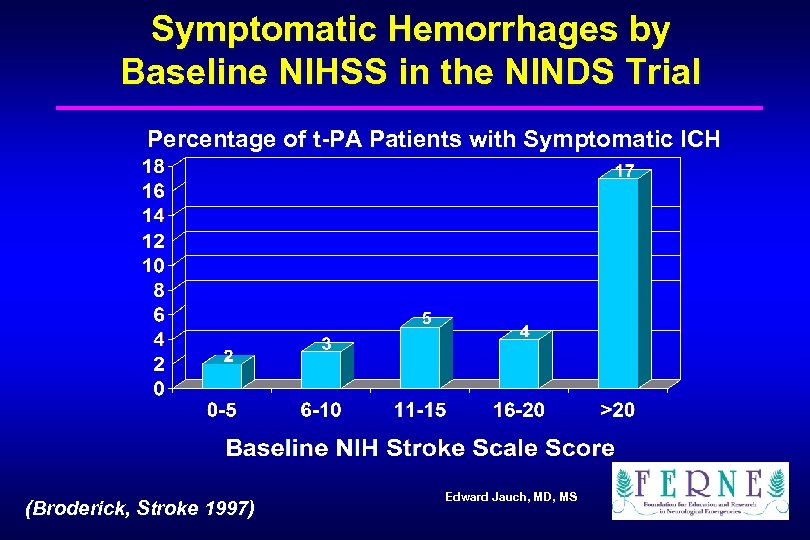 Symptomatic Hemorrhages by Baseline NIHSS in the NINDS Trial Percentage of t-PA Patients with Symptomatic ICH (Broderick, Stroke 1997) Edward Jauch, MD, MS
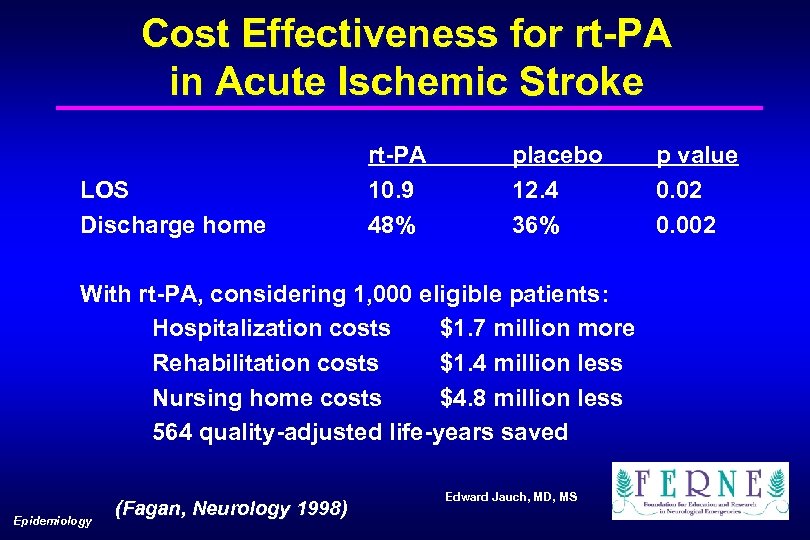 Cost Effectiveness for rt-PA in Acute Ischemic Stroke LOS Discharge home rt-PA 10. 9 48% placebo 12. 4 36% With rt-PA, considering 1, 000 eligible patients: Hospitalization costs $1. 7 million more Rehabilitation costs $1. 4 million less Nursing home costs $4. 8 million less 564 quality-adjusted life-years saved Epidemiology (Fagan, Neurology 1998) Edward Jauch, MD, MS p value 0. 02 0. 002
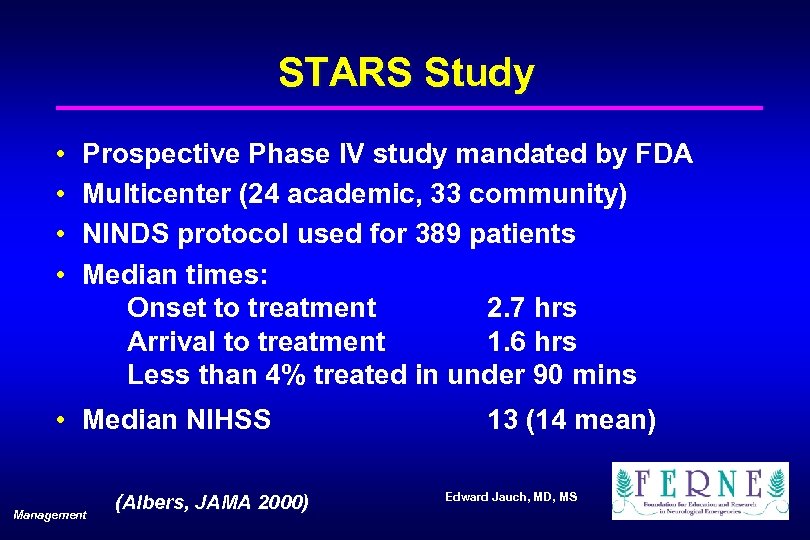 STARS Study • • Prospective Phase IV study mandated by FDA Multicenter (24 academic, 33 community) NINDS protocol used for 389 patients Median times: Onset to treatment 2. 7 hrs Arrival to treatment 1. 6 hrs Less than 4% treated in under 90 mins • Median NIHSS Management (Albers, JAMA 2000) 13 (14 mean) Edward Jauch, MD, MS
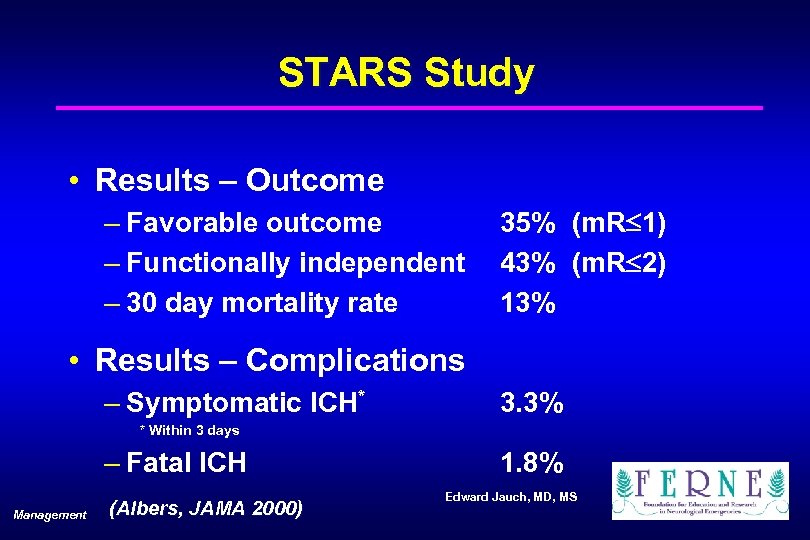 STARS Study • Results – Outcome – Favorable outcome – Functionally independent – 30 day mortality rate 35% (m. R 1) 43% (m. R 2) 13% • Results – Complications – Symptomatic ICH* 3. 3% * Within 3 days – Fatal ICH Management (Albers, JAMA 2000) 1. 8% Edward Jauch, MD, MS
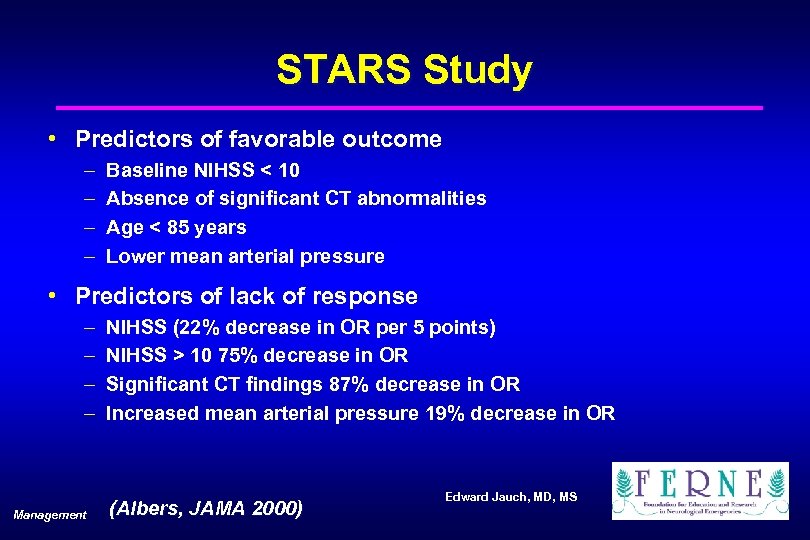 STARS Study • Predictors of favorable outcome – – Baseline NIHSS < 10 Absence of significant CT abnormalities Age < 85 years Lower mean arterial pressure • Predictors of lack of response – – Management NIHSS (22% decrease in OR per 5 points) NIHSS > 10 75% decrease in OR Significant CT findings 87% decrease in OR Increased mean arterial pressure 19% decrease in OR (Albers, JAMA 2000) Edward Jauch, MD, MS
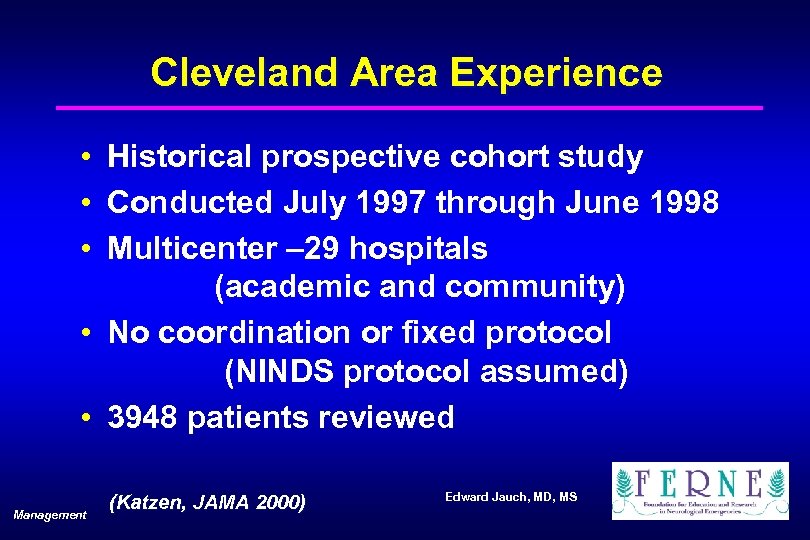 Cleveland Area Experience • Historical prospective cohort study • Conducted July 1997 through June 1998 • Multicenter – 29 hospitals (academic and community) • No coordination or fixed protocol (NINDS protocol assumed) • 3948 patients reviewed Management (Katzen, JAMA 2000) Edward Jauch, MD, MS
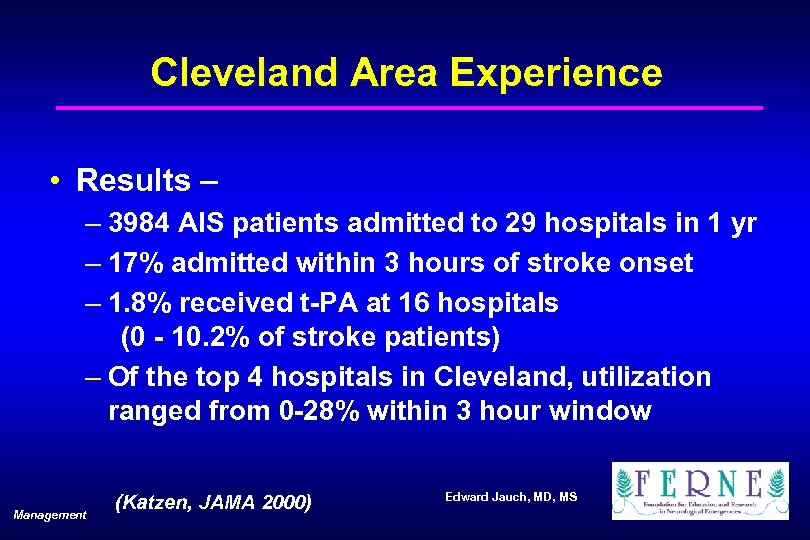 Cleveland Area Experience • Results – – 3984 AIS patients admitted to 29 hospitals in 1 yr – 17% admitted within 3 hours of stroke onset – 1. 8% received t-PA at 16 hospitals (0 - 10. 2% of stroke patients) – Of the top 4 hospitals in Cleveland, utilization ranged from 0 -28% within 3 hour window Management (Katzen, JAMA 2000) Edward Jauch, MD, MS
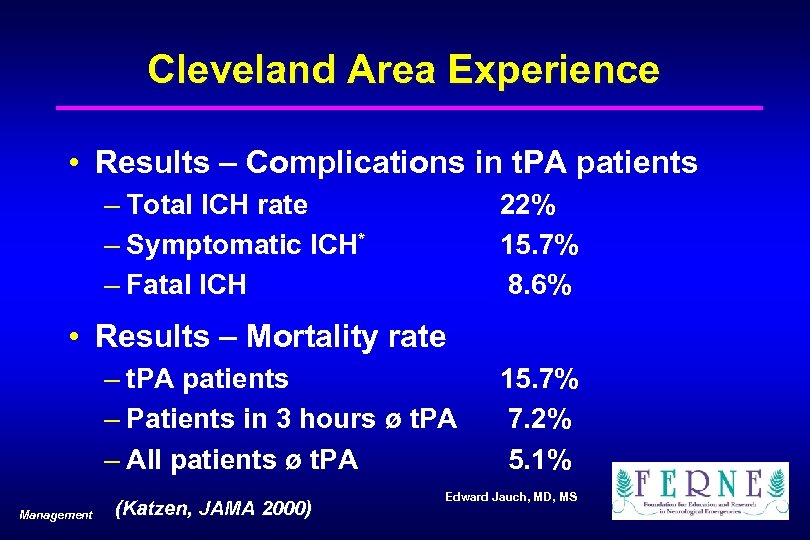 Cleveland Area Experience • Results – Complications in t. PA patients – Total ICH rate – Symptomatic ICH* – Fatal ICH 22% 15. 7% 8. 6% • Results – Mortality rate – t. PA patients – Patients in 3 hours ø t. PA – All patients ø t. PA Management (Katzen, JAMA 2000) 15. 7% 7. 2% 5. 1% Edward Jauch, MD, MS
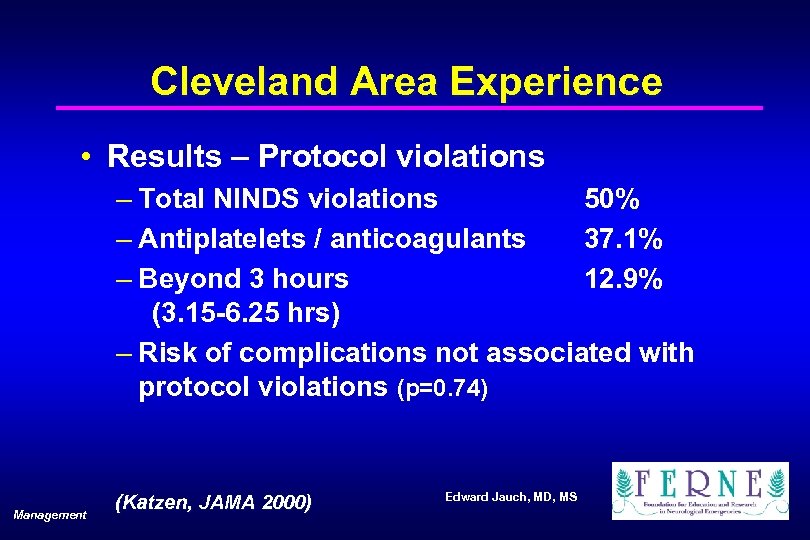 Cleveland Area Experience • Results – Protocol violations – Total NINDS violations 50% – Antiplatelets / anticoagulants 37. 1% – Beyond 3 hours 12. 9% (3. 15 -6. 25 hrs) – Risk of complications not associated with protocol violations (p=0. 74) Management (Katzen, JAMA 2000) Edward Jauch, MD, MS
 How to Evaluate and Treat Acute Ischemic Stroke in 2000 Edward Jauch, MD, MS Evaluation
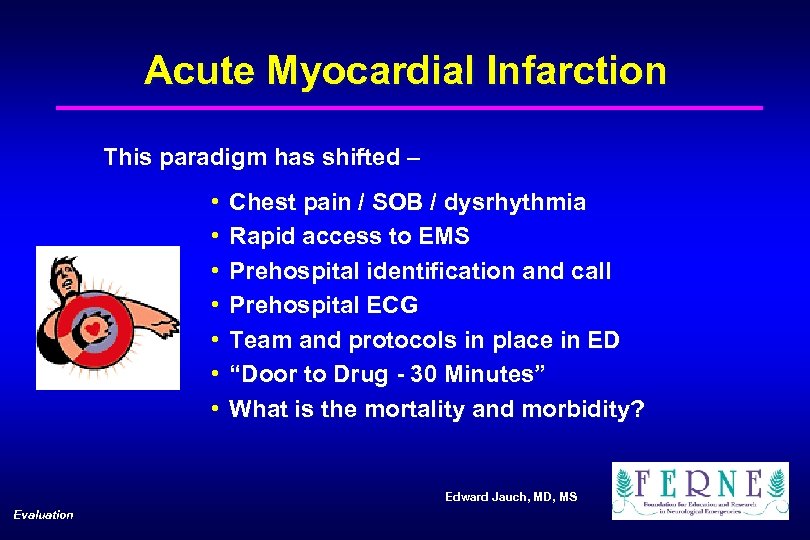 Acute Myocardial Infarction This paradigm has shifted – • • Chest pain / SOB / dysrhythmia Rapid access to EMS Prehospital identification and call Prehospital ECG Team and protocols in place in ED “Door to Drug - 30 Minutes” What is the mortality and morbidity? Edward Jauch, MD, MS Evaluation
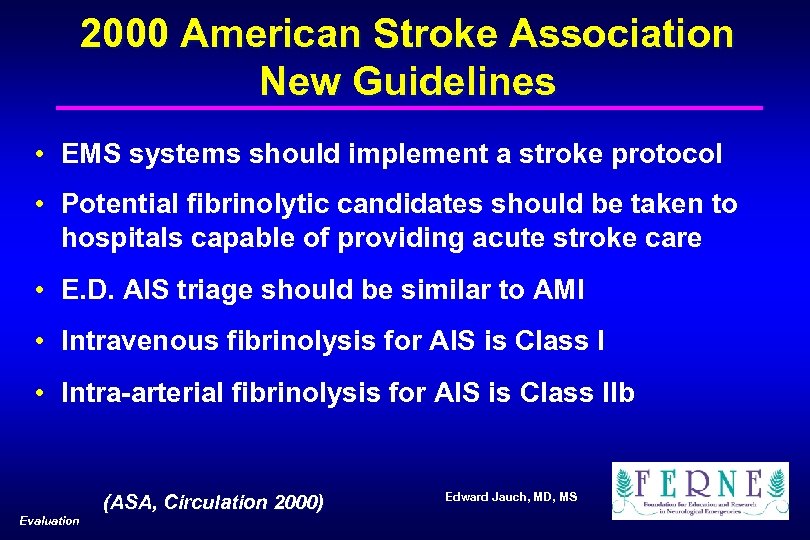 2000 American Stroke Association New Guidelines • EMS systems should implement a stroke protocol • Potential fibrinolytic candidates should be taken to hospitals capable of providing acute stroke care • E. D. AIS triage should be similar to AMI • Intravenous fibrinolysis for AIS is Class I • Intra-arterial fibrinolysis for AIS is Class IIb (ASA, Circulation 2000) Evaluation Edward Jauch, MD, MS
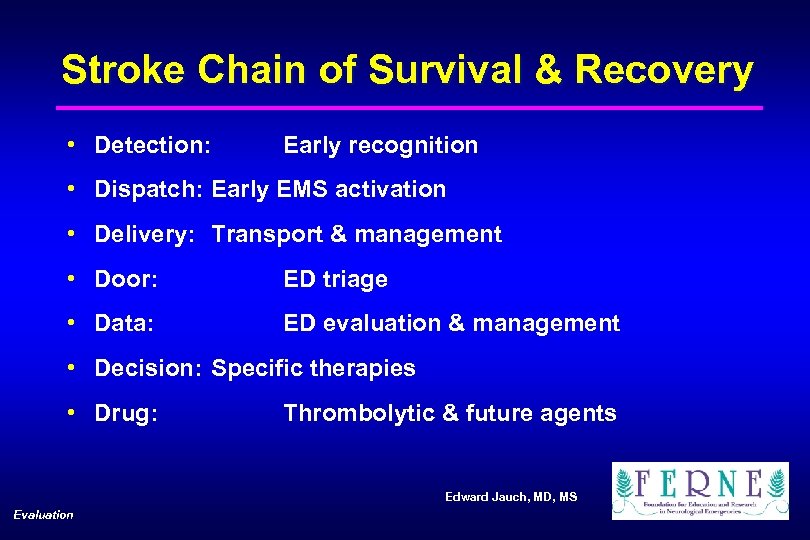 Stroke Chain of Survival & Recovery • Detection: Early recognition • Dispatch: Early EMS activation • Delivery: Transport & management • Door: ED triage • Data: ED evaluation & management • Decision: Specific therapies • Drug: Thrombolytic & future agents Edward Jauch, MD, MS Evaluation
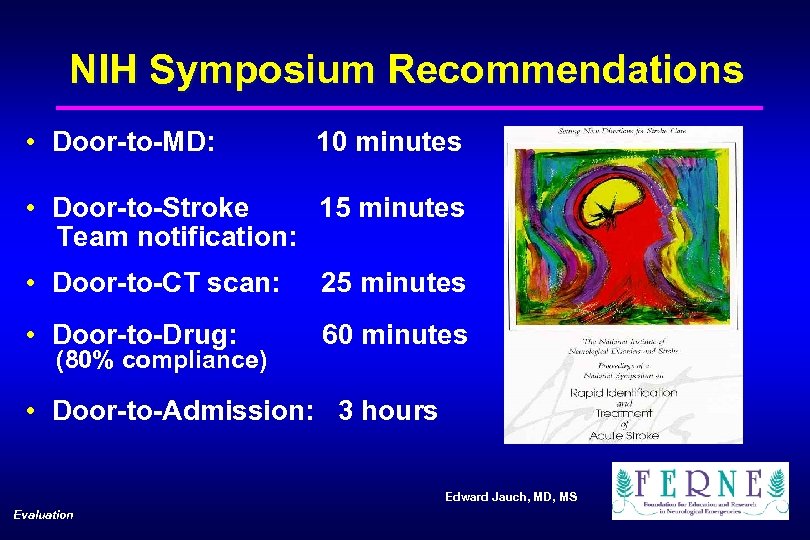 NIH Symposium Recommendations • Door-to-MD: 10 minutes • Door-to-Stroke 15 minutes Team notification: • Door-to-CT scan: 25 minutes • Door-to-Drug: 60 minutes (80% compliance) • Door-to-Admission: 3 hours Edward Jauch, MD, MS Evaluation
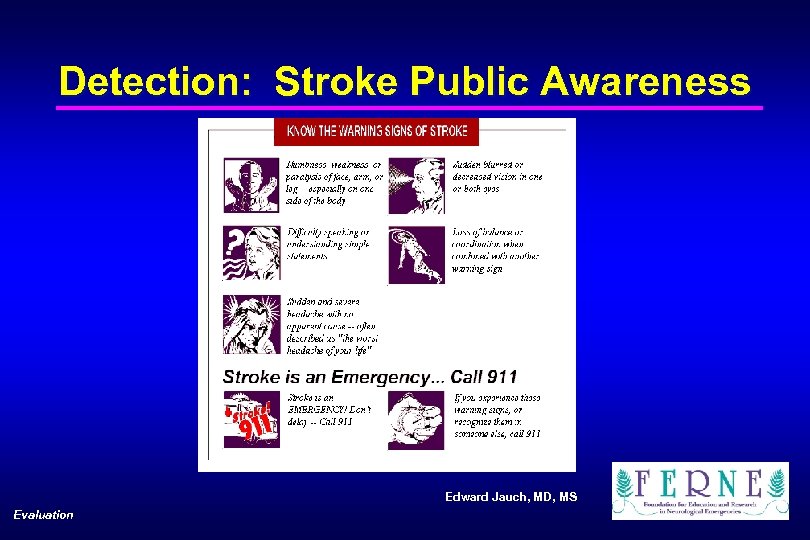 Detection: Stroke Public Awareness Edward Jauch, MD, MS Evaluation
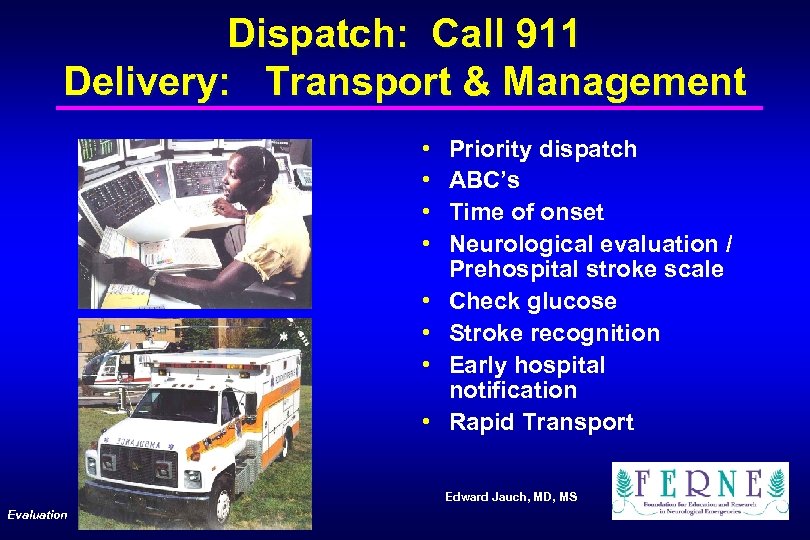 Dispatch: Call 911 Delivery: Transport & Management • • Priority dispatch ABC’s Time of onset Neurological evaluation / Prehospital stroke scale Check glucose Stroke recognition Early hospital notification Rapid Transport Edward Jauch, MD, MS Evaluation
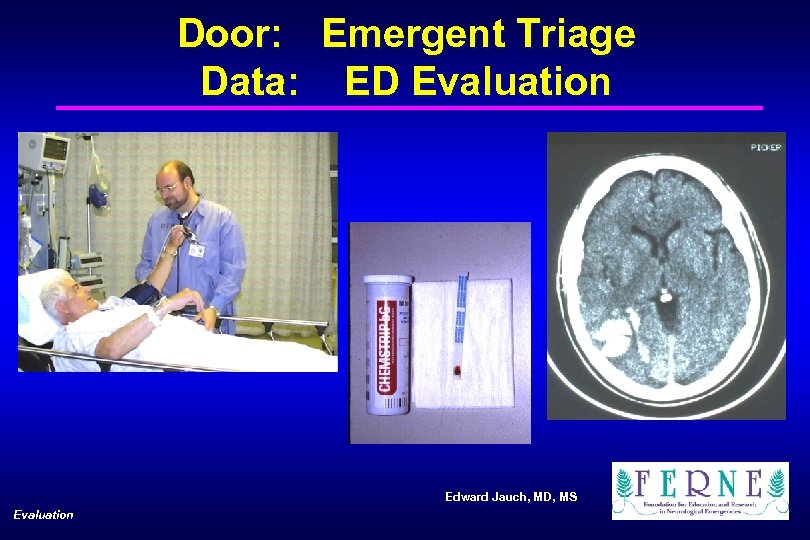 Door: Emergent Triage Data: ED Evaluation Edward Jauch, MD, MS Evaluation
 Preparation • • Check glucose Two large IV lines Oxygen as needed Cardiac monitor Continuous pulse-ox Non-contrast CT scan ECG CXR • Perform the NIH stroke scale • Get rt-PA – Prepare to mix – Have pharmacy alerted • Make sure family is available • Contact primary care provider Edward Jauch, MD, MS Evaluation
 Preparation • Systems and personnel need to be in place • Know your Stroke Team before you need them! Edward Jauch, MD, MS Evaluation
 General Stroke Management • Oxygen – Use to correct hypoxia – Suggestion it may hurt one year survival 69% 3 L NC vs 73% control • Glucose – Maintain euglycemia – Treat glucose < 50 with D 50 – Treat glucose > 300 mg/dl with insulin (Rønning, Stroke 1999) Evaluation Edward Jauch, MD, MS
 General Stroke Management • Cardiac monitor – Observe for ischemic changes or atrial fibrillation • Intravenous fluids – Avoid D 5 W and excessive fluid administration – IV normal saline at 50 cc / hr unless otherwise required • NPO – Aspiration risk is great, avoid oral intake until swallowing assessed • Temperature – Avoid hyperthermia, PO/PR acetaminophen prn Edward Jauch, MD, MS Evaluation
 The True Time of Onset • Multiple sources • How normal were they? – Who saw them this morning? – Clearly no symptoms? • Times of reference – The time the basketball game started Edward Jauch, MD, MS Evaluation
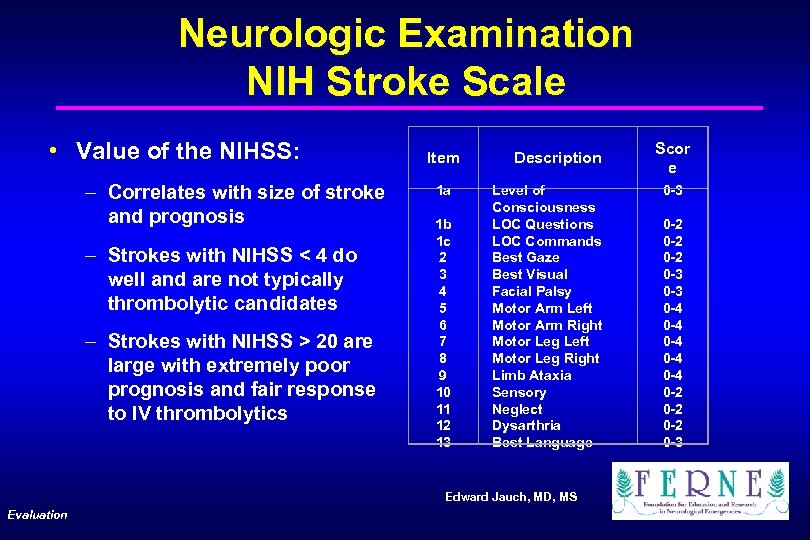 Neurologic Examination NIH Stroke Scale • Value of the NIHSS: – Correlates with size of stroke and prognosis – Strokes with NIHSS < 4 do well and are not typically thrombolytic candidates – Strokes with NIHSS > 20 are large with extremely poor prognosis and fair response to IV thrombolytics Item 1 a 1 b 1 c 2 3 4 5 6 7 8 9 10 11 12 13 Description Level of Consciousness LOC Questions LOC Commands Best Gaze Best Visual Facial Palsy Motor Arm Left Motor Arm Right Motor Leg Left Motor Leg Right Limb Ataxia Sensory Neglect Dysarthria Best Language Edward Jauch, MD, MS Evaluation Scor e 0 -3 0 -2 0 -2 0 -3 0 -4 0 -4 0 -4 0 -2 0 -2 0 -3
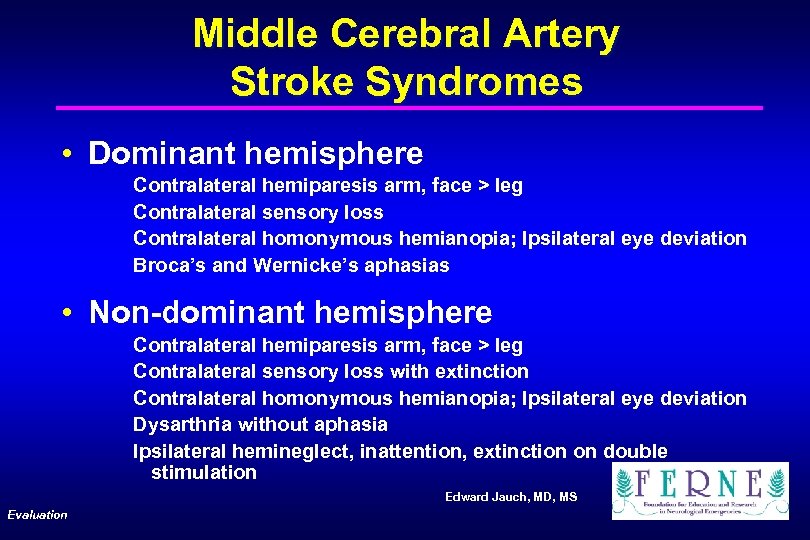 Middle Cerebral Artery Stroke Syndromes • Dominant hemisphere Contralateral hemiparesis arm, face > leg Contralateral sensory loss Contralateral homonymous hemianopia; Ipsilateral eye deviation Broca’s and Wernicke’s aphasias • Non-dominant hemisphere Contralateral hemiparesis arm, face > leg Contralateral sensory loss with extinction Contralateral homonymous hemianopia; Ipsilateral eye deviation Dysarthria without aphasia Ipsilateral hemineglect, inattention, extinction on double stimulation Edward Jauch, MD, MS Evaluation
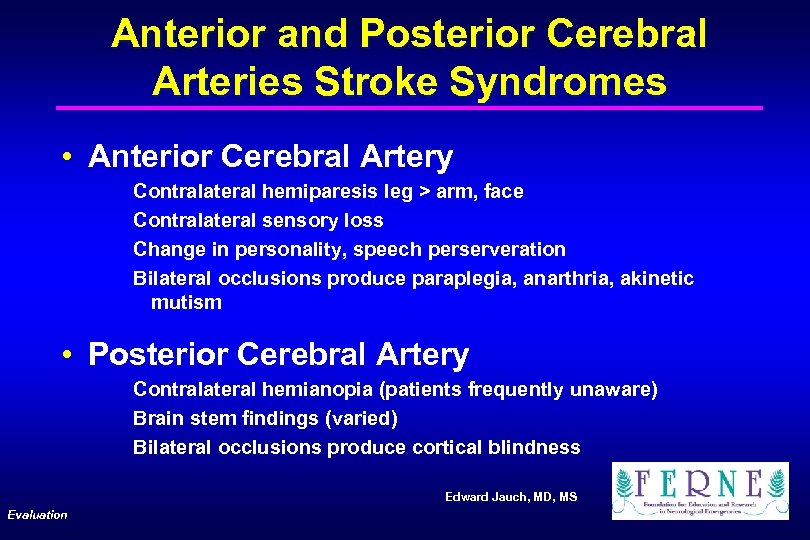 Anterior and Posterior Cerebral Arteries Stroke Syndromes • Anterior Cerebral Artery Contralateral hemiparesis leg > arm, face Contralateral sensory loss Change in personality, speech perserveration Bilateral occlusions produce paraplegia, anarthria, akinetic mutism • Posterior Cerebral Artery Contralateral hemianopia (patients frequently unaware) Brain stem findings (varied) Bilateral occlusions produce cortical blindness Edward Jauch, MD, MS Evaluation
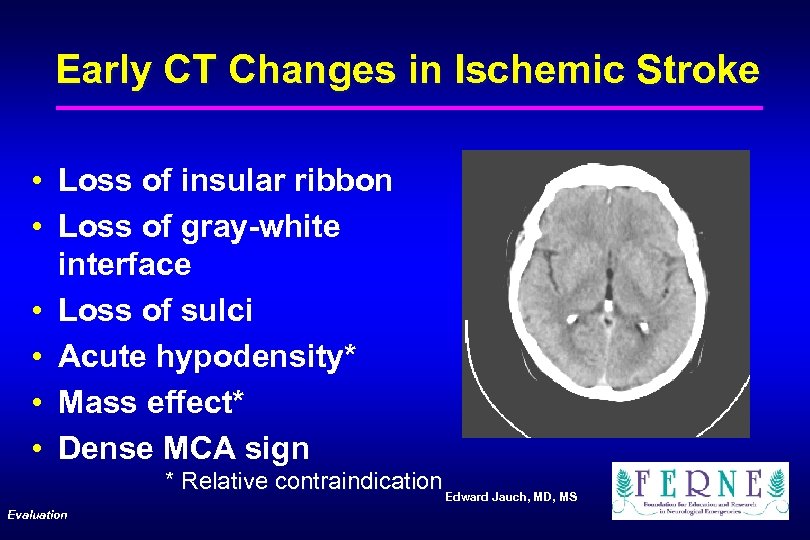 Early CT Changes in Ischemic Stroke • Loss of insular ribbon • Loss of gray-white interface • Loss of sulci • Acute hypodensity* • Mass effect* • Dense MCA sign * Relative contraindication Edward Jauch, MD, MS Evaluation
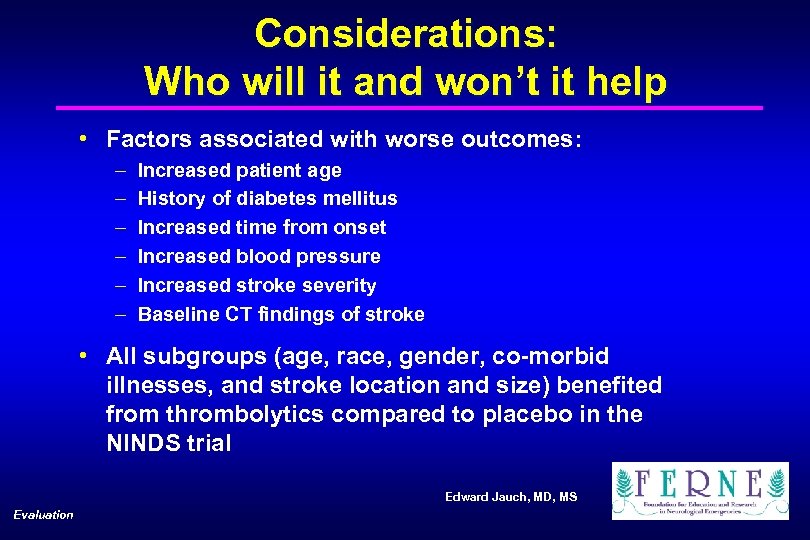 Considerations: Who will it and won’t it help • Factors associated with worse outcomes: – – – Increased patient age History of diabetes mellitus Increased time from onset Increased blood pressure Increased stroke severity Baseline CT findings of stroke • All subgroups (age, race, gender, co-morbid illnesses, and stroke location and size) benefited from thrombolytics compared to placebo in the NINDS trial Edward Jauch, MD, MS Evaluation
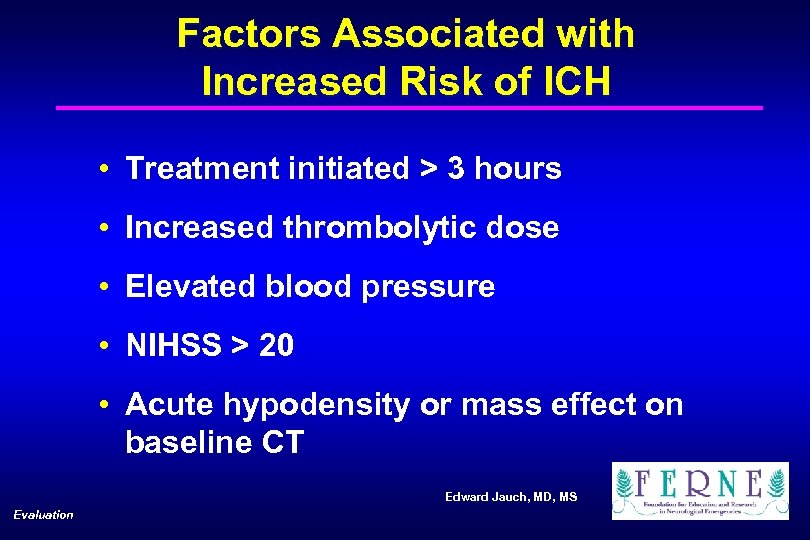 Factors Associated with Increased Risk of ICH • Treatment initiated > 3 hours • Increased thrombolytic dose • Elevated blood pressure • NIHSS > 20 • Acute hypodensity or mass effect on baseline CT Edward Jauch, MD, MS Evaluation
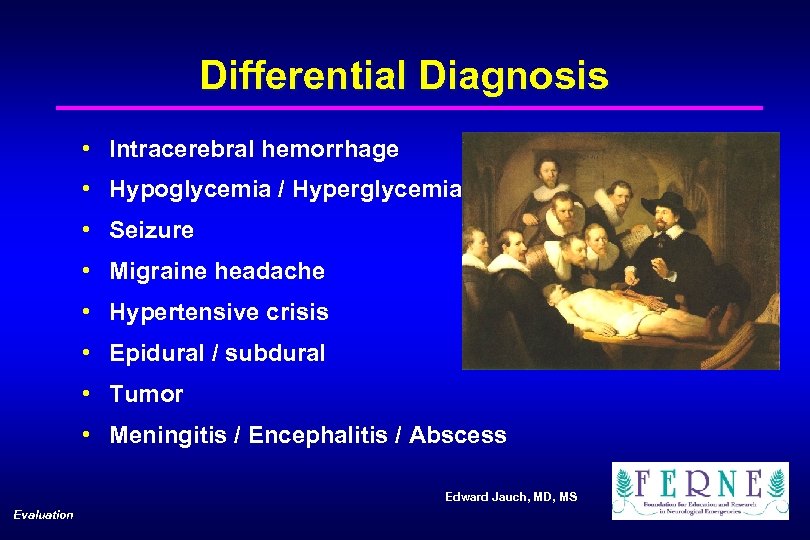 Differential Diagnosis • Intracerebral hemorrhage • Hypoglycemia / Hyperglycemia • Seizure • Migraine headache • Hypertensive crisis • Epidural / subdural • Tumor • Meningitis / Encephalitis / Abscess Edward Jauch, MD, MS Evaluation
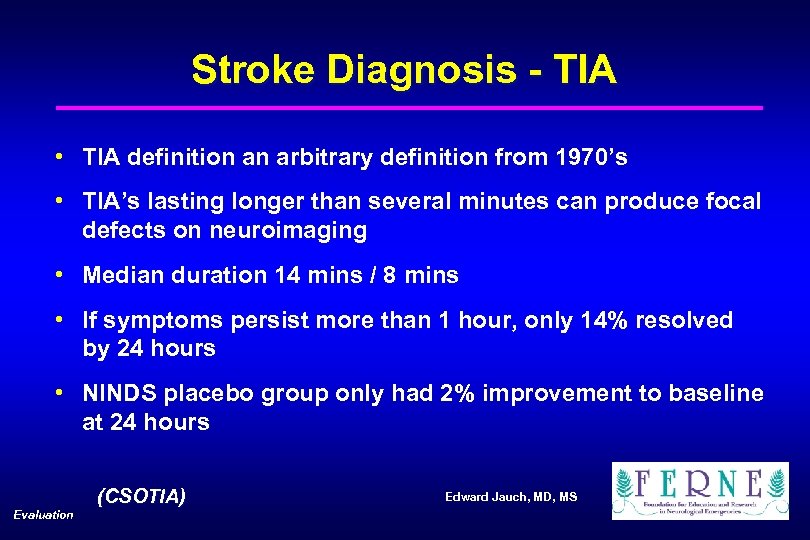 Stroke Diagnosis - TIA • TIA definition an arbitrary definition from 1970’s • TIA’s lasting longer than several minutes can produce focal defects on neuroimaging • Median duration 14 mins / 8 mins • If symptoms persist more than 1 hour, only 14% resolved by 24 hours • NINDS placebo group only had 2% improvement to baseline at 24 hours (CSOTIA) Evaluation Edward Jauch, MD, MS
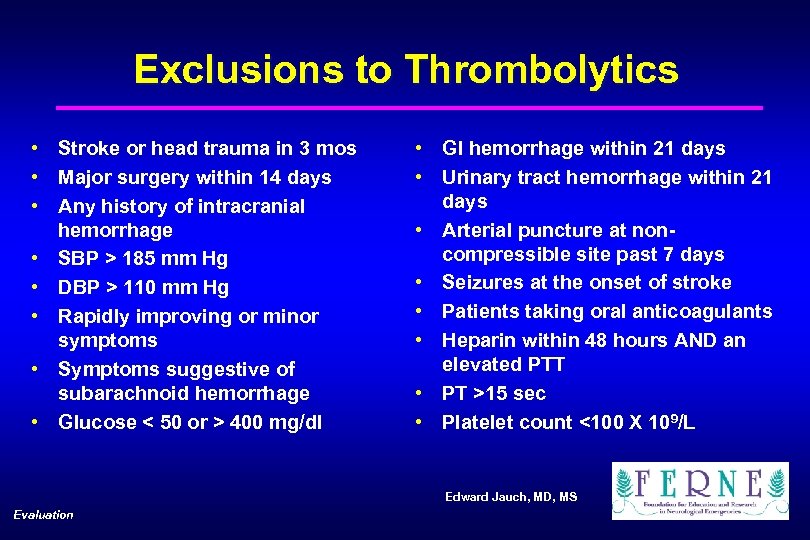 Exclusions to Thrombolytics • Stroke or head trauma in 3 mos • Major surgery within 14 days • Any history of intracranial hemorrhage • SBP > 185 mm Hg • DBP > 110 mm Hg • Rapidly improving or minor symptoms • Symptoms suggestive of subarachnoid hemorrhage • Glucose < 50 or > 400 mg/dl • GI hemorrhage within 21 days • Urinary tract hemorrhage within 21 days • Arterial puncture at noncompressible site past 7 days • Seizures at the onset of stroke • Patients taking oral anticoagulants • Heparin within 48 hours AND an elevated PTT • PT >15 sec • Platelet count <100 X 109/L Edward Jauch, MD, MS Evaluation
 Exclusions to Thrombolytics • “Patients were also excluded if aggressive measures were required to lower the blood pressure to within specified limits” Edward Jauch, MD, MS Evaluation
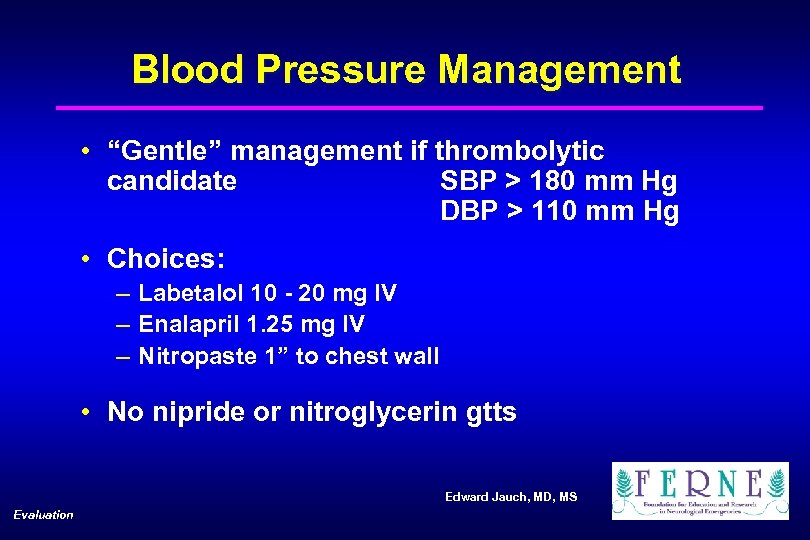 Blood Pressure Management • “Gentle” management if thrombolytic candidate SBP > 180 mm Hg DBP > 110 mm Hg • Choices: – Labetalol 10 - 20 mg IV – Enalapril 1. 25 mg IV – Nitropaste 1” to chest wall • No nipride or nitroglycerin gtts Edward Jauch, MD, MS Evaluation
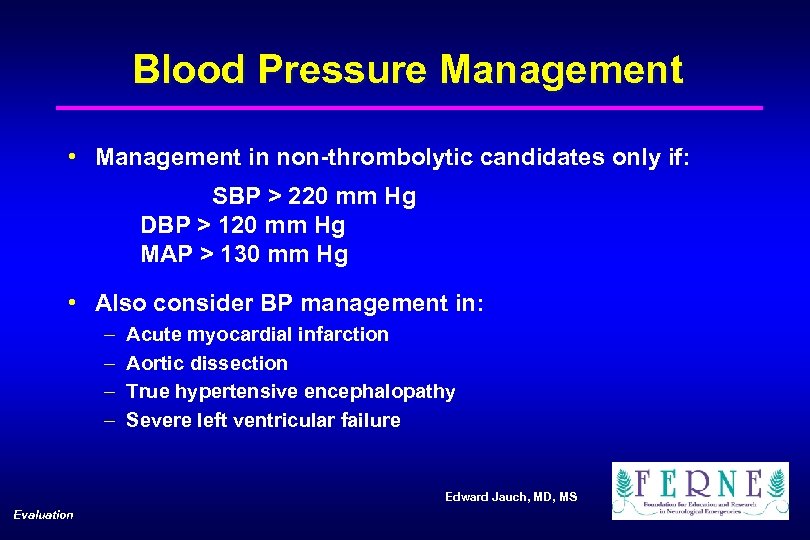 Blood Pressure Management • Management in non-thrombolytic candidates only if: SBP > 220 mm Hg DBP > 120 mm Hg MAP > 130 mm Hg • Also consider BP management in: – – Acute myocardial infarction Aortic dissection True hypertensive encephalopathy Severe left ventricular failure Edward Jauch, MD, MS Evaluation
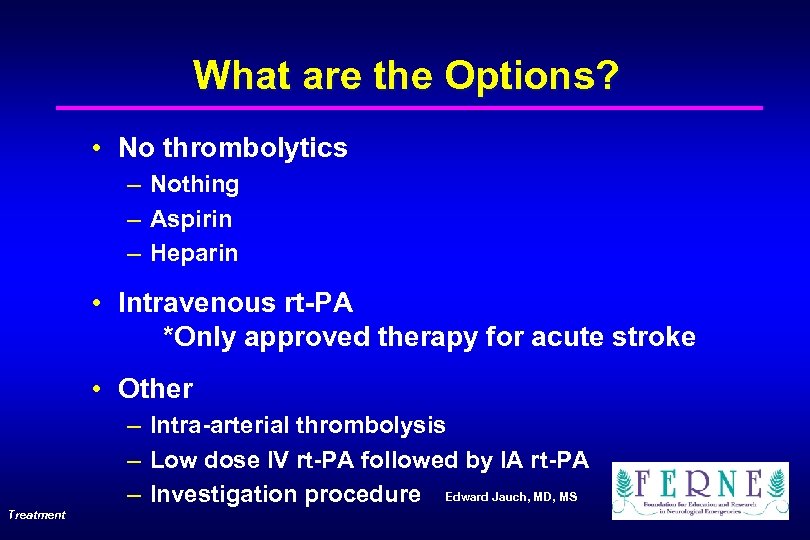 What are the Options? • No thrombolytics – Nothing – Aspirin – Heparin • Intravenous rt-PA *Only approved therapy for acute stroke • Other – Intra-arterial thrombolysis – Low dose IV rt-PA followed by IA rt-PA – Investigation procedure Edward Jauch, MD, MS Treatment
 Stroke Treatment – Aspirin / Heparinoids • Aspirin – Two large trials: International Stroke Trial (IST) Chinese Acute Stroke Trial (CAST) – Death / nonfatal strokes reduced 11% – If not a thrombolytic candidate, give within first 24 hrs • Heparin – Two important trials International Stroke Trial (IST) TOAST (Trial of ORG 10172) – No net stroke benefit Treatment Edward Jauch, MD, MS
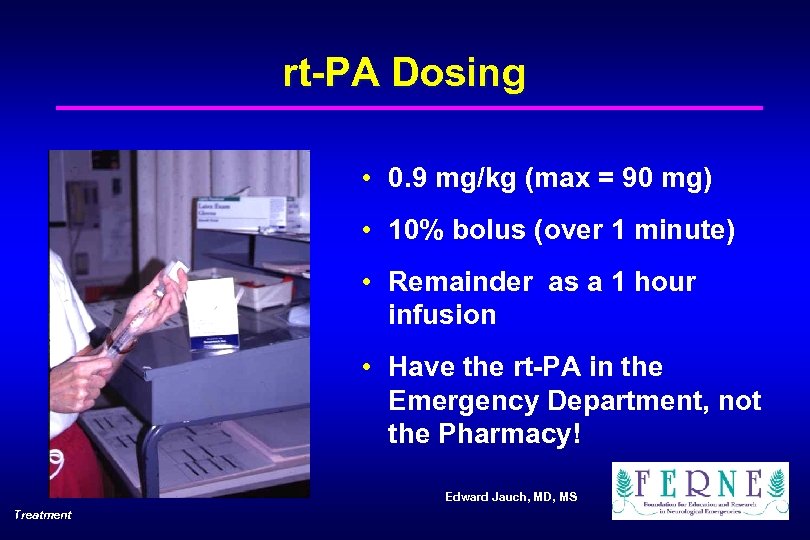 rt-PA Dosing • 0. 9 mg/kg (max = 90 mg) • 10% bolus (over 1 minute) • Remainder as a 1 hour infusion • Have the rt-PA in the Emergency Department, not the Pharmacy! Edward Jauch, MD, MS Treatment
 Post-Treatment Care Edward Jauch, MD, MS Treatment
 Patient Monitoring • ICU admission (24 hours) • Neuro checks – Q 15 minute X 6 hours – Q 1 hour X 18 hours • BP checks – Call on the FIRST abnormal reading! – Do not hesitate to use a drip • Watch for bleeding Treatment Edward Jauch, MD, MS
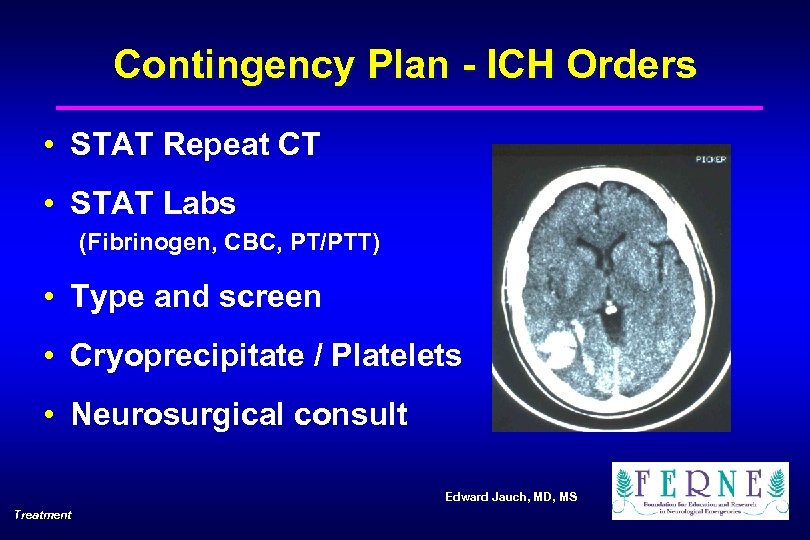 Contingency Plan - ICH Orders • STAT Repeat CT • STAT Labs (Fibrinogen, CBC, PT/PTT) • Type and screen • Cryoprecipitate / Platelets • Neurosurgical consult Edward Jauch, MD, MS Treatment
 Blood Pressure Management After Thrombolytics • SBP 180 - 230 or DBP 105 -120 mm Hg – Labetalol 10 mg IV, may repeat / double to 150 mg max – Labetalol drip 2 -8 mg / min • SBP > 230 or DBP 121 - 140 mm Hg – Above – Sodium nitroprusside • DBP > 140 mm Hg – Sodium nitroprusside (0. 5 µg/kg per minute) • May consider enalapril in patients with CHF, asthma, abnormal cardiac conduction Edward Jauch, MD, MS Treatment
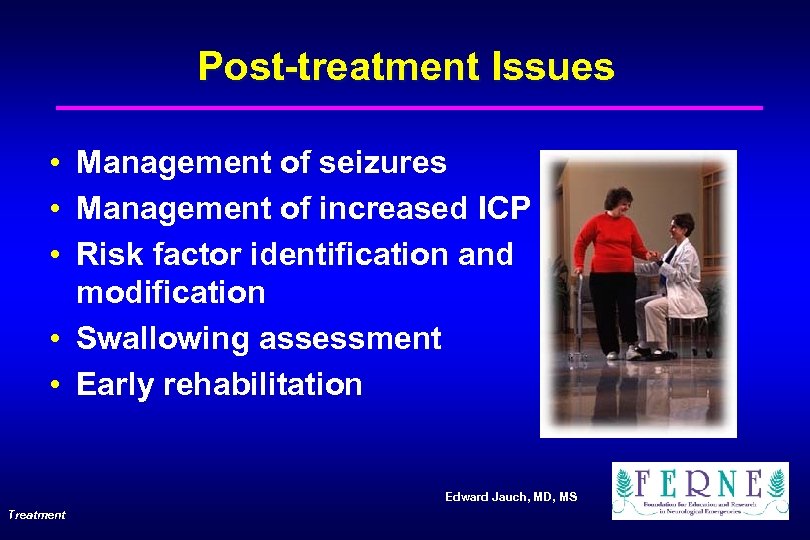 Post-treatment Issues • Management of seizures • Management of increased ICP • Risk factor identification and modification • Swallowing assessment • Early rehabilitation Edward Jauch, MD, MS Treatment
 The Future of Acute Stroke Treatment • • • Establishment of tiered “Stroke Centers” New diagnostic tools Neuroimaging, markers Thrombolytics Pro. UK, TNK, r. PA, ANCROD* Intra-arterial approaches IA, stents, angioplasty Combination agents Antiplatelets, LMWH, • Cerebral protection • Surgical neuroprotectives Hypothermia, HBO Hemicraniectomy * fibrinogenolytic Edward Jauch, MD, MS Future
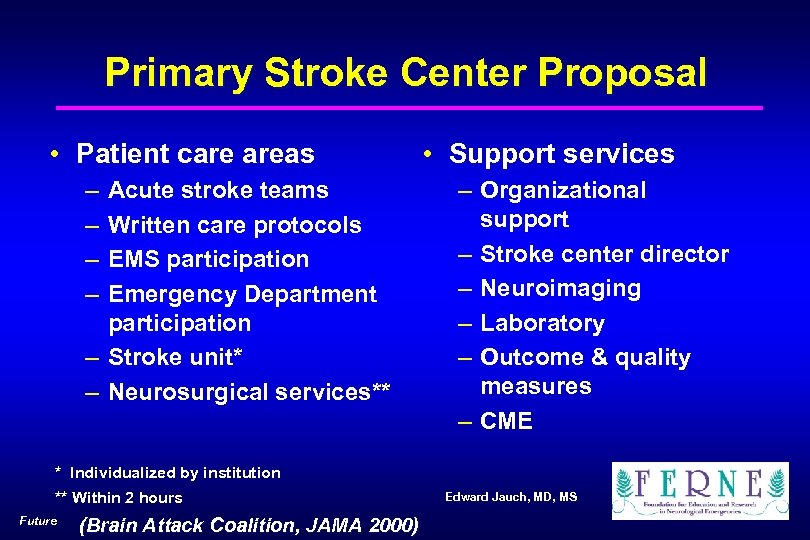 Primary Stroke Center Proposal • Patient care areas – – Acute stroke teams Written care protocols EMS participation Emergency Department participation – Stroke unit* – Neurosurgical services** • Support services – Organizational support – Stroke center director – Neuroimaging – Laboratory – Outcome & quality measures – CME * Individualized by institution ** Within 2 hours Future (Brain Attack Coalition, JAMA 2000) Edward Jauch, MD, MS
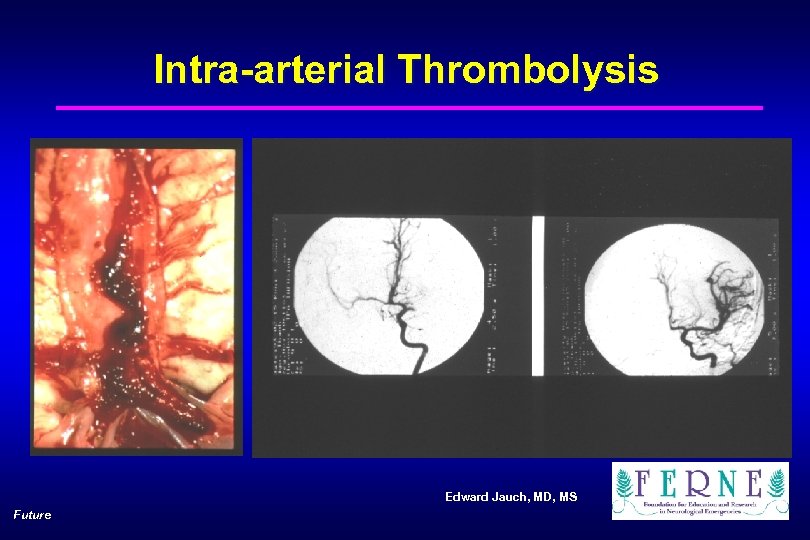 Intra-arterial Thrombolysis Edward Jauch, MD, MS Future
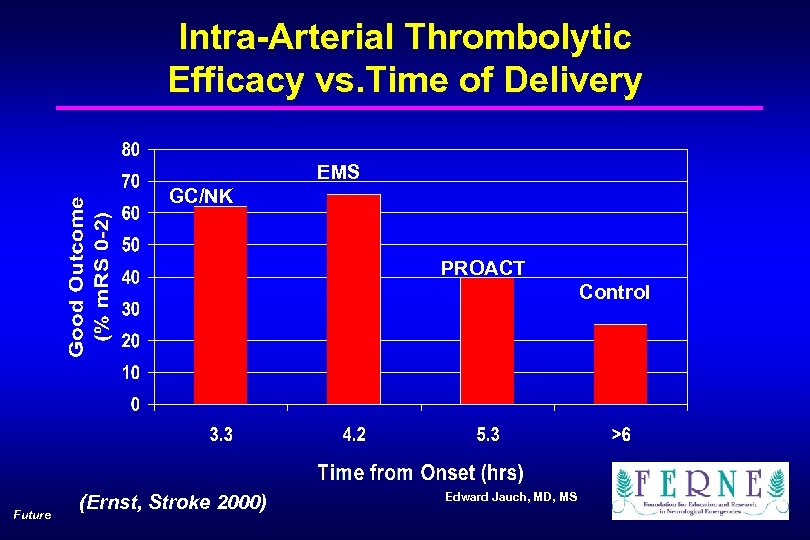 Intra-Arterial Thrombolytic Efficacy vs. Time of Delivery EMS GC/NK PROACT Control Future (Ernst, Stroke 2000) Edward Jauch, MD, MS
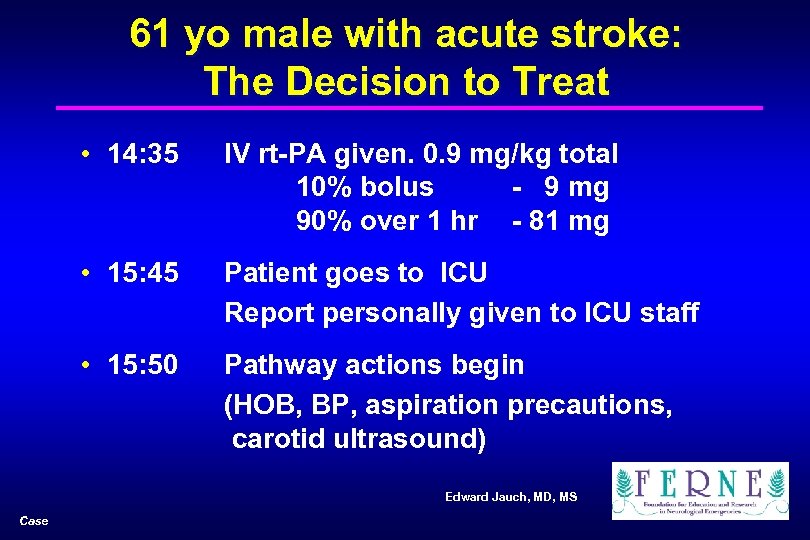 61 yo male with acute stroke: The Decision to Treat • 14: 35 IV rt-PA given. 0. 9 mg/kg total 10% bolus - 9 mg 90% over 1 hr - 81 mg • 15: 45 Patient goes to ICU Report personally given to ICU staff • 15: 50 Pathway actions begin (HOB, BP, aspiration precautions, carotid ultrasound) Edward Jauch, MD, MS Case
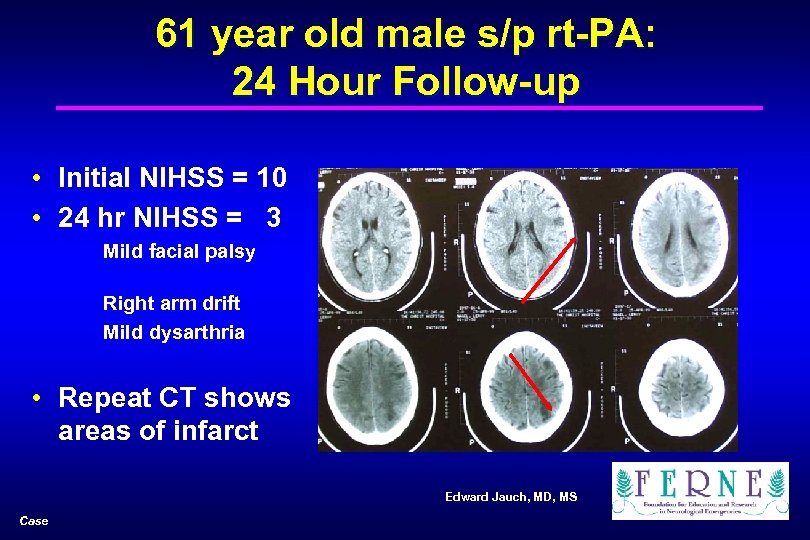 61 year old male s/p rt-PA: 24 Hour Follow-up • Initial NIHSS = 10 • 24 hr NIHSS = 3 Mild facial palsy Right arm drift Mild dysarthria • Repeat CT shows areas of infarct Edward Jauch, MD, MS Case
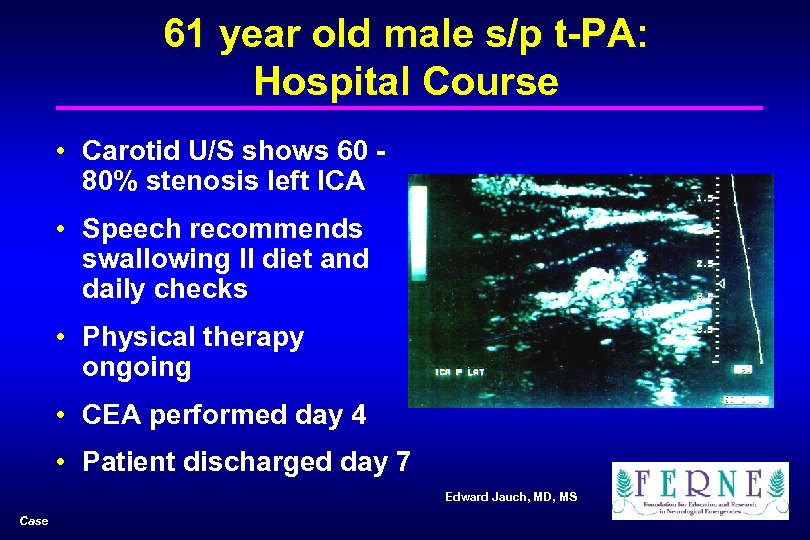 61 year old male s/p t-PA: Hospital Course • Carotid U/S shows 60 80% stenosis left ICA • Speech recommends swallowing II diet and daily checks • Physical therapy ongoing • CEA performed day 4 • Patient discharged day 7 Edward Jauch, MD, MS Case
 Conclusions • Acute stroke is an emergency • Multidisciplinary systems must be in place in every institution • Strict adherence to protocols minimizes complications • Acute stroke treatment is and will remain the responsibility of the Emergency Physician Edward Jauch, MD, MS Conclusion