


 Скачать презентацию Is Your Hospital or Clinic Effectively Communicating with
b8dc96d5d36ecd5f57d9c70dda0175ba.ppt
- Количество слайдов: 36
 Is Your Hospital or Clinic Effectively Communicating with Patients? Measuring Your Communications Climate Stephanie Uecker Literacy Coalition of Central Texas Steve Sparks Wisconsin Health Literacy Summit April 14, 2015
 Who We Are Wisconsin Health Literacy is a statewide organization raising awareness of the importance of health literacy and fostering better communication between health care consumers and health care providers. We are a division of Wisconsin Literacy, Inc. , a nonprofit coalition representing a membership of 74 communitybased literacy agencies. 2
 Who We Are Health Literacy Forward provides trainings and consulting services on patient-centered care with a focus on effective communication and health literacy. We are a division of the Literacy Coalition of Central Texas in Austin, TX, a nonprofit coalition representing a membership of 29 community-based literacy organizations. 3
 Objectives • Recognize 9 domains that impact an organization’s communication with patients. • Make the case for assessing and improving patientcentered communication. • Identify sample tools to assess your organization’s patient communication. 4
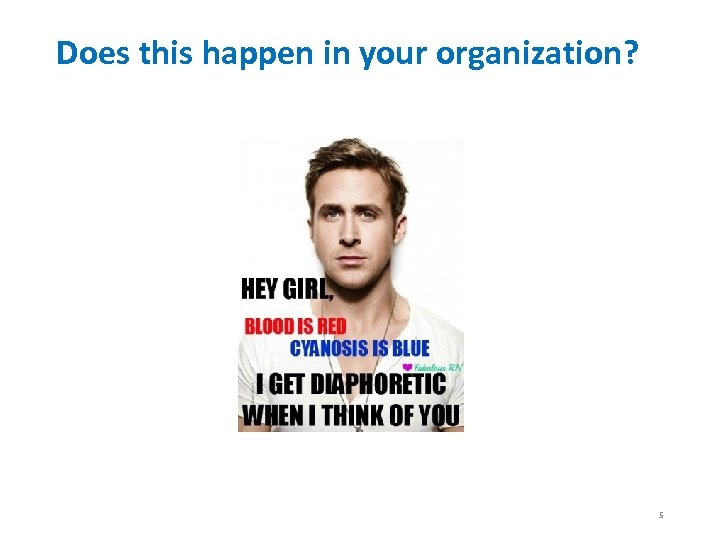 Does this happen in your organization? 5
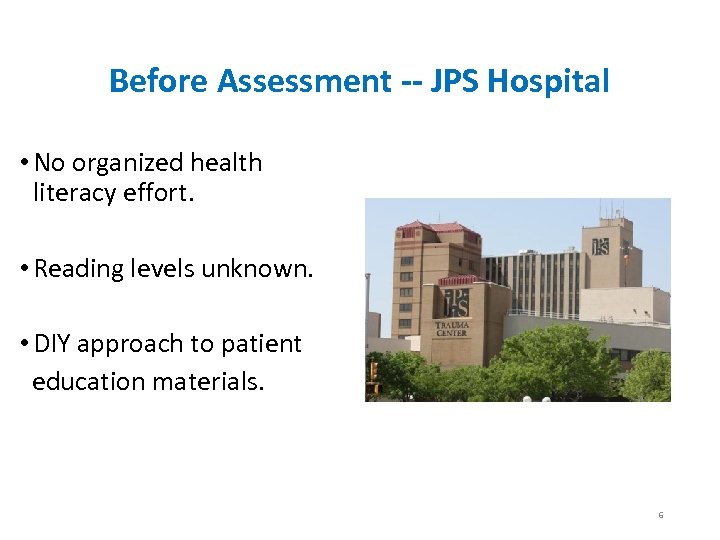 Before Assessment -- JPS Hospital • No organized health literacy effort. • Reading levels unknown. • DIY approach to patient education materials. 6
 Patient-Centered Communication
 Patient-Centered Communication • Term originally coined by Balint in 1969 to express the belief that each patient “has to be understood as a unique human-being” (Balint 1969). • May be defined as communication that is respectful of and responsive to individual patient preferences, needs, and values. (IOM 2001). 8
 Patient-Centered Communication Others have struggled to find a proper definition of patient-centeredness. Three useful maxims that I have encountered are these: – The needs of the patient come first. – Nothing about me without me. – Every patient is the only patient. Donald M. Berwick, What 'Patient-Centered' Should Mean: Confessions Of An Extremist Health Affairs, 28, no. 4 (2009): w 555 -w 565. 9
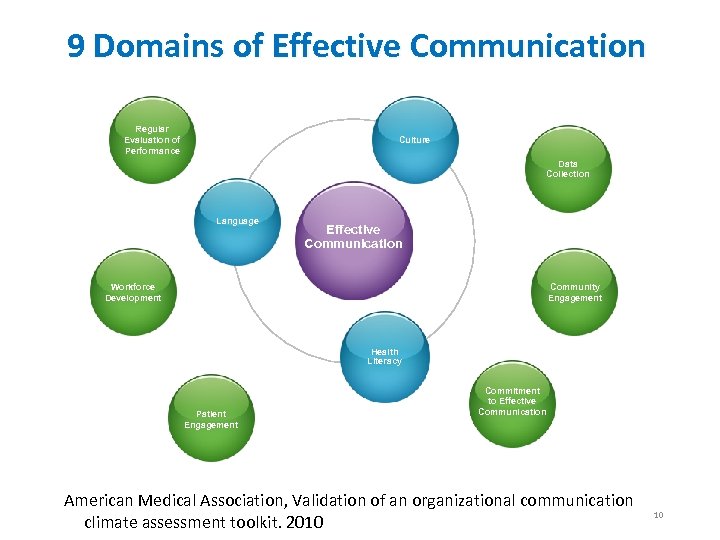 9 Domains of Effective Communication Regular Evaluation of Performance Culture Data Collection Language Effective Communication Workforce Development Community Engagement Health Literacy Patient Engagement Commitment to Effective Communication American Medical Association, Validation of an organizational communication climate assessment toolkit. 2010 10
 Leadership Commitment • Look at guiding documents, policies and procedures -mission, vision, values. • Consider their own attitudes and behaviors -- set the example. • Find out what messages are reinforced -- messages staff hear at new employee orientation, mandatory group meetings. 11
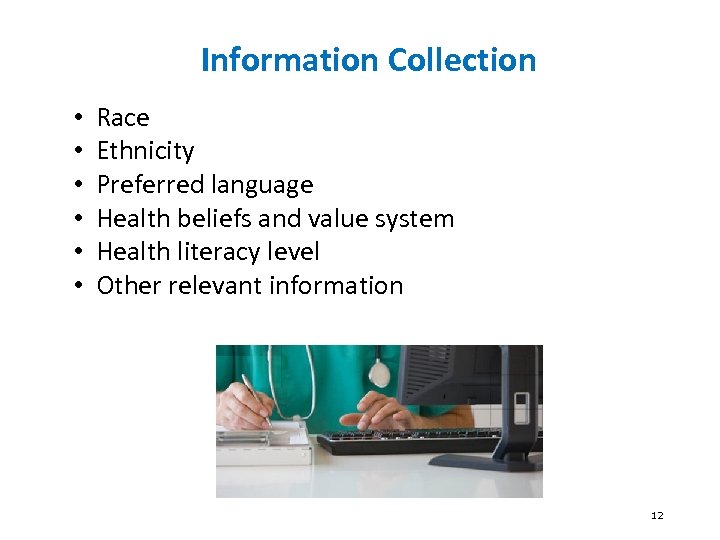 Information Collection • • • Race Ethnicity Preferred language Health beliefs and value system Health literacy level Other relevant information 12
 Community Engagement Engaging community entities such as radio stations, faith-based organizations, schools, adult education groups and supermarkets, provides a wide range of opportunities to present health messages in gradual, nonthreatening ways. 13
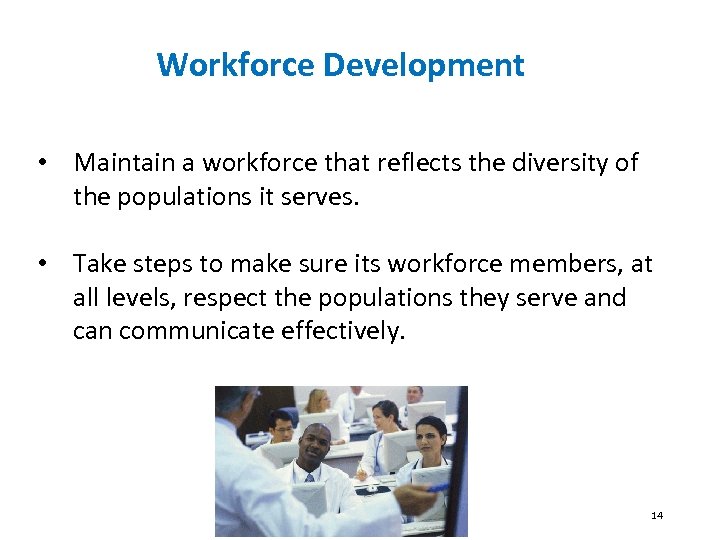 Workforce Development • Maintain a workforce that reflects the diversity of the populations it serves. • Take steps to make sure its workforce members, at all levels, respect the populations they serve and can communicate effectively. 14
 Individual Engagement • Accurate information to understand use. • Feel comfortable asking questions. • Trust is a must. 15
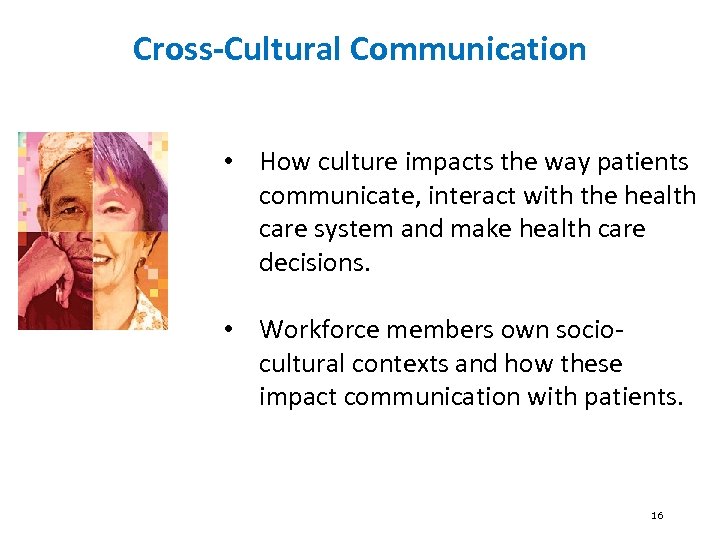 Cross-Cultural Communication • How culture impacts the way patients communicate, interact with the health care system and make health care decisions. • Workforce members own sociocultural contexts and how these impact communication with patients. 16
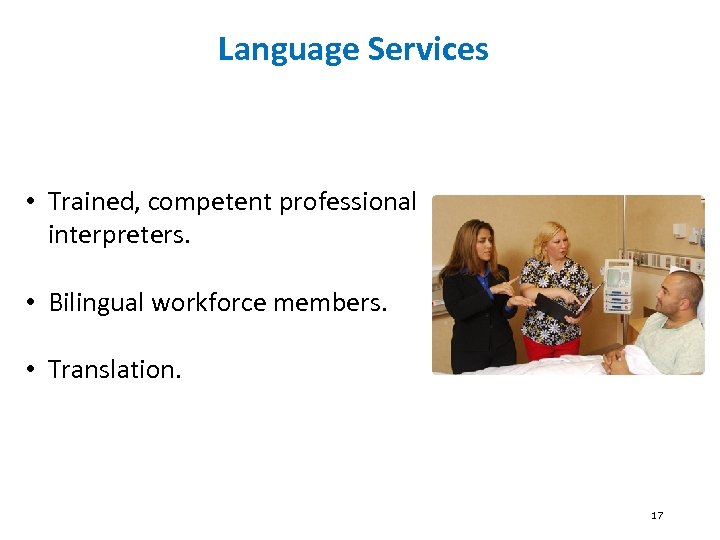 Language Services • Trained, competent professional interpreters. • Bilingual workforce members. • Translation. 17
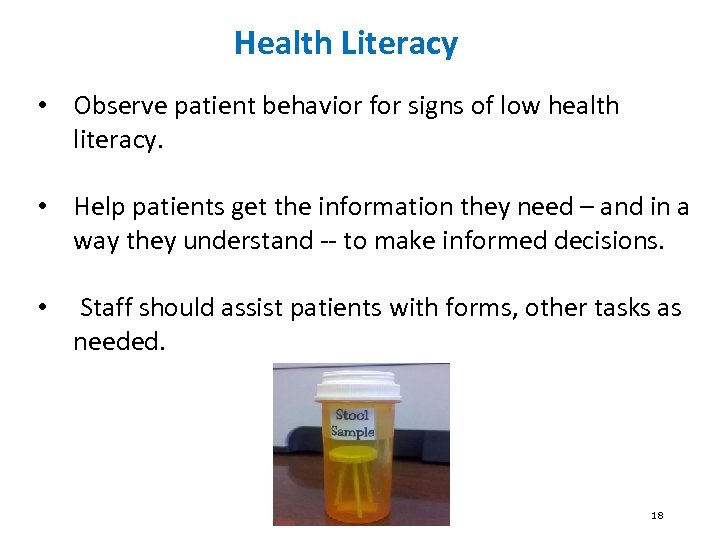 Health Literacy • Observe patient behavior for signs of low health literacy. • Help patients get the information they need – and in a way they understand -- to make informed decisions. • Staff should assist patients with forms, other tasks as needed. 18
 Evaluating Performance • Adopt standardized sets of clinical measures endorsed by established groups (NQF). • Adhere to accreditation standards (JCAHO, NCQA). • Report performance across the populations it serves and compare its performance to other organizations. 19
 Making the case to measure your communications climate
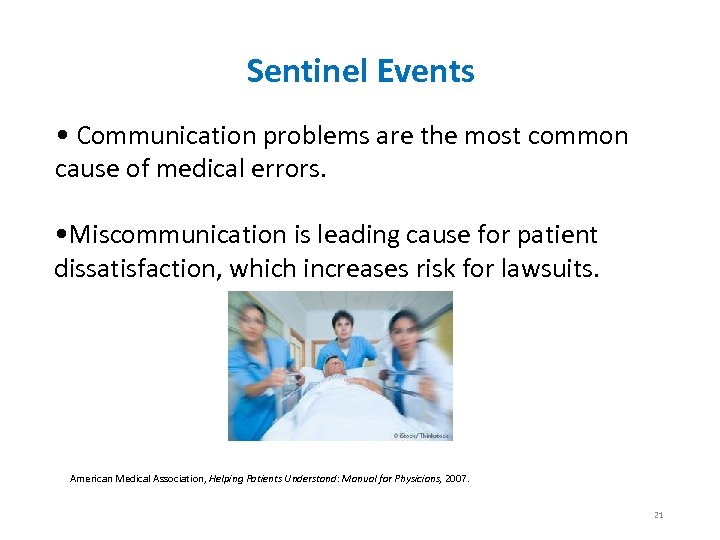 Sentinel Events • Communication problems are the most common cause of medical errors. • Miscommunication is leading cause for patient dissatisfaction, which increases risk for lawsuits. American Medical Association, Helping Patients Understand: Manual for Physicians, 2007. 21
 Legal and Regulatory Risks • Lawsuits related to inadequate informed consent • Violations of federal laws (e. g. , Title VI and the Americans with Disabilities Act) • Not meeting the Culturally and Linguistically Appropriate Services (CLAS) standards • Not meeting the accrediting and regulatory standards of the Joint Commission on Accreditation of Healthcare Organizations (Joint Commission) or other organizations. 22
 Preventable Readmissions • 75% of readmissions are preventable. • 75% of preventable readmissions are a result of miscommunication. 23
 Opportunities • Strengthen an organization’s commitment to its mission and a high quality of care. • Improve consumer loyalty, retention and public image. • Increase market share. • Enhance employee morale. 24
 Opportunities • Patient-centered medical homes. • Incentives to improve quality and patient satisfaction. • Consumer Assessment of Healthcare Providers and Services (CAHPS) and Hospital Consumer Assessment of Healthcare Providers and Services (HCAHPS). 25
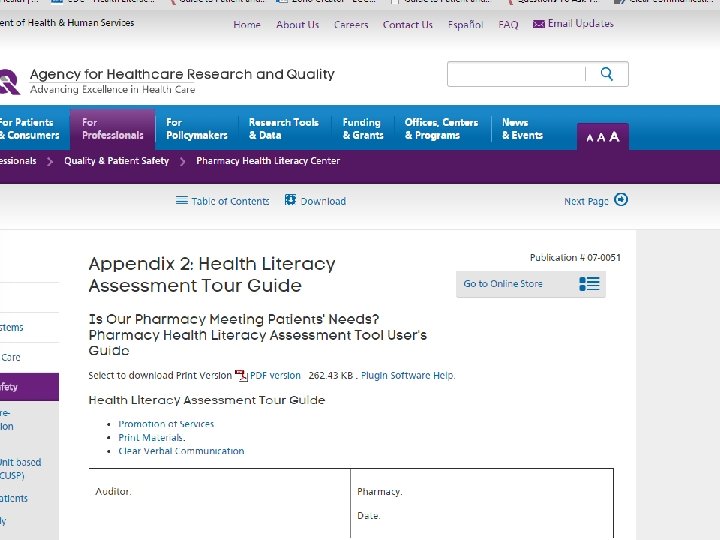
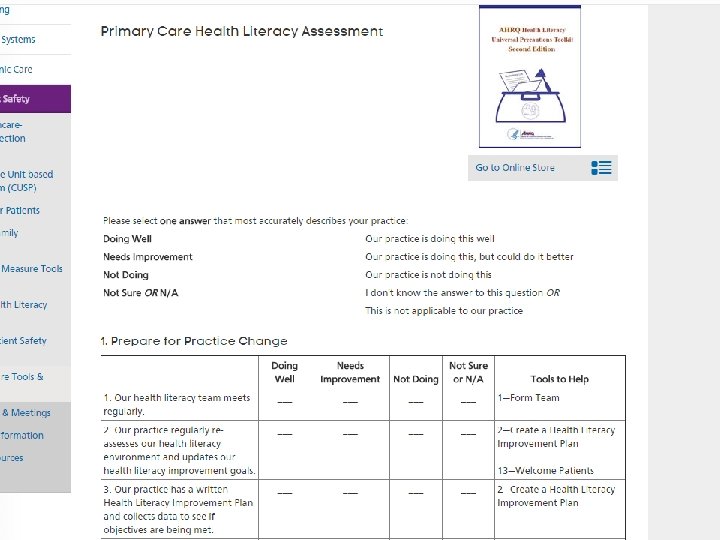
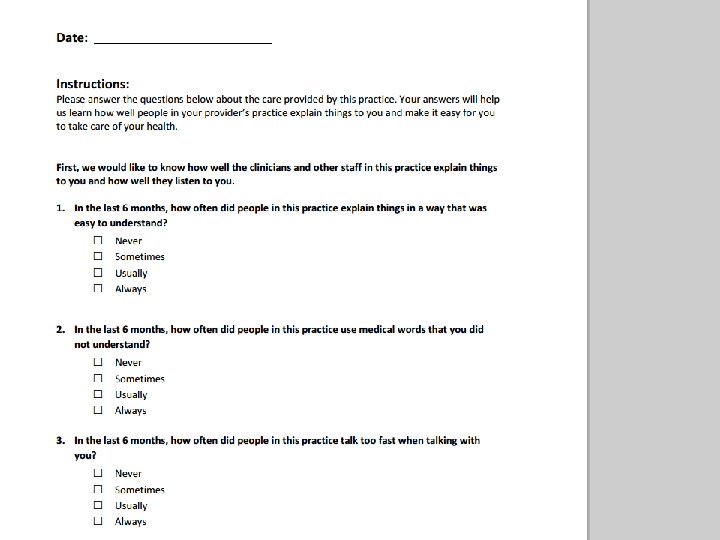
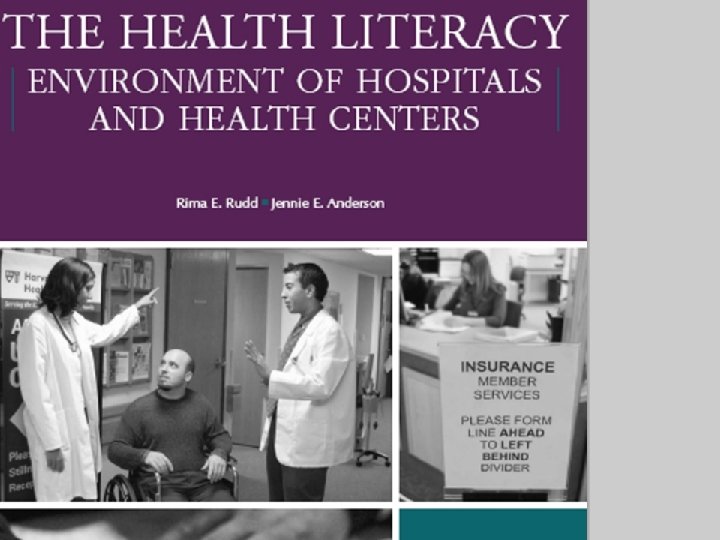
 Sample Assessment Tools
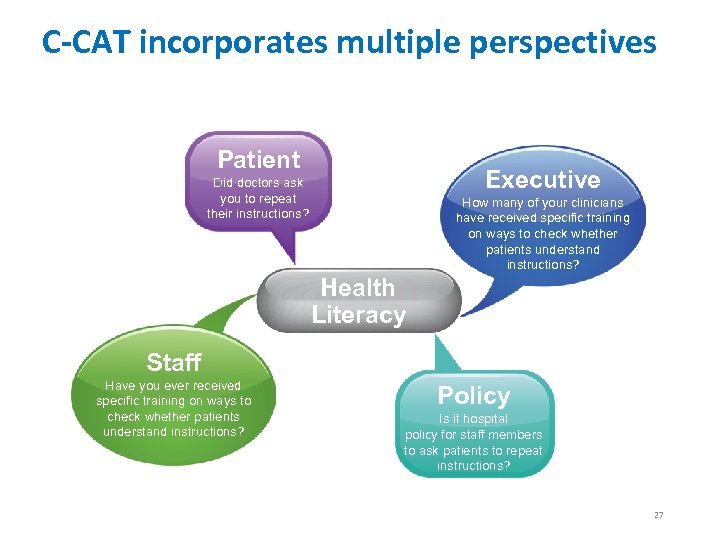 C-CAT incorporates multiple perspectives Patient Executive Did doctors ask you to repeat their instructions? How many of your clinicians have received specific training on ways to check whether patients understand instructions? Health Literacy Staff Have you ever received specific training on ways to check whether patients understand instructions? Policy Is it hospital policy for staff members to ask patients to repeat instructions? 27
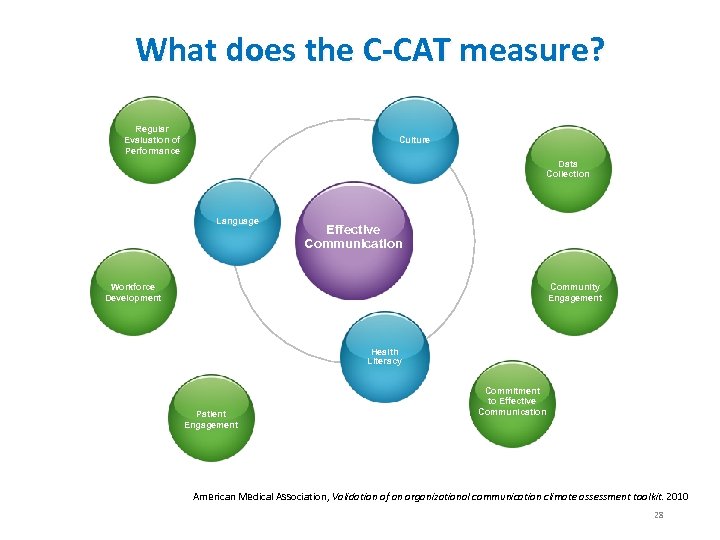 What does the C-CAT measure? Regular Evaluation of Performance Culture Data Collection Language Effective Communication Workforce Development Community Engagement Health Literacy Patient Engagement Commitment to Effective Communication American Medical Association, Validation of an organizational communication climate assessment toolkit. 2010 28
 29
29
 30
30
 31
31
 32
32
 33
33
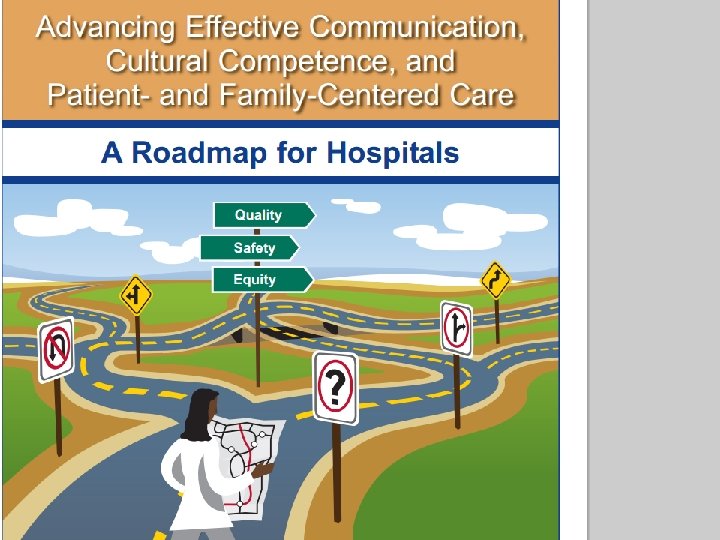 34
34
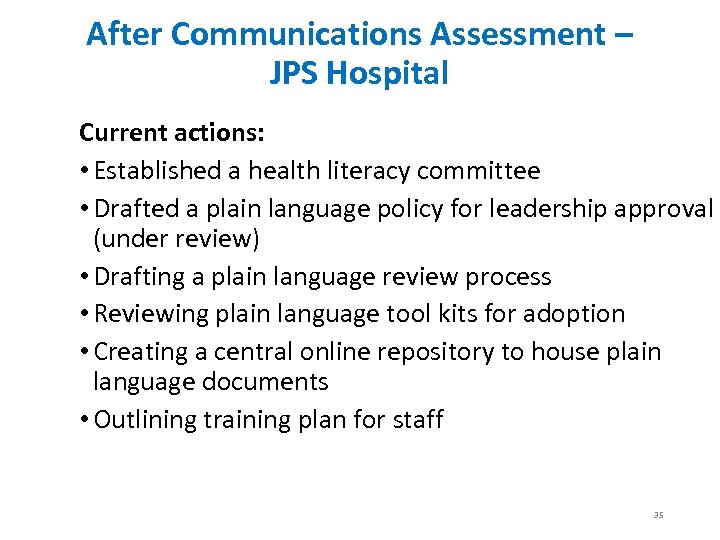 After Communications Assessment – JPS Hospital Current actions: • Established a health literacy committee • Drafted a plain language policy for leadership approval (under review) • Drafting a plain language review process • Reviewing plain language tool kits for adoption • Creating a central online repository to house plain language documents • Outlining training plan for staff 35
 Thank You! Stephanie Uecker Director of Health Literacy Coalition of Central Texas Austin, TX stephanie@willread. org Steve Sparks Health Literacy Director Wisconsin Health Literacy Madison, WI steve@wisconsinliteracy. org 36