


 Скачать презентацию Is it MG Crisis Dr Chan Yan Fat
90d1ebd6f429868ceb3e419a179f09ea.ppt
- Количество слайдов: 77
 Is it MG Crisis? Dr Chan Yan Fat Alfred Caritas Medical Center 20/01/2009
 Background history • • 82 -year-old woman, ex-smoker Mother of 6 children Resident in Canada and being FU at there Post-radioactive-iodine hypothyroidism Asthma with nil attack for years Essential hypertension Ocular myasthenia gravis (MG) since 2002
 Long term medication • • • L-thyroxine 75 microgram daily Candesartan 8 mg daily Ventolin 2 puffs Qid PRN Becotide 2 puffs BD Pyridostigmine (Mestinon) 60 mg BD
 History of present illness • Visit Hong Kong since one week ago • Upper respiratory infection since arrival • Fever and sputum for 3 days, and put on oral Levofloxacin 100 mg BD + Romilar • Subjective double vision for one day, with bilateral upper limb weakness + numbness, but still able to walk • While at Precious blood Hospital, developed choking and SOB
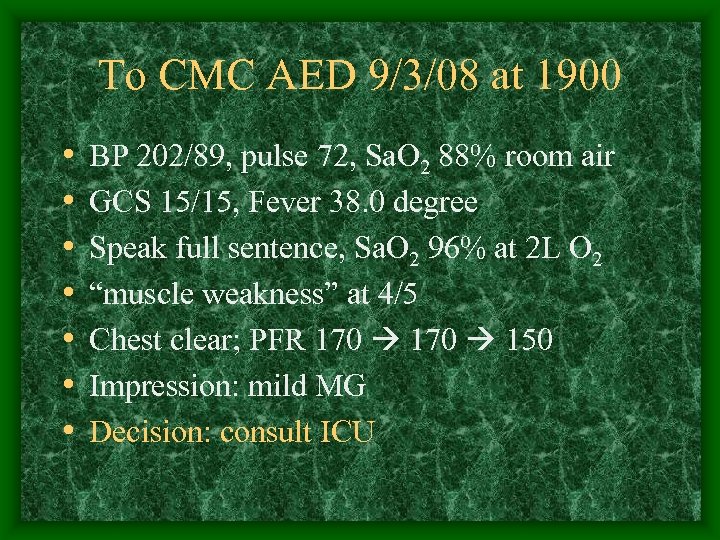 To CMC AED 9/3/08 at 1900 • • BP 202/89, pulse 72, Sa. O 2 88% room air GCS 15/15, Fever 38. 0 degree Speak full sentence, Sa. O 2 96% at 2 L O 2 “muscle weakness” at 4/5 Chest clear; PFR 170 150 Impression: mild MG Decision: consult ICU
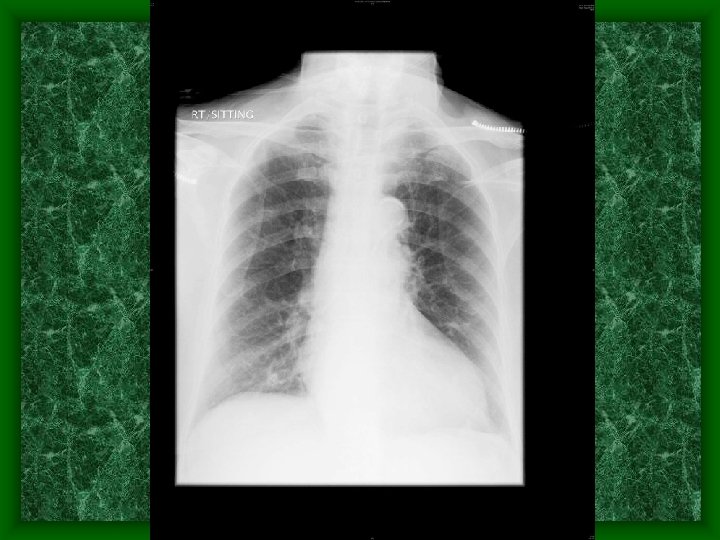
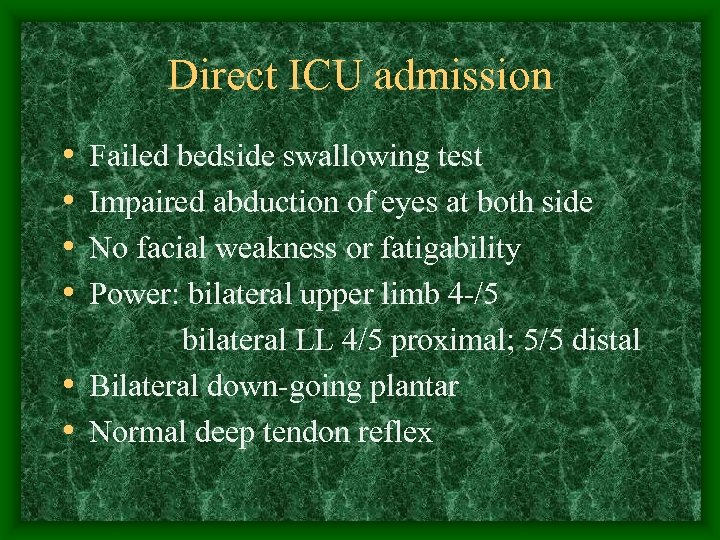 Direct ICU admission • • Failed bedside swallowing test Impaired abduction of eyes at both side No facial weakness or fatigability Power: bilateral upper limb 4 -/5 bilateral LL 4/5 proximal; 5/5 distal • Bilateral down-going plantar • Normal deep tendon reflex
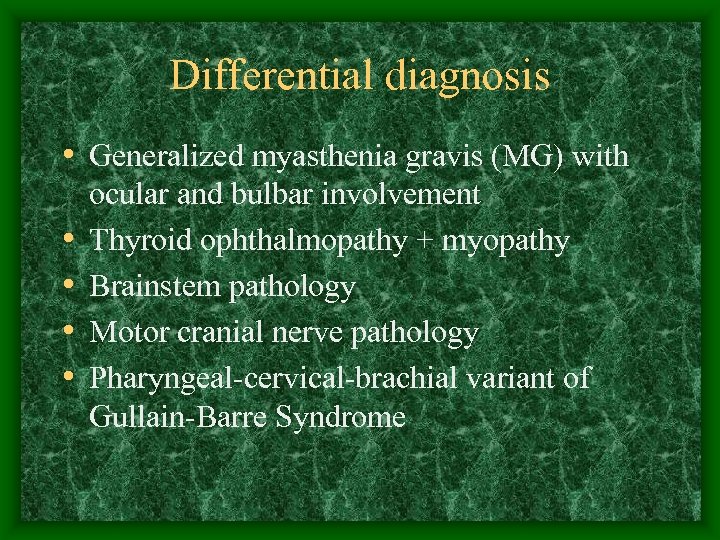 Differential diagnosis • Generalized myasthenia gravis (MG) with • • ocular and bulbar involvement Thyroid ophthalmopathy + myopathy Brainstem pathology Motor cranial nerve pathology Pharyngeal-cervical-brachial variant of Gullain-Barre Syndrome
 Impression at ICU Generalized MG with bulbar involvement Precipitated by……
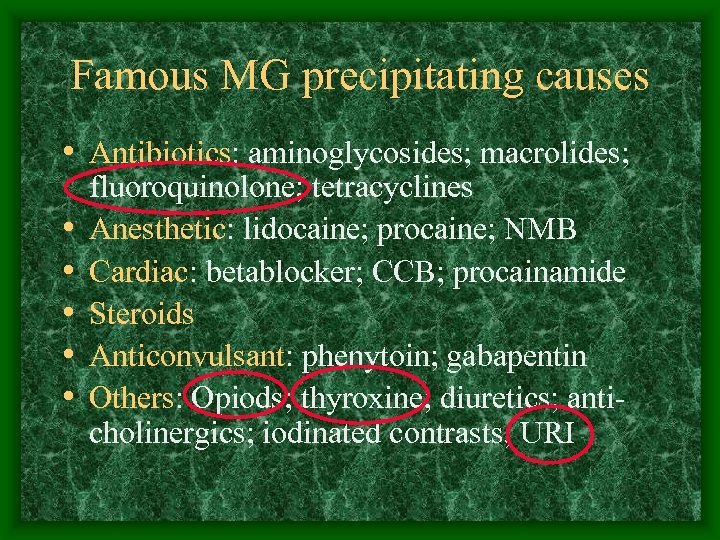 Famous MG precipitating causes • Antibiotics: aminoglycosides; macrolides; • • • fluoroquinolone; tetracyclines Anesthetic: lidocaine; procaine; NMB Cardiac: betablocker; CCB; procainamide Steroids Anticonvulsant: phenytoin; gabapentin Others: Opiods; thyroxine; diuretics; anticholinergics; iodinated contrasts; URI
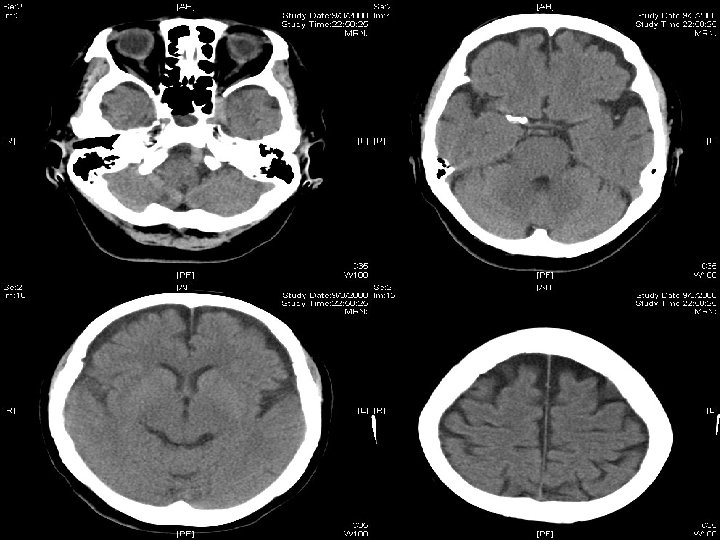
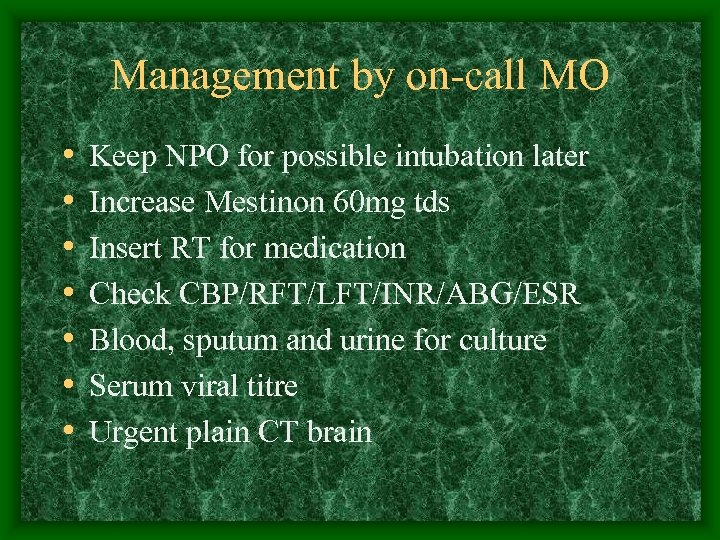 Management by on-call MO • • Keep NPO for possible intubation later Increase Mestinon 60 mg tds Insert RT for medication Check CBP/RFT/LFT/INR/ABG/ESR Blood, sputum and urine for culture Serum viral titre Urgent plain CT brain
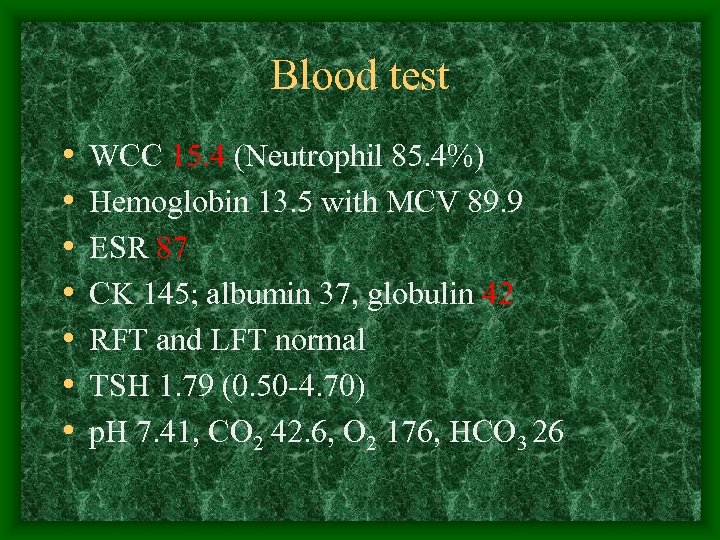 Blood test • • WCC 15. 4 (Neutrophil 85. 4%) Hemoglobin 13. 5 with MCV 89. 9 ESR 87 CK 145; albumin 37, globulin 42 RFT and LFT normal TSH 1. 79 (0. 50 -4. 70) p. H 7. 41, CO 2 42. 6, O 2 176, HCO 3 26
 Progress on 10/3/08 at ICU D 2 • Subjective deterioration and require frequent suction of oral secretion/ sputum • Examination in AM around: ØHoarseness and weak cough ØDrooling of saliva ØPoor AE over both chest • Impression: MG crisis
 Bronchoscopy • Very poor cough effort • Continuous aspiration of saliva and upper airway secretion into lower tract • BAL done at right lower lobe for virus study and bacterial culture
 Management at ICU day 2 • Endotracheal intubation • Start IV Augmentin for chest infection • Start iv Intragram (IVIG) 21 g (BW 53 kg), plan daily dose for 5 days • Trace old record from Canada family doctor about the diagnosis and previous workup of myasthenia gravis
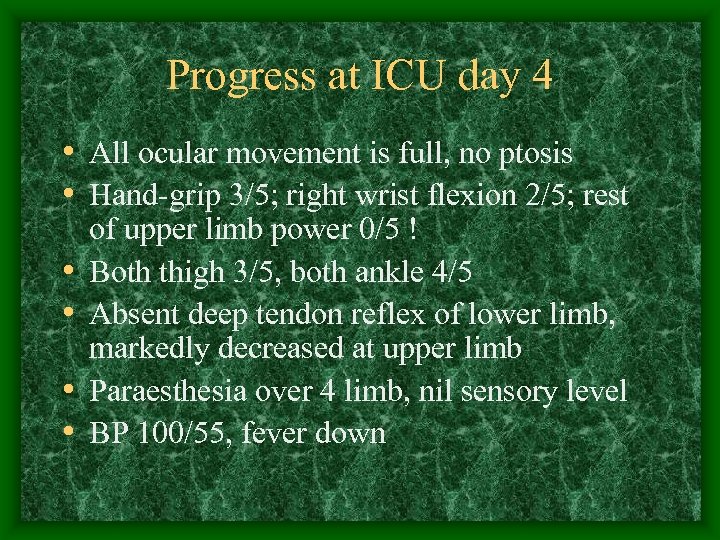 Progress at ICU day 4 • All ocular movement is full, no ptosis • Hand-grip 3/5; right wrist flexion 2/5; rest • • of upper limb power 0/5 ! Both thigh 3/5, both ankle 4/5 Absent deep tendon reflex of lower limb, markedly decreased at upper limb Paraesthesia over 4 limb, nil sensory level BP 100/55, fever down
 Atypical presentation of MG! Deterioration with iv Ig Other pathology?
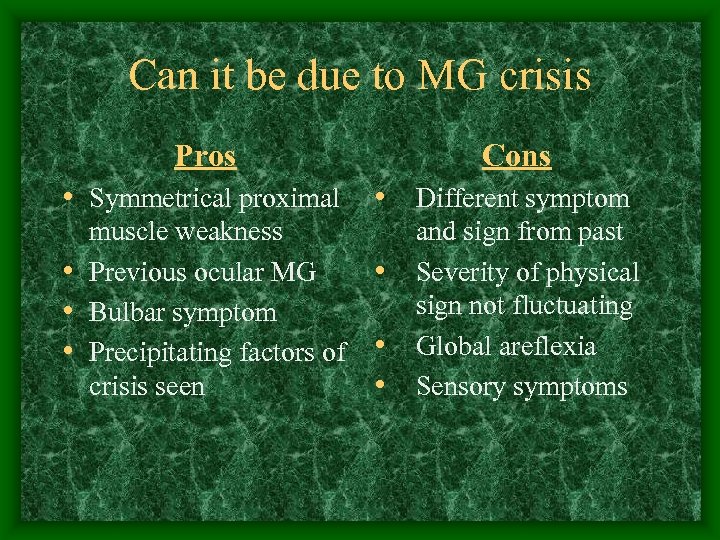 Can it be due to MG crisis Pros • Symmetrical proximal muscle weakness • Previous ocular MG • Bulbar symptom • Precipitating factors of crisis seen Cons • Different symptom • • • and sign from past Severity of physical sign not fluctuating Global areflexia Sensory symptoms
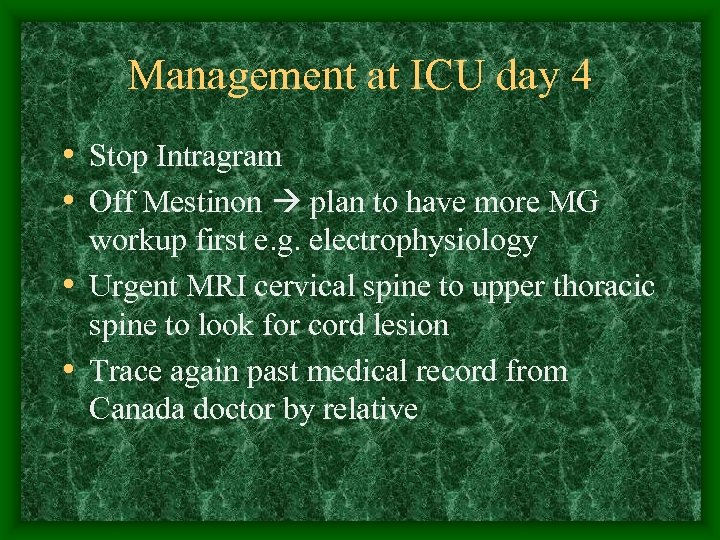 Management at ICU day 4 • Stop Intragram • Off Mestinon plan to have more MG workup first e. g. electrophysiology • Urgent MRI cervical spine to upper thoracic spine to look for cord lesion • Trace again past medical record from Canada doctor by relative
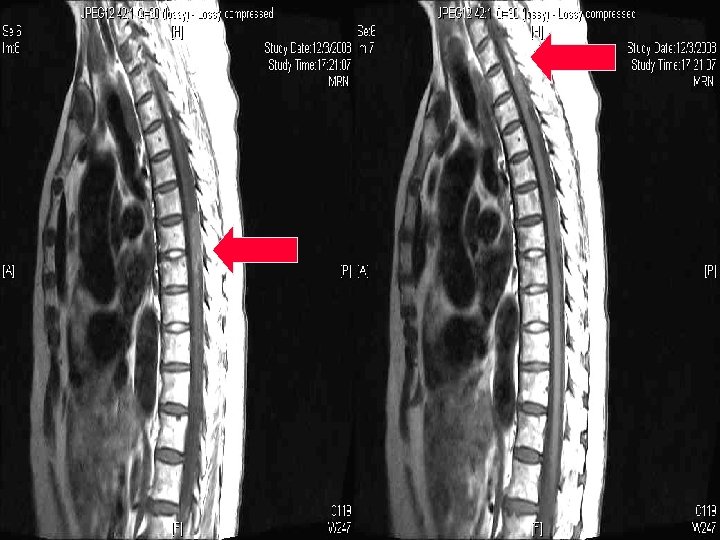
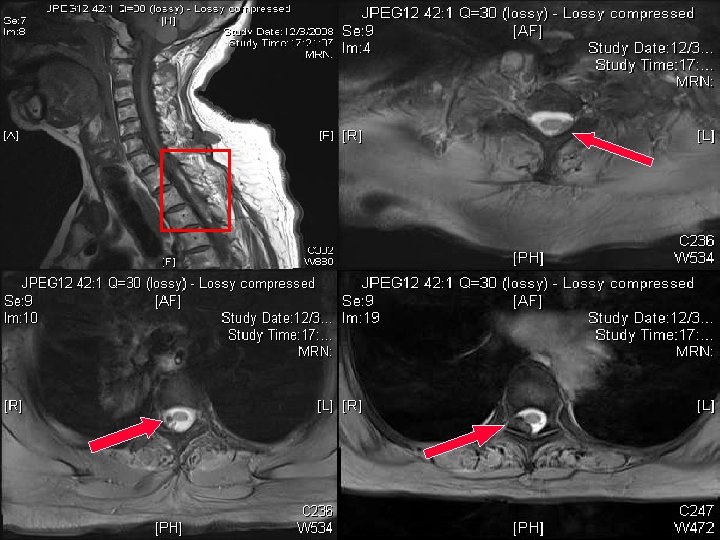
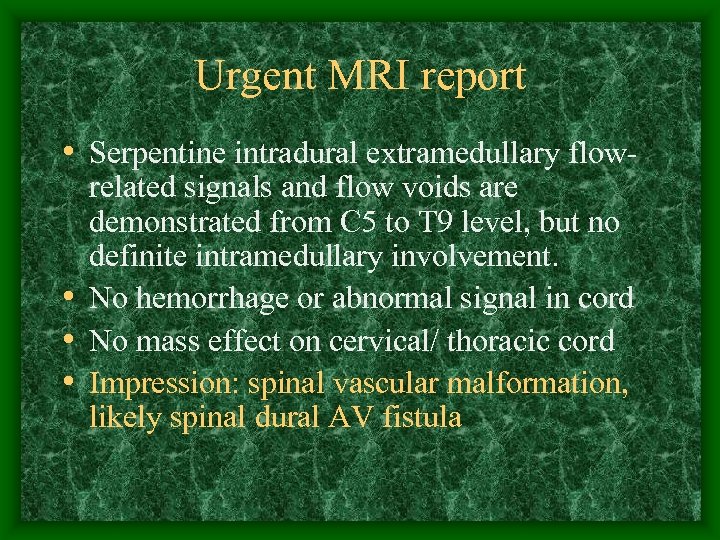 Urgent MRI report • Serpentine intradural extramedullary flowrelated signals and flow voids are demonstrated from C 5 to T 9 level, but no definite intramedullary involvement. • No hemorrhage or abnormal signal in cord • No mass effect on cervical/ thoracic cord • Impression: spinal vascular malformation, likely spinal dural AV fistula
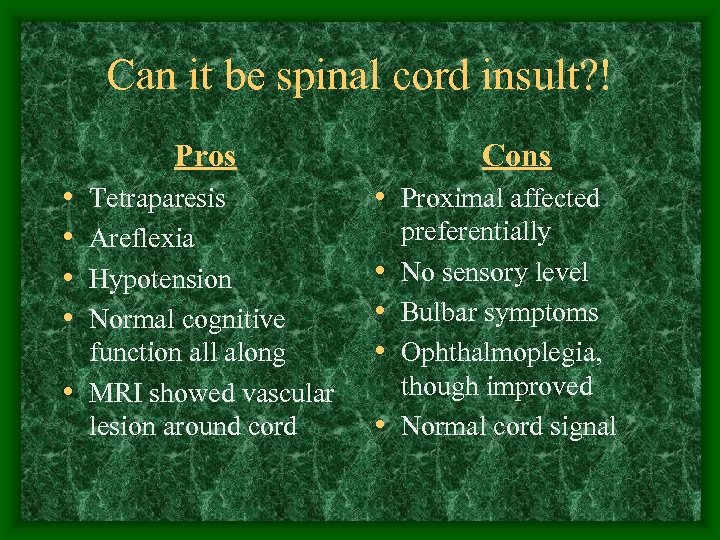 Can it be spinal cord insult? ! Pros • • Tetraparesis Areflexia Hypotension Normal cognitive function all along • MRI showed vascular lesion around cord Cons • Proximal affected • • preferentially No sensory level Bulbar symptoms Ophthalmoplegia, though improved Normal cord signal
 Progress at ICU day 5 • Orthopedics intramedullary lesion better be managed by neurosurgery • Neurosurgery no evidence of acute element for intervention, suggest to transfer patient when nil airway problem • ICU noted good respiratory effort with spontaneous tidal volume >400 ml. Failed extubation because of aspiration problem
 Progress at ICU day 6 (1) • • Medical summary from Canada Patient presents as ptosis and diplopia in June 2002. Nil peripheral/ bulbar or respiratory involvement Nil Tensilon test, nil anti-acetylcholine receptor antibody checked Prompt effect with Mestinon CT thorax showed no thymoma
 Progress at ICU day 6 (2) • Proximal muscle power 2/5, distal 4/5 • Double-blinded Tensilon test no significant change in limb power • Bedside EMG: no typical decrement of amplitude with repetitive stimulation • Acetylcholine receptor binding antibody 10. 57 (<0. 45, ELIZA method)
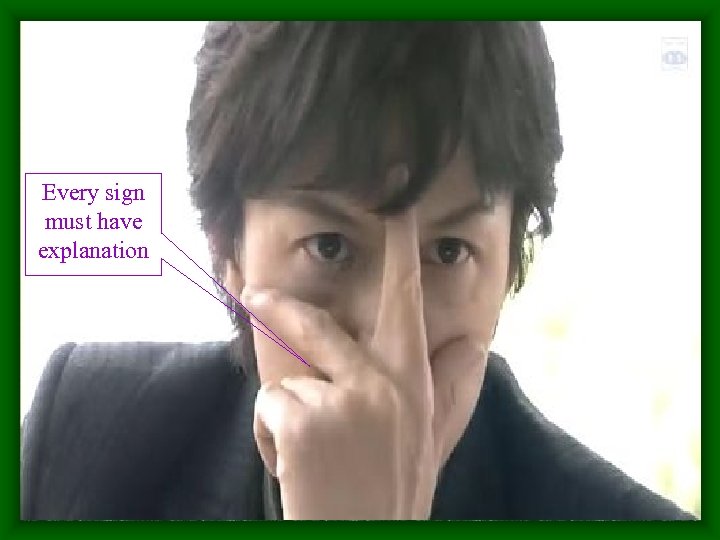 Every sign must have explanation
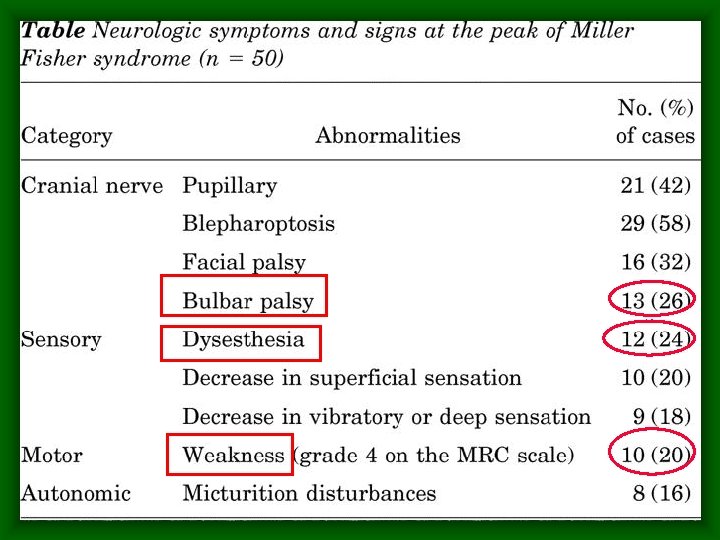
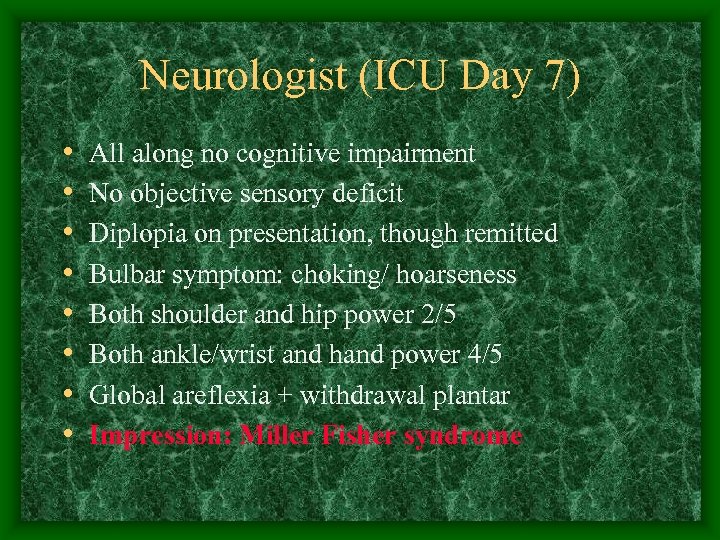 Neurologist (ICU Day 7) • • All along no cognitive impairment No objective sensory deficit Diplopia on presentation, though remitted Bulbar symptom: choking/ hoarseness Both shoulder and hip power 2/5 Both ankle/wrist and hand power 4/5 Global areflexia + withdrawal plantar Impression: Miller Fisher syndrome
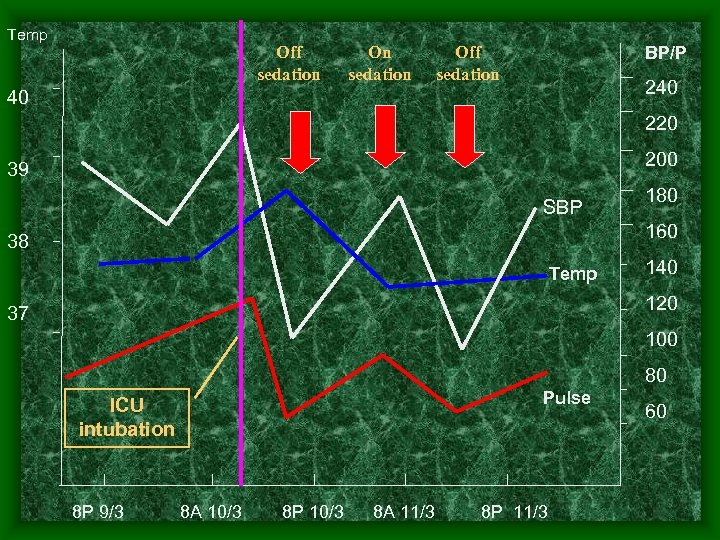
 Retrospectively, look at the graph of vital signs…….
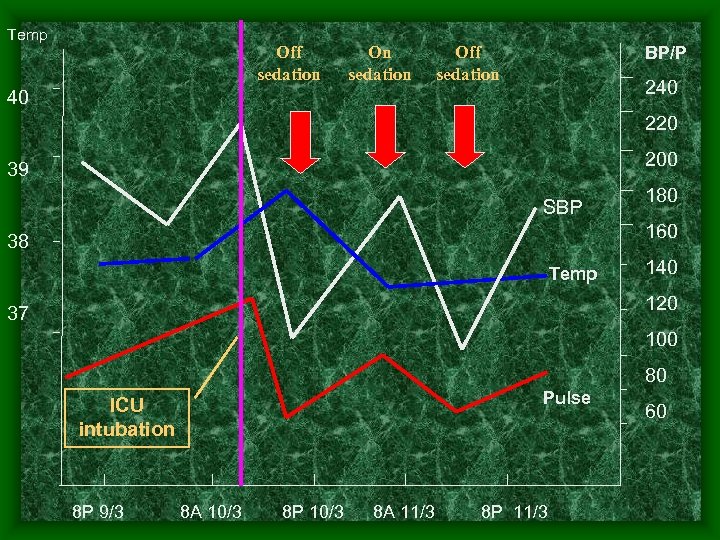 Temp Off sedation On sedation BP/P Off sedation 240 40 220 200 39 SBP 180 160 38 Temp 140 120 37 100 80 Pulse ICU intubation 8 P 9/3 8 A 10/3 8 P 10/3 8 A 11/3 8 P 11/3 60
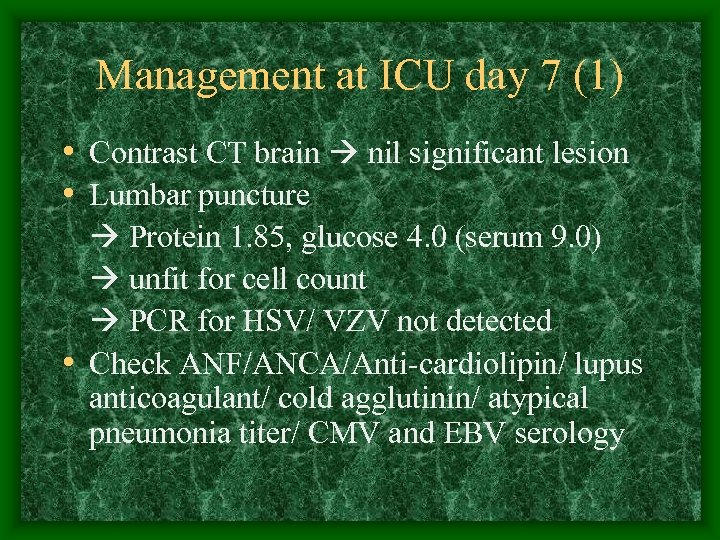 Management at ICU day 7 (1) • Contrast CT brain nil significant lesion • Lumbar puncture Protein 1. 85, glucose 4. 0 (serum 9. 0) unfit for cell count PCR for HSV/ VZV not detected • Check ANF/ANCA/Anti-cardiolipin/ lupus anticoagulant/ cold agglutinin/ atypical pneumonia titer/ CMV and EBV serology
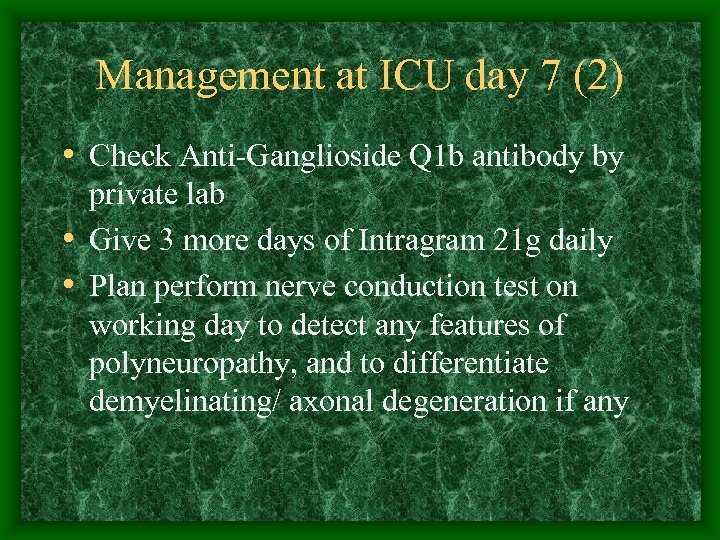 Management at ICU day 7 (2) • Check Anti-Ganglioside Q 1 b antibody by private lab • Give 3 more days of Intragram 21 g daily • Plan perform nerve conduction test on working day to detect any features of polyneuropathy, and to differentiate demyelinating/ axonal degeneration if any
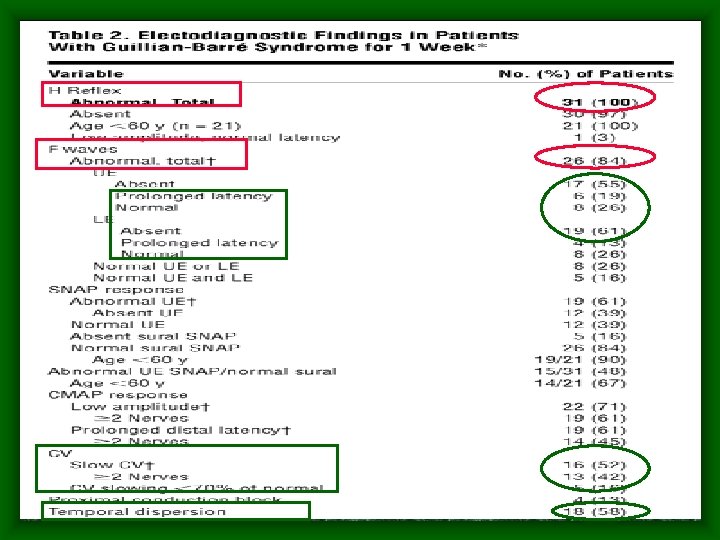
 Progress at ICU day 9 • Shoulder/ elbow power 4 -/5; hand 5/5 • Hip/ knee power 3/5; ankle 4/5 • Nerve conduction test bedside ØAbsent F wave response in 5 nerves ØProlonged distal latency ØAmplitude and velocity within normal ØNo conduction block; sural nerve spared ØAxonal degeneration; motor dominant
 Progress at ICU day 10 • Proximal power 4/5, distal power 5/5 • Right brachioradialis reflex intact, right knee jerk has minimal response • Complained of severe headache and low back pain. ? neck stiffness on exam • ? Mechanical injury of AVM during LP
 CT brain + C-spine + L-spine • Brain showed nil significant abnormality • No abnormal vasculature in cervical cord • Small enhancing vessels along surface of thecal sac at level down to L 2 • No evidence of bleeding from vessel
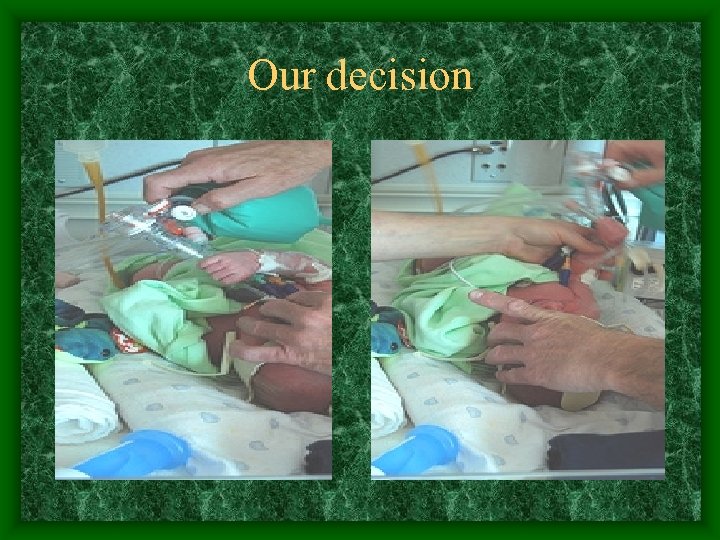 Our decision
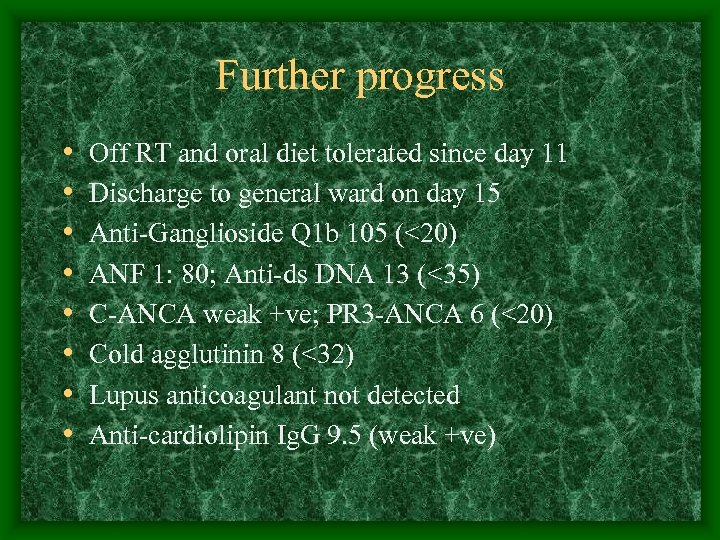 Further progress • • Off RT and oral diet tolerated since day 11 Discharge to general ward on day 15 Anti-Ganglioside Q 1 b 105 (<20) ANF 1: 80; Anti-ds DNA 13 (<35) C-ANCA weak +ve; PR 3 -ANCA 6 (<20) Cold agglutinin 8 (<32) Lupus anticoagulant not detected Anti-cardiolipin Ig. G 9. 5 (weak +ve)
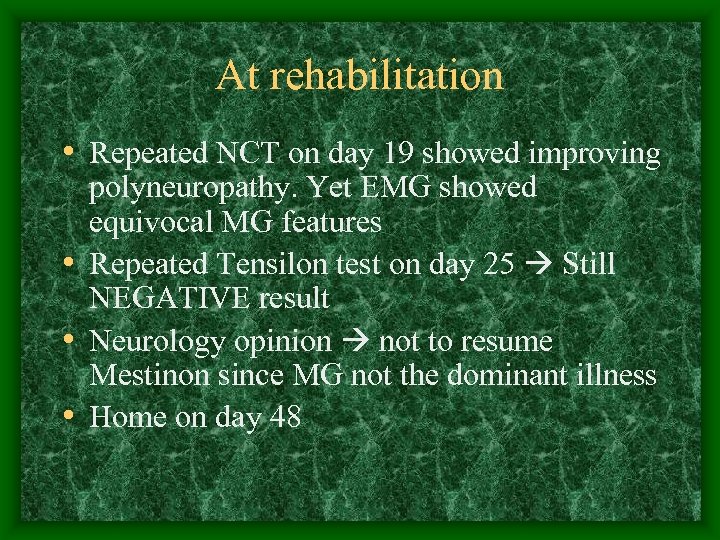 At rehabilitation • Repeated NCT on day 19 showed improving polyneuropathy. Yet EMG showed equivocal MG features • Repeated Tensilon test on day 25 Still NEGATIVE result • Neurology opinion not to resume Mestinon since MG not the dominant illness • Home on day 48
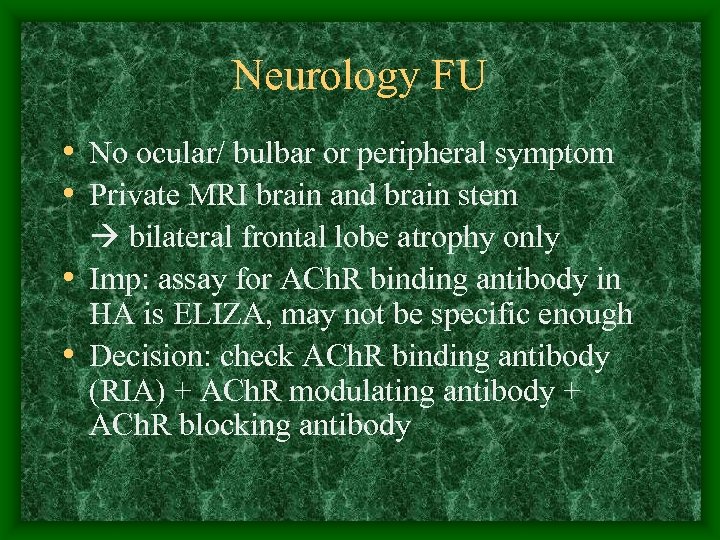 Neurology FU • No ocular/ bulbar or peripheral symptom • Private MRI brain and brain stem bilateral frontal lobe atrophy only • Imp: assay for ACh. R binding antibody in HA is ELIZA, may not be specific enough • Decision: check ACh. R binding antibody (RIA) + ACh. R modulating antibody + ACh. R blocking antibody

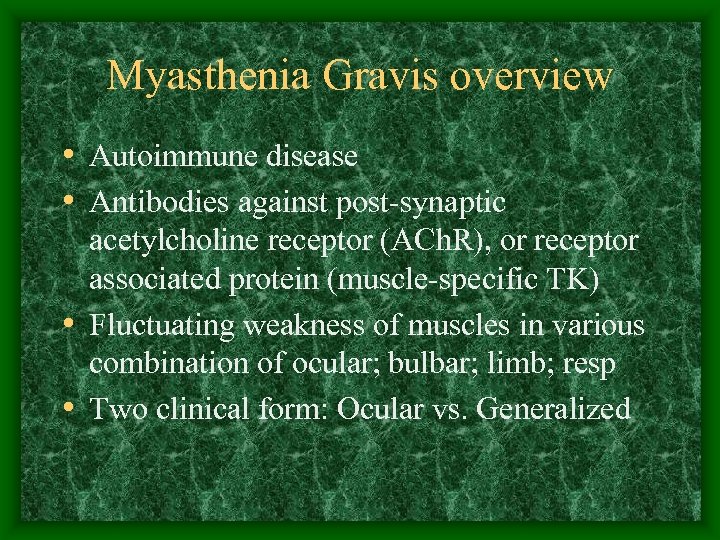 Myasthenia Gravis overview • Autoimmune disease • Antibodies against post-synaptic acetylcholine receptor (ACh. R), or receptor associated protein (muscle-specific TK) • Fluctuating weakness of muscles in various combination of ocular; bulbar; limb; resp • Two clinical form: Ocular vs. Generalized
 Presenting symptoms • Ocular: >50%. Among ocular presentation, >50% progress to generalized in 2 years • Bulbar: 15%. Dysarthria/ dysphagia and fatigable chewing • Proximal limb: <5% as presenting symptom • Rare: isolated neck; isolated resp; isolated distal limb weakness
 Bedside diagnostic test of MG • Tensilon test: ØSensitivity is 0. 92 for ocular; ØSensitivity is 0. 88 for generalized ØFalse +ve: MND; brainstem tumor • Ice-pad test: ØBest use for ocular MG ØSensitivity: 0. 94 for ocular; ØSensitivity: 0. 82 for generalized Neuromuscular disorders 2006; 16: 459 -67
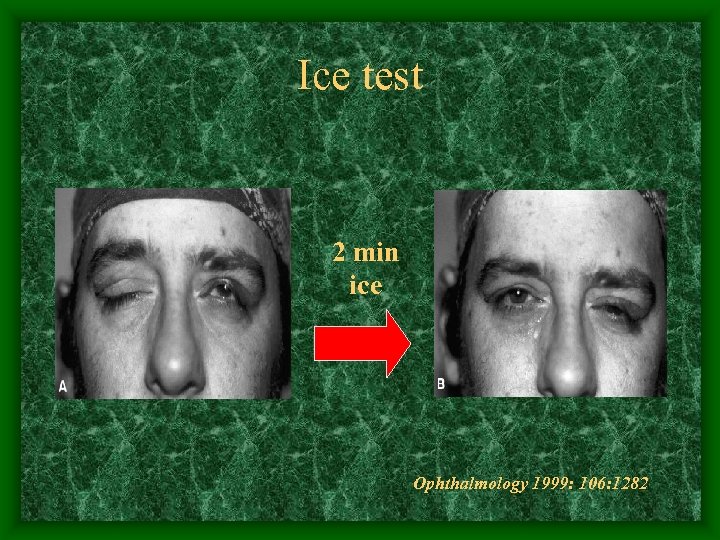 Ice test 2 min ice Ophthalmology 1999: 106: 1282
 Electrophysiological studies Repetitive nerve stimulation (RNS) • Motor nerve is stimulated 6 -10 times under low frequencies (2 -3 Hz) • Positive result if decrement in compound muscle action potential >10% within 4 -5 stimuli • Post-activation exhaustion • Post-tetanus potentiation • Sensitivity: 50% if ocular • Sensitivity: 75% if generalized
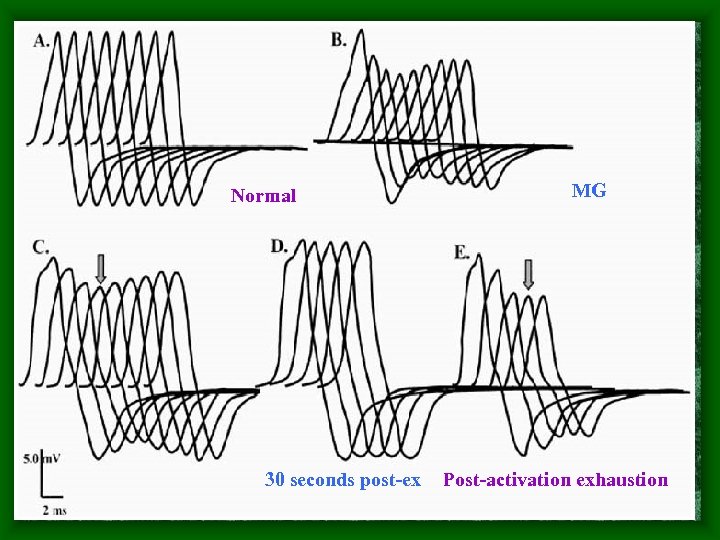 Normal 30 seconds post-ex MG Post-activation exhaustion
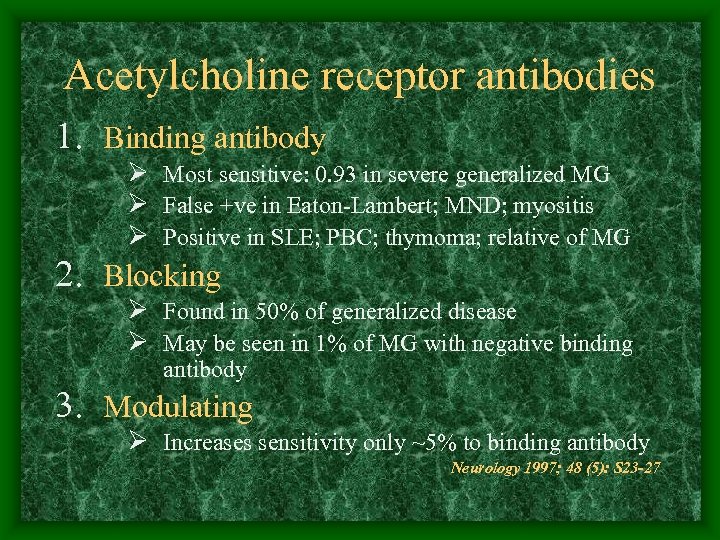 Acetylcholine receptor antibodies 1. Binding antibody Ø Most sensitive: 0. 93 in severe generalized MG Ø False +ve in Eaton-Lambert; MND; myositis Ø Positive in SLE; PBC; thymoma; relative of MG 2. Blocking Ø Found in 50% of generalized disease Ø May be seen in 1% of MG with negative binding antibody 3. Modulating Ø Increases sensitivity only ~5% to binding antibody Neurology 1997; 48 (5): S 23 -27
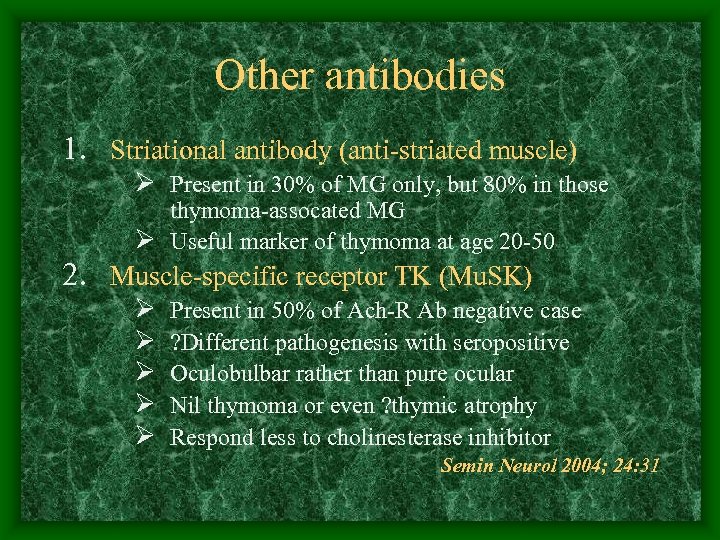 Other antibodies 1. Striational antibody (anti-striated muscle) Ø Present in 30% of MG only, but 80% in those thymoma-assocated MG Ø Useful marker of thymoma at age 20 -50 2. Muscle-specific receptor TK (Mu. SK) Ø Ø Ø Present in 50% of Ach-R Ab negative case ? Different pathogenesis with seropositive Oculobulbar rather than pure ocular Nil thymoma or even ? thymic atrophy Respond less to cholinesterase inhibitor Semin Neurol 2004; 24: 31
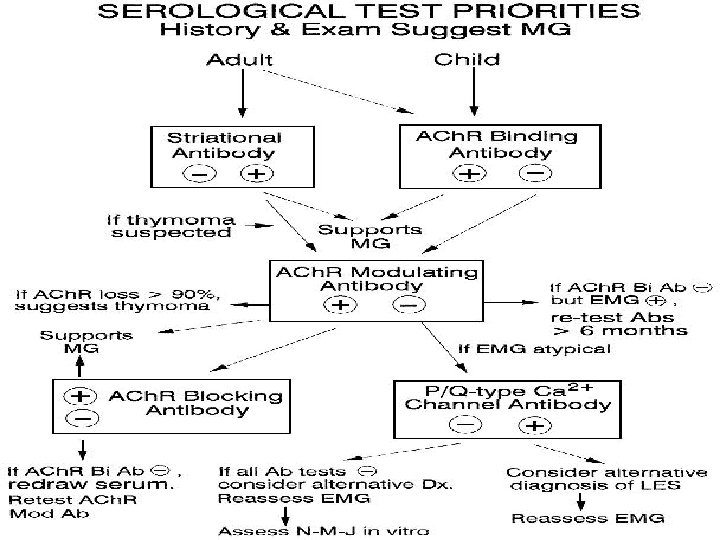
 Our patients had all three Ach. R antibodies positive, with titre high or very high at OPD
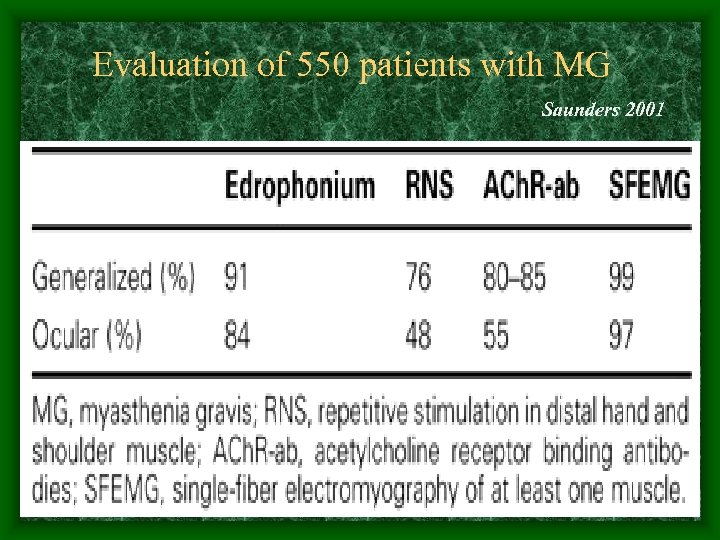 Evaluation of 550 patients with MG Saunders 2001
 History of Guillain Barre Syndrome • • Landry’s ascending paralysis 1859 Landry described 10 cases of weakness which ascended from lower limb to become generalized, and one of died of asphyxia “usually a motor disorder characterized by a gradual diminution of muscular strength with flaccid limbs and without contractures, convulsions or reflex movements” “weakness spreads rapidly from the lower to the upper parts of the body with a universal tendency to become generalised” Landry offered no explanation of disease
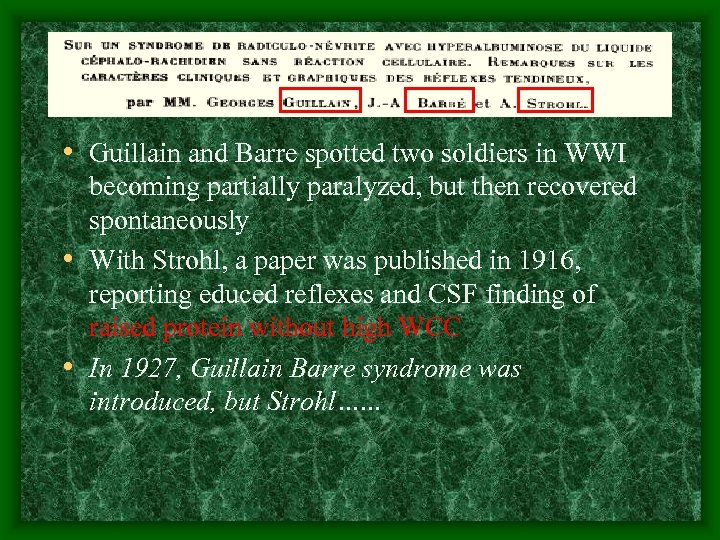 • Guillain and Barre spotted two soldiers in WWI becoming partially paralyzed, but then recovered spontaneously • With Strohl, a paper was published in 1916, reporting educed reflexes and CSF finding of raised protein without high WCC • In 1927, Guillain Barre syndrome was introduced, but Strohl…. . .
 Guillain Strohl Barre
 Essential features of GBS • Progressive symmetrical muscle weakness associated with depressed deep tendon reflexes, usually begins at proximal legs • Severity varies a lot from mild difficulty in walking to complete paralysis and respiratory failure • Extremities, facial, bulbar and respiratory muscles are affected in combination
 Other features of GBS • • Facial weakness >50% Oropharyngeal weakness 50% Oculomotor weakness 15% Respiratory failure ventilation 30% Begins from face and UL 10% Paresthesias in hand/feet 80% (Yet nil sign) Prominent severe back pain Dysautonomia 70% (e. g. HT alt with shock) NEJM 1992; 326: 1130
 Temp Off sedation On sedation BP/P Off sedation 240 40 220 200 39 SBP 180 160 38 Temp 140 120 37 100 80 Pulse ICU intubation 8 P 9/3 8 A 10/3 8 P 10/3 8 A 11/3 8 P 11/3 60
 Atypical GBS features • • • Meningism Papilloedema Vocal cord palsy Hearing loss Mental state change e. g. hallucination, delusion and vivid dream has been reported in a cohort of 139 patients of GBS in ICU Brain 2005; 128: 2535
 GBS Pathogenesis • Heterogenous syndrome caused by immunemediated peripheral nerve damage after being evoked by antecedent infection • Acute inflammatory demyelinating polyradiculoneuropathy (AIDP): epitopes in Schwann cell surface membrane • Acute motor axonal neuropathy (AMAN): epitopes in axonal membrane
 Possible antecedent infections • Campylobacter jejuni ØGenerate antibody to specific ganglioside GM 1 Ø 60% of AMAN/ AMSAN ØAxonal degeneration worse prognosis • CMV/ Epstein-Barr virus/ Mycoplasma • HIV • ? VZV/ HSV/ H influenzae
 Diagnostic criteria (NINDS) • Required features ØProgressive weakness >1 limb, ranging from minimal LL to complete tetraparesis, bulbar/facial muscles and ophthalmoplegia ØAreflexia. Typiclly global areflexia, but distal areflexia + hyporeflexia at knee/ biceps will suffice
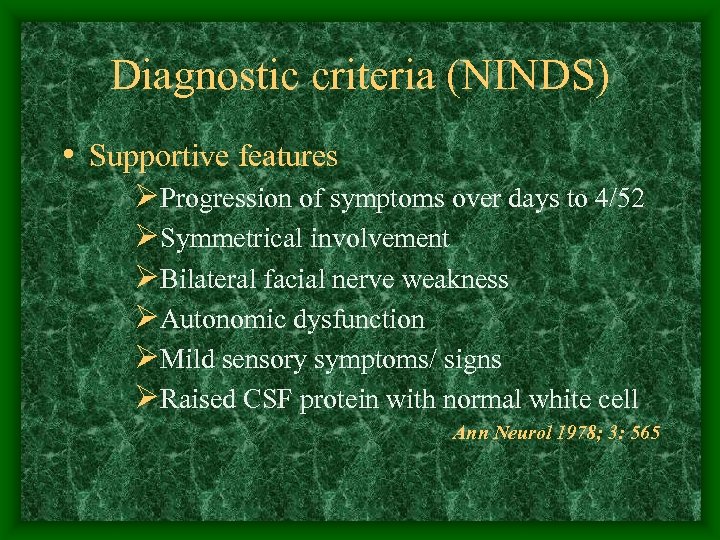 Diagnostic criteria (NINDS) • Supportive features ØProgression of symptoms over days to 4/52 ØSymmetrical involvement ØBilateral facial nerve weakness ØAutonomic dysfunction ØMild sensory symptoms/ signs ØRaised CSF protein with normal white cell Ann Neurol 1978; 3: 565
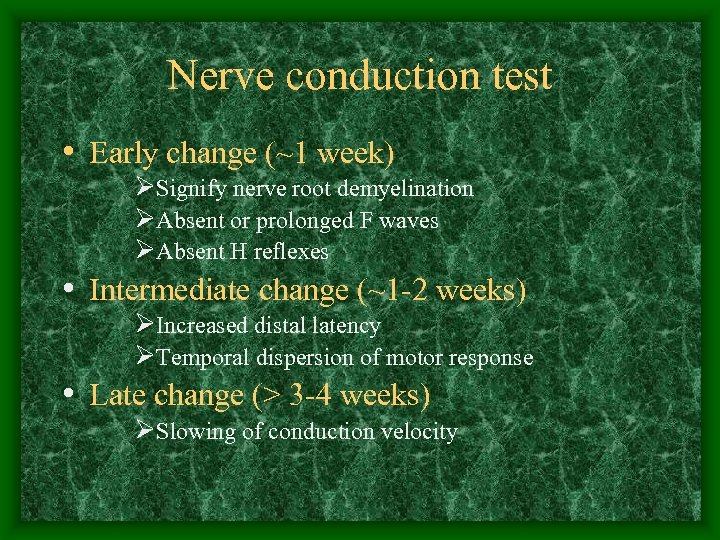 Nerve conduction test • Early change (~1 week) ØSignify nerve root demyelination ØAbsent or prolonged F waves ØAbsent H reflexes • Intermediate change (~1 -2 weeks) ØIncreased distal latency ØTemporal dispersion of motor response • Late change (> 3 -4 weeks) ØSlowing of conduction velocity
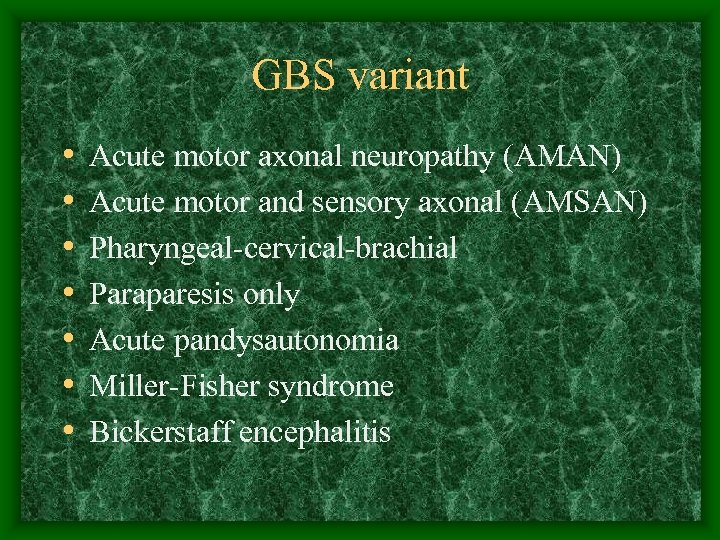 GBS variant • • Acute motor axonal neuropathy (AMAN) Acute motor and sensory axonal (AMSAN) Pharyngeal-cervical-brachial Paraparesis only Acute pandysautonomia Miller-Fisher syndrome Bickerstaff encephalitis
 Differential diagnosis for GBS • • Acute polyneuropathies Vasculitis Spinal cord: compression; myelitis Neuromuscular junction: MG; Eaton. Lambert; botulism • Muscle: polymyositis; CIM
 Miller Fisher syndrome • Triad: ophthalmoplegia, ataxia and areflexia • 20% patient may have extremities weakness • Anti-Ganglioside q 1 b antibody present in 85 -90% of cases • NCT shows absent or diminished sensory response, and may show similar change of AIDP for cases with weakness • CSF has similar change with GBS
 Differential diagnosis for MFS • • Brainstem stroke Myasthenia gravis Wernicke encephalopathy Other neuromusclar junction disease e. g. Eaton-Lambert, botulism • Bickerstaff encephalitis: ophthalmoplegia + ataxia + hyper-reflexia + anti-G Q 1 b +ve
 Treatment of MFS • Supportive care including ventilatory • • support, DVT prophylaxis, pain control Cardiovascualar monitoring and control Cholinesterase inhibitor not useful Immunomodulating therapy: IVIG; plasmapheresis Steroid has not been shown beneficial
 Plasma exchange • Maximal benefit when given within 7 days • ? Optimal number of exchange. Possibly lying between 4 -6 exchanges • Dose of volume: 200 -250 ml/kg weight • Shorten median time to recover walking by 40 -50% compared to supportive treatment • May be a problem in hemodynamics
 IV IG • • Five days of IVIG of 0. 4 g/kg body weight No inferiority compared to plasmapheresis Common minor side-effect: headache Other effects: aseptic meningitis; allergy; skin rash; acute renal failure • Life-threatening anaphylaxis reported Brain 2007; 130: 2245 -2257
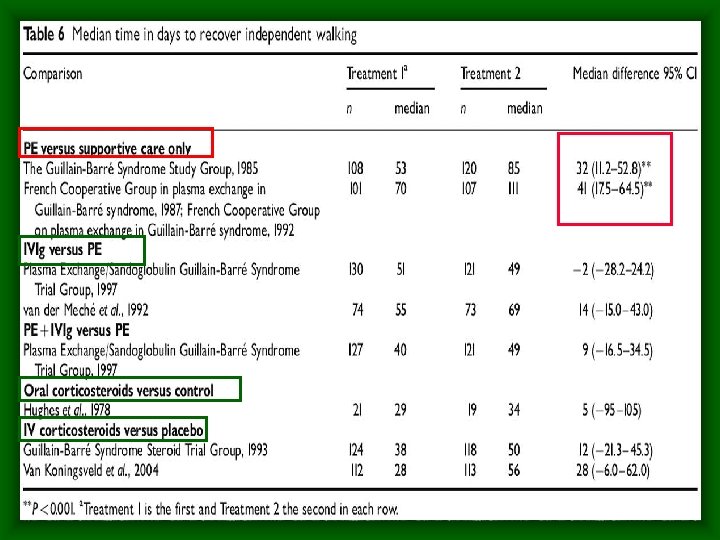
 Prognosis • Median time to walk unaided 53 -85 days • 5 -10% patients with prolonged ventilator dependency, and incomplete recovery • Overall mortality 5%; 20% ventilator cases • Poor prognosis indicator: old age; rapid onset; diarrhoea preceded; ventilator need; reduced distal motor response amplitude <20% of normal; axonal degeneration
 In summary, our patient • Past history of ocular MG • Symptom and sign suggest MFS • MRI shows bystander vascular malformation • • around spinal cord NCT showed axonal degeneration Improved rapidly Presence of anti-gangliose Q 1 b antibody Anti-Ach. R antibodies signify underlying MG
 Wish you happy lunar new year