


 Скачать презентацию Is Correction of Iron Deficiency a New Addition
5cb9518d43611acdfd27187b32c39b53.ppt
- Количество слайдов: 34
 Is Correction of Iron Deficiency a New Addition to the Treatment of Heart Failure? Silverberg DS, Wexler D, Schwartz D. Department of Nephrology and Cardiology, Tel Aviv Medical Center, Tel Aviv, Israel.
 How common is anemia in heart failure? • Anemia (Hb <13 g% in men and <12 g% in women) is present in about 50% of Heart Failure (HF) patients.
 How do you define iron deficiency in heart failure? • Iron deficiency (ID), is defined as either a serum ferritin of <100 ug/l or a serum ferritin of 100 -300 ug/l along with % Transferrin Saturation of <20%,
 How common is iron deficiency in anemic heart failure patients? • Iron deficiency is present in about 50% of the HF patients
 How common is iron deficiency in heart failure patients with a normal Hb ? • Iron deficiency is found in about 50% of patients without anemia
 So how common is iron deficiency in heart failure? Thus ID is present in about half the patients with HF both in those who are anemic and those who are not. Therefore every patient who has heart failure should be checked for iron deficiency anemia whether they are anemic or not!!!!!
 What are the arguments that support the importance of iron deficiency in heart failure? • The ID in HF is associated with reduced iron stores in the bone marrow and the heart. • ID is an independent risk factor for severity and worsening of the HF • Correction of ID with intravenous (IV) iron corrects both the anemia and the ID.
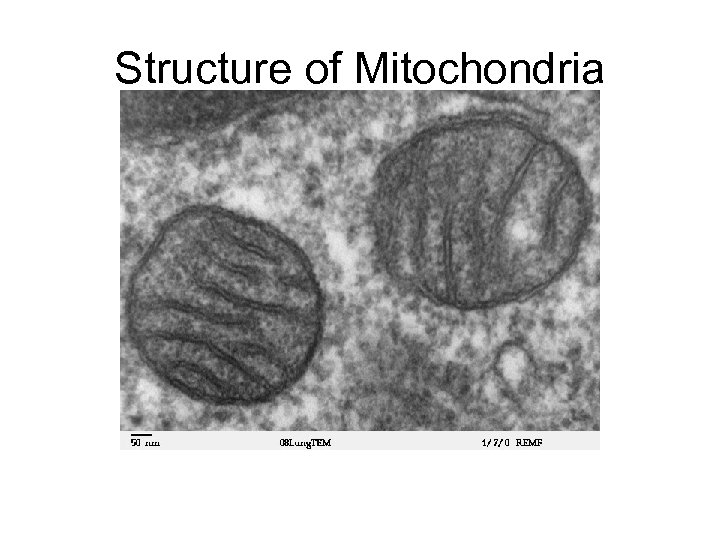 Structure of Mitochondria
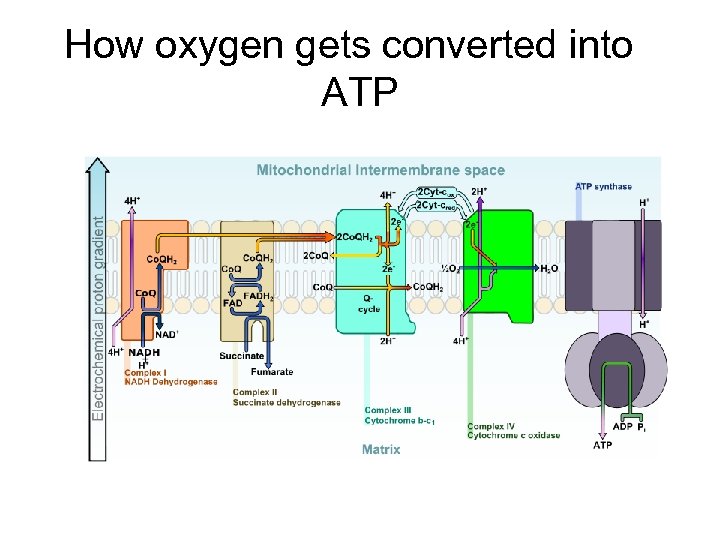 How oxygen gets converted into ATP
 What iron deficiency does to the cell • 1. Reduces Hb causing reduced supply of oxygen to the cell • 2. It reduces myoglobin concentration in the cell reducing the storage of oxygen • 3. Reduces oxygen utilization- the conversion of oxygen to ATP • All these make the heart and skeletal muscles weak and interfere with all cell functions in the body
 Animal Studies • In animal studies • If you give iron to iron deficient anemic rats but keep the Hb level unchanged they improve greatly • SO THAT IT IS NOT JUST THE Hb THAT IS IMPROVING THE PATIENT WHO IS TREATED FOR IRON DEFICIENCY BUT THE IRON AS WELL
 • Iron deficiency in animal studies has shown to cause the development of • left ventricular hypertrophy and dilatation, • cardiac fibrosis and dysfunction leading to heart failure, • mitochondrial swelling, • disruption of sarcomeres • and release of reactive oxygen species that can cause cell damage
 What improvements are seen with the use of IV iron in HF • Improved NYHA functional status, • Improved Exercise capacity as judged by oxygen utilization in exercise and 6 min walk distance, • Decreased C Reactive Protein, BNP, RDW (Red Cell Disribution Width) • Improved Quality of life
 What improvements are seen with the use of IV iron in HF • IV iron correction of ID in HF is associated with improvement in • rate of hospitalization for HF (falls about 72%), • cardiac dilation and hypertrophy, • cardiac function including systolic and diastolic function, and • renal function
 The Quality of Life as judged by standard questionnaires was improved • What does this mean? • Improvement in • activities of daily living, • appetite, • mobility, • dressing themselves, • hobbies, • general interest • depression improved
 Meta-analysis of IV iron in HF • 5 trials- 509 IV iron and 342 controls • Combined end point of risk of all-cause death or cardiovascular hospitalizations reduced by 56% • Combined endpoint of risk of CV death or hospitalization for worsening heart failure reduced by 61% • Hospitalization for HF reduced by 72% • NYHA class reduced by 0. 54
 • 6 Minute Walking Distance increased by 31 m • Increased Quality of Life increased by 4 different scales. • In Summary • Improved outcomes death and hospitalization • Increased exercise capacity • Improved Quality of Life • Alleviation of Heart Failure Symptoms
 Is IV iron treatment costeffective? • The cost-effectiveness of the treatment in terms of quality of life is about equivalent to the use of beta blockers, ACE inhibitors and ARBs
 Is this improvement due to the improvement in the anemia or the improvement in iron deficiency? • The improvement seem to be related more to the correction of the iron deficiency than to correction of the anemia.
 Which IV iron products have been used in HF and are they safe? • The large placebo- controlled studies have only been done with Ferric carboxymaltose and Ferric sucrose and the incidence of adverse effects of these agents is similar to placebo.
 In the 5 placebo-controlled studies and 3 non-placebo studies patients in patients with HF, IV iron was given over a few weeks either as Ferric saccharate – (Venofer) total 1000 mg) 200 mg once a week for 5 weeks Or Ferric Carboxymaltose (Ferinject) 1000 mg given as 1000 mg once or 500 mg twice over a week or 200 mg per week for 5 weeks
 The drawbacks of the studieswhat data is lacking? Large long-term adequatelycontrolled mortality-driven intervention studies are still needed to clarify the effect of IV iron in HF.
 What are the current policies of international heart associations about detection and treatment of IV iron in heart ? • Several Heart Associations, including the European, • French • Australian and New Zealand • Heart Associations, suggest that ID should now be routinely sought for in all HF patients and corrected if present.
 What is the role of oral iron in iron deficiency in heart failure? • There is currently insufficient data on this subject. Some experts say that if the patient is stable, oral iron can be tried for a few weeks but if it fails to correct the iron deficiency IV iron should be used. • Others would not wait and would treat the iron deficiency with IV iron right away
 When should Erythropoietin (EPO) be added? • A large placebo- controlled multicenter study, the RED-HF study, has been done in anemic HF patients which failed to show any advantage of EPO over placebo. In addition the EPO was associated with increased cardiovascular complications. These findings are confirmed by metaanalysis. But QOL is improved as is dyspnea
 • In metaanalysis the effects of short and long acting EPO are similar. • EPO should be added only when the Hb remains less than 10 -11 g% and only given in the lowest doses needed to get to a Hb of around 11 g%
 What has caused the iron deficiency? • Reduced intake- anorexia or low protein diets • Reduced iron absorption from the intestines caused by Hepcidininduced reduction in iron absorption from the gut • Hepcidin- induced lack of release of iron from iron stores in the liver cells and macrophages
 What has caused the iron deficiency? • Gastritis –due Helicobacter pylori or not • Intestinal edema from Heart Failure • Bleeding gastric or duodenal ulcers • Carcinoma of the stomach or colon • Warfarin-like agents, NSAIDs, ASA, Clopidogril etc • Medications such as calcium • The use of Erythropoietin
 How does hepcidin reduce iron absorption? • CHF is an inflammatory condition like renal failure, cancer, rheumatoid arthritis etc • In all inflammatory conditions the body produces a cytokine called interleukin 6 which goes into the liver and causes the production of hepcidin
 • This hepcidin is released into the blood and reduces ferroportin activity in the gut and the liver and RES • This prevents the absorption of iron from the gut and prevents the release of iron from iron stores in the liver and RES • For these 2 reasons not enough iron gets into the blood and therefore not enough iron is delivered to the tissues including the bone marrow and heart
 How does IV iron alone compare to IV iron and EPO in Cardio Renal Syndrome? • We recently compared the 2 approaches in 81 cases of CRS and we found that • 74% of the IV iron alone group could reach a Hb of 11 g/dl and • 85% of the combination could reach a Hb of 11 g/dl • So the great majority can reach a satisfactory Hb with IV iron alone • Ben –Assa and Silverberg Cardiorenal Med 2015; 5: 248 -53
 Conclusions • 50% of the patients with heart failure have iron deficiency whether or not they are anemic • Intravenous iron reduces hospitalization for heart failure by about 72% without causing serious side effects in iron deficient CHF patients • IV iron has a great effect on improving Quality of Life, exercise capacity, and probably renal and cardiac function in CHF • Most IV iron preparations are safe and effective but iron carboxymaltose probably has the most advantages
 • The role of oral iron is uncertain and has not been studied sufficiently
 References • • • Silverberg DS et al Is Correction of Iron Deficiency a New Addition to the Treatment of the Heart Failure? Int J Mol Sci. 2015 Jun 18; 16(6): 14056 -74. Qian C, et al. The Efficacy and Safety of Iron Supplementation in Patients With Heart Failure and Iron Deficiency: A Systematic Review and Metaanalysis. Can J Cardiol 2015 Jun 21. [Epub ahead of print] Wong CC, et al. Iron Deficiency in Heart Failure: Looking Beyond Anaemia. Heart Lung Circ. 2015 Jul 15 [Epub ahead of print] Mc. Donagh T, Macdougall IC Iron therapy for the treatment of iron deficiency in chronic heart failure: intravenous or oral? Eur J Heart Fail. 2015 Mar; 17(3): 248 -62 Jankowska EA et al Effects of IV iron therapy in irondeficient patients with systolic heart failure. Eur J Heart Failure 2016 Jan 28 (ahead of print).