 Скачать презентацию IRCOS Equipment of Radio Monitoring established in 1992
4aa9bc80aff6dfaaccff5568f16aed87.ppt
- Количество слайдов: 61



IRCOS Equipment of Radio Monitoring (established in 1992) May 2009
Engineering, Manufacturing and Supply of Equipment for Outdoor Radio Monitoring (in urban, rural and industrial areas, airports and counterterrorism operation sites) Ø Indoor Radio Monitoring (in one room, in a group of rooms within one building and around buildings). Ø Specialized Detection of side electromagnetic radiation/interferences in office equipment Ø Measurement of all radio signal parameters Ø 2
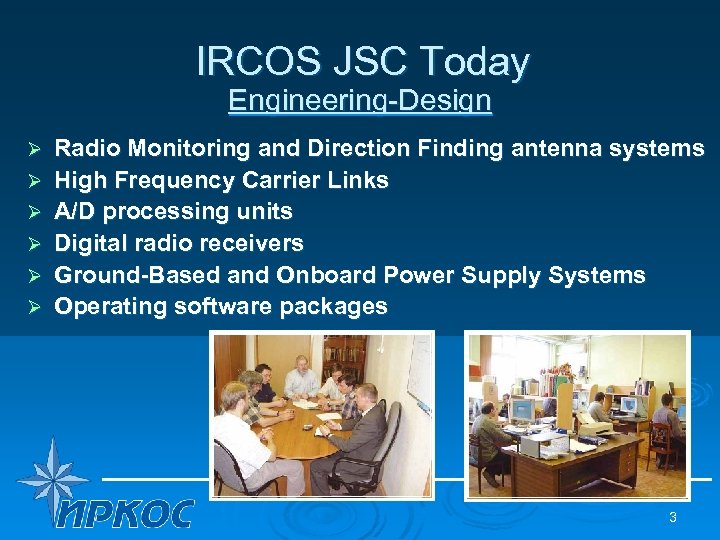
IRCOS JSC Today Engineering-Design Ø Ø Ø Radio Monitoring and Direction Finding antenna systems High Frequency Carrier Links A/D processing units Digital radio receivers Ground-Based and Onboard Power Supply Systems Operating software packages 3
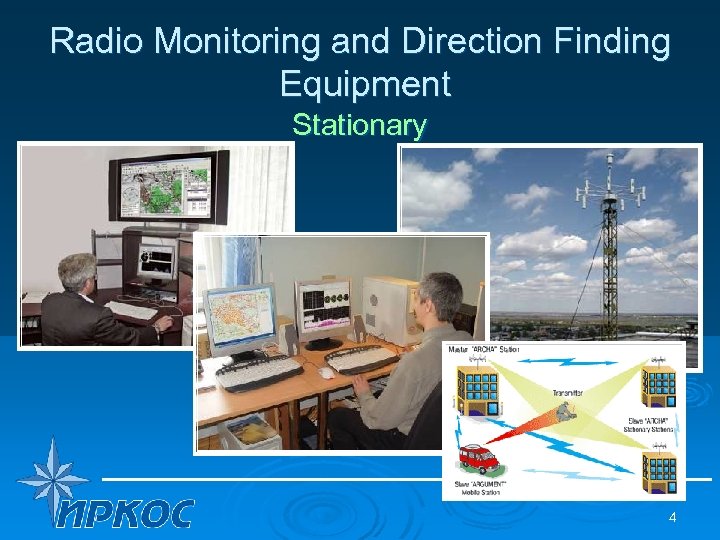
Radio Monitoring and Direction Finding Equipment Stationary 4
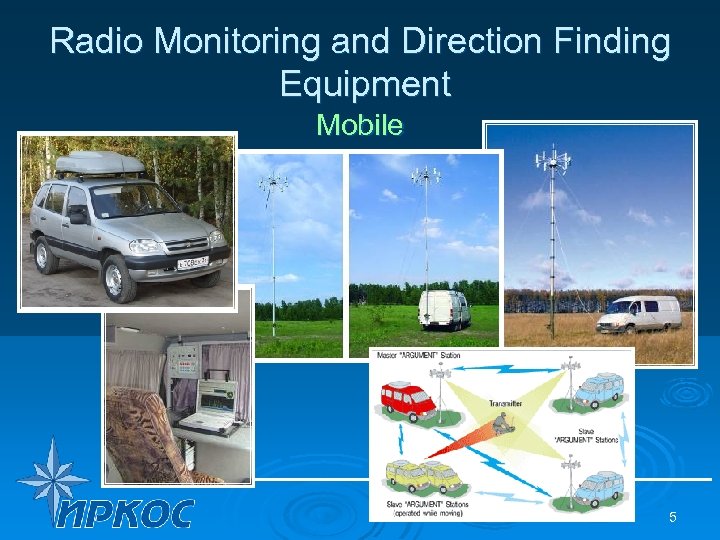
Radio Monitoring and Direction Finding Equipment Mobile 5
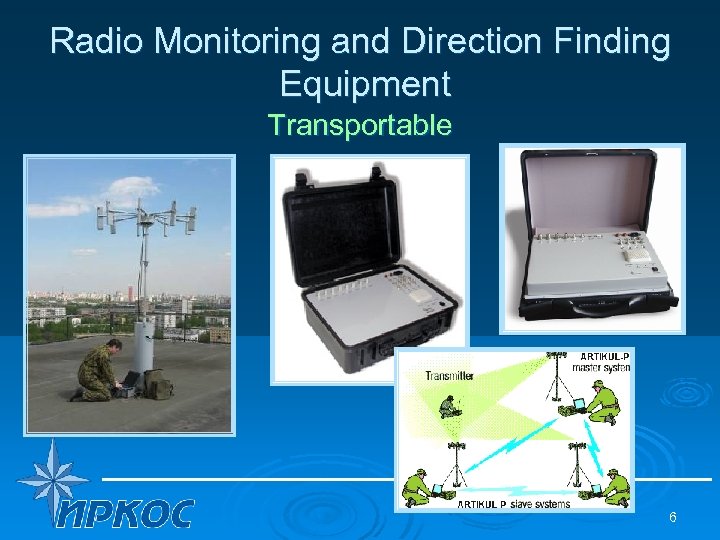
Radio Monitoring and Direction Finding Equipment Transportable 6
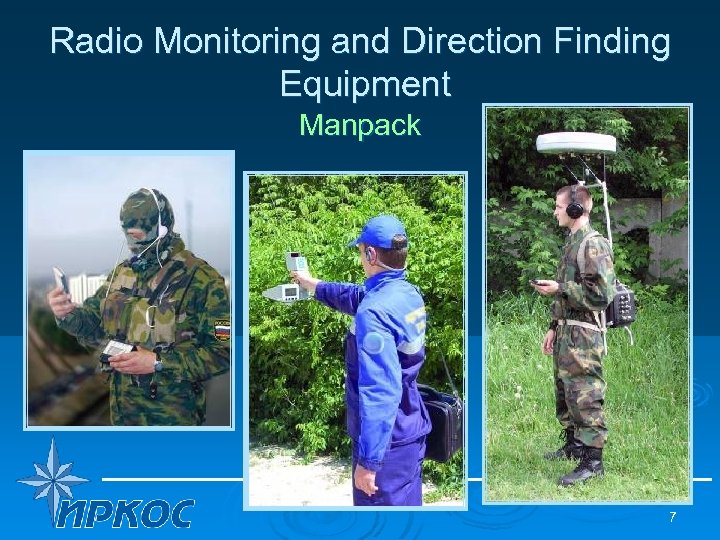
Radio Monitoring and Direction Finding Equipment Manpack 7
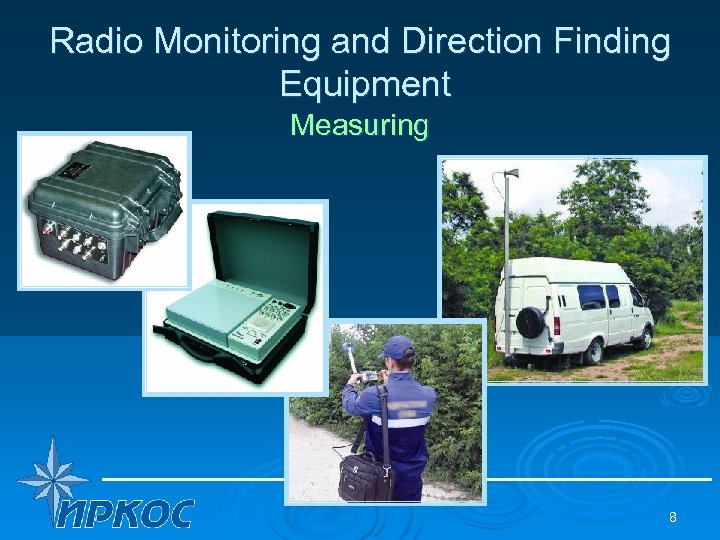
Radio Monitoring and Direction Finding Equipment Measuring 8
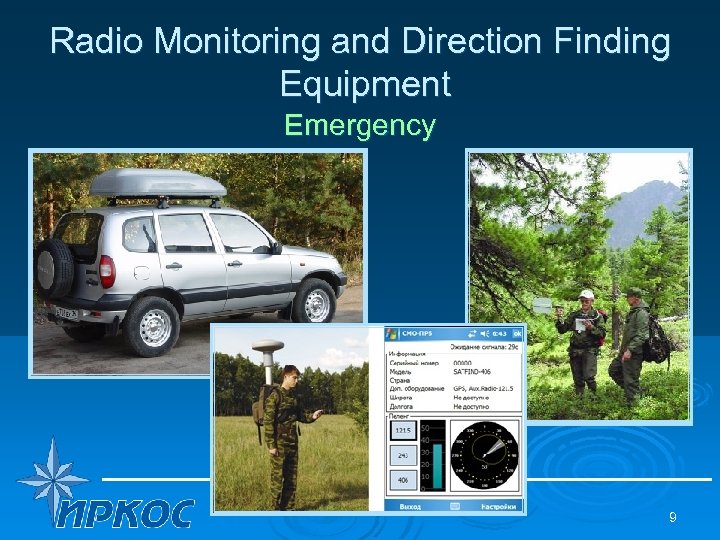
Radio Monitoring and Direction Finding Equipment Emergency 9
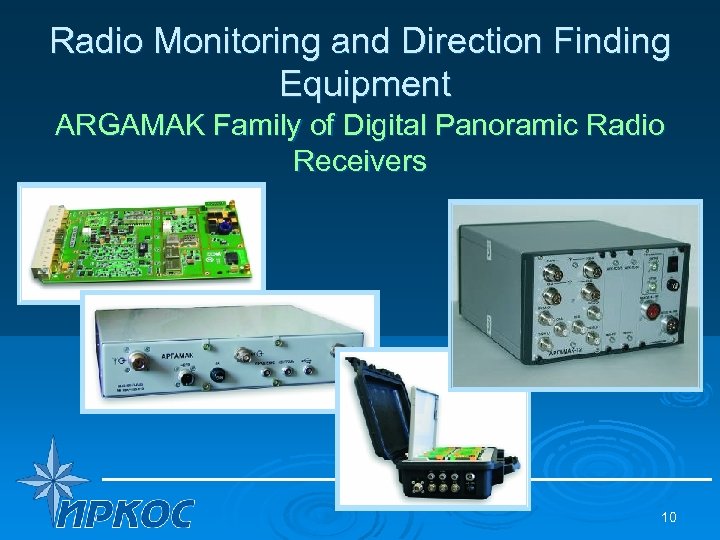
Radio Monitoring and Direction Finding Equipment ARGAMAK Family of Digital Panoramic Radio Receivers 10
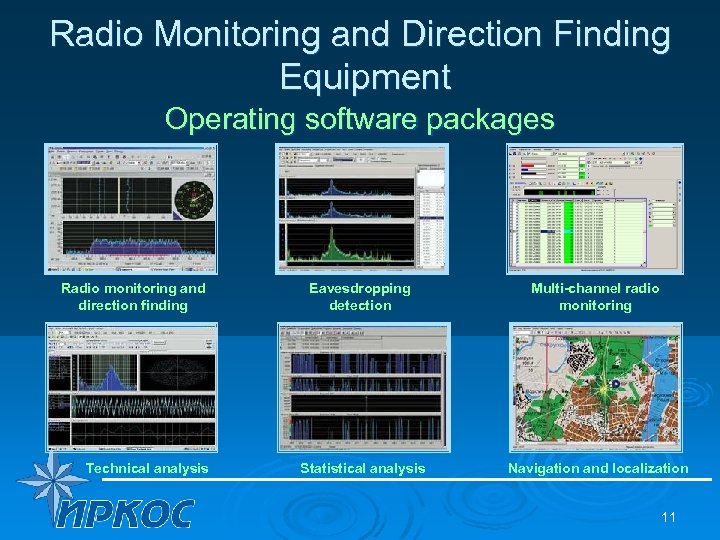
Radio Monitoring and Direction Finding Equipment Operating software packages Radio monitoring and direction finding Technical analysis Eavesdropping detection Multi-channel radio monitoring Statistical analysis Navigation and localization 11
NATIONAL RADIO MONITORING SYSTEM May 2009
NATIONAL RADIOMONITORING SYSTEM Radio frequency spectrum is a limited national nature resource Purpose: Radio frequency resource managing shall encourage: ü Effective use of the wireless communication systems üNational economy üNational defense and the reign of law üLife and health protection üImplementation of modern radioelectronic technology. 13
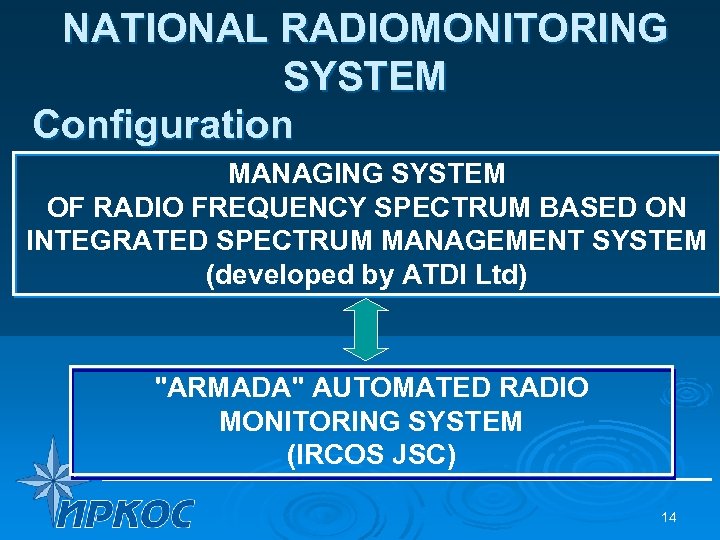
NATIONAL RADIOMONITORING SYSTEM Configuration MANAGING SYSTEM OF RADIO FREQUENCY SPECTRUM BASED ON INTEGRATED SPECTRUM MANAGEMENT SYSTEM (developed by ATDI Ltd) "ARMADA" AUTOMATED RADIO MONITORING SYSTEM (IRCOS JSC) 14
MANAGING SYSTEM OF RADIO FREQUENCY SPECTRUM BASIC FUNCTIONS üPlanning and regulation of spectrum utilization. üCost accounting of spectrum utilization management. üFrequency bandwidth allocation. üFrequency assignment and licensing üCo-operation with other state services. 15
MANAGING SYSTEM OF RADIO FREQUENCY SPECTRUM BASIC FUNCTIONS (continue) üInternational and regional co-operation. üStandartization and definition of the technical requirements to radio equipment. üData exchange with ARMS "ARMADA". üControl of the spectrum licensee. üSupport of Spectrum Managing System 16
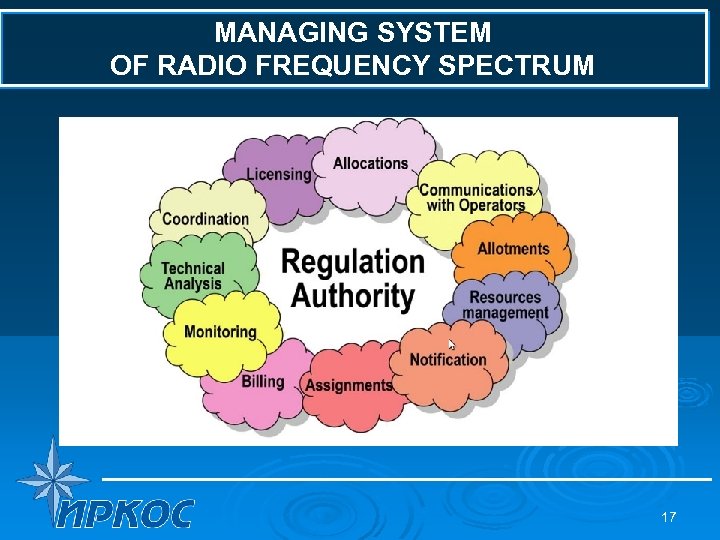
MANAGING SYSTEM OF RADIO FREQUENCY SPECTRUM 17
MANAGING SYSTEM OF RADIO FREQUENCY SPECTRUM The purpose of ICS Manager is to assist the Regulation Authorities to handle all these processes. First of all, ICS Manager provides a database, able to contain all the technical and administrative data related to Spectrum Management, i. e. : • The frequency allocations • The frequency allotments • The frequency assignments • The shared resources : Sites, Antennas, Equipments. . . 18
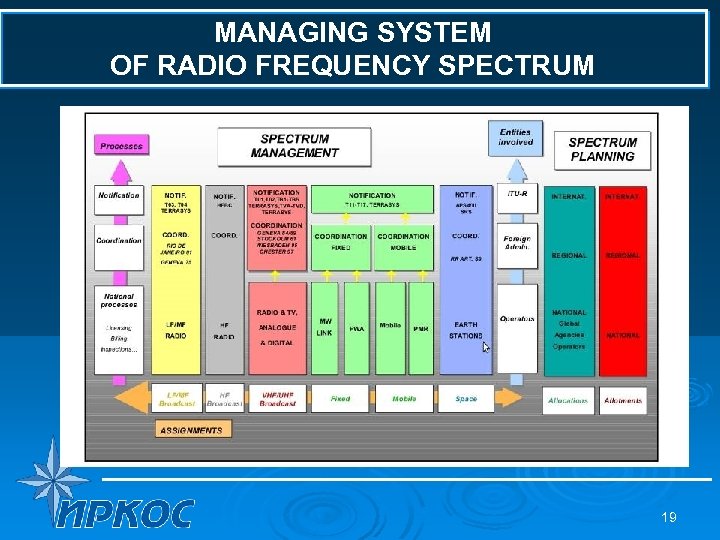
MANAGING SYSTEM OF RADIO FREQUENCY SPECTRUM 19
MANAGING SYSTEM OF RADIO FREQUENCY SPECTRUM ICS Manager allows to manipulate these data easily, i. e. to : • Display the data in various and adequate ways • Input the data easily • Validate the data (redundancy, consistency, tracability. . . ) • Print maps, notification forms, coordination requests, customized reports. . . • Exchange data with other organizations (ITU-R, Foreign Administrations, Operators, . . . ) • Access the data following a secured privileges policy • Configure the working environment. . . And eventually, ICS Manager allows to manage all the processes mentioned above. . . 20
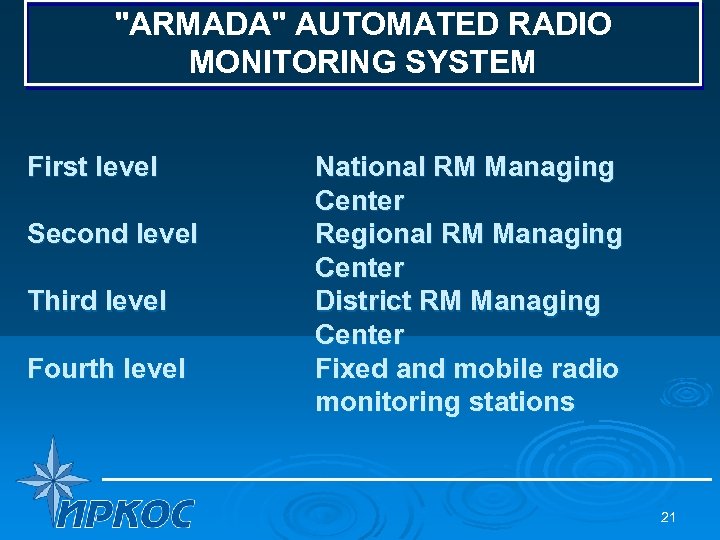
"ARMADA" AUTOMATED RADIO MONITORING SYSTEM First level Second level Third level Fourth level National RM Managing Center Regional RM Managing Center District RM Managing Center Fixed and mobile radio monitoring stations 21
"ARMADA" AUTOMATED RADIO MONITORING SYSTEM 22
"ARMADA" AUTOMATED RADIO MONITORING SYSTEM 23
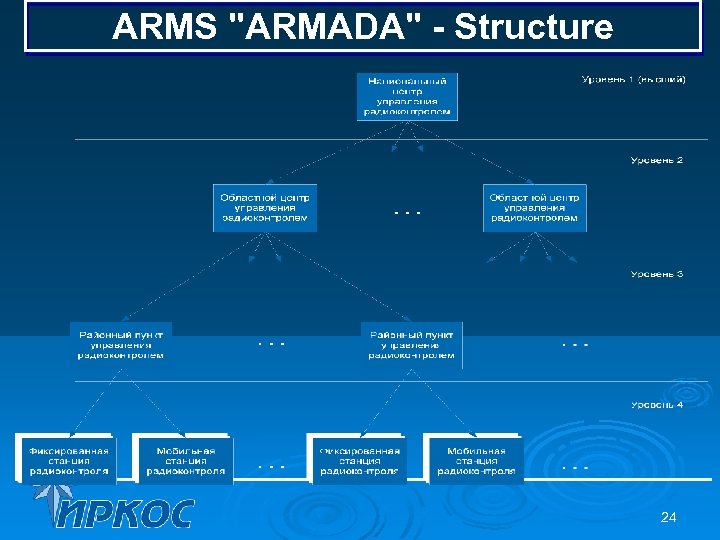
ARMS "ARMADA" - Structure 24
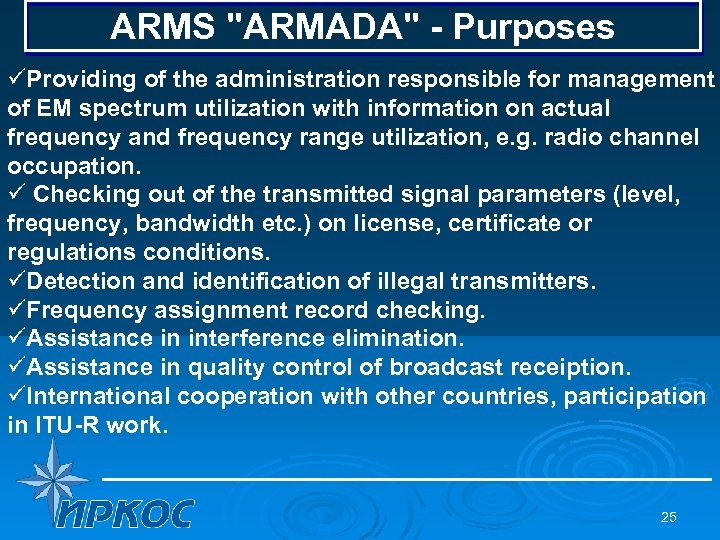
ARMS "ARMADA" - Purposes üProviding of the administration responsible for management of EM spectrum utilization with information on actual frequency and frequency range utilization, e. g. radio channel occupation. ü Checking out of the transmitted signal parameters (level, frequency, bandwidth etc. ) on license, certificate or regulations conditions. üDetection and identification of illegal transmitters. üFrequency assignment record checking. üAssistance in interference elimination. üAssistance in quality control of broadcast receiption. üInternational cooperation with other countries, participation in ITU-R work. 25
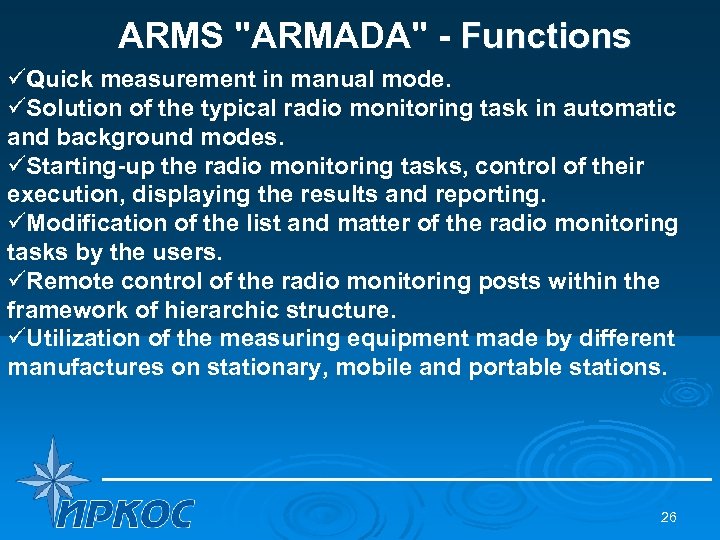
ARMS "ARMADA" - Functions üQuick measurement in manual mode. üSolution of the typical radio monitoring task in automatic and background modes. üStarting-up the radio monitoring tasks, control of their execution, displaying the results and reporting. üModification of the list and matter of the radio monitoring tasks by the users. üRemote control of the radio monitoring posts within the framework of hierarchic structure. üUtilization of the measuring equipment made by different manufactures on stationary, mobile and portable stations. 26
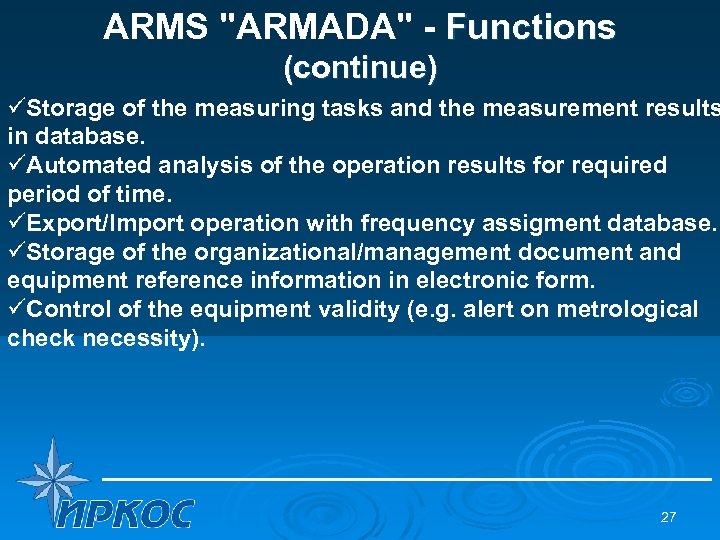
ARMS "ARMADA" - Functions (continue) üStorage of the measuring tasks and the measurement results in database. üAutomated analysis of the operation results for required period of time. üExport/Import operation with frequency assigment database. üStorage of the organizational/management document and equipment reference information in electronic form. üControl of the equipment validity (e. g. alert on metrological check necessity). 27
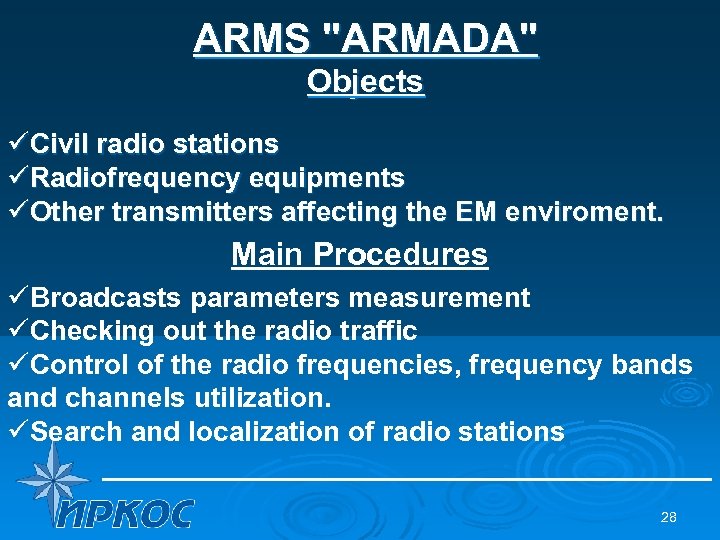
ARMS "ARMADA" Objects üCivil radio stations üRadiofrequency equipments üOther transmitters affecting the EM enviroment. Main Procedures üBroadcasts parameters measurement üChecking out the radio traffic üControl of the radio frequencies, frequency bands and channels utilization. üSearch and localization of radio stations 28
ARMS "ARMADA" Main Procedures (continue) üSearch and localization of radio interference sources üSearch and localization of the illegal transmitters üAutomated radio monitoring, direction finding and mapping of the transmitters üMeasuring of electromagnetic field strength and radio signal parameters, recording and technical analysis 29
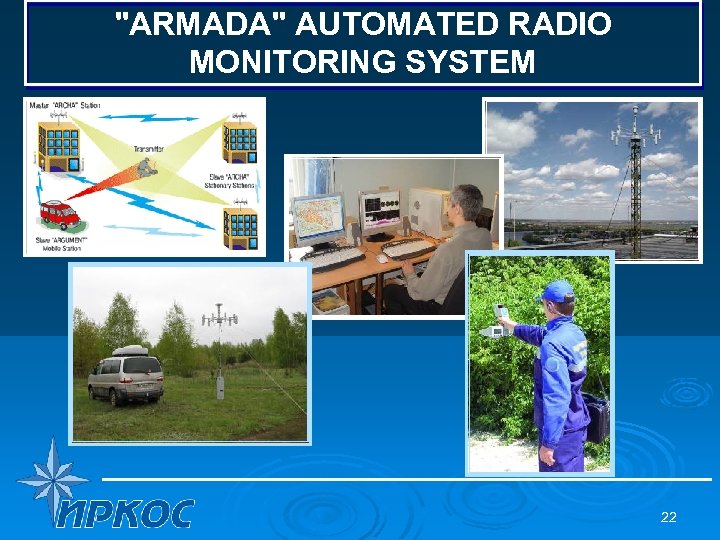
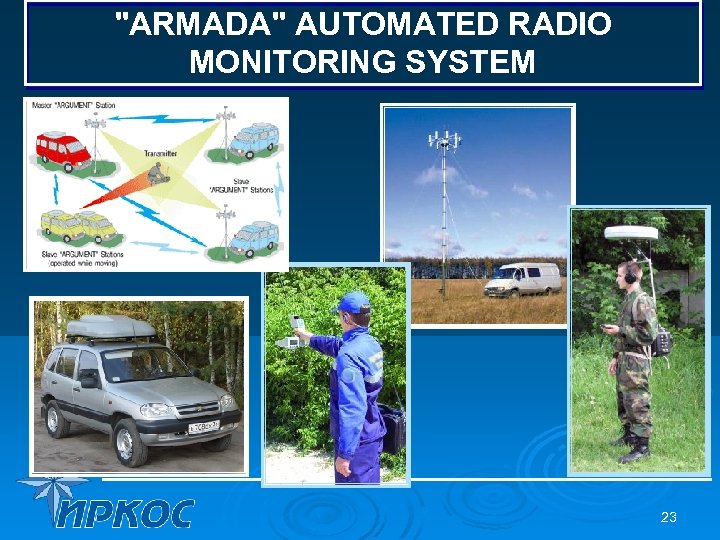
ARMS "ARMADA" Configuration üEquipment for national, regional and distinct radio monitoring mangement centers üStationary measuring stations ARCHA-I Radio monitoring and direction finding üMobile measuring stations ARGUMENT-I Radio monitoring and direction finding üHand-Held Direction Finder ARC-RP 3 to solve "last mile" task 30
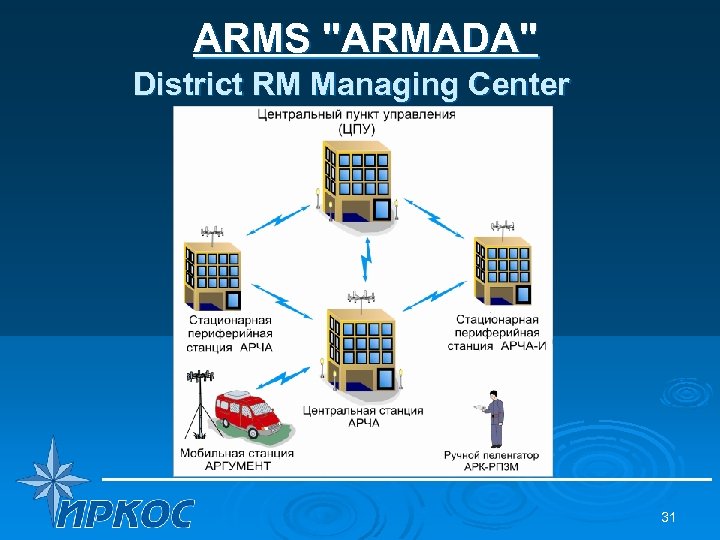
ARMS "ARMADA" District RM Managing Center 31
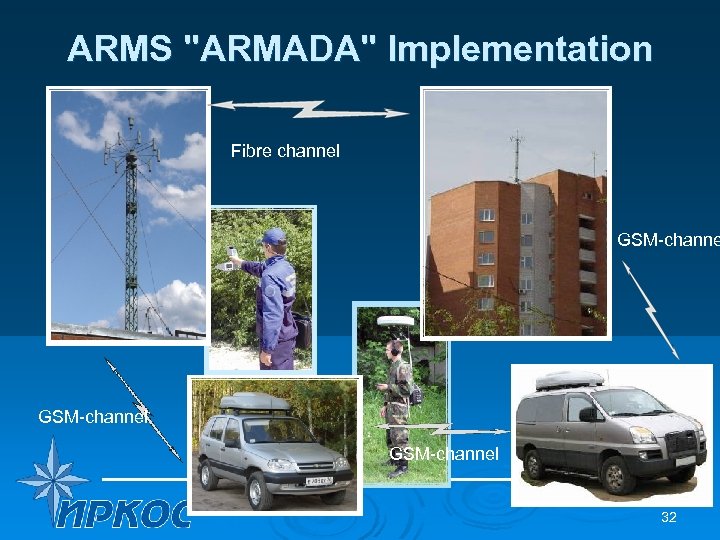
ARMS "ARMADA" Implementation Fibre channel GSM-channel 32
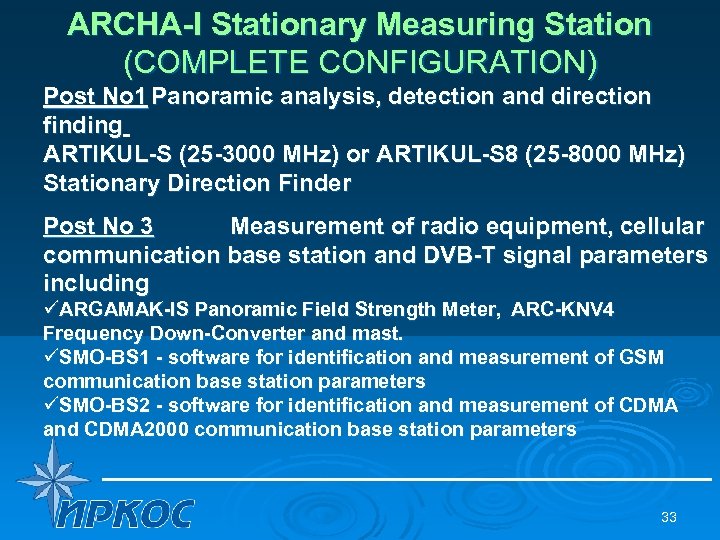
ARCHA-I Stationary Measuring Station (COMPLETE CONFIGURATION) Post No 1 Panoramic analysis, detection and direction finding ARTIKUL-S (25 -3000 MHz) or ARTIKUL-S 8 (25 -8000 MHz) Stationary Direction Finder Post No 3 Measurement of radio equipment, cellular communication base station and DVB-T signal parameters including üARGAMAK-IS Panoramic Field Strength Meter, ARC-KNV 4 Frequency Down-Converter and mast. üSMO-BS 1 - software for identification and measurement of GSM communication base station parameters üSMO-BS 2 - software for identification and measurement of CDMA and CDMA 2000 communication base station parameters 33
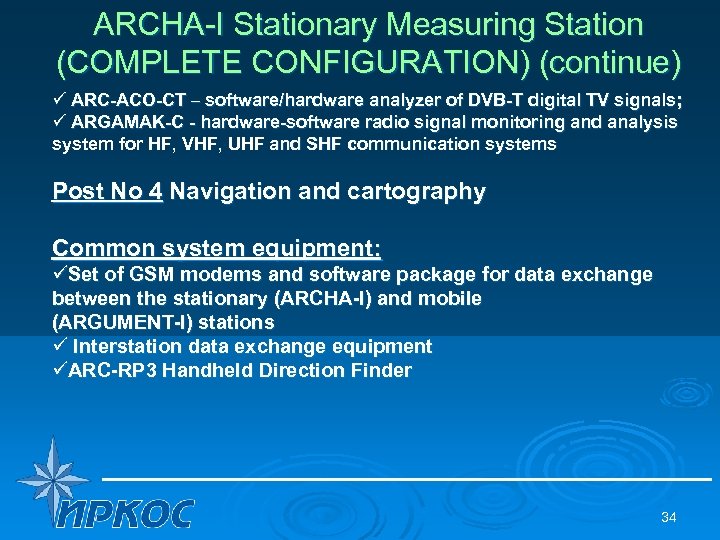
ARCHA-I Stationary Measuring Station (COMPLETE CONFIGURATION) (continue) ü ARC-ACO-CT – software/hardware analyzer of DVB-T digital TV signals; ü ARGAMAK-C - hardware-software radio signal monitoring and analysis system for HF, VHF, UHF and SHF communication systems Post No 4 Navigation and cartography Common system equipment: üSet of GSM modems and software package for data exchange between the stationary (ARCHA-I) and mobile (ARGUMENT-I) stations ü Interstation data exchange equipment üARC-RP 3 Handheld Direction Finder 34
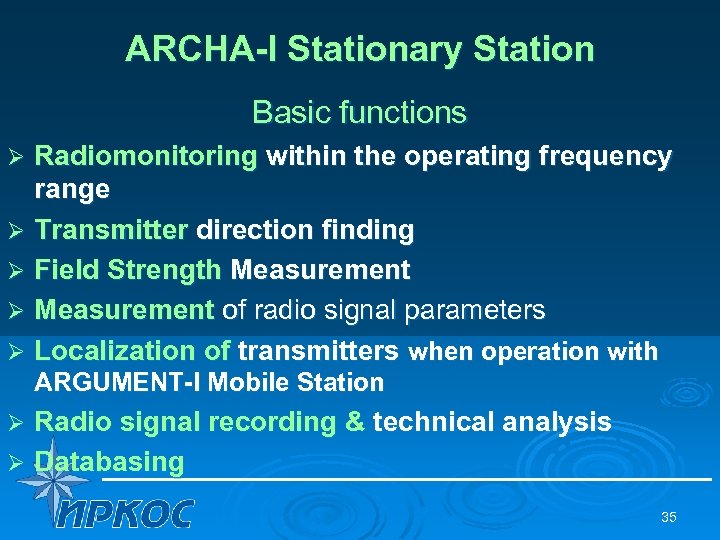
ARCHA-I Stationary Station Basic functions Radiomonitoring within the operating frequency range Ø Transmitter direction finding Ø Field Strength Measurement Ø Measurement of radio signal parameters Ø Localization of transmitters when operation with Ø ARGUMENT-I Mobile Station Radio signal recording & technical analysis Ø Databasing Ø 35
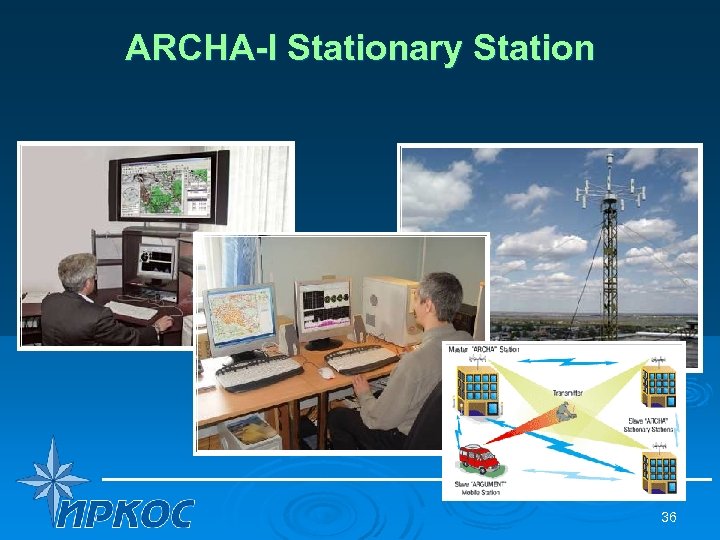
ARCHA-I Stationary Station 36
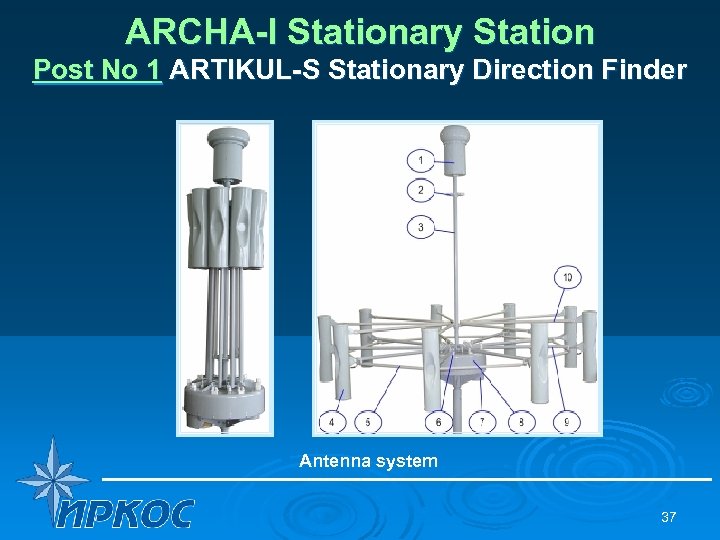
ARCHA-I Stationary Station Post No 1 ARTIKUL-S Stationary Direction Finder Antenna system 37
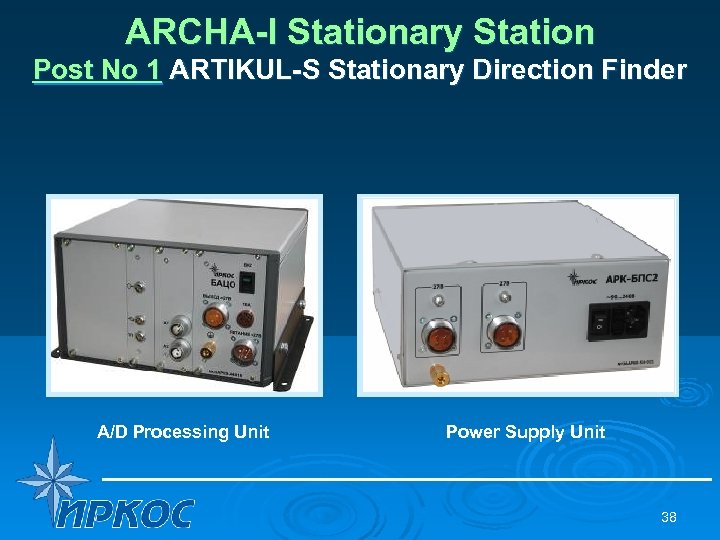
ARCHA-I Stationary Station Post No 1 ARTIKUL-S Stationary Direction Finder A/D Processing Unit Power Supply Unit 38
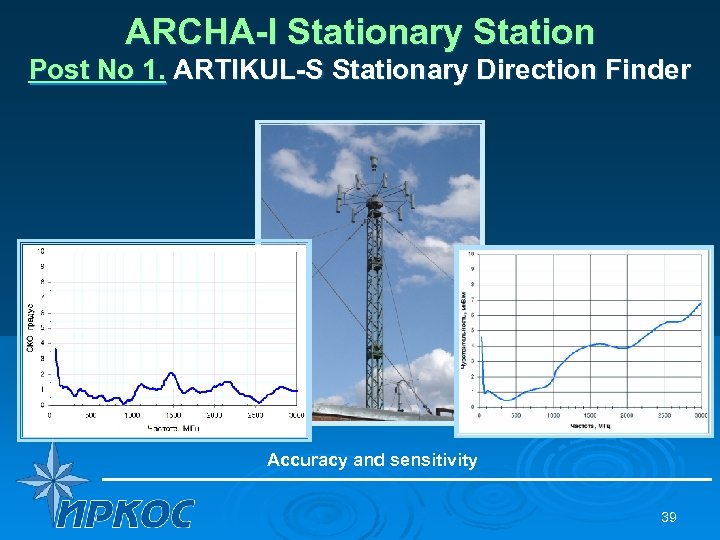
ARCHA-I Stationary Station Post No 1. ARTIKUL-S Stationary Direction Finder Accuracy and sensitivity 39
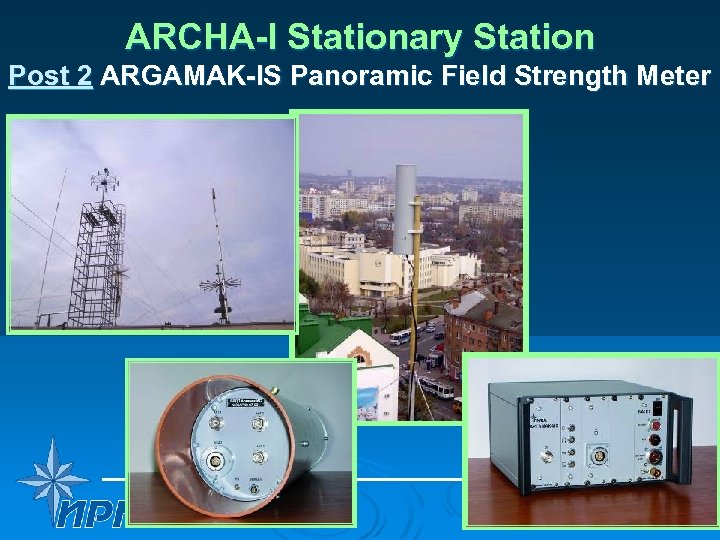
ARCHA-I Stationary Station Post 2 ARGAMAK-IS Panoramic Field Strength Meter 40
ARGUMENT-I Mobile Measurement Station Basic functions Radiomonitoring within the operating frequency range Ø Transmitter direction finding Ø Field Strength Measurement Ø Measurement of radio signal parameters Ø Localization of transmitters Ø Radio signal recording & technical analysis Ø Databasing Ø 41
ARGUMENT-I Mobile Measurement Station (COMPLETE CONFIGURATION) Post No. 1 ARTIKUL-M Mobile Direction Finder with Two Antenna Systems mounted on a vehicle roof and on a remote mast. Post No 3 ARGAMAK-IM Panoramic Measuring Receiver with ARC-KNV 4 Frequency Down-Converter (25– 18000 MHz), antenna set and mast for their mounting ARGAMAK-C - hardware-software radio signal monitoring and analysis system for HF, VHF, UHF and SHF communication systems 42
ARGUMENT-I Mobile Measurement Station (continue) Post No 4 ARC-KN 2 Navigation and Cartography equipment, SMO-SEKTOR software package Common system equipment: ü Equipment for data transmission to other stations (to be agreed with the Customer) ü ARC-RP 3 Handheld Direction Finder (0. 3 18000 MHz) ü ARC-TG 3 Test Generator (25 – 3000 MHz) to test and adjust the direction finder ü Self-contained power supply 43
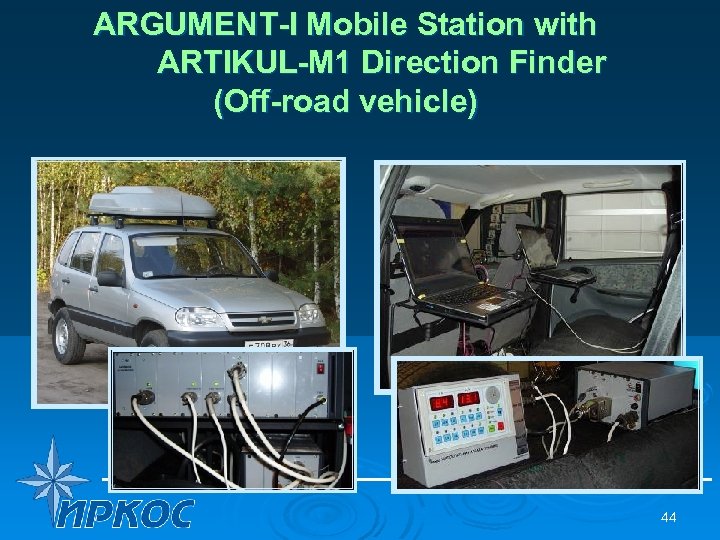
ARGUMENT-I Mobile Station with ARTIKUL-M 1 Direction Finder (Off-road vehicle) 44
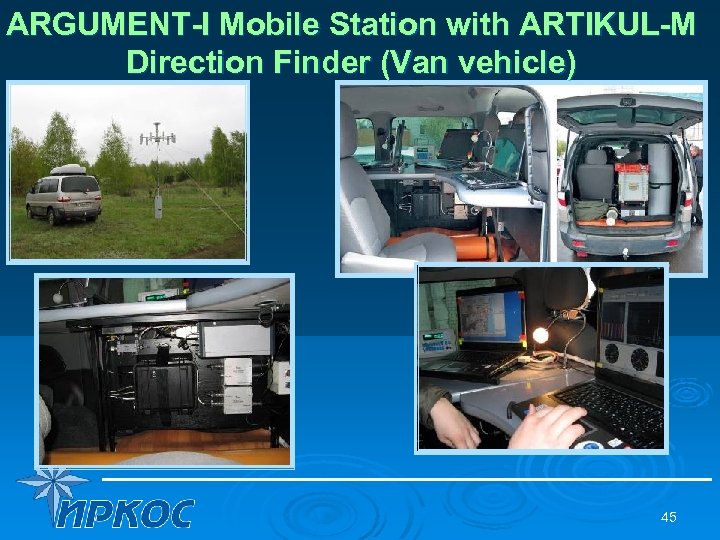
ARGUMENT-I Mobile Station with ARTIKUL-M Direction Finder (Van vehicle) 45
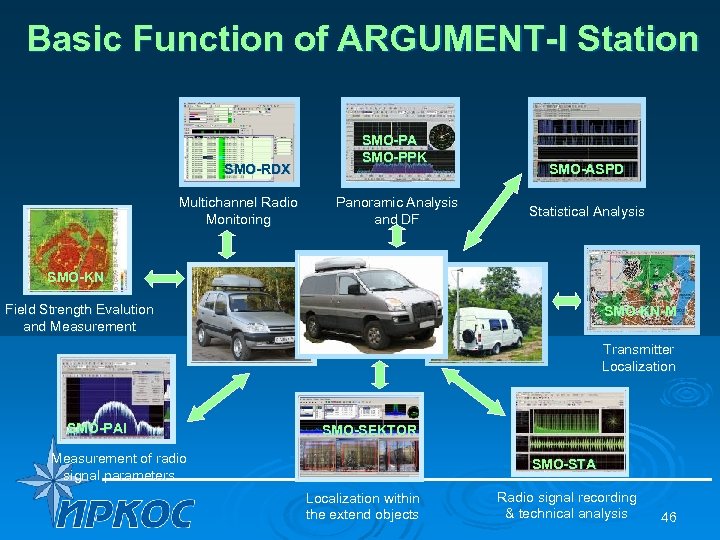
Basic Function of ARGUMENT-I Station SMO-RDX Multichannel Radio Monitoring SMO-PA SMO-PPK Panoramic Analysis and DF SMO-ASPD Statistical Analysis SMO-KN Field Strength Evalution and Measurement SMO-KN-M Transmitter Localization SMO-PAI SMO-SEKTOR Measurement of radio signal parameters SMO-STA Localization within the extend objects Radio signal recording & technical analysis 46
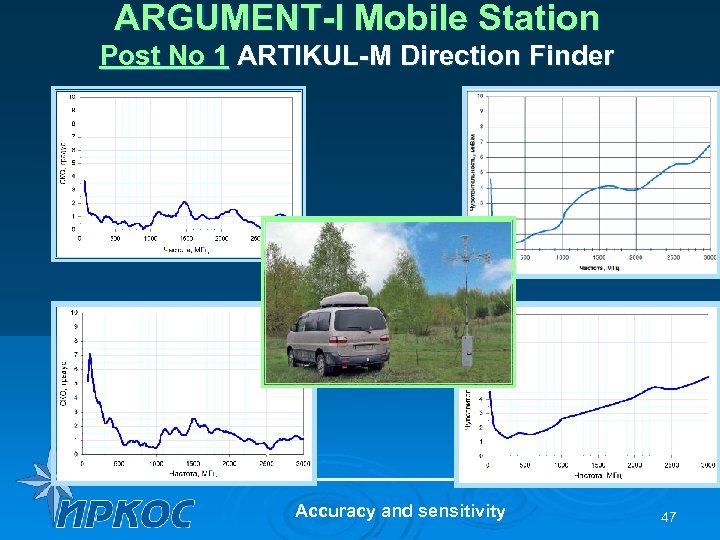
ARGUMENT-I Mobile Station Post No 1 ARTIKUL-M Direction Finder Accuracy and sensitivity 47
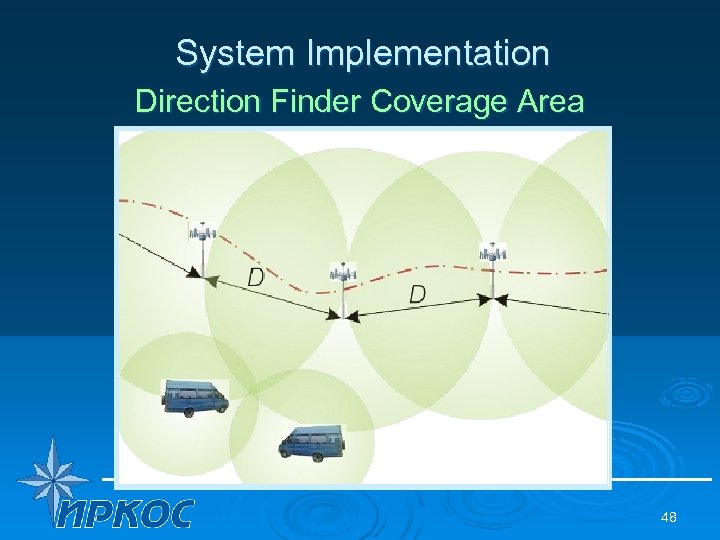
System Implementation Direction Finder Coverage Area 48
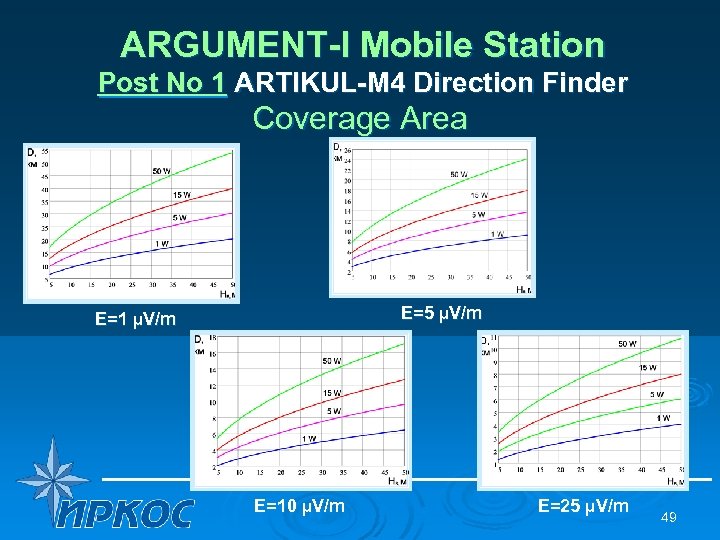
ARGUMENT-I Mobile Station Post No 1 ARTIKUL-M 4 Direction Finder Coverage Area Е=5 µV/m Е=10 µV/m Е=25 µV/m 49
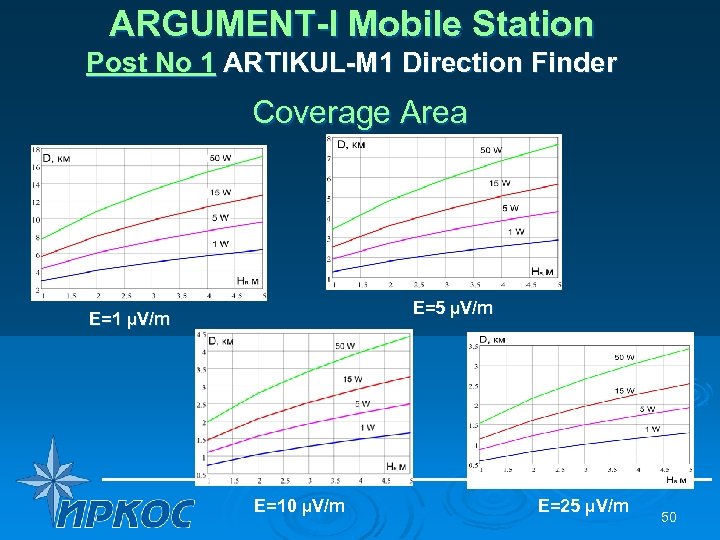
ARGUMENT-I Mobile Station Post No 1 ARTIKUL-M 1 Direction Finder Coverage Area Е=5 µV/m Е=10 µV/m Е=25 µV/m 50
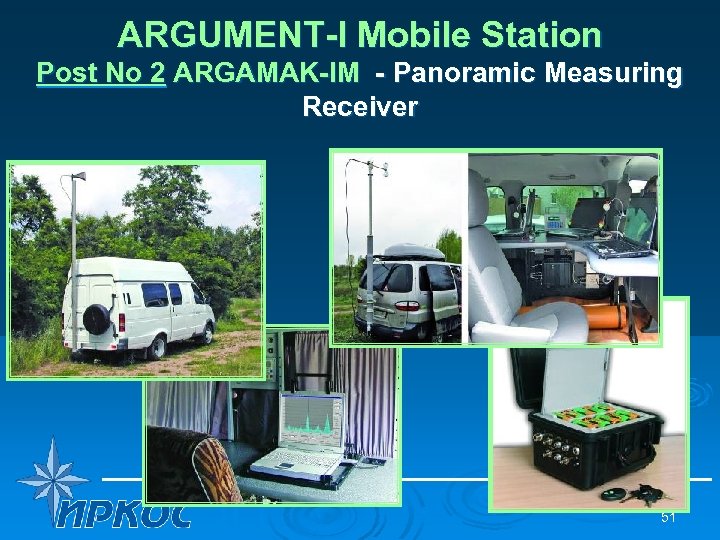
ARGUMENT-I Mobile Station Post No 2 ARGAMAK-IM - Panoramic Measuring Receiver 51
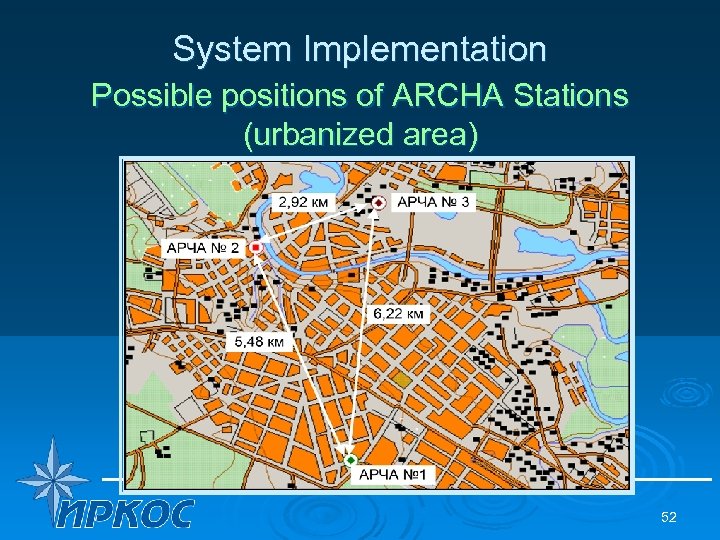
System Implementation Possible positions of ARCHA Stations (urbanized area) 52
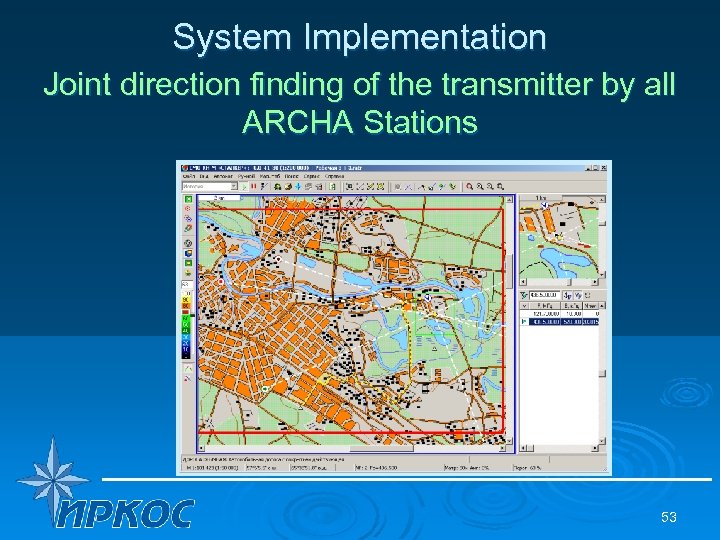
System Implementation Joint direction finding of the transmitter by all ARCHA Stations 53
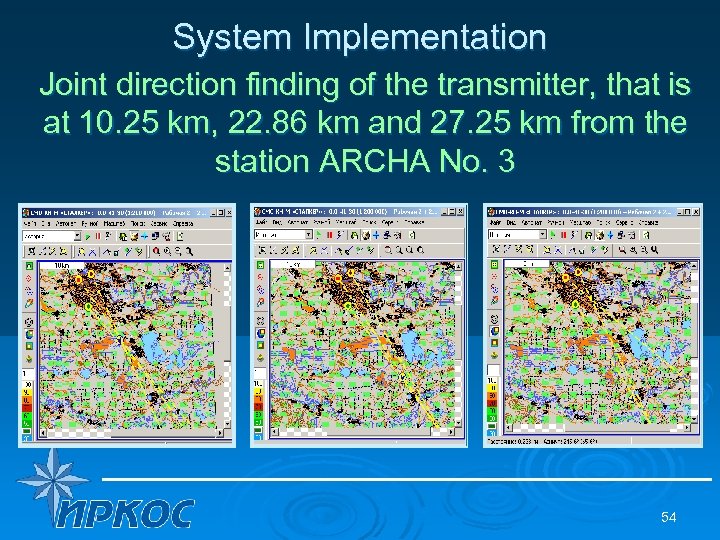
System Implementation Joint direction finding of the transmitter, that is at 10. 25 km, 22. 86 km and 27. 25 km from the station ARCHA No. 3 54
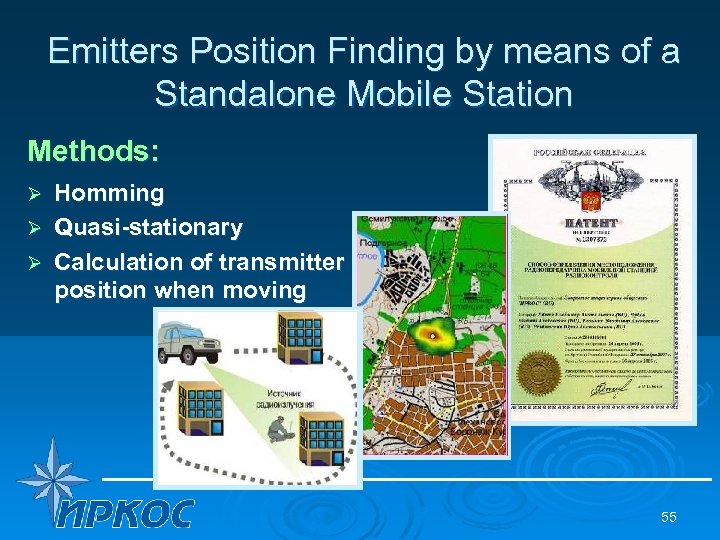
Emitters Position Finding by means of a Standalone Mobile Station Methods: Homming Ø Quasi-stationary Ø Calculation of transmitter position when moving Ø 55
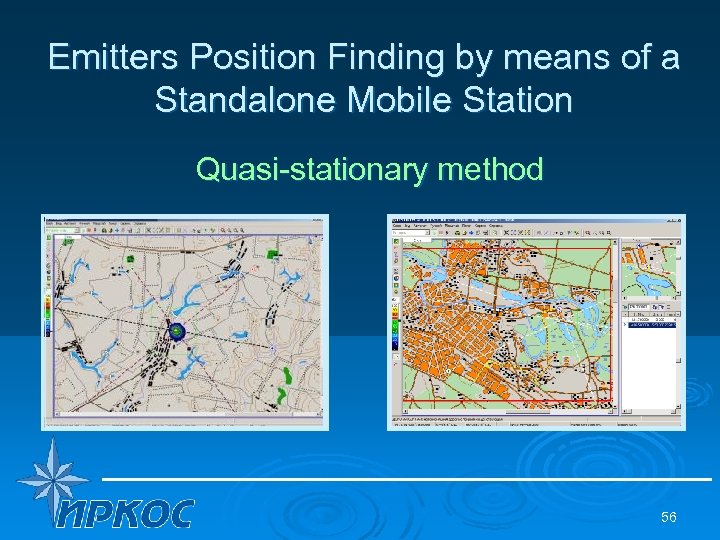
Emitters Position Finding by means of a Standalone Mobile Station Quasi-stationary method 56
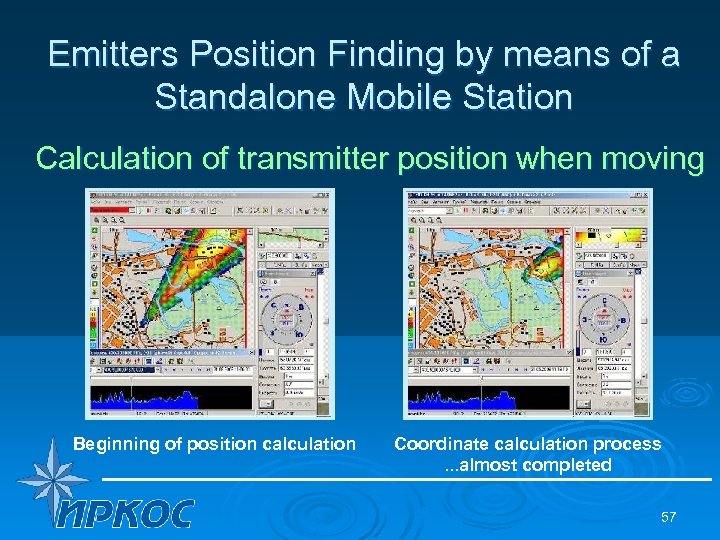
Emitters Position Finding by means of a Standalone Mobile Station Calculation of transmitter position when moving Beginning of position calculation Coordinate calculation process. . . almost completed 57
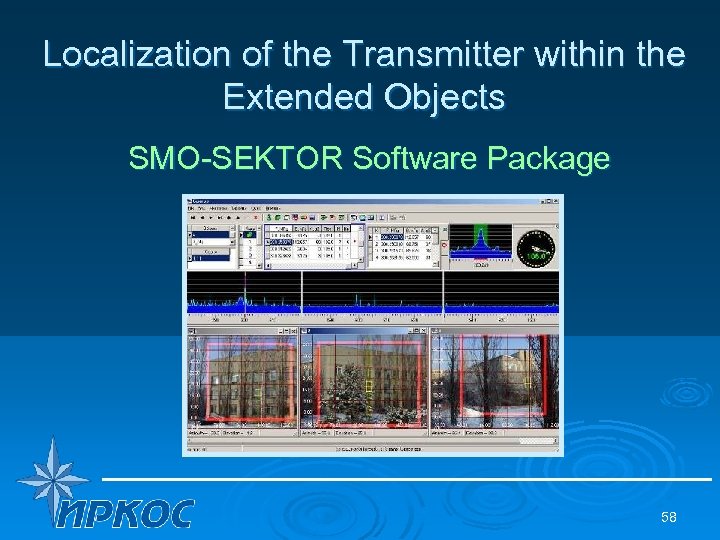
Localization of the Transmitter within the Extended Objects SMO-SEKTOR Software Package 58
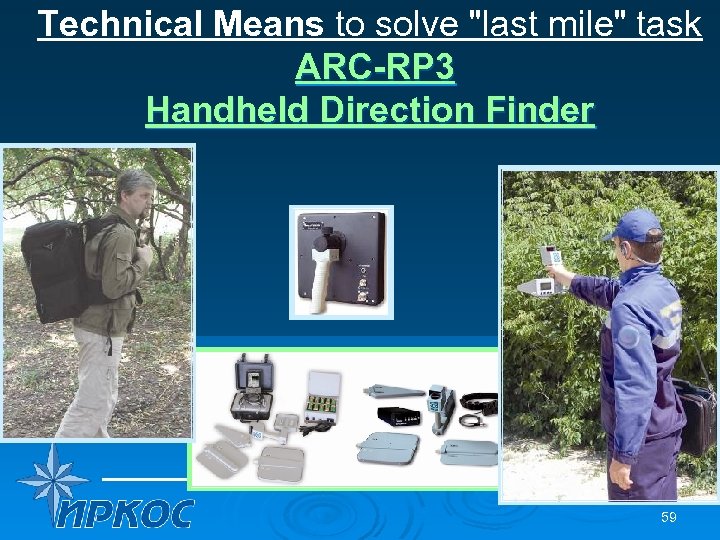
Technical Means to solve "last mile" task ARC-RP 3 Handheld Direction Finder 59
Handheld Direction Finder ARC-RP 3 Purpose Outdoor radio monitoring applications including: Panoramic spectrum analysis Ø Direction finding Ø Emitter position finding. Ø Field strength estimation Ø Radio signal parameter estimation Ø Radio signal technical analysis Ø Radio channel monitoring. Ø 60
 Скачать презентацию IRCOS Equipment of Radio Monitoring established in 1992
4aa9bc80aff6dfaaccff5568f16aed87.ppt