 Скачать презентацию IPPI in India 2000 — 2001 RESEARCH BASED
82532daddf5e3a8803ab9bd4f42a65ec.ppt
- Количество слайдов: 17



IPPI in India 2000 - 2001 RESEARCH BASED COMMUNICATION MODEL for UNREACHED CHILDREN By Dr K SURESH Project Officer, UNICEF India Country Office
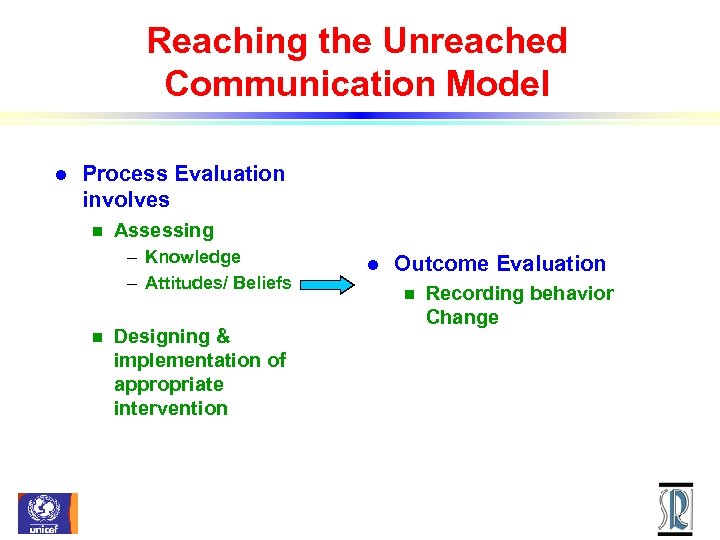
Reaching the Unreached Communication Model l Process Evaluation involves n Assessing – Knowledge – Attitudes/ Beliefs n Designing & implementation of appropriate intervention l Outcome Evaluation n Recording behavior Change
MONITORS S/NID’s & H-HOUSE GOVERNMENT--DIST/STATE WHO/NPSP / UNICEF ON THE SPOT GUIDANCE END DAY CONSULTATIONS
Methods of Data Collection for the Indicators Process Evaluation l Independent observers - NGO, Medical Colleges, IAP members, Students … l Filled-in questionnaire within 10 days of S/NIDs were included for the analysis l l Five part questionnaire was developed 5000 -9000 booths/areas observed On booth day and third day for Ht. H activities
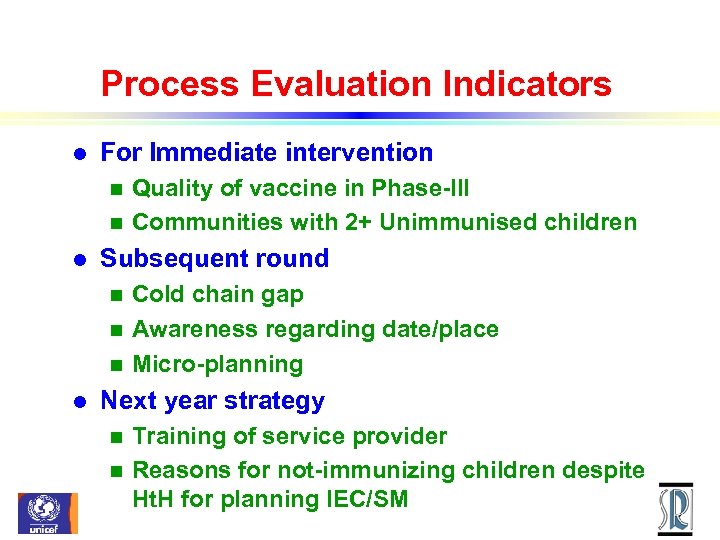
Process Evaluation Indicators l For Immediate intervention Quality of vaccine in Phase-III n Communities with 2+ Unimmunised children n l Subsequent round Cold chain gap n Awareness regarding date/place n Micro-planning n l Next year strategy Training of service provider n Reasons for not-immunizing children despite Ht. H for planning IEC/SM n
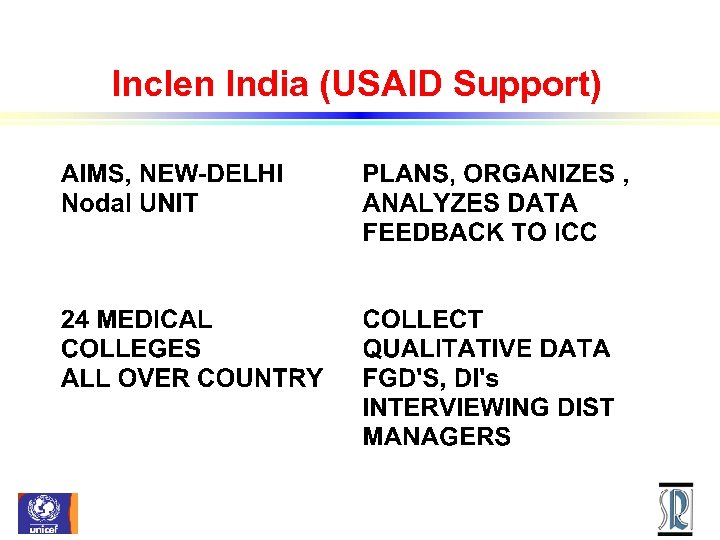
Inclen India (USAID Support)
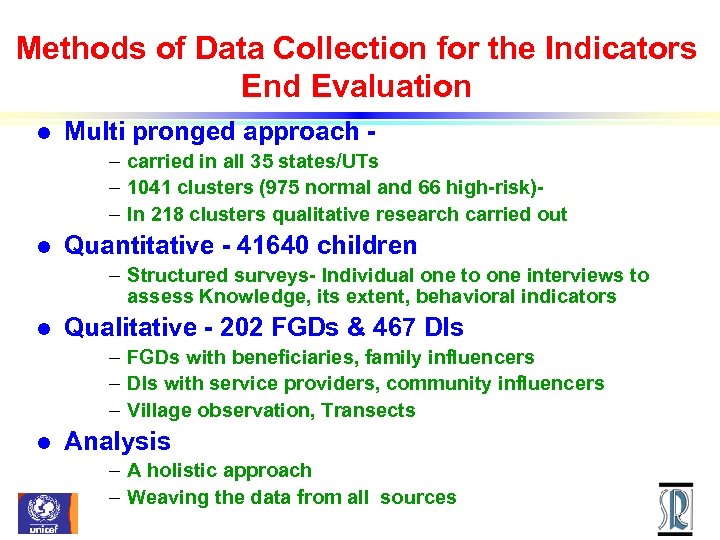
Methods of Data Collection for the Indicators End Evaluation l Multi pronged approach – carried in all 35 states/UTs – 1041 clusters (975 normal and 66 high-risk)– In 218 clusters qualitative research carried out l Quantitative - 41640 children – Structured surveys- Individual one to one interviews to assess Knowledge, its extent, behavioral indicators l Qualitative - 202 FGDs & 467 DIs – FGDs with beneficiaries, family influencers – DIs with service providers, community influencers – Village observation, Transects l Analysis – A holistic approach – Weaving the data from all sources
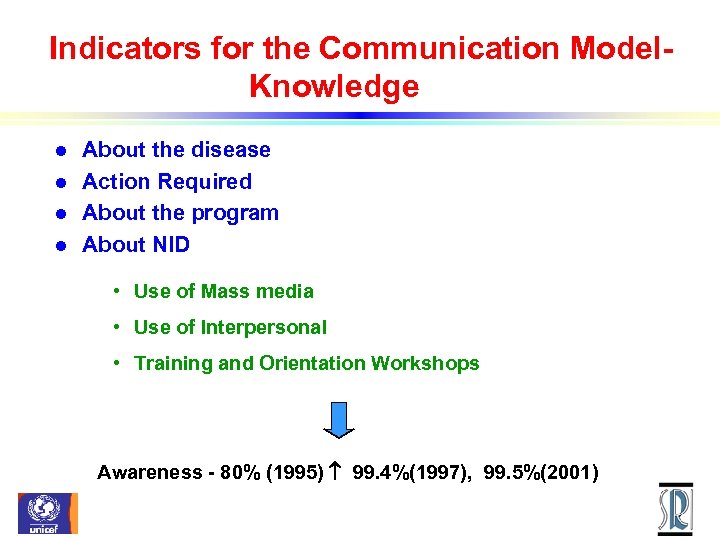
Indicators for the Communication Model. Knowledge l l About the disease Action Required About the program About NID • Use of Mass media • Use of Interpersonal • Training and Orientation Workshops Awareness - 80% (1995) 99. 4%(1997), 99. 5%(2001)
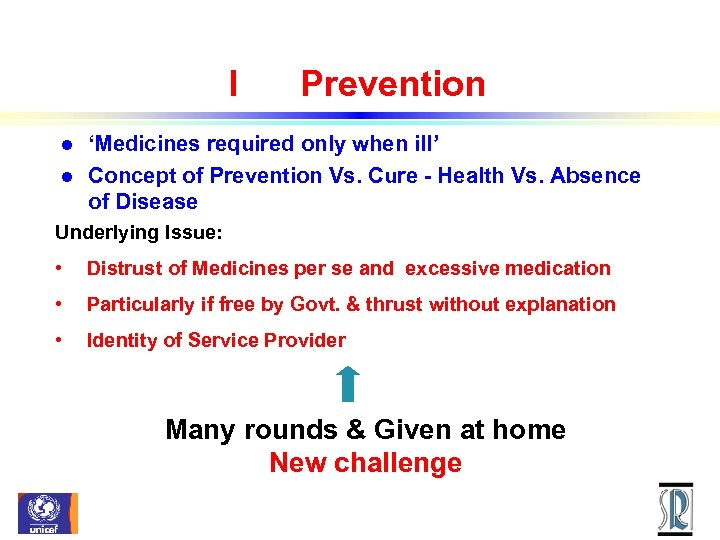
I l l Prevention ‘Medicines required only when ill’ Concept of Prevention Vs. Cure - Health Vs. Absence of Disease Underlying Issue: • Distrust of Medicines per se and excessive medication • Particularly if free by Govt. & thrust without explanation • Identity of Service Provider Many rounds & Given at home New challenge
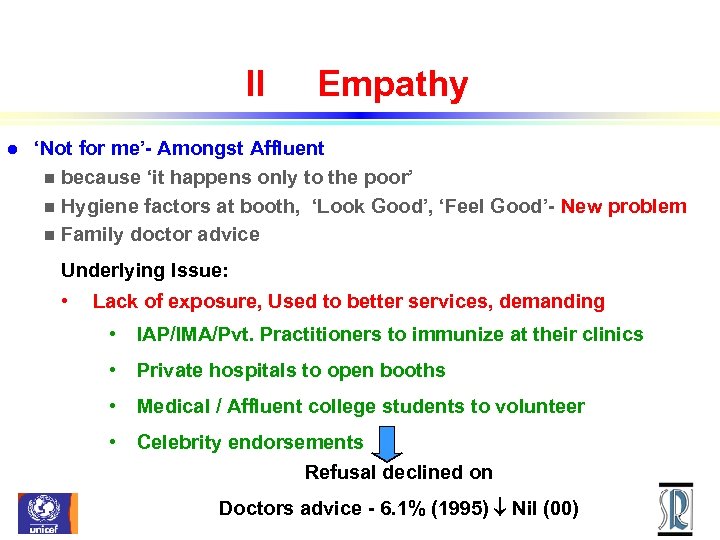
II l Empathy ‘Not for me’- Amongst Affluent n because ‘it happens only to the poor’ n Hygiene factors at booth, ‘Look Good’, ‘Feel Good’- New problem n Family doctor advice Underlying Issue: • Lack of exposure, Used to better services, demanding • IAP/IMA/Pvt. Practitioners to immunize at their clinics • Private hospitals to open booths • Medical / Affluent college students to volunteer • Celebrity endorsements Refusal declined on Doctors advice - 6. 1% (1995) Nil (00)
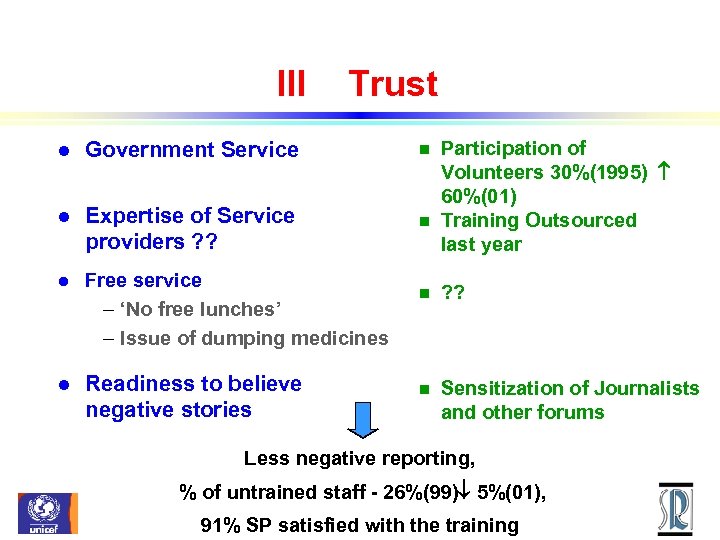
III Trust l Government Service l Expertise of Service providers ? ? l Free service – ‘No free lunches’ – Issue of dumping medicines l Readiness to believe negative stories Participation of Volunteers 30%(1995) 60%(01) n Training Outsourced last year n n ? ? n Sensitization of Journalists and other forums Less negative reporting, % of untrained staff - 26%(99) 5%(01), 91% SP satisfied with the training
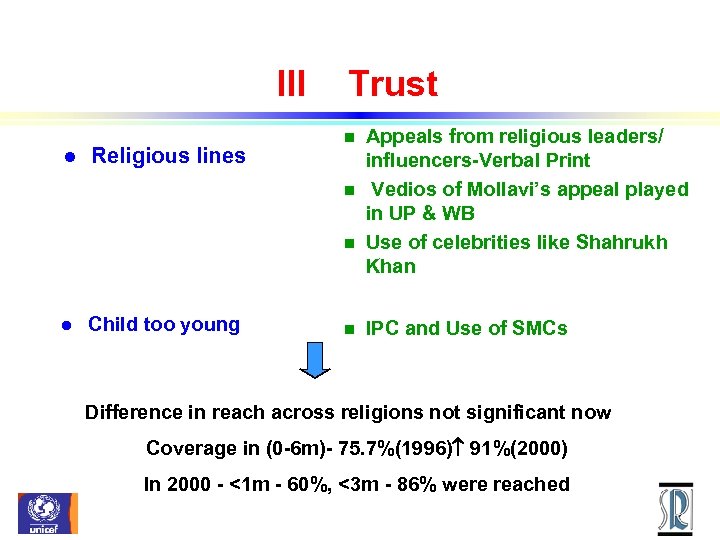
III l Religious lines l Child too young Trust Appeals from religious leaders/ influencers-Verbal Print n Vedios of Mollavi’s appeal played in UP & WB n Use of celebrities like Shahrukh Khan n n IPC and Use of SMCs Difference in reach across religions not significant now Coverage in (0 -6 m)- 75. 7%(1996) 91%(2000) In 2000 - <1 m - 60%, <3 m - 86% were reached
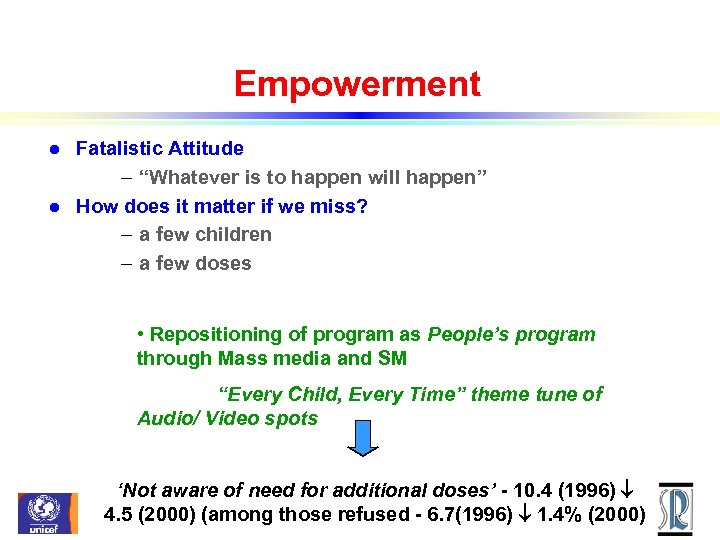
Empowerment l l Fatalistic Attitude – “Whatever is to happen will happen” How does it matter if we miss? – a few children – a few doses • Repositioning of program as People’s program through Mass media and SM “Every Child, Every Time” theme tune of Audio/ Video spots ‘Not aware of need for additional doses’ - 10. 4 (1996) 4. 5 (2000) (among those refused - 6. 7(1996) 1. 4% (2000)
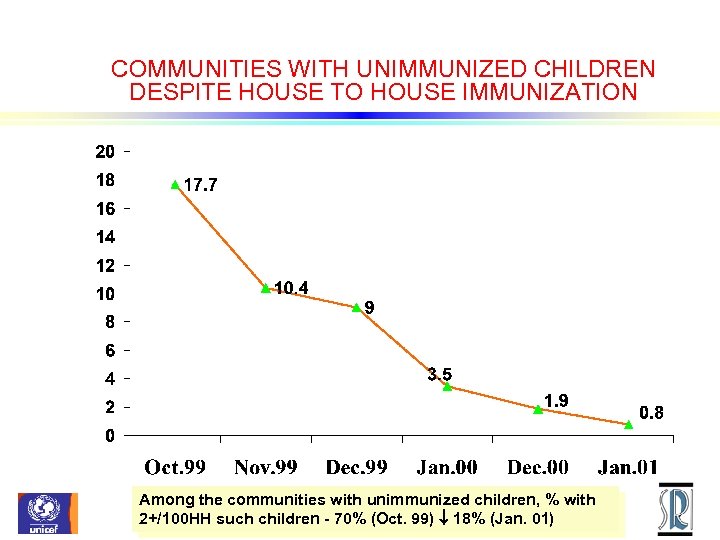
COMMUNITIES WITH UNIMMUNIZED CHILDREN DESPITE HOUSE TO HOUSE IMMUNIZATION Among the communities with unimmunized children, % with 2+/100 HH such children - 70% (Oct. 99) 18% (Jan. 01)
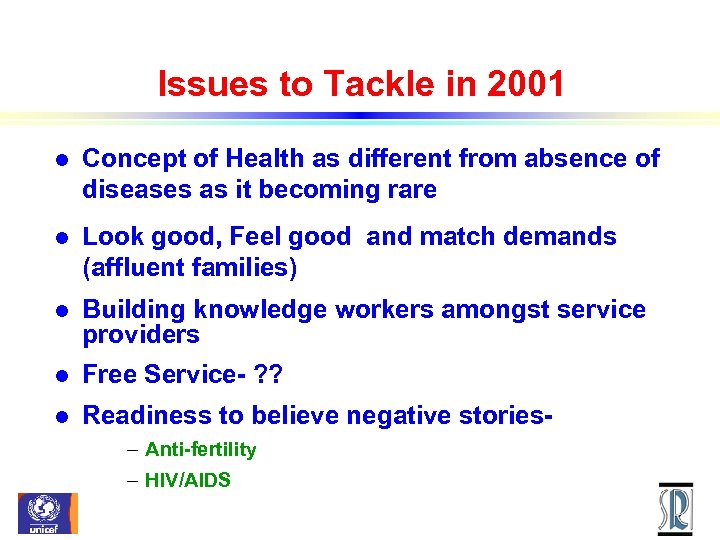
Issues to Tackle in 2001 l Concept of Health as different from absence of diseases as it becoming rare l Look good, Feel good and match demands (affluent families) l Building knowledge workers amongst service providers l Free Service- ? ? l Readiness to believe negative stories– Anti-fertility – HIV/AIDS
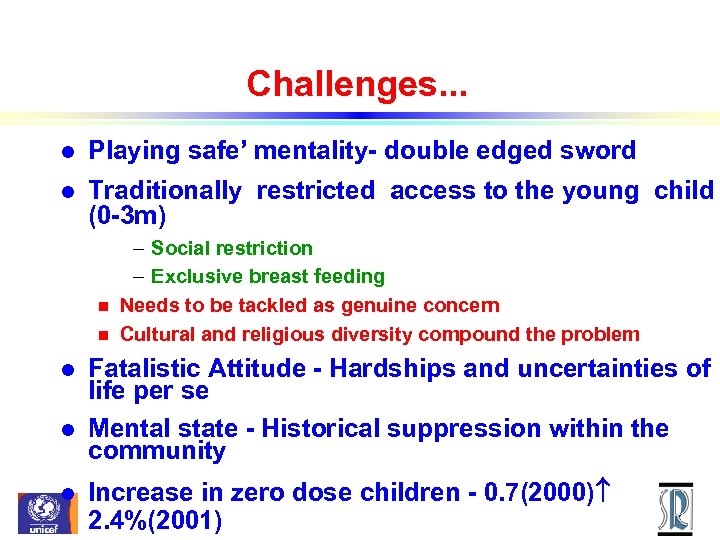
Challenges. . . l Playing safe’ mentality- double edged sword l Traditionally restricted access to the young child (0 -3 m) n n l l l – Social restriction – Exclusive breast feeding Needs to be tackled as genuine concern Cultural and religious diversity compound the problem Fatalistic Attitude - Hardships and uncertainties of life per se Mental state - Historical suppression within the community Increase in zero dose children - 0. 7(2000) 2. 4%(2001)
Thanks for caring
Скачать презентацию IPPI in India 2000 — 2001 RESEARCH BASED
82532daddf5e3a8803ab9bd4f42a65ec.ppt