


 Скачать презентацию IP management in knowledge transfer Dr Alun Tlusty-Sheen
b8ea0b1ff53fba14a184176f21d2ca5a.ppt
- Количество слайдов: 25
 IP management in knowledge transfer Dr Alun Tlusty-Sheen MInst. KT AURIL Council www. auril. org. uk University of Westminster www. westminster. ac. uk
 Briefing • “I believe the work of the Institute for Knowledge Transfer and of AURIL in building capacity for successful knowledge transfer is exemplary in the European region … [would you] • share your organizations' experience with and approach towards IP management in knowledge transfer • help our constituents advance their understanding of these issues • identify what steps they can take to promote knowledge transfer in their countries
 Roles in IP Management • • • KT Officers Government Money IP Income AURIL KT Training
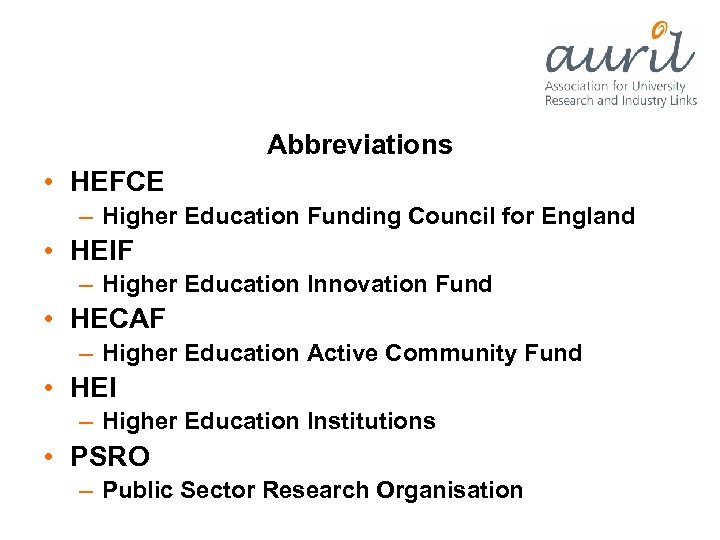 Abbreviations • HEFCE – Higher Education Funding Council for England • HEIF – Higher Education Innovation Fund • HECAF – Higher Education Active Community Fund • HEI – Higher Education Institutions • PSRO – Public Sector Research Organisation
 About me … • UK KT since 2003 at University of Westminster • International KT 1994 -2002 London Business School • MSc LBS 1992 -93, Research Fellow • Marketing B 2 B Software 1984 -1992 • D Phil “Prehistoric Iraqi Archaeology” Oxford 1979 -1982 … “normal” path for UK KT people …
 • • • What do we do – 1 Manage intellectual property Broker partnerships and strategic alliances Identify, evaluate, exploit knowledge Bid for research / exploitation / development funding Manage contracts for research and consultancy Conduct/commission technology audits
 • • What do we do – 2 Create Start-Up / Spin-Out Companies Negotiate contracts, close deals including licenses Support and train Company managers Establish work-based CPD training programmes Hire of equipment and facilities Train fellow professionals Market and promote services
 Organisation (HEIs and PSROs) define and manage KT differently • Part of Academic Administration • Part of Corporate Services • Report direct to Vice Chancellor • 100% Subsidiary Company • Public Company with external shareholders … with different missions …
 Different Missions • • Raise income Regenerate local economy Accelerate diffusion of new discoveries Improve student employability through more relevant curricula delivered by more real world aware academics – Spider diagrams that follow from Library House Metrics for the Evaluation of Knowledge Transfer Activities at Universities March 2009 - www. libraryhouse. net
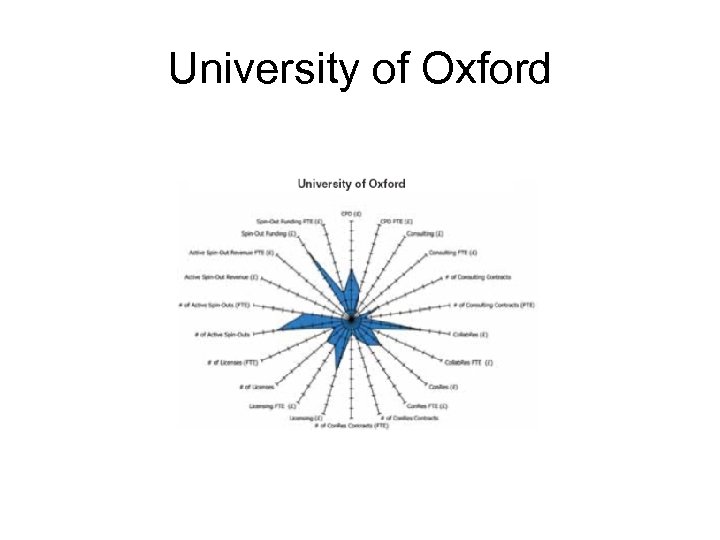 University of Oxford
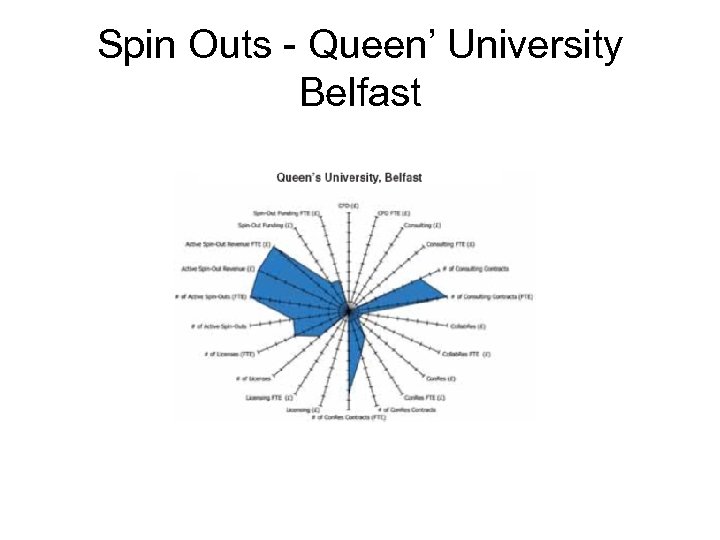 Spin Outs - Queen’ University Belfast
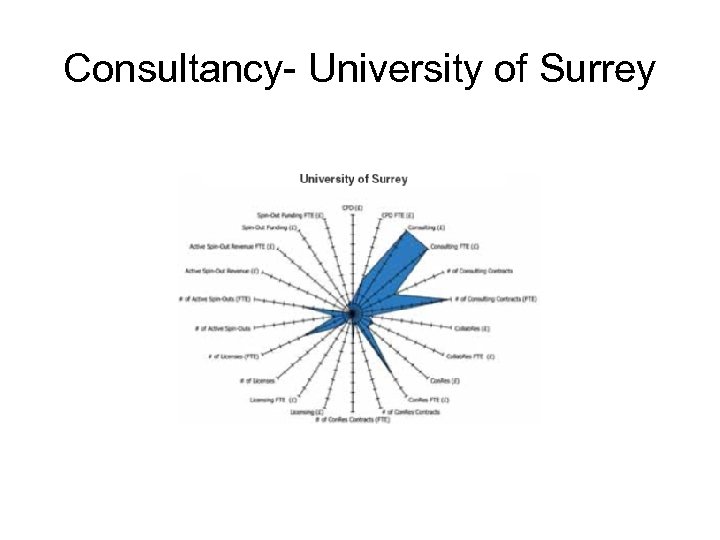 Consultancy- University of Surrey
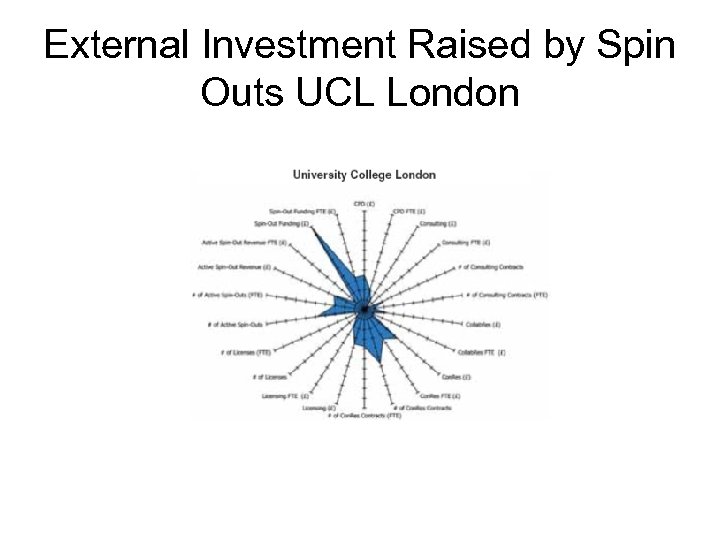 External Investment Raised by Spin Outs UCL London
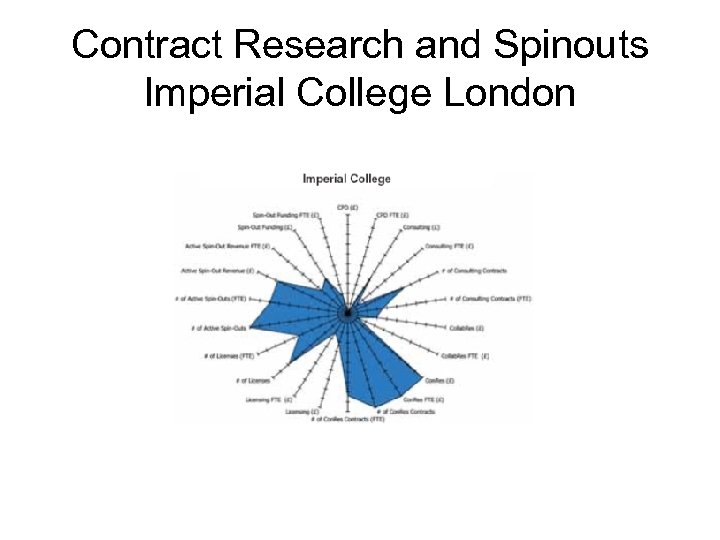 Contract Research and Spinouts Imperial College London
 Wide range of actions underpinned by common skill bases • Problem solving and managing • Information & Communications • Relationships • Decision Making Process • Commercial Interface • Projects • Operations Within a Legal Context
 Impact • • Private Sector => competitiveness & growth Public Sector => effective, harmonious policy Culture => enrichment Community => resources and ‘voice training’ … a more ‘intelligent’ society …
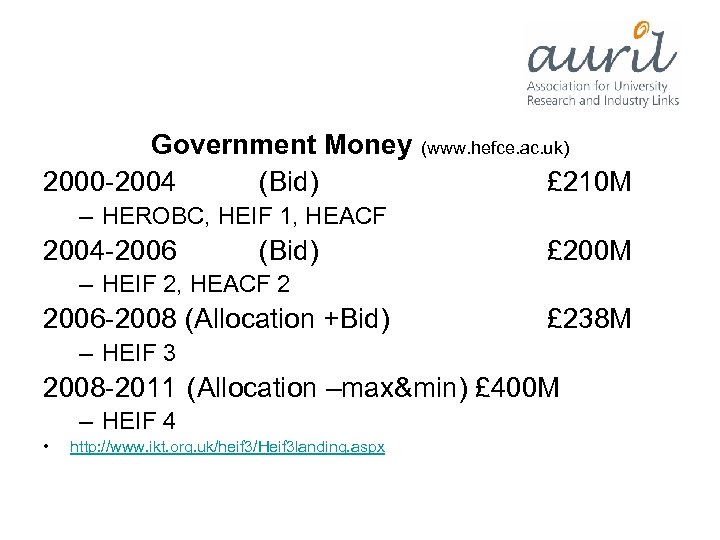 Government Money (www. hefce. ac. uk) 2000 -2004 (Bid) £ 210 M – HEROBC, HEIF 1, HEACF 2004 -2006 (Bid) £ 200 M – HEIF 2, HEACF 2 2006 -2008 (Allocation +Bid) £ 238 M – HEIF 3 2008 -2011 (Allocation –max&min) £ 400 M – HEIF 4 • http: //www. ikt. org. uk/heif 3/Heif 3 landing. aspx
 IP Income • In 2005 -06 and 2006 -07 just over 1% of University income £ 94 million at an IP protection cost of £ 17 £ 20 million • 29 HEIs spent more on protection than income – 72 HEIs had more income • 13 >£ 1 M (#1 £ 9 M, #2 £ 3 M), 6 >£ 0. 5 M and 19 >£ 0. 1 M • Collaborative Research £ 651 - £ 783 million 8% • Consultancy £ 242 - £ 288 million 3%
 AURIL is the largest knowledge transfer professional body in the UK and Ireland dedicated to • Developing partnerships between higher education, business and the community • Supporting innovation and competitiveness • Representing industrial liaison, knowledge/ technology transfer, commercialisation, research administration specialists in UK and Rep. of Ireland
 AURIL Offers • Ability to influence national thinking eg funders, Government, industry and other stakeholders • Exchange of best practice through the development of policies, processes, guidelines and procedures and their measurement and performance monitoring • Networking and collaborative partnerships – Annual Conference, GINNN ‘professional-social network’, SIG/Professional themes
 An Example: Lambert Agreements 2004 -2009 http: //www. innovation. gov. uk/lambertagreements/ • Idea to provide ‘standard’ contracts for 5 common forms of University-Industry Collaboration – Reduce negotiation time, Support ‘naïve’ negotiators • Findings of 2009 not officially available … – Lambert ‘ 4’ most popular – Industry still sees • IP policy, bureaucracy and influence of legal professionals as main barriers to KT – Universities still see • Lack of resources as an issue and to a lesser extent those above
 KT Training-Learning from Experience • KT as Project Management with a twist does not work • KT is a loose collection of defined competencies eg legal • KT is an interfacing role between many stakeholders
 KT Training - Institute for Knowledge Transfer www. ikt. org. uk • Stakeholders through IKT recognise relevant external ie not IKT provided training for definable competences • Effectiveness is the ability to call on and manage expertises • Fellow practitioners recognise effectiveness and elect Members • Mentor network starting October ‘ 08
 Next Steps • Professional association for University/PSRO KT Units to foster dialogue with – IP users – Government – Own institution • Professional association for KT individuals to develop the individual skills and esprit de corps
 KT is an Emerging Profession • Older professions can be more prescriptive about knowledge bases eg law, medicine • KT may be more rigidly defined in future • Present needs satisfied by diversity of skills and origins • Interpersonal skills vital