


 Скачать презентацию Iowa Mechanics Lien and Revised Article 9 Update
cc6082791c701858ff8b638737ab0860.ppt
- Количество слайдов: 45
 Iowa Mechanics Lien and Revised Article 9 Update March 6, 2014 | 11: 45 -1: 00 PM Presented by: Lynn Wickham Hartman Simmons Perrine Moyer Bergman PLC (319) 366 -7641 Lhartman@simmonsperrine. com 1
 Mechanic’s Lien 2
 Iowa Mechanic’s Lien Basics Ø Anyone who furnishes material or labor on a private building or land for improvement, alteration or repair can file a mechanic’s lien. Ø If properly perfected, the lien can be foreclosed and the property sold to pay the lienholder. Ø Mechanic’s lien law is “entirely statutory, ” but there are many deadlines, tricks and pitfalls built in. Ø The tricks affect contractors’, subcontractors’, owners’ and lenders’ rights in many ways. 3
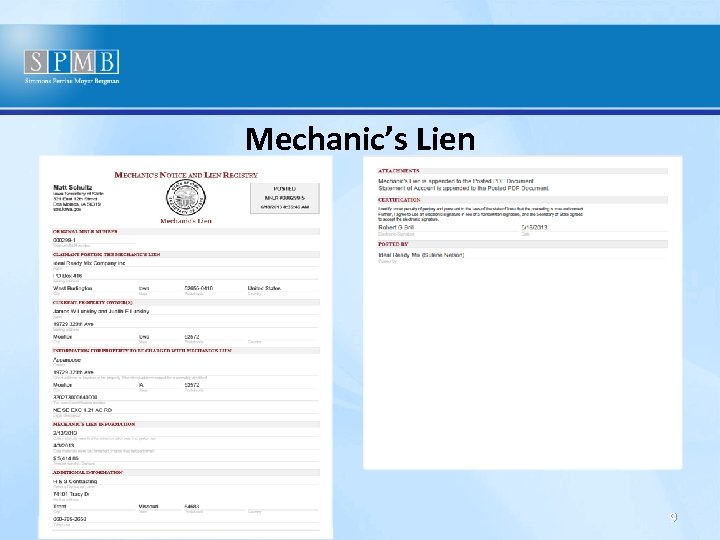
 Mechanic’s Notice & Lien Registry In Iowa, the game changed on January 1, 2013 Ø Before January 1, 2013, all mechanic’s liens were filed with the Clerk of Court in the county where the real estate is located. Ø As of January 1, 2013, mechanic’s liens are filed online with the statewide registry maintained by the Secretary of State. Ø The new central registry will display the existence of liens and be searchable by address and tax parcel identification number. 4
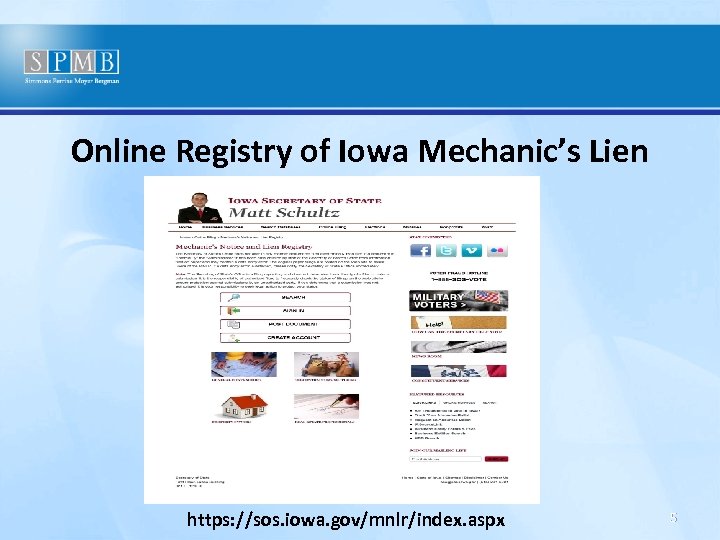 Online Registry of Iowa Mechanic’s Lien https: //sos. iowa. gov/mnlr/index. aspx 5
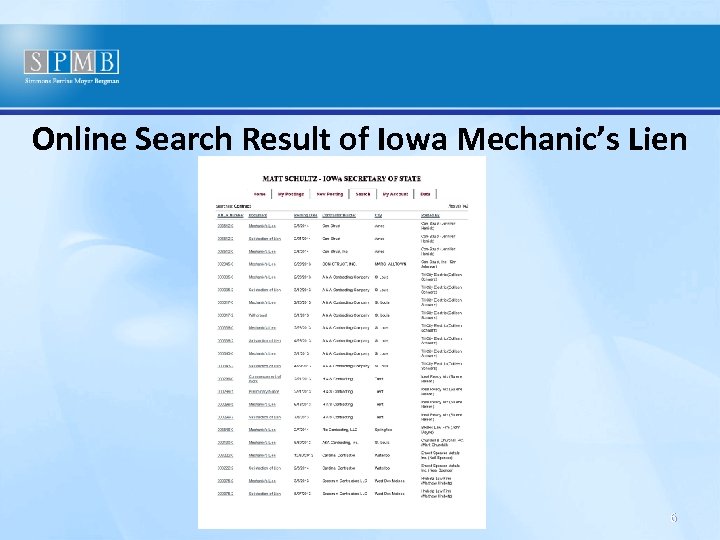 Online Search Result of Iowa Mechanic’s Lien 6
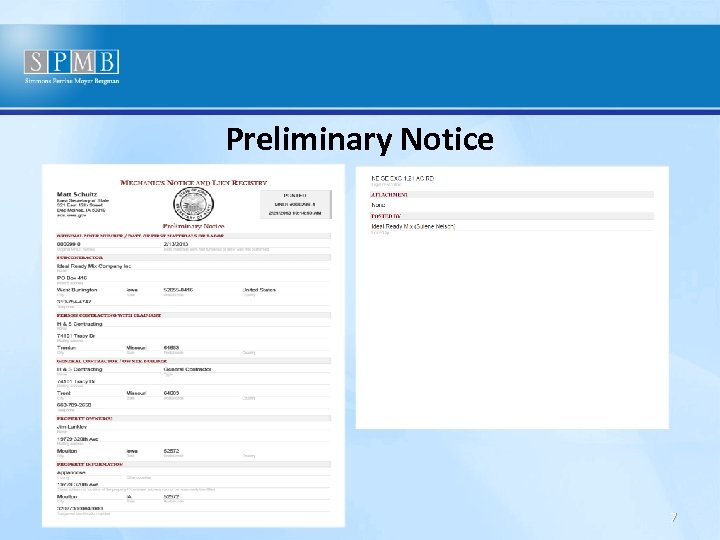 Preliminary Notice 7
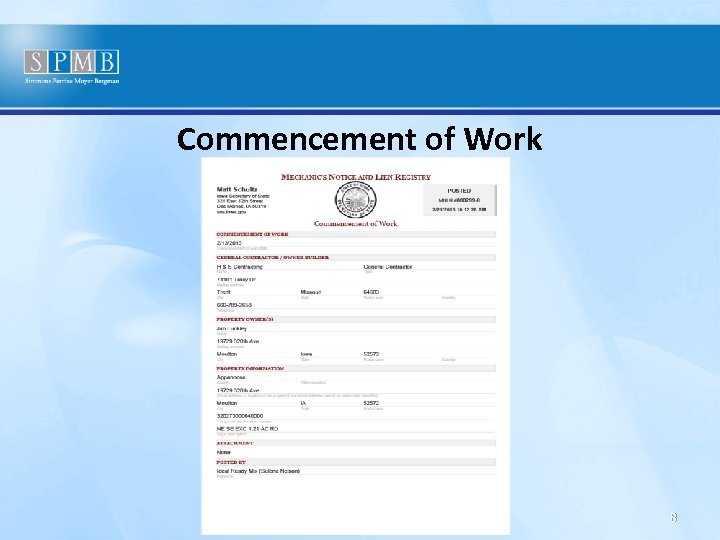 Commencement of Work 8
 Mechanic’s Lien 9
 All Contractors Ø The only change—theoretically—is how contractors and subcontractors file their liens. Ø Filings will no longer be made with the Clerk of Court. Ø A central registry allows for more convenient and timely searches for mechanic’s liens. Ø The mechanic’s lien filings will function like UCC filings. 10
 Residential Contractors Ø “Residential construction” is defined under the Iowa code as “construction on single-family or two-family dwellings occupied or used, or intended to be occupied or used, primarily for residential purposes, and includes real property pursuant to chapter 499 B. ” Ø Residential contractors have notice requirements that do not apply to commercial construction. Therefore, commercial contractors may continue to file liens without meeting the following notice requirements. Ø General contractors must post a “Preliminary Notice” within ten days of commencing work. Ø Failure to post the notice cuts off lien rights. Ø The owner is notified by the general contractor and the secretary of state. Ø This notice requirement eliminates the problem with unrecorded liens relating back to the commencement date of the work. 11
 Owner Notice Requirements Ø The notice must be sent to the owner’s address and, if the owner’s address is different than the property address, to the property itself (addressed to the owner). Ø The notice must contain the owner’s name and address; the name, address and telephone number of the general contractor or owner-builder; the address and legal description of the property; the tax parcel identification number; and the date work started or is anticipated to start. Ø General contractor is also required to post a notice of commencement of work to the mechanics’ notice and lien registry internet site no later than ten days after commencement of work on the property. Ø Subcontractor may post the notice if the general contractor fails to do so. 12
 Failure to Provide Notice Provide notice to preserve mechanic’s lien rights Ø If a general contractor fails to provide the notice, it will be barred from asserting a mechanic’s lien. Ø If a general contractor or owner-builder does not timely post and send the notice, a subcontractor may do so. 13
 Residential Subcontractors Ø To assert a mechanic’s lien, a subcontractor must post a preliminary notice. Ø A subcontractor can claim a mechanic’s lien only for labor or material provided after the preliminary notice is posted. Ø The subcontractor must also deliver a copy of the notice to the owner by personally serving it via the county sheriff or private process server, mailing the notice by certified mail (so long as the subcontractor obtains a signed return receipt) or by personally delivering the notice to the owner (so long as the owner signs a receipt acknowledging delivery). Ø If a subcontractor does not post the Preliminary Notice to the Registry or deliver the Preliminary Notice to the owner, it will be barred from asserting a mechanic’s lien. 14
 Upside/Downside Ø One stop shopping. Ø Good news for lenders worried about unrecorded liens. Ø Hard change for residential contractors and subcontractors who are disposed to wait until the project goes bad before filing. 15
 Revised Article 9 16
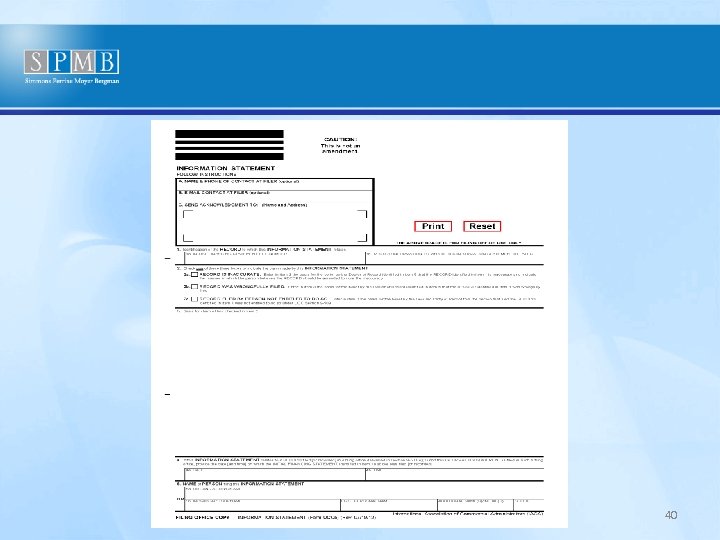
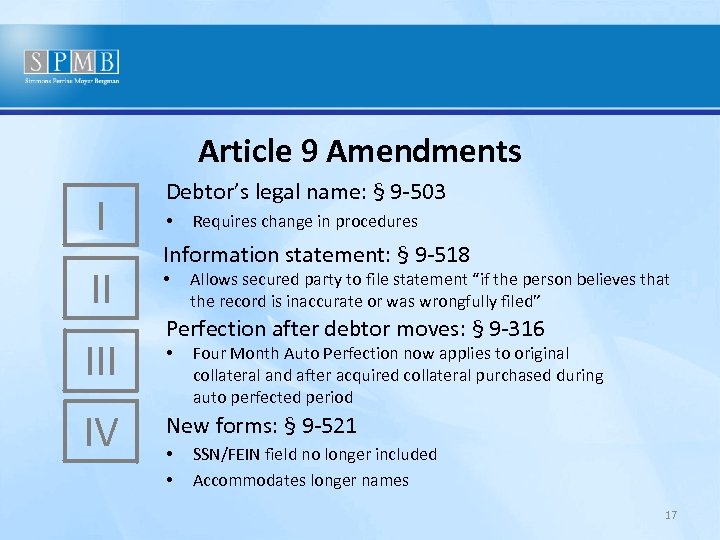 Article 9 Amendments I Debtor’s legal name: § 9 -503 • Requires change in procedures Information statement: § 9 -518 II • IV New forms: § 9 -521 Allows secured party to file statement “if the person believes that the record is inaccurate or was wrongfully filed” Perfection after debtor moves: § 9 -316 • • Four Month Auto Perfection now applies to original collateral and after acquired collateral purchased during auto perfected period SSN/FEIN field no longer included Accommodates longer names 17
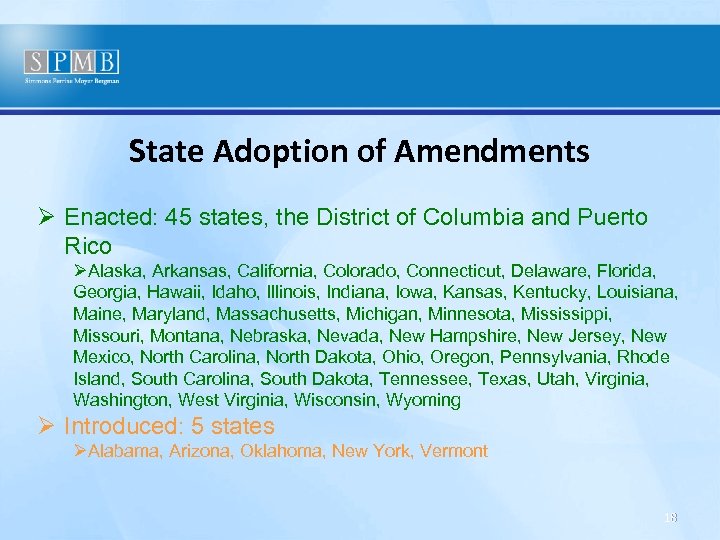 State Adoption of Amendments Ø Enacted: 45 states, the District of Columbia and Puerto Rico ØAlaska, Arkansas, California, Colorado, Connecticut, Delaware, Florida, Georgia, Hawaii, Idaho, Illinois, Indiana, Iowa, Kansas, Kentucky, Louisiana, Maine, Maryland, Massachusetts, Michigan, Minnesota, Mississippi, Missouri, Montana, Nebraska, Nevada, New Hampshire, New Jersey, New Mexico, North Carolina, North Dakota, Ohio, Oregon, Pennsylvania, Rhode Island, South Carolina, South Dakota, Tennessee, Texas, Utah, Virginia, Washington, West Virginia, Wisconsin, Wyoming Ø Introduced: 5 states ØAlabama, Arizona, Oklahoma, New York, Vermont 18
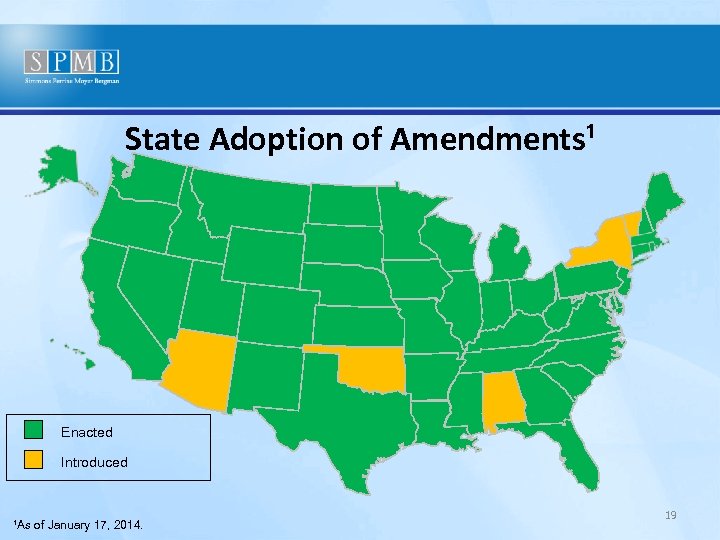 State Adoption of Amendments¹ Enacted Introduced ¹As of January 17, 2014. 19
 New Rule for Name of Individual/Sole Proprietor for UCC Filings Ø Revised Article 9 proposes two alternative methods for determining the proper name for UCC filings: Alternative A or Alternative B. Ø Alternative A (the “Only If” rule) – requires that the debtor’s name listed on the UCC Financing Statement match exactly the name listed on the debtor’s unexpired driver’s license, or if no license then the name appearing on the individual’s state identification card (if the state provides for such ID cards). If the debtor does not have an unexpired driver’s license (or state issued ID card) then the UCC filing shall be filed using 1) debtor’s surname (i. e. family name) and first personal name or 2) the individual’s name (which is not defined ). Ø Alternative B (the “Safe Harbor” rule) –requires that the debtor’s name listed on the UCC filing be one of the following: 1) the debtor’s name exactly as it appears on an unexpired driver’s license or if no license then the name appearing on the individual’s state identification card (if the state provides for such ID cards); 2) debtor’s surname (i. e. family name) and first personal name or 3) the individual’s name (which is not defined). Ø Iowa and most other states have chosen Alternative A. 20
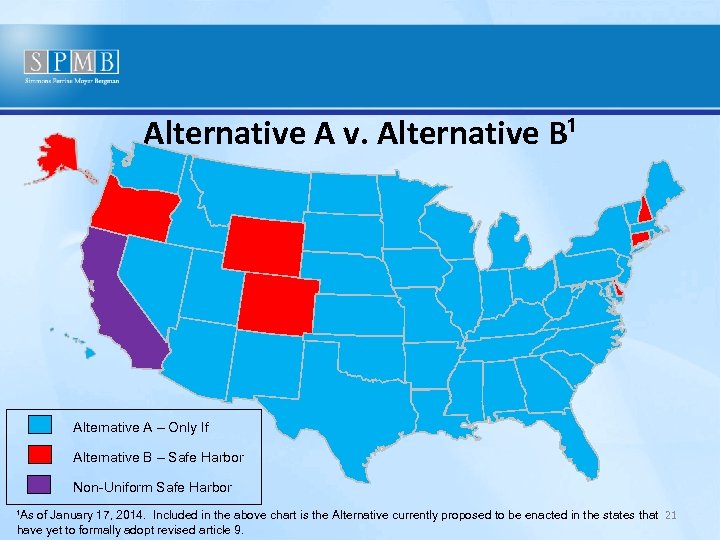 Alternative A v. Alternative B¹ Alternative A – Only If Alternative B – Safe Harbor Non-Uniform Safe Harbor ¹As of January 17, 2014. Included in the above chart is the Alternative currently proposed to be enacted in the states that 21 have yet to formally adopt revised article 9.
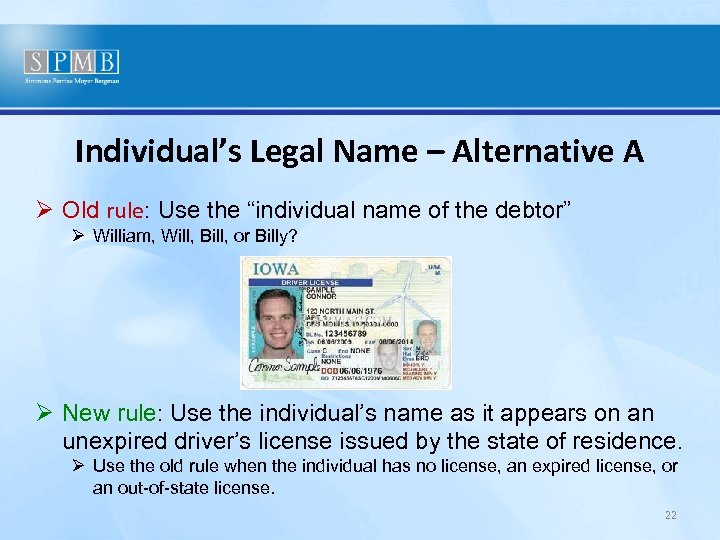 Individual’s Legal Name – Alternative A Ø Old rule: Use the “individual name of the debtor” Ø William, Will, Bill, or Billy? Ø New rule: Use the individual’s name as it appears on an unexpired driver’s license issued by the state of residence. Ø Use the old rule when the individual has no license, an expired license, or an out-of-state license. 22
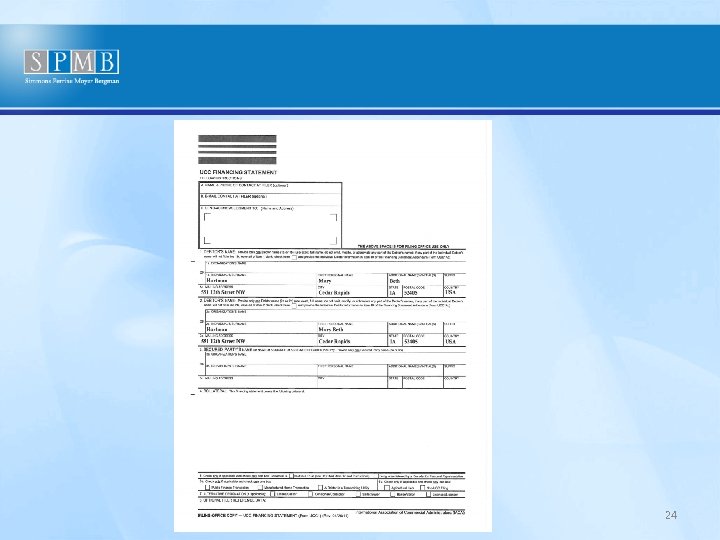
 Determining the exact legal name may not be as easy a task as it initially appears to be Ø Mary Beth Hartman – Is Beth part of the first name or is Beth the middle name? 23
 24
24
 When in doubt, file under multiple names Ø Official Comments 2(d) to 9 -503: If there is any doubt about an individual debtor’s name, a secured party may choose to file one or more financing statements that provide a number of possible names for the debtor, and a searcher may similarly choose to search under a number of possible names. 25
 Seriously Misleading Ø A Financing Statement not complying with these rules MAY still be effective, depending on whether it is seriously misleading, and the laws of your state: Ø A filing made that is not in compliance with the Article 9 rules is presumed to be seriously misleading. Ø However, a filing under an improper name may be deemed to not be seriously misleading if such a filing is found when someone performs a search of the filing office records using the correct debtor’s name. Ø Please Note: In some states courts have held that the failure to comply is seriously misleading, and is not presumed. Ø Example: In an Alternative A state, if a filing is made for a debtor using the name “John Doe” and the name appearing on that debtor’s driver’s license is “John Smith Doe” then the presumption that the filing is seriously misleading might be overcame if a search on the name “John Smith Doe” returns the filing made for “John Doe”. Ø The ONLY way to ensure a Financing Statement is not seriously misleading is to file it using the proper debtor name as required under Article 9. 26
 Implications of Regulation B Ø With the adoption of Revised Article 9, more lenders will likely want to keep a copy of a debtor’s driver’s license in its files in order to establish that its filing was proper. Ø Regulation B applies to all creditors and requires financial institutions and other firms engaged in the extension of credit to “make credit equally available to all creditworthy customers” regardless of sex, marital status, race, color, religion, age, or national origin. Ø Regulation B doe not expressly prohibit a financial institution from maintaining a copy of a debtor’s driver’s license in its records. 27
 Implications of Regulation B Ø Prior to the adoption of the CIP rules, there was a widely supported premise by regulators that keeping a copy of the debtor’s driver’s license could lead to discriminatory lending practices as the lender could use such information for discriminatory purposes. Ø The adoption of the CIP rules made clear that the keeping of a debtor’s driver’s license for purposes of verifying a customer’s identity is not a violation of Regulation B, but that creditors should ensure proper policies, procedures and safe guards are in place to ensure such information is used properly. 28
 Implications of Regulation B Ø Ways of minimizing the risk of violating Regulation B: Ø Keep copy of driver’s license in a separate file and not in the loan file itself; Ø If copy of driver’s license is in the loan file, ensure it is kept separate from the other customer information such as the financial statements, credit reports, etc. Ø I recommend to my bank clients to maintain a copy of the debtor’s driver’s license unless the bank has other practices indicative of high risk for fair lending disparities. Ø I recommend to keep the driver’s license in a separate file from the loan file and include instructions in its loan 29 policies restricting access to such copies.
 Common Questions Regarding Filing for Individuals Ø Should a secured party file just using the First and Last Name on the Driver’s License? Ø No, the name on the filing should be exactly as it appears on the driver’s license. Ø What if someone’s driver’s license is incorrect? Ø Still file under the incorrect driver’s license name. Recommend filing a second filing under the correct name. Ø What if someone has multiple unexpired driver’s licenses, in the same state, with different names? Ø Use the name listed in the most recent unexpired driver’s license and consider filing under other names. Ø What if someone has multiple driver’s licenses from different states with different names? Ø Use the driver’s license issued in the state of domicile and consider filing under 30 other names.
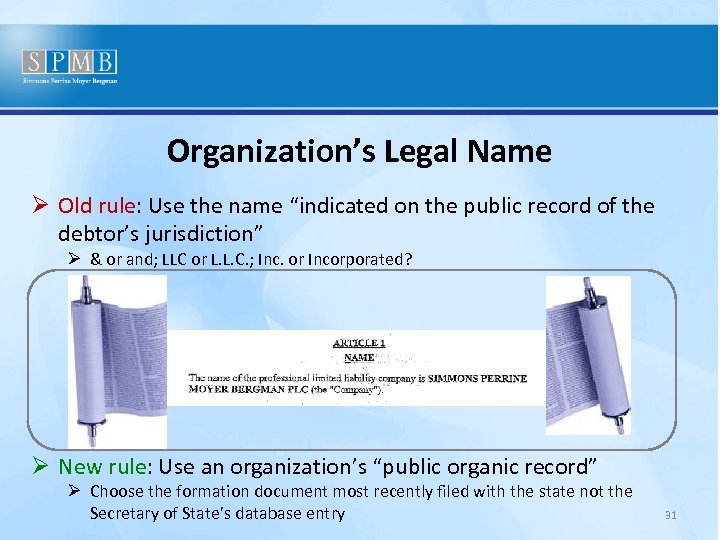 Organization’s Legal Name Ø Old rule: Use the name “indicated on the public record of the debtor’s jurisdiction” Ø & or and; LLC or L. L. C. ; Inc. or Incorporated? Ø New rule: Use an organization’s “public organic record” Ø Choose the formation document most recently filed with the state not the Secretary of State’s database entry 31
 Determining Name of Registered Organizations Ø Registered Organizations include Corporations, Limited Partnerships, and Limited Liability Companies. Ø Name to be used is the exact name stated on the “public organic record” most recently filed in the state where the organization is organized. Ø Examples of public organic records: Articles of Incorporation, Certificates of Limited Partnership, Articles of Organization, Amendments or Restatements to such. Ø Important to note, the name(s) listed in a certificate of good standing or on the Secretary of State’s website is not sufficient. The organization’s name must match the actual public organic record. Ø Illustration: Certificate of good standing and Secretary of State’s website identifies debtor as: “Property Disposals, Inc. ” and the Articles of Incorporation states: “Property Disposal, Inc. ” (without any other filings) Ø Filing should use the name of “Property Disposal, Inc. ” Ø When filing continuation statements, the name used on such statements must 32 match the “public organic record. ”
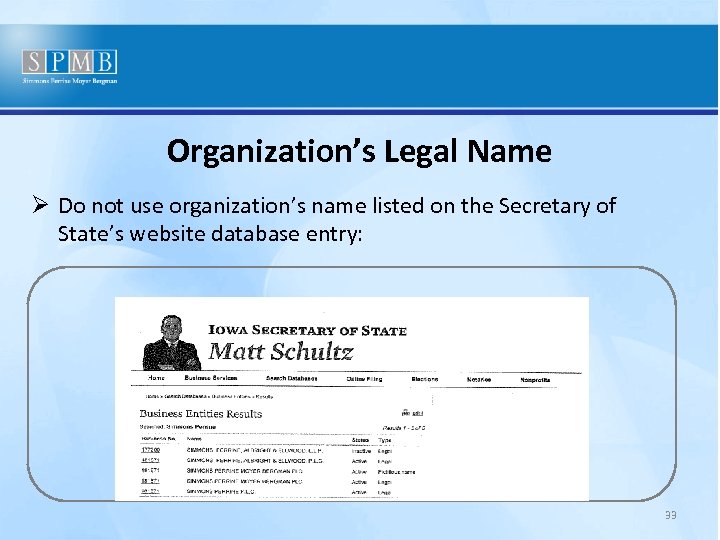 Organization’s Legal Name Ø Do not use organization’s name listed on the Secretary of State’s website database entry: 33
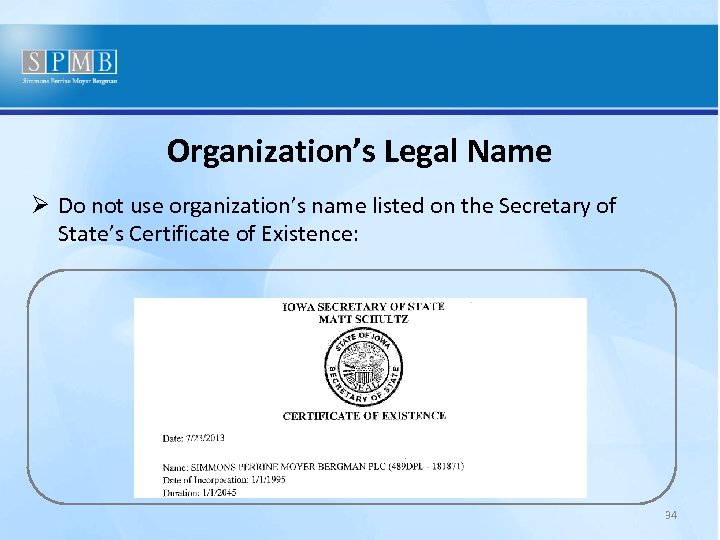 Organization’s Legal Name Ø Do not use organization’s name listed on the Secretary of State’s Certificate of Existence: 34
 Other Legal Name Situations Ø General Partnership Ø List the general partners using the individual and organization rules, as applicable. Ø Review any partnership documents available (such as the Partnership Agreement) in order to determine the proper name of the partnership. Ø Limited Liability Partnerships Ø Treat general partners of a limited liability partnership as you would general partners in a general partnership. Ø It is advisable when filing against the limited liability partnership itself to rely on the name of the partnership in the “Statement of Qualification” filed on the Secretary of State’s website (or the most recent amendment to such). If informed that the partnership name is different than the name on the Statement of Qualification, then advisable to file under that name as well. 35
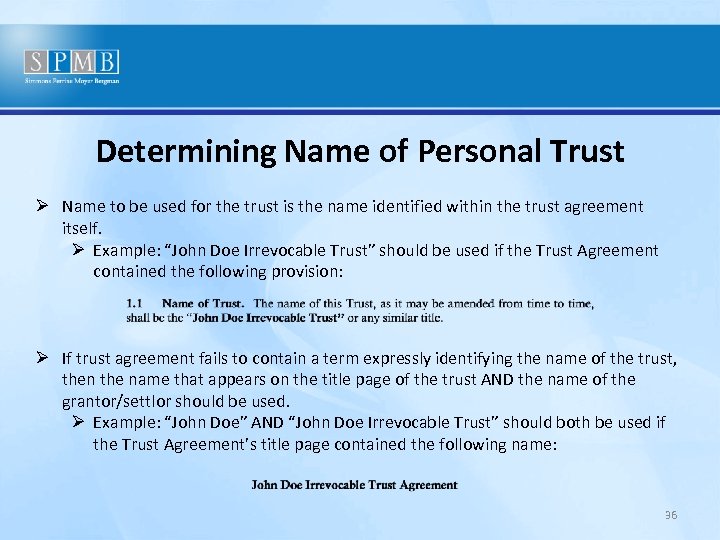 Determining Name of Personal Trust Ø Name to be used for the trust is the name identified within the trust agreement itself. Ø Example: “John Doe Irrevocable Trust” should be used if the Trust Agreement contained the following provision: Ø If trust agreement fails to contain a term expressly identifying the name of the trust, then the name that appears on the title page of the trust AND the name of the grantor/settlor should be used. Ø Example: “John Doe” AND “John Doe Irrevocable Trust” should both be used if the Trust Agreement’s title page contained the following name: 36
 Determining Name of Personal Trust & Estate with Personal Representative Ø Personal Trusts: Ø For UCC Financing Statements, the box “held in a Trust” in section 5 must be checked. Ø Also, must provide additional information in the Financing Statement distinguishing the trust from other trusts having the same settlor/grantor, if any: Ø Example: John Doe Trust Executed July 2, 2013 Ø Estates Administered by Personal Representative: Ø UCC Financing Statement should be filed on the name of the decedent. Ø For UCC Financing Statements, the box “being administered by a Decedent’s Personal Representative” in section 5 must be checked. 37
 Implementation of Procedures to Track Legal Name Ø Important to have procedures in place to track debtor’s legal name changes. Ø Potential procedures: Ø Request debtor to provide notification of any changes in their legal name. Ø Contact debtor when license is set to expire to review renewed license. Ø Request to review debtor’s driver’s license on a periodic basis to ensure proper filing. 38
 Change of Events Requiring Amendment of Financing Statements Ø Driver’s License Event: Ø Renewal – If driver’s license is renewed or reissued and the name on the license changes, then lender must amend UCC filing within 4 months of renewal. Ø Expiration - If driver’s license expires and is not renewed and the individual’s correct name is different in any way from the name on the expired driver’s license, then lender must amend UCC filing within 4 months of expiration. Ø Individual Moves to Another State. Lender must discover the move and file a new UCC financing statement within 4 months of the move in the new state. Failure to file could result in loss of perfection in all filing-type collateral. Ø Individual Changes Sole Proprietorship to a Legal Entity. Lender must discover change within: Ø 4 months of the change if in same filing jurisdiction and amend to prevent loss of perfection in new filing-type collateral acquired after 4 months; OR Ø 1 year of the change and refile in new jurisdiction to prevent loss of perfection in all filing-type collateral. 39
 40
40
 Search Procedures After July 1, 2013 Ø At least until July 1, 2018, and for all new UCC filing-type secured loans to individuals, search under: Ø Driver’s license name, AND Ø Name by which the individual otherwise is generally known, AND Ø Surname, First name Ø If prior filings of other secured creditors appear, address priority issues before proceeding to close and fund. Ø A UCC filing predating July 1, 2013, could have priority over a later filing even though the prior UCC filing was not filed on the current driver’s license name. Ø Ask individual debtors whether their name changed on the driver’s license during the past 5 years. If so, also search that other name. 41
 Filings After July 1, 2013 Ø All new filings must comply with the amended Article 9. Ø Whenever there has been a change in circumstances requiring action by the secured party, then the existing filing must comply with amended Article 9. Ø If an existing filing reaches its lapse date, then the filing must comply with amended Article 9 to remain effective. 42
 Transition Rules Ø Financing Statements that were properly filed prior to July 1, 2013 remain effective until such filing lapses or a change in circumstances arise requiring the secured party to amend it. Ø Examples of changes in circumstances – Individual debtor’s name changes, sole proprietorship is converted into a different legal entity, or a continuation statement is filed. Ø All such examples will require the filing to comply with Revised Article 9. 43
 Case Example - In re Miller Ø In re Miller, a recent Illinois Bankruptcy case, applied the prior standard that stated: “(a) Sufficiency of debtor's name. A financing statement sufficiently provides the name of the debtor: . . . (4) in other cases: (A) if the debtor has a name, only if it provides the individual or organizational name of the debtor[. ]” Ø The court held that a UCC-1 filing filed against “Bennie A. Miller” rather than “Ben Miller, ” was ineffective. Miller used the name “Bennie A. Miller” in all his business transactions and it was the name on his driver’s license, Social Security card, tax returns, and deed to his residence. Despite this, the court still found the bank’s UCC filing ineffective since Miller’s legal name, per his birth certificate, is “Ben Miller”. Ø 78 U. C. C. Rep. Serv. 2 d 496, 2012 WL 3589426 (C. D. Ill. Aug. 17, 2012). Ø Different result would apply if Revised Article 9 controlled. ØIf Alternative A applied -> the filing would have been effective since the filing matched the name on the debtor’s driver’s license. ØIf Alternative B applied -> the filing would again be effective since the name used matched the debtor’s name as it appeared on his driver’s license which is one of the three names that may be used for an effective UCC filing. 44
 Questions? Lynn Wickham Hartman Simmons Perrine Moyer Bergman PLC 115 3 rd Street SE, Suite 1200 |Cedar Rapids, IA 52401 (319) 366 -7641 City Center Square | 1100 5 th Street | Coralville, IA 52241 (319) 354 -1019 www. simmonsperrine. com Disclaimer: This webinar is designed and intended for general information purposes only and is not intended, nor should it be construed or relied on, as legal advice. Please consult your attorney if specific legal information is desired. 45