 Скачать презентацию IOM and City Guilds Labour Market Survey
ce5241301bc63718cfc1576a3852d16c.ppt
- Количество слайдов: 22




IOM and City & Guilds Labour Market Survey in KSA Construction Sector IMAGE COPYRIGHT: FAHAD SHADEED/REUTERS
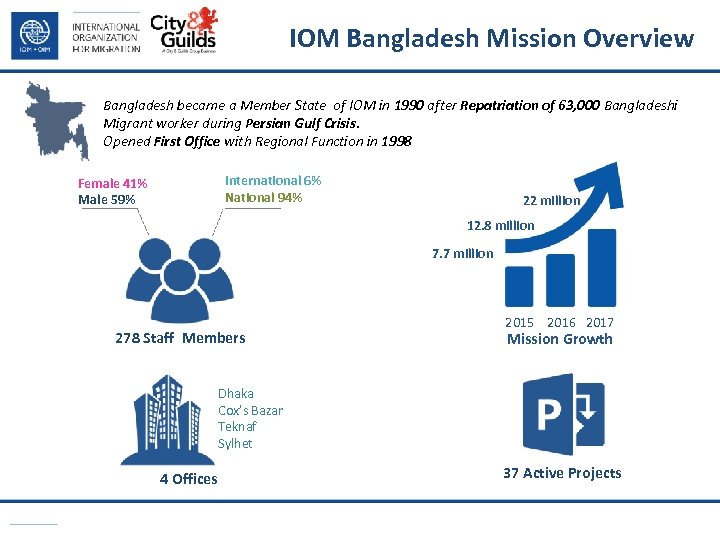
IOM Bangladesh Mission Overview Bangladesh became a Member State of IOM in 1990 after Repatriation of 63, 000 Bangladeshi Migrant worker during Persian Gulf Crisis. Opened First Office with Regional Function in 1998 International 6% National 94% Female 41% Male 59% 22 million 12. 8 million 7. 7 million 278 Staff Members 2015 2016 2017 Mission Growth Dhaka Cox’s Bazar Teknaf Sylhet 4 Offices 37 Active Projects
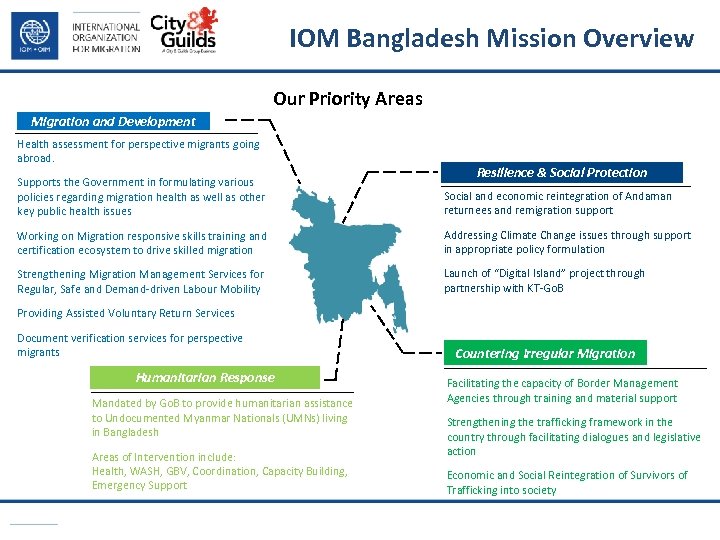
IOM Bangladesh Mission Overview Our Priority Areas Migration and Development Health assessment for perspective migrants going abroad. Resilience & Social Protection Supports the Government in formulating various policies regarding migration health as well as other key public health issues Social and economic reintegration of Andaman returnees and remigration support Working on Migration responsive skills training and certification ecosystem to drive skilled migration Addressing Climate Change issues through support in appropriate policy formulation Strengthening Migration Management Services for Regular, Safe and Demand-driven Labour Mobility Launch of “Digital Island” project through partnership with KT-Go. B Providing Assisted Voluntary Return Services Document verification services for perspective migrants Humanitarian Response Mandated by Go. B to provide humanitarian assistance to Undocumented Myanmar Nationals (UMNs) living in Bangladesh Areas of Intervention include: Health, WASH, GBV, Coordination, Capacity Building, Emergency Support Countering Irregular Migration Facilitating the capacity of Border Management Agencies through training and material support Strengthening the trafficking framework in the country through facilitating dialogues and legislative action Economic and Social Reintegration of Survivors of Trafficking into society
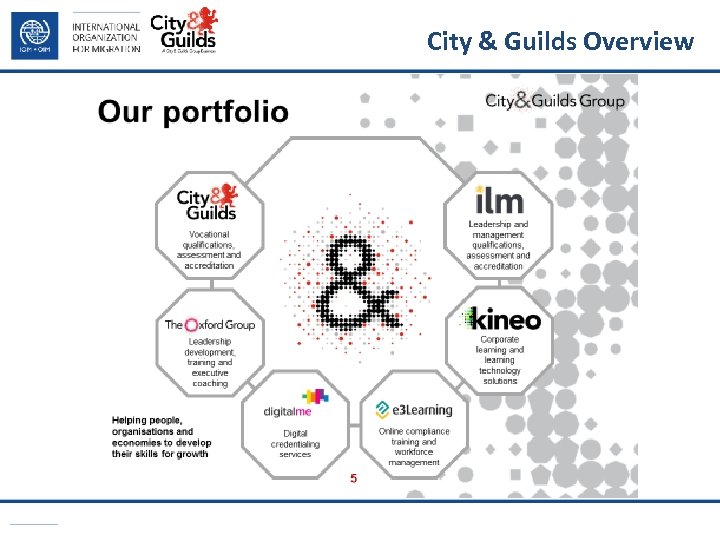
City & Guilds Overview
Survey Overview The research provides with evidence relating to: I. the key challenges and opportunities in skilled construction sector employment for Bangladeshi migrants and II. the prevailing attitudes in KSA to employing this particular workforce, in order to support the development of RPL system.
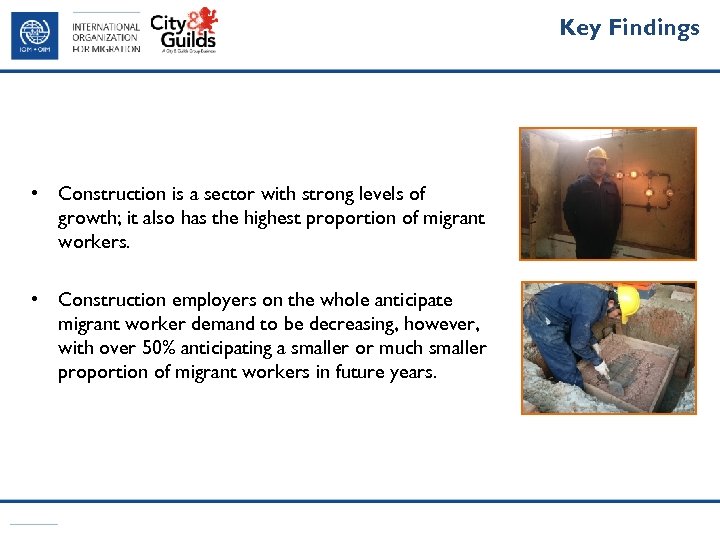
Key Findings • Construction is a sector with strong levels of growth; it also has the highest proportion of migrant workers. • Construction employers on the whole anticipate migrant worker demand to be decreasing, however, with over 50% anticipating a smaller or much smaller proportion of migrant workers in future years.
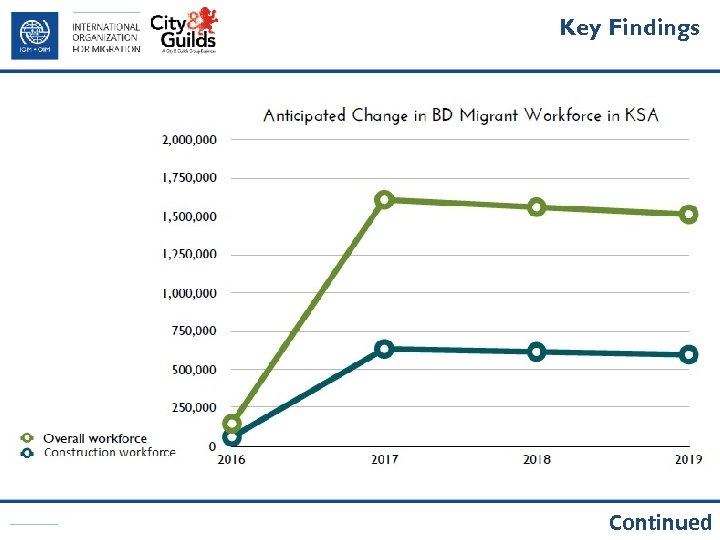
Key Findings Continued
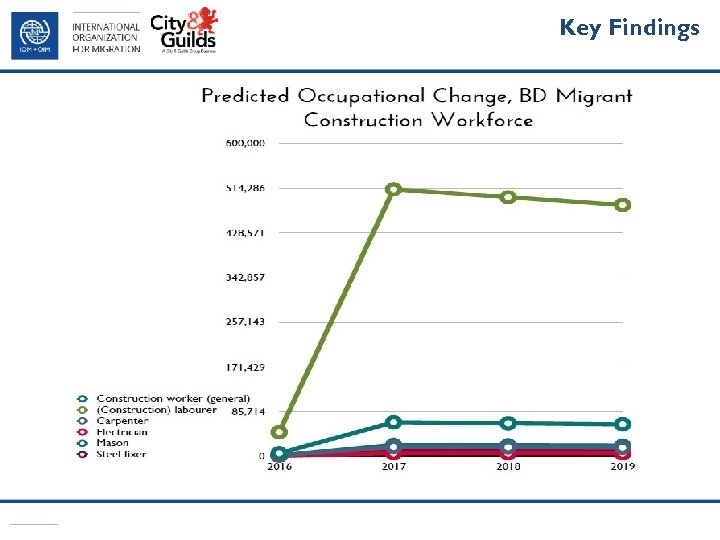
Key Findings
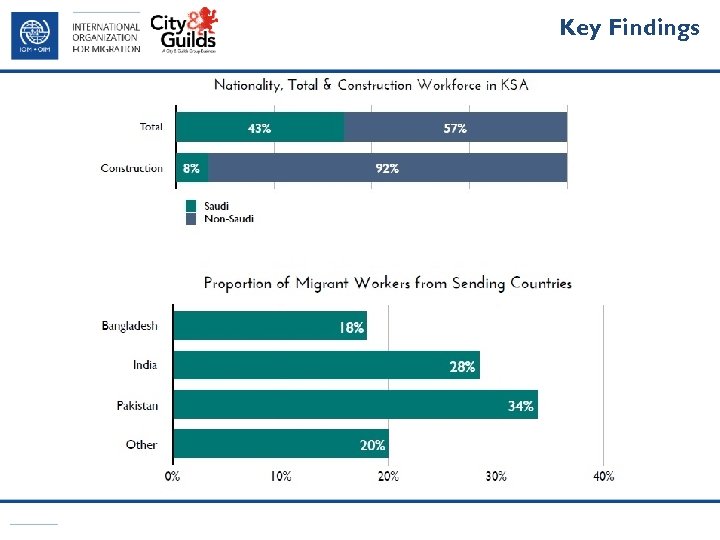
Key Findings
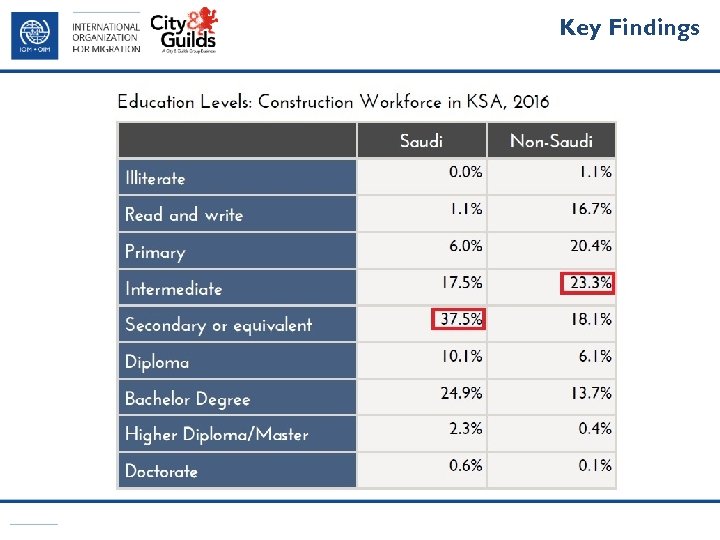
Key Findings
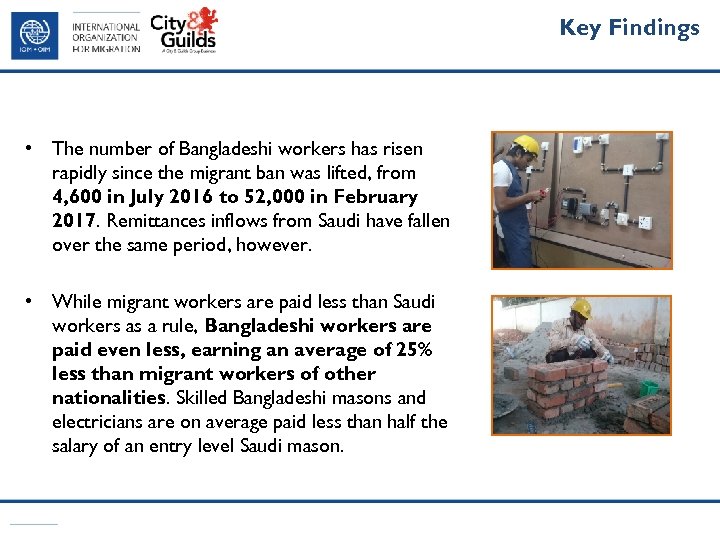
Key Findings • The number of Bangladeshi workers has risen rapidly since the migrant ban was lifted, from 4, 600 in July 2016 to 52, 000 in February 2017. Remittances inflows from Saudi have fallen over the same period, however. • While migrant workers are paid less than Saudi workers as a rule, Bangladeshi workers are paid even less, earning an average of 25% less than migrant workers of other nationalities. Skilled Bangladeshi masons and electricians are on average paid less than half the salary of an entry level Saudi mason.
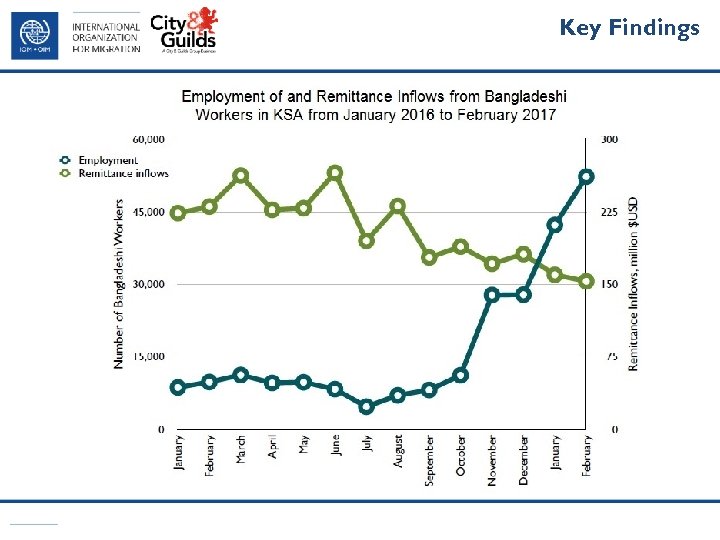
Key Findings
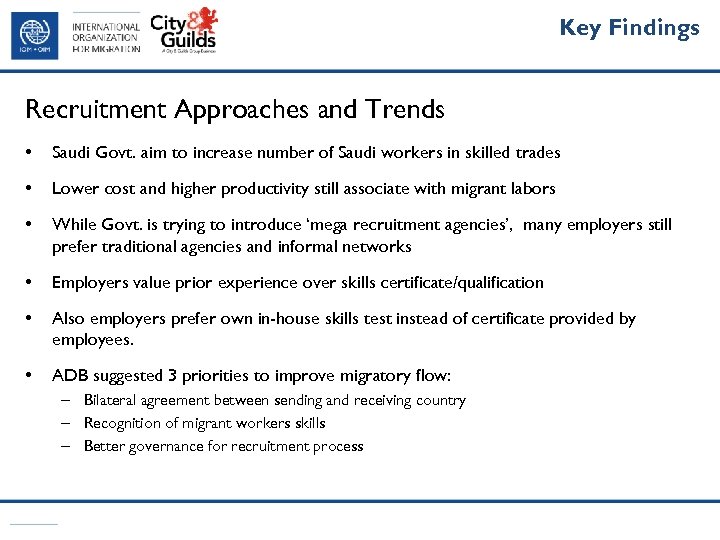
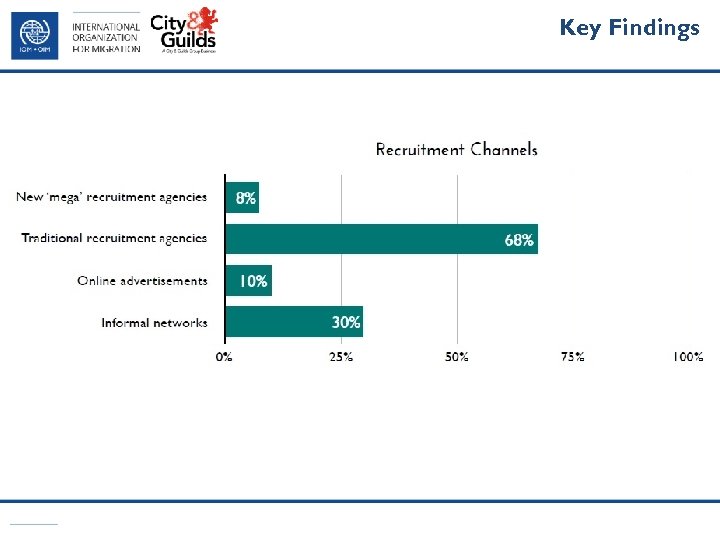
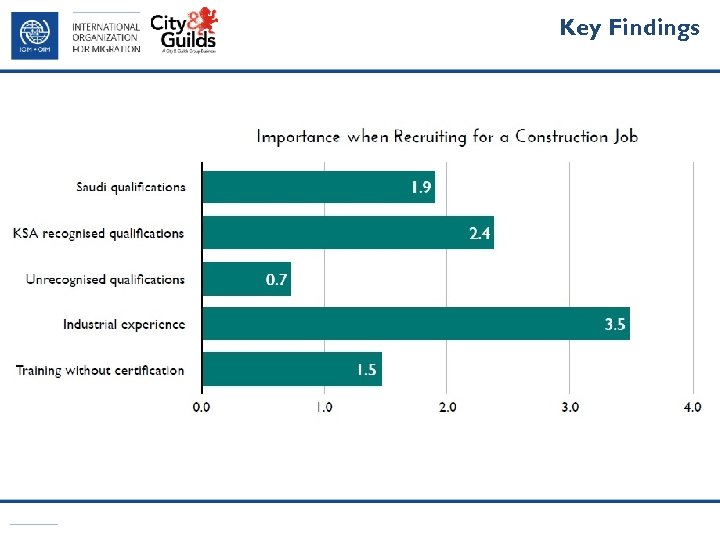
Key Findings Recruitment Approaches and Trends • Saudi Govt. aim to increase number of Saudi workers in skilled trades • Lower cost and higher productivity still associate with migrant labors • While Govt. is trying to introduce ‘mega recruitment agencies’, many employers still prefer traditional agencies and informal networks • Employers value prior experience over skills certificate/qualification • Also employers prefer own in-house skills test instead of certificate provided by employees. • ADB suggested 3 priorities to improve migratory flow: – Bilateral agreement between sending and receiving country – Recognition of migrant workers skills – Better governance for recruitment process
Key Findings
Key Findings
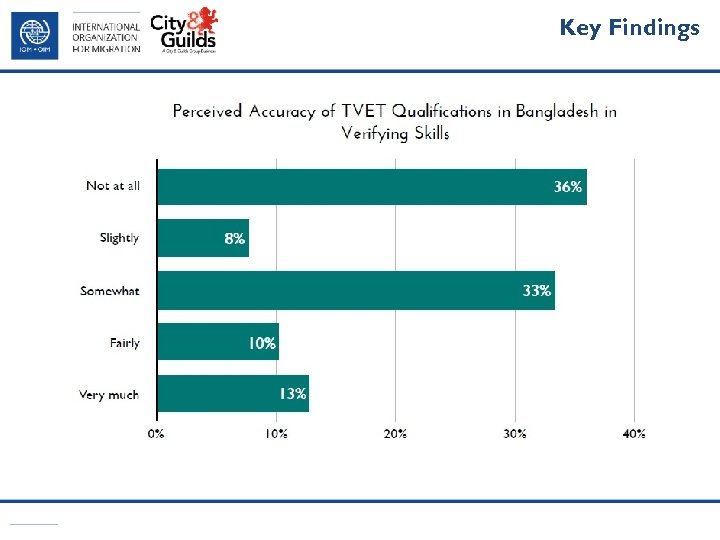
Key Findings Perceptions of Bangladeshi Workforce • Bangladeshi workers are more effective as short term/ project workers • 23% of the employers surveyed believe the Bangladesh TVET qualifications fairly, accurately verify workers skills.
Key Findings
Key Findings Recognition of Prior Learning (RPL) • Majority of employers interviewed believe, RPL which is broadly known as Skills Verification Test (SVT) in KSA for Bangladesh migrant workers would be useful to get their skills assessed and certified • One-third of the employers think, the test would not be useful • Negative perceptions of skills verification test are related to: – Current practice of some firms conducting own skills test – Concern related to salary increase of Bangladeshi workers • Challenges in introducing skills verification test: – Engaging migrant workers in the training and assessment – Persuading recruitment agencies – Value of training certificate understood by employers
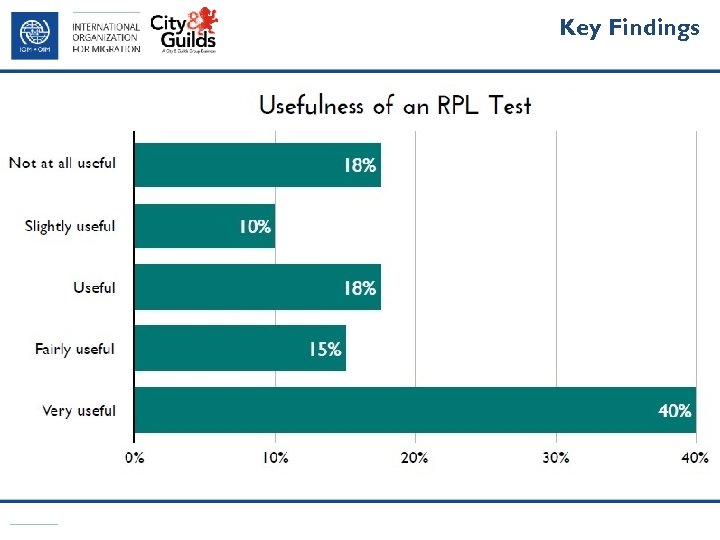
Key Findings
Recommendations • Ensure that Bangladeshi workers gain a competitive advantage over migrant labor from other nations through enhanced skills and better perception amongst employers • Providing short courses on soft skills to the prospective migrants workers alongside hard skills • Build awareness of the value of Bangladeshi skills verification system with employers and policymakers in KSA - Linking skills with increased productivity • Agreement with Saudi employers to secure job placements for the first cohort of Bangladesh workers receiving skills test certificates to demonstrate quality of work
Recommendations • Build awareness among the Bangladeshi migrant worker on the value of RPL test • Bangladesh consular staff to device package support for the workers facing exploitation and dangerous situation • Engage skills development authorities and industry representatives with mega agencies to ensure skills and opportunity for Bangladeshi workers are appropriate and legitimate
THANK YOU Image copyright: RT
Скачать презентацию IOM and City Guilds Labour Market Survey
ce5241301bc63718cfc1576a3852d16c.ppt