


 Скачать презентацию Investor Relations impact on Corporate Governance Agenda
3f540c87e45c495a4c42769e92e8a57b.ppt
- Количество слайдов: 19
 Investor Relations impact on Corporate Governance Agenda • Case Study • Investor Relations • Reputational Management • Compliance Programmes Michael Campbell September 2010 1
 Case Study l Shareholders vs Executives l Conflict and non-alignment, enter ‘corporate governance’ l Charl Kocks: “doing the right thing at the right time” l Remedies or approaches to achieve corporate governance: l l Corporate raiders: bid for underperforming shares (1980’s) l l Traditional: exit or voice/influence (1970’s) Activist shareholders: Bob Monks – Lens (1990 -2000) Contentious issues: l Pay vs performance (UK) l Value creation/destruction (US) l Stock option plans (UK and US) 2
 Case Study: Activist shareholder – Bob Monks l Take active positions in company: l underperforming in light of strong underlying values, and l susceptible to increased value through shareholder involvement l Managers to function as legally charged vs activist to monitor and even remove hard-of-hearing managers l Ran for directorship of Sears Roebuck in 1991 l Eastman Kodak, Westinghouse, American Express l Now activism extended from US to UK and Asia 3
 Influence of Institutional Shareholders Special Responsibility to Corporate Governance: l Hirschman (1970) – exit or voice l Cadbury Committee (1972) – influence l Greenburg Report (1995) – power and influence l Hempel Report (1998) – role of shareholders l Combined Code (2003) – dialogue with companies: l Enter a dialogue l Evaluation of governance disclosures l Shareholder voting 4
 Influence of Institutional Shareholders - 2 l UK: Hermes principles (2002): l l l Company’s board should seek an honest, open and ongoing dialogue with shareholders Board is responsible for facilitating a satisfactory dialogue with shareholders US: ‘investor capitalism’ (1996): “concentration of shares enables institutional investors to directly challenge management on issues of concern. ” (Useem) 5
 Investor Relations’ goal is. . . l To position the company as the world’s premier corporate, across all measures, amongst key stakeholders l Taking cognisance of investment markets l Regulatory environment, and l Global best practice 6
 Purpose statement - 1 l Strive for “best-in-class” communications l Promote excellent relationships with investment communities l Build and maintain positive stakeholder sentiment l Ensure sufficient liquidity in company shares l Retain and expand company’s investor universe 7
 Purpose statement - 2 l Manage analyst and investor expectations l Increase analyst research coverage l Positively differentiate from other investments l Communicate through various channels l Messaging has to be managed in a regulated environment 8
 Communication tools l l l l l Annual Report and Interim Report Presentations of full year and half year results Roadshows 1: 1 meetings Electronic media – SENS, website Print media – news releases, brochures, corporate surveys, research reports Investor Day / site visits Investor breakfasts / lunches Conference speaking 9
 Who is our Investor market? l Institutions / fund managers l Analysts (buy- and sell- side) l Private investors (retail market) l Financial media l Employees l Other influential contacts 10
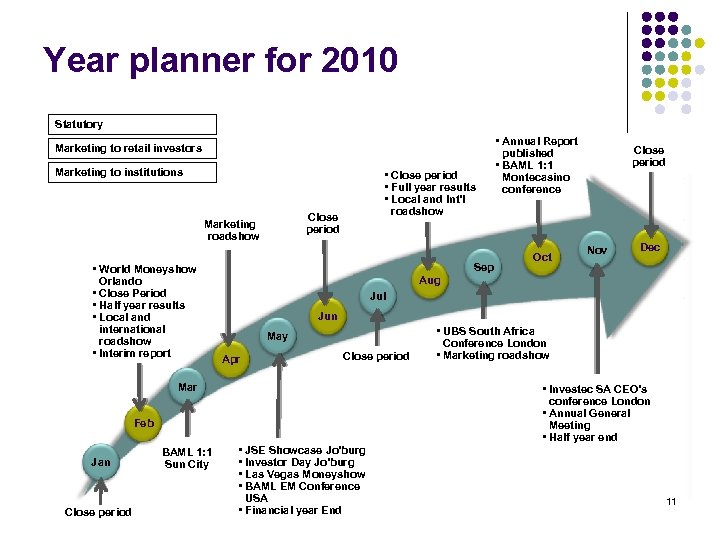 Year planner for 2010 Statutory Marketing to retail investors Marketing to institutions Close period Marketing roadshow • World Moneyshow Orlando • Close Period • Half year results • Local and international roadshow • Interim report • Close period • Full year results • Local and Int’l roadshow Sep Close period Nov Dec Jul Jun May Apr Close period • UBS South Africa Conference London • Marketing roadshow • Investec SA CEO’s conference London • Annual General Meeting • Half year end Feb BAML 1: 1 Sun City Oct Close period Aug Mar Jan • Annual Report published • BAML 1: 1 Montecasino conference • JSE Showcase Jo’burg • Investor Day Jo’burg • Las Vegas Moneyshow • BAML EM Conference USA • Financial year End 11
 Reputation risks l Size l Health and safety issues l Emotive industry / government l Ambivalent base / management l Soft target, and l Company defensive Reputation is the only competitive advantage 12
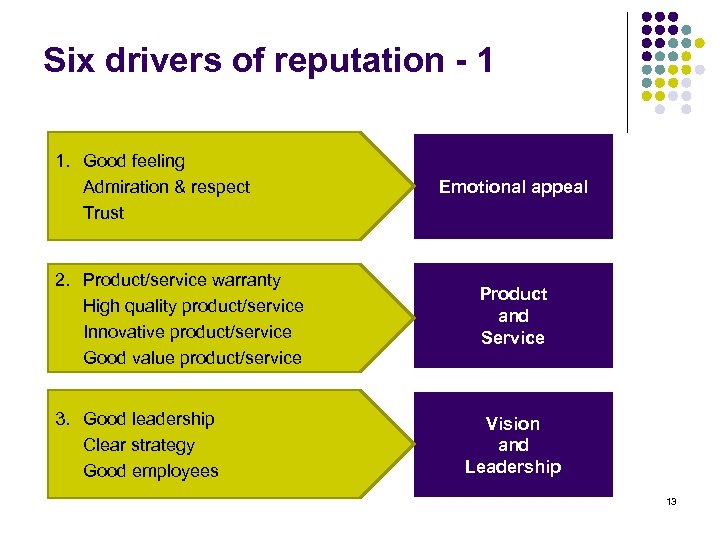 Six drivers of reputation - 1 1. Good feeling Admiration & respect Trust 2. Product/service warranty High quality product/service Innovative product/service Good value product/service 3. Good leadership Clear strategy Good employees Emotional appeal Product and Service Vision and Leadership 13
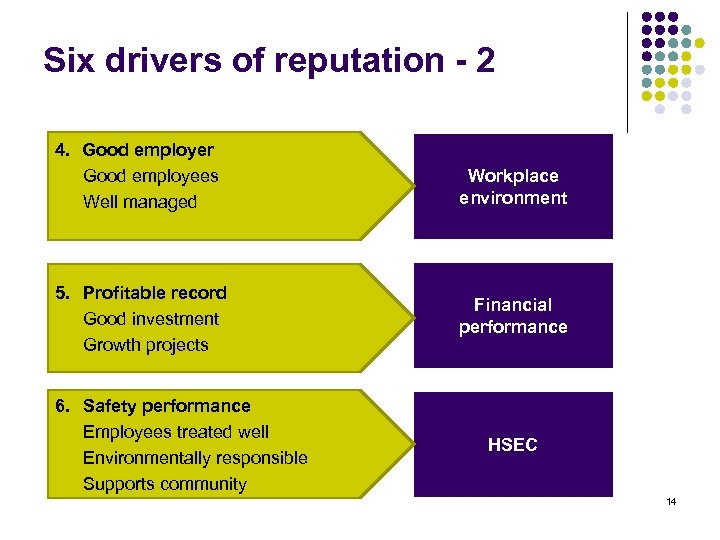 Six drivers of reputation - 2 4. Good employer Good employees Well managed 5. Profitable record Good investment Growth projects 6. Safety performance Employees treated well Environmentally responsible Supports community Workplace environment Financial performance HSEC 14
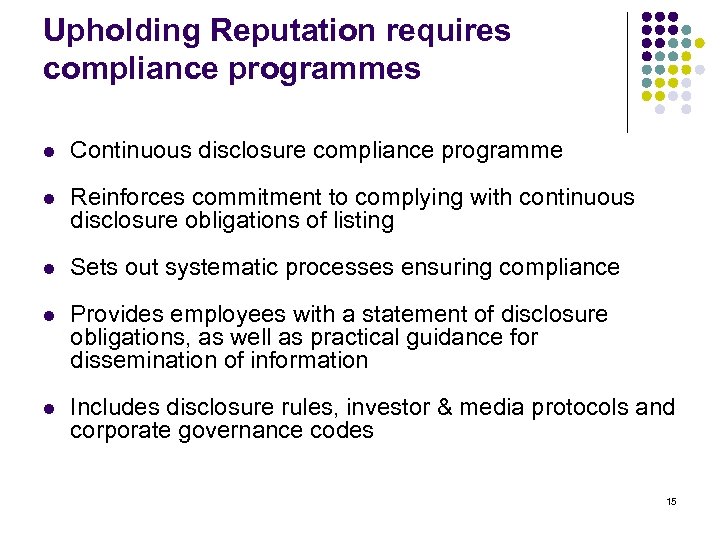 Upholding Reputation requires compliance programmes l Continuous disclosure compliance programme l Reinforces commitment to complying with continuous disclosure obligations of listing l Sets out systematic processes ensuring compliance l Provides employees with a statement of disclosure obligations, as well as practical guidance for dissemination of information l Includes disclosure rules, investor & media protocols and corporate governance codes 15
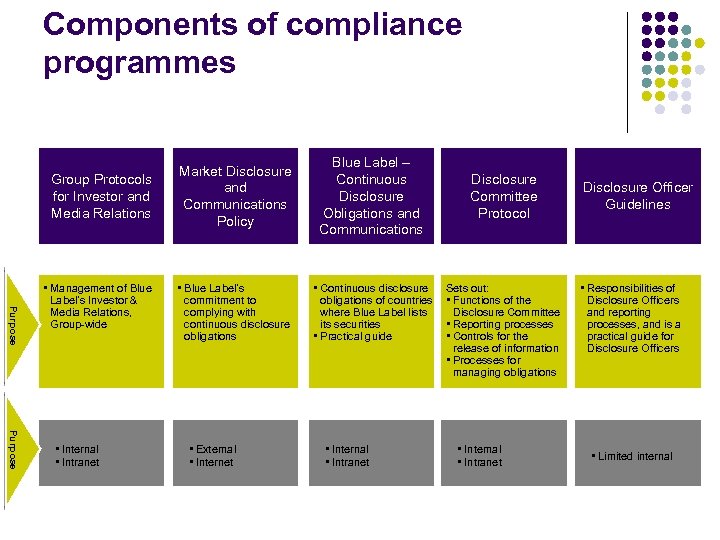 Components of compliance programmes Group Protocols for Investor and Media Relations Purpose • Management of Blue Label’s Investor & Media Relations, Group-wide Market Disclosure and Communications Policy Blue Label – Continuous Disclosure Obligations and Communications • Blue Label’s commitment to complying with continuous disclosure obligations • Continuous disclosure obligations of countries where Blue Label lists its securities • Practical guide Disclosure Committee Protocol Sets out: • Functions of the Disclosure Committee • Reporting processes • Controls for the release of information • Processes for managing obligations Disclosure Officer Guidelines • Responsibilities of Disclosure Officers and reporting processes, and is a practical guide for Disclosure Officers Purpose 16 • Internal • Intranet • External • Internet • Internal • Intranet • Limited internal
 Principles or why do we have Rules of Disclosure? l Legal requirement to disclose ‘material information’ to the market in accordance with listing rules l Determining ‘materiality’ is not always straightforward and may require judgement – consult widely l Information is released to stock exchange, investors and media and is posted on website l Investor Relations and Disclosure Committee/Company Secretary responsible not selective but simultaneous disclosure 17
 In conclusion… In general: l We say too much… too soon… to too many people l We are unique, technology, passionate l Golden rules l no surprises, no disappointments l don’t over-promise, don’t under-deliver 18
 Questions and Answers Michael Campbell September 2010 19