 Скачать презентацию Investing in Asia s Local Currency Debt Markets Presentation
3b7ebf02f6710c6df3a3aeb6b8599491.ppt
- Количество слайдов: 14



Investing in Asia’s Local Currency Debt Markets Presentation to the Asia-Pacific Finance & Development Centre, 4 -6 November 2005 Woon-Khien. Chia@ubs. com Tel: +852 2971 6425 ANALYST CERTIFICATION AND REQUIRED DISCLOSURES AT THE END OF THE DOCUMENT UBS does and seeks to do business with companies covered in its research reports. As a result, investors should be aware that the firm may have a conflict of interest that could affect the objectivity of this report. Investors should consider this report as only a single factor in making their investment decision.
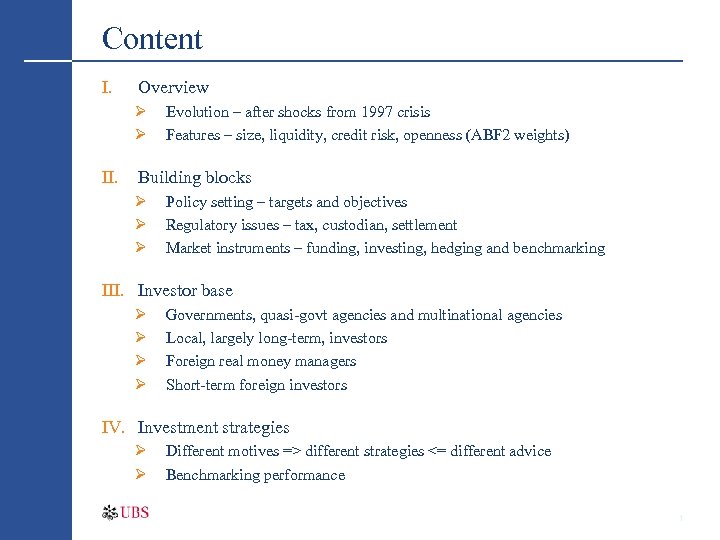
Content I. Overview Ø Ø II. Evolution – after shocks from 1997 crisis Features – size, liquidity, credit risk, openness (ABF 2 weights) Building blocks Ø Ø Ø Policy setting – targets and objectives Regulatory issues – tax, custodian, settlement Market instruments – funding, investing, hedging and benchmarking III. Investor base Ø Ø Governments, quasi-govt agencies and multinational agencies Local, largely long-term, investors Foreign real money managers Short-term foreign investors IV. Investment strategies Ø Ø Different motives => different strategies <= different advice Benchmarking performance 1
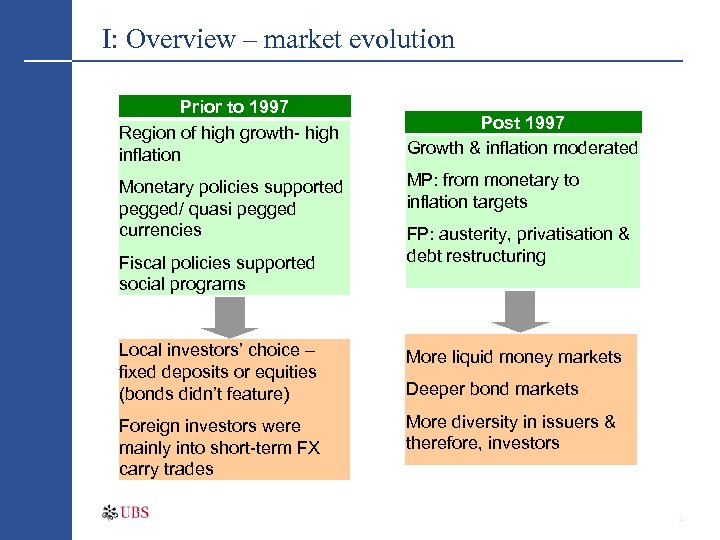
I: Overview – market evolution Prior to 1997 Region of high growth- high inflation Monetary policies supported pegged/ quasi pegged currencies Fiscal policies supported social programs Post 1997 Growth & inflation moderated MP: from monetary to inflation targets FP: austerity, privatisation & debt restructuring Local investors’ choice – fixed deposits or equities (bonds didn’t feature) More liquid money markets Foreign investors were mainly into short-term FX carry trades More diversity in issuers & therefore, investors Deeper bond markets 2
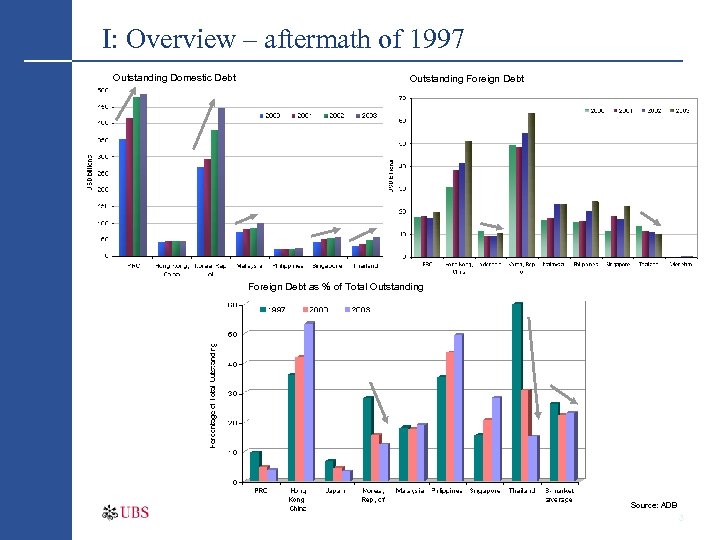
I: Overview – aftermath of 1997 Outstanding Domestic Debt Outstanding Foreign Debt as % of Total Outstanding Source: ADB 3
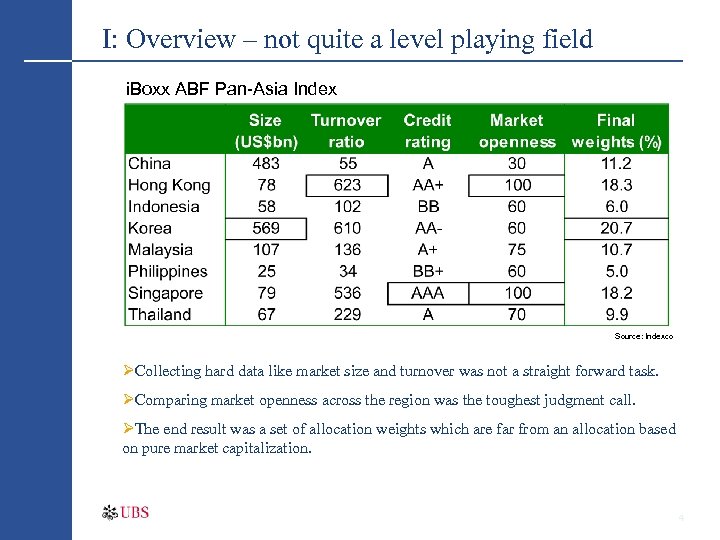
I: Overview – not quite a level playing field i. Boxx ABF Pan-Asia Index Source: Indexco ØCollecting hard data like market size and turnover was not a straight forward task. ØComparing market openness across the region was the toughest judgment call. ØThe end result was a set of allocation weights which are far from an allocation based on pure market capitalization. 4
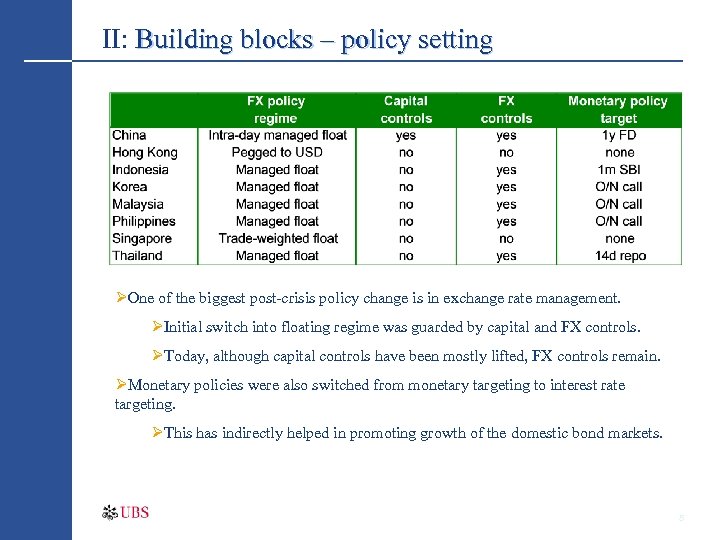
II: Building blocks – policy setting ØOne of the biggest post-crisis policy change is in exchange rate management. ØInitial switch into floating regime was guarded by capital and FX controls. ØToday, although capital controls have been mostly lifted, FX controls remain. ØMonetary policies were also switched from monetary targeting to interest rate targeting. ØThis has indirectly helped in promoting growth of the domestic bond markets. 5
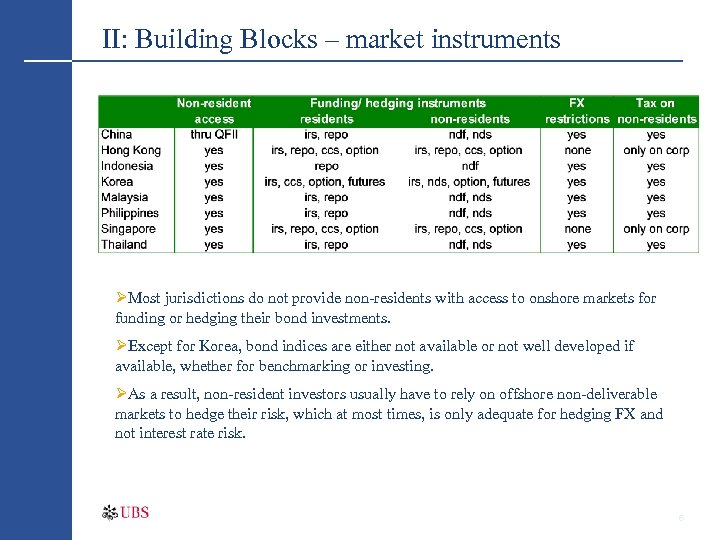
II: Building Blocks – market instruments ØMost jurisdictions do not provide non-residents with access to onshore markets for funding or hedging their bond investments. ØExcept for Korea, bond indices are either not available or not well developed if available, whether for benchmarking or investing. ØAs a result, non-resident investors usually have to rely on offshore non-deliverable markets to hedge their risk, which at most times, is only adequate for hedging FX and not interest rate risk. 6
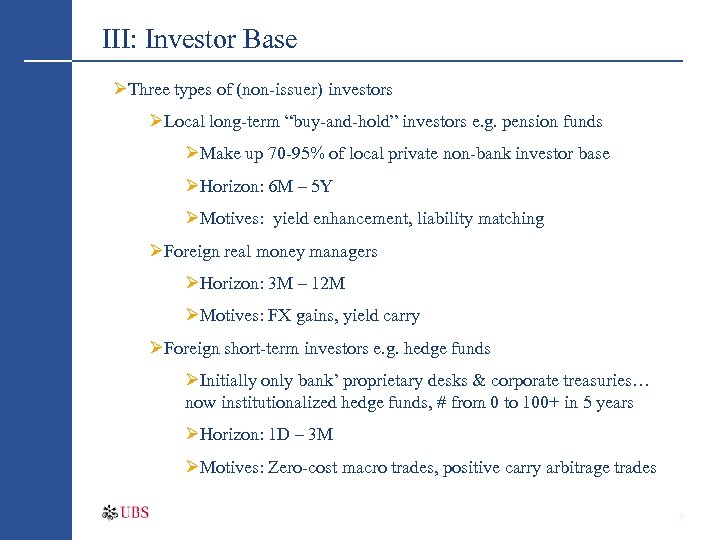
III: Investor Base ØThree types of (non-issuer) investors ØLocal long-term “buy-and-hold” investors e. g. pension funds ØMake up 70 -95% of local private non-bank investor base ØHorizon: 6 M – 5 Y ØMotives: yield enhancement, liability matching ØForeign real money managers ØHorizon: 3 M – 12 M ØMotives: FX gains, yield carry ØForeign short-term investors e. g. hedge funds ØInitially only bank’ proprietary desks & corporate treasuries… now institutionalized hedge funds, # from 0 to 100+ in 5 years ØHorizon: 1 D – 3 M ØMotives: Zero-cost macro trades, positive carry arbitrage trades 7
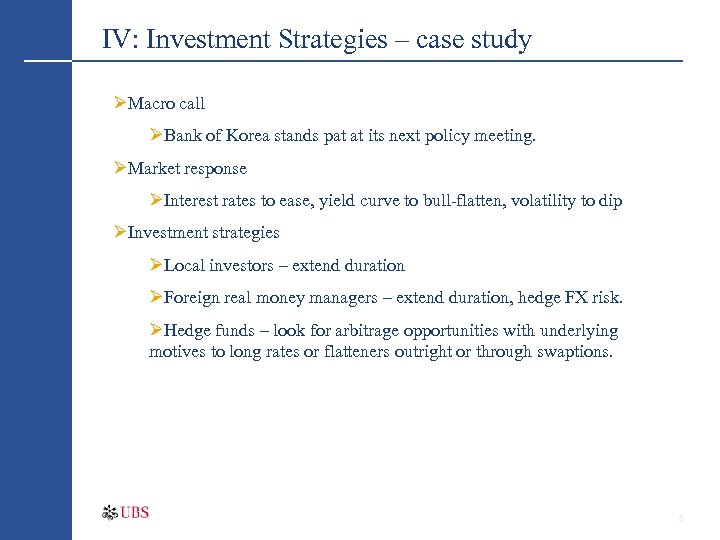
IV: Investment Strategies – case study ØMacro call ØBank of Korea stands pat at its next policy meeting. ØMarket response ØInterest rates to ease, yield curve to bull-flatten, volatility to dip ØInvestment strategies ØLocal investors – extend duration ØForeign real money managers – extend duration, hedge FX risk. ØHedge funds – look for arbitrage opportunities with underlying motives to long rates or flatteners outright or through swaptions. 8
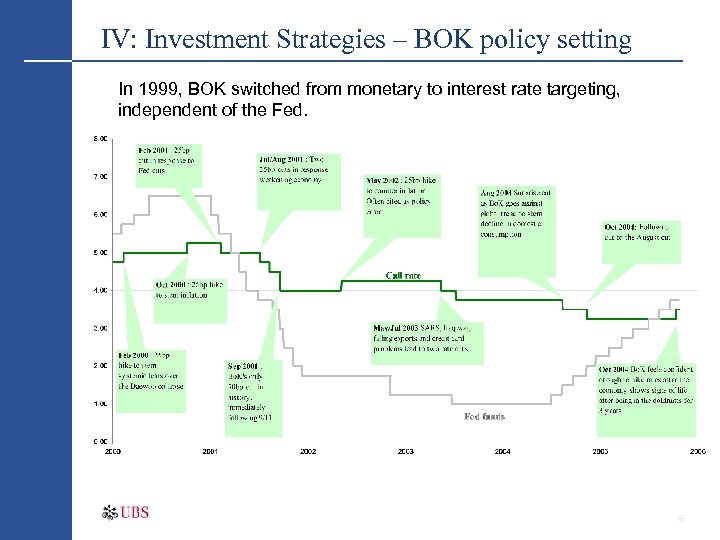
IV: Investment Strategies – BOK policy setting In 1999, BOK switched from monetary to interest rate targeting, independent of the Fed. 9
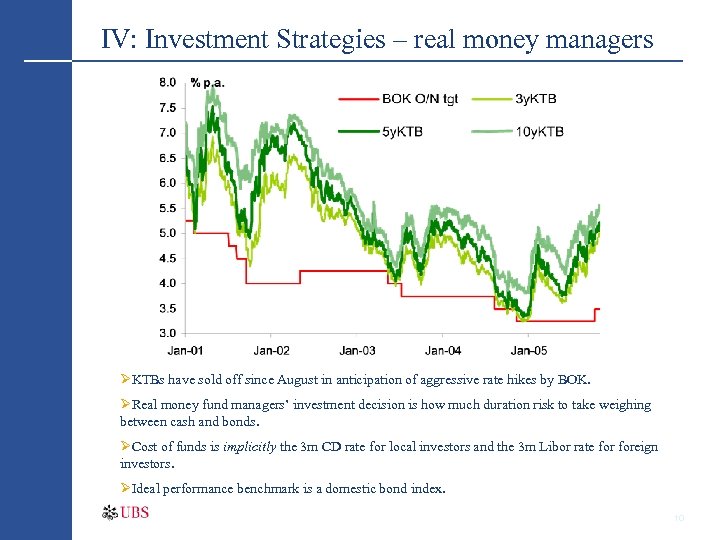
IV: Investment Strategies – real money managers ØKTBs have sold off since August in anticipation of aggressive rate hikes by BOK. ØReal money fund managers’ investment decision is how much duration risk to take weighing between cash and bonds. ØCost of funds is implicitly the 3 m CD rate for local investors and the 3 m Libor rate foreign investors. ØIdeal performance benchmark is a domestic bond index. 10
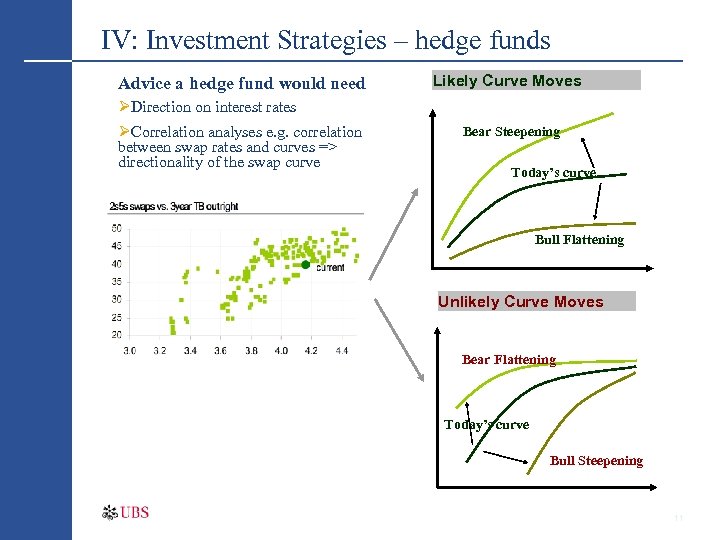
IV: Investment Strategies – hedge funds Advice a hedge fund would need ØDirection on interest rates ØCorrelation analyses e. g. correlation between swap rates and curves => directionality of the swap curve Likely Curve Moves Bear Steepening Today’s curve Bull Flattening Unlikely Curve Moves Bear Flattening Today’s curve Bull Steepening 11
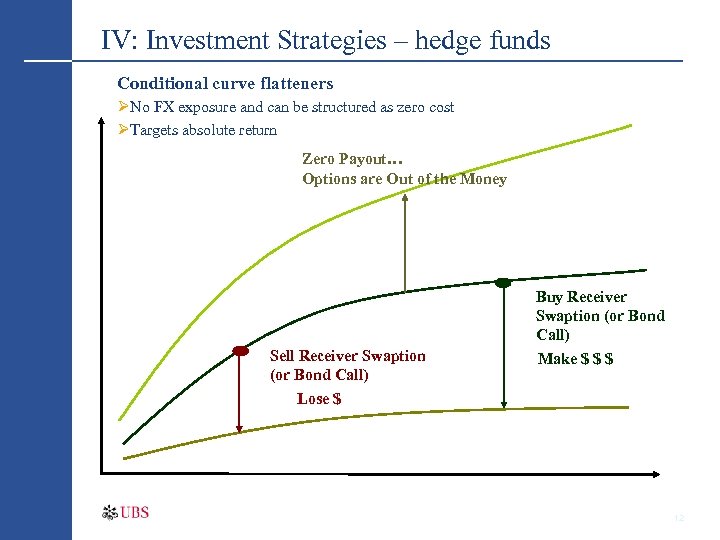
IV: Investment Strategies – hedge funds Conditional curve flatteners ØNo FX exposure and can be structured as zero cost ØTargets absolute return Zero Payout… Options are Out of the Money Sell Receiver Swaption (or Bond Call) Lose $ Buy Receiver Swaption (or Bond Call) Make $ $ $ 12
This material has been prepared by the division, group, subsidiary or affiliate of UBS AG (“UBS”) identified herein. In certain countries UBS AG is referred to as UBS SA. UBS Warburg is a business group of UBS AG. This material is for distribution only under such circumstances as may be permitted by applicable law. It has no regard to the specific investment objectives, financial situation or particular needs of any recipient. It is published solely for informational purposes and is not to be construed as a solicitation or an offer to buy or sell any securities or related financial instruments. No representation or warranty, either express or implied, is provided in relation to the accuracy, completeness or reliability of the information contained herein. It should not be regarded by recipients as a substitute for the exercise of their own judgement. Any opinions expressed in this report are the views held by the relevant UBS Department issuing this report. Other UBS entities or officers may hold differing views to those contained within this report as a result of using different assumptions. Any opinions expressed in this material are subject to change without notice and UBS is not under any obligation to update or keep current the information contained herein. UBS and its respective officers and associates or clients may have an interest in the financial instruments of any entities referred to in this material. In addition, UBS may make purchases and/or sales as principal or agent or may act as market maker or provide investment banking or other services. UBS its related entities, directors, employees and agents accept no liability whatsoever for any loss or damage of any kind arising out of the use of all or any part of this material. United Kingdom and rest of Europe: Except as otherwise specified herein, this material is communicated by UBS Warburg Ltd. , a subsidiary of UBS AG, to persons who are market counterparties or intermediate customers (as detailed in the FSA Rules) and is only available to such persons. The information contained herein does not apply to, and should not be relied upon by, private customers. Switzerland: This material is distributed in Switzerland by UBS AG. United States: This material is distributed to US persons by UBS Warburg LLC a subsidiary of UBS AG, or by another division, group, subsidiary or affiliate of UBS to major US institutional investors only. UBS Warburg LLC accepts responsibility for the content of materials prepared by another division, group, subsidiary or affiliate of UBS AG when distributed by UBS Warburg LLC to US persons. All transactions by a US person in the securities mentioned in this material must be effected through UBS Warburg LLC. Canada: This material is distributed by UBS Bunting Warburg Inc. , a subsidiary of UBS AG and a member of the principal Canadian stock exchanges & CIPF. A statement of its financial condition and a list of its directors and senior officers will be provided upon request. Japan: This material is distributed in Japan by UBS Warburg (Japan) Limited, a registered securities company, or by UBS AG, Tokyo Branch, a licensed bank. For further details of our local services, please call your regular contact at UBS in Japan. Hong Kong: This material is distributed in Hong Kong by UBS Warburg (Asia) Limited. Australia: This material is distributed in Australia by UBS Warburg Australia Ltd or UBS Warburg Australia Equities Ltd licensed securities dealers. New Zealand: This material is distributed in New Zealand by UBS Warburg New Zealand Ltd, or UBS Warburg New Zealand Equities Ltd. South Africa: This material is distributed in South Africa by UBS Warburg Corporate Finance South Africa (Pty) Ltd. 2004 UBS AG. All rights reserved. UBS specifically prohibits the redistribution of this material and accepts no liability whatsoever for the actions of third parties in this respect. 13
Скачать презентацию Investing in Asia s Local Currency Debt Markets Presentation
3b7ebf02f6710c6df3a3aeb6b8599491.ppt