


 Скачать презентацию Investigations in Neurosurgery Dr Ari Sami Neurosurgeon College
520fe1ea921a93e12403451433866153.ppt
- Количество слайдов: 19
 Investigations in Neurosurgery Dr. Ari Sami Neurosurgeon College of Medicine University of Sulaimani
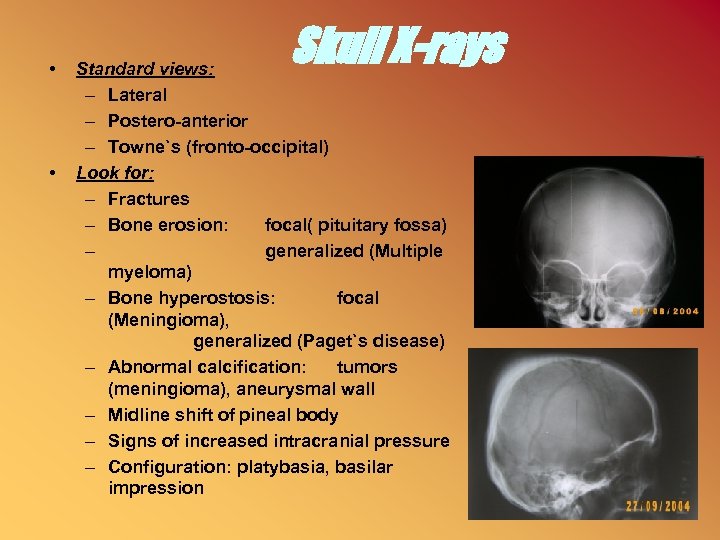 • • Skull X-rays Standard views: – Lateral – Postero-anterior – Towne`s (fronto-occipital) Look for: – Fractures – Bone erosion: focal( pituitary fossa) – generalized (Multiple myeloma) – Bone hyperostosis: focal (Meningioma), generalized (Paget`s disease) – Abnormal calcification: tumors (meningioma), aneurysmal wall – Midline shift of pineal body – Signs of increased intracranial pressure – Configuration: platybasia, basilar impression
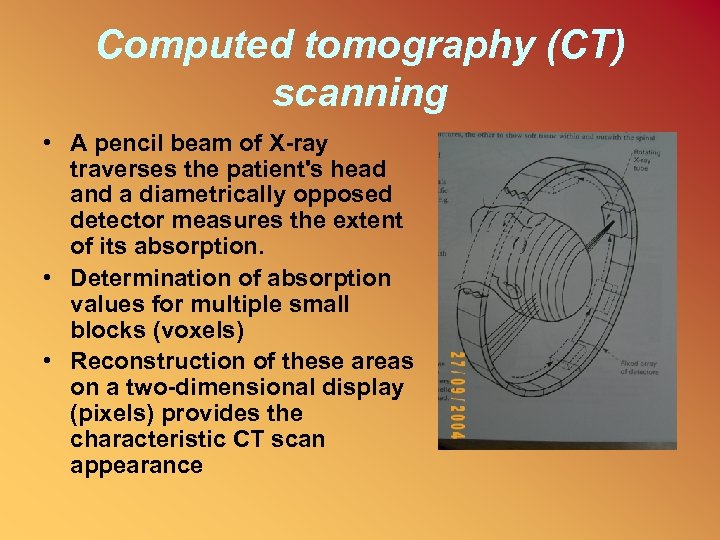 Computed tomography (CT) scanning • A pencil beam of X-ray traverses the patient's head and a diametrically opposed detector measures the extent of its absorption. • Determination of absorption values for multiple small blocks (voxels) • Reconstruction of these areas on a two-dimensional display (pixels) provides the characteristic CT scan appearance
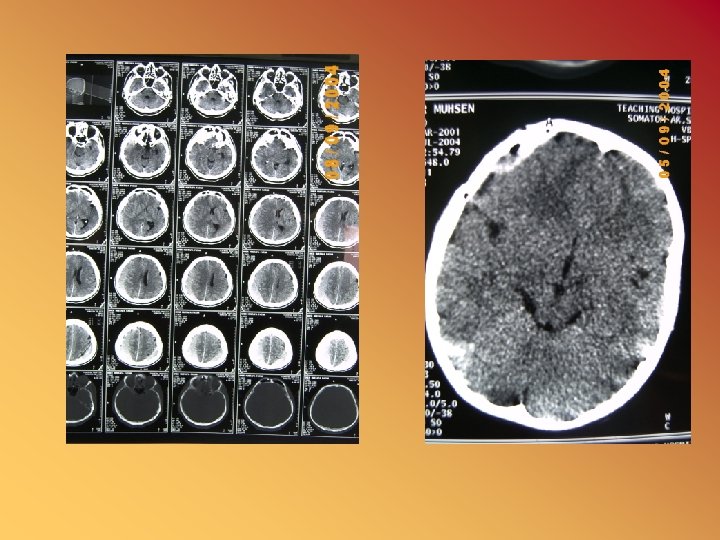
 Interpretation of the cranial CT • Ventricular system: size, position, compression • Width of cortical sulci and sylvian fissure: • Skull base and vault: hyperostosis, osteolytic lesion, remodelling, depressed fracture • Multiple lesions: tumor, abscesses, granuloma, infarction, trauma • Abnormal tissue density: – – Midline shift Ventricular compression Obliteration of the basal cisterns, sulci High density( blood, calcification in tumor or AVM or hamertoma) – Low (infarction, tumor, abscess, oedema, encephalitis, resolving hematoma) – Mixed (tumor, abscess, AVM, contusion, hemorrahgic infarct)
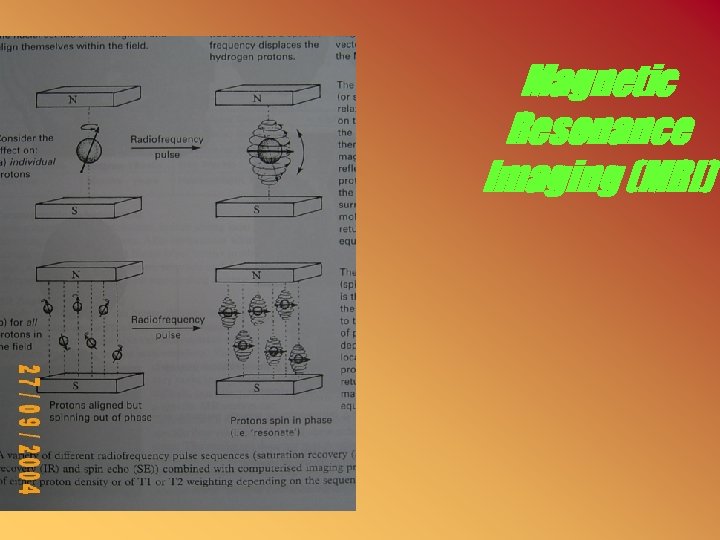 Magnetic Resonance Imaging (MRI)
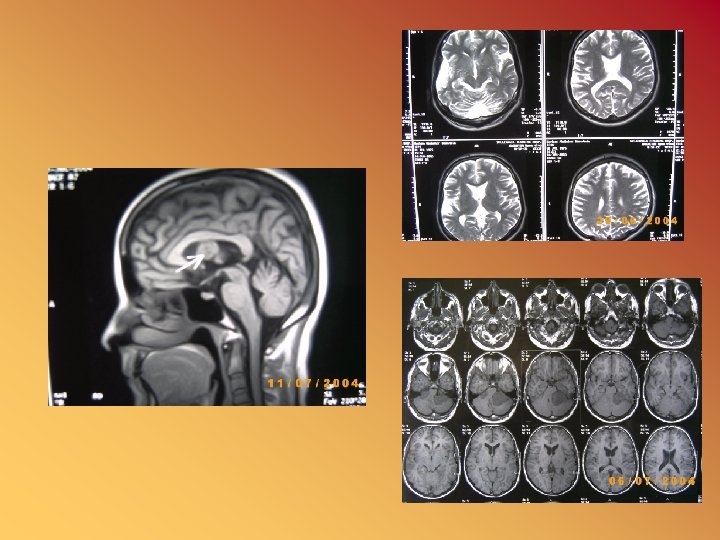
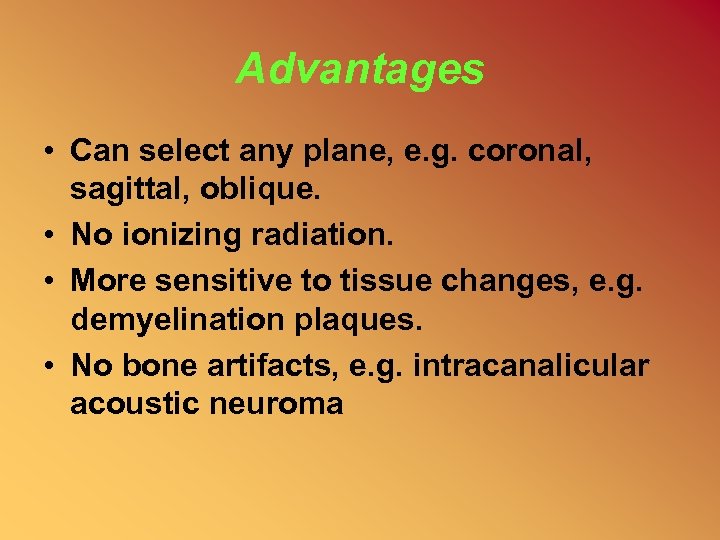 Advantages • Can select any plane, e. g. coronal, sagittal, oblique. • No ionizing radiation. • More sensitive to tissue changes, e. g. demyelination plaques. • No bone artifacts, e. g. intracanalicular acoustic neuroma
 Disadvantages • Limited slice thickness-3 mm. • Bone imaging limited to display of marrow. • Claustrophobia. • Cannot use with pacemaker or ferromagnetic implant.
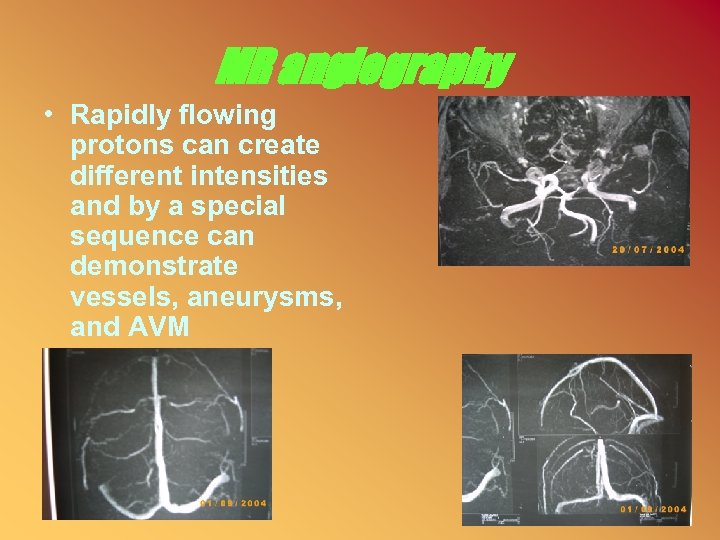 MR angiography • Rapidly flowing protons can create different intensities and by a special sequence can demonstrate vessels, aneurysms, and AVM
 MRI • • Diffusion-weighted MRI Perfusion-weighted MRI Functional MRI MR spectroscopy (N-acetylaspartate, lactate, ATP, and inorganic phosphate)
 Ultrasound • Extracranial : Doppler, colour doppler • Intracranialtranscranial doppler ultrasound: – Assessment of intracranial hemodynamics – Detection of vasospasm in SAH
 Angiography • DSA: subtraction of a pre-injection film from the angiogram eliminates bone densities and improves vessel definition – Phases: • Arterial • Capillary • Venous Carotid vertebral
 Interventional angiography • Embolization – Particles (ivalon sponge) – Glue (isobutyl-2 -cyanocrylate) – Balloon (detachable) for CC fistula – Platinum coils – Stents – Angioplasty
 Radionuclide imaging • Single photon emission computed tomography (SPECT): – Uses compounds labelled with gammaemitting tracers (ligands) and a rotating gamma camera is often used for detection – Detection of early ischemia – Evaluation of patients with intractable epilepsy of temporal lobe origin – Thallium SPECT: differentiate low from high grade tumors.
 Radionuclide imaging • Positron emission tomography (PET): – Utilises positron-emitting isotopes bound to compounds of biological interest
 Lumbar puncture • CSF analysis • CSF drainage and pressure reduction • Avoid LP: – If raised intracranial pressure is suspected – If platelet count is less than 40 000 and prothrombin time is less than 50% of control
 Myelography
 Others • EEG • Evoked potentials: – Visual – Auditory – Somatosensory • EMG and NCS • Neuro-otological tests – auditory system – vestibular system