


 Скачать презентацию Investigating Shipping Pollution Violations Pacific Module 12 Vessel
8b8d2241c07f64d3c447dca1cea1b6f1.ppt
- Количество слайдов: 37
 Investigating Shipping Pollution Violations Pacific Module 12 Vessel boarding and onboard Investigation
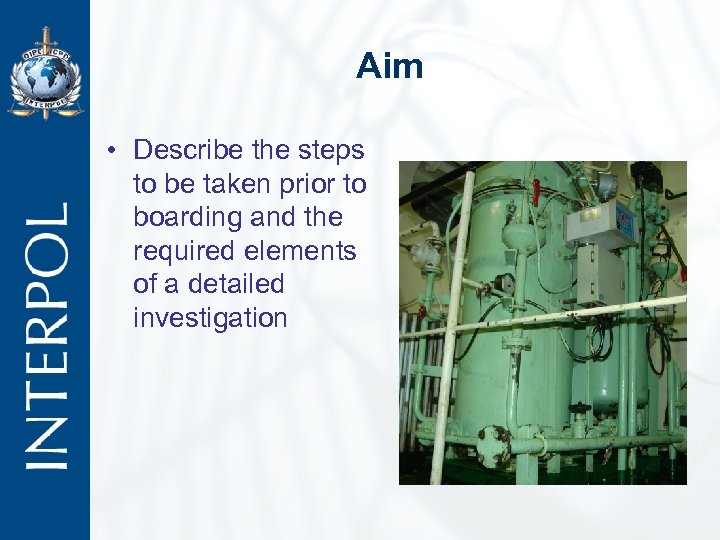 Aim • Describe the steps to be taken prior to boarding and the required elements of a detailed investigation
 Onboard Investigations Overview • Document the primary investigative tools required for the collection of vessel pollution evidence – Steps to be taken prior to boarding – Required elements of a detailed inspection
 Authority to Board • National/domestic legislation • Awareness of security arrangements and appropriate authorisation to enter the port • Investigators should be authorised or appointed under the legislation
 Powers of Authorised Officers • Go on board with assistants & equipment necessary, undertake inquiries, inspections searches, seizures, arrests etc • Inspect & test any machinery or equipment • Open & inspect any hold, bunker, tank etc • Require production of documentation • Make copies of documentation • Require Captain to certify copies of documentation • Take samples
 Basis for Investigation • Detection of violation • Onboard investigations important process to obtaining further evidence where there are clear grounds that a vessel has violated pollution laws • Time critical • UNCLOS provisions • Domestic law provisions – Search warrant or court order required (? ) – Powers of authorised officers – Security
 Investigation team • Utilise various expertise – – – Police Port State Control officers Marine surveyors/engineers Environment protection officers Computer technology experts Interpreters etc
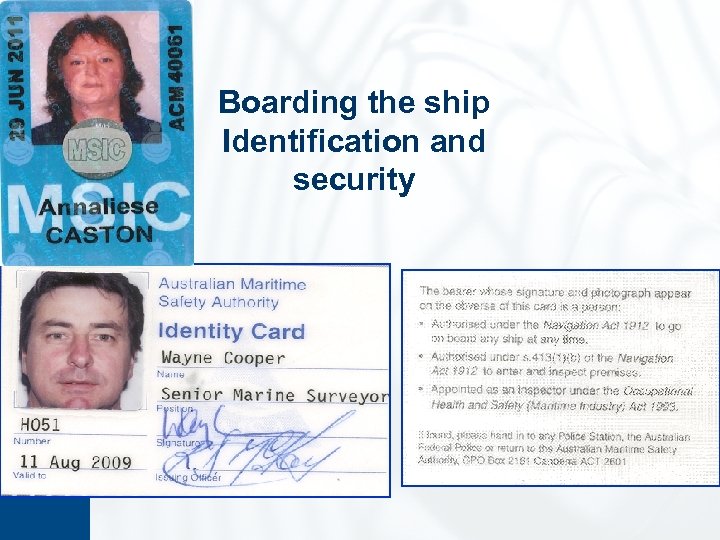 Boarding the ship Identification and security
 Preparation prior to boarding • Ship arrival information • Port Authority, Maritime/Transport Department, Customs • Crew list • Estimated time of arrival • Berth • Offshore anchorage • Other information about the vessel • Do NOT advise Vessel Agent
 Investigations Plan • • Identify all evidence required Roles of investigation team Integrity of evidence Chain of custody Inspection Equipment PPE Clothing Food - Water
 Pre-Boarding Briefing • Conduct a clear, concise and comprehensive briefing prior to boarding to ensure that all team members understand their roles and responsibilities and to ensure that all necessary equipment is on hand in good working order • Team leader relays all relevant information re: communications checks, emergency procedures etc. to establishing and maintaining a safe level of general ship board security
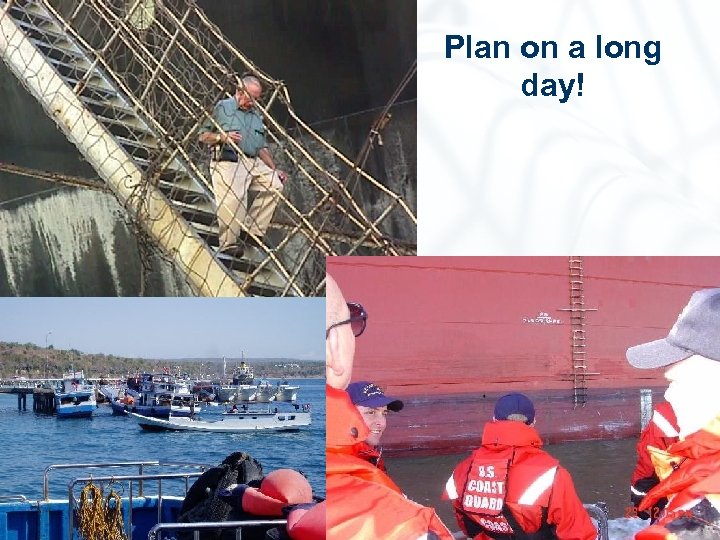
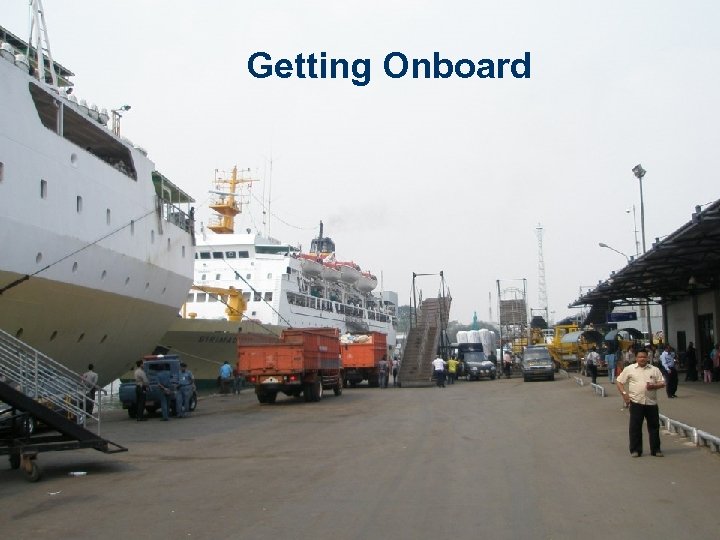 Getting Onboard
 Plan on a long day!
 Aspects of Onboard Investigation 1. Investigation of Certificates 2. Investigation of Record Books and other documentation 3. Detailed inspection of Engine room • Operating equipment • physical evidence • sampling 4. Interview crew members
 Contemporaneous notes • Ensure that all investigation officers maintain comprehensive notes of their roles and all activity • Investigators will be required to provide written statements of their involvement in the investigation • May be handwritten • Photographs and video footage should also be taken of all relevant areas
 Obtaining Shipboard Documentation As Evidence • • Originals – best evidence Certified copies Electronic documentation – hard drive IMO MSC-MEPC. 4/Circular 1 “Retention of original records/documents onboard ships” • Maintain custody/control of documents once taken as evidence • IMO requirements for documentation and records
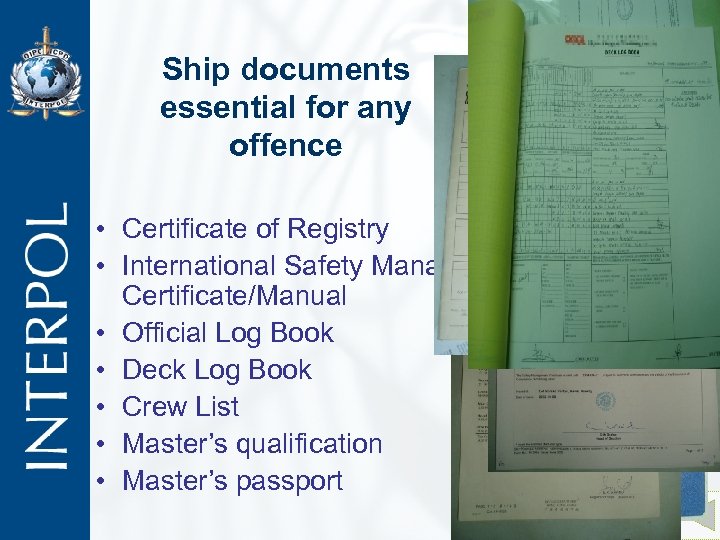 Ship documents essential for any offence • Certificate of Registry • International Safety Management ISM Certificate/Manual • Official Log Book • Deck Log Book • Crew List • Master’s qualification • Master’s passport
 Documentary Evidence • Engineering Documentation 1. Engine Room Log 2. International Oil Pollution Prevention Certificate (IOPP) 3. Oil Record Book Part I (Part II oil tankers) 4. Shipboard Oil Pollution Emergency Plan 5. Incinerator Log 6. Vessel diagrams – piping, tanks, equipment
 Testimonial Evidence • Interviews of crewmembers – Investigator’s notes – Documented in report • Statements from crewmembers – Relevant officers and ratings
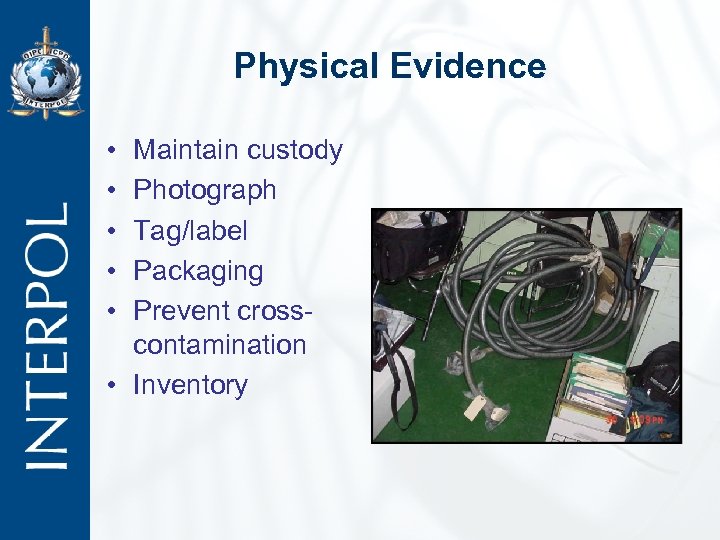 Physical Evidence • • • Maintain custody Photograph Tag/label Packaging Prevent crosscontamination • Inventory
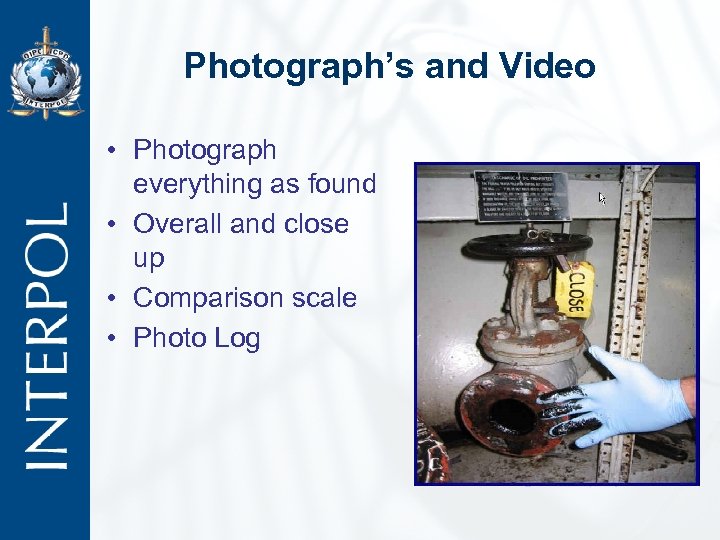 Photograph’s and Video • Photograph everything as found • Overall and close up • Comparison scale • Photo Log
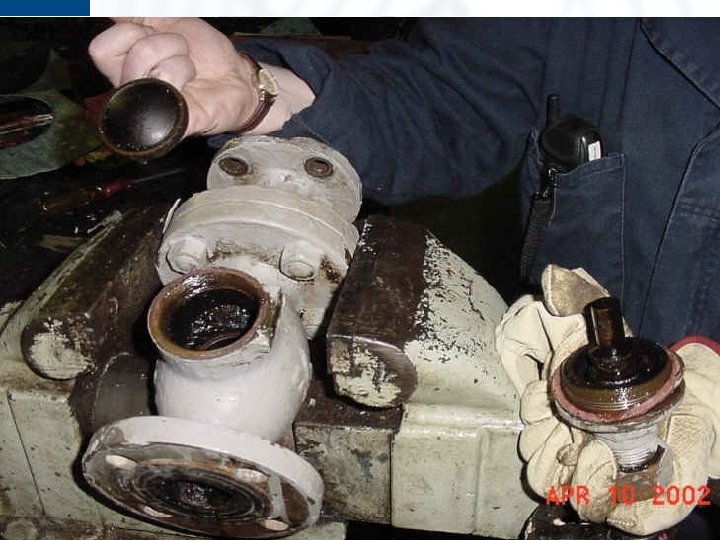
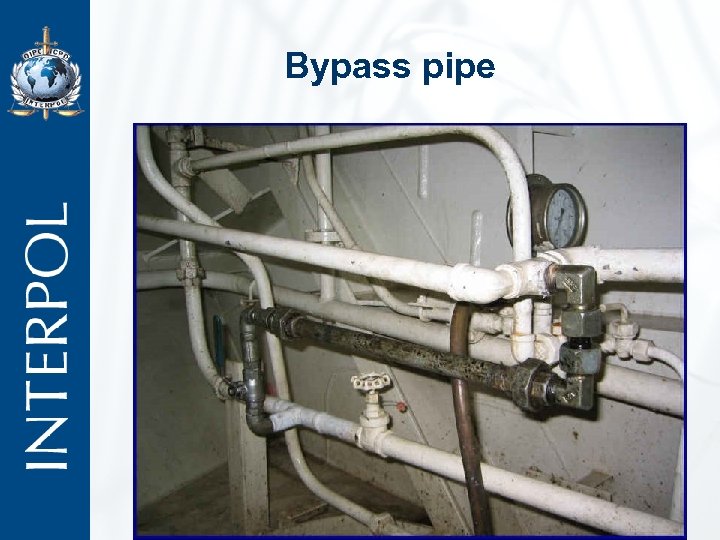 Bypass pipe
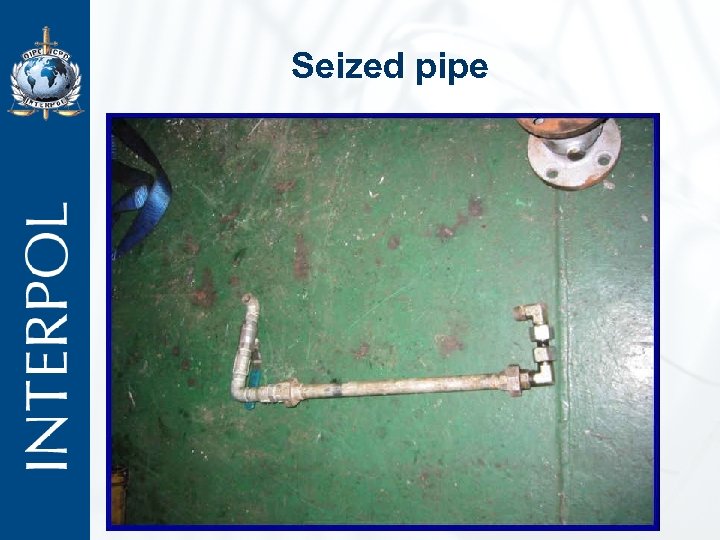 Seized pipe
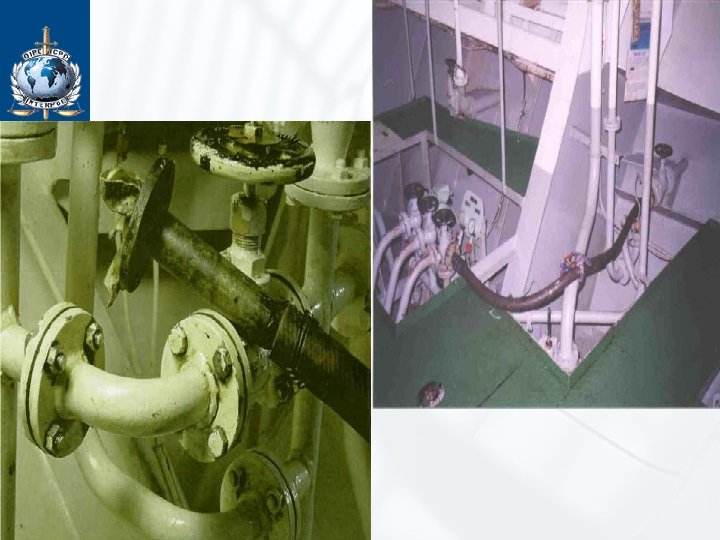
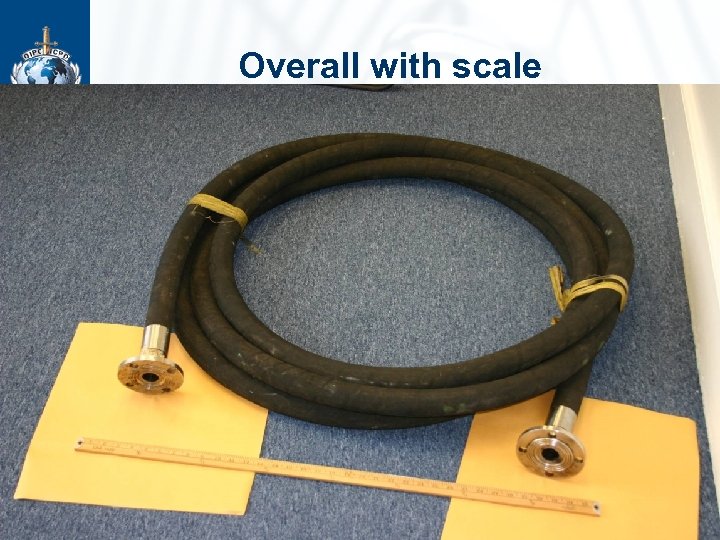 Overall with scale
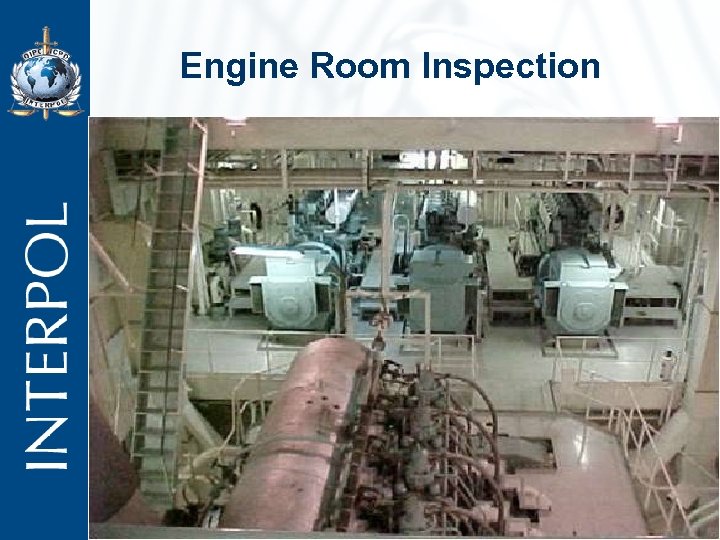 Engine Room Inspection
 Documentation Assessment The documentation collected should be examined in detail including: • Analysis of all waste streams to determine content, volume, method of storage, capacity for storage, treatment and disposal, and estimated cost • Analysis of waste disposal records • Comparison to volumes purchased • Scheduling of routine maintenance • Identification of equipment and procedures necessary to maintain systems and account for aging • Examination of Logs for recording waste streams and oil to sea interfaces • Identification of procedures for routine use of bilge/ballast crossovers and blind flanges • Discovery of any communication between shore management and line engineers and lower level crew members • Identification of environmental component in routine shipboard and safety meetings
 Engine Room Inspection • PSCO Familiarity with General Arrangements Drawing or Plan • Engine room and machinery spaces • Designated Responsibilities within Engineering Department • Remember that crew will have cleaned areas prior to arrival in port • Take photographs and video footage
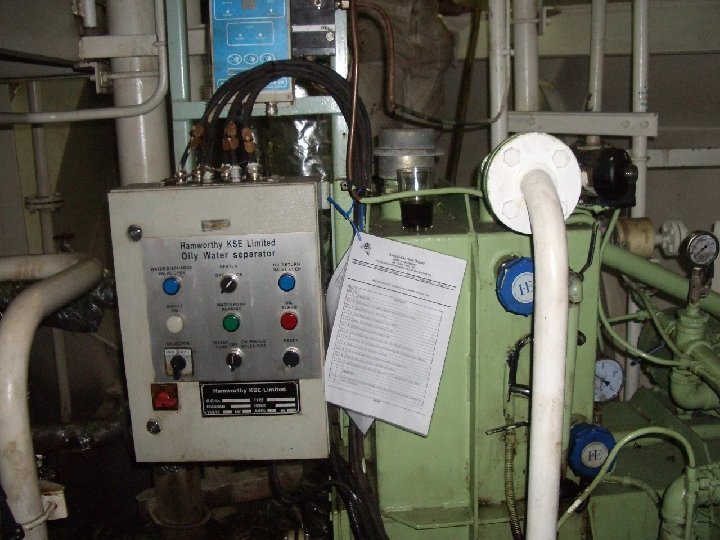
 Equipment Inspection • • • Oily water separator Oil content monitor Overboard discharge valve Incinerator Crew demonstrates familiarity with equipment/operation
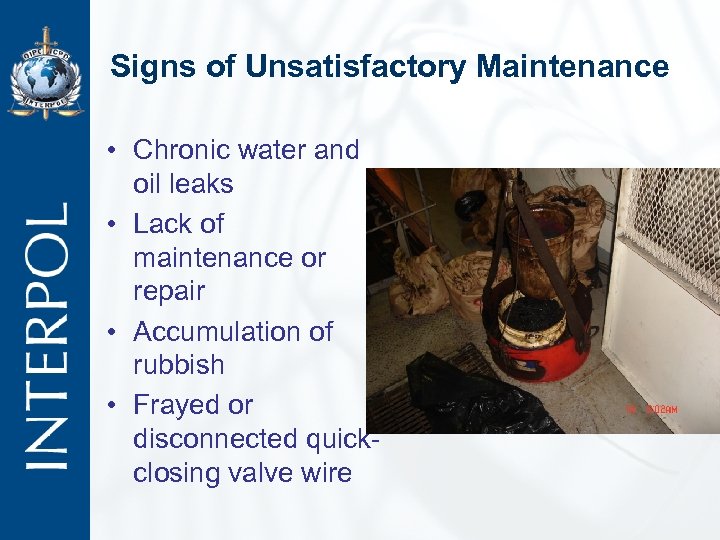 Signs of Unsatisfactory Maintenance • Chronic water and oil leaks • Lack of maintenance or repair • Accumulation of rubbish • Frayed or disconnected quickclosing valve wire
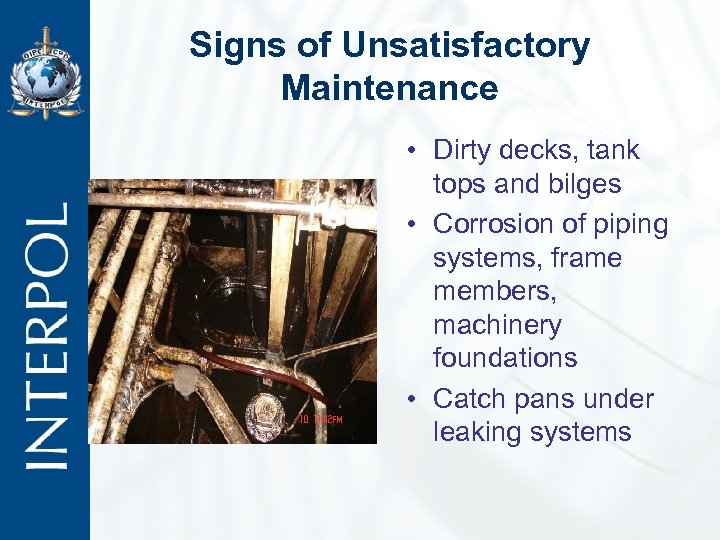 Signs of Unsatisfactory Maintenance • Dirty decks, tank tops and bilges • Corrosion of piping systems, frame members, machinery foundations • Catch pans under leaking systems
 Signs of Concealment of Violations • • Fresh paint Bolt heads without paint Hoses or pipes with flanged ends Visible traces of oil consistent with discharge
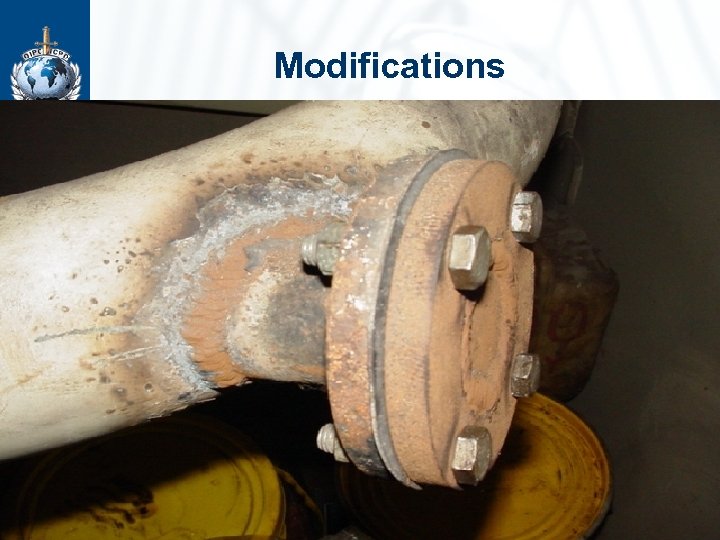 Modifications
 Questions?