



 Inventions and inventors
 The aim of the lesson: To learn about some famous scientists and their contribution to the world science 2. To practice lexical vocabulary in dialogues and short monologues 3. To encourage students to gain knowledge to become a useful person for society 1.
 Science is organized knowledge. Wisdom is organized life. The important thing in science is not so much to obtain new facts as to discover new ways of thinking about them.
 One hundred yeas ago did people… 1. 2. 3. 4. 5. 6. 7. 8. Drive cars? Ride bicycles? Watch TV? Take photos? Travel by train? Make telephone calls? Speak on mobile phone? Travel by plane?
 One hundred yeas ago did people… 1. 2. 3. 4. 5. 6. 7. Wear jeans? Use computers? Use CD? Use anaesthetics? Use artificial heart? Use X-ray? Fly by helicopter?
 Match 1. 2. 3. 4. 5. To discover: a) to make better To research: b) the act of giving smth for common purpose To invent: c) to investigate facts or principles or to collect the information To improve: d) to create smth new Contribution: e)to be the first to find out about smth
 Match 1. 2. 3. 4. 5. To promote: a) using the latest technology Achievement: b) to stimulate someone to do smth Technology: c) a gradual development to a more complex form Technology: d) knowledge and theories about the world which are based on facts and experiments High – tech: e) the use of scientific knowledge and discoveries to develop new machines and systems
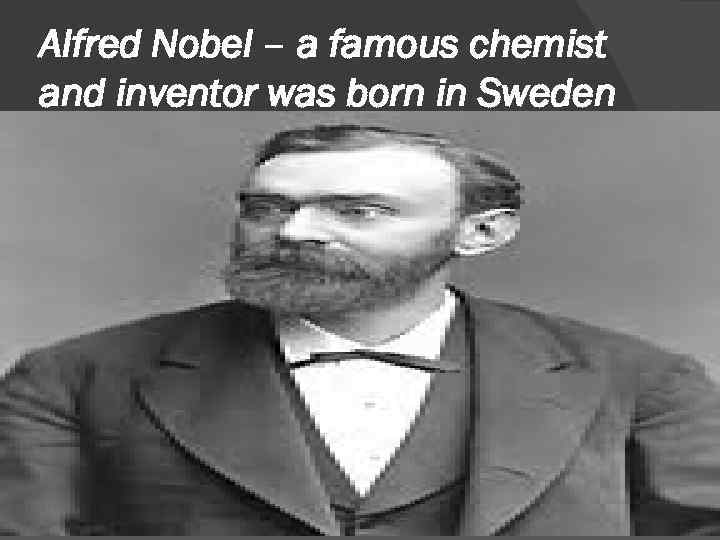 Alfred Nobel – a famous chemist and inventor was born in Sweden
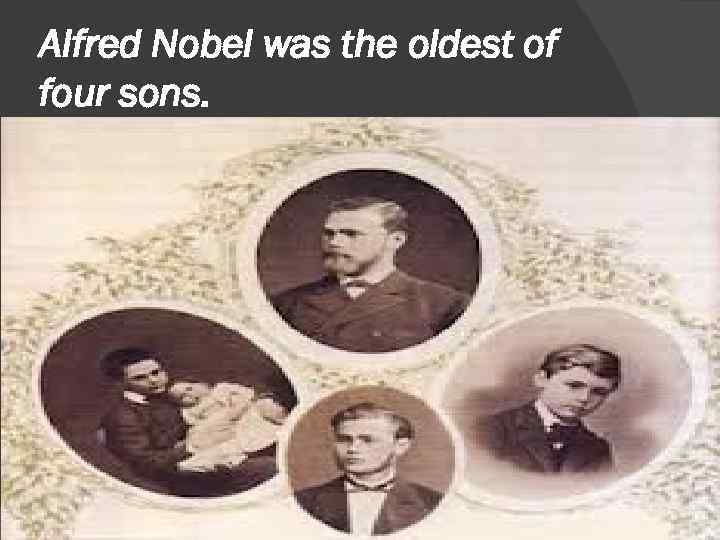 Alfred Nobel was the oldest of four sons.
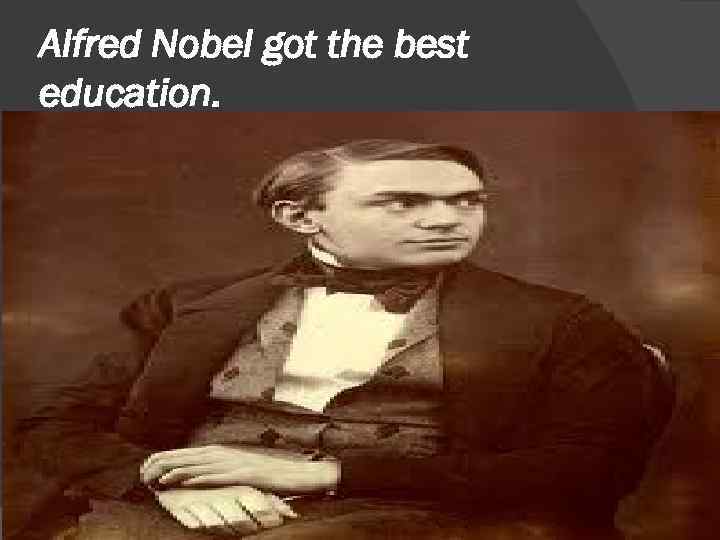 Alfred Nobel got the best education.
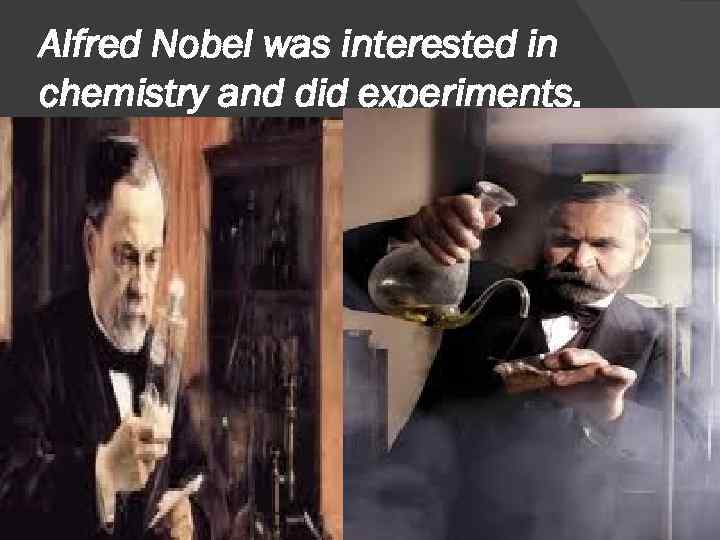 Alfred Nobel was interested in chemistry and did experiments.
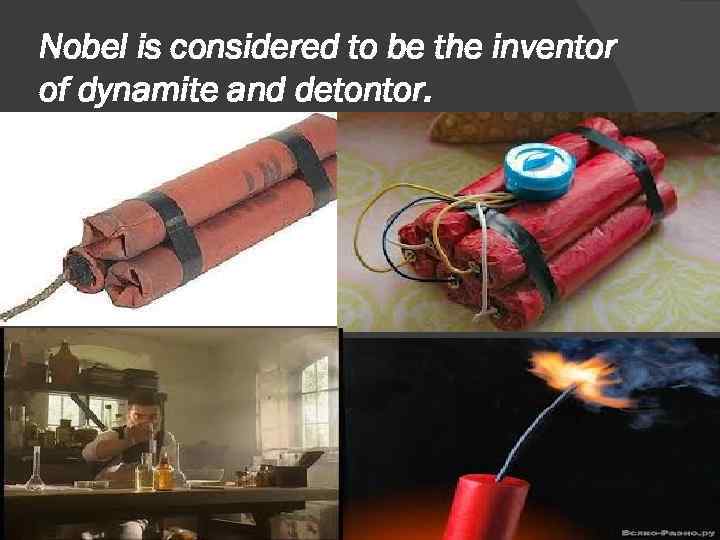 Nobel is considered to be the inventor of dynamite and detontor.
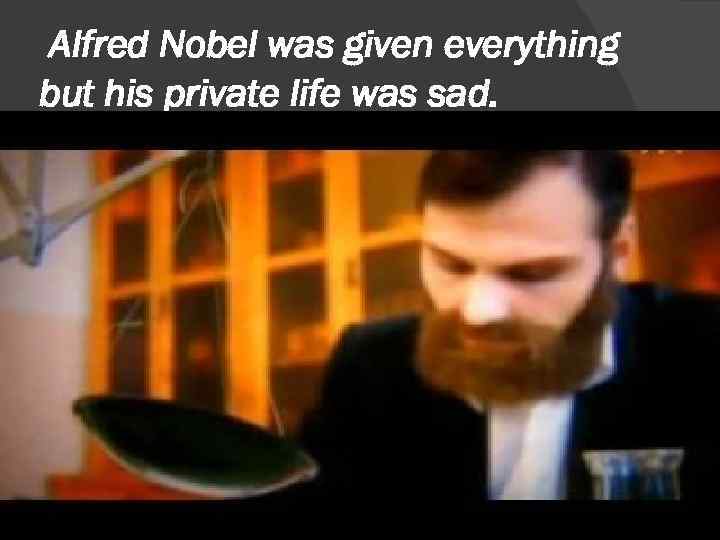 Alfred Nobel was given everything but his private life was sad.
 Testament
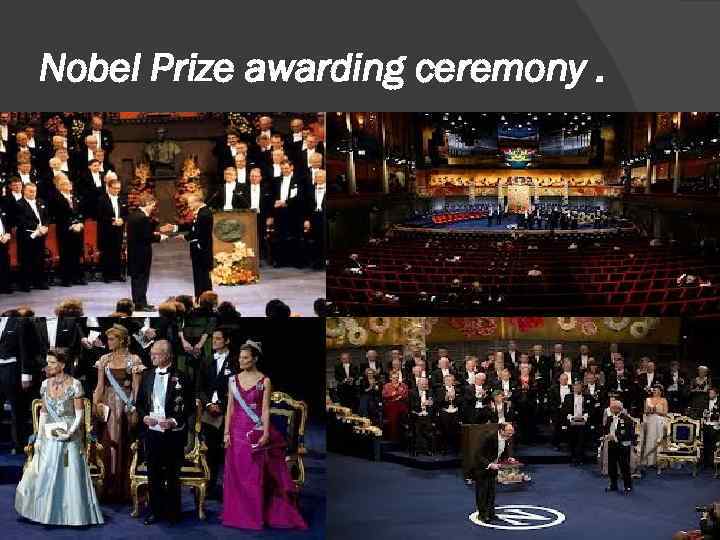 Nobel Prize awarding ceremony.
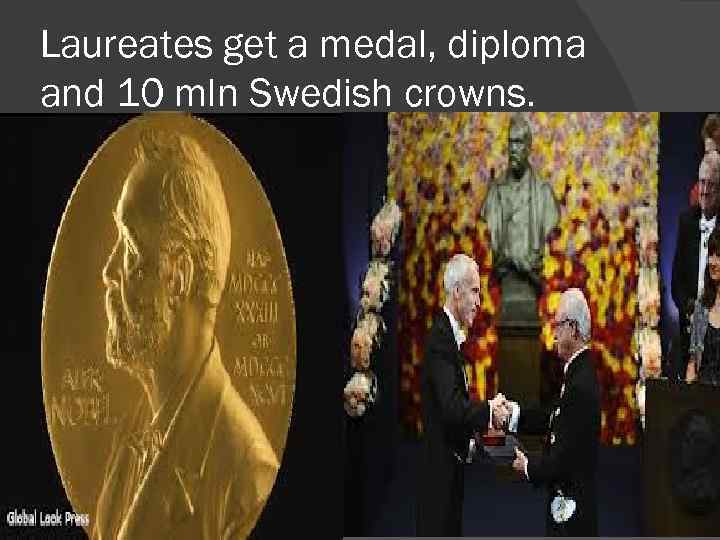 Laureates get a medal, diploma and 10 mln Swedish crowns.
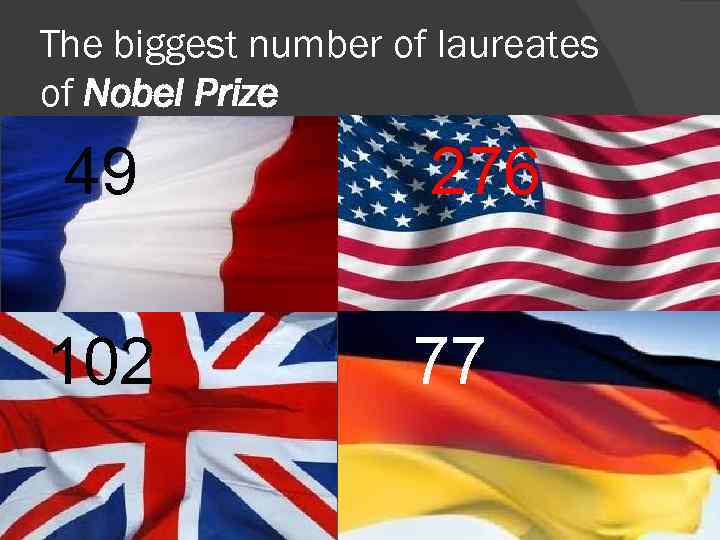 The biggest number of laureates of Nobel Prize 49 276 102 77