 Скачать презентацию Introduction to z OS Basics Chapter 2 A Hardware
c0022d203a5194ba4fcd28086fdb0383.ppt
- Количество слайдов: 54



Introduction to z/OS Basics Chapter 2 A: Hardware systems and LPARs © 2009 IBM Corporation
Chapter 2 A z. Series Hardware Objectives § In this chapter you will learn: – About S/360 and z. Series hardware design – Mainframe terminology – Hardware componentry – About processing units and disk hardware – How mainframes differ from PC systems in data encoding – About some typical hardware configurations 2 © 2006 IBM Corporation
Chapter 2 A z. Series Hardware Introduction § Here we look at the hardware in a complete system although the emphasis is on the processor “box” § Terminology is not straightforward – Ever since “boxes” became multi-engined, the terms system, processor, and CPU have become muddled 3 © 2006 IBM Corporation
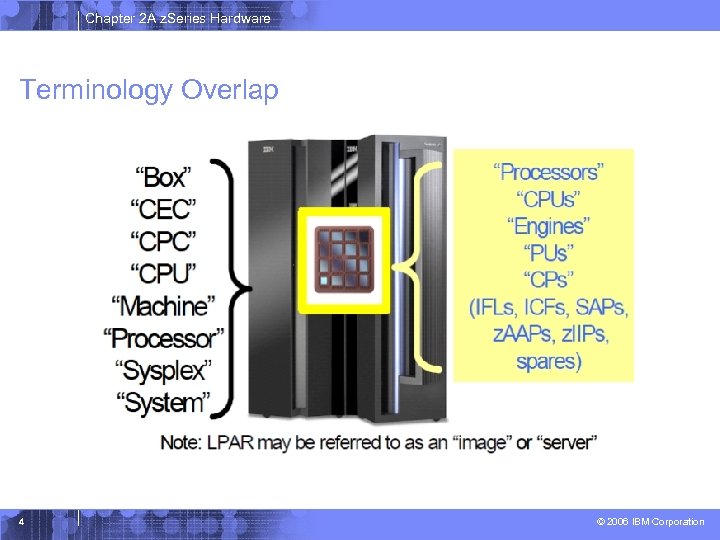
Chapter 2 A z. Series Hardware Terminology Overlap 4 © 2006 IBM Corporation
Chapter 2 A z. Series Hardware Early system design § System/360 was designed in the early 1960 s § The central processor box contains the processors, memory, control circuits and channel interfaces – Early systems had up to 16 channels whereas modern systems have 1024 (256 * 4 Logical Channel Subsystems) § Channels connect to control units § Control units connect to devices such as disk drives, tape drives and communication interfaces 5 © 2006 IBM Corporation
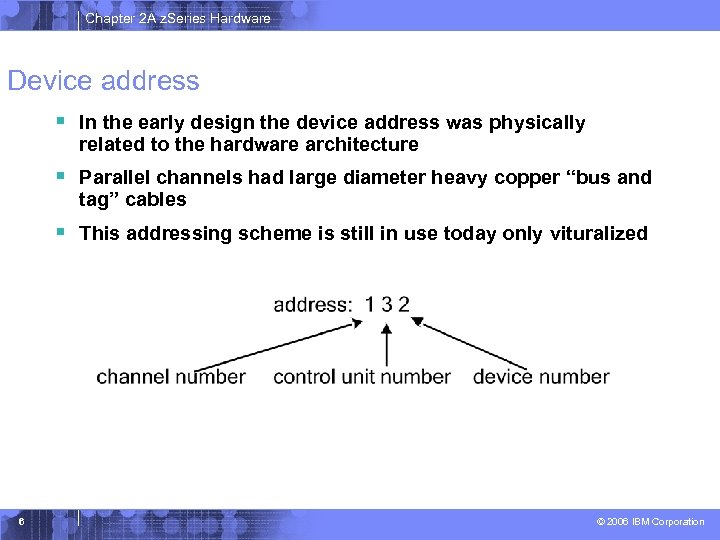
Chapter 2 A z. Series Hardware Device address § In the early design the device address was physically related to the hardware architecture § Parallel channels had large diameter heavy copper “bus and tag” cables § This addressing scheme is still in use today only vituralized 6 © 2006 IBM Corporation
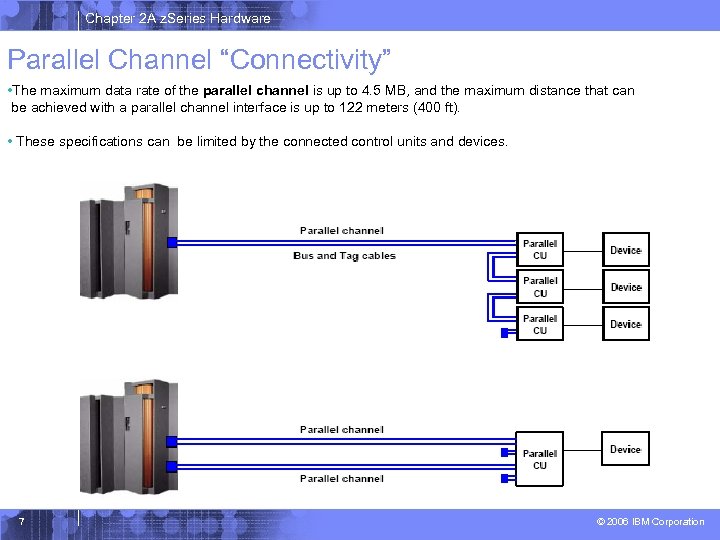
Chapter 2 A z. Series Hardware Parallel Channel “Connectivity” • The maximum data rate of the parallel channel is up to 4. 5 MB, and the maximum distance that can be achieved with a parallel channel interface is up to 122 meters (400 ft). • These specifications can be limited by the connected control units and devices. 7 © 2006 IBM Corporation
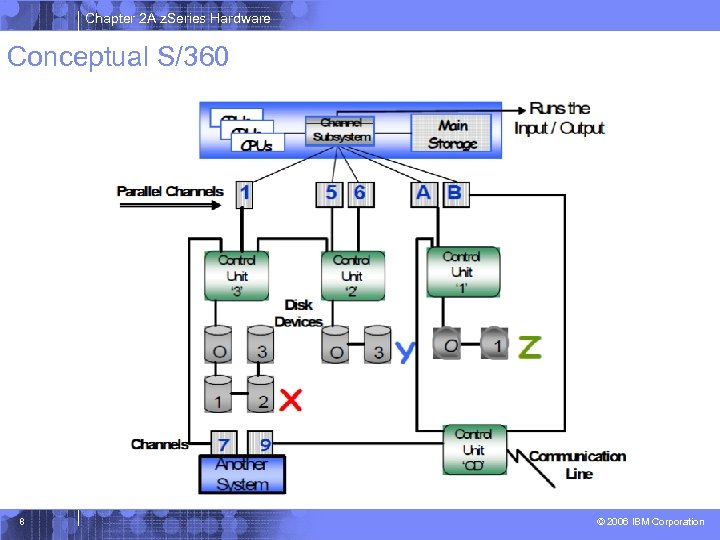
Chapter 2 A z. Series Hardware Conceptual S/360 8 © 2006 IBM Corporation
Chapter 2 A z. Series Hardware Current design § Current CEC designs are considerably more complex although modular in their architecture to allow for easy maintenance and upgrades then the early S/360 design § This new design includes: - CEC modular componentry - I/O housing - I/O connectivity - I/O operation - Partitioning of the system 9 © 2006 IBM Corporation
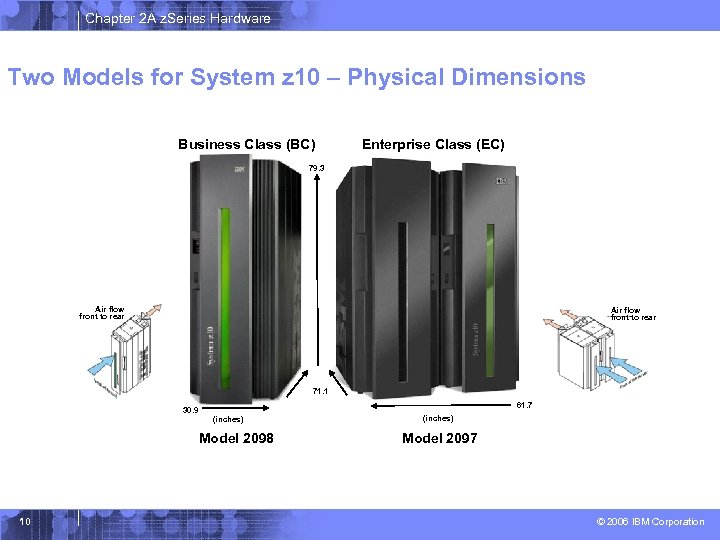
Chapter 2 A z. Series Hardware Two Models for System z 10 – Physical Dimensions Business Class (BC) Enterprise Class (EC) 79. 3 Air flow front to rear 71. 1 61. 7 30. 9 (inches) Model 2098 10 (inches) Model 2097 © 2006 IBM Corporation
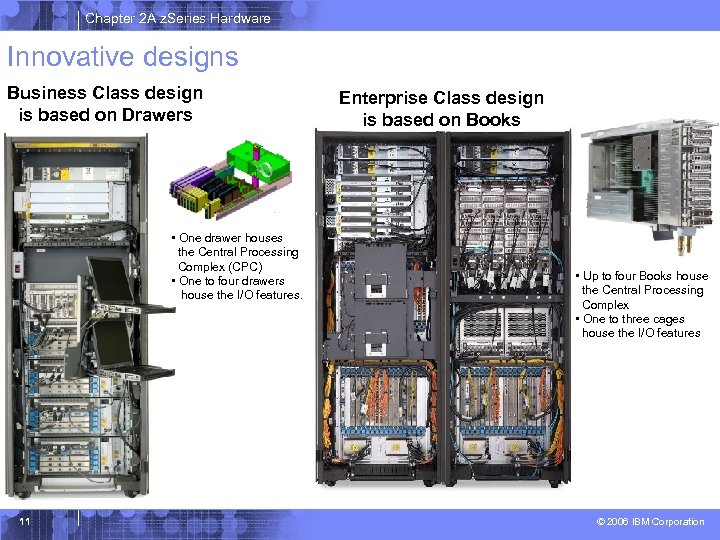
Chapter 2 A z. Series Hardware Innovative designs Business Class design is based on Drawers • One drawer houses the Central Processing Complex (CPC) • One to four drawers house the I/O features. 11 Enterprise Class design is based on Books • Up to four Books house the Central Processing Complex • One to three cages house the I/O features © 2006 IBM Corporation
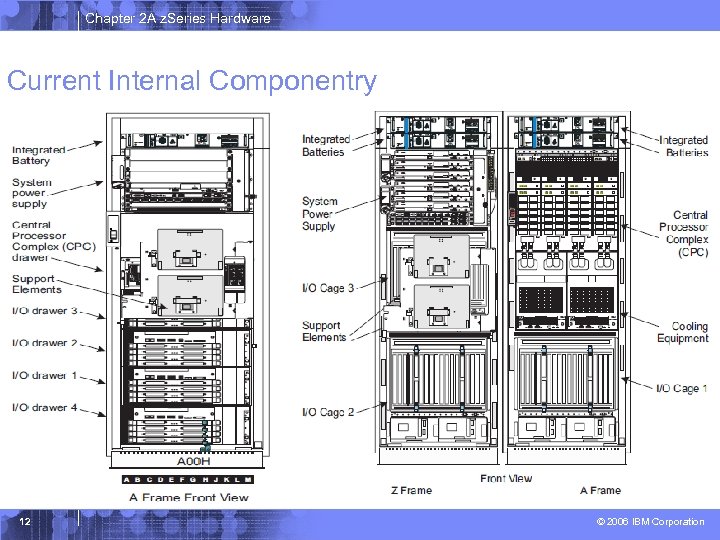
Chapter 2 A z. Series Hardware Current Internal Componentry 12 © 2006 IBM Corporation
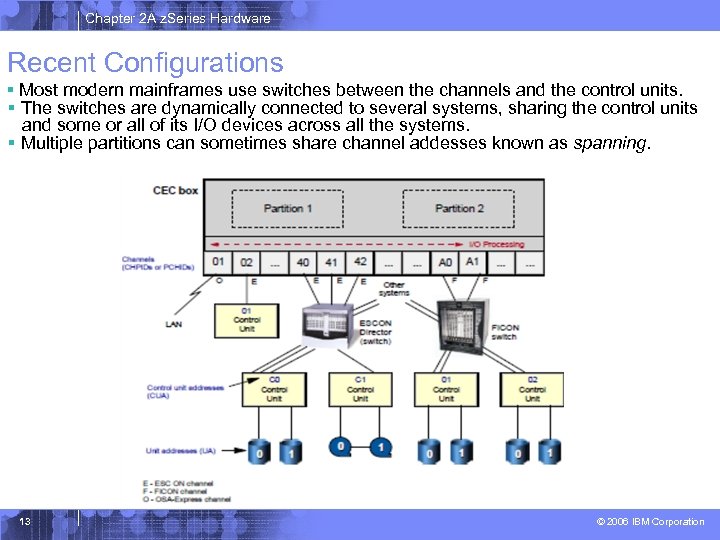
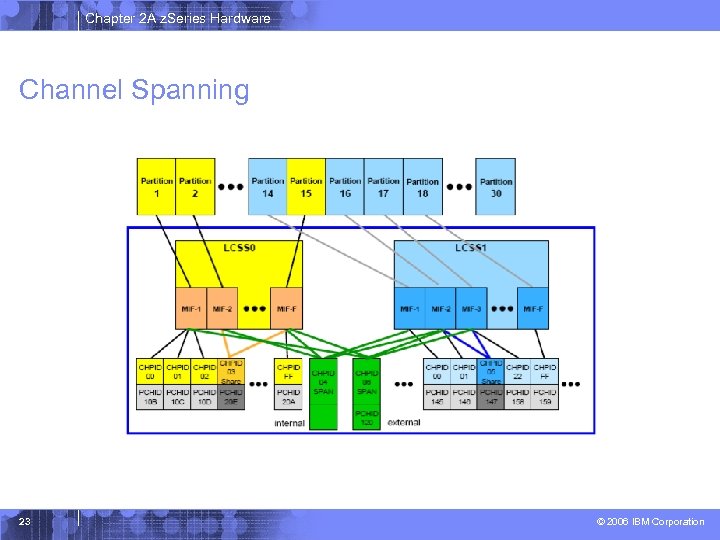
Chapter 2 A z. Series Hardware Recent Configurations § Most modern mainframes use switches between the channels and the control units. § The switches are dynamically connected to several systems, sharing the control units and some or all of its I/O devices across all the systems. § Multiple partitions can sometimes share channel addesses known as spanning. 13 © 2006 IBM Corporation
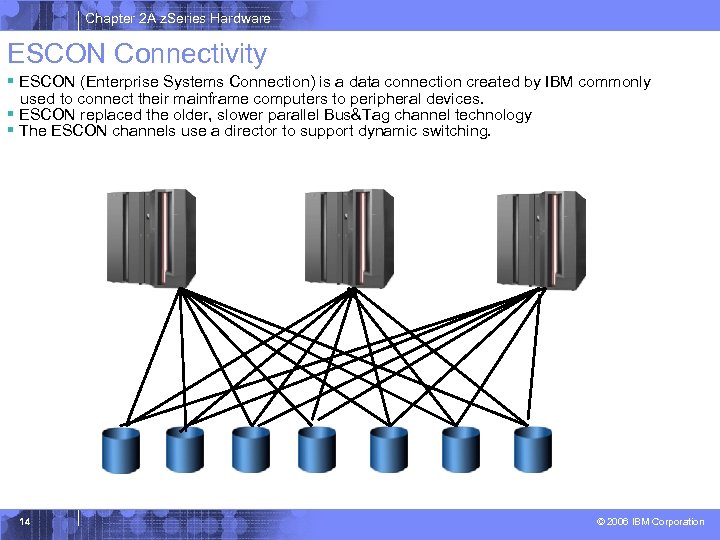
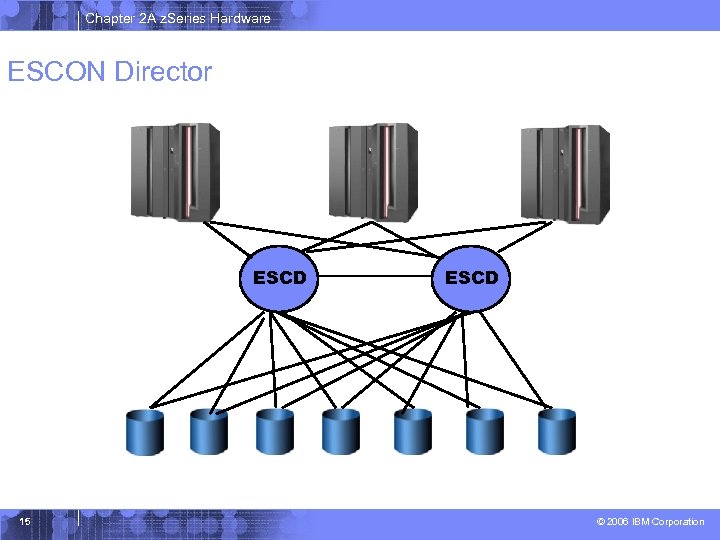
Chapter 2 A z. Series Hardware ESCON Connectivity § ESCON (Enterprise Systems Connection) is a data connection created by IBM commonly used to connect their mainframe computers to peripheral devices. § ESCON replaced the older, slower parallel Bus&Tag channel technology § The ESCON channels use a director to support dynamic switching. 14 © 2006 IBM Corporation
Chapter 2 A z. Series Hardware ESCON Director ESCD 15 ESCD © 2006 IBM Corporation
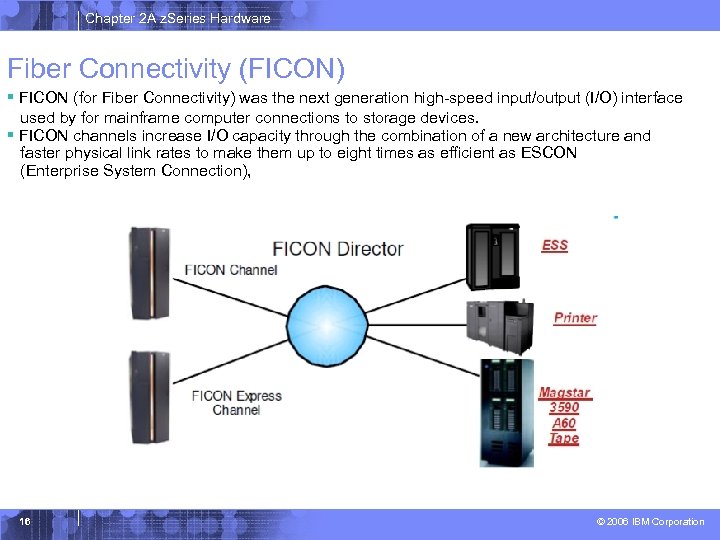
Chapter 2 A z. Series Hardware Fiber Connectivity (FICON) § FICON (for Fiber Connectivity) was the next generation high-speed input/output (I/O) interface used by for mainframe computer connections to storage devices. § FICON channels increase I/O capacity through the combination of a new architecture and faster physical link rates to make them up to eight times as efficient as ESCON (Enterprise System Connection), 16 © 2006 IBM Corporation
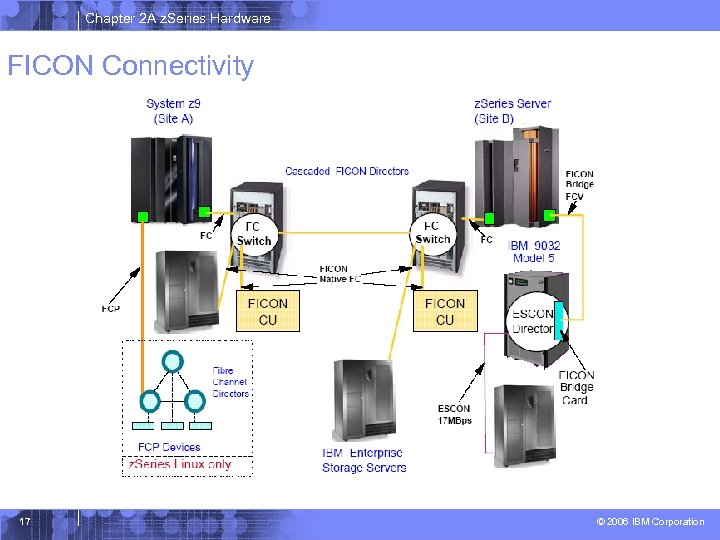
Chapter 2 A z. Series Hardware FICON Connectivity 17 © 2006 IBM Corporation
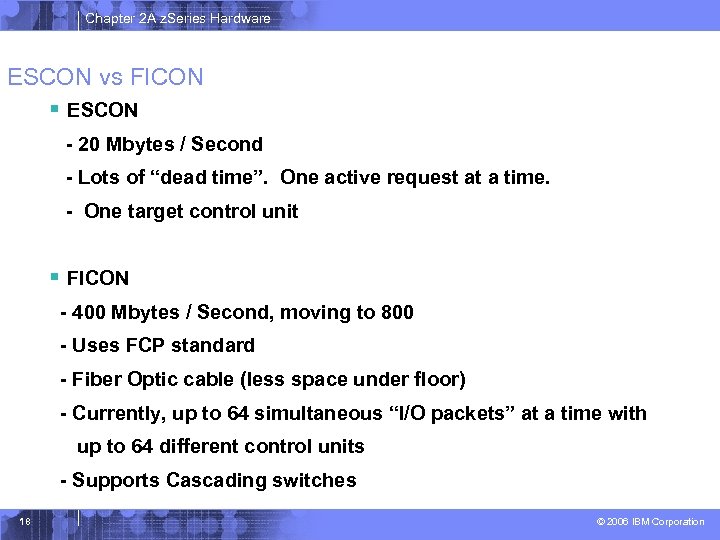
Chapter 2 A z. Series Hardware ESCON vs FICON § ESCON - 20 Mbytes / Second - Lots of “dead time”. One active request at a time. - One target control unit § FICON - 400 Mbytes / Second, moving to 800 - Uses FCP standard - Fiber Optic cable (less space under floor) - Currently, up to 64 simultaneous “I/O packets” at a time with up to 64 different control units - Supports Cascading switches 18 © 2006 IBM Corporation
Chapter 2 A z. Series Hardware System z I/O Connectivity § § § 19 ESCON and FICON channels Switches to connect peripheral devices to more than one CEC CHPID addresses are two hex digits (FF / 256) Multiple partitions can share CHPIDs (MIF) I/O subsystem layer exists between the operating system and the CHPIDs © 2006 IBM Corporation
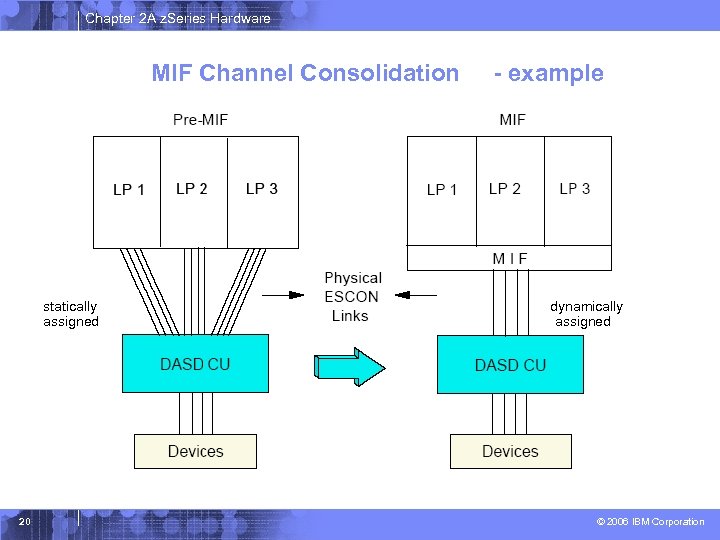
Chapter 2 A z. Series Hardware MIF Channel Consolidation statically assigned 20 - example dynamically assigned © 2006 IBM Corporation
Chapter 2 A z. Series Hardware I/O Connectivity Addressing and Definitions § I/O control layer uses a control file IOCDS that translates physical I/O addresses into devices numbers that are used by z/OS § Device numbers are assigned by the system programmer when creating the IODF and IOCDS and are arbitrary (but not random!) § On modern machines they are three or four hex digits example - FFFF = 64 K devices can be defined § The ability to have dynamic addressing theoretically 7, 848, 900 maximum number of devices can be attached. 21 © 2006 IBM Corporation
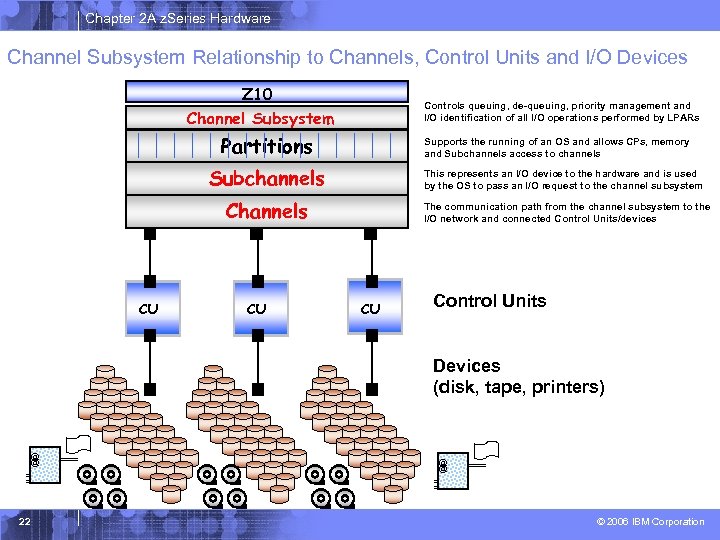
Chapter 2 A z. Series Hardware Channel Subsystem Relationship to Channels, Control Units and I/O Devices Z 10 Channel Subsystem Controls queuing, de-queuing, priority management and I/O identification of all I/O operations performed by LPARs Partitions Supports the running of an OS and allows CPs, memory and Subchannels access to channels Subchannels This represents an I/O device to the hardware and is used by the OS to pass an I/O request to the channel subsystem Channels CU CU The communication path from the channel subsystem to the I/O network and connected Control Units/devices CU Control Units Devices (disk, tape, printers) @ @ = = 22 @ @ = = © 2006 IBM Corporation
Chapter 2 A z. Series Hardware Channel Spanning 23 © 2006 IBM Corporation
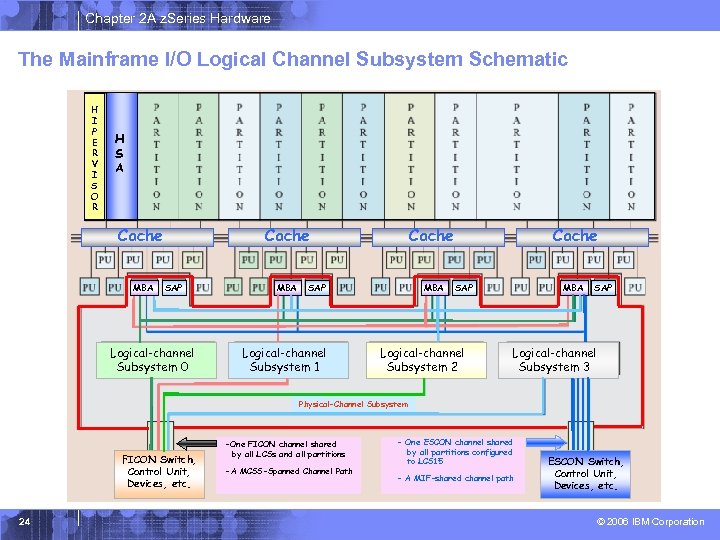
Chapter 2 A z. Series Hardware The Mainframe I/O Logical Channel Subsystem Schematic H I P E R V I S O R H S A Cache MBA Cache SAP Logical-channel Subsystem 0 Cache MBA SAP Logical-channel Subsystem 1 Cache MBA SAP Logical-channel Subsystem 2 SAP Logical-channel Subsystem 3 Physical-Channel Subsystem FICON Switch, Control Unit, Devices, etc. 24 -One FICON channel shared by all LCSs and all partitions -A MCSS-Spanned Channel Path - One ESCON channel shared by all partitions configured to LCS 15 - A MIF-shared channel path ESCON Switch, Control Unit, Devices, etc. © 2006 IBM Corporation
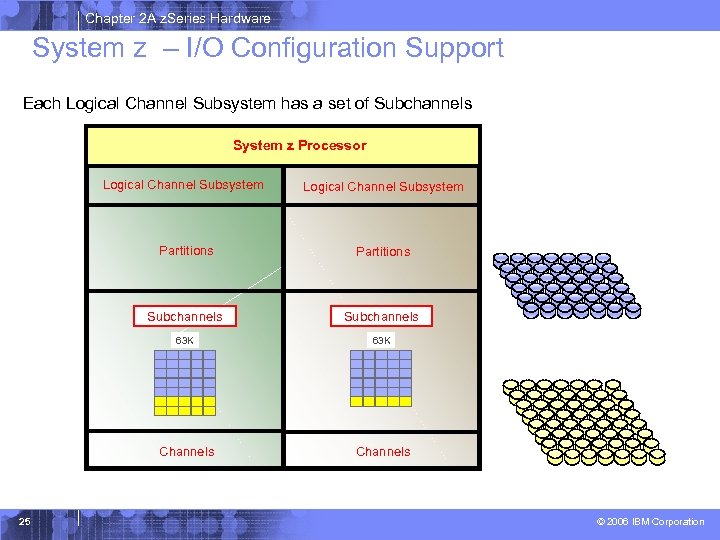
Chapter 2 A z. Series Hardware System z – I/O Configuration Support Each Logical Channel Subsystem has a set of Subchannels System z Processor Logical Channel Subsystem Partitions Subchannels 63 K Channels 25 Logical Channel Subsystem Channels © 2006 IBM Corporation
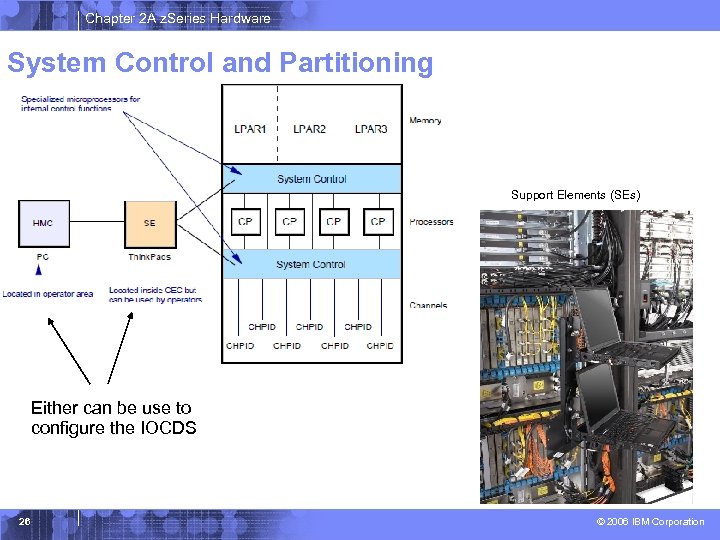
Chapter 2 A z. Series Hardware System Control and Partitioning Support Elements (SEs) Either can be use to configure the IOCDS 26 © 2006 IBM Corporation
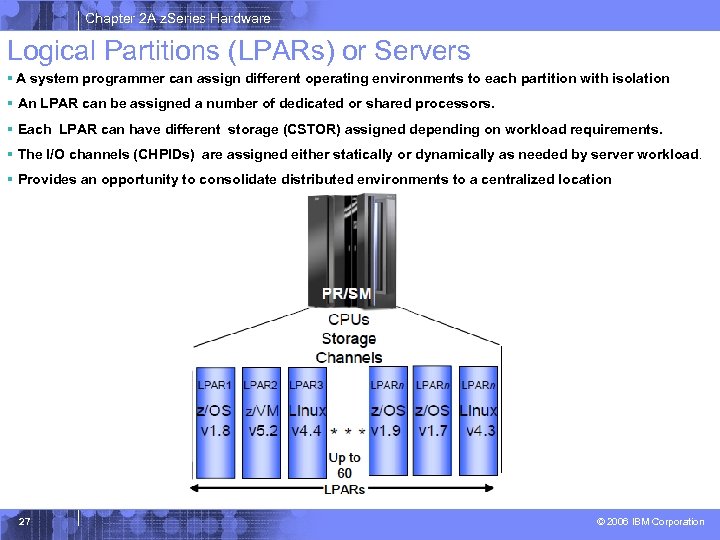
Chapter 2 A z. Series Hardware Logical Partitions (LPARs) or Servers § A system programmer can assign different operating environments to each partition with isolation § An LPAR can be assigned a number of dedicated or shared processors. § Each LPAR can have different storage (CSTOR) assigned depending on workload requirements. § The I/O channels (CHPIDs) are assigned either statically or dynamically as needed by server workload. § Provides an opportunity to consolidate distributed environments to a centralized location 27 © 2006 IBM Corporation
Chapter 2 A z. Series Hardware Characteristics of LPARs § LPARs are the equivalent of a separate mainframe for most practical purposes § § Each LPAR runs its own operating system Devices can be shared across several LPARs Processors can be dedicated or shared When shared each LPAR is assigned a number of logical processors (up to the maximum number of physical processors) § Each LPAR is independent 28 © 2006 IBM Corporation
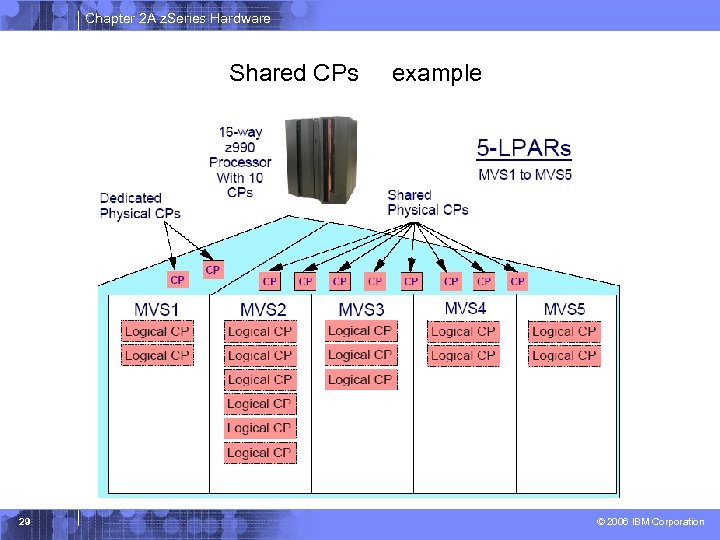
Chapter 2 A z. Series Hardware Shared CPs 29 example © 2006 IBM Corporation
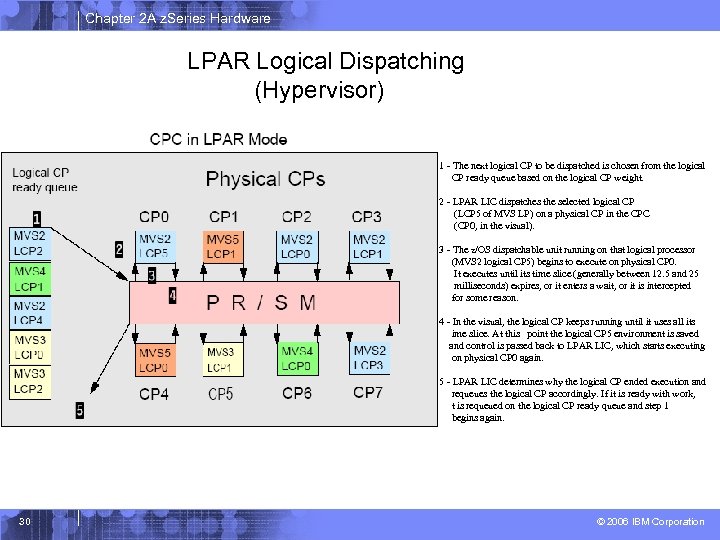
Chapter 2 A z. Series Hardware LPAR Logical Dispatching (Hypervisor) 1 - The next logical CP to be dispatched is chosen from the logical CP ready queue based on the logical CP weight. 2 - LPAR LIC dispatches the selected logical CP (LCP 5 of MVS LP) on a physical CP in the CPC (CP 0, in the visual). 3 - The z/OS dispatchable unit running on that logical processor (MVS 2 logical CP 5) begins to execute on physical CP 0. It executes until its time slice (generally between 12. 5 and 25 milliseconds) expires, or it enters a wait, or it is intercepted for some reason. 4 - In the visual, the logical CP keeps running until it uses all its ime slice. At this point the logical CP 5 environment is saved and control is passed back to LPAR LIC, which starts executing on physical CP 0 again. 5 - LPAR LIC determines why the logical CP ended execution and requeues the logical CP accordingly. If it is ready with work, t is requeued on the logical CP ready queue and step 1 begins again. 30 © 2006 IBM Corporation
Chapter 2 A z. Series Hardware LPAR Summary § System administrators assign: – Memory – Processors – CHPIDs either dedicated or shared § This is done partly in the IOCDS and partly in a system profile on the Support Element (SE) in the CEC. This is normally updated through the HMC. § Changing the system profile and IOCDS will usually require a power-on reset (POR) but some changes are dynamic 31 © 2006 IBM Corporation
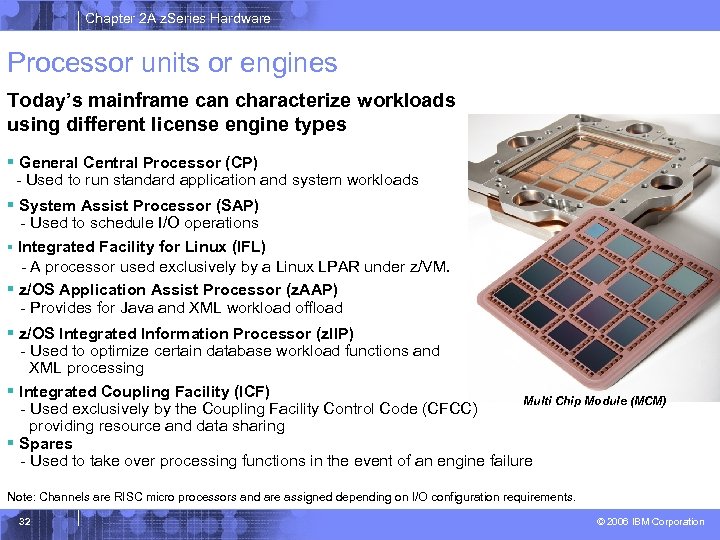
Chapter 2 A z. Series Hardware Processor units or engines Today’s mainframe can characterize workloads using different license engine types § General Central Processor (CP) - Used to run standard application and system workloads § System Assist Processor (SAP) - Used to schedule I/O operations § Integrated Facility for Linux (IFL) - A processor used exclusively by a Linux LPAR under z/VM. § z/OS Application Assist Processor (z. AAP) - Provides for Java and XML workload offload § z/OS Integrated Information Processor (z. IIP) - Used to optimize certain database workload functions and XML processing § Integrated Coupling Facility (ICF) Multi Chip Module (MCM) - Used exclusively by the Coupling Facility Control Code (CFCC) providing resource and data sharing § Spares - Used to take over processing functions in the event of an engine failure Note: Channels are RISC micro processors and are assigned depending on I/O configuration requirements. 32 © 2006 IBM Corporation
Chapter 2 A z. Series Hardware Capacity on Demand § Various forms of Capacity on Demand exist § Additional processing power to meet unexpected growth or sudden demand peaks § § 33 CBU – Capacity Back Up CUo. D – On/Off Capacity Upgrade on Demand Sub. Capacity Licensing Charges LPAR CPU Management (IRD) © 2006 IBM Corporation
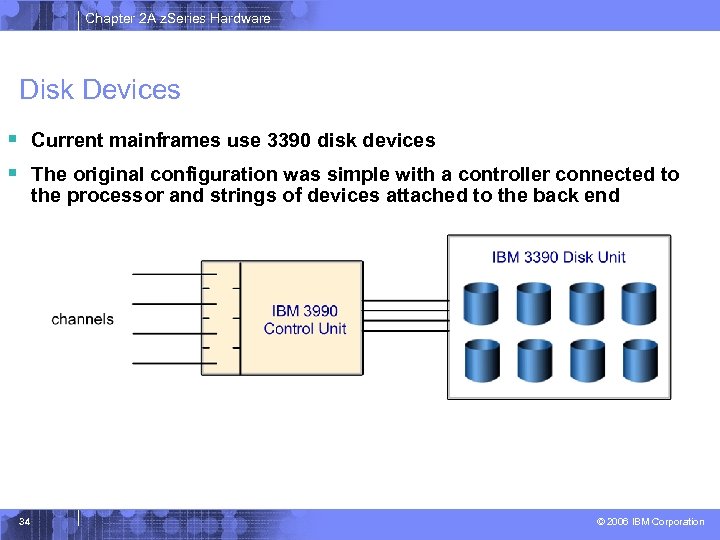
Chapter 2 A z. Series Hardware Disk Devices § Current mainframes use 3390 disk devices § The original configuration was simple with a controller connected to the processor and strings of devices attached to the back end 34 © 2006 IBM Corporation
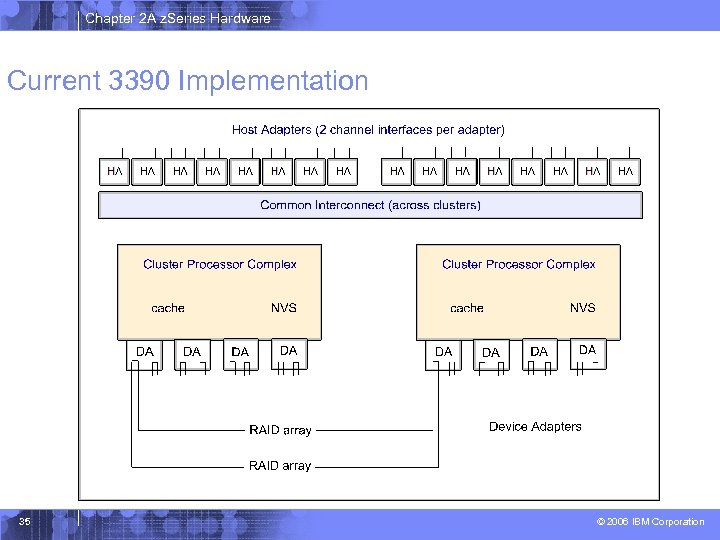
Chapter 2 A z. Series Hardware Current 3390 Implementation 35 © 2006 IBM Corporation
Chapter 2 A z. Series Hardware Modern 3390 devices § The DS 8000 2105 Enterprise Storage Server just shown is very sophisticated § It emulates a large number of control units and 3390 disks. It can also be partitioned and connect to UNIX and other systems as SCSI devices. § There are 11 196 TB of disk space up to 32 channel interfaces, 16 256 GB cache and 284 MB of non-volatile memory 36 © 2006 IBM Corporation
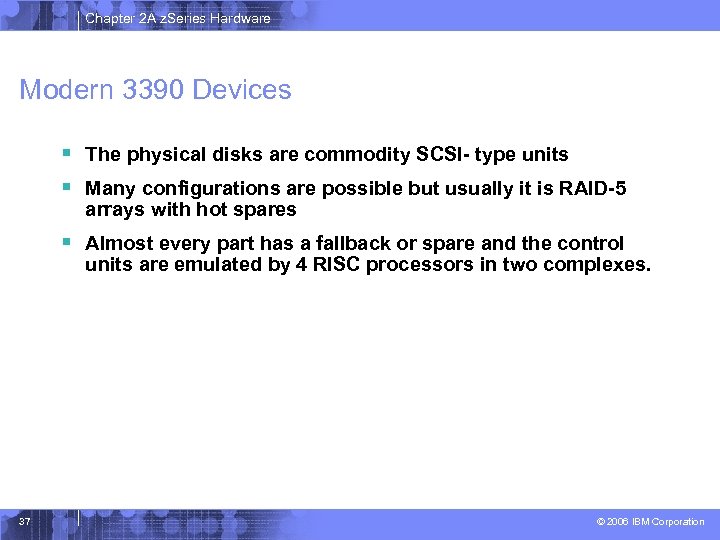
Chapter 2 A z. Series Hardware Modern 3390 Devices § The physical disks are commodity SCSI- type units § Many configurations are possible but usually it is RAID-5 arrays with hot spares § Almost every part has a fallback or spare and the control units are emulated by 4 RISC processors in two complexes. 37 © 2006 IBM Corporation
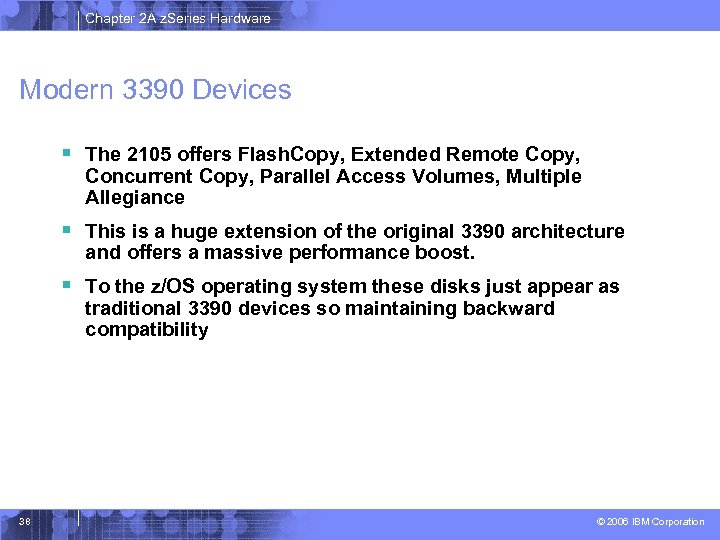
Chapter 2 A z. Series Hardware Modern 3390 Devices § The 2105 offers Flash. Copy, Extended Remote Copy, Concurrent Copy, Parallel Access Volumes, Multiple Allegiance § This is a huge extension of the original 3390 architecture and offers a massive performance boost. § To the z/OS operating system these disks just appear as traditional 3390 devices so maintaining backward compatibility 38 © 2006 IBM Corporation
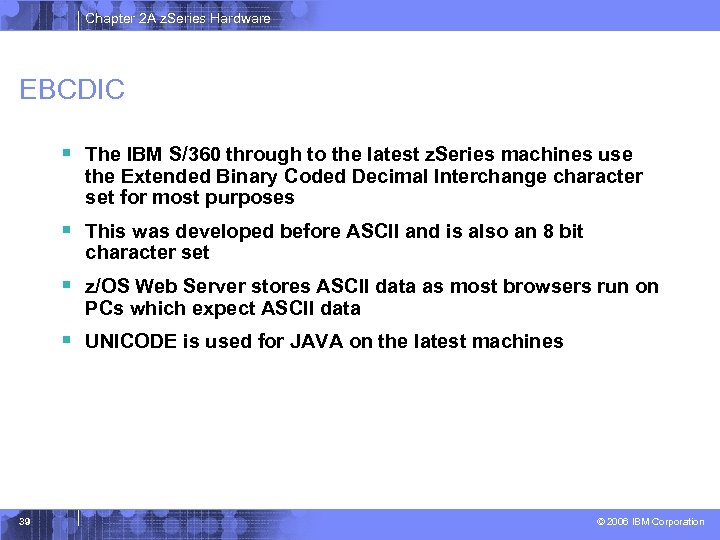
Chapter 2 A z. Series Hardware EBCDIC § The IBM S/360 through to the latest z. Series machines use the Extended Binary Coded Decimal Interchange character set for most purposes § This was developed before ASCII and is also an 8 bit character set § z/OS Web Server stores ASCII data as most browsers run on PCs which expect ASCII data § UNICODE is used for JAVA on the latest machines 39 © 2006 IBM Corporation
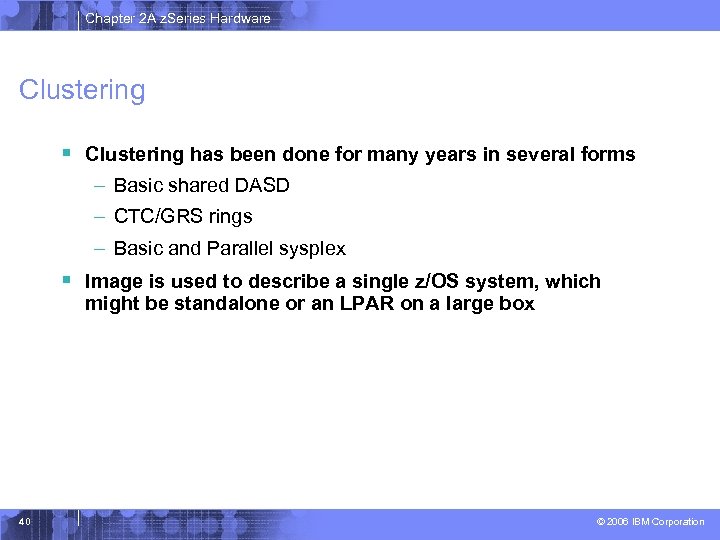
Chapter 2 A z. Series Hardware Clustering § Clustering has been done for many years in several forms – Basic shared DASD – CTC/GRS rings – Basic and Parallel sysplex § Image is used to describe a single z/OS system, which might be standalone or an LPAR on a large box 40 © 2006 IBM Corporation
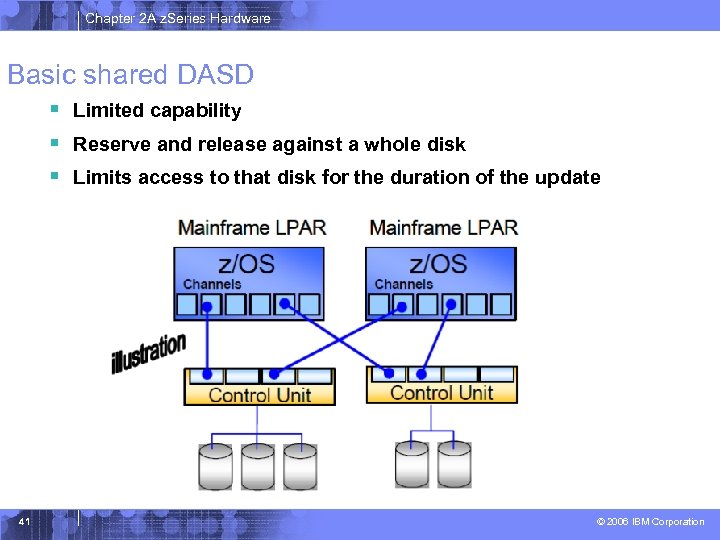
Chapter 2 A z. Series Hardware Basic shared DASD § Limited capability § Reserve and release against a whole disk § Limits access to that disk for the duration of the update 41 © 2006 IBM Corporation
Chapter 2 A z. Series Hardware Next few slides introduce Sysplex and Parallel Sysplex or Instructor can use Slides in Chapter 02 B for more details 42 © 2006 IBM Corporation
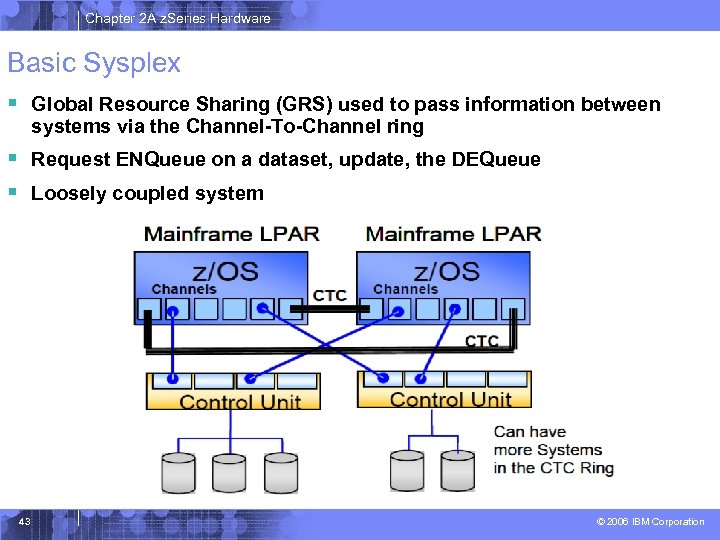
Chapter 2 A z. Series Hardware Basic Sysplex § Global Resource Sharing (GRS) used to pass information between systems via the Channel-To-Channel ring § Request ENQueue on a dataset, update, the DEQueue § Loosely coupled system 43 © 2006 IBM Corporation
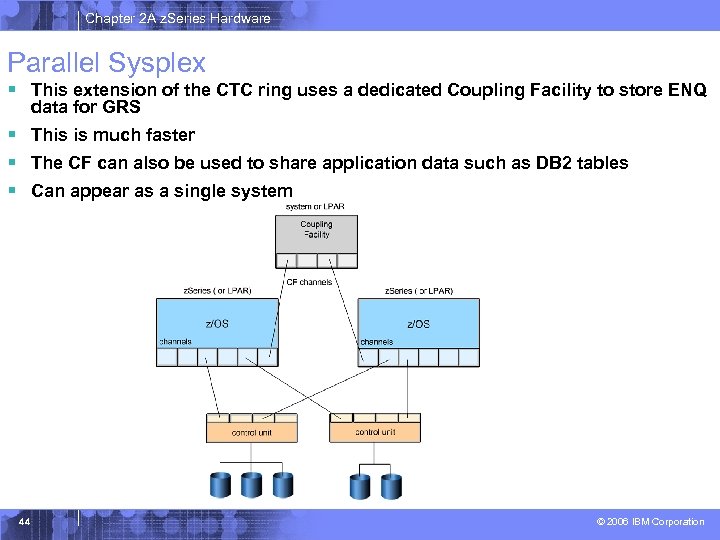
Chapter 2 A z. Series Hardware Parallel Sysplex § This extension of the CTC ring uses a dedicated Coupling Facility to store ENQ data for GRS § This is much faster § The CF can also be used to share application data such as DB 2 tables § Can appear as a single system 44 © 2006 IBM Corporation
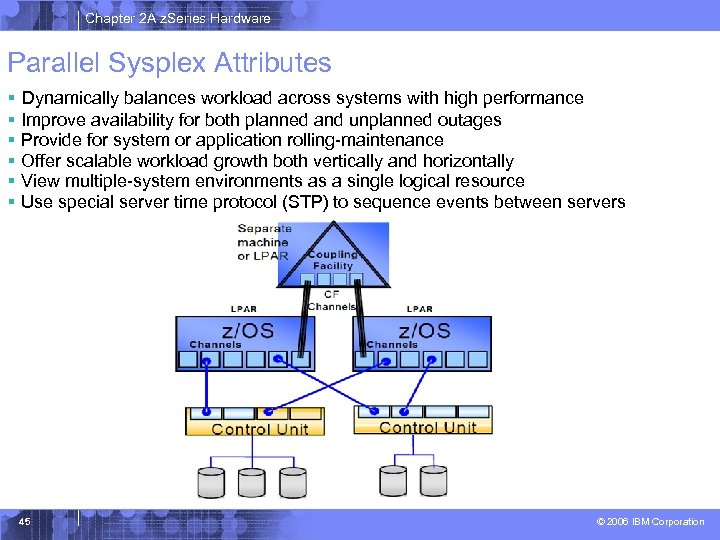
Chapter 2 A z. Series Hardware Parallel Sysplex Attributes § Dynamically balances workload across systems with high performance § Improve availability for both planned and unplanned outages § Provide for system or application rolling-maintenance § Offer scalable workload growth both vertically and horizontally § View multiple-system environments as a single logical resource § Use special server time protocol (STP) to sequence events between servers 45 © 2006 IBM Corporation
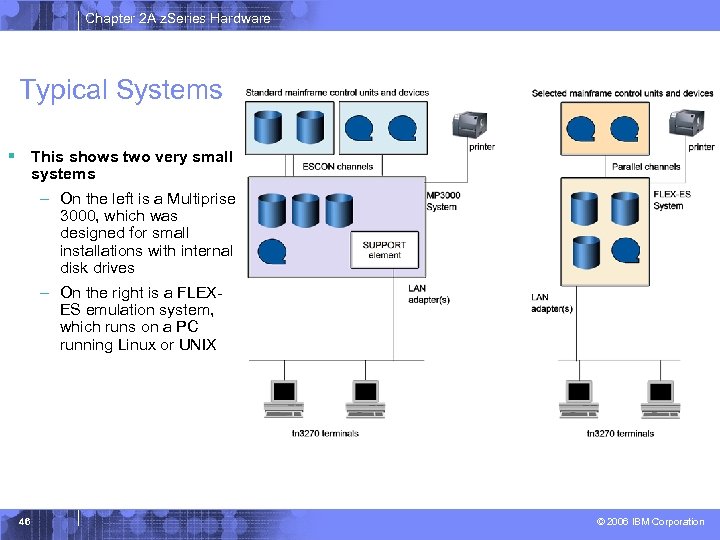
Chapter 2 A z. Series Hardware Typical Systems § This shows two very small systems – On the left is a Multiprise 3000, which was designed for small installations with internal disk drives – On the right is a FLEXES emulation system, which runs on a PC running Linux or UNIX 46 © 2006 IBM Corporation
Chapter 2 A z. Series Hardware Summary § Terminology is important § The classic S/360 design is important as all later designs have enhanced it. The concepts are still relevant § New processor types are now available to reduce software costs § EBCDIC character set § Clustering techniques and parallel sysplex 47 © 2006 IBM Corporation
Chapter 2 A z. Series Hardware Extra Slides on Hardware Management and LPAR Creation 48 © 2006 IBM Corporation
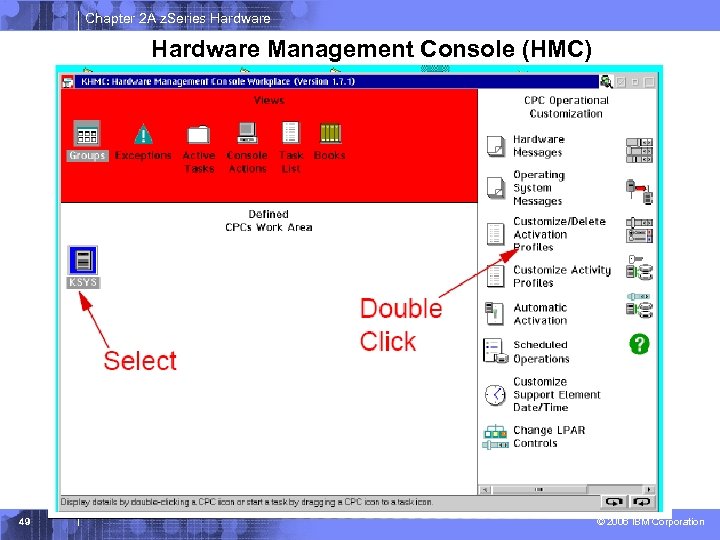
Chapter 2 A z. Series Hardware Management Console (HMC) 49 © 2006 IBM Corporation
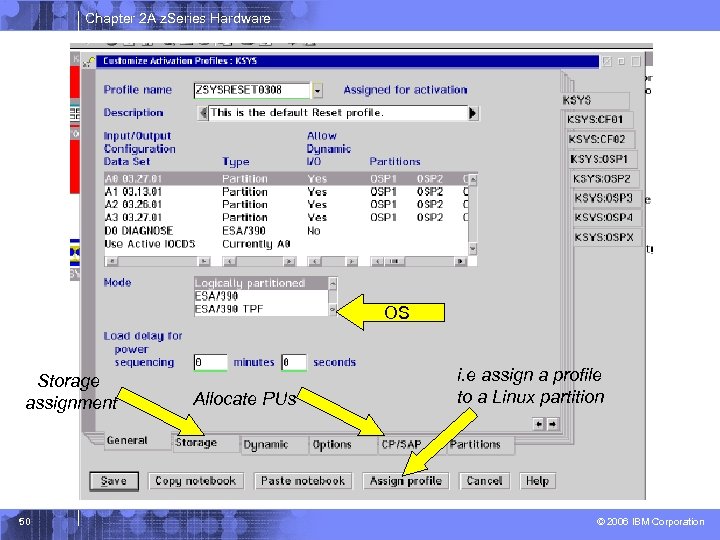
Chapter 2 A z. Series Hardware OS Storage assignment 50 Allocate PUs i. e assign a profile to a Linux partition © 2006 IBM Corporation
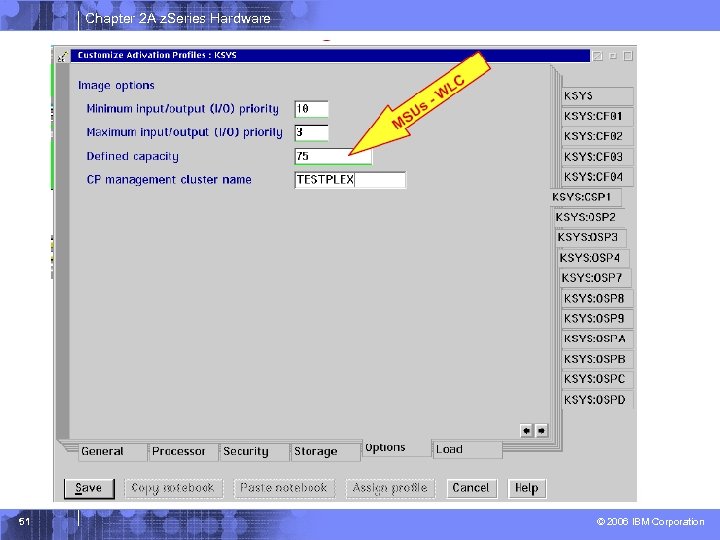
Chapter 2 A z. Series Hardware 51 © 2006 IBM Corporation
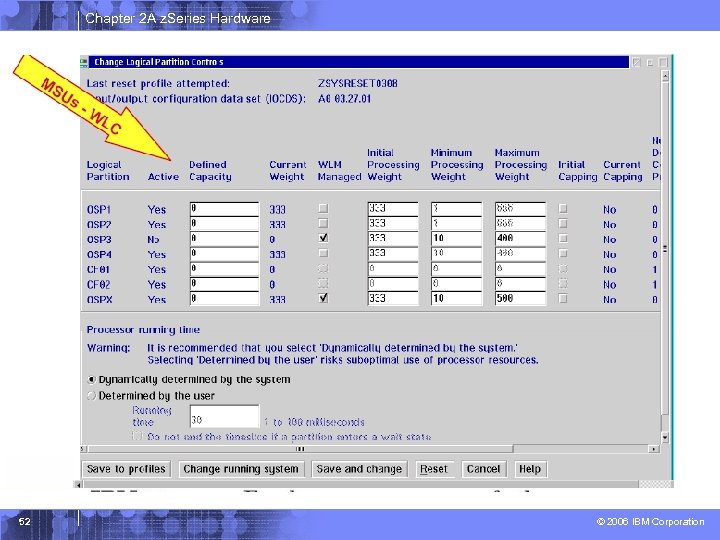
Chapter 2 A z. Series Hardware 52 © 2006 IBM Corporation
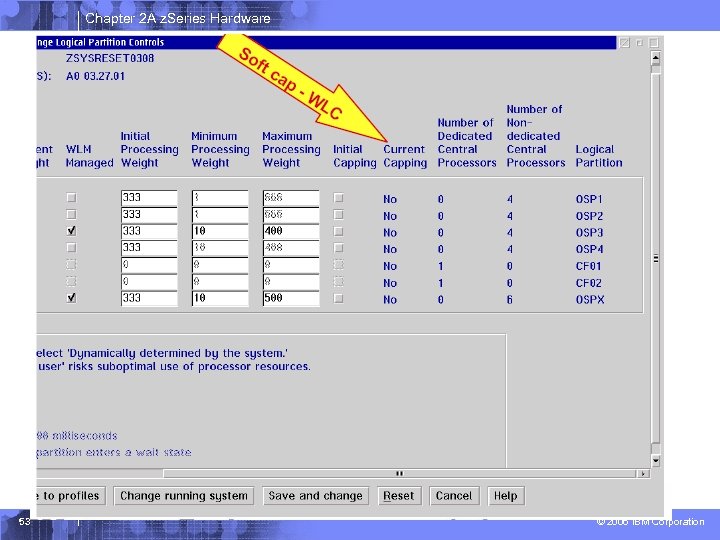
Chapter 2 A z. Series Hardware 53 © 2006 IBM Corporation
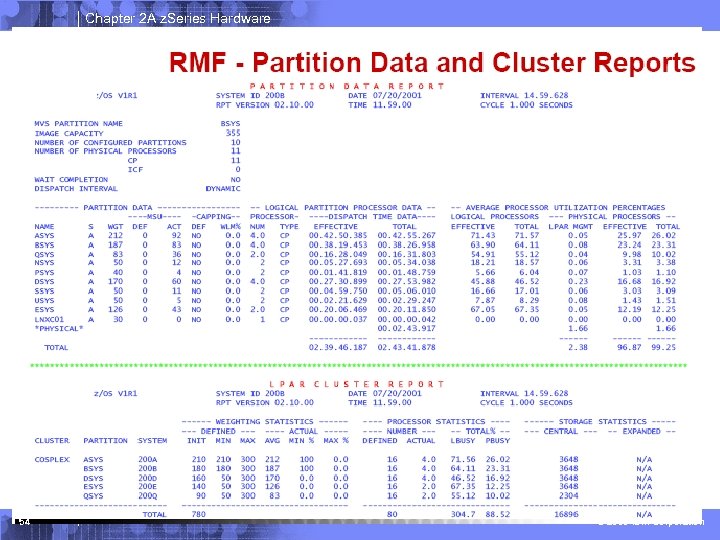
Chapter 2 A z. Series Hardware 54 © 2006 IBM Corporation
Скачать презентацию Introduction to z OS Basics Chapter 2 A Hardware
c0022d203a5194ba4fcd28086fdb0383.ppt