 Скачать презентацию Introduction to Web Engineering Tsinghua University Beijing April
f5c753941e8c7dd9b212d28fda378c51.ppt
- Количество слайдов: 51



Introduction to Web Engineering Tsinghua University, Beijing April 2008 Bebo White bebo@slac. stanford. edu
My Basic Premises Developing a Web-based system is no longer an event, it is a process Web-based systems are growing systems Web-based applications are adding a whole new dimension to software development
Terms I Use Web System – an infrastructure or system enabling the operation of a Web application Web Application – a distributed application that accomplishes a certain business need based on the technologies of WWW and that consists of a set of Webspecific resources
The Web Started Simple “Even simple rules lead to complex behavior” – Wolfram, New Science, 2002 “It is now technically possible and feasible to put the entire creative works of man online” – Kahle, The Internet Archives E-commerce (Web/Internet) accounted for 2% of US retail sales in 4 Q, 2004 - $18. 4 billion – US Census Bureau
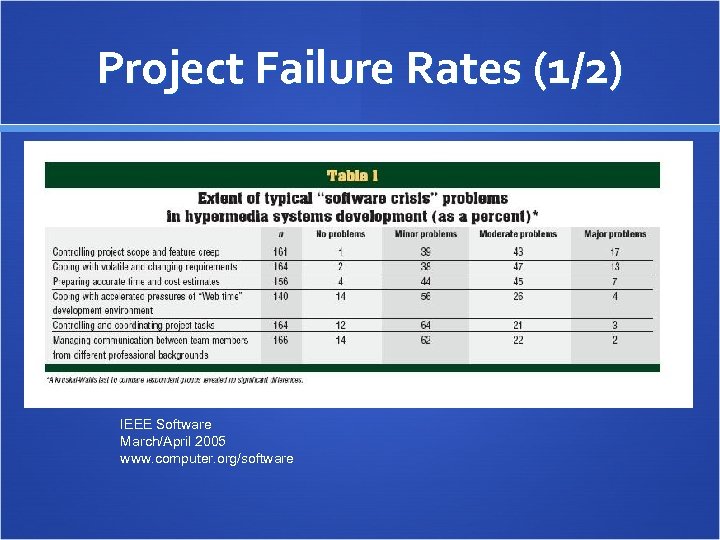
Project Failure Rates (1/2) IEEE Software March/April 2005 www. computer. org/software
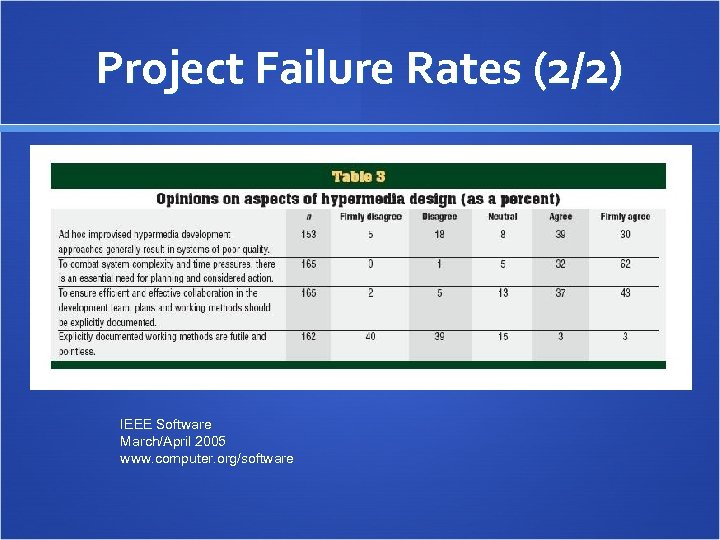
Project Failure Rates (2/2) IEEE Software March/April 2005 www. computer. org/software
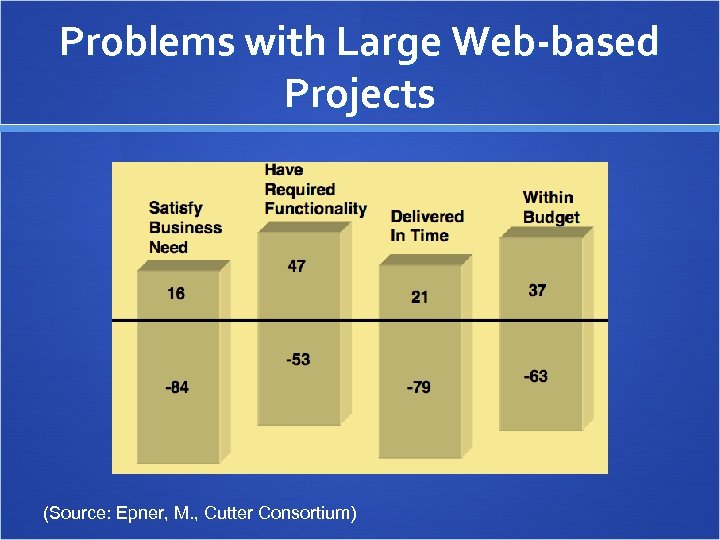
Problems with Large Web-based Projects (Source: Epner, M. , Cutter Consortium)
What About Complex Web Systems?
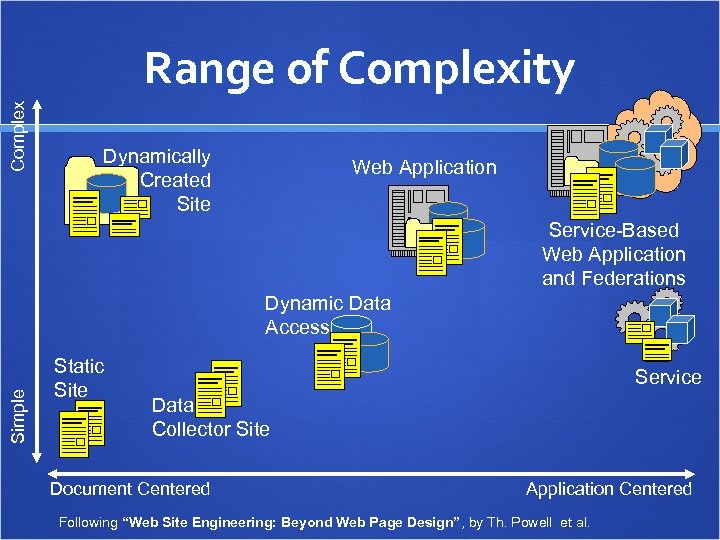
Complex Range of Complexity Dynamically Created Site Web Application Service-Based Web Application and Federations Simple Dynamic Data Access Static Site Service Data Collector Site Document Centered Application Centered Following “Web Site Engineering: Beyond Web Page Design”, by Th. Powell et al.
Characteristics Today’s focus on large-scale and ubiquitously useable Web Applications Many Users – many languages – many cultures Different access mechanisms Many User Agents Presents large volume of interrelated information (including different media) and processes Appropriate presentation Progression through activities – finish one thing before starting another Often guides user Growing and increasing complexity Many product iterations/versions/refinements (calls for Reuse) Many developers and operators, complex handling of temporal media (e. g. publishing of company news) Customization, Personalization, Security issues and a lot more. . . E. g. “Up-to-date” by following trends
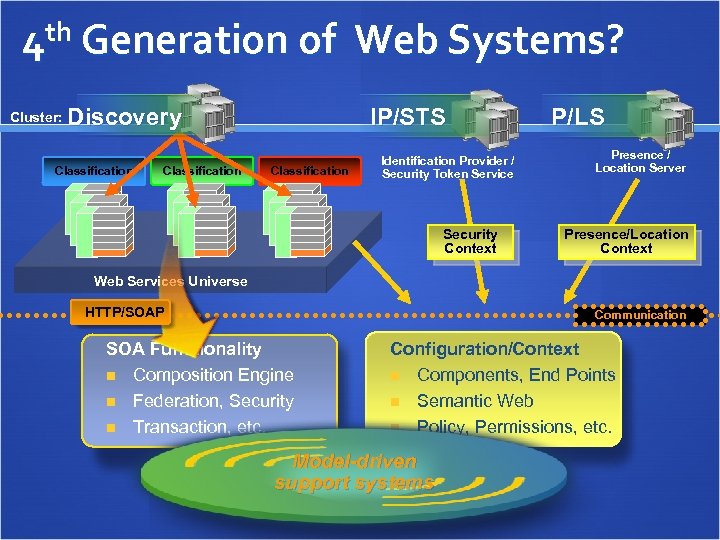
4 th Generation of Web Systems? Cluster: IP/STS Discovery Classification Identification Provider / Security Token Service Security Context P/LS Presence / Location Server Presence/Location Context Web Services Universe HTTP/SOAP Communication SOA Functionality n Composition Engine n Federation, Security n Transaction, etc. Configuration/Context n Components, End Points n Semantic Web n Policy, Permissions, etc. Model-driven support systems
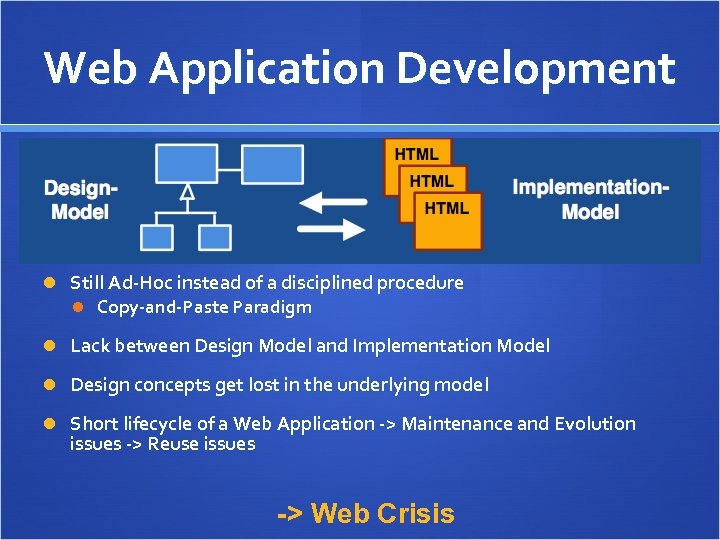
Web Application Development Still Ad-Hoc instead of a disciplined procedure Copy-and-Paste Paradigm Lack between Design Model and Implementation Model Design concepts get lost in the underlying model Short lifecycle of a Web Application -> Maintenance and Evolution issues -> Reuse issues -> Web Crisis
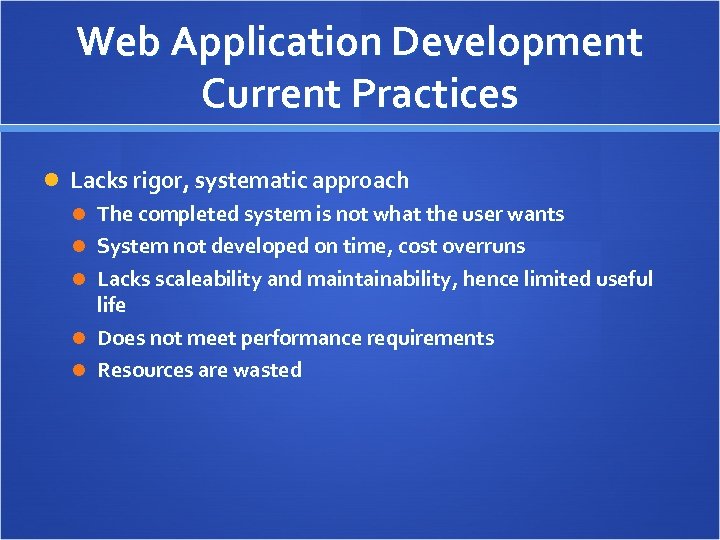
Web Application Development Current Practices Lacks rigor, systematic approach The completed system is not what the user wants System not developed on time, cost overruns Lacks scaleability and maintainability, hence limited useful life Does not meet performance requirements Resources are wasted
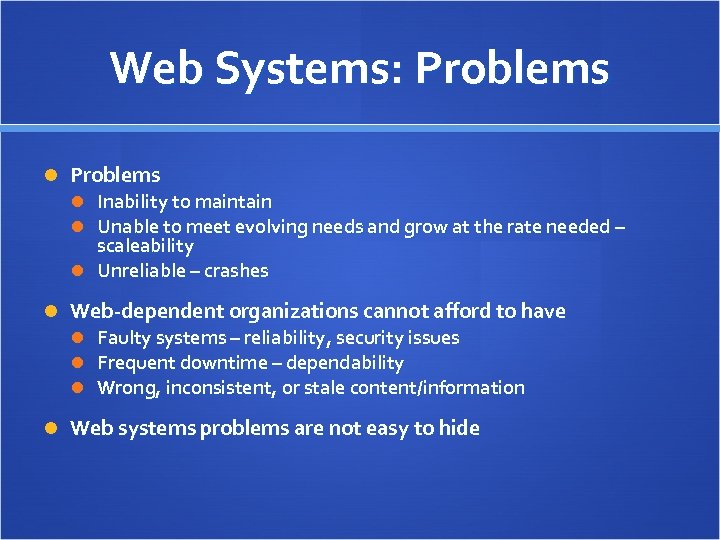
Web Systems: Problems Inability to maintain Unable to meet evolving needs and grow at the rate needed – scaleability Unreliable – crashes Web-dependent organizations cannot afford to have Faulty systems – reliability, security issues Frequent downtime – dependability Wrong, inconsistent, or stale content/information Web systems problems are not easy to hide
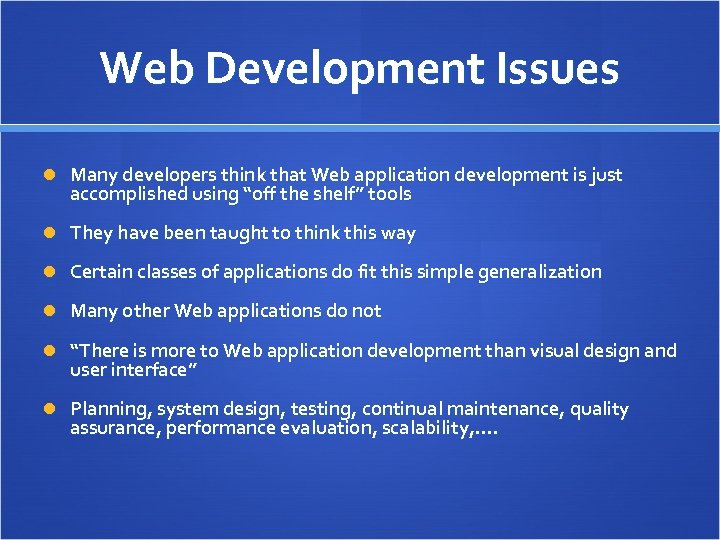
Web Development Issues Many developers think that Web application development is just accomplished using “off the shelf” tools They have been taught to think this way Certain classes of applications do fit this simple generalization Many other Web applications do not “There is more to Web application development than visual design and user interface” Planning, system design, testing, continual maintenance, quality assurance, performance evaluation, scalability, ….
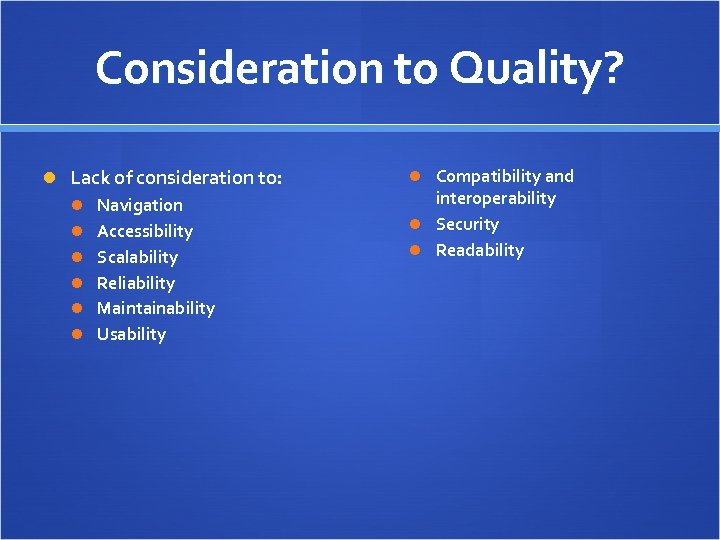
Consideration to Quality? Lack of consideration to: Navigation Accessibility Scalability Reliability Maintainability Usability Compatibility and interoperability Security Readability
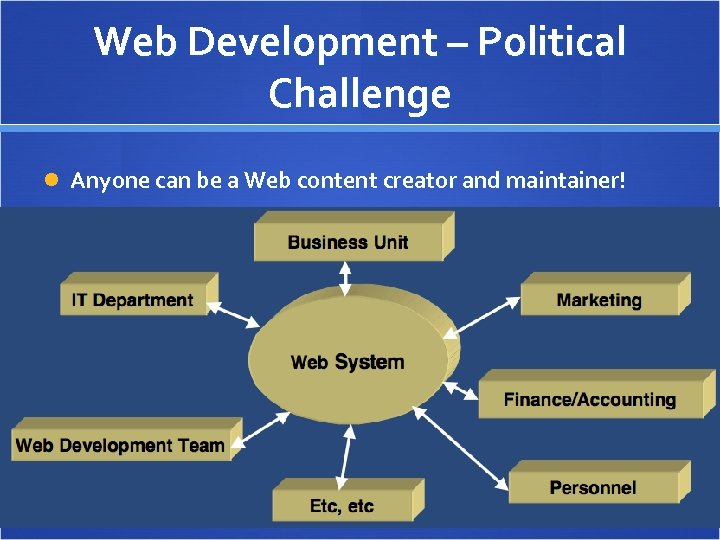
Web Development – Political Challenge Anyone can be a Web content creator and maintainer!
Web System Development Summary (1/2) Less attention is given to development methodologies, testing and evaluation, quality assessment and control Largely relies on individual’s own development practices Lack of realization of its lifecycle Analysis of needs, redesign, development (including coding), management, metrics, maintenance Calls for significant system-level and design decisions It is an exercise – not an event Legitimate concern about the manner in which they are created and their long-term quality and integrity
Web System Development Summary (2/2) In many cases, Web systems development is Chaotic Failure-prone Unsatisfactory
Why Do You Think That Web Systems are the #1 Target of Attack?
Why Do You Think That Web Systems Are the #1 Target of Attack?
Risks to Web-Based Business Long system delivery time Low responsiveness to business changes High project development and ongoing support costs Questionable system quality
Desires of Web-Based Businesses Project delivery time – shorter System quality – improved Technology investment - optimized
Need for Process Domination of the different requirements calls for a systematic approach Producing high-quality applications in a cost-effective way Goal – application should be Maintainable and evolvable Reliable Efficient Appropriate for UI Delivered on time at predictable cost
![Or Simply Software Engineering? “Fundamental differences [between hypermedia and other disciplines] however, make a](https://present5.com/presentation/f5c753941e8c7dd9b212d28fda378c51/image-25.jpg "Or Simply Software Engineering? “Fundamental differences [between hypermedia and other disciplines] however, make a")
Or Simply Software Engineering? “Fundamental differences [between hypermedia and other disciplines] however, make a pure transposition of techniques both difficult and inadequate. An important part of hypertext design concerns aesthetic and cognitive aspects that software engineering environments do not support. ” --Nanard & Nanard
Web Development vs. Software Development They are different due to the nature and distinct requirements of Web-based systems Even though Web-based systems often require programming and specialty software, the development of that software is often unique
Web-Based Systems vs. Software (1/3) Web-based systems: Are often document-oriented containing static or dynamic content More emphasis on “look and feel” Are “content-driven” – process is driven by the availability of content Need to cater to users with diverse skills and capabilities Are typically constrained to a short development time making it difficult to apply the same levels of formal planning and testing used in software development
Web-Based Systems vs. Software (2/3) Web-based systems: Differ by means of their access and delivery medium Have different life spans Have differing development requirements Developers are vastly varied in terms of their background, skills, knowledge, and system understanding Developers differ in their perception of Web systems
Web-Based Systems vs. Software (3/3) Web-based systems: Should be scalable Have varying performance requirements – must be able to cope with uncertain, random heavy demands on services Must be secure Are subject to assorted legal, social, and ethical scrutiny
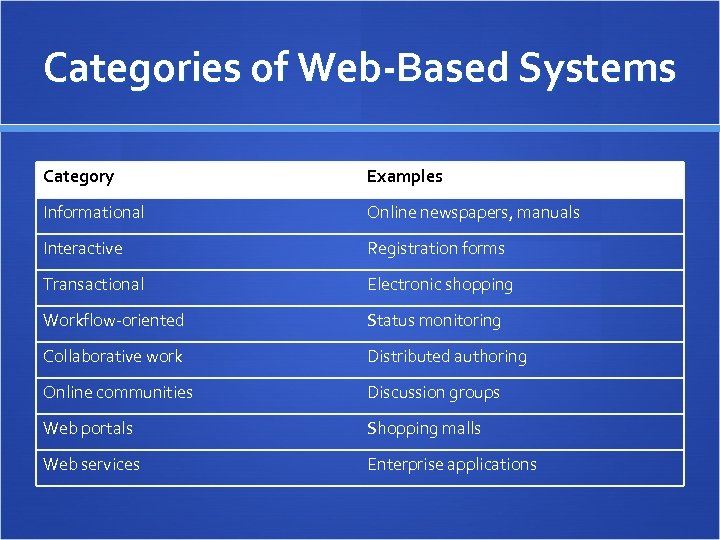
Categories of Web-Based Systems Category Examples Informational Online newspapers, manuals Interactive Registration forms Transactional Electronic shopping Workflow-oriented Status monitoring Collaborative work Distributed authoring Online communities Discussion groups Web portals Shopping malls Web services Enterprise applications
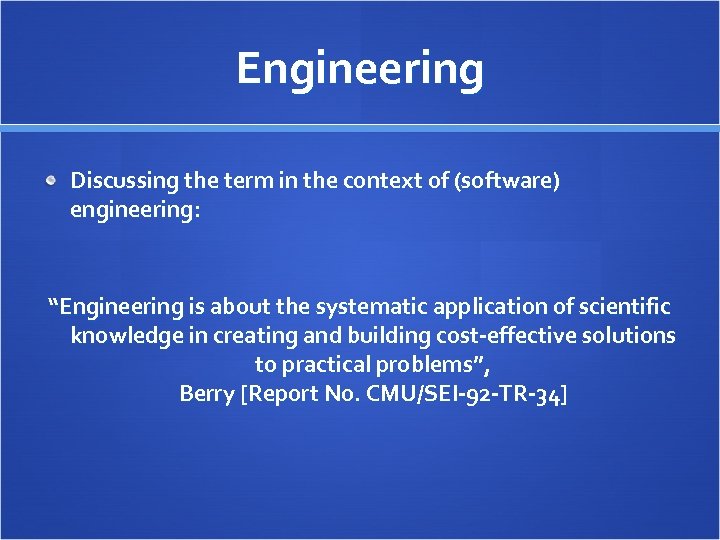
Engineering Discussing the term in the context of (software) engineering: “Engineering is about the systematic application of scientific knowledge in creating and building cost-effective solutions to practical problems”, Berry [Report No. CMU/SEI-92 -TR-34]
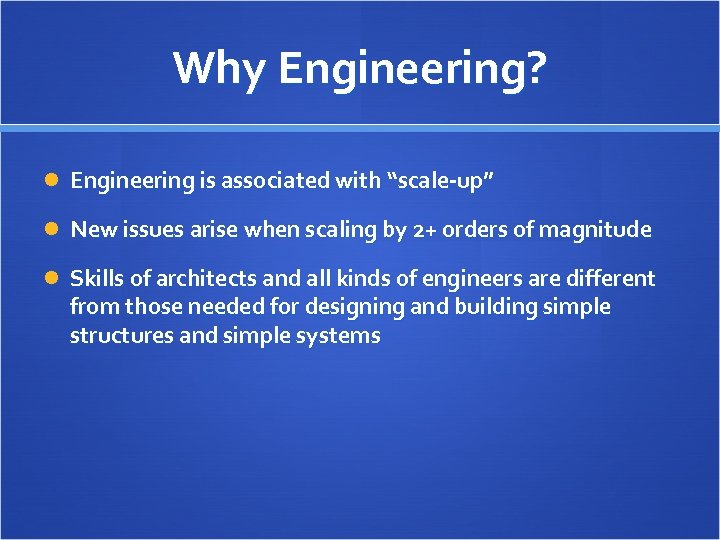
Why Engineering? Engineering is associated with “scale-up” New issues arise when scaling by 2+ orders of magnitude Skills of architects and all kinds of engineers are different from those needed for designing and building simple structures and simple systems
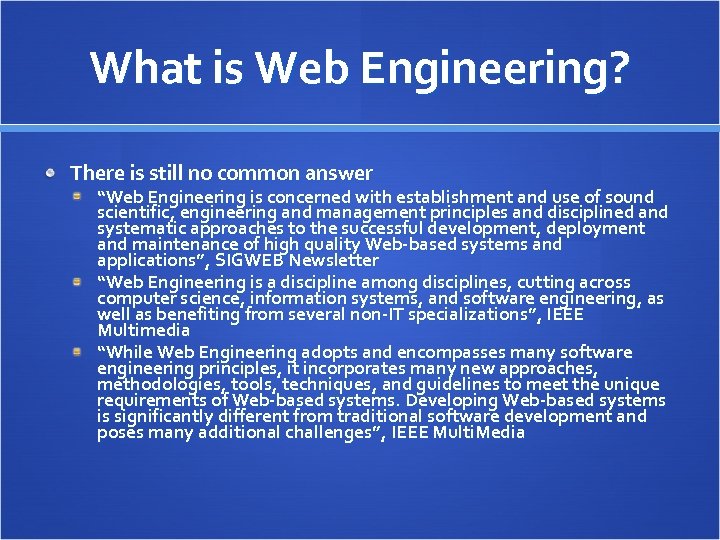
What is Web Engineering? There is still no common answer “Web Engineering is concerned with establishment and use of sound scientific, engineering and management principles and disciplined and systematic approaches to the successful development, deployment and maintenance of high quality Web-based systems and applications”, SIGWEB Newsletter “Web Engineering is a discipline among disciplines, cutting across computer science, information systems, and software engineering, as well as benefiting from several non-IT specializations”, IEEE Multimedia “While Web Engineering adopts and encompasses many software engineering principles, it incorporates many new approaches, methodologies, tools, techniques, and guidelines to meet the unique requirements of Web-based systems. Developing Web-based systems is significantly different from traditional software development and poses many additional challenges”, IEEE Multi. Media
Web Engineering The application of systematic, disciplined, and quantifiable approaches to the design, production, deployment, operation, maintenance and evolution of Web-based software products. ---Gaedke, 2000
Web Engineering (1/2) A holistic and proactive approach to Web systems development Offers systematic approaches and disciplined processes for development Deals with the management of complexity and diversity of Web development Brings to Web-based system development Control Risk minimization Enhanced maintainability and quality
Web Engineering (2/2) Other factors Document orientation Navigational design Changing technology Budget and time constraints People and internal politics Division between theory and practice Lack of understanding…
Goals of Web Engineering Develop high quality Web applications Effective Efficient Achieve desired application Maintain and evolve Plan for change – solution may change the problem Encourage the use of systematic, disciplined and quantifiable approaches and process models
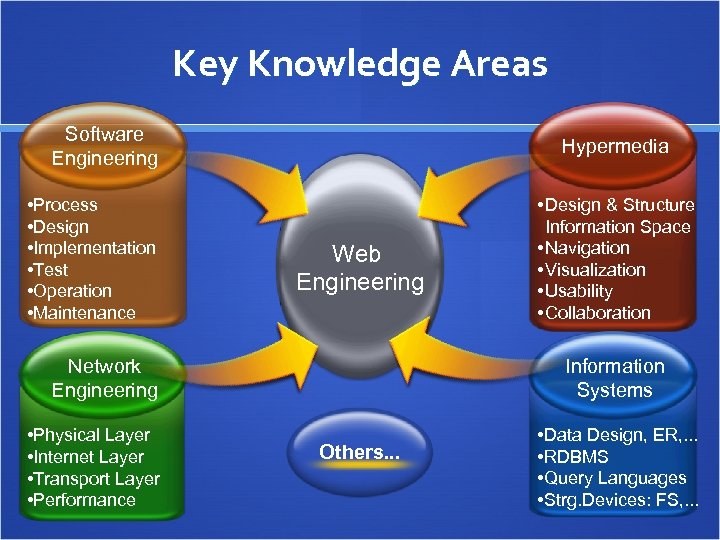
Key Knowledge Areas Software Engineering • Process • Design • Implementation • Test • Operation • Maintenance Hypermedia Web Engineering Information Systems Network Engineering • Physical Layer • Internet Layer • Transport Layer • Performance • Design & Structure Information Space • Navigation • Visualization • Usability • Collaboration Others. . . • Data Design, ER, . . . • RDBMS • Query Languages • Strg. Devices: FS, . . .
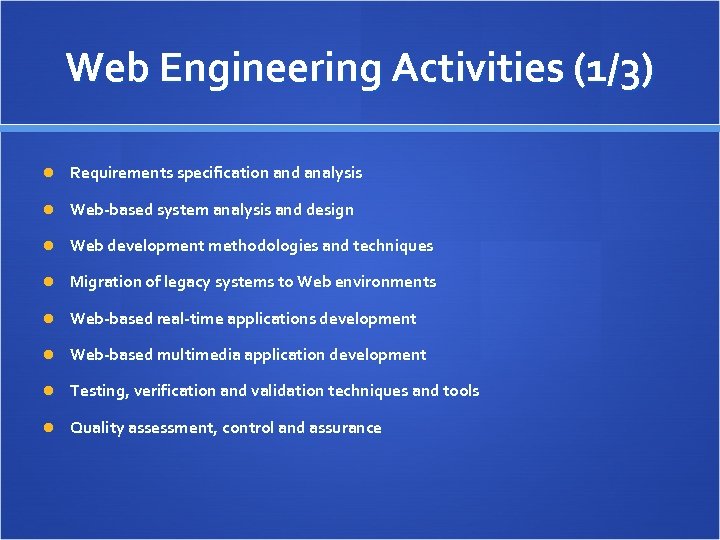
Web Engineering Activities (1/3) Requirements specification and analysis Web-based system analysis and design Web development methodologies and techniques Migration of legacy systems to Web environments Web-based real-time applications development Web-based multimedia application development Testing, verification and validation techniques and tools Quality assessment, control and assurance
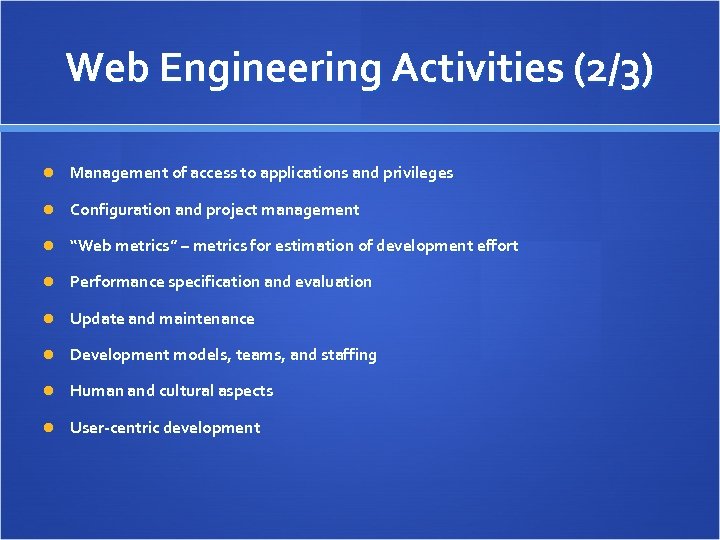
Web Engineering Activities (2/3) Management of access to applications and privileges Configuration and project management “Web metrics” – metrics for estimation of development effort Performance specification and evaluation Update and maintenance Development models, teams, and staffing Human and cultural aspects User-centric development
Web Engineering Activities (3/3) Graphics, animation, and streaming Copyright, legal and social aspects
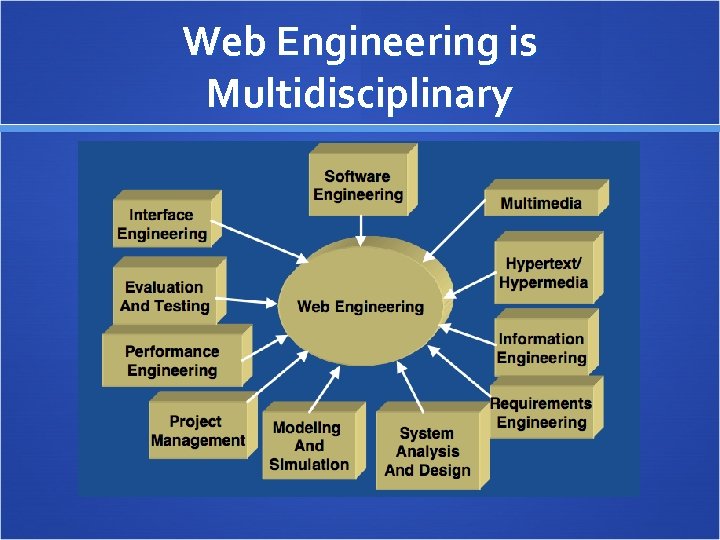
Web Engineering is Multidisciplinary
Example – Web Project Management
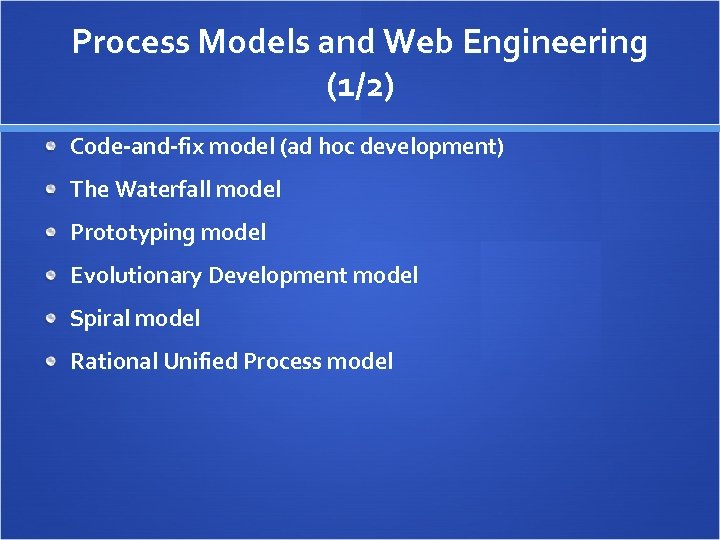
Process Models and Web Engineering (1/2) Code-and-fix model (ad hoc development) The Waterfall model Prototyping model Evolutionary Development model Spiral model Rational Unified Process model
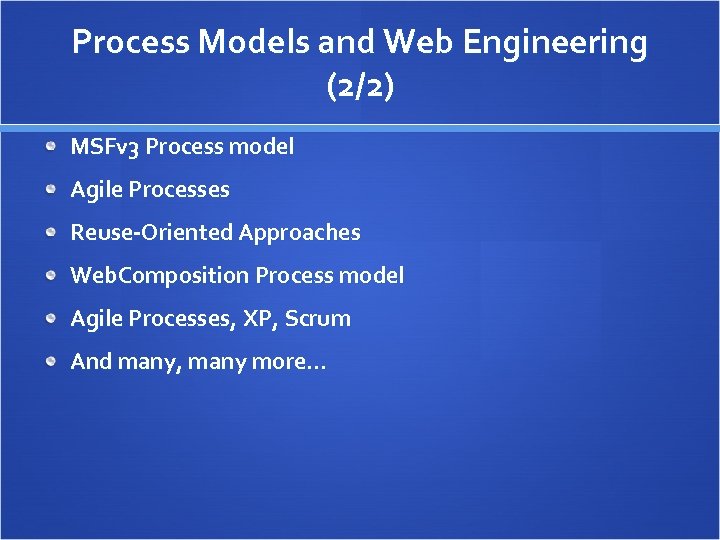
Process Models and Web Engineering (2/2) MSFv 3 Process model Agile Processes Reuse-Oriented Approaches Web. Composition Process model Agile Processes, XP, Scrum And many, many more…
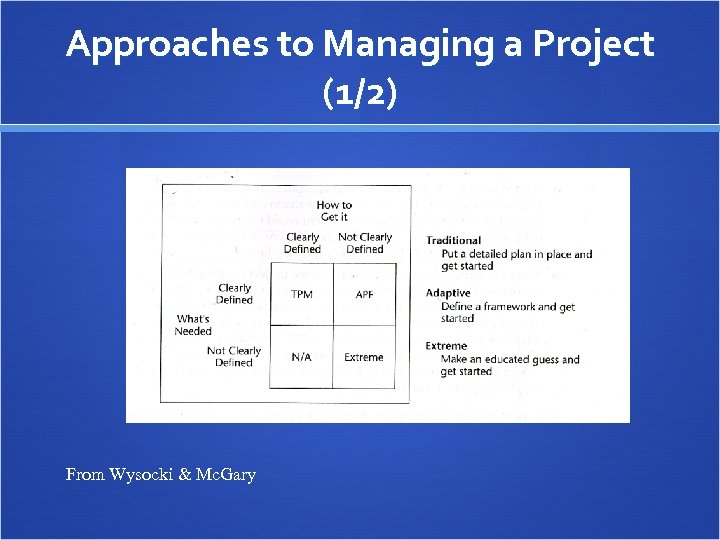
Approaches to Managing a Project (1/2) From Wysocki & Mc. Gary
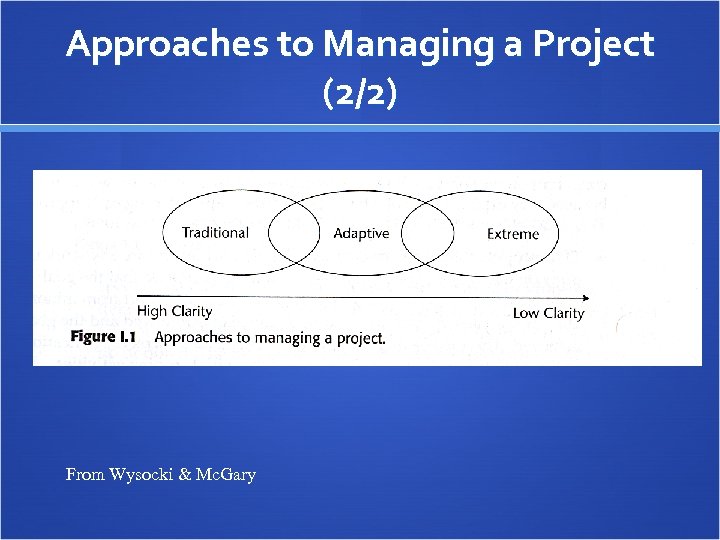
Approaches to Managing a Project (2/2) From Wysocki & Mc. Gary
Thank You! Questions? Comments? bebo@slac. stanford. edu
Скачать презентацию Introduction to Web Engineering Tsinghua University Beijing April
f5c753941e8c7dd9b212d28fda378c51.ppt