 Скачать презентацию Introduction to Vegetable Gardening in Florida Bob Prier
709cc46f140a3841cd0705ec902a6ca4.ppt
- Количество слайдов: 26



Introduction to Vegetable Gardening in Florida Bob Prier Master Gardener Charlotte County
Site planning • For convenience locate the garden near the house • Choose a well drained site • Close to a source of water • A location that receives at least six hours of direct sunlight daily • Where possible, rotate the garden from place to help control soil diseases and other pests. (or least rotate crops)
Vegetable Growing in South. West Florida • “The only thing that Florida soil is good for is holding up the plants”. Gene Mc. Avov, 2009, UF Extension agent Best success of growing vegetables in SW Florida is with augmented soil or Alternative vegetable growing programs
Steps to improve soil • First have your soil p. H tested. • The best p. H range for vegetable gardens on sandy soil is between p. H 5. 8 and 6. 3. If your soil p. H is between 5. 5 and 7. 0, no adjustment in p. H needs to be made. • If your soil p. H is below 5. 5, apply lime at a rate recommended by soil test. • If your soil p. H is above 7, best solution is find another site.
Augment Soil • Add organic material: – Rotted leaves – Manure: raw manure a month in advance – Prepackaged soil additives, Miracle Gro, Scotts, etc • Top Soil (what are you buying? ) • Compost: make your own or purchase commercial variety. Green Planet on Rt 17 (4694 Duncan Rd. 941 -637 -6053 has bulk garden compost at reasonable prices. • Worm Castings: BEST ADDITION TO SOIL
Worm Composting • Composting with worms is easy and produces an excellent soil additive • Worm castings contain: – Beneficial Bacteria – Essential Minerals • Worm castings help Control Nematodes • Web Site: www. floridanativeplantseeds. com • Google video at: backtenfeet. com: worm composting with Rachael Singletary
Benefits of Organic Matter • Improves water holding • Supplies nutrients- slow release • Buffers and conditions soil • Helps fight nematodes and other pests
Vegetable Planting Season • SW Florida has 2 vegetable growing seasons – Spring and Fall • Plant February/March for spring season • Plant September/October for fall season • Bonus 3 rd Season: cool season crops, plant November through January
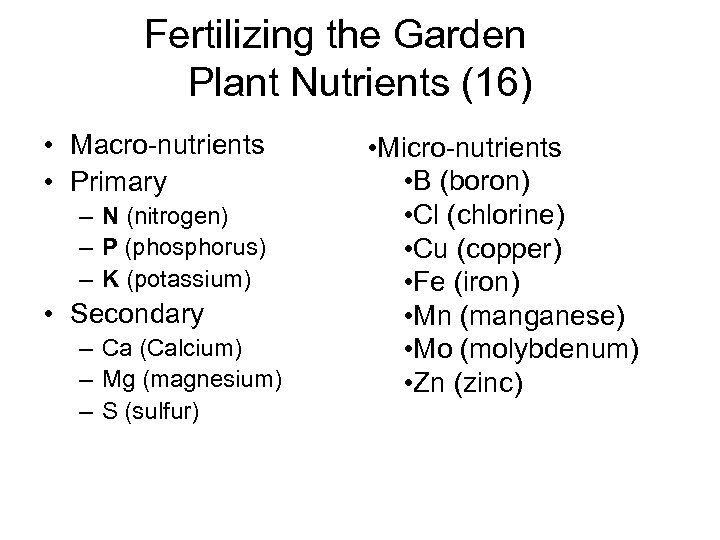
Fertilizing the Garden Plant Nutrients (16) • Macro-nutrients • Primary – N (nitrogen) – P (phosphorus) – K (potassium) • Secondary – Ca (Calcium) – Mg (magnesium) – S (sulfur) • Micro-nutrients • B (boron) • Cl (chlorine) • Cu (copper) • Fe (iron) • Mn (manganese) • Mo (molybdenum) • Zn (zinc)
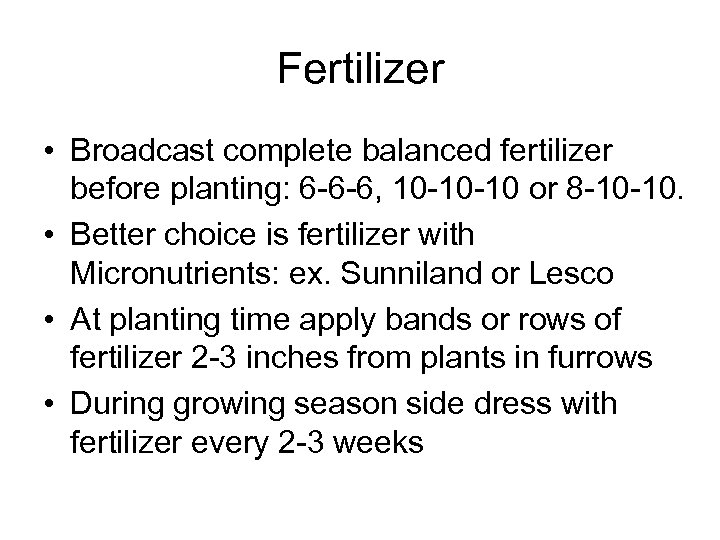
Fertilizer • Broadcast complete balanced fertilizer before planting: 6 -6 -6, 10 -10 -10 or 8 -10 -10. • Better choice is fertilizer with Micronutrients: ex. Sunniland or Lesco • At planting time apply bands or rows of fertilizer 2 -3 inches from plants in furrows • During growing season side dress with fertilizer every 2 -3 weeks
Watering/Irrigation • Vegetables need frequent watering, especially young plants and during hot windy days, as much as daily. • Covering seeds until germination increases germination rate. • Water soil, not the plants. • Drip irrigation is best. • Water early in day.
Weed Pest Management • Cover bare soil: paper, cardboard, plastic to cut down on weeds. • Weeds grow very fast in Florida; try to stay ahead of problem. • Never let weeds go to seed
Insect Pest Management • • Scout and hand pick Soap & Oil Spray, Bt, Neem Oil Buy Resistant varieties of vegetables Chemical insecticides: – – Foliar sprays: cover both sides of leaves Systemic: once a season Wear protective clothing Follow the label SOLARIZATION
Chemical Control • • • Non-systemic –Horticultural oil –Malathion –Carbaryl Pyrethroids • Systemic • –Imidacloprid (Bayer Advanced )
Animal Pests • • • Birds Moles Rabbits Squirrels Armadillos Raccons Management Control • Fencing • Trapping • Nets for birds • Sprays ex. Bonide SHOT-GUN REPELS-ALL
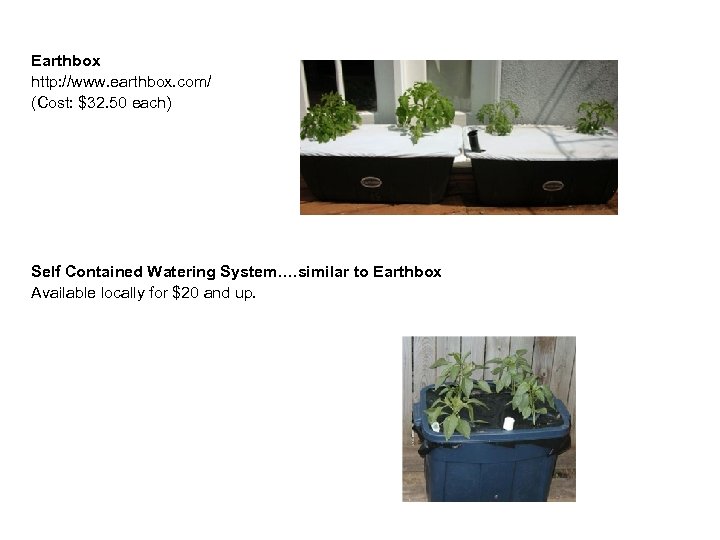
Earthbox http: //www. earthbox. com/ (Cost: $32. 50 each) Self Contained Watering System…. similar to Earthbox Available locally for $20 and up.
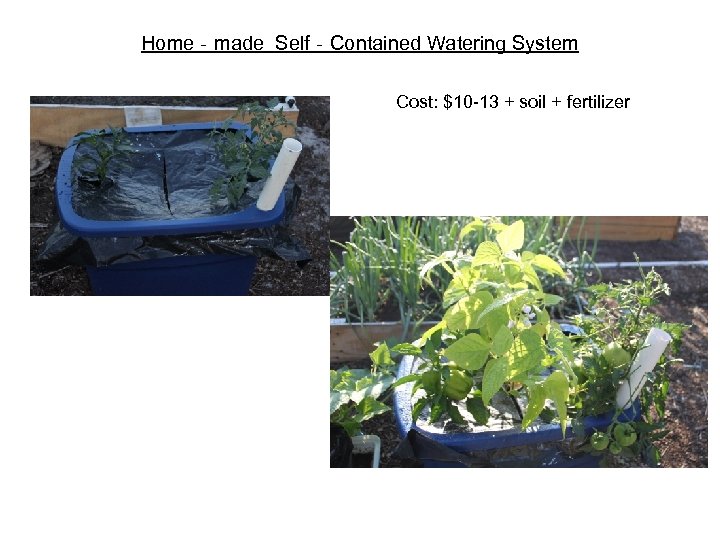
Home‐made Self‐Contained Watering System Cost: $10 -13 + soil + fertilizer
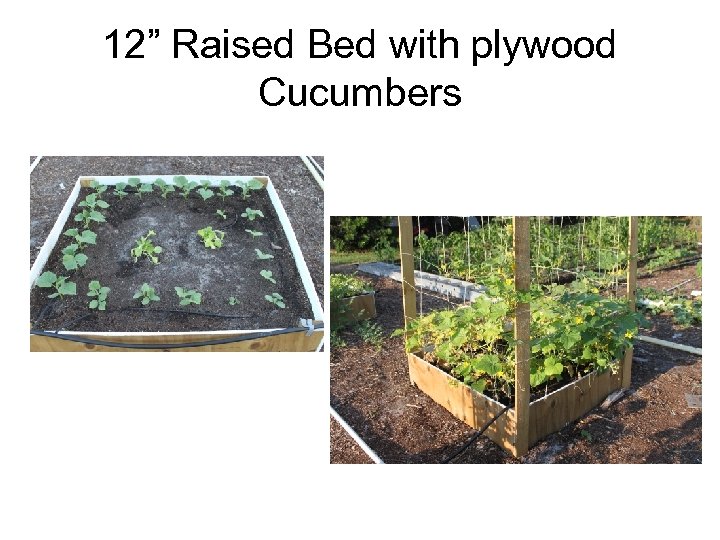
12” Raised Bed with plywood Cucumbers
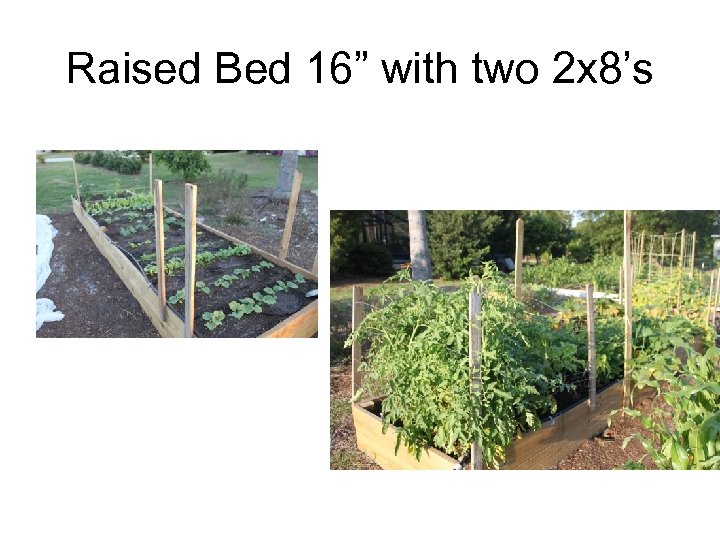
Raised Bed 16” with two 2 x 8’s
Vegetable growing tips • Tomatoes: choose VFN for best resistance • Cherry tomatoes do very well • Pick fruit when it has just started to turn pink, do not wait until fully ripe • Try to avoid spraying water on leaves or splashing soil onto leaves • Cucumbers: Poinsett good variety • Radishes: radishes are easy but get hot as the temperature rises.
Vegetable growing tips • Sweet Corn: go to Publix or Winn-Dixie • Greenbeans: Bush beans more tender • Sugar Snap Peas: plant Nov-Jan but might need frost protection • Eggplant: attracts lots of insects • Okra: best for summer garden, very productive…check daily in hot season • Cucumbers: plant every 2 -3 weeks
Tomatoes • • Staking, mulching very beneficial May not set fruit if nitrogen is excessive Tomato cracking is from uneven watering Use resistant varieties (VFN) Better Boy, Celebrity Sweet 100 Cherry variety Remember to pick at first blush!!
Squash & Zucchini • • Plant Spring or Fall Feed frequently: every 2 -3 weeks Mulch Scout often for insects – Caterpillars, vine borers, aphids – Systemic pesticide is good for vine borers and caterpillars
Cool Season Vegetables • • Plant late fall to early winter May need to cover if freeze occurs Cabbage Broccoli Collards Lettuce – leaf lettuce Lettuce – head: plant in late fall.
References and Resources • Various references in presentation from Florida Vegetable Gardening Guide by Sydney Park Brown et al, UF/IFAS • and • Vegetable Gardening Basics by Gene Mc. Avoy, UF/IFAS extension agent • http: //www. edis. ifas. ufl. edu
Happy Gardening • If you have problems, go to a Master Gardener Plant Clinic • Bob Prier • 979 -8632 • bobprier@comcast. net
Скачать презентацию Introduction to Vegetable Gardening in Florida Bob Prier
709cc46f140a3841cd0705ec902a6ca4.ppt