


 Скачать презентацию Introduction to Transportation Systems PART I CONTEXT
94d0c00c9b8fa45a235eea398a87b56d.ppt
- Количество слайдов: 20
 Introduction to Transportation Systems
 PART I: CONTEXT, CONCEPTS AND CHARACTER IZATION
 Chapter 2: Transportation Systems Components: An Internal Perspective
 Infrastructure ♦ Guideways: Special Purpose vs. General Purpose Guideway - some examples ♦ Highway ♦ Railroad ♦ Pipeline ♦ Air Corridors ♦ Terminals/Stations - -some examples ♦ Rail Freight Yards ♦ Container Port ♦ Airports ♦ Bus Stations ♦ Transit Stations ♦ Street Corner Bus Stops/Taxi Stands
 Vehicles ♦ Automobiles ♦ Rail Locomotives ♦ Airplanes ♦ Tractor Trailer ♦ Truck Trailers ♦ Railroad Cars ♦ Containers
 Vehicle Characteristics ♦ Crashworthiness ♦ Degree of Automation ♦ Energy Source: internal vs. external ♦ Weight ♦ Material ♦ Aerodynamics ♦ Emissions
 Equipment - some examples ♦ Loading Crane at Container Port ♦ Railroad Track Maintenance Equipment ♦ Airport Baggage Handling ♦ Snow Removal Vehicles
 Power Systems ♦ ♦ ♦ ♦ ♦ Internal Combustion Engine Diesel Engine Electric Motors Humans Animals Gravity Windmill Solar Panels Tidal Baffles
 Fuel ♦ ♦ ♦ ♦ ♦ Gasoline Natural Gas Diesel Coal Electricity (e. g. , as generated from coal) Electricity (as in an onboard battery) Solar Energy Tides/Currents Wind
 Control, Communications and Location Systems ♦ Humans ♦ Driver ♦ Controllers (as in air traffic) ♦ Dispatcher ♦ Technology ♦ Traffic Lights ♦ Sensors - e. g. , Loop Detectors ♦ Fleet Management Systems ♦ Automated Vehicles ♦ Block Control (railroad) ♦ Global Positioning Systems (GPS) ♦ Intelligent Transportation Systems (ITS)
 Summary -- Transportation Physical System Components ♦ Infrastructure ♦ Guideway ♦ Terminals ♦ Stations ♦ Vehicles ♦ Power Systems ♦ Fuel ♦ Control, Communications & Location Systems Figure 2. 1
 "Operators" ♦ Labor ♦ Management ♦ Marketing ♦ Intramodal ♦ Intersectoral, e. g. , Transportation vs. Communication ♦ Strategic Planning ♦ Operations
 Operations/Marketing "Tension" ♦ Marketing people like to provide highquality service. To a first approximation, they want to maximize revenues. ♦ Marketing people like to provide universal, direct, frequent, and highquality service to transportation customers. ♦Marketing people are basically concerned with maximizing the revenues that flow to the company.
 Operations/Marketing "Tension" ♦ Operations people are cost-oriented. ♦ Operations people are typically worried about minimizing cost. ♦ Operations people want to run an efficient and cost-effective operation.
 "Operators", continued ♦ Maintenance Management ♦ Information Management ♦ Operations Research ♦ Administration
 Operating Plans ♦ Schedule ♦ Crew Assignments ♦ Vehicle Distribution
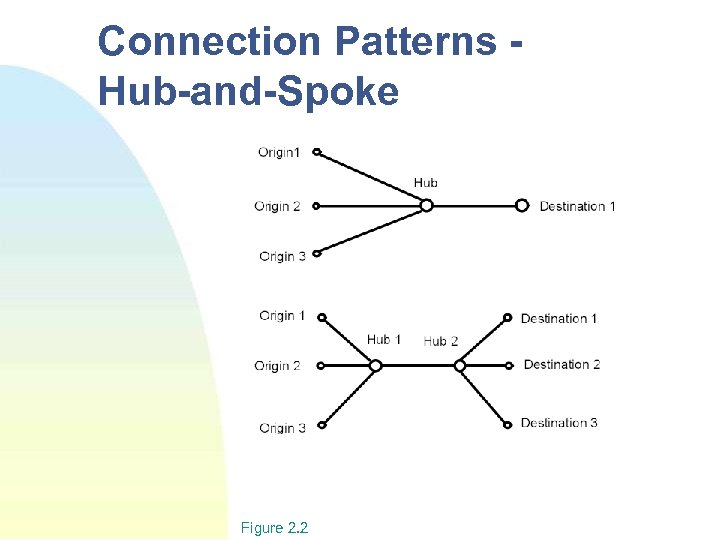 Connection Patterns Hub-and-Spoke Figure 2. 2
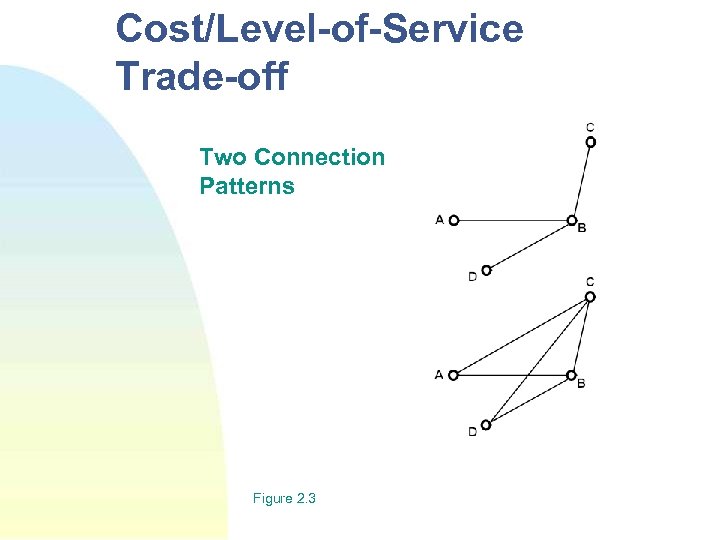 Cost/Level-of-Service Trade-off Two Connection Patterns Figure 2. 3
 Do we provide direct, high-quality service from A to C as shown in the lower figure, or do we consolidate passengers at Node B with other passengers from Node D, into a single flight from B to C? Here we have some fundamental cost/level-of-service trade-offs. Which pattern does the VPMarketing like? How about the VP -Operations?
 Contingency Planning What do we do when things go wrong? How do we decide how to alter our operating plan to reflect changes in weather, demand for service and accidents — -such as a derailment?