 Скачать презентацию Introduction to Sustainable Development Lecture A Purpose
811d60da02ea7a541bcc0557777575ff.ppt
- Количество слайдов: 39



Introduction to Sustainable Development Lecture A
Purpose of the Course [ Introduce the Concept of Sustainability as the Foundation of Future Society [ Provide a Foundation for Understanding and Implementing Sustainability Principles [ Show the Importance of a Sustainable Community as the Key Concept [ Indicate Methods for Implementing Sustainability in Various Social and Economic Sectors
Reasons for this Course [ Humankind is profoundly affecting the Earth: ÖDestruction of ecosystems and biodiversity ÖGlobal environmental problems: greenhouse warming, ozone depletion, toxification, soil erosion, emissions ÖMass movements of materials ÖIntroduction of biological agents: estrogen mimickers, genetically engineered products [ Humankind does not understand or appreciate the role of ecosystems for our health and in our economy [ Humanity may be crashing the critical planetary ecosystems [ How do we change direction at this critical point in time? Globally? In Poland?
Proposed Solution -Briefly [ Sustainable development or sustainability [ “Development that meets the needs of the present without compromising the ability of future generations to meet their own needs” [World Commission on Environment and Development, 1987; Our Common Future (Brundtland Report)] [ Balancing environment, economy, and society’s needs [ Sustainability Clarified: Satisfying lives for all within the means of nature—now and in the future. [Redefining Progress, 2002, www. rprogress. org]
[ Sustainability [ Substitutability [ Deep Ecology [ Factor 4 and Factor 10 [ Carrying Capacity [ Ecological Footprint [ Ecological Rucksack [ Adaptive Management [ Ecological Economics [ Environmental Ethics [ Clean Production [ Industrial Ecology [ Eco-efficiency [ MIPS Some New Vocabulary
The Twin Problems: Population and Consumption [ Human population has been growing exponentially since the beginning of the industrial revolution (1. 7%/year) [ Industrial production has also been growing at an exponential rate (3. 5%/year 1970 -2000) [ World fertilizer consumption is doubling every 15 years. Total use now is 15 times greater than the end of WWII. [ In this century, consumption of energy and materials will increase by a Factor of 12 (2000 -2100) if growth in population continues at the same rates Beyond the Limits to Growth, Meadows, and Rander
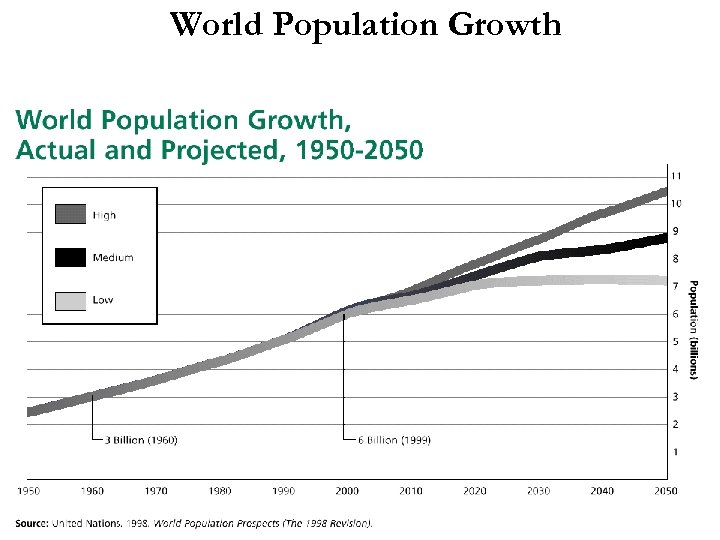
World Population Growth
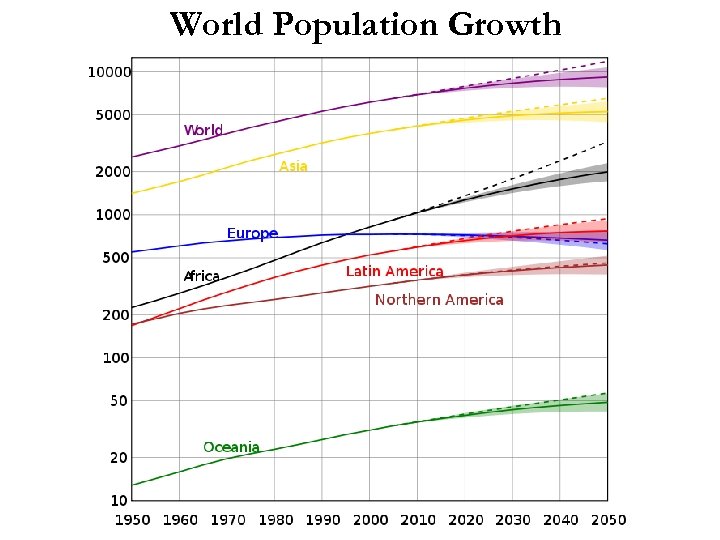
World Population Growth
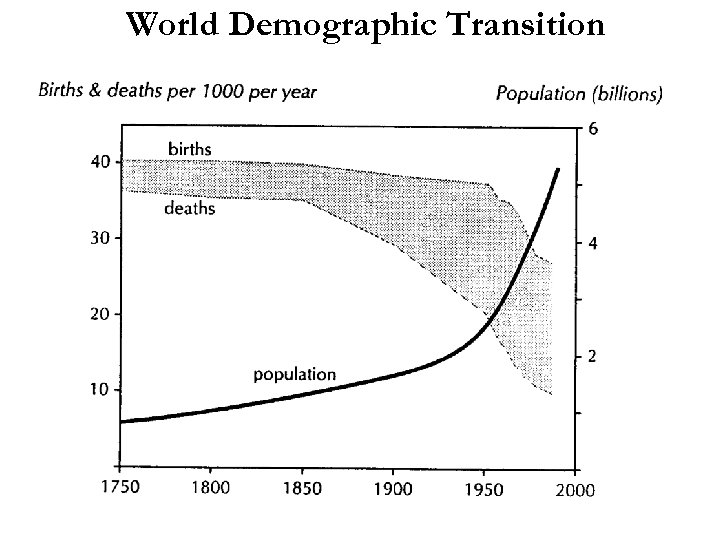
World Demographic Transition
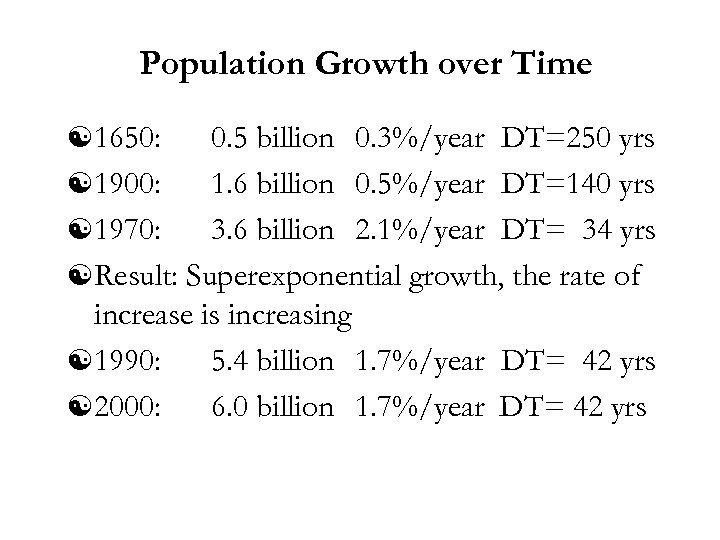
Population Growth over Time [ 1650: 0. 5 billion 0. 3%/year DT=250 yrs [ 1900: 1. 6 billion 0. 5%/year DT=140 yrs [ 1970: 3. 6 billion 2. 1%/year DT= 34 yrs [ Result: Superexponential growth, the rate of increase is increasing [ 1990: 5. 4 billion 1. 7%/year DT= 42 yrs [ 2000: 6. 0 billion 1. 7%/year DT= 42 yrs
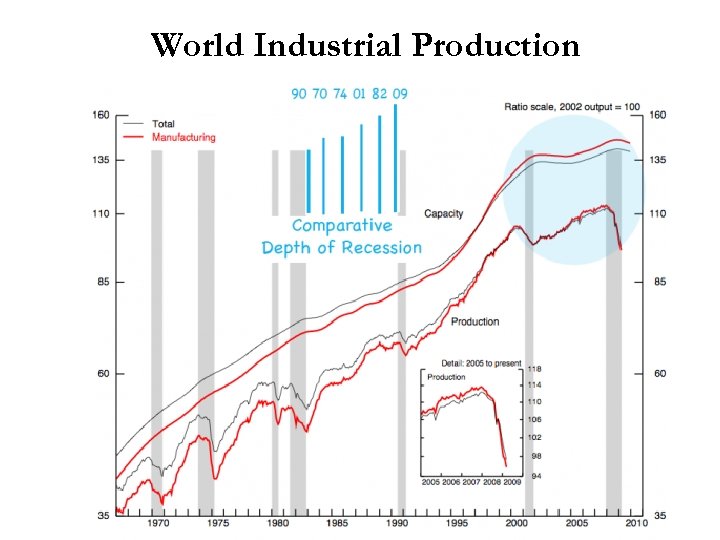
World Industrial Production
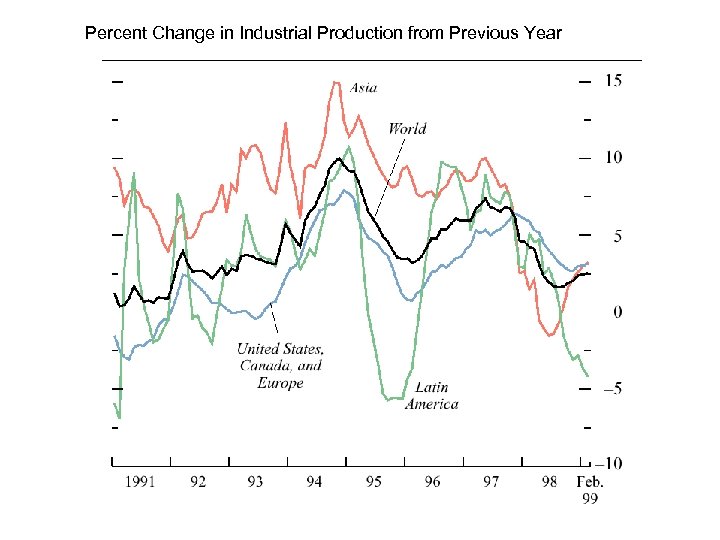
Percent Change in Industrial Production from Previous Year
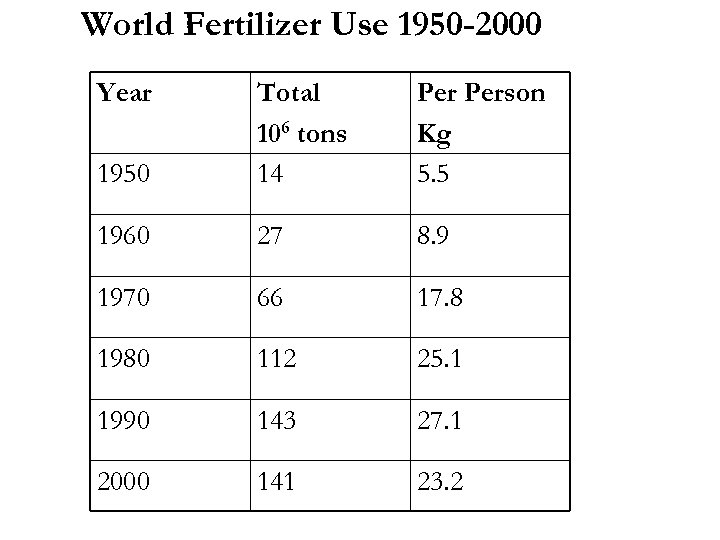
World Fertilizer Use 1950 -2000 Year 1950 Total 106 tons 14 Person Kg 5. 5 1960 27 8. 9 1970 66 17. 8 1980 112 25. 1 1990 143 27. 1 2000 141 23. 2
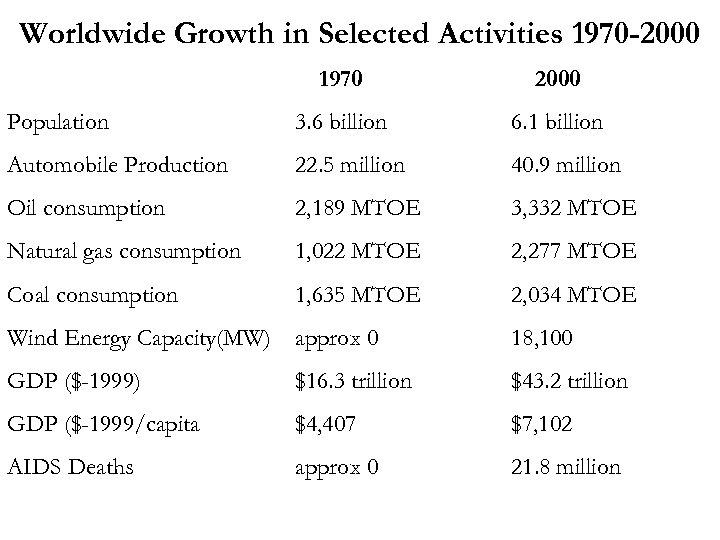
Worldwide Growth in Selected Activities 1970 -2000 1970 2000 Population 3. 6 billion 6. 1 billion Automobile Production 22. 5 million 40. 9 million Oil consumption 2, 189 MTOE 3, 332 MTOE Natural gas consumption 1, 022 MTOE 2, 277 MTOE Coal consumption 1, 635 MTOE 2, 034 MTOE Wind Energy Capacity(MW) approx 0 18, 100 GDP ($-1999) $16. 3 trillion $43. 2 trillion GDP ($-1999/capita $4, 407 $7, 102 AIDS Deaths approx 0 21. 8 million
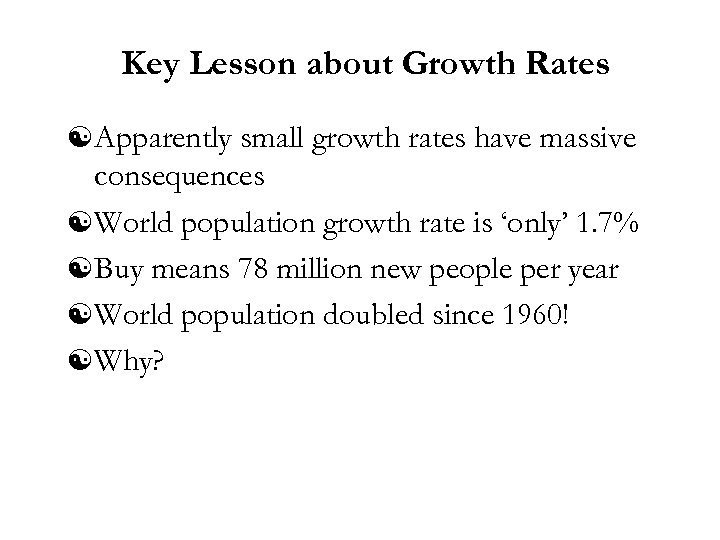
Key Lesson about Growth Rates [ Apparently small growth rates have massive consequences [ World population growth rate is ‘only’ 1. 7% [ Buy means 78 million new people per year [ World population doubled since 1960! [ Why?
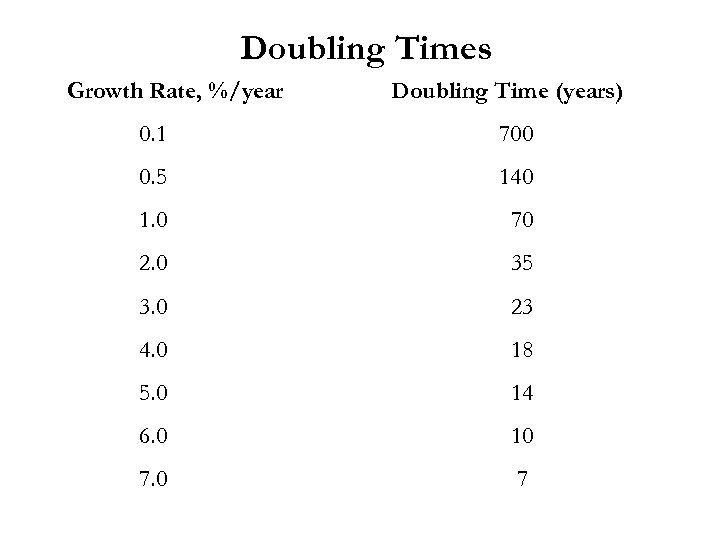
Doubling Times Growth Rate, %/year Doubling Time (years) 0. 1 700 0. 5 140 1. 0 70 2. 0 35 3. 0 23 4. 0 18 5. 0 14 6. 0 10 7. 0 7
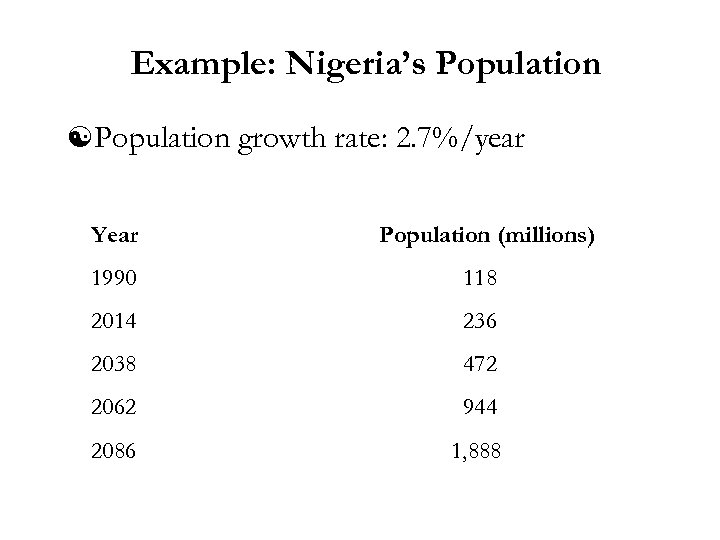
Example: Nigeria’s Population [ Population growth rate: 2. 7%/year Year Population (millions) 1990 118 2014 236 2038 472 2062 944 2086 1, 888
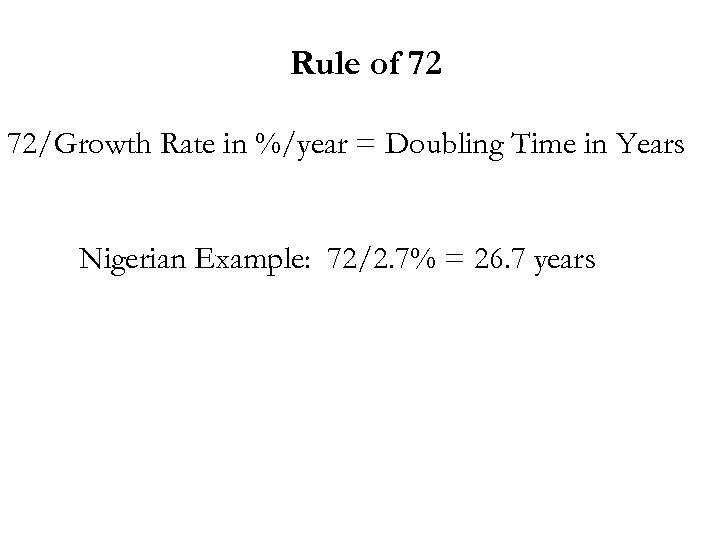
Rule of 72 72/Growth Rate in %/year = Doubling Time in Years Nigerian Example: 72/2. 7% = 26. 7 years
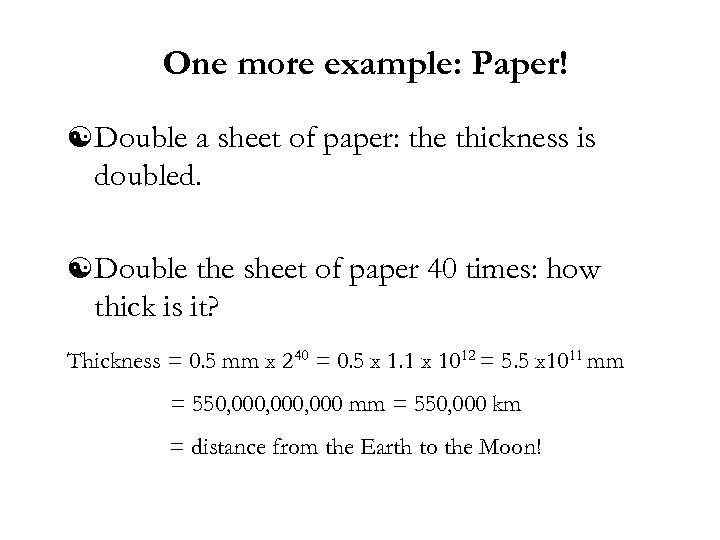
One more example: Paper! [ Double a sheet of paper: the thickness is doubled. [ Double the sheet of paper 40 times: how thick is it? Thickness = 0. 5 mm x 240 = 0. 5 x 1. 1 x 1012 = 5. 5 x 1011 mm = 550, 000, 000 mm = 550, 000 km = distance from the Earth to the Moon!
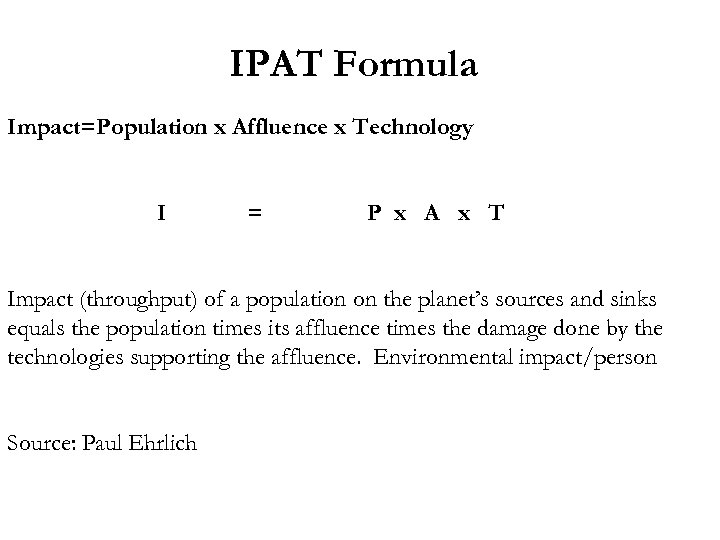
IPAT Formula Impact=Population x Affluence x Technology I = P x A x T Impact (throughput) of a population on the planet’s sources and sinks equals the population times its affluence times the damage done by the technologies supporting the affluence. Environmental impact/person Source: Paul Ehrlich
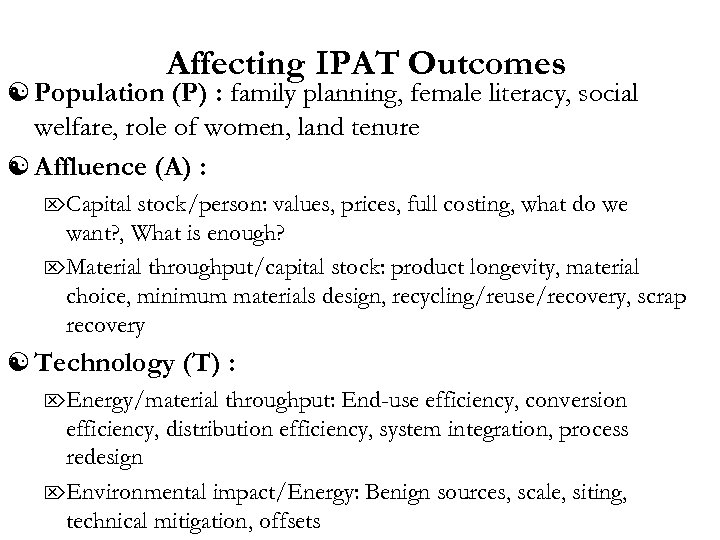
Affecting IPAT Outcomes [ Population (P) : family planning, female literacy, social welfare, role of women, land tenure [ Affluence (A) : ÖCapital stock/person: values, prices, full costing, what do we want? , What is enough? ÖMaterial throughput/capital stock: product longevity, material choice, minimum materials design, recycling/reuse/recovery, scrap recovery [ Technology (T) : ÖEnergy/material throughput: End-use efficiency, conversion efficiency, distribution efficiency, system integration, process redesign ÖEnvironmental impact/Energy: Benign sources, scale, siting, technical mitigation, offsets
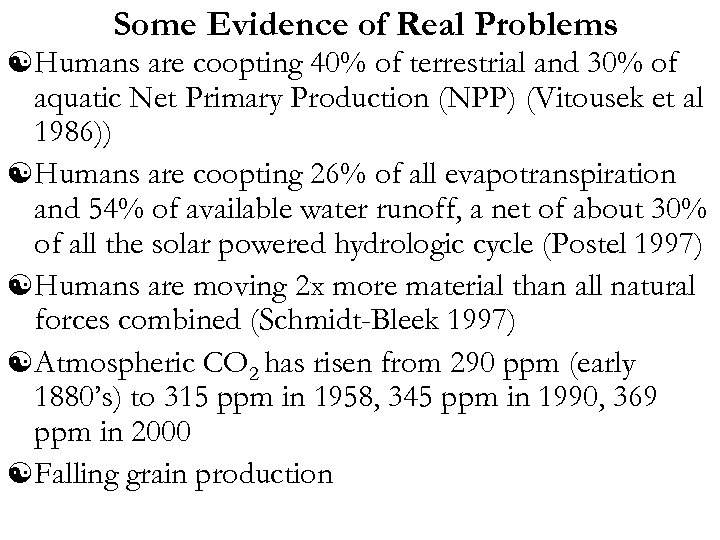
Some Evidence of Real Problems [ Humans are coopting 40% of terrestrial and 30% of aquatic Net Primary Production (NPP) (Vitousek et al 1986)) [ Humans are coopting 26% of all evapotranspiration and 54% of available water runoff, a net of about 30% of all the solar powered hydrologic cycle (Postel 1997) [ Humans are moving 2 x more material than all natural forces combined (Schmidt-Bleek 1997) [ Atmospheric CO 2 has risen from 290 ppm (early 1880’s) to 315 ppm in 1958, 345 ppm in 1990, 369 ppm in 2000 [ Falling grain production
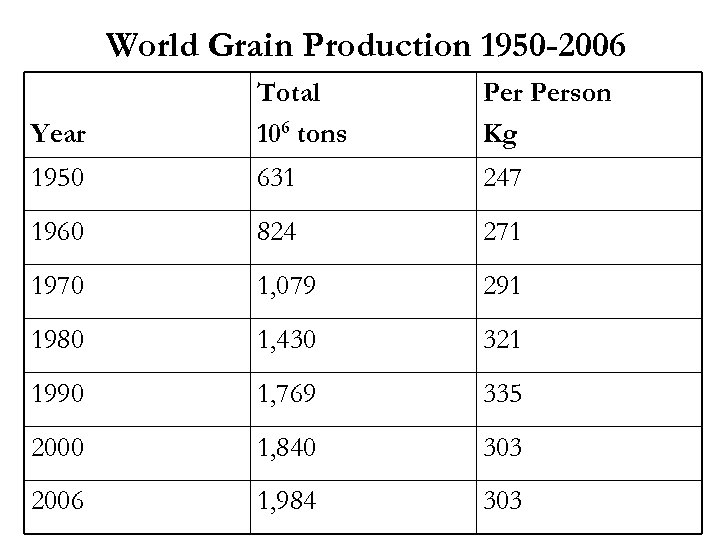
World Grain Production 1950 -2006 Year Total 106 tons Person Kg 1950 631 247 1960 824 271 1970 1, 079 291 1980 1, 430 321 1990 1, 769 335 2000 1, 840 303 2006 1, 984 303
What is Sustainable Development? _ Sustainable development is development that meets the needs of the present without compromising the ability of future generations to meet their own needs [World Commission on Environment and Development, 1987; Our Common Future (Brundtland Report)] _ Agenda 21: In order to meet the challenges of environment and development, States decided to engage in a new global partnership. . . sustainable development should become a priority item on the agenda of the international community [UN Conf on Env Dev, Rio de Janeiro, June 1992] _ . . . is nondeclining human well-being over time [David Pearce, Economics of Sustainable Development, 1994]
More on Sustainable Development [ A particular system that when considered in isolation has a positive balance in relation to its own costs and benefits (Ravetz 1992) [ Improving the quality of life within the carrying capacity or supporting ecosystems (WCU 1991) [ The use of energy and materials in an urban area in balance with what the region can supply continuously through natural processes such as photosynthesis, biological decomposition, and the biochemical processes which sustain life (Lyle 1994) [ Something is 'sustainable' if it has the capacity to continue. (Sustainable London)
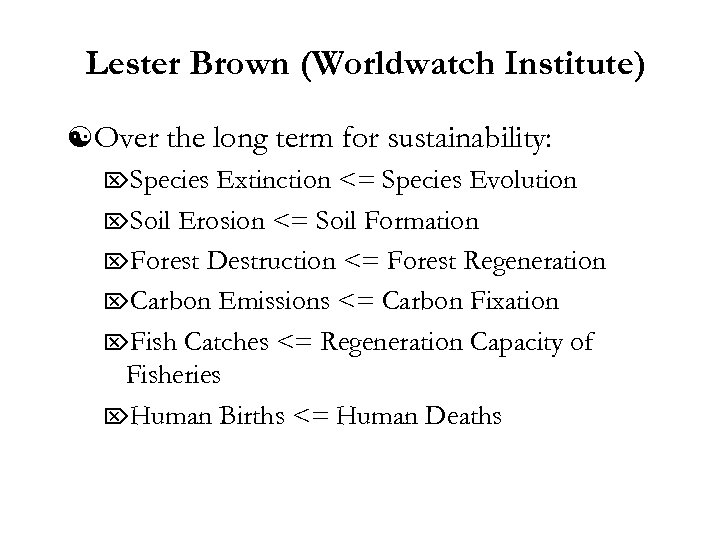
Lester Brown (Worldwatch Institute) [ Over the long term for sustainability: ÖSpecies Extinction <= Species Evolution ÖSoil Erosion <= Soil Formation ÖForest Destruction <= Forest Regeneration ÖCarbon Emissions <= Carbon Fixation ÖFish Catches <= Regeneration Capacity of Fisheries ÖHuman Births <= Human Deaths
Key Points [Sustainability is concerned with future generations, intergenerational justice, resources, environment [Three systems must be maintained in healthy a healthy relationship: ecological, social, and economic [Natural systems hold the key to human sustainability
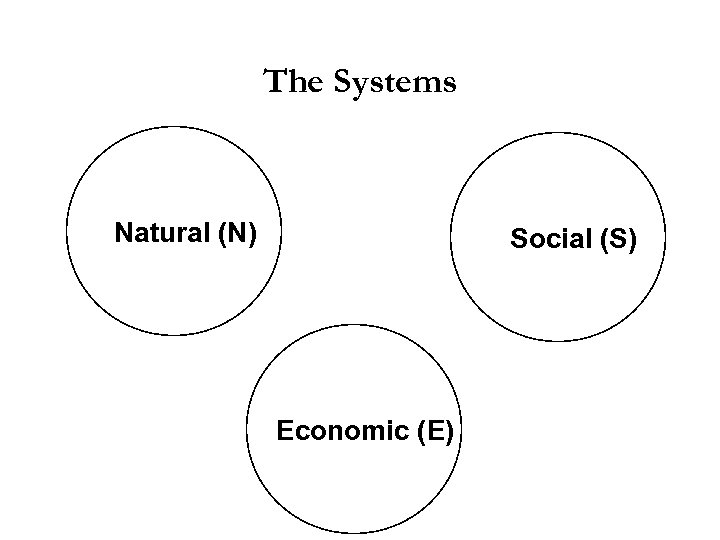
The Systems Natural (N) Social (S) Economic (E)
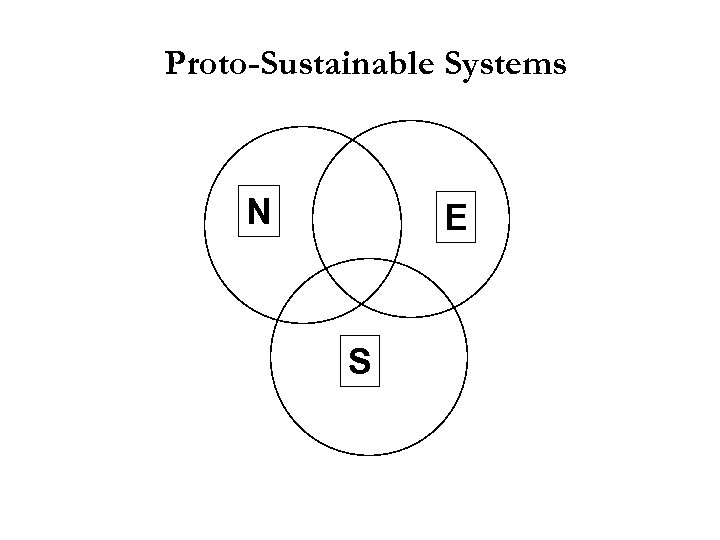
Proto-Sustainable Systems N E S
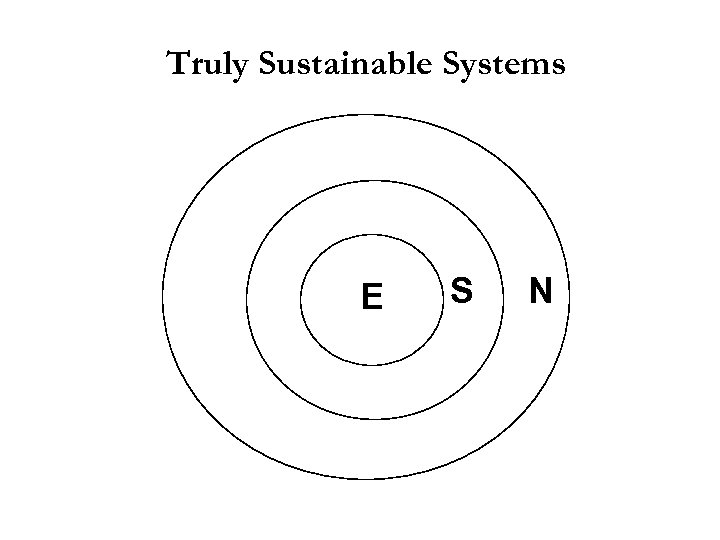
Truly Sustainable Systems E S N
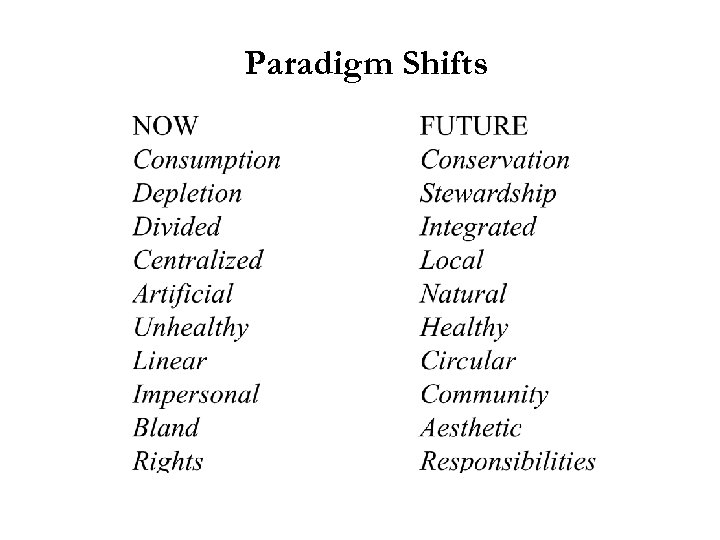
Paradigm Shifts
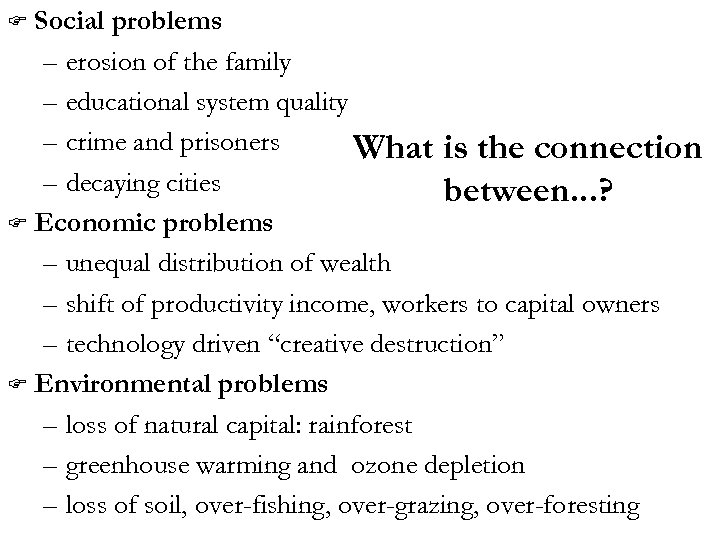
Social problems – erosion of the family – educational system quality – crime and prisoners What is the connection – decaying cities between. . . ? F Economic problems – unequal distribution of wealth – shift of productivity income, workers to capital owners – technology driven “creative destruction” F Environmental problems – loss of natural capital: rainforest – greenhouse warming and ozone depletion – loss of soil, over-fishing, over-grazing, over-foresting F
Thinking Sustainably: Observe Nature F There is no such thing as waste F Live off current solar income F Respect and foster diversity A key lesson from this course!
General Sustainability Principles F minimize resource consumption, use of nonrenewables, pollution, toxics, waste F maximize efficiency, reuse, recycling, renewable resource use F foster conservation, understanding of natural systems functions, economic justice F focus on quality v. quantity, needs v. wants F redesign the economy and artifacts to mimic natural systems
Waste = Pollution = Inefficiency = Lost $ F F F Positive Correlation: environmentalism & economic prosperity Germany – environmental technologies – environmental policy = economic policy – improved environmental quality = improved competitiveness Japan – 40% less energy in steel production than US, far less air pollution – defy conventional wisdom – Research Agency of Innovative Technology for the Earth: international competitiveness
Perverse Economics u Environmental damage actually add to GNP u Depletion of natural resources adds to GNP (+ tax credits!!) u The polluter hardly pays u Waste disposal is heavily subsidized u Maximum ROI drives corporate decisions u Discount rate maximizes today’s consumption/depletion
Strong vs. Weak Sustainability [ Refers to different schools of thought [ Strong: natural capital is irreplaceable [ Weak: natural capital is substitutable by manmade capital [ More discussion when we cover economic concepts
Summary [ Extraction of resource and environmental damage continuing and even accelerating [ We are rapidly destroying adapted, diverse ecosystems crucial to both our economy and our survival [ Growth as a basic assumption of the economic system is mathematically and physically impossible [ Sustainability can help us change course to live within the constraints of nature with a high quality of life, to change our thinking.
“The significant problems we face cannot be solved at the same level of thinking we were at when we created them. ” - Albert Einstein
Скачать презентацию Introduction to Sustainable Development Lecture A Purpose
811d60da02ea7a541bcc0557777575ff.ppt