


 Скачать презентацию Introduction to shipping — Alexander Mishin 1
Introduction to shipping.pptx
- Количество слайдов: 23
 Introduction to shipping - Alexander Mishin 1
 Vessel = Ship= Rusty Bucket Судно = Пароход = Лодка = Ржавое ведро НЕ КОРАБЛЬ!!!!! Introduction to shipping - Alexander Mishin 2
 Preliminary programm 1. Geography of the marine transport 2. Types of ships / Innovations 3. Types of Cargoes 4. Ship’s operations and Management 5. Bulk Chartering 6. Tanker Chartering 7. Shipbrokers 8. Bill of Lading 9. Charter Parties 10. Multi modal transport 11. Off shore industry 12. Ship’s finance 13. Laytime calculations / Maritime law Introduction to shipping - Alexander Mishin 3
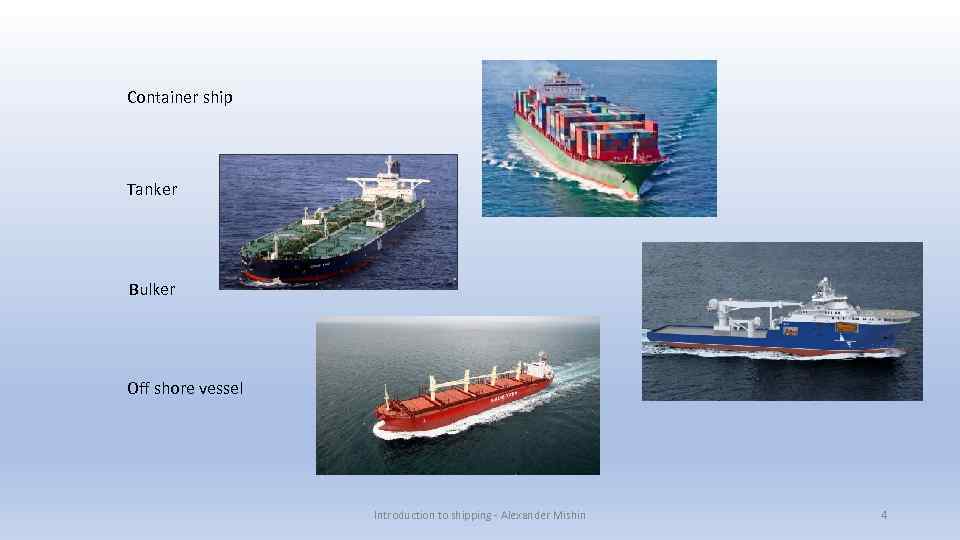 Container ship Tanker Bulker Off shore vessel Introduction to shipping - Alexander Mishin 4
 3 Functions of the Bill of Lading 1. Document of title 2. Evidence of contract of carriage 3. Bill of Lading as receipt Introduction to shipping - Alexander Mishin 5
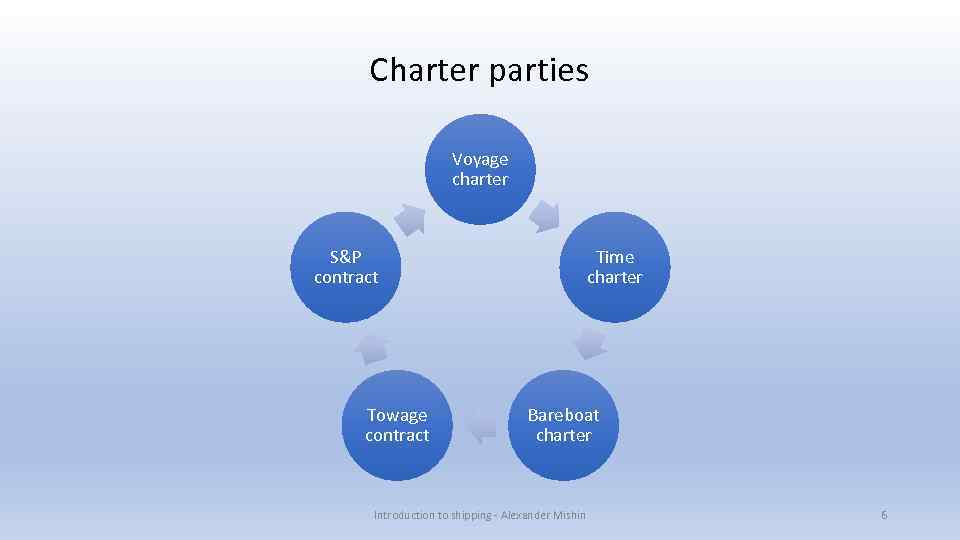 Charter parties Voyage charter S&P contract Towage contract Time charter Bareboat charter Introduction to shipping - Alexander Mishin 6
 Laytime SSHEX SSHINC SOF Introduction to shipping - Alexander Mishin 7
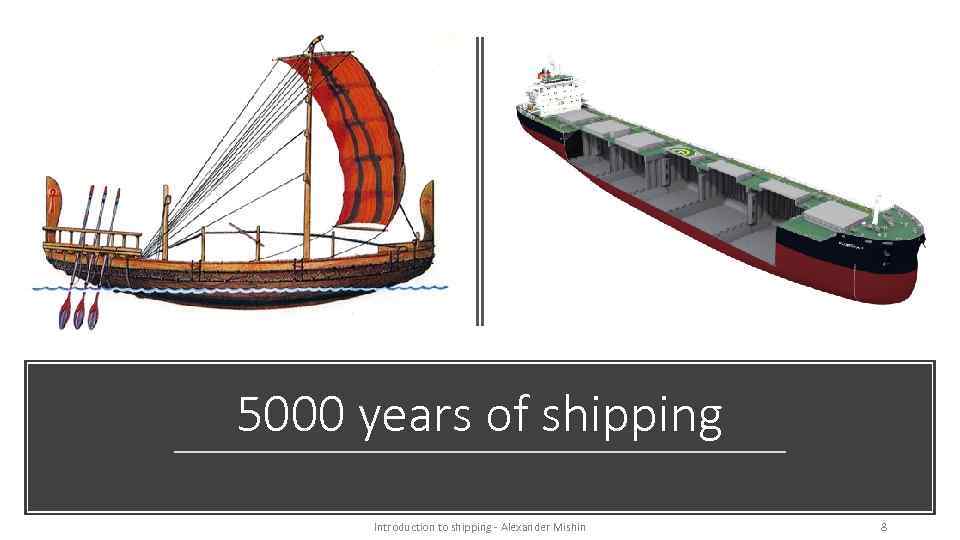 5000 years of shipping Introduction to shipping - Alexander Mishin 8
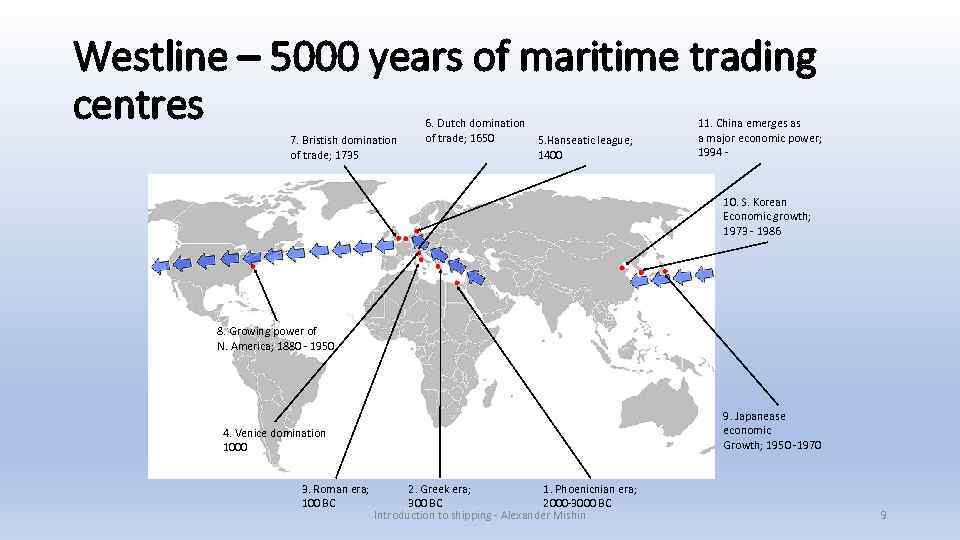 Westline – 5000 years of maritime trading centres 7. Bristish domination of trade; 1735 6. Dutch domination of trade; 1650 5. Hanseatic league; 1400 11. China emerges as a major economic power; 1994 - 10. S. Korean Economic growth; 1973 - 1986 8. Growing power of N. America; 1880 - 1950 9. Japanease economic Growth; 1950 -1970 4. Venice domination 1000 3. Roman era; 100 BC 2. Greek era; 1. Phoenicnian era; 300 BC 2000 -3000 BC Introduction to shipping - Alexander Mishin 9
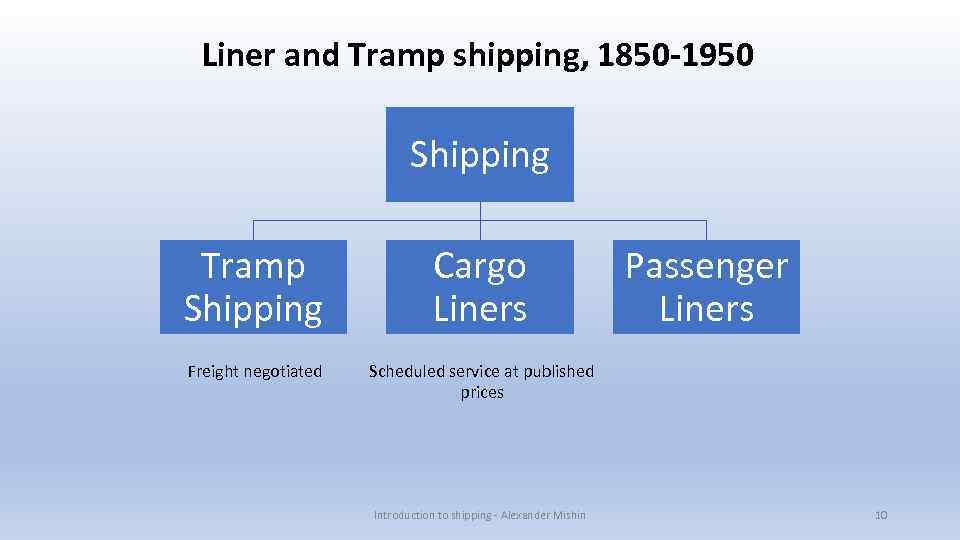 Liner and Tramp shipping, 1850 -1950 Shipping Tramp Shipping Cargo Liners Freight negotiated Scheduled service at published prices Introduction to shipping - Alexander Mishin Passenger Liners 10
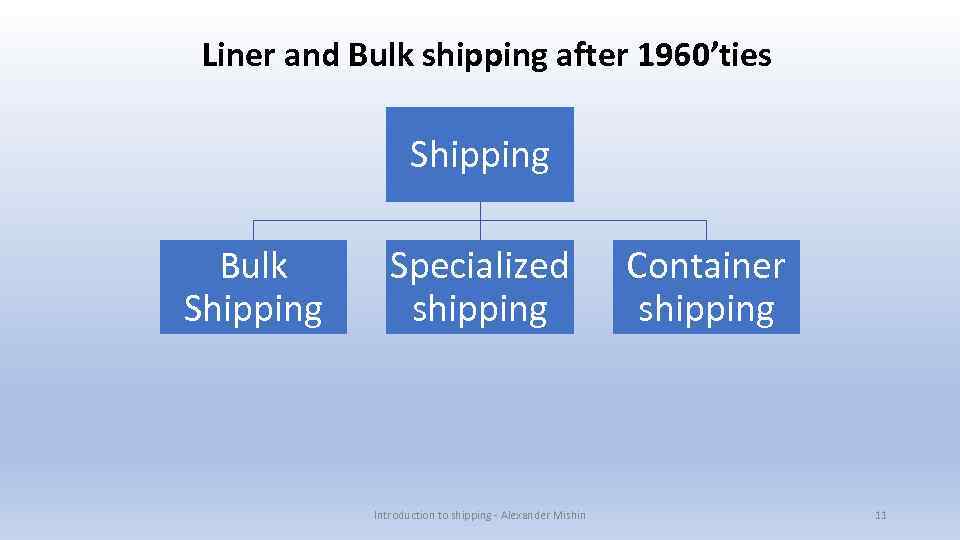 Liner and Bulk shipping after 1960’ties Shipping Bulk Shipping Specialized shipping Introduction to shipping - Alexander Mishin Container shipping 11
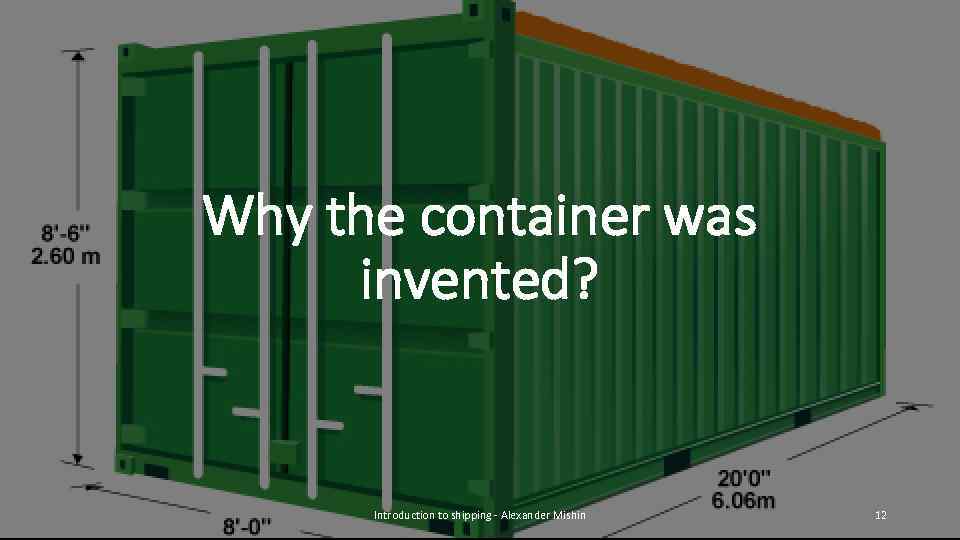 Why the container was invented? Introduction to shipping - Alexander Mishin 12
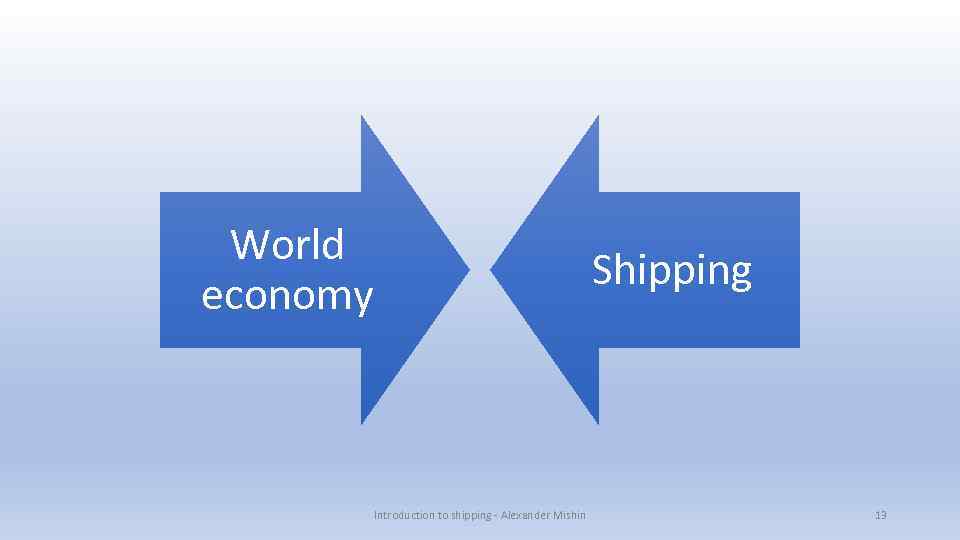 World economy Shipping Introduction to shipping - Alexander Mishin 13
 Introduction to shipping - Alexander Mishin 14
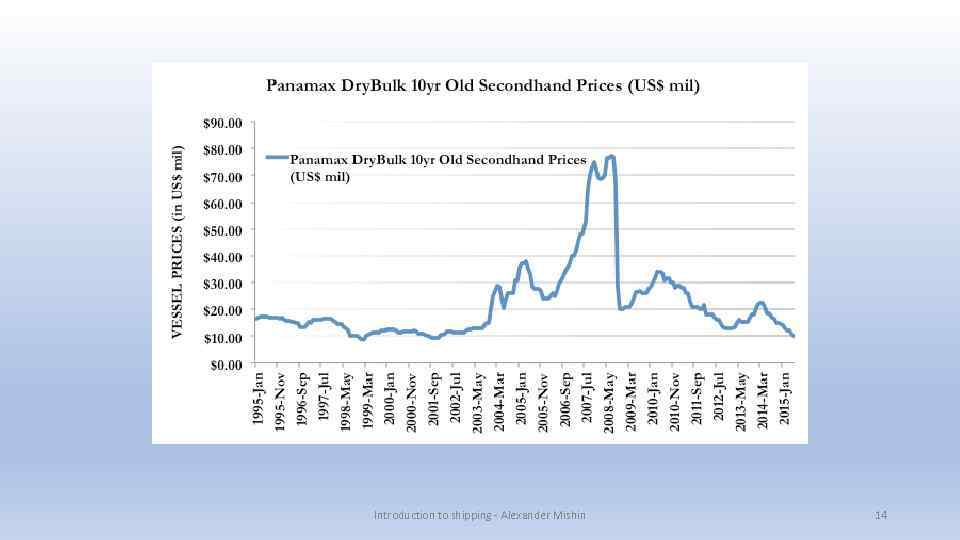
 Seaborne trade • Shipping routes reflect world trade flows about 90% of international trade is done by sea competitive freight costs (growing efficiency of maritime transport) Globalization. 7 -8 billions tons of cargoes. • Shipping industry made globalization possible and probably benefits from globalization more than almost any other sector. 150 countries are involved. • However this dependence of international trade and seaborne trade makes shipping industry more vulnerable to economic cycles / crisis. • Why are we still using ships to carry our cargoes? Introduction to shipping - Alexander Mishin 15
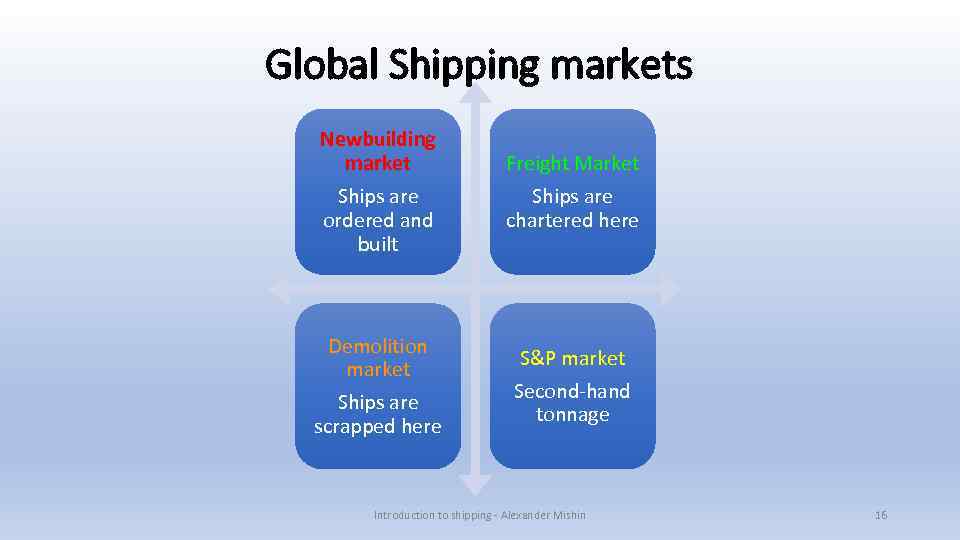 Global Shipping markets Newbuilding market Ships are ordered and built Freight Market Ships are chartered here Demolition market Ships are scrapped here S&P market Second-hand tonnage Introduction to shipping - Alexander Mishin 16
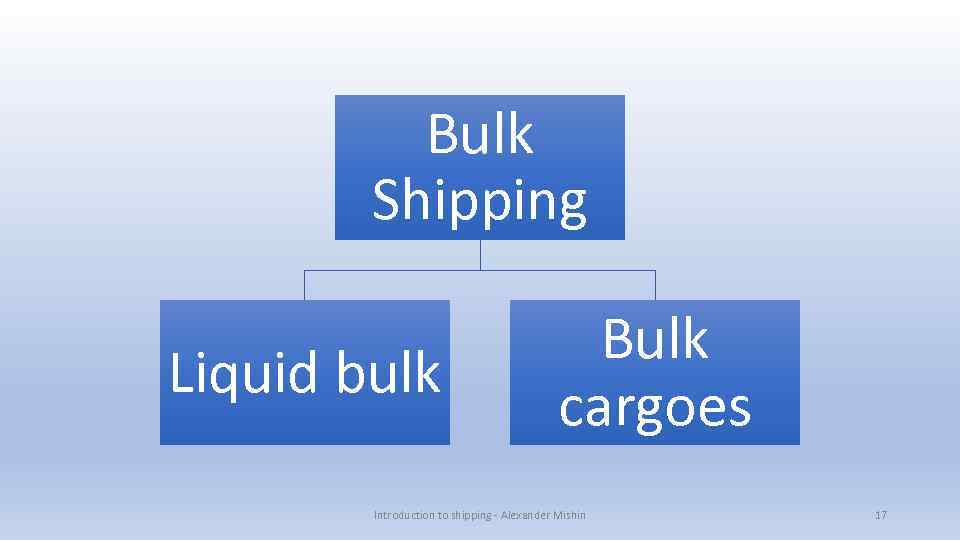 Bulk Shipping Liquid bulk Bulk cargoes Introduction to shipping - Alexander Mishin 17
 Bulkers • Capesize over dwt 100. 000 mts (but usually it is 150 -180. 000 mts) • Panamax dwt 70 – 100. 000 mts ( dwt 72. 000 standard Panamax) • Handymax dwt 40 – 60. 000 mts (Supramax + Ultramax) • Handysize dwt 25 – 40. 000 mts • Minibulkers dwt 10 – 20. 000 mts • Coasters dwt 1. 000 - 10. 000 mts Introduction to shipping - Alexander Mishin 18
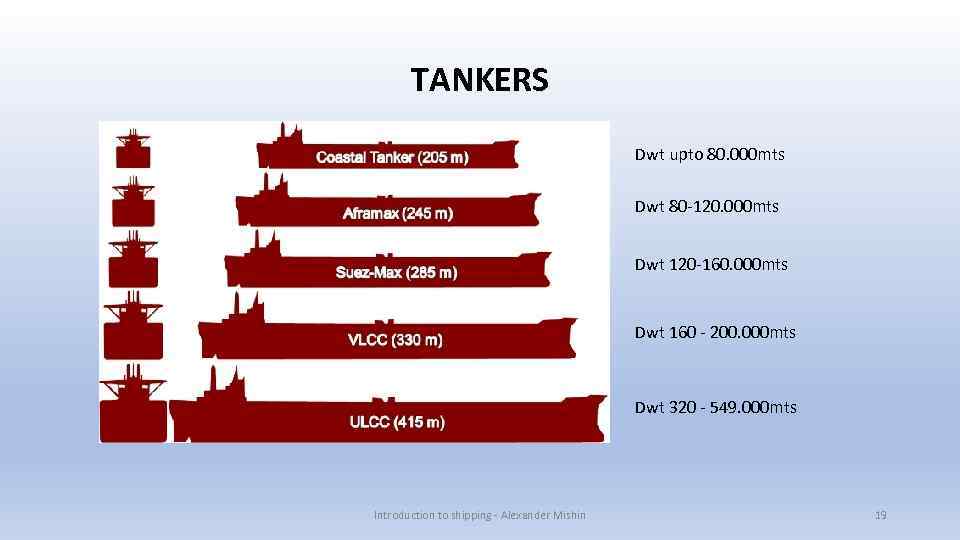 TANKERS Dwt upto 80. 000 mts Dwt 80 -120. 000 mts Dwt 120 -160. 000 mts Dwt 160 - 200. 000 mts Dwt 320 - 549. 000 mts Introduction to shipping - Alexander Mishin 19
 Major bulk cargoes • Liquid bulk cargoes require tanker transportation. The main ones are crude oil, oil products, liquid chemicals • Five major bulks – iron ore, grains, coal, phosphates, bauxite • Minor bulks – steel products, steel scrap, cement, nitrogen fertilizers, forest products Introduction to shipping - Alexander Mishin 20
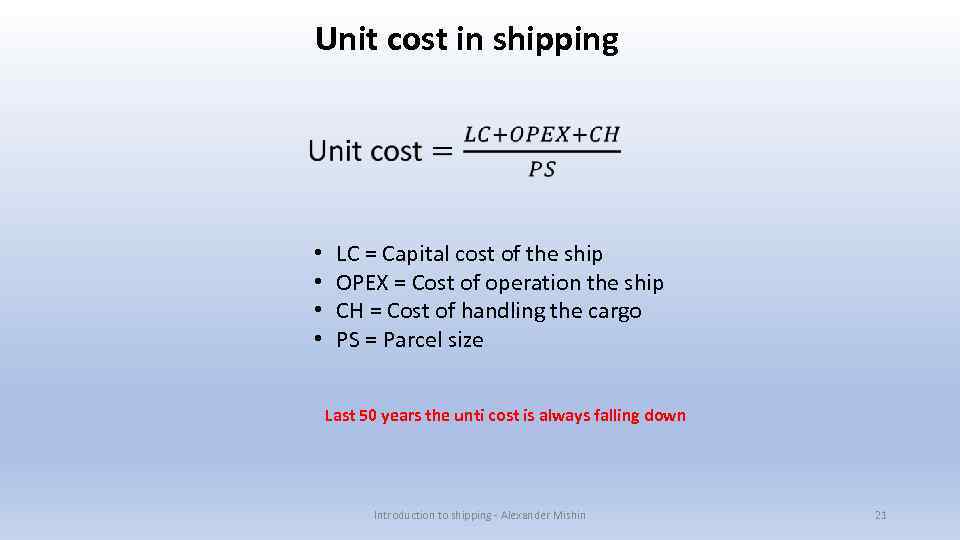 Unit cost in shipping • • LC = Capital cost of the ship OPEX = Cost of operation the ship CH = Cost of handling the cargo PS = Parcel size Last 50 years the unti cost is always falling down Introduction to shipping - Alexander Mishin 21
 Key success factors for the owners • Fuel-efficient vessels. In order to give competitive freight rates on this low freight market. • Good relationships and close contacts with the main charterers and traders / Market know how and expertise. • Government / Political risks Introduction to shipping - Alexander Mishin 22
 Q&A • Расскажите нам об основных этапах истории судоходства • Кризисы 1970 -1980 х годов и их влияние на шиппинг • Базисы поставки товара - Инкотермс - особенно ФОБ и СИФ • Типы шиппинговых компаний Introduction to shipping - Alexander Mishin 23