


 Скачать презентацию Introduction to Questionnaire Design Ian Walker Department of
76064bfcabdc8479f63c280bb7d56581.ppt
- Количество слайдов: 34
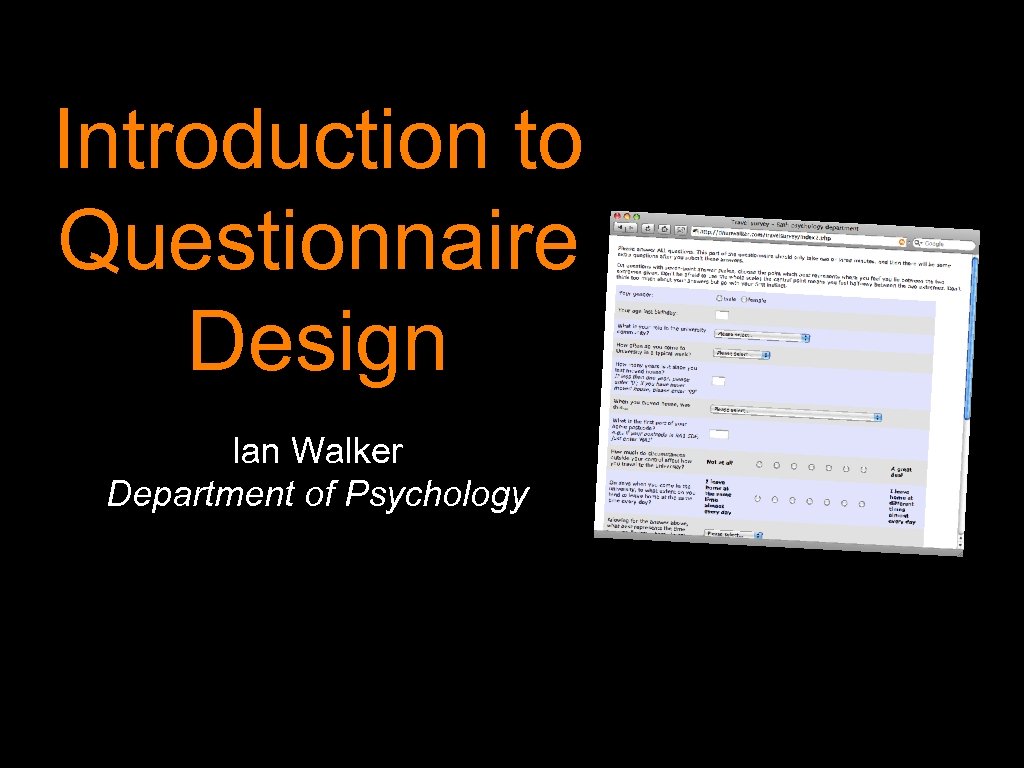 Introduction to Questionnaire Design Ian Walker Department of Psychology
 Session plan • Why questionnaires? • Types of question • Good and bad design • A crash course in psychometrics • Ethics • Practicalities
 A thought. . . • “It may seem easy to construct a survey… But there are hundreds of ways to do it wrong and only a few ways to do it right” Physics Today, Nov. 2007
 Why a questionnaire? • What is a questionnaire? • What can it tell you? • What can’t it tell you? • Are you sure this is the best way to answer your question? • Does a questionnaire already exist or must you create one?
 Planning ahead • Exploring a topic, or asking a specific question? • What will happen to the data you collect? • Descriptive only? Statistical analysis?
 Types of question • Open questions • How to process the data • Subjectivity and reliability • Closed questions • Yes/no, categories, Likert scales, etc.
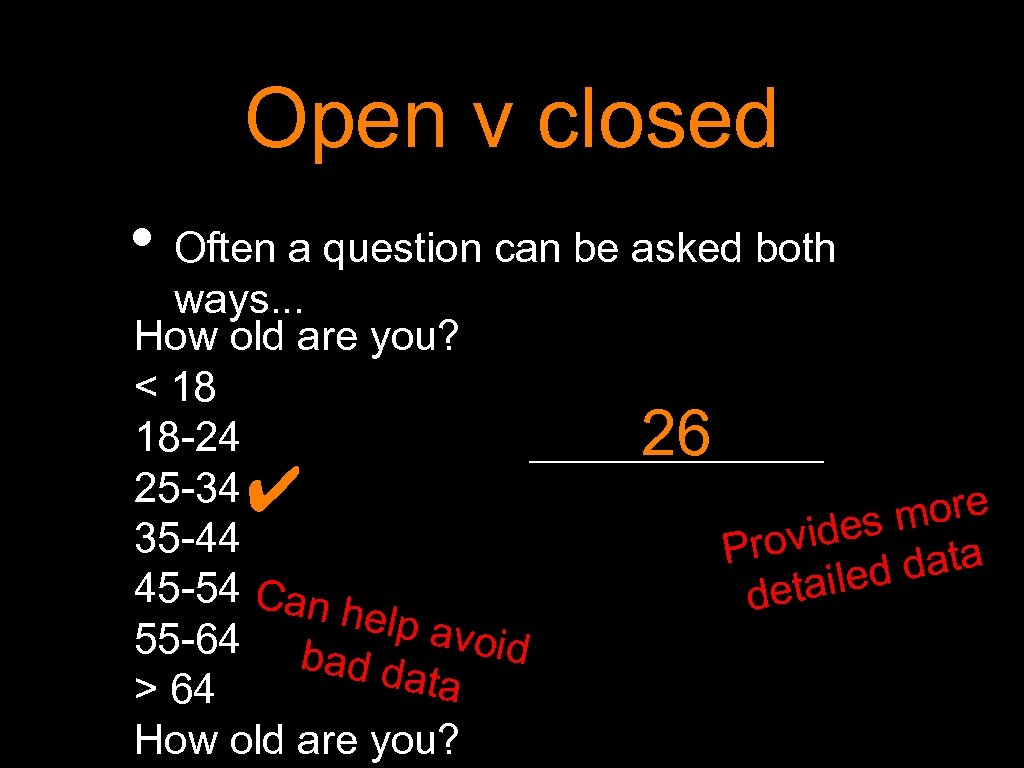 Open v closed • Often a question can be asked both ways. . . How old are you? < 18 18 -24 25 -34✔ 35 -44 45 -54 Can help a void 55 -64 ba d data > 64 How old are you? 26 more vides Pro data ailed det
 Open questions • “Do you have any comments about the service you received? ” • “What was the best thing about our service? ” • “Do you have any other comments? ”
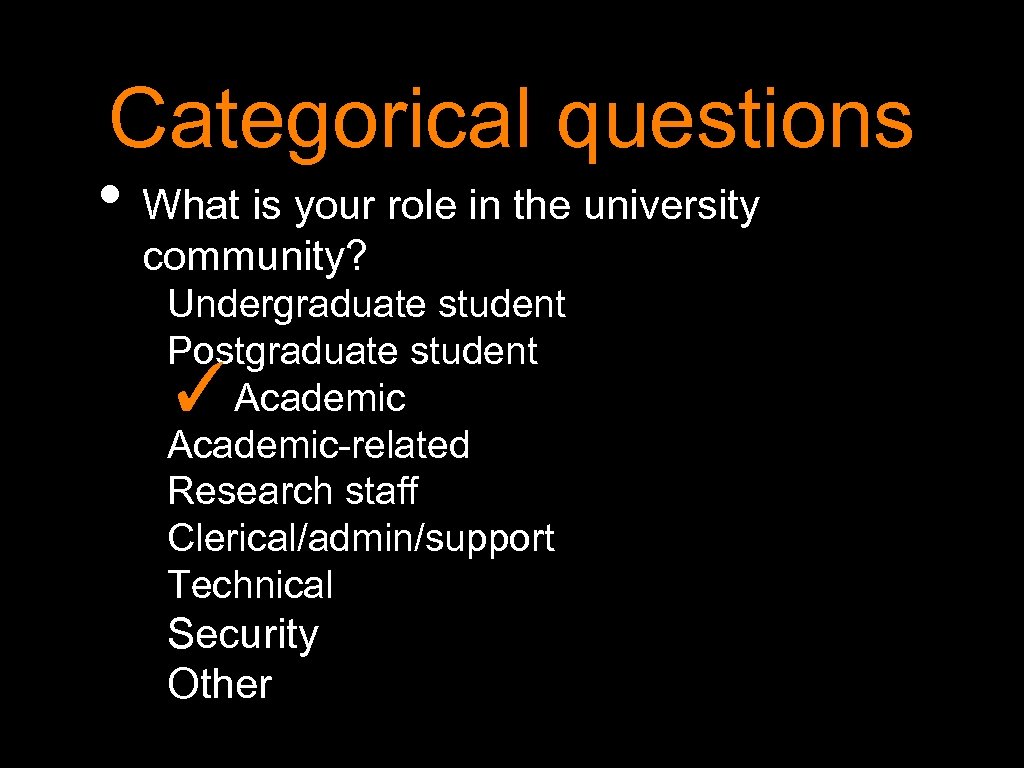 Categorical questions • What is your role in the university community? Undergraduate student Postgraduate student Academic-related Research staff Clerical/admin/support Technical ✓ Security Other
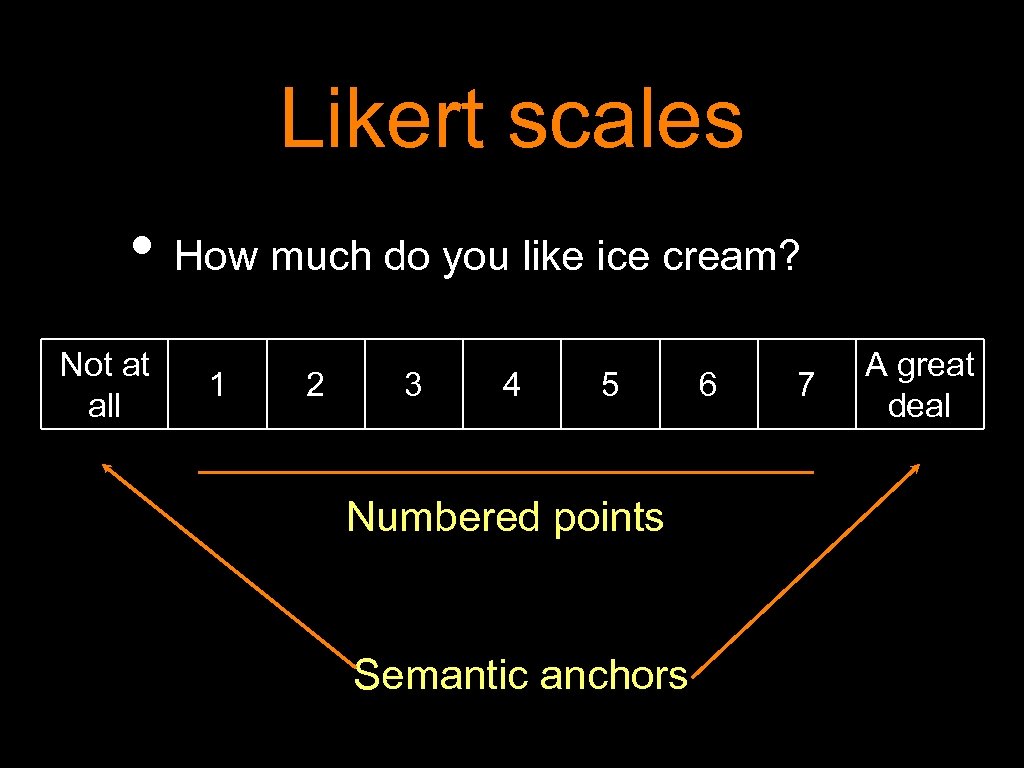 Likert scales • How much do you like ice cream? Not at all 1 2 3 4 5 Numbered points Semantic anchors 6 7 A great deal
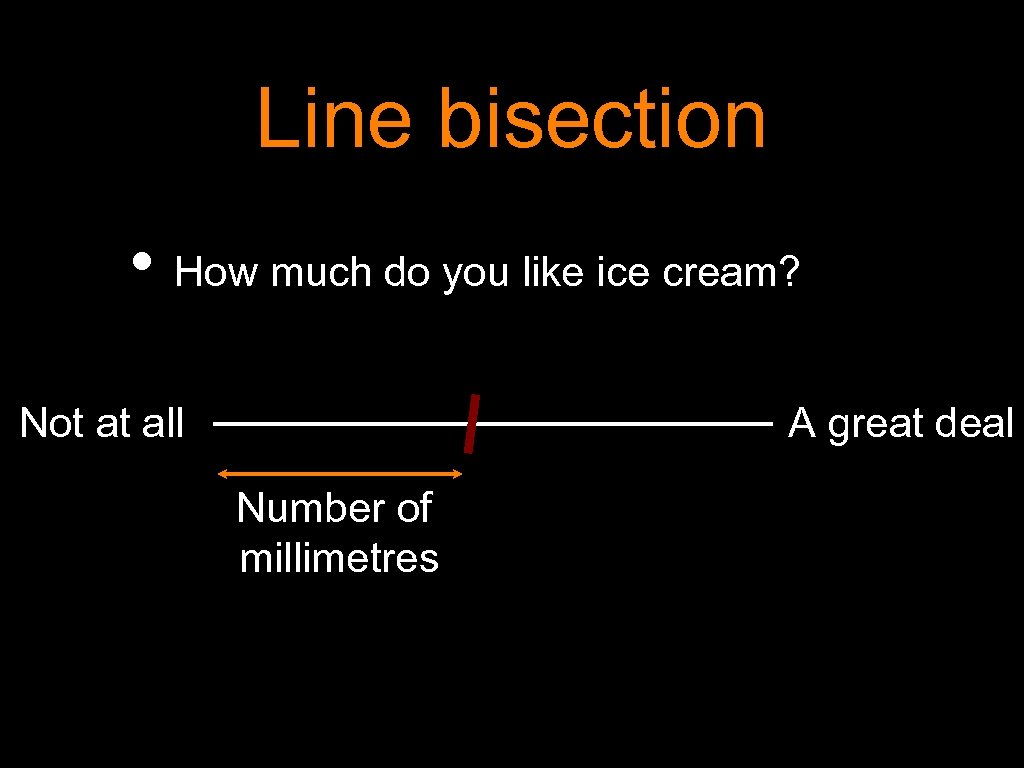 Line bisection • How much do you like ice cream? Not at all A great deal Number of millimetres
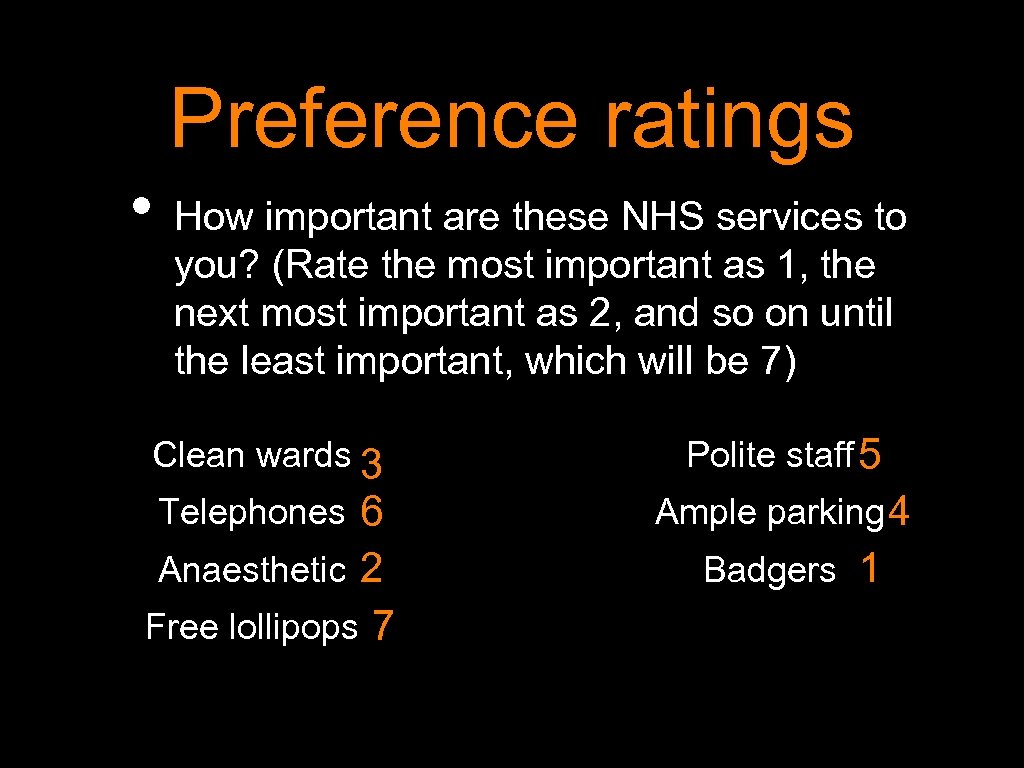 Preference ratings • How important are these NHS services to you? (Rate the most important as 1, the next most important as 2, and so on until the least important, which will be 7) Clean wards 3 Polite staff 5 Telephones 6 Ample parking 4 Anaesthetic 2 Badgers 1 Free lollipops 7
 Good and bad items • A good question provides useful information • A bad question confuses people and loses you data • Ultimately it may invalidate your research
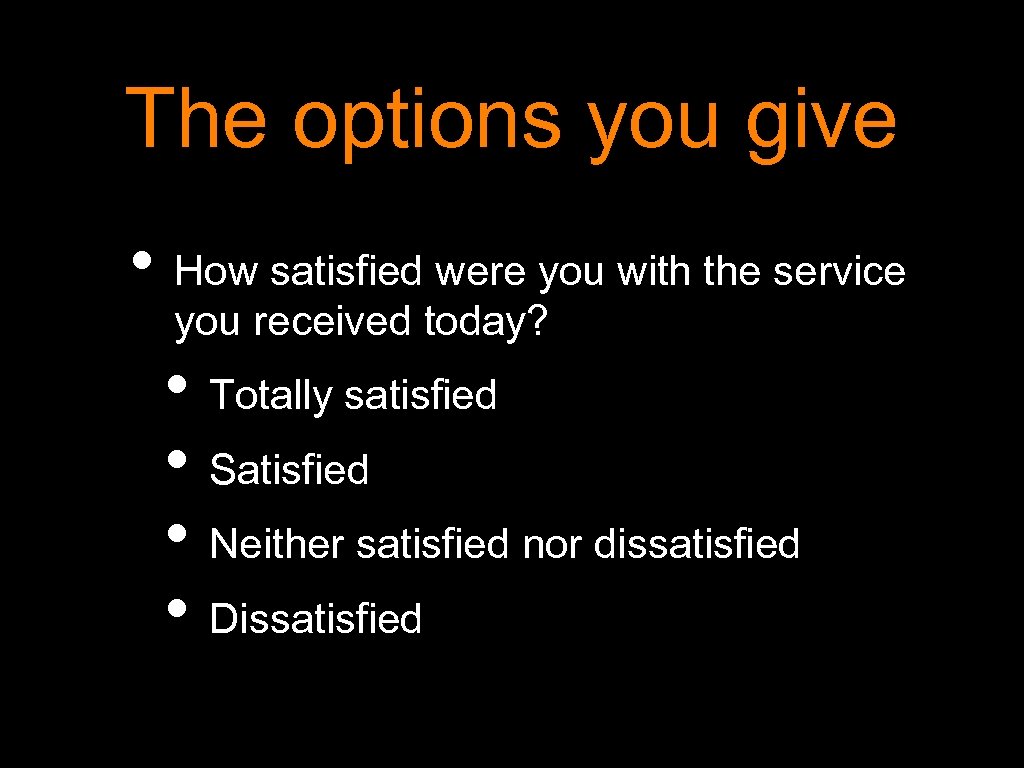 The options you give • How satisfied were you with the service you received today? • Totally satisfied • Satisfied • Neither satisfied nor dissatisfied • Dissatisfied
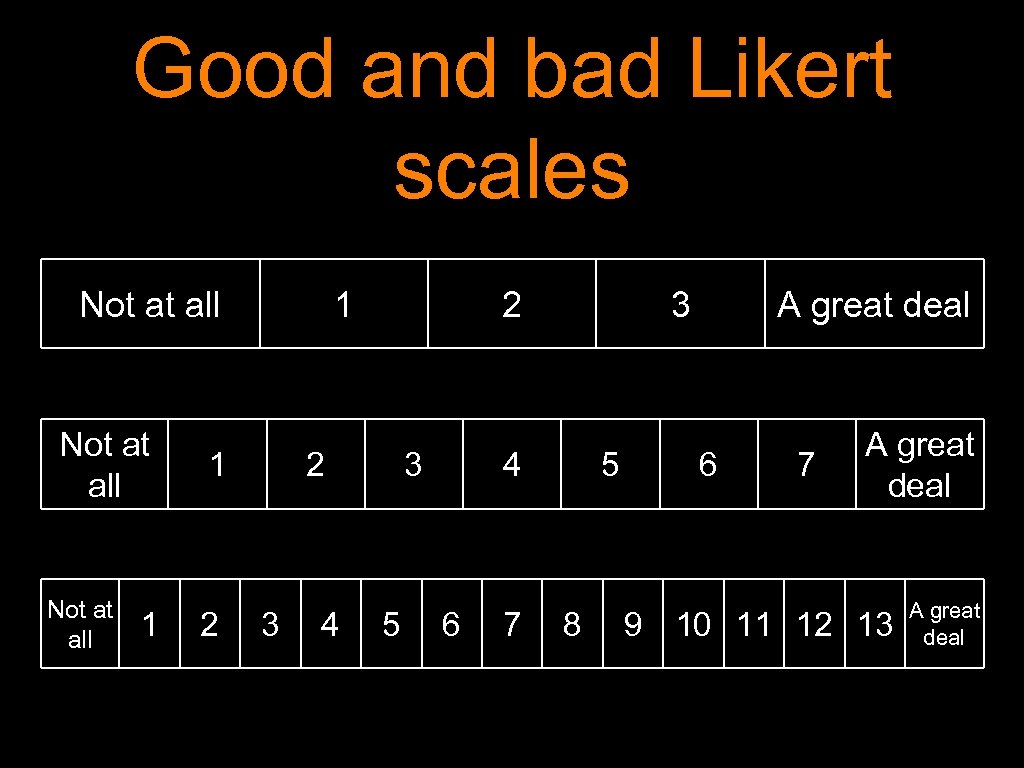 Good and bad Likert scales Not at all 1 1 1 2 2 2 3 4 3 5 3 4 6 7 5 8 A great deal 6 7 A great deal 9 10 11 12 13 A great deal
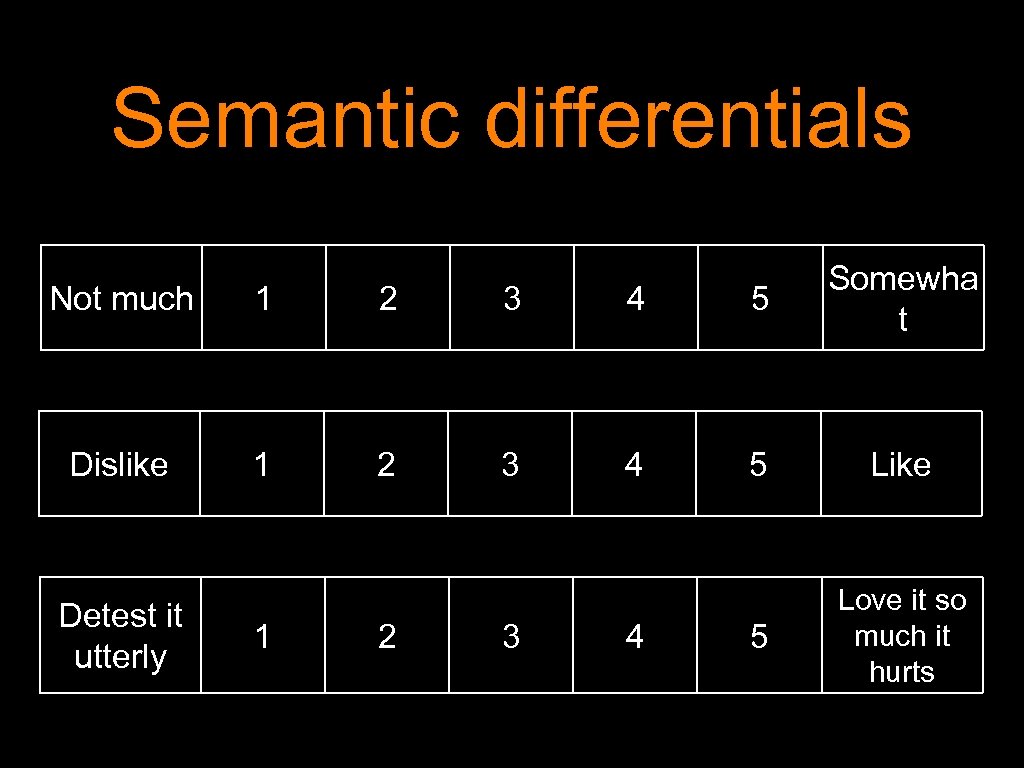 Semantic differentials Not much 1 2 3 4 5 Somewha t Dislike 1 2 3 4 5 Like 5 Love it so much it hurts Detest it utterly 1 2 3 4
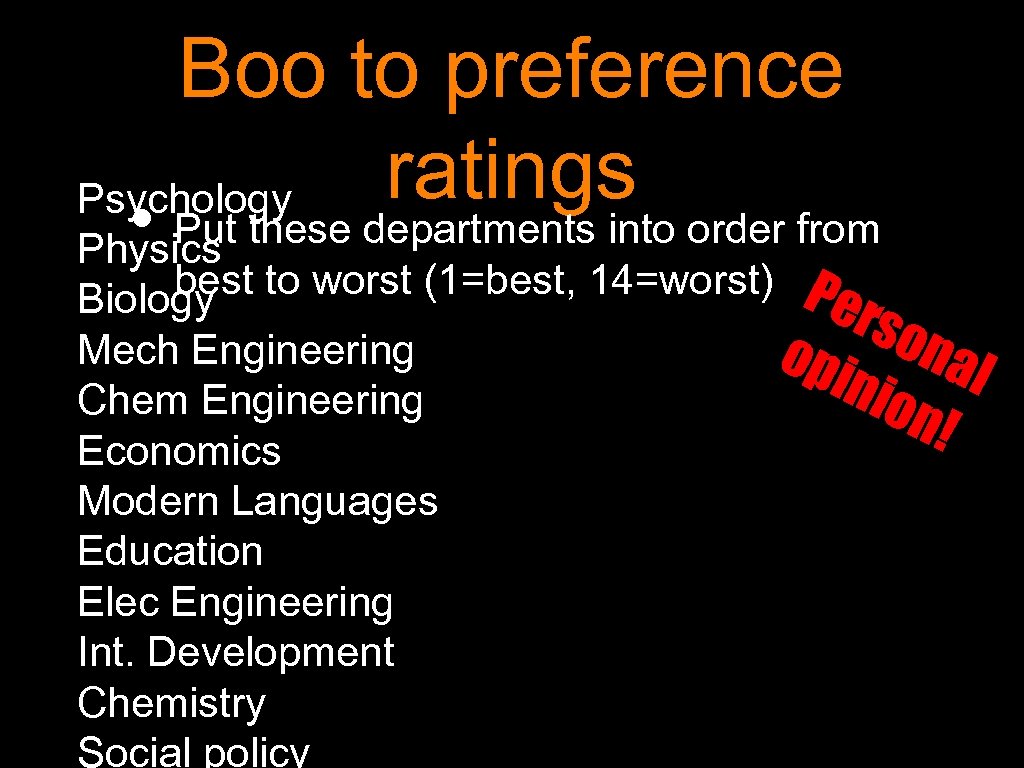 Boo to preference ratings Psychology • Put these departments into order from Physics best to worst (1=best, 14=worst) P Biology ers ona Mech Engineering opi nio l Chem Engineering n! Economics Modern Languages Education Elec Engineering Int. Development Chemistry Social policy
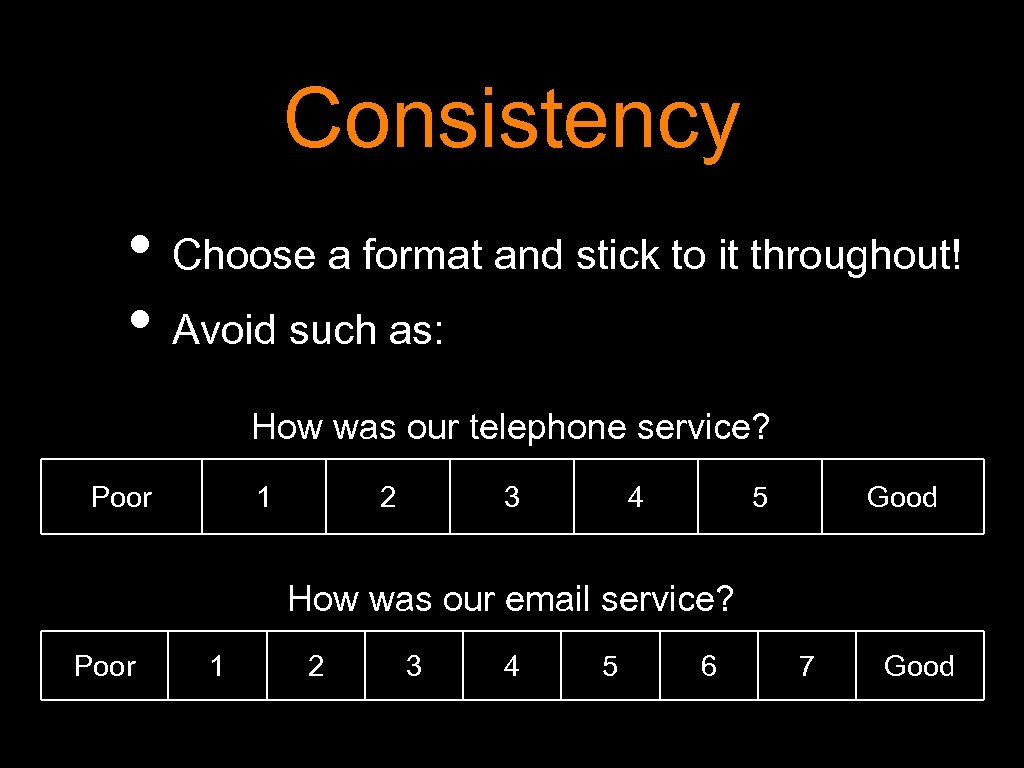 Consistency • Choose a format and stick to it throughout! • Avoid such as: How was our telephone service? Poor 1 2 3 4 5 Good How was our email service? Poor 1 2 3 4 5 6 7 Good
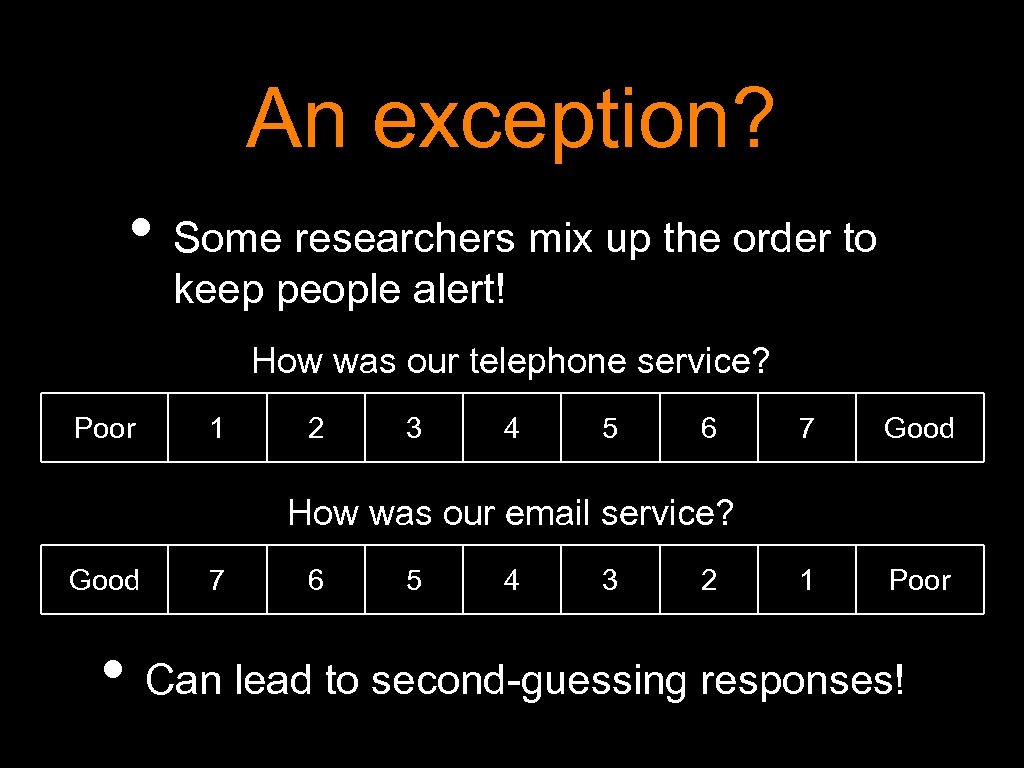 An exception? • Some researchers mix up the order to keep people alert! How was our telephone service? Poor 1 2 3 4 5 6 7 Good 1 Poor How was our email service? Good 7 6 5 4 3 2 • Can lead to second-guessing responses!
 Objective terms can improve questions • How did the drug make you feel? • Did you experience any of these feelings when you took the drug? • nausea • tingling • dizziness • euphoria
 ‘for instance…’ • ‘for instance…’ or ‘for example…’ can also provide useful cues in open questions • “Have you ever had a bad experience at a staff development course? (For instance, the presenter sneezing on you? )” • Can clarify what you expect • Can also bias responses in a particular direction
 Vagueness is your enemy • “How important is the university’s new strategy? ” • To whom? • “How often do you buy shoes? ” • Per week? Per year? The word ‘often’ is also very subjective • Better as: How many pairs of shoes have you bought in the last 12 months?
 • • People agree with statements Biased: Do you agree that the university should stop admitting overseas students to reduce its carbon footprint? • Unbiased: Do you agree or disagree that the university should stop accepting overseas students to reduce its carbon footprint? •
 More design issues • Questionnaire length • Although favour clarity over conciseness • Question wording affects responses • Pilot testing • Visual appearance. . .
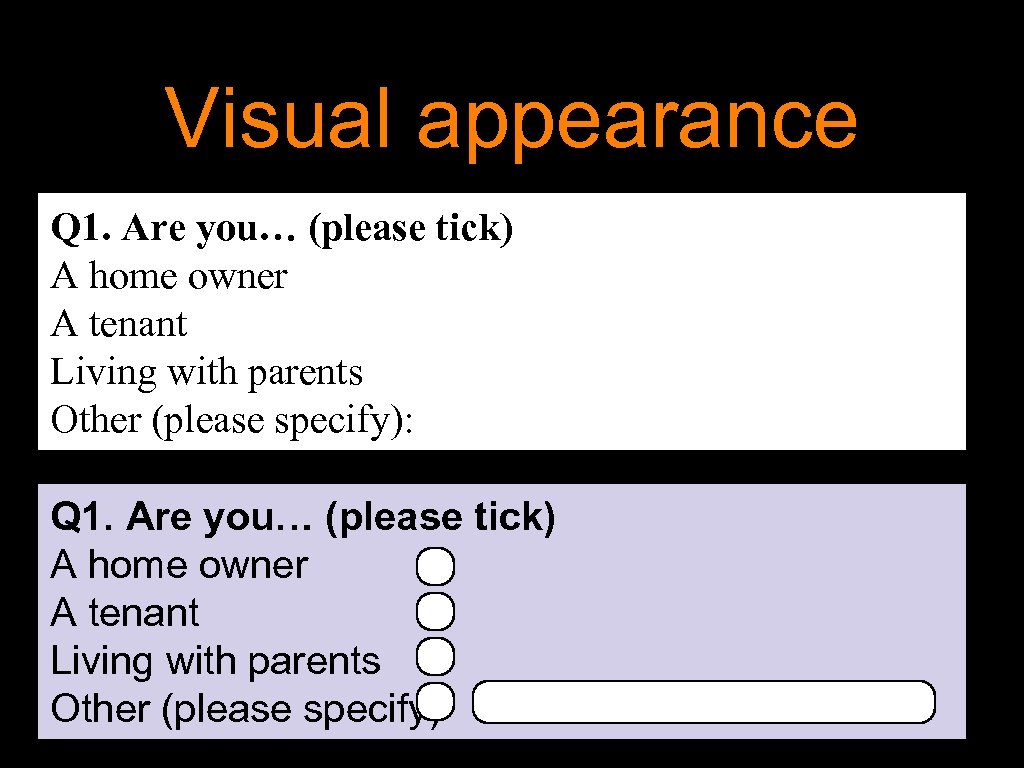 Visual appearance Q 1. Are you… (please tick) A home owner A tenant Living with parents Other (please specify): Q 1. Are you… (please tick) A home owner A tenant Living with parents Other (please specify)
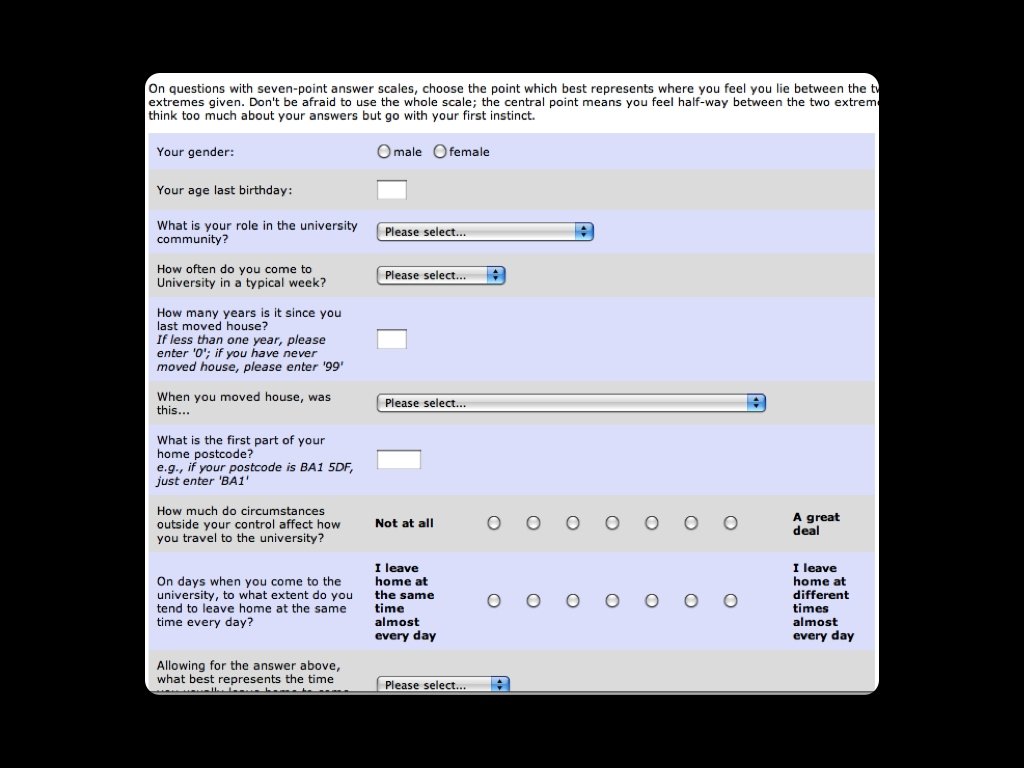
 Psychometrics • Psychometrics = mind-measuring • Validity • Do you measure what you want to measure? • Forms of validity • Reliability • How consistently do you measure something? • Forms of reliability
 Populations and samples • Be clear about what your population is • Role of statistical inference • Forms of sampling • particularly stratified, random, opportunity, snowball • Aiming for representative sample
 Ethical considerations • • • Informed consent • Special groups - minors, prisoners, reduced responsibility, etc. Anonymity Confidentiality Withdrawal Do people answer all the questions? • especially online, where you can insist Data retention
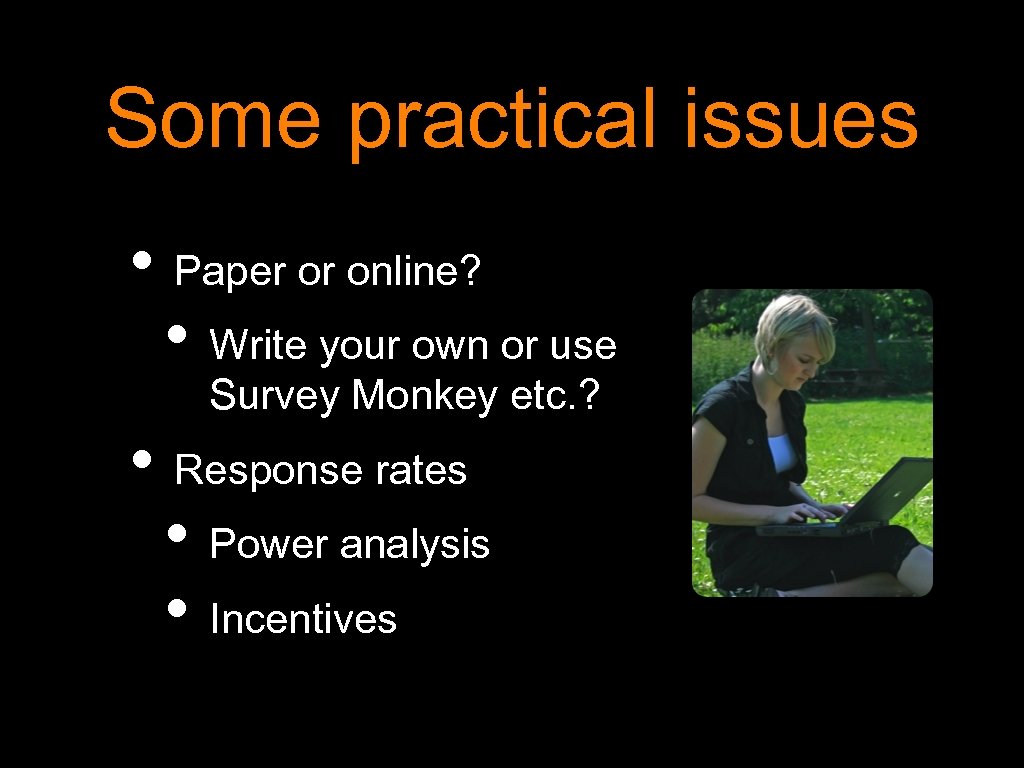 Some practical issues • Paper or online? • Write your own or use Survey Monkey etc. ? • Response rates • Power analysis • Incentives
 Is good wording a factor in the design of good questionnaires? For me, it’s a question of whether the wording offers sufficiently concrete options, thereby reducing any possibility of the reader failing to understand
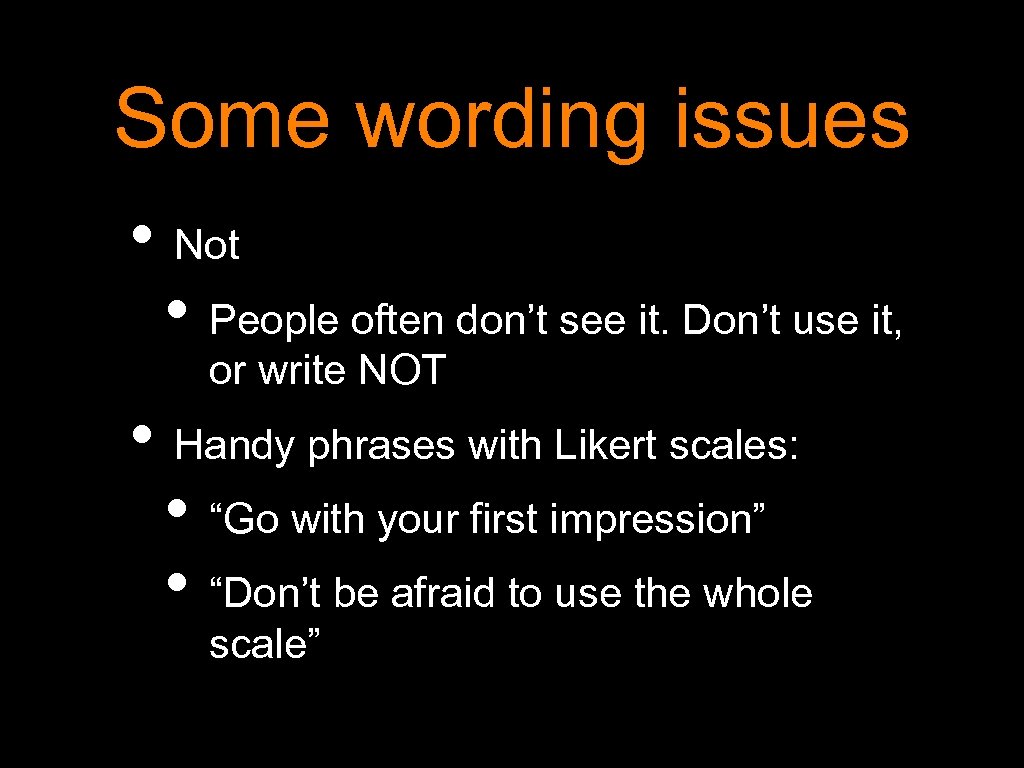 Some wording issues • Not • People often don’t see it. Don’t use it, or write NOT • Handy phrases with Likert scales: • “Go with your first impression” • “Don’t be afraid to use the whole scale”
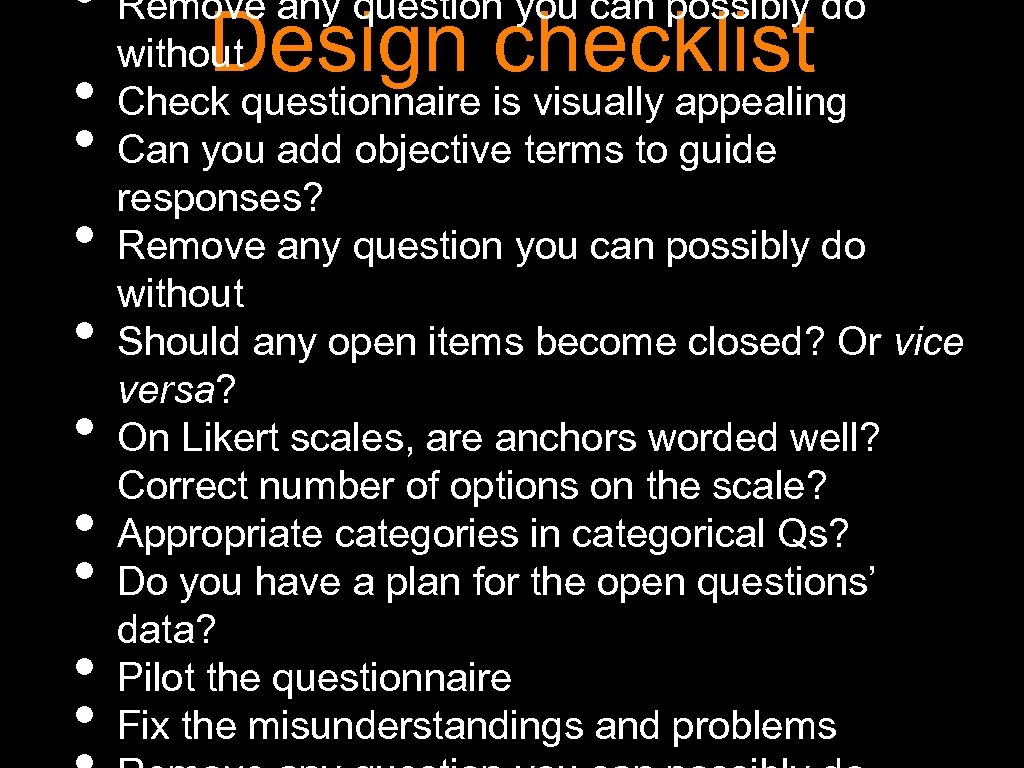 • • • Remove any question you can possibly do without Check questionnaire is visually appealing Can you add objective terms to guide responses? Remove any question you can possibly do without Should any open items become closed? Or vice versa? On Likert scales, are anchors worded well? Correct number of options on the scale? Appropriate categories in categorical Qs? Do you have a plan for the open questions’ data? Pilot the questionnaire Fix the misunderstandings and problems Design checklist