


 Скачать презентацию Introduction to Psychology Suzy Scherf Lecture 11 How
3b4d2346a05f9314a0a36f55a5aa43ad.ppt
- Количество слайдов: 55
 Introduction to Psychology Suzy Scherf Lecture 11: How Do We Think? Language
 What is Language? Language is a system composed -
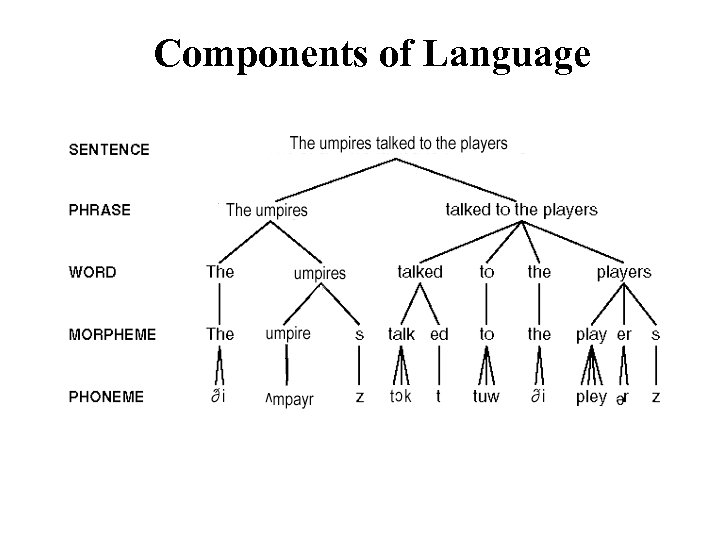 Components of Language
 Phonology • Sound structure of the language • A ______ is the smallest perceptual unit -
 Phonology • Universal set of____ phonemes for all languages • Any language only uses • Phonological development -
 Phonology • Disorders of phonology: • Apraxia • Articulation disorders - • Developmental phonological disorders -
 Morphology • _______ of the language • A ______ is the smallest language unit that • Morphemes include stems and affixes Stems = Affixes =
 Morphology • Rules for combining morphemes makes new words: • dance + -ed = • strange + -er + -s = • re- + align = • warm + up = • Some morphological relatives just memorized: • go + past tense = • eat + past tense =
 Morphology • Some languages have very extensive morphological systems (like 6000 variations of a single verb) • Morphological development -
 Morphology • Disorders of morphology: • Specific Language Impairment “She remembered when she hurts herself the other day. ” “Carol is cry in the church. ” • Williams’ Syndrome -
 Semantics • ______ conveyed by words in the language • Word meanings pick out - • Words are ______ not _______
 Semantics • No - • Newport’s study of Chinese immigrants • Pidgins • No consistent -
 Semantics Pidgin in Hawaii spoken by immigrants: • “Me cape buy, me check make. ” • “Good, dis one. Kaukau any-kin’ dis one. Pilipine islan’ no good. No mo money. ”
 Semantics Disorders of Semantics: • Anomia • Semantic dementia - • Wernickie’s Aphasia
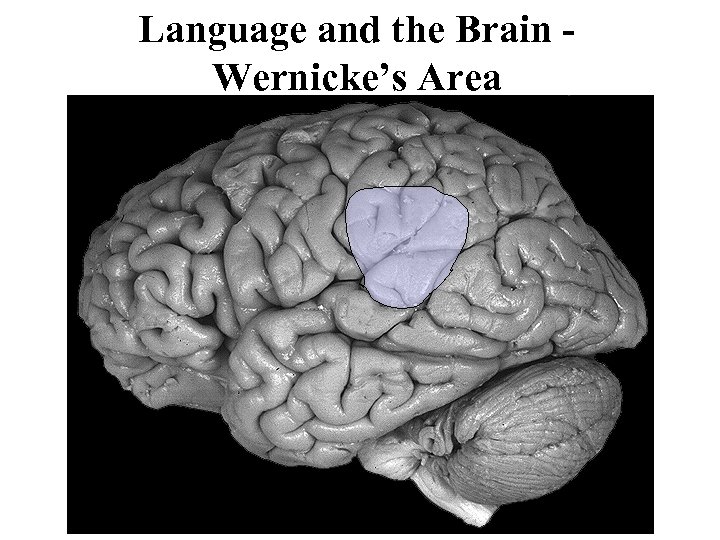 Language and the Brain Wernicke’s Area
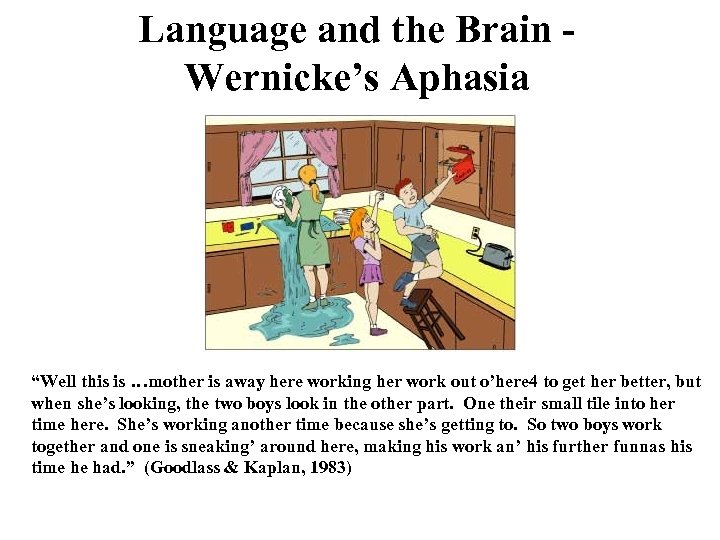 Language and the Brain Wernicke’s Aphasia “Well this is …mother is away here working her work out o’here 4 to get her better, but when she’s looking, the two boys look in the other part. One their small tile into her time here. She’s working another time because she’s getting to. So two boys work together and one is sneaking’ around here, making his work an’ his further funnas his time he had. ” (Goodlass & Kaplan, 1983)
 Semantics and Wernicke’s Area Part of the brain that: 1. 2. 3. 4.
 Syntax/Grammar • The rules for • Important difference between: • Prescriptive Grammar - • Descriptive Grammar -
 Syntax/Grammar • Prescriptive Grammar: • All languages related by __________ • All languages related • No language more - • Labov’s study of grammatical sentences
 Syntax/Grammar • Prescriptive Grammar: • “My bank is awful” • “My bank are awful” • “My bank be awful” -
 Syntax/Grammar • Descriptive Grammar Includes: 1. Rules for combining morphemes 2. Word Order 3. Forming contractions 4. Implementing who did what to whom in a sentence
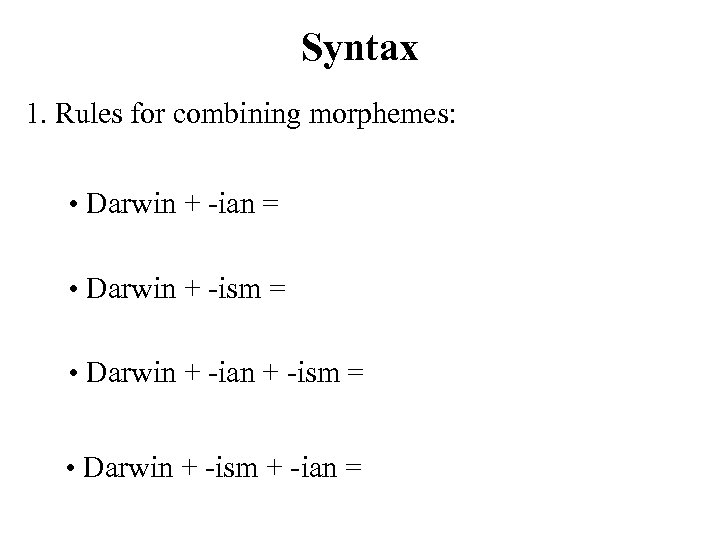 Syntax 1. Rules for combining morphemes: • Darwin + -ian = • Darwin + -ism = • Darwin + -ian + -ism = • Darwin + -ism + -ian =
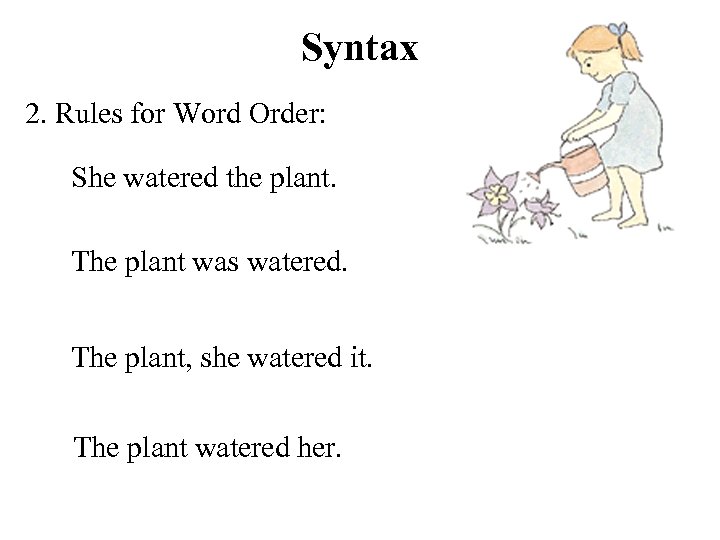 Syntax 2. Rules for Word Order: She watered the plant. The plant was watered. The plant, she watered it. The plant watered her.
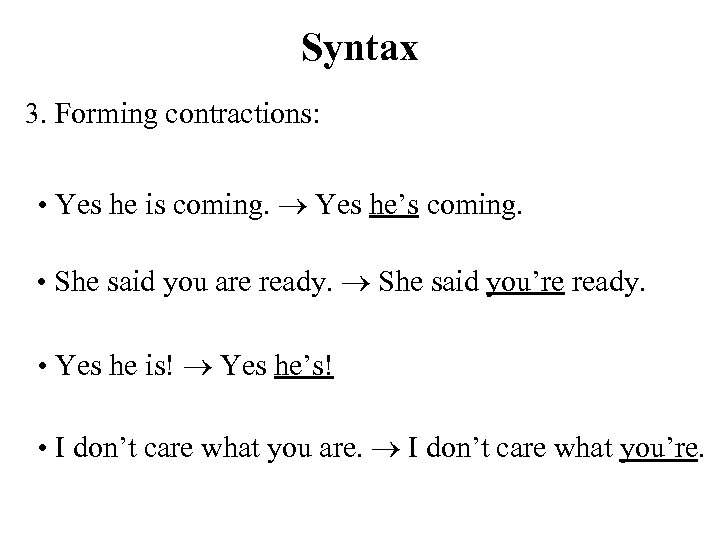 Syntax 3. Forming contractions: • Yes he is coming. Yes he’s coming. • She said you are ready. She said you’re ready. • Yes he is! Yes he’s! • I don’t care what you are. I don’t care what you’re.
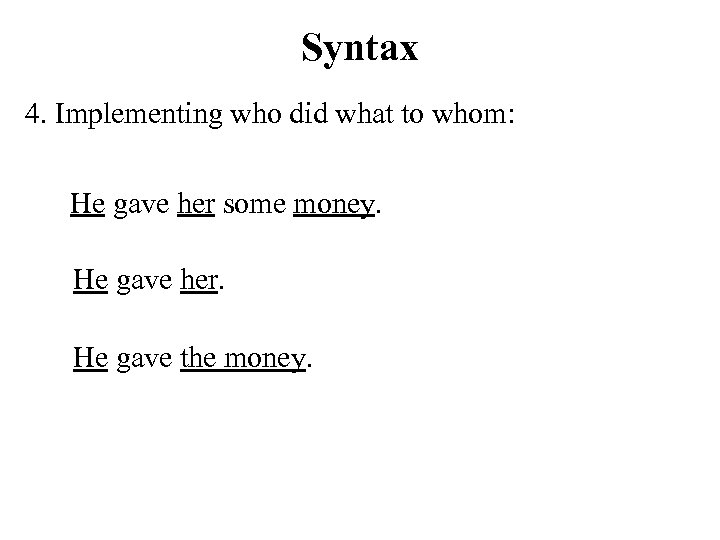 Syntax 4. Implementing who did what to whom: He gave her some money. He gave her. He gave the money.
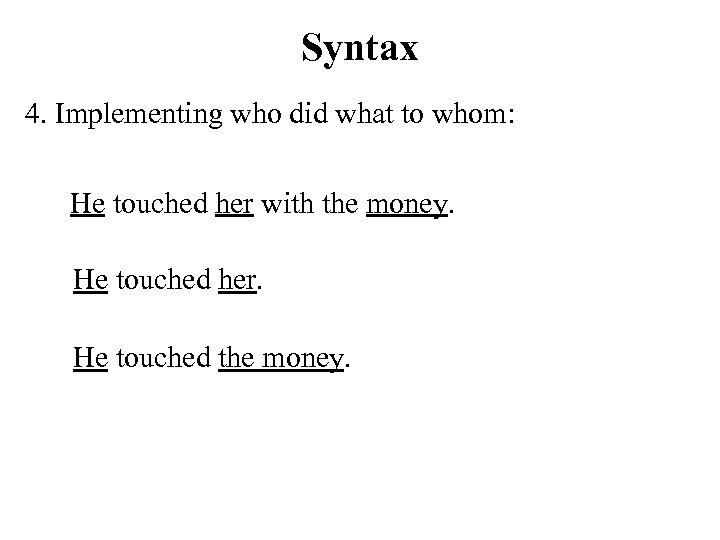 Syntax 4. Implementing who did what to whom: He touched her with the money. He touched her. He touched the money.
 Grammar/Syntax • Syntactic development seems - • Creoles - • Children interject -
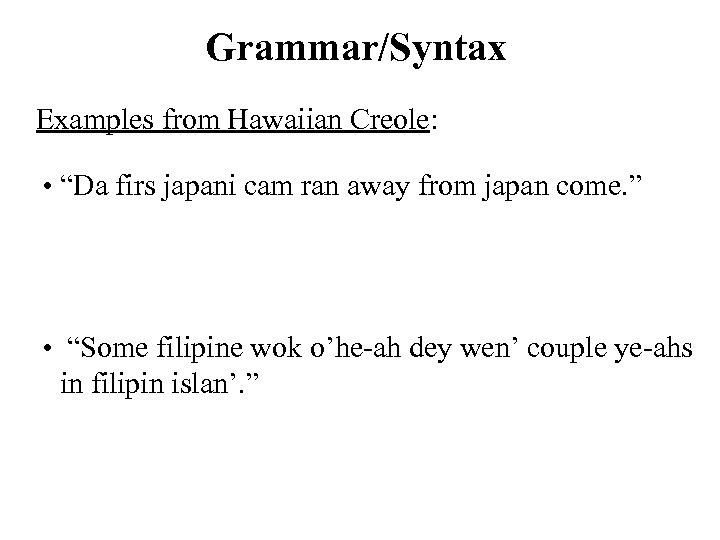 Grammar/Syntax Examples from Hawaiian Creole: • “Da firs japani cam ran away from japan come. ” • “Some filipine wok o’he-ah dey wen’ couple ye-ahs in filipin islan’. ”
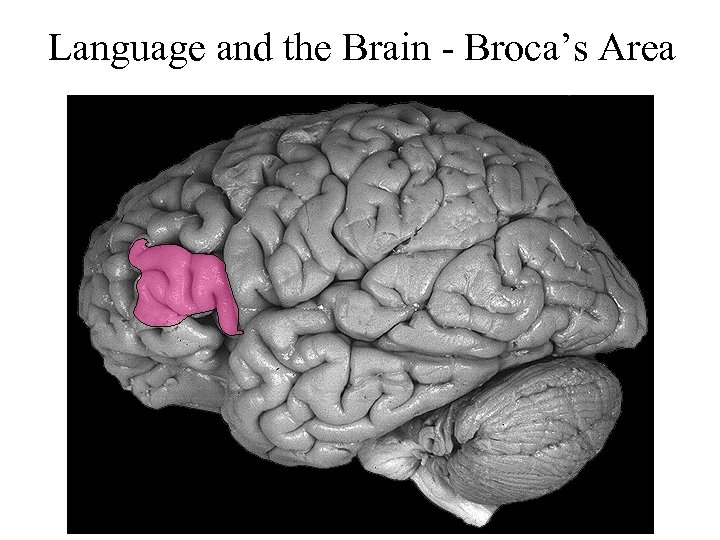 Language and the Brain - Broca’s Area
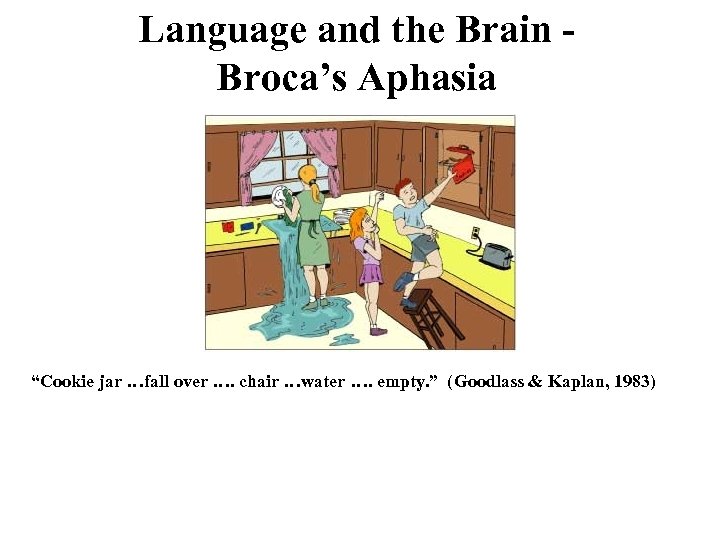 Language and the Brain Broca’s Aphasia “Cookie jar …fall over …. chair …water …. empty. ” (Goodlass & Kaplan, 1983)
 Syntax and Broca’s Area Part of the brain that: 1. 2. 3. 4.
 Pragmatics • Using language appropriately • • • In autistic individuals who develop language -
 What is Language Designed to Do? • Communication?
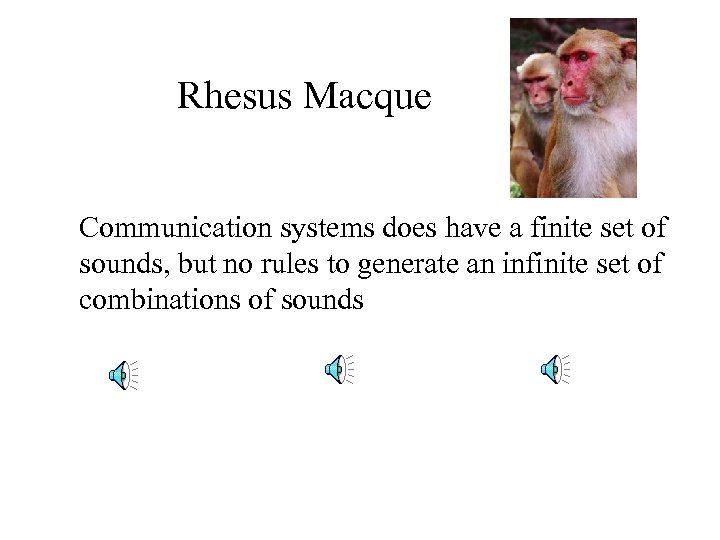 Rhesus Macque Communication systems does have a finite set of sounds, but no rules to generate an infinite set of combinations of sounds
 Is Language a Uniquely Human Adaptation? We alone among terrestrial mammals seem able to -
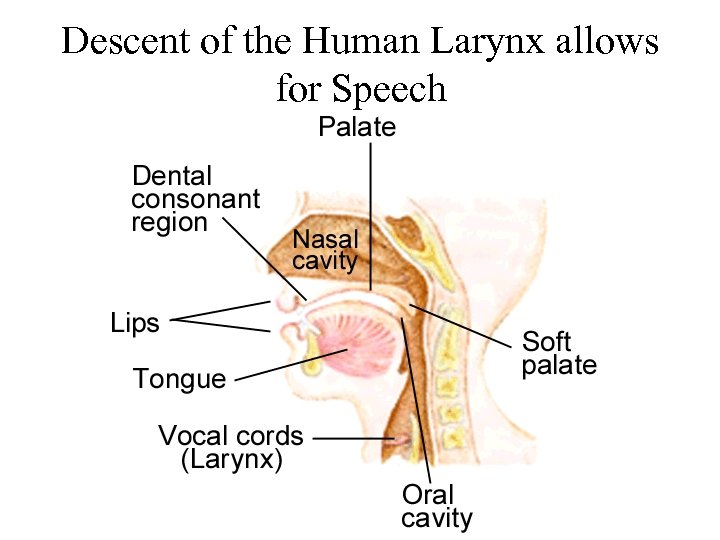 Descent of the Human Larynx allows for Speech
 Is Language a Uniquely Human Adaptation? What about the ability to learn words and combine them to form sentences?
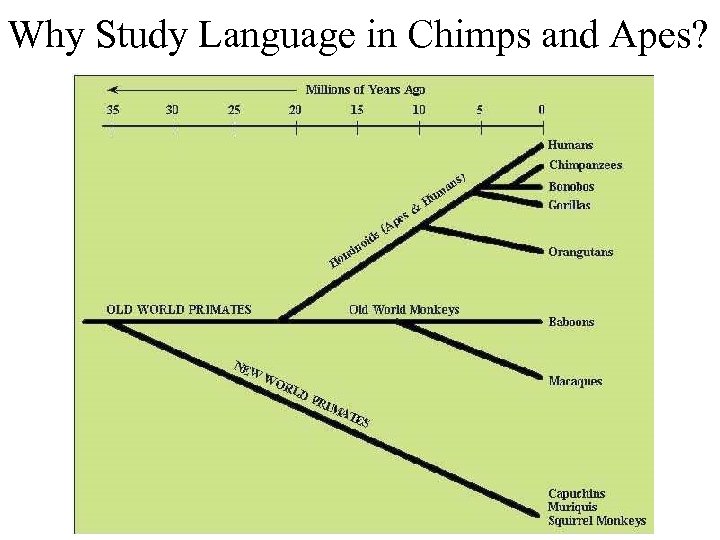 Why Study Language in Chimps and Apes?
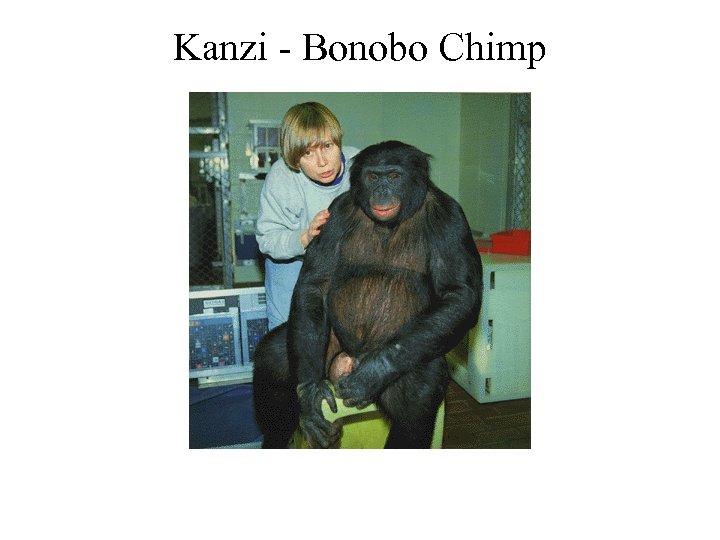 Kanzi - Bonobo Chimp
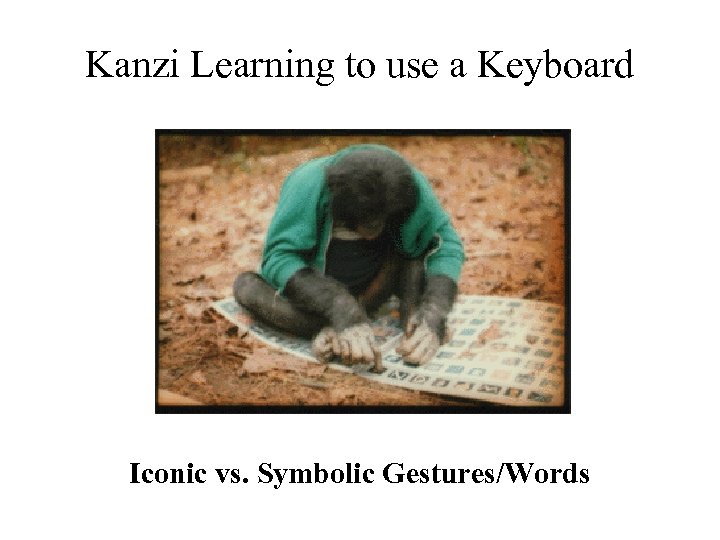 Kanzi Learning to use a Keyboard Iconic vs. Symbolic Gestures/Words
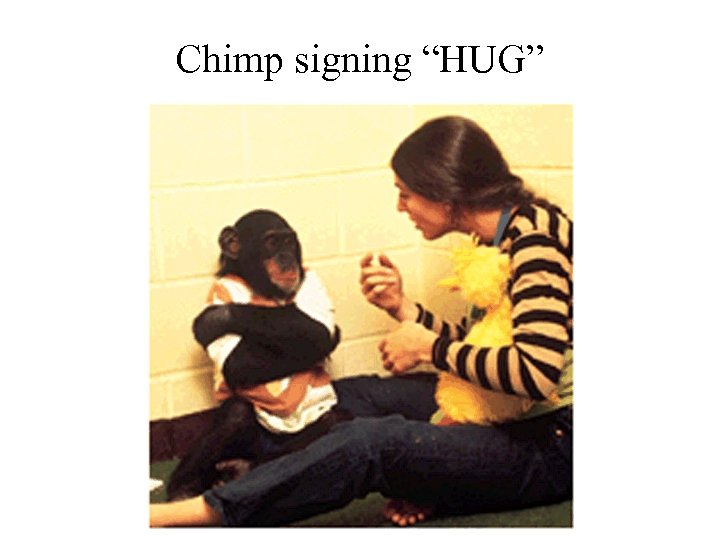 Chimp signing “HUG”
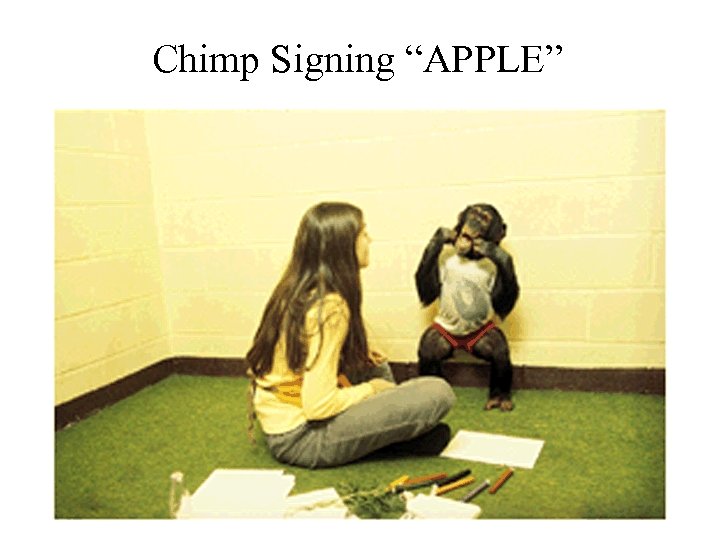 Chimp Signing “APPLE”
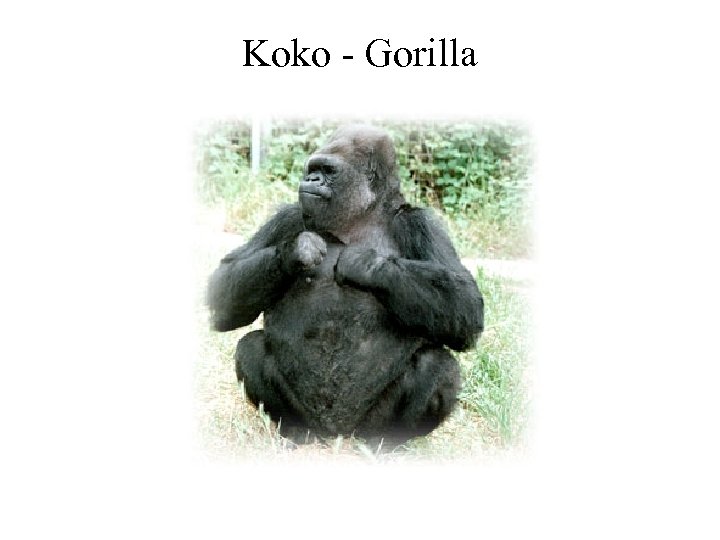 Koko - Gorilla
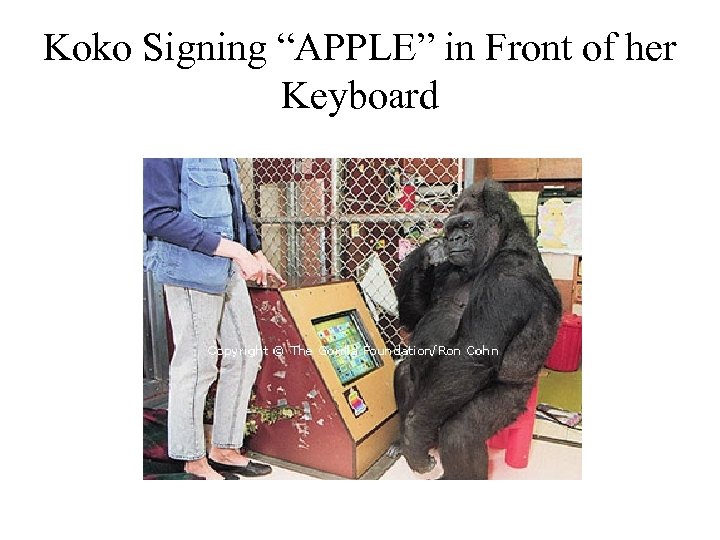 Koko Signing “APPLE” in Front of her Keyboard
 Interview with Koko Penny Patterson as interpreter Question: Koko are you going to have a baby in the future? Koko signs: Pink Patterson explains: We had earlier discussion about colors today.
 Question: Do you like to chat with people? Koko signs: Fine nipple. Patterson explains: Nipple rhymes with people, she doesn't sign people per se, she was trying to do a "sounds like. . . "
 Question: Does she have hair? Or is it like fur? Koko signs: Fine. Patterson explains: She has fine hair. Question: Koko, do you feel love from the humans who have raised you? Koko signs: Lips, apple give me. Patterson explains: People give her favorite foods.
 Is Language a Uniquely Human Adaptation? Chimps and Gorillas appear to be able to:
 Is Language a Uniquely Human Adaptation? Chimps and Gorillas appear to be sensitive to:
 Is Language a Uniquely Human Adaptation? Chimps and Gorillas are not sensitive to -
 Is Language a Uniquely Human Adaptation?
 Evidence of Language as an Adaptation? • Complex, specialized skill • Cultural artifacts vary widely in their sophistication across societies - • Ubiquitous -
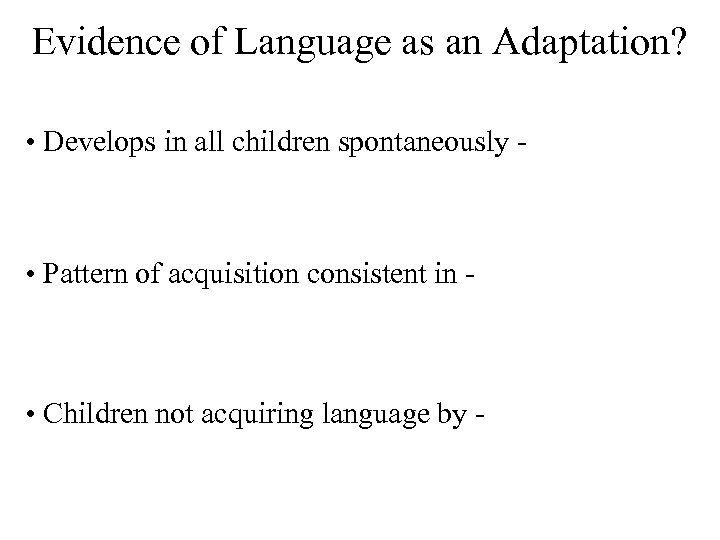 Evidence of Language as an Adaptation? • Develops in all children spontaneously - • Pattern of acquisition consistent in - • Children not acquiring language by -
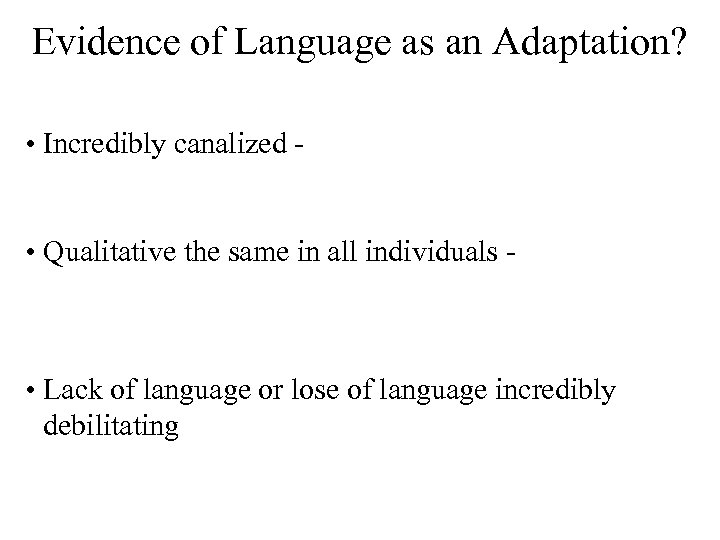 Evidence of Language as an Adaptation? • Incredibly canalized • Qualitative the same in all individuals - • Lack of language or lose of language incredibly debilitating
 What is Language For? • • •